

If you're looking for a simple answer, you won't find one—there isn't a single standard cubicle desk size. Instead, a few common dimensions have become the industry go-to: 6'x6', 6'x8', and 8'x8'. Think of these less as rigid rules and more as proven starting points for designing a workspace that actually works.
Decoding Common Cubicle Dimensions
Choosing the right cubicle size is one of the most important calls you'll make in your office design. It has a direct impact on employee comfort, how you use your floor space, and ultimately, how much work gets done. While "standard" makes it sound like a one-size-fits-all deal, the reality is much more flexible.
The best size really comes down to what people will be doing in that space. A bustling call center has completely different requirements than a department of accountants who need quiet focus and room for sensitive documents.
This is why the industry has settled on a few common footprints that just plain work. These sizes are the building blocks for office planning, helping managers and designers put together functional, organized layouts. Seeing them in context helps make the numbers feel real, so it's a good idea to check out different examples of office cubicles to visualize the possibilities.
This concept map is a great way to see the three main categories of cubicle sizes at a glance.
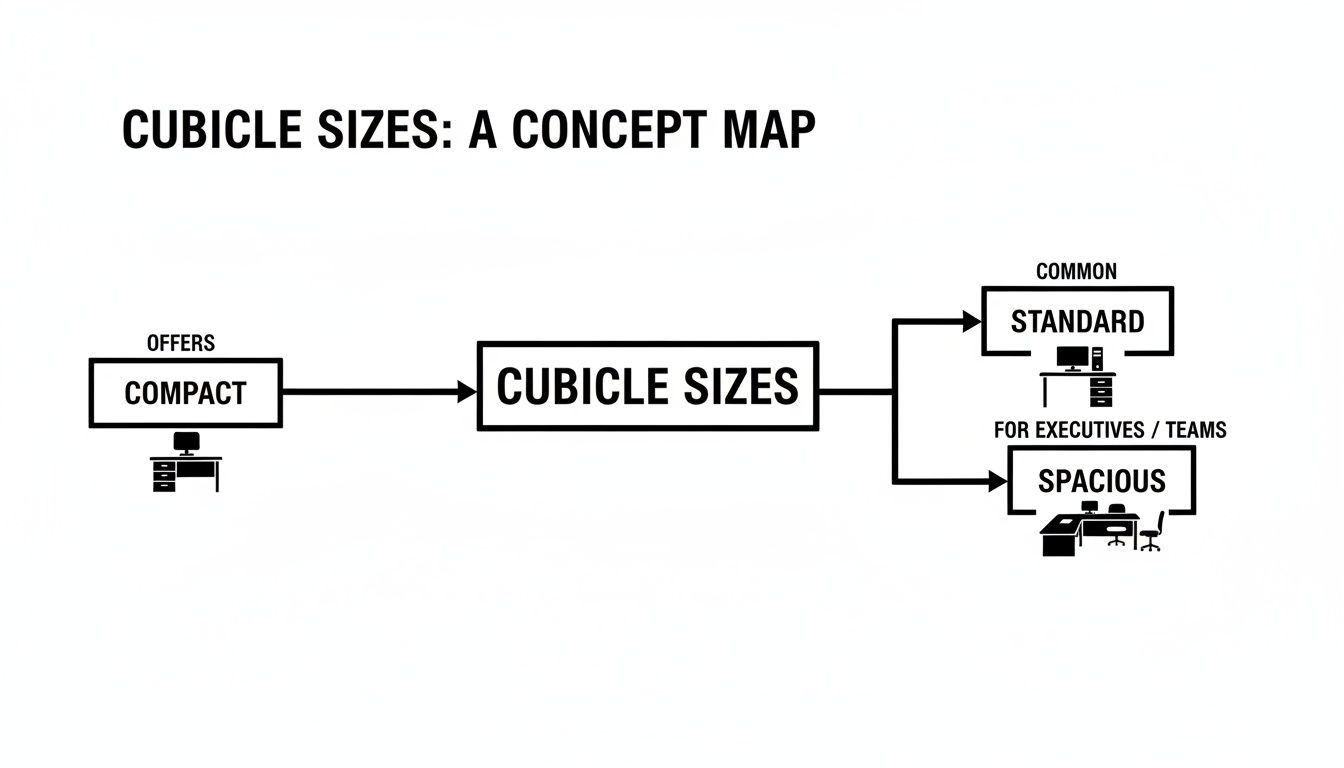
As you can see, each category serves a unique purpose, from saving as much space as possible to giving someone a generous personal workspace.
Quick Reference for Common Cubicle Footprints
To make it easier to see how these standard sizes apply in the real world, here's a quick breakdown of the most common options and where they fit best. This table summarizes the go-to dimensions for modern office layouts.
| Cubicle Category | Common Dimensions (Width x Depth) | Best Use Case |
|---|---|---|
| Compact | 4'x4' or 5'x5' | High-density call centers, touch-down/hot-desking spots |
| Standard | 6'x6' | General office tasks, administrative & professional roles |
| Spacious | 6'x8' or 8'x8' | Managers, developers, designers, or anyone needing more space |
This is just a starting point, of course, but it covers the vast majority of what we see in office design today.
Key Cubicle Categories
The three main buckets you'll hear about are compact, standard, and spacious. Each is built to support different kinds of work and departmental needs, making sure the space fits the job.
Compact Workstations: These are all about efficiency. They're perfect for high-density setups like call centers or for temporary "hot desking" roles where you need to fit the maximum number of people into an area.
Standard Workstations: The 6'x6' is the undisputed champion for a reason. It's the go-to for most administrative and professional jobs, offering a great balance of space for a computer, monitors, and paperwork without feeling closed in.
Spacious Workstations: Often set aside for managers or employees who need extra gear, these larger footprints can comfortably fit a guest chair, more storage, and multiple large work surfaces.
Understanding these categories is the first step toward creating a workspace that truly supports your team. The goal is to match the cubicle's footprint to the employee's workflow, not the other way around.
At the end of the day, it's all about finding the right balance between what your employees need and the square footage you have to work with. Once you get a handle on these common sizes, you can start building a floor plan that’s both efficient and a great place to work.
To take it a step further, check out our guide on how to maximize the ergonomics of your office. This knowledge will come in handy as we dive into panel heights and layout strategies next.
The Story Behind Today’s Cubicle Dimensions
To really get a handle on the common cubicle dimensions we use today, it helps to know how we got here. The cubicle has a pretty interesting backstory, starting as a grand vision for worker freedom and evolving through decades of corporate belt-tightening and shifting ideas about what an office should be. What started as a way to empower employees eventually became a symbol of pure efficiency, for better or worse.
The original concept from the 1960s, called the "Action Office," was meant to give workers a sense of personal space, freedom, and flexibility. The whole idea was to break away from the rigid, factory-like open offices that were common at the time. Those early designs were actually quite spacious and designed to support different work styles.
But that idealism ran head-on into the economic realities of the decades that followed. As companies started looking for ways to pack more people into the same amount of real estate, the cubicle started to shrink. A lot.
The Great Cubicle Squeeze
The 1980s was a turning point that drastically changed the standard cubicle desk size. It was an era of mergers and downsizing, and facility managers were under immense pressure to make every single square foot count. This led to a major cutback in workstation footprints, sometimes chopping them down by as much as 25% to 50%. By 1994, though, companies started to see the fallout from these cramped spaces and began to push the average cubicle size back up to around 90 square feet. You can get the full story in our detailed look at the evolution of the office cubicle.
This is the era that gave us the "cubicle farm" stereotype—those endless seas of tiny, identical boxes that put density way ahead of employee comfort. The focus wasn't on creating a great place to work; it was just about how many bodies you could fit on one floor plan.
Finding a Modern Balance
Thankfully, the pendulum has swung back. Today, businesses get it: employee well-being is directly linked to productivity, and giving people enough room to work is a huge part of that. The modern standard cubicle desk size is a smart compromise, balancing the company's need for efficiency with the employee's need for comfort and focus.
This shift has opened up the huge range of options you see today. Instead of a one-size-fits-all box, companies can now pick from a whole menu of footprints designed for specific jobs and teams.
The dimensions you see today—like the popular 6'x6' workstation—are not arbitrary. They are the result of decades of trial and error, reflecting a learned balance between human needs and business practicalities.
Knowing this history isn't just trivia; it gives you critical context. It explains why just picking the smallest size possible is a recipe for disaster, often leading to tanking morale and productivity. The dimensions of modern cubicles are built for today's work, which often means multiple monitors, collaborative tech, and a mix of heads-down focus and teamwork.
This perspective helps you make smarter choices for your own office. You can build a layout that’s both efficient and genuinely supportive of your team’s best work, whether you need private office cubicles for deep concentration or flexible workstation cubicles for everyday tasks. The next time you look at a floor plan, you'll see more than just numbers—you'll see a long story of adaptation and refinement, a journey you can continue with your own layout using our Cubicle Designer.
Choosing the Right Panel Height for Privacy and Collaboration
While the footprint of a cubicle carves out its physical space, it's the height of the panels that really sets the mood. Panel height is the secret ingredient that balances privacy against collaboration, and focus against open communication. It’s what makes the difference between a high-energy, buzzing team hub and a quiet, heads-down work zone.
Picking the right panel height is far more than an aesthetic choice—it’s a strategic decision that directly shapes your company culture and daily workflow. The industry standards fall into three main camps: low, medium, and high. Each one serves a unique purpose, letting you tailor the environment to what your teams actually need to get their work done.
Low Panels: Creating an Open Vibe
Low panels, which usually stand between 39 and 42 inches high, are all about encouraging interaction. When seated, employees can easily see over the dividers to talk to colleagues, making this height ideal for teams that need to be in constant communication.
This setup gives you that airy, open-plan feel without totally eliminating personal space. It also lets natural light flow through the office and makes it a breeze for managers to check in with their teams.
- Best For: Sales teams, marketing departments, and any group that thrives on spontaneous collaboration.
- Key Benefit: Fosters a connected, high-energy atmosphere where ideas can be shared freely.
Medium Panels: The Versatile Standard
Coming in at around 53 inches tall, medium panels are the go-to choice for most general office roles. This height hits the sweet spot for a lot of businesses by offering what’s known as "seated privacy."
When an employee is sitting, the panels are high enough to block visual distractions and help them focus. But if they need to collaborate, all they have to do is stand up to see across the office and chat with a coworker. It’s a balanced approach that works well for both individual tasks and team projects.
This height provides a perfect compromise, giving employees the autonomy to choose between focused work and collaborative interaction. It respects the need for personal space while still keeping teams accessible to one another.
For a closer look at how different setups impact the employee experience, check out our guide on achieving office cubicle privacy. It’ll give you more context to make the right call.
High Panels: For Maximum Focus and Privacy
High panels, which start at 65 inches or taller, are designed for roles that demand serious concentration, confidentiality, or acoustic separation. These walls effectively create a private office within a larger space, cutting down on both visual and auditory distractions.
This level of enclosure is perfect for HR professionals, finance departments, or anyone handling sensitive information. It provides a secure, quiet environment that’s essential for detailed and confidential work. These panels are the cornerstone of truly effective private office cubicles.
It’s interesting to think that these tall walls were once the norm. Back in the 70s, 80s, and early 90s, the average cubicle wall towered between 60 to 84 inches. By the mid-90s, a major shift in workplace philosophy toward more open environments caused panel heights to drop to just 3 or 4 feet. You can read more about this history over at iSpace Environments. It goes to show that today's panel heights aren't just a default setting—they're a deliberate choice.
Matching Cubicle Sizes to Real-World Job Functions
Knowing the theory behind cubicle dimensions is a good start, but the real magic happens when you apply it to an actual office. Let's move away from abstract numbers and look at how different departments really function day-to-day. This is where you can see how a standard cubicle desk size gets adapted to fit the unique rhythm of each team.
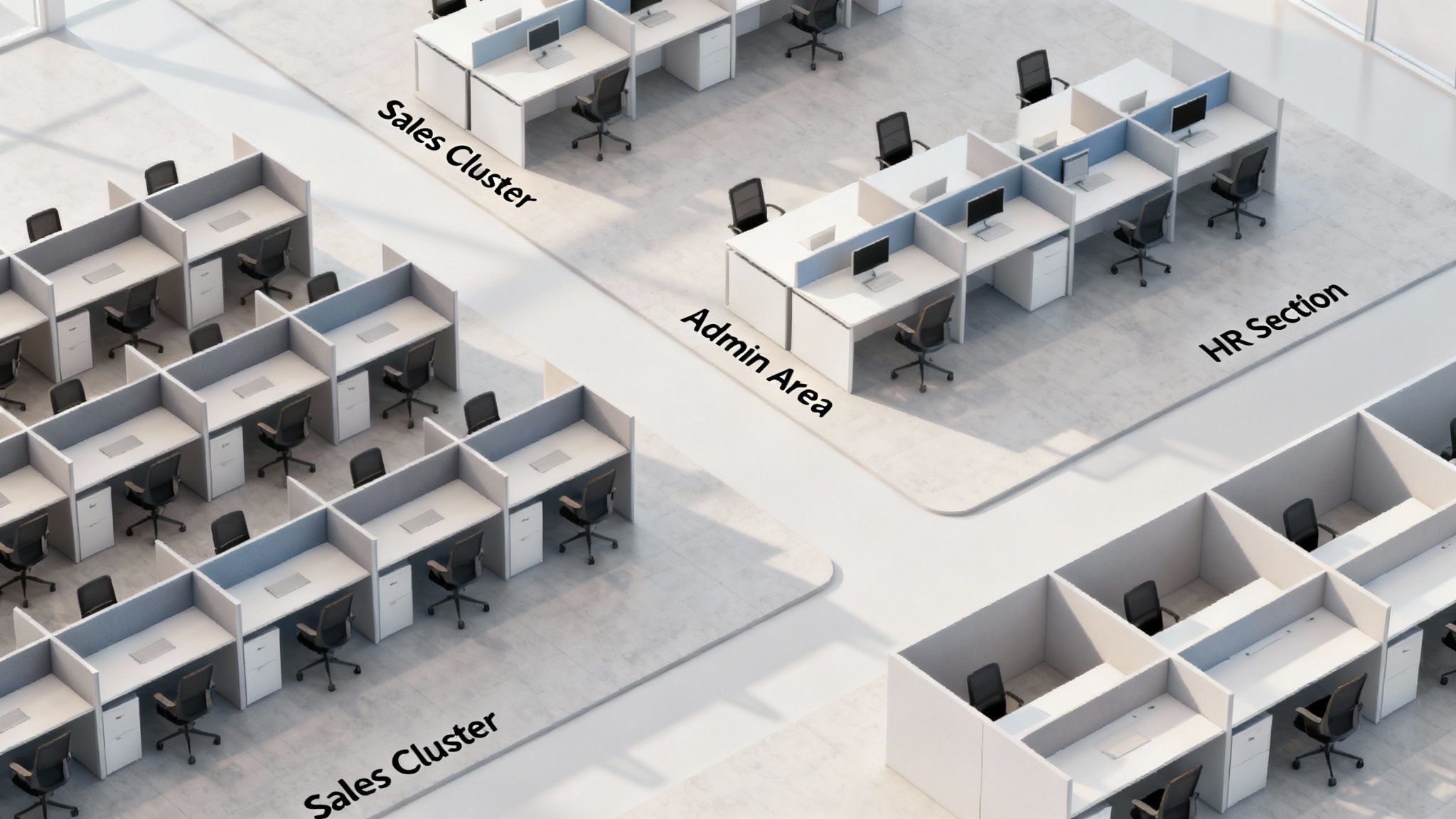
Think of your floor plan like a strategic map. Every department has a mission, and its workspace should be the headquarters that helps them succeed. The whole idea is to match the cubicle's footprint directly to what the job demands—from storage needs to how people talk to each other.
The High-Energy Sales Team
A fast-paced sales or customer service department runs on energy and quick communication. For these roles, compact 5'x5' workstation cubicles are almost always the perfect call. This size gives them enough room for the essentials—a computer, headset, and a notepad—without putting up unnecessary walls between teammates.
That smaller footprint naturally gets people talking and makes it easy for supervisors to jump in with support and guidance. When you pair this layout with low panels, you create a dynamic, buzzing environment where information just flows.
- Job Requirements: Mostly phone and computer work, with little need for stacks of physical files.
- Storage Needs: Usually, some simple under-desk storage for personal items is all that's needed.
- Collaborative Dynamics: High-level team interaction and quick chats are critical for getting the job done.
The Reliable Administrative Team
Your admin staff is the operational backbone of the company, juggling all sorts of tasks that require both focus and easy access. The classic 6'x6' cubicle is the industry standard for these roles, and for good reason. It hits that sweet spot between personal workspace and efficiency.
This size comfortably fits an L-shaped desk, dual monitors, and plenty of storage for paperwork and supplies. It gives employees enough elbow room to work without feeling boxed in, all while fitting neatly into most office layouts. Medium-height panels are a great match here, offering privacy for focused work while seated.
This versatile 6'x6' size is the true workhorse of the modern office. It’s adaptable enough for most general roles, making it a safe and effective starting point for any layout.
Getting a closer look at the different ways this popular size can be configured is incredibly helpful. You might want to check out our guide on 6×6 office cubicles to see exactly why it's such a trusted option.
The Focused HR and Accounting Departments
Departments like Human Resources, finance, and legal deal with sensitive information all day long. They need a higher degree of privacy and the ability to really concentrate. For these teams, a more spacious 8'x8' cubicle is the ideal solution. The larger footprint provides plenty of room for secure, lockable filing cabinets and a bigger work surface for spreading out documents.
That extra space also means you can add a guest chair, which allows for private, one-on-one meetings without having to hunt down a free conference room. When you pair these larger cubicles with high panels of 65 inches or more, you create a true sense of a private office, cutting down on both visual and sound distractions. This setup is crucial for maintaining confidentiality and allowing for the deep focus these jobs demand.
By tying specific cubicle sizes to the daily realities of each department, you build a much more effective and harmonious workspace. This thoughtful approach ensures every team has the right environment to do their best work, turning your office from a simple collection of desks into a purpose-built machine for productivity. The next step is to take these ideas and start applying them to your own physical space.
How to Measure Your Space and Plan a Cubicle Layout
Alright, it's time to roll up our sleeves and move from ideas to a real-life floor plan. A great layout isn't just about picking nice cubicles; it starts with a tape measure and a solid understanding of the room you're working with. Think of this part as drawing the blueprint for your office—get it right, and every piece will fall into place, creating a space that's both productive and safe.
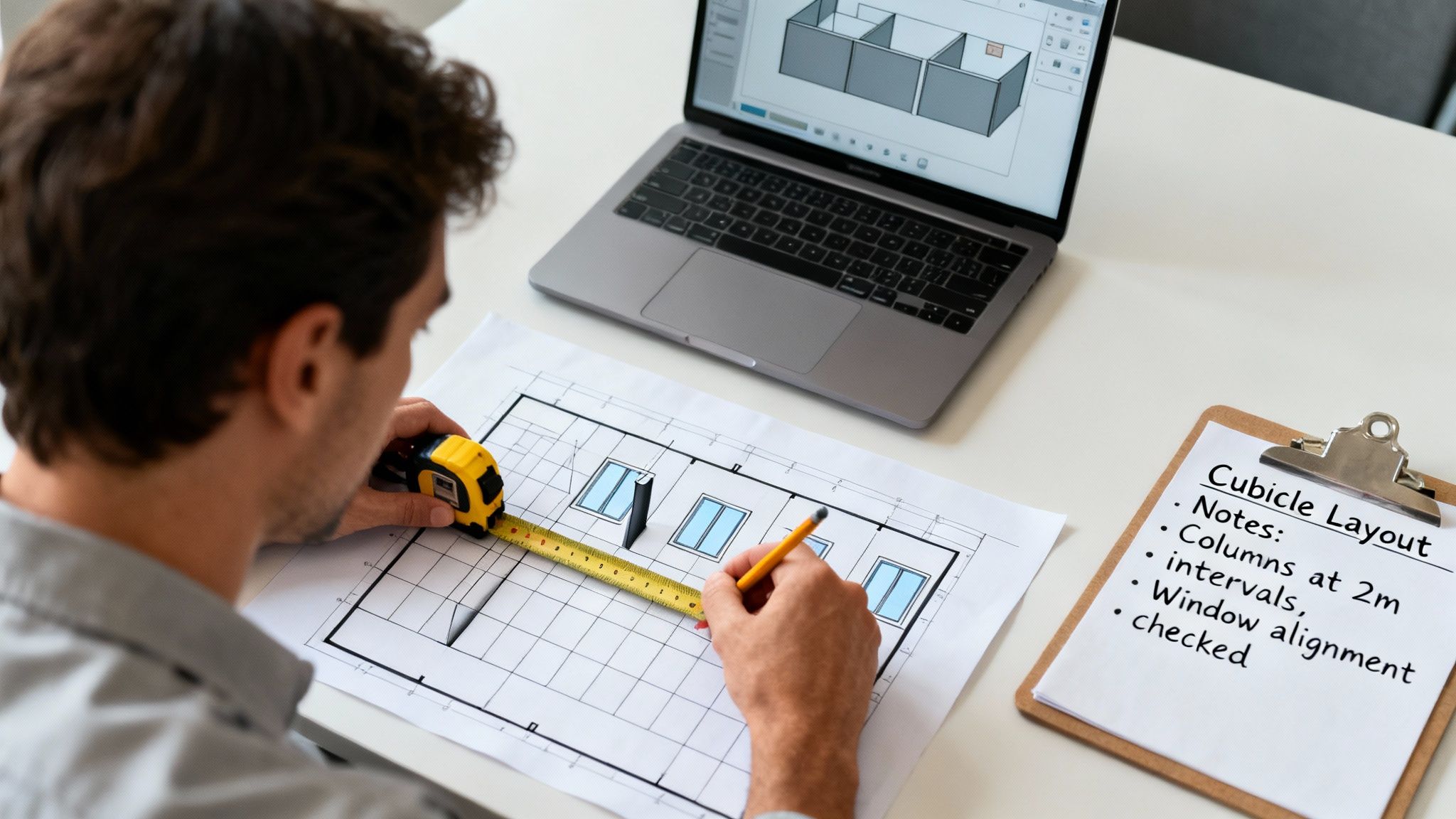
Before you fall in love with a particular standard cubicle desk size, you need to know exactly what your canvas is. That means getting to know every nook, cranny, and quirk of your office space. It’s like a pre-flight checklist for office design—nailing these details upfront saves you from some very expensive headaches later on.
Your Measurement Checklist
First things first, measure the total length and width of the room to get your overall square footage. But don't stop there. You have to account for everything that could get in the way of your perfect layout.
- Map Immovable Objects: Find and note the exact location and size of columns, support beams, windows, and doorways. These are the non-negotiables your entire plan must bend to.
- Locate Power and Data Ports: Get a sketch of the room and mark every single electrical outlet, ethernet port, and data jack. It’s a massive time and money saver to plan your cubicles around existing hookups.
- Identify Traffic Flow: Imagine your team walking through the space. Where are the main highways? Pinpoint the major pathways from the entrance to key areas like the break room, restrooms, and meeting rooms.
Once you have these measurements down, you can start to see how different cubicle setups might actually fit. For a deeper dive, our office space planning guide has even more tips.
Complying with Codes and Accessibility
This is one of the most critical parts of the process. Forgetting about walkway clearance isn't just a design mistake; it can be a serious code violation. You absolutely have to plan a layout that meets the legal requirements for safety and accessibility.
Local fire codes and the Americans with Disabilities Act (ADA) have strict rules to make sure everyone can move around the office safely and easily.
A common mistake is packing cubicles too tightly, leaving insufficient room for circulation. This not only creates a cramped environment but also poses significant safety and compliance risks. Always prioritize safe and accessible pathways.
Here are the key minimums to burn into your memory:
- Main Aisles: These are your primary walkways. They need to be at least 44 inches wide to allow for comfortable two-way traffic and wheelchair access.
- Secondary Aisles: The smaller paths between individual cubicles should have a minimum clearance of 36 inches.
Following these guidelines is non-negotiable for creating a workspace that is functional, compliant, and comfortable for every single person on your team.
Bringing Your Vision to Life
With your measurements in hand and compliance rules in mind, the fun part can begin. This is where you get to play with different layouts and find the absolute best fit for your teams and how they work.
To make this whole process visual and seamless, you can use our interactive Cubicle By Design Custom Cubicle Designer. This tool is a game-changer. You can plug in your room's dimensions and experiment with all sorts of configurations. Test drive different cubicle sizes, arrange them in pods, and see a 3D model of your office before you commit to anything.
Using a tool like this takes the guesswork out of the equation. It transforms your raw measurements into a tangible, workable plan, helping you design a space that's efficient and perfectly suited to your company's needs from day one.
A Few Common Questions About Cubicle Sizes
Even with a great plan in hand, you'll probably still have a few questions as you start to lock in your final office layout. It's totally normal. Trying to nail down the specifics of a standard cubicle desk size, walkway rules, and how to mix and match different setups can feel a bit overwhelming.
To help you move forward with confidence, we’ve put together answers to the most common questions we hear from business owners and facility managers just like you. Think of this as the final checklist to clear up any lingering doubts.
What Is the Most Popular Standard Cubicle Desk Size?
The 6' x 6' workstation is the king of the cubicle world, and for good reason. It's hands-down the most popular and flexible size out there, hitting that perfect sweet spot between giving an employee enough personal space and not eating up your entire floor plan.
This footprint comfortably fits an L-shaped desk, which gives your team members plenty of room for a computer, a couple of monitors, and their daily paperwork without making them feel boxed in. It’s a solid, productive setup for almost any administrative or professional role.
Sure, smaller 5' x 5' workstation cubicles are great when you need to maximize headcount, and larger 8' x 8' spots are better for managers. But the 6' x 6' is the reliable go-to for most office plans. It’s a fantastic—and safe—starting point for any layout design.
How Much Space Do I Need for Walkways Between Cubicles?
This is a big one. Planning for proper walkway clearance isn't just about making the office feel open; it's absolutely critical for safety, accessibility, and legal compliance.
For the smaller aisles that weave between individual cubicles, you need to budget for a minimum width of 36 inches (3 feet). This gives one person enough room to walk by comfortably and allows someone to push their chair back without completely blocking the path.
For your main arteries—the central corridors leading to exits, the break room, or conference rooms—you need to go wider. Aim for 44 to 48 inches (about 4 feet). These wider paths are often required by the Americans with Disabilities Act (ADA) and local fire codes to ensure wheelchair access and a clear escape route in an emergency. Always double-check your local codes, but these numbers are a solid rule of thumb.
Don't make the classic mistake of skimping on walkway space. It’s one of the most common and costly errors in office planning, creating a cramped, frustrating environment that's also a serious safety and legal liability.
Can I Use Different Cubicle Sizes in the Same Office?
Absolutely! In fact, you should. Mixing and matching cubicle sizes is a smart, modern way to create a dynamic office that actually works for how your different teams operate. A one-size-fits-all plan is an outdated approach that rarely meets everyone's needs.
For instance, you could set up a pod of compact cubicles for your high-energy sales team, use standard 6' x 6' stations for marketing and admin, and give larger, more private private office cubicles to departments like HR or finance that handle sensitive information. This hybrid model lets you fine-tune your floor plan for both efficiency and function.
The trick is to use a consistent cubicle system, like the ones from Cubicle By Design, to keep the whole office looking cohesive and professional. Our Cubicle Designer tool makes it easy to play around with different combinations and design a hybrid layout that’s a perfect fit for your team’s workflow.
How Does Desk Depth Impact the Overall Cubicle Size?
Desk depth is one of those details that has a huge impact on how a cubicle actually feels to work in. The two standard depths are 24 inches and 30 inches, and choosing between them really affects employee comfort and what they can get done.
A 24-inch depth is your space-saver. It’s perfect for people who mainly use a laptop or a single monitor, giving them just enough surface area without taking up precious real estate. This is often the go-to choice for higher-density layouts where every square foot counts.
A 30-inch depth, on the other hand, feels much more generous. That extra six inches of space is a game-changer for anyone using multiple large monitors, spreading out blueprints, or working with physical documents. It helps cut down on clutter and gives people more room to set up an ergonomic workstation. When you're looking at a 6' x 6' cubicle, the desk depth is what determines how much of that footprint is truly usable workspace. If you're looking for more ideas on space management, digging into specialized articles on office planning can offer some great insights.
Ready to design a better workplace? At Cubicle By Design, we provide the tools, expertise, and high-quality cubicles you need to create an efficient and comfortable office. Start building your ideal layout today.