
So you’re staring at an office full of desks, chairs, and cubicles you no longer need. This isn't just clutter—it's surplus assets. Office furniture liquidation is the process of turning all that equipment into cash, usually because of an office move, a downsizing event, or a full-on closure.
It’s a strategic way to recover value from your assets while getting a commercial space cleared out efficiently. Think of it as a mix of selling, donating, and recycling, all rolled into one manageable project. At Cubicle By Design, we've seen it all, and this guide will give you a clear roadmap for turning what feels like a massive headache into a smooth process.
Navigating Your Office Furniture Liquidation Strategy
Whether you're relocating to a new building, shrinking your footprint, or embracing a remote-first work model, dealing with leftover office furniture can feel like a huge undertaking. A well-thought-out liquidation plan, however, transforms this challenge into a smart asset recovery operation.
The first step is always understanding the "why" behind your liquidation. Are you up against an expiring lease? Is a company merger forcing a consolidation? Answering that question is the key to making the right decisions down the line.
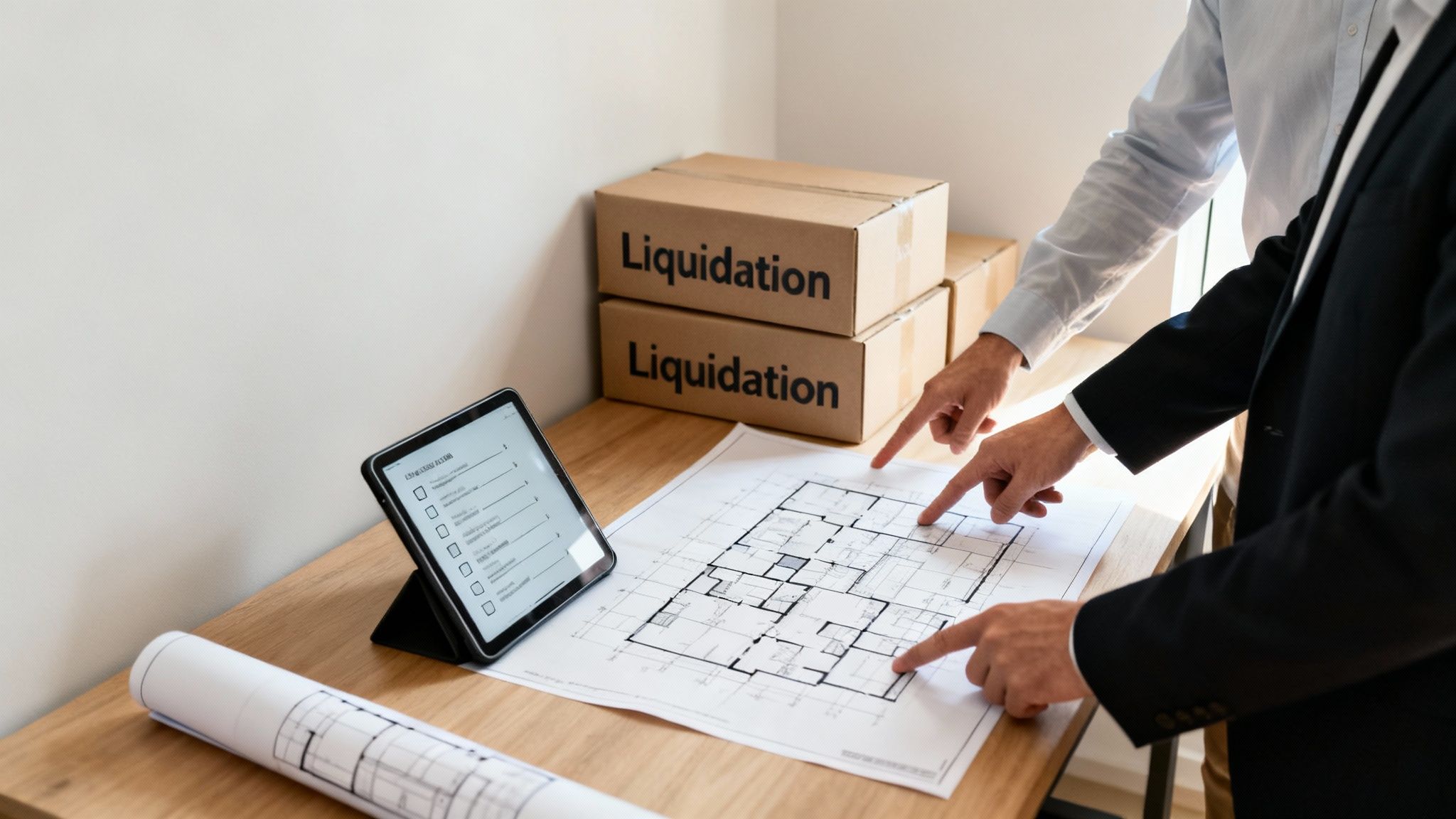
This isn't just about getting rid of old stuff. It's about minimizing the logistical nightmares and maximizing your financial return. With the right approach, you can create a positive outcome for both your company's bottom line and its environmental conscience.
Why Liquidation Is A Growing Trend
The need for smart liquidation strategies is definitely on the rise. The global market for second-hand office furniture is already sitting at around $5 billion, and experts project it to grow at a Compound Annual Growth Rate (CAGR) of about 8% through 2033.
What's driving this? Mostly, it’s the big shift to hybrid work. Companies need smaller, more flexible offices, which naturally leads to a lot of surplus assets. This trend means more businesses are looking for efficient ways to offload their used furniture, making a clear, actionable plan more critical than ever.
The Core Stages Of The Process
No matter the size of your office, a successful liquidation project follows a predictable path. Breaking it down into distinct phases helps make sure nothing important gets missed. If you're managing a complete facility exit, it's also worth reviewing broader strategies for facility closure or going out of business to understand the bigger picture.
A well-executed liquidation is not an expense; it's a recovery operation. The goal is to offset costs and, in many cases, generate revenue from assets that would otherwise be liabilities.
Thinking through each stage prevents those last-minute scrambles and expensive mistakes. From inventory to final removal, every step builds on the one before it. And for companies focused on sustainability, our guide on responsible office cleanouts offers some great practical tips.
To give you a high-level look at what to expect, we've broken the process down into its core stages.
The Core Stages of Office Furniture Liquidation
This table gives you a bird's-eye view of the typical project flow.
| Phase | Primary Goal | Key Activities |
|---|---|---|
| Inventory & Assessment | To create a detailed record of all assets and their condition. | Cataloging items, grading condition, taking photos, noting dimensions. |
| Valuation & Pricing | To determine the fair market value of your furniture. | Researching comparable sales, consulting experts, setting prices. |
| Pathway Selection | To choose the best method for offloading assets. | Comparing selling vs. donating vs. recycling, selecting partners. |
| Execution & Logistics | To manage the physical removal of all items from the space. | Scheduling movers, coordinating with building management, ensuring cleanup. |
Following these phases in order will bring much-needed structure to what can otherwise feel like a chaotic process, setting you up for the best possible outcome.
First Things First: Building Your Furniture Asset Inventory
Before you can even think about selling, donating, or recycling your used office furniture, you need to know exactly what you’ve got. A detailed, accurate inventory is the absolute bedrock of a successful liquidation. Without it, you're flying blind—unable to get solid quotes, negotiate with any real leverage, or plan your move-out logistics.
Think of it like creating a resume for your furniture. Each piece has a story—its brand, condition, and specs—that determines what it’s worth to a potential buyer. A vague list that just says "50 office chairs" isn't going to get you very far. But an entry that reads "50 Herman Miller Aeron Chairs, Size B, Graphite Frame, Good Condition" will make any liquidator sit up and pay attention.
This level of detail is a game-changer, especially for your high-value pieces. When you’re cataloging assets like specialized private office cubicles or flexible workstation cubicles, that precision is what maximizes your return.
Detailing Your Assets
Your best bet is a simple spreadsheet. Set up columns for each key piece of information to keep everything consistent. This methodical approach doesn't just help you; it makes it incredibly easy for potential buyers to quickly size up your offer.
Here are the must-haves to capture for every single item:
- Item Type: Get specific. Is it an "ergonomic task chair," an "L-shaped desk," or a "3-drawer lateral filing cabinet"?
- Brand/Manufacturer: Name-brand furniture from companies like Steelcase, Herman Miller, or Knoll almost always holds more value.
- Dimensions: Grab a tape measure and record the height, width, and depth. This is non-negotiable for buyers trying to figure out if it fits their space, and for the logistics team planning truck space.
- Quantity: A simple headcount of identical items.
- Condition: Use a clear, consistent grading system, which we'll dive into next.
A well-documented inventory speaks volumes. It tells buyers you're organized, professional, and serious about the sale. That builds trust right out of the gate and almost always leads to better offers and a smoother process.
Taking the time to build this list is the single most important thing you can do at the start of your used office furniture liquidation project.
Implementing a Practical Grading System
Let's be real: not all used furniture is created equal. A simple, consistent grading system helps you set realistic price expectations and gives buyers a clear picture of what they’re getting. Ditch the subjective terms and stick to a defined scale.
Here’s a common three-tier system the pros use:
- A-Grade (Excellent): This is as close to new as it gets. The item shows little to no signs of wear, has no real scratches or dings, and all the mechanical parts (like chair lifts or drawer glides) work perfectly.
- B-Grade (Good): The item is 100% functional but has normal signs of wear and tear. Think minor scuffs on chair legs, small scratches on a desktop, or slight wear on the fabric.
- C-Grade (Functional): It works, but it's got visible cosmetic issues. This could be significant scratches, noticeable stains, or chipped laminate. It’s usable, but it definitely looks used.
Anything below a C-Grade is usually destined for the recycling pile, as its resale value is pretty much zero. Applying this grading system honestly will save you a ton of back-and-forth with potential buyers. If you're dealing with a large volume of furniture, knowing your storage options is a huge plus. Looking into professional warehousing services can give you an idea of how to manage this part of the puzzle.
The Power of High-Quality Photos
In the world of liquidation, a picture isn't just worth a thousand words—it’s worth a higher offer. Clear, well-lit photos are non-negotiable. They back up your inventory list and your condition grades, allowing liquidators to give you a much more accurate quote without having to do an initial site visit.
For each type of item, take photos from a few different angles. Get the front, back, sides, and any branding or unique features. Most importantly, be honest. If you graded something a "C" because of a big scratch, take a picture of that scratch. Hiding damage will only cause headaches and price renegotiations down the road. The goal here is to build credibility and make the sale happen smoothly.
Choosing the Right Liquidation Pathway
With a detailed inventory in your back pocket, you’ve hit a critical fork in the road. How are you actually going to offload all this stuff? A successful used office furniture liquidation isn’t a one-size-fits-all deal. It's really about mixing and matching strategies to fit your timeline, financial goals, and frankly, your company's values.
You’re looking at three main avenues: selling, donating, and recycling. Each has its own set of pros and cons, and knowing the difference is what separates a decent return from a costly headache. Selling gets you cash, donating offers goodwill and a potential tax break, and recycling handles the leftover items responsibly.
Most businesses I’ve worked with get the best results by using a combination of all three. Those A-grade Herman Miller chairs? They’re prime candidates for sale. The B-grade conference tables that are still perfectly functional? A local nonprofit would probably love to have them. And those C-grade desks with a bit too much wear and tear? Those are destined for a certified recycling facility.
This simple flowchart can help you visualize that initial sorting process.
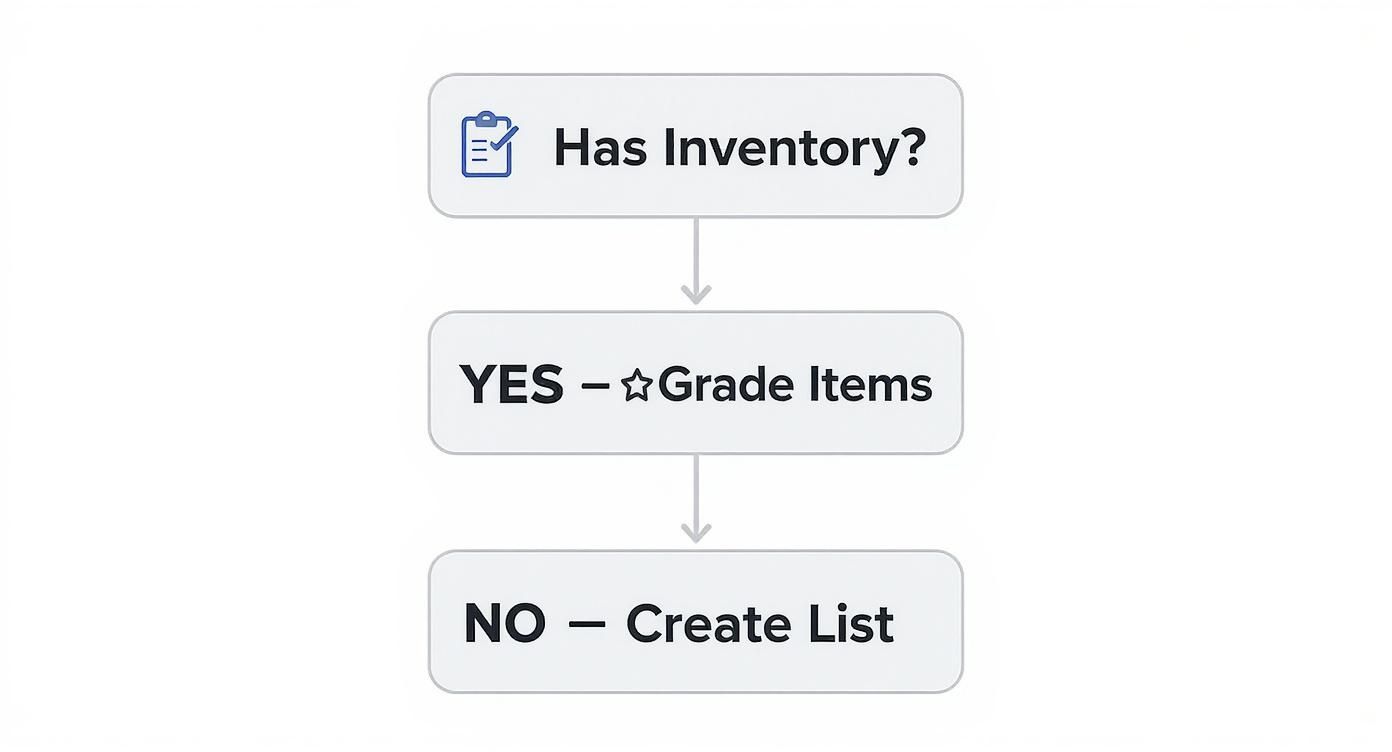
As you can see, it all starts with knowing what you have. That first step dictates where everything else goes.
Comparing Liquidation Options: Sell vs. Donate vs. Recycle
Deciding which path to take for each category of furniture can feel overwhelming. This table breaks down the core differences to help you make a more informed, strategic decision based on what matters most to your organization.
| Method | Potential Financial Return | Typical Timeline | Logistical Effort | Environmental Impact |
|---|---|---|---|---|
| Sell | Highest direct cash return, especially for premium brands. | Can be fast with a liquidator (days/weeks) or slow with DIY sales (weeks/months). | Low with a professional liquidator; very high with DIY. | Neutral. Extends the product lifecycle. |
| Donate | No cash, but a potential tax deduction can offset costs. | Varies widely based on charity's needs and capacity (weeks/months). | Medium. Requires coordination, scheduling, and proper documentation. | Positive. Gives furniture a second life in the community. |
| Recycle | No financial return; usually involves a disposal cost. | Fast. Can often be scheduled within a few days. | Low to medium, depending on the service provider. | Highly positive. Prevents landfill waste by recovering raw materials. |
Ultimately, a blended approach allows you to capture the best of each world—maximizing financial return from your top-tier assets, generating community goodwill with functional pieces, and upholding your environmental commitments with the rest.
The Professional Selling Pathway
For any furniture with real resale value, selling is your most direct path to getting some money back. You’ve really got two options here: work with a professional liquidator like Cubicle By Design, or try to sell it all yourself on platforms like Facebook Marketplace or Craigslist. While the DIY route might sound tempting, it quickly becomes a massive time-sink with absolutely no guarantee of success.
A professional liquidator, on the other hand, offers a clean, turnkey solution. They’ll assess your inventory, give you a bulk offer, and handle every single logistical detail of the removal. This is, by far, the fastest and most efficient way to clear out a space, especially when you’re staring down a hard lease-end date. Liquidators already have networks of buyers and the right equipment to move tons of furniture quickly and without damaging the building.
The biggest advantage of hiring a professional liquidator is certainty. You get a firm price and a guaranteed clear-out date. This completely removes the risk and stress of managing dozens of individual buyers, no-shows, and piecemeal pickups.
This hands-off approach lets you get back to running your business instead of becoming a part-time used furniture dealer.
Donating for Impact and Tax Benefits
Not every desk and chair is going to fetch a great price, but that doesn't mean they're worthless. Donating your functional, B-grade furniture to charities, schools, or local nonprofits is a fantastic way to give back to the community and bolster your company's reputation.
The trick is finding the right partner. Start calling local organizations to see if they even accept office furniture and, more importantly, if they have the means to come pick it up. A lot of smaller nonprofits just don't have a truck or manpower for large-scale removals, so you need to plan ahead.
Don't forget the paperwork. To claim a potential tax deduction, you absolutely need a detailed receipt from the 501(c)(3) organization describing the items you donated. You won't get cash, but a solid tax benefit can be just as valuable to your bottom line.
Responsible Recycling for End-of-Life Assets
Let's be real—some pieces are just too worn out, broken, or outdated to be sold or donated. For this C-grade (and below) inventory, responsible recycling is the only truly ethical and environmentally sound choice. Just sending it all to a landfill is not only terrible for the planet but can also come with surprisingly steep disposal fees.
Recycling partners are specialists. They know how to break down furniture into its core materials—metal, wood, plastic, fabric—so they can be repurposed. This is a huge win for any corporate sustainability goals and helps you meet those "broom-swept" conditions that are standard in commercial leases.
This final step is non-negotiable for a well-rounded liquidation plan. For a deeper dive, you can explore our professional services for office furniture installation and disposal, which covers everything from setup to removal. The global office furniture market is enormous and still growing—it's expected to jump from USD 101.46 billion to USD 183.53 billion by 2032. All that growth means a constant churn of old furniture, making responsible liquidation more critical than ever.
Making the Liquidation Project Happen
You've got your inventory sorted and know whether you're selling, donating, or recycling. Now it's time to get down to business. This is the execution phase, where all that careful planning turns into action. The goal is to run the used office furniture liquidation like a well-oiled machine—one that minimizes disruption, keeps your property manager happy, and hits your deadline without any eleventh-hour chaos.
The trick is to treat this like any other critical business project. That means you need a master timeline, seamless coordination between everyone involved, and a crystal-clear understanding of who is responsible for what. Every detail matters, from booking movers to clearing elevator and loading dock access with building management. Trust me, overlooking these small logistical steps can cause big, expensive delays and sour your relationship with the landlord.

Developing Your Master Timeline
Your timeline is the single source of truth for this whole operation. The best way to build it is to work backward from your hard deadline—usually, the day your lease ends and the space needs to be totally empty. This document isn't just a list of dates; it’s a playbook that assigns ownership to every task and shows how one step depends on another.
Your timeline should map out key milestones:
- Finalizing Agreements: Get signed contracts from your liquidator, donation centers, and any recycling partners.
- Internal Coordination: Pin down dates for IT to disconnect equipment and for employees to clear out their personal belongings.
- Building Management Sync: Book the freight elevator and loading dock access far in advance. These are almost always shared resources and get reserved quickly.
- Phased Removal: Plan which areas of the office will be cleared first to create an efficient workflow instead of a chaotic free-for-all.
A classic mistake is underestimating how long it takes to physically move everything out. Clearing a single floor of a corporate office can easily stretch over several days, especially if building rules restrict you to working after hours or on weekends.
Having this master plan brings clarity to your internal team and gives you a tool to hold your partners accountable.
The Critical 'Broom-Swept' Condition
Just about every commercial lease has a "broom-swept" or "broom-clean" clause buried in the fine print. This is a legally binding term that means you have to leave the space completely empty of all furniture, gear, and trash. If you don't, you risk losing your security deposit. Even worse, the landlord can hire their own crew to finish the job and stick you with an eye-watering bill.
Getting the space to "broom-swept" condition is the end game of your liquidation. It’s more than just getting the big stuff out. It means:
- Removing all furniture, including that one forgotten chair in a storage closet.
- Disconnecting and removing any non-permanent fixtures or extra cabling you installed.
- Sweeping and cleaning the floors to get rid of dust and small debris left behind.
Bringing in a professional liquidation partner is your best insurance policy against lease penalties. Clearing the space to meet these requirements is part of their standard service, guaranteeing a clean hand-off back to the building. If you want to dive deeper, our guide on professional office decommissioning breaks down the whole process.
Defining a Clear Scope of Work
To avoid surprise charges and arguments, you need an ironclad Scope of Work (SOW) with your liquidator or moving company. This document needs to spell out exactly what their service includes—and, just as importantly, what it doesn't. A vague agreement is basically an open invitation for extra fees and confusion on move-out day.
A good SOW will clearly define who is responsible for things like disassembling complex workstations, protecting floors and walls during the move, and properly disposing of items that couldn't be sold. Any reputable partner will insist on creating a detailed SOW with you before they start. It’s all about proactive communication to make sure everyone is on the same page from the get-go.
Maximizing Your Financial Return from Used Furniture
Let's be honest: the whole point of liquidating your used office furniture is to turn those surplus assets into a positive financial outcome. This isn't just about slapping a price tag on a desk. A smart financial strategy means understanding what your furniture is really worth on the secondary market, knowing how to negotiate, and looking at the entire financial picture—from sales revenue to potential tax write-offs and avoided costs.

The first step is a reality check. Even premium, high-end office furniture depreciates fast. A common mistake we see is pricing items based on the original purchase order. That's a surefire way to scare off any serious buyer. The price needs to reflect current market demand, the condition of the piece, and brand recognition.
Setting Realistic Prices
You have to put yourself in the buyer's shoes. What's the going rate for a similar item today? A quick search on resale marketplaces will give you a ballpark, but keep in mind that a liquidator is buying in bulk and has their own overhead to consider.
Several key factors will always influence the value:
- Brand Recognition: A chair from a brand like Herman Miller or Steelcase is always going to fetch a higher price than a generic, no-name equivalent. It’s that simple.
- Condition: This is where that A, B, and C grading system you did earlier really pays off. A-grade items might bring in 30-50% of their original value, while C-grade stuff might only be worth 5-10%.
- Market Demand: Neutral, modern designs are what everyone wants. That outdated cherry wood desk or those bulky, specialized filing systems? A much harder sell.
Don't forget that wider economic pressures are actually working in your favor here. The global market for used furniture is valued at around USD 47.17 billion and is projected to keep growing as everyone from startups to established companies leans into value purchasing to fight inflation.
Effective Negotiation Tactics
Whether you're dealing with one liquidator for the whole lot or selling pieces off to individual buyers, negotiation is part of the game. Your detailed inventory is your best friend here. It shows you’re organized, you know what you have, and you've done your homework. It puts you in a much stronger negotiating position.
When it comes to price, be prepared to be flexible, especially for a bulk sale. A liquidator's offer will always factor in their own costs for labor, transport, and warehousing. Their per-item offer might seem low, but the value of a fast, guaranteed, and complete removal is often worth far more than holding out for a slightly higher price on a few individual sales.
Remember, the best deal isn't always the highest offer. A lower but all-inclusive offer from a reputable liquidator who guarantees a "broom-swept" finish can save you from costly lease penalties and logistical nightmares, making it the more financially sound choice in the long run.
The Full Financial Picture
A truly profitable liquidation looks beyond just the sale price. You need to account for every associated cost and benefit to understand your actual net return. For example, what are the tax deductions you can claim for donated items? How do recycling fees stack up against the steep costs of sending everything to a landfill?
To make sure you're squeezing every bit of value from your furniture, it helps to understand the broader strategies behind asset sales. For a deeper dive, check out these tips on how to liquidate assets for maximum return. This bigger-picture knowledge will help frame your specific decisions. It also pays to connect with professional used office furniture buyers who can give you a real-time perspective on market rates and what's in demand.
Finally, never overlook the hidden costs of a poorly managed project. Underestimating labor, failing to account for potential damage to the building during the move-out, or missing your lease deadline can wipe out any profit you made from the sale in a hurry. A holistic financial view is absolutely essential.
A Few Common Office Furniture Liquidation Questions
Even the most buttoned-up liquidation plan will have a few loose ends. We get questions all the time from facility managers knee-deep in the process, so we’ve gathered the most common ones here.
Think of this as a quick-reference guide for those last-minute questions that always seem to pop up.
How Long Does a Typical Liquidation Take?
This is the big one, and the honest answer is: it really depends. Clearing out a small, 20-person office might only take a few days. But if you’re decommissioning several floors in a corporate high-rise? That could easily stretch into a month or more from the first inventory count to the final walkthrough.
So, what moves the needle on your timeline?
- The sheer volume of furniture. More stuff simply takes more time.
- Building logistics. Is there a dedicated freight elevator? A clear loading dock? Or will the crew be navigating tight stairwells after 6 PM? Access is everything.
- Your chosen method. Working with a professional liquidator is almost always the fastest path. Trying to sell everything yourself, piece by piece, can drag on for months.
Your best bet is to give yourself a runway. Start the planning process at least 2-3 months before you need the space cleared. That buffer is invaluable for getting quotes, scheduling the work, and avoiding a last-minute scramble.
What Happens to Unsellable Furniture?
It's a simple fact of every job: some furniture just won't have any resale value. Maybe it’s broken, badly worn, or a style that nobody wants anymore. For these items, responsible recycling is the only way to go.
Any good liquidator will have a network of certified recycling partners. These are the folks who can break down an old desk or chair into its core components—metal, wood, plastic, fabric—so those raw materials can find a new life instead of ending up in a landfill.
You'll likely have to pay a fee for recycling, but it's a necessary part of a modern, green-minded liquidation. The cost is often on par with landfill tipping fees, and it’s a much better story to tell for your company’s sustainability goals. You're not just clearing a space; you're doing it the right way.
This approach lets you meet your "broom-swept" lease obligations while also making an environmentally sound choice.
What Are the Biggest Mistakes to Avoid?
We've seen it all, and a few common blunders can turn a smooth project into a complete headache. If you can sidestep these, you’re already ahead of the game.
The most common mistake, by far, is waiting too long to start. Procrastination is the enemy of a successful liquidation. A rushed timeline shrinks your options, weakens your negotiating power, and almost always costs you more money.
Another pitfall is having unrealistic expectations about what your furniture is worth. The used office furniture market doesn't care what you paid for it new. Its value is based on current supply, demand, and condition. A quick look at what's available for sale online will give you a dose of reality.
Finally, not vetting your liquidation partner properly can be a catastrophe. An uninsured crew can cause thousands in building damage, a shady operator can hit you with hidden fees, and an unreliable one might just not show up, leaving you in a huge bind with your landlord. Always, always ask for references and a certificate of insurance. A little due diligence upfront can save you from a disaster. Taking a look at our main page and cubicles category can help you get a better feel for what to expect.
Can I Liquidate Filing Cabinets That Held Sensitive Data?
Absolutely, but you need to be incredibly careful. The responsibility for making sure that data is gone for good rests squarely on your shoulders, not the liquidator's.
Before a single filing cabinet or storage credenza leaves your control, it has to be completely empty. That means a physical, hands-on check of every single drawer.
If you find any old hard drives, backup tapes, or other media, they need to be professionally destroyed. A reputable liquidator can connect you with a certified data destruction service that provides a certificate of destruction. For compliance with regulations like HIPAA or GDPR, this isn't just a good idea—it's non-negotiable.
Ready to design a new workspace or need expert help with your office transition? The team at Cubicle By Design is here to support you every step of the way, from space planning with our Cubicle Designer to sourcing the perfect furniture for your needs.