

A lot of office managers run into the same moment. The workstations are installed, the team is settling in, and then the blank cubicle walls start to feel harsher than expected. Someone asks if they can hang family photos. Another person wants a framed print. Facilities worries about damage, lease terms, and whether adhesive strips will peel off in a week.
That's the key question behind how to hang pictures in cubicle spaces. It isn't just about finding a hook. It's about matching the hanging method to the wall material, keeping the installation safe, and avoiding a mess for HR, facilities, or the next reconfiguration.
The practical answer depends on what the panel is made of. Fabric, glass, and metal each behave differently. A method that holds well on one surface can fail quickly on another, or leave marks you'll regret when the office layout changes. If you're managing a larger workplace, it also helps to think about the cubicle system itself, whether you're working with custom office cubicles or more open glass office partitions.
How to Hang Pictures in Cubicle
Why Personalizing Your Cubicle Matters
A new workstation install often looks clean on day one and impersonal by day three. The panels are straight, the finishes match, and everything functions. Then employees start asking the practical question. Can they hang a family photo, a small framed print, or a calendar without causing damage or breaking policy?
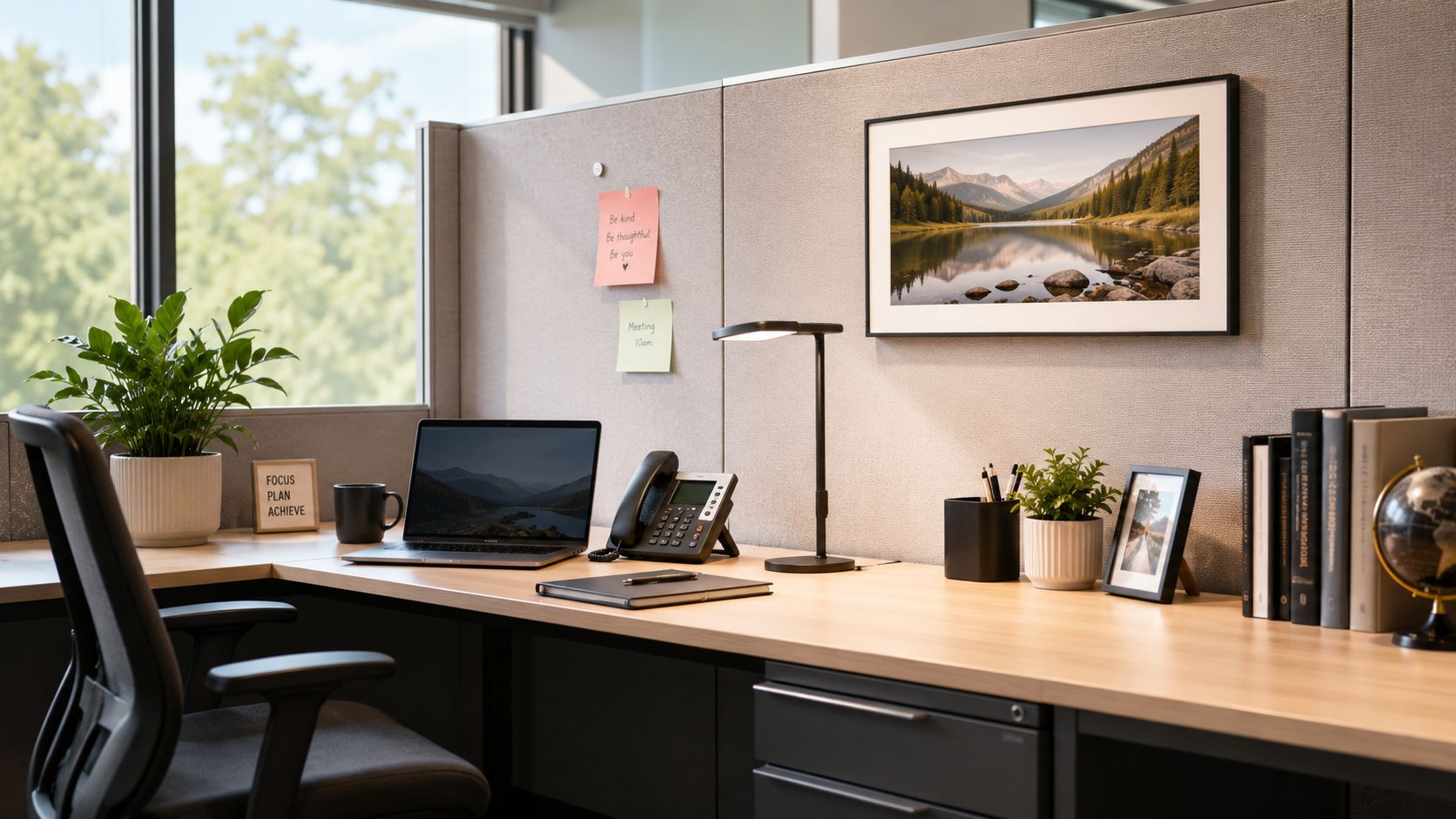
That request matters more than it may seem. In offices I've worked on, a few personal items can make a standard cubicle feel assigned, cared for, and easier to settle into. People tend to keep their work area neater when the space feels like theirs, and that usually shows up in how consistently they use the workstation.
The benefit is practical, not just decorative. Personal touches can soften tall panels, reduce the temporary feel of a newly installed station, and help an office read as occupied instead of staged. In hybrid workplaces, that difference is even more noticeable because employees compare the office directly with the comfort and familiarity of home.
A cubicle does not need much decor. It needs enough to feel intentional.
Good personalization also helps office managers set a better standard across the floor. A workstation with one or two well-chosen items usually looks more professional than a panel covered edge to edge with mixed décor, loose papers, and oversized frames. If you want visual examples before setting those standards, this roundup can inspire your office with wall art without pushing the office toward clutter.
The material of the cubicle wall still matters. Fabric panels can accept certain pins and panel hooks. Glass and metal need completely different methods. That is why office-wide decoration rules work better when they follow the panel type instead of using one blanket rule for every station. If you are building a policy for fabric workstations, these examples of cubicle wall decoration are a useful starting point.
The goal is simple. Let people personalize their space in a way that looks professional, stays secure, and does not create a facilities or compliance problem later.
First Steps Before You Hang Anything
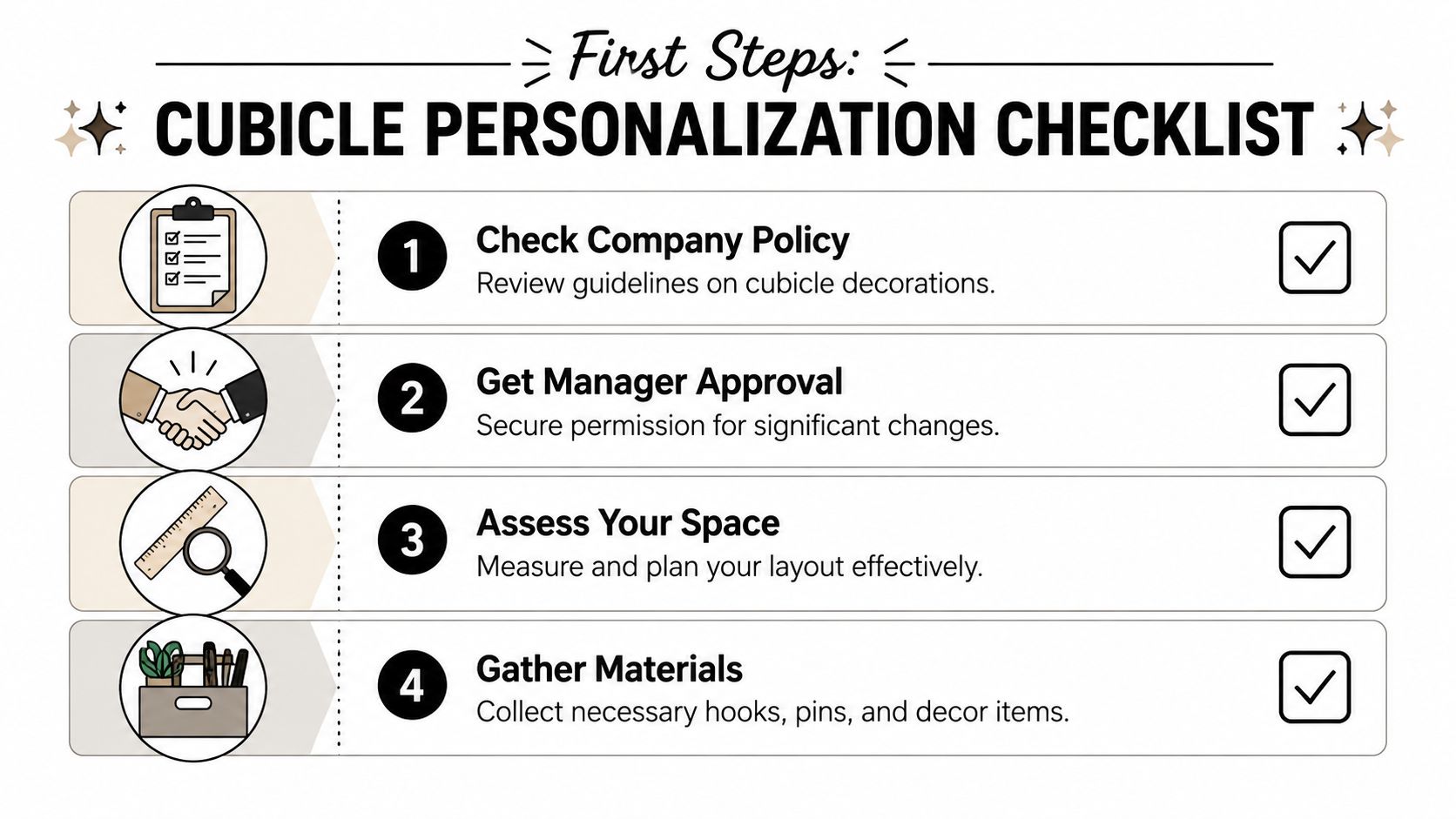
A frame goes up on Monday. By Friday, Facilities is pulling it down because the adhesive failed on glass, the panel fabric is puckered from the wrong pin, or the item violates a no-penetration rule in the lease. That is the pattern to avoid.
Check policy before hardware
Office managers usually focus on the picture first and the wall second. In practice, policy should come first, especially in buildings with leased furniture, fire-rated assemblies, or strict maintenance standards. Some employers allow push pins in fabric panels. Others prohibit any puncture, residue, or modification because they are trying to control repair costs and keep panel systems in spec.
Ask these questions before anyone starts hanging decor:
What is allowed on each wall type
Fabric, glass, metal, and laminate often have different rules, even within one office.Are penetrating fasteners prohibited
If the answer is yes, that rules out pins, hooks, and many panel clips.Who approves heavier items
A paper print is one category. A glazed frame or shelf is another.
For a broader reference on hardware types and load behavior, see Colorado Art Services on art hanging. It gives useful context on why some products rely on friction, some on mechanical support, and some on adhesive bond strength.
Identify the wall material correctly
This step saves time.
I have seen plenty of offices call every partition a fabric cubicle wall, even when the face is vinyl, laminate, steel, or glass. Hardware selection falls apart fast when the surface is misidentified, and so do office-wide decoration policies.
Use a quick field check before ordering anything:
| Wall surface | What it feels like | What usually works |
|---|---|---|
| Fabric panel | Textured, slightly soft | T-pins, cubicle clips, modified anchors |
| Glass panel | Smooth, reflective | Glass-safe adhesive or top-rail mechanical hanging |
| Metal panel | Magnetic, hard | Magnetic hooks and clips |
| Vinyl or laminate | Smooth, coated | Surface-rated adhesive or over-panel hardware |
If the office needs a cleaner way to handle rotating notes, snapshots, and temporary items, adding a dedicated cork board and magnetic board often works better than letting staff improvise on every panel surface.
Plan the layout before making holes or marks
Good placement solves half the problem before hardware enters the picture. One small frame hung too high can make a workstation feel cramped, and a cluster of items near a panel seam often shifts or sags over time.
Measure the usable area, check for power poles or cable access, and keep decor clear of shared worksurfaces, overhead bins, and sightlines. In open plans, I usually recommend fewer pieces, smaller formats, and a consistent top line. The result looks more intentional, creates less visual noise, and is easier for Facilities to maintain.
Hanging Methods for Fabric Cubicle Walls
Fabric panels give you more options than glass or laminate, but they still reward the right hardware choice. In practice, the best method depends on what you are hanging, how long it needs to stay up, and whether Facilities will need to remove it without repairing the panel afterward.
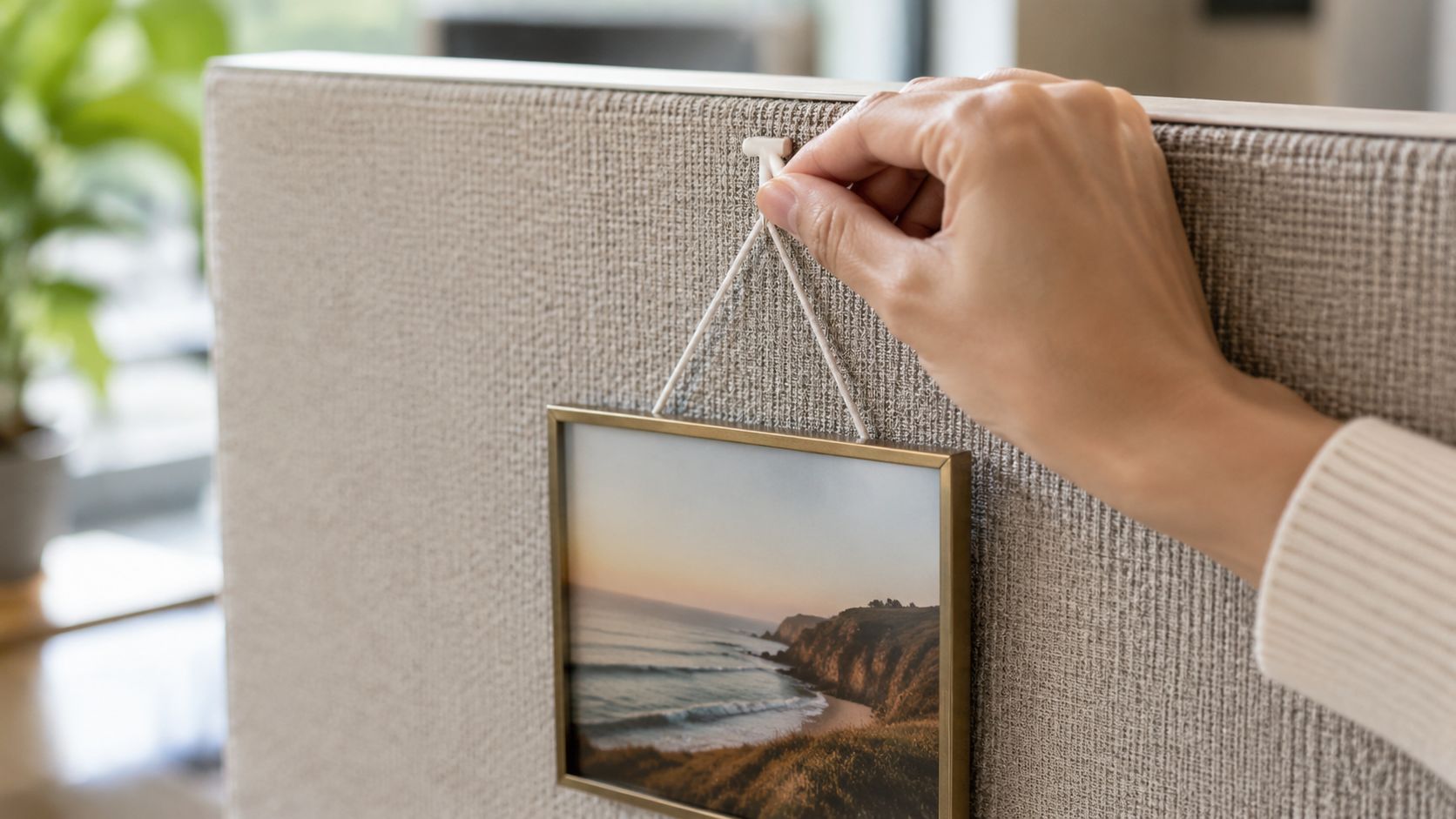
The quick options for light items
For paper prints, photos, and thin calendars, fabric-safe push pins or T-pins are usually the simplest answer. They install fast, leave small punctures, and work well for items that do not put much pull on the panel face. T-pins also help when you want to support the edge of a poster or photo without punching through the image itself.
Clip-style hardware is another good fit for lightweight pieces. A push-pin clip or bulldog-style cubicle clip holds the panel with the pin and grips the item at the edge, which is useful for swapping schedules, recognition notes, or seasonal decor without adding new holes every time.
Where adhesive strips usually disappoint
Adhesive products tend to underperform on fabric because the bond is only as good as the surface contact. On a textured panel, the strip grabs the high spots while the fabric compresses under load. That is why strips that seem fine on a painted wall often peel early on a cubicle panel, especially in warm offices or near HVAC airflow.
They also create policy headaches. A failed strip can drop a frame onto a keyboard, chip a shared worksurface, or leave residue that violates lease return standards. For offices trying to keep panels clean and consistent, adhesives are usually the first method I rule out on fabric.
Here's a helpful visual walk-through before attempting a DIY hanger:
The modified J-hook method for framed art
For a small framed photo or lightweight print, a modified J-hook paperclip can hold better than tape or standard adhesive strips if the fabric panel has enough density. It is a practical workaround, not a universal fix. I would use it for one modest frame at an assigned workstation, not for anything heavy, valuable, or hanging over electronics.
Use it when you need:
- More holding strength than a basic pin for a small frame
- A low-profile hanger that stays fairly discreet
- A non-adhesive method on panels that shed strips or show residue
Shape matters here. Open the double loop, turn the ends outward toward the back of the fabric, and insert the hook into the weave at an angle so the load spreads across more material instead of stressing one point. Bending only the tip concentrates force and makes the clip more likely to deform or snap.
When to step up to panel-supported accessories
Some offices want more than a few photos. If staff are hanging framed art, document pockets, or personal storage, stop relying on the fabric skin alone and move to hardware that uses the panel structure. That approach is safer, looks cleaner, and usually fits office standards better because the load transfers to the top rail or frame instead of pulling on the fabric.
For heavier accessories, cubicle hanging shelves are built around that same principle. The panel frame does the work, not just the fabric face. That is a better long-term setup in active workplaces where appearance, safety, and easy reconfiguration all matter.
Solutions for Glass and Metal Surfaces
A glass return panel and a steel storage tower can sit in the same workstation, but they do not accept the same hardware. Treating them as one category is how frames slide, adhesives fail, and facilities teams end up scraping residue off finished surfaces.
What works on metal
Start by confirming that the surface is magnetic. Some cubicle components are painted steel, while others are aluminum, laminate, or vinyl over substrate. A basic magnet test saves time.
On magnetic steel, magnetic hooks and magnetic clips are usually the cleanest option for lightweight photos, paper pieces, and small signs. They reposition easily, leave the finish intact, and fit offices that do not allow punctures or adhesive residue. Holding strength still matters. A magnet that manages a postcard may not hold a small glazed frame, especially if the panel gets bumped during cleaning or daily traffic.
Use wider magnets or paired magnets for better stability, and keep the load close to the surface. The farther a frame projects outward, the more likely it is to twist or slip.
What works on glass and smooth panels
Glass needs hardware made for smooth, non-porous surfaces and a removal plan that will not damage film, coatings, or adjacent trim. Before installing anything, check whether the glass is tempered, filmed, frosted, or part of a demountable system. Some offices prohibit suction cups and adhesive tabs on glass because they can interfere with cleaning standards or leave visible outlines over time.
For smooth vinyl-coated panels, light hook-and-loop strips can work for small, low-value pieces if the manufacturer approves that surface. For anything with real weight, I would move to a top-supported method that transfers the load to the panel structure instead of relying on the face material alone. That setup is more predictable, looks cleaner, and usually aligns better with facility standards.
Hanging wire setup matters here. A wire pulled too flat lets the frame tilt and swing. Keep the wire tensioned so the frame hangs tighter to the panel, and use two support points when possible instead of one centered hook.
The policy and acoustics angle office managers should check
Glass partitions look open because they stay visually quiet. Too many frames, clips, and layered personal items break that effect fast. In offices using glass cubicle wall systems, I usually recommend fewer pieces, smaller formats, and consistent placement heights across a department. The result feels more orderly and distracts less in shared or hybrid environments.
Policy matters just as much as hardware. Some landlords and corporate facility teams restrict what can be attached to glass, metal end panels, or shared-facing surfaces. Fire and life-safety rules can also come into play if employees start covering sightlines, unit numbers, or access to electrical raceways. Before approving a decorating standard, set clear limits by wall type, allowed hardware, and maximum size so staff can personalize their stations without creating a maintenance or compliance problem.
Respecting Weight Limits for Safety and Success
Weight is where a simple decorating decision turns into a safety issue. A frame that falls from eye level can damage the panel, break the frame, or land on equipment. In denser workstation runs, it can also become a liability problem the office could have prevented with a basic limit policy.
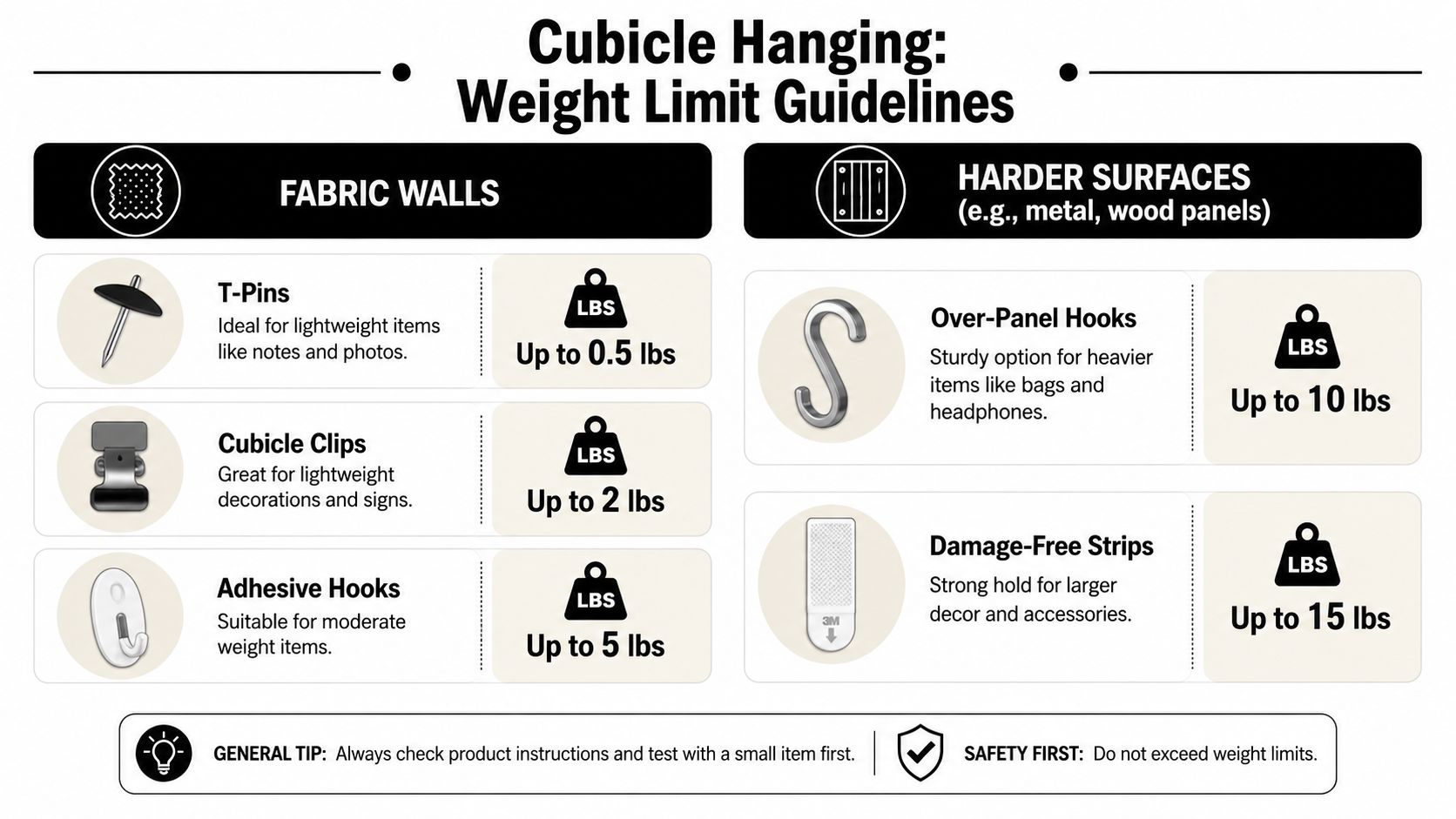
The clearest threshold to remember
A standard safety threshold for most adhesive mounting squares on typical cubicle surfaces is 2.25 lbs (approx. 1 kg). Exceeding this limit often requires mechanical cubicle board hangers that utilize the wall's top rail for support, according to Picture Hang Solutions' workspace hanging guide.
That number is useful because it gives office managers a simple cutoff. Under that threshold, lightweight adhesive products may be reasonable if the wall material and policy allow them. Over it, you should start thinking in terms of mechanical support.
Why failures happen
Most failures come from one of three problems:
Too much weight on surface adhesive
The bond may hold at first, then let go as the material shifts or the adhesive ages.Weight concentrated at one point
A single hanger carries all the load, which increases pull-out risk and tilt.Ignoring the panel structure
The face material isn't always the strongest part of the system. The top rail often is.
For anything that feels “borderline heavy” in your hand, don't trust a surface-only solution. Use hardware that transfers load to the panel frame.
Better support for heavier items
A safer approach is to distribute the load across two points or use a hanger that grabs the top of the panel. That's especially important for framed art, memo boards, or accessories employees may touch frequently.
If your office uses more permanent workstation storage, a wall mount hutch follows the same principle. It relies on the cubicle's structure rather than the decorative face material. That's the right mental model for any heavier visual item too.
Troubleshooting Common Issues and Final Tips
Even when the method is right, small installation mistakes can make a picture look sloppy or fail early. Most of the fixes are simple.
If the frame keeps tilting
Start with the hanger spacing. On fabric, use two support points for wider frames when possible. On top-rail systems, check the wire tension and make sure it isn't hanging too flat.
Also look at the frame itself. A bowed backing board or uneven wire attachment can create a tilt problem that has nothing to do with the cubicle wall.
If adhesive leaves residue
Work slowly. Don't scrape at the panel with a metal blade or hard tool. Use the removal method recommended for that adhesive type, and test any cleaner on an inconspicuous spot first.
For glass, hazing is the main concern. For fabric, the risk is fraying or matting the face.
If a hanger fails
Treat one failure as a warning, not a one-off annoyance. Recheck the wall type, the actual item weight, and whether the support method is surface-based or mechanically anchored.
A few finishing habits make a big difference:
Use a small level
Eyeballing looks fine until you step back.Keep spacing consistent
Matching gaps between items instantly makes a cubicle look more professional.Limit visual density
A workstation should still feel calm and usable.
If the decorating question turns into a broader workspace reset, a planning tool like the Cubicle Designer can help map panel heights, privacy, and accessory needs before changes ripple across the floor. And if you're standardizing decor policies in high-density team environments, it helps to review workstation layouts built for scale, such as call center cubicles, where consistency and durability matter every day.
If you're planning new workstations, updating older panels, or trying to set decoration standards that won't create problems later, Cubicle By Design offers modular workplace solutions and planning resources for offices that need practical, code-aware setups.