
Improving employee productivity isn't just about managing tasks better. It's about creating an environment where people can actually thrive. A truly productive office combines a supportive culture and clear goals with a physical workspace that removes friction and lets people do their best work. At Cubicle By Design, we've seen firsthand how the right office design can transform a team's output.
Understanding the Real Cost of Workplace Distraction
That modern "productivity crisis" you keep hearing about? It's not just about people getting distracted by their phones. More often than not, the problem is rooted in the physical office itself. As an office manager, you're in the perfect position to make real, tangible changes that go way beyond typical HR metrics.
Think about it. Outdated layouts, bad ergonomics, and a total lack of flexible spaces are silent killers of your bottom line. These aren't just minor annoyances. Imagine trying to do deep, focused work in an open-plan office where chatter is constant, or a call center where terrible acoustics lead to burnout and high turnover. These environments are actively working against your team.
The good news? Investing in your workspace is a direct investment in your team's output.
The Financial Impact of Disengagement
The link between a frustrating office and low productivity becomes crystal clear when you look at employee engagement numbers. It's a bit staggering, really. Only 21% of workers globally report feeling genuinely engaged at their jobs.
This massive disconnect has created a productivity drain that experts estimate costs the global economy a whopping $438 billion. On the flip side, business units with engaged employees see 78% less absenteeism and are 14% more productive than their disengaged peers. If you want to dig into the numbers yourself, you can read the full research on employee productivity statistics.
This shows that a well-designed office isn't some luxury—it's the foundation for a focused, engaged, and highly productive team. Giving people the right physical tools and spaces is one of the most direct ways to show them they're valued and set up for success.
Common Productivity Killers and Their Solutions
Pinpointing the specific problems in your office is the first step toward fixing them. A lot of the most common workplace frustrations can be solved with thoughtful design changes. By tackling the root causes of distraction and discomfort, you can unlock some serious gains in both efficiency and morale.
Let's look at some common issues and their practical, design-based solutions.
Productivity Killers vs. Productivity Boosters
| Common Productivity Killer | Workplace Design Solution |
|---|---|
| Constant noise and interruptions | Implementing acoustic panels, high-walled cubicles, or designated quiet zones. |
| Lack of private space for focused tasks | Creating "focus pods" or installing private office cubicles for deep work sessions. |
| Poor ergonomics leading to discomfort | Investing in adjustable chairs, sit-stand desks, and proper monitor setups. |
| Inefficient layout causing wasted time | Reconfiguring the office with modular furniture like our workstation cubicles to create logical workflows and adjacencies. |
By addressing these environmental factors, you get to the heart of the productivity problem. For instance, making sure every employee has a space where they can control their level of interaction is a game-changer. Thoughtful planning of office cubicle privacy can significantly boost concentration and reduce the mental drain from constant interruptions.
Key Takeaway: The physical workspace is not a passive backdrop; it is an active participant in your team's daily performance. Every element, from the height of a desk to the privacy of a cubicle, either supports or hinders productivity.
Here at Cubicle By Design, we believe that designing a better workplace starts with understanding and eliminating these daily frustrations.
Designing Workspaces That Actually Work
Let's move beyond productivity theory and get our hands dirty with the physical office itself. The old one-size-fits-all approach to office design? It's officially dead. Today's teams are diverse, with different tasks and workflows, and they need a mix of environments to really hit their stride.
The key to unlocking that potential is creating dedicated zones. It’s all about carving out specific areas for different kinds of work, from deep, heads-down focus to high-energy brainstorming sessions. This doesn't mean you need a massive construction budget; it just means being smarter with the space you have.
Think about a growing tech startup. They’ve got developers who need total silence to code and a sales team that thrives on collaborative buzz. By using modular furniture, they can set up quiet pods and open huddles without putting up a single permanent wall, creating a workplace that actually works for everyone.
This flow chart shows the direct line from a distracting, costly environment to an engaged, productive team—all through thoughtful design.
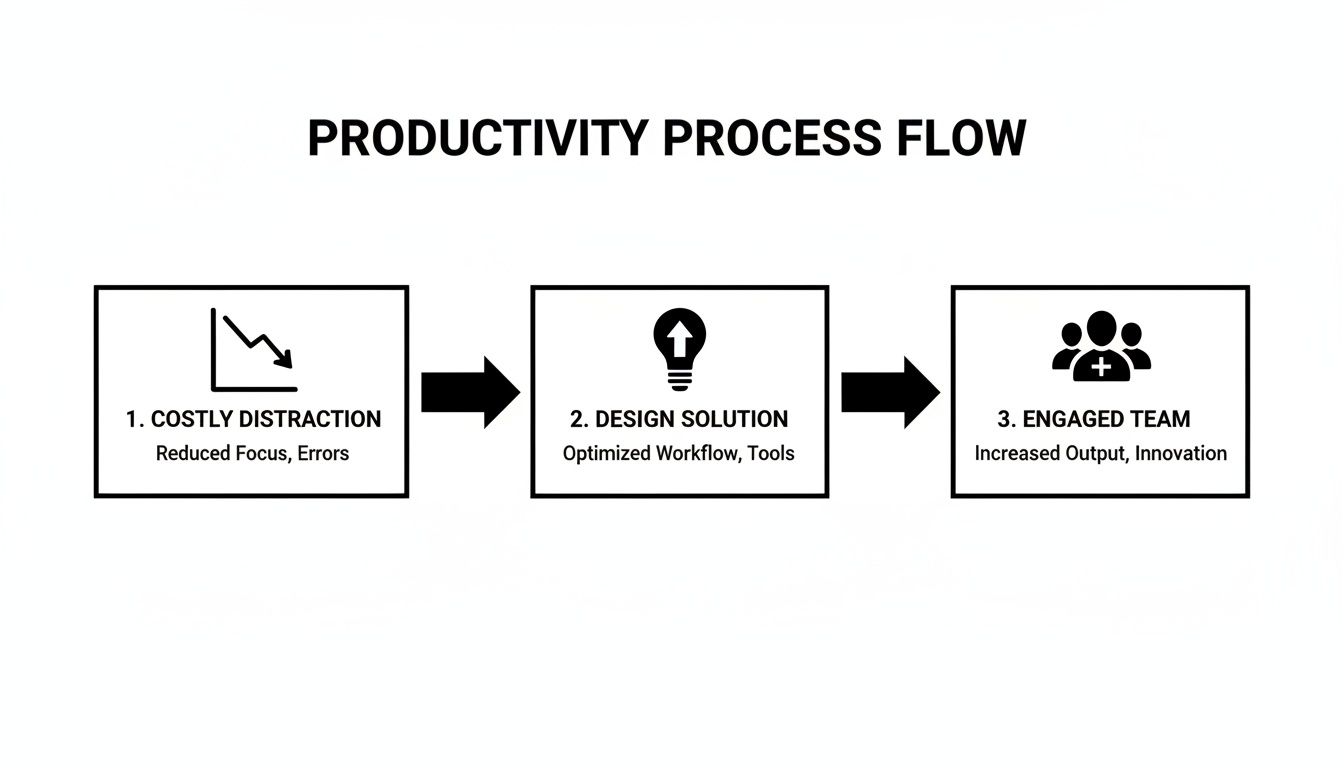
As you can see, intentional design directly counters the distractions that drain your bottom line, leading to a more focused and motivated crew.
Tailoring Spaces for Specific Tasks
First things first: you have to analyze how your teams actually work. Do they spend all day on the phone? Do they need huge surfaces for creative layouts? Or do they need absolute silence for number-crunching? Answering these questions helps you build a layout that supports their daily grind instead of fighting against it.
Managers, for instance, almost always need confidentiality for one-on-one meetings and sensitive calls. Private office cubicles can provide that necessary acoustic separation without the cost and permanence of drywall construction. They create an accessible yet distinct space for leadership to operate effectively.
On the flip side, you have teams that feed off constant communication. For them, versatile, open-concept workstation cubicles can spark that synergy and make quick problem-solving a breeze. These setups encourage easy interaction while still giving each person their own home base. Getting the right mix of open and private spaces is what creates a balanced, high-functioning office ecosystem. For a deeper dive, our guide to office space planning and design has more strategies to explore.
The Power of Small Environmental Changes
Boosting productivity isn't always about grand, sweeping changes. Sometimes, the biggest wins come from small, budget-friendly tweaks to the immediate work environment. Things like acoustics, lighting, and ergonomics play a huge role in daily comfort, focus, and—ultimately—output.
Bad acoustics, for example, are one of the top killers of concentration. A few simple fixes can make a world of difference.
- Acoustic Panels: Adding these to walls or as desk dividers soaks up ambient chatter and echo, making it much easier to focus.
- Sound-Masking Systems: These systems emit a soft, uniform background sound (like airflow) that masks distracting conversations and sudden noises.
- Strategic Layouts: Simply arranging desks so that noisy, high-traffic areas are separated from quiet-focus zones can be incredibly effective.
Better Lighting and Ergonomics
Lighting is another huge piece of the puzzle. Dim or harsh lighting can cause eye strain, headaches, and fatigue—all of which are productivity vampires. Maximizing natural light is always the best-case scenario, but where that isn't an option, giving employees adjustable task lighting puts them in control. One study even found that well-designed office lighting can boost productivity by as much as 23%.
Finally, there's ergonomics. Let’s be honest: an employee who is physically uncomfortable simply cannot be fully productive.
Providing ergonomic seating and adjustable desks isn't a perk; it's a fundamental requirement for a high-performing workplace. When people are comfortable and their bodies are properly supported, they can focus better, work longer without fatigue, and experience fewer work-related injuries.
Investing in these small but critical improvements does more than just boost numbers; it shows your team you care about their well-being. These changes create a more comfortable, focused environment and signal a clear commitment to building a better place to work. This foundation of physical comfort is non-negotiable for any serious productivity strategy.
Creating a Destination Office for Hybrid Teams
The whole idea of "the office" has changed. With hybrid work becoming the norm, it's no longer the place everyone has to show up to every single day. Instead, the office has a new job: it's the hub for connection, real collaboration, and building the company culture—all the things you just can't quite replicate over a video call.
To get people excited about coming in and actually boost their productivity when they're here, you need to create a "destination workplace." This means your office has to offer something valuable that they simply can't get at home. Think seamless tech, a variety of meeting spaces, and a genuine sense of community.
Bottom line: The office now has to earn the commute.
Why the Office Still Matters
While working from home has its obvious perks, the office provides something different but equally valuable. The data backs this up. According to ActivTrak's State of the Workplace report, fully remote workers squeeze out about 29 minutes of extra productive time each day.
But here's the interesting part: that same report found that hybrid workers are just as productive as their in-office colleagues and are a whopping 33% less likely to quit. You can find more insights from this workplace report here.
This tells us a well-thought-out office isn't just a place to put desks—it's a powerful tool for keeping your best people and keeping them engaged. It’s the anchor for your culture, where those spontaneous "aha" moments happen in the hallway.
Rethinking the Office Footprint With Hot Desking
As an office manager, you might be facing the challenge of shrinking your physical footprint while making the space you keep more appealing than ever. This is exactly where strategies like "hot desking" or "hoteling" shine, especially when paired with flexible furniture.
Hot desking is simple: instead of a permanent desk, employees grab any available workstation when they come in. For a hybrid team, the benefits are huge:
- Optimized Space Usage: No more rows of empty desks on Tuesday when half the team is remote. You can operate in a smaller, more cost-effective space that always feels alive.
- Increased Flexibility: The office can handle fluctuating headcounts without feeling like a ghost town one day and a sardine can the next.
- Encouraged Cross-Team Interaction: When people sit in different spots, they naturally bump into colleagues from other departments. This breaks down silos and sparks new conversations and ideas.
A great hot-desking setup is about more than just getting rid of assigned seats. It's about providing a variety of well-equipped, reservable spaces that let people choose the best spot for the task at hand—whether that's a quiet pod for deep focus, a collaborative bench for a quick brainstorm, or a private cubicle for a confidential call.
Designing a Fluid Workspace
For a hot-desking model to actually work, the environment itself has to be incredibly adaptable. This is where modular furniture becomes your best friend. You need workstations that can be easily rearranged to support everything from solo deep work to group projects. The huge variety of modern cubicles available today from Cubicle By Design gives you the perfect toolkit to build this kind of fluid space.
For example, you could use low-walled workstation cubicles to create touchdown zones for quick tasks and teamwork. At the same time, you can add some fully enclosed private office cubicles that team members can book when they need to make sensitive calls or truly concentrate without distractions.
This mix-and-match approach ensures everyone can find an environment that works for them, no matter what their schedule looks like. It transforms the office from a static grid of desks into a dynamic resource that people actually want to use. By understanding how to leverage new office trends to enhance the hybrid work environment, you can create a true destination that helps your team thrive.
Let People Make Their Workspace Their Own
Productivity isn't just about output metrics and hitting targets. It's deeply tied to how an employee feels in their space—their comfort, their sense of ownership, and even their psychological safety. When you empower your team to control and personalize their immediate environment, you'll see a dramatic boost in morale and a real sense of belonging that translates into measurable performance gains.
This flies in the face of the old-school, top-down approach to office design. Instead of forcing a uniform look on every single workstation, this strategy recognizes a simple truth: the people doing the work usually know what they need to do it well.
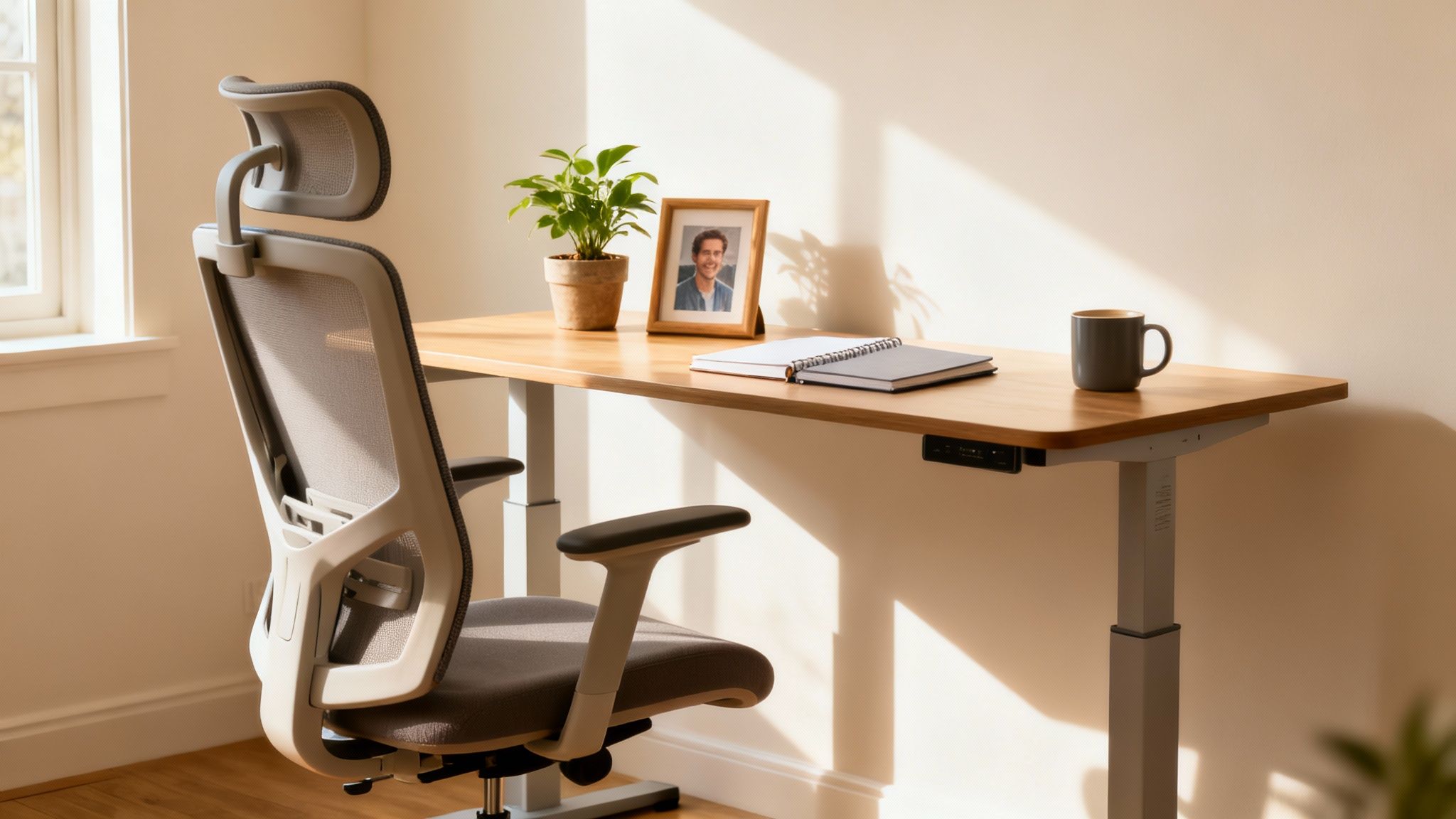
Start with Small Acts of Ownership
You don't need a massive office overhaul to start seeing results. Even small bits of control can have a huge impact on an employee's day-to-day experience and their connection to the company.
Think about the simple power of choice. Letting an employee pick their own task chair or giving them a sit-stand desk sends a clear message: we trust you and value your comfort. These small decisions create a sense of agency that leads directly to higher job satisfaction.
When employees feel like they have a stake in their physical environment, they take more pride in their work and feel a stronger connection to the company's mission. This psychological ownership is a quiet but potent driver of productivity.
Other simple, high-impact options include:
- Personal Task Lighting: Let people adjust the brightness and color temperature of their own desk lamp.
- Accessory Choices: Offer a small budget for things like monitor stands, ergonomic keyboards, or desk organizers.
- A Touch of Green: Encourage employees to bring in small desk plants, which are proven to reduce stress.
These are low-cost initiatives that deliver high value, creating an environment where people feel seen and supported. You can see how this concept expands by learning more about creating personalized workspaces with custom cubicles and how it fits into the bigger picture.
Scaling Up: Team-Level Customization
Once you see the benefits of individual choice, the next logical step is to get entire teams involved in designing their own department layouts. This collaborative approach ensures the workspace is perfectly tuned to the team's specific workflow, communication style, and collaborative needs.
This is where modern tools can make a real difference. For instance, the online Cubicle Designer tool from Cubicle By Design puts the power of space planning directly into your hands—or even into the hands of your department heads. It takes the guesswork out of the process, allowing teams to build a virtual model of their ideal setup before a single piece of furniture is even ordered.
A Real-World Customization Scenario
Imagine a marketing agency with distinct teams for content, graphic design, and account management. The leadership team noticed the open-plan layout was great for the account managers who needed to talk all day, but it was a nightmare for the writers and designers who needed to focus.
Instead of imposing a new layout, they empowered each department head to design a new "pod" for their team.
- The Content Team: They used a design tool to opt for higher-walled workstation cubicles with added acoustic panels, creating a quiet, library-like atmosphere to kill distractions.
- The Design Team: They went with lower partitions but larger, L-shaped desks to accommodate multiple monitors and physical proofs. They also dropped a small collaborative table in the center of their pod for quick huddles.
- The Account Team: They kept a more open design for easy conversation but added several small, enclosed private office cubicles nearby that anyone could book for confidential client calls.
The result? A workspace perfectly tailored to how each team actually worked. Within three months, the company measured a 15% increase in project completion rates and a major jump in employee satisfaction scores. This just goes to show that trusting your teams to design their own environment isn't just a morale booster; it's a smart business strategy.
Integrating Technology for a Frictionless Workflow
A modern office that actually works is a smart one. The connection between your physical office layout and its tech backbone can genuinely make or break your team's day-to-day efficiency. We've all seen it: people hunting for a free power outlet, wrestling with a mess of cables under their desk, or fighting with clunky AV gear in a meeting room. These aren't just minor annoyances—they're productivity killers.
The only way to solve this is to stop treating technology as an add-on. It has to be designed into the very fabric of the workspace from day one. When you anticipate your team's needs, you remove all that friction and give them back valuable time.
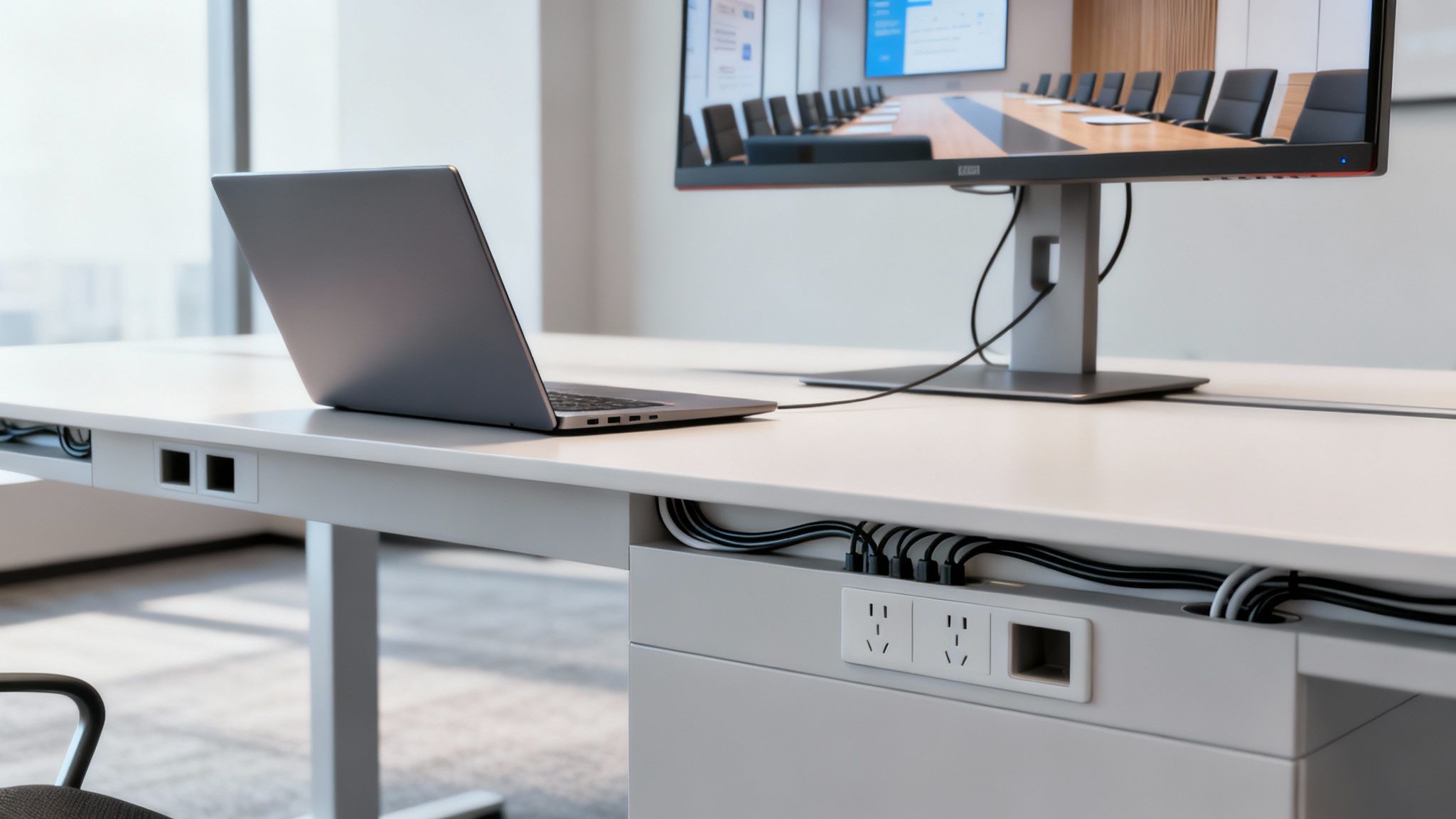
Building a Foundation of Seamless Connectivity
What stops work faster than a dead laptop or a dropped Wi-Fi signal? Nothing. To really boost productivity, every single person needs reliable, easy access to power and data, right where they're working. This is where furniture with built-in tech solutions becomes a game-changer.
Modern modular furniture is designed with exactly this in mind. These systems have built-in raceways for power and data cables, which keeps cords neatly tucked away, out of sight, and safely off the floor. No more tripping hazards or messy "rats' nests" of wires.
When power and data are integrated directly into the workstation, people don't waste time searching for outlets or untangling cords. This creates a clean, safe, and efficient environment where they can just plug in and get to work.
Picture a busy call center where every single workstation is pre-wired. That kind of setup doesn't just cut down on downtime; it makes reconfiguring the office or moving teams around incredibly simple. The entire electrical system is part of the furniture, creating a true plug-and-play environment. For a deeper dive into the nuts and bolts, our guide on a proper cubicle electrical setup is a great resource.
Smart Integration for Collaborative Spaces
A frictionless workflow needs to extend beyond the individual desk. Your meeting rooms, huddle spaces, and brainstorming pods have to be just as seamless. When the tech in these shared areas just works, it sparks spontaneous collaboration and quick decision-making.
Think about these practical touches:
- Integrated Displays: Small meeting pods with built-in screens let teams share their work instantly. No more fumbling with projectors or trying to find the right adapter.
- Accessible Charging Ports: Placing USB ports and power outlets directly into common area tables or seating means devices stay charged during those informal chats.
- Simplified AV Controls: User-friendly, one-touch systems for video calls and presentations slash setup time and prevent the technical glitches that kill a meeting's momentum before it even starts.
These integrations remove the barriers to great teamwork. When the technology is intuitive and reliable, your team can focus its energy on solving problems, not troubleshooting equipment.
The Broader Tech Ecosystem
Of course, a truly integrated office goes beyond physical hardware. You have to connect the digital tools your teams use every day, too. Fragmented software and manual data entry are huge time-wasters. The goal is to create an ecosystem where information flows smoothly from one platform to another.
For example, a sales team's productivity can skyrocket when their communication tools and client management systems talk to each other. Exploring a CRM with VoIP Integration for Sales Success is a perfect illustration of this. Linking these tools automatically logs calls and updates client records, which eliminates tons of repetitive admin work and frees up your team to do what they do best: build relationships.
When you thoughtfully combine a well-designed physical office with a smart digital infrastructure, you create an environment where productivity can truly flourish.
Still Have Questions About Boosting Workplace Productivity?
Even when you're ready to dive into a redesign, it's normal to have a few lingering questions. Most business owners I talk to have similar concerns, so let's tackle some of the most common ones to help clear things up.
What’s the Single Biggest Design Change I Can Make for Productivity?
Hands down, it's creating distinct zones for different types of work. Productivity absolutely tanks in a one-size-fits-all office. A massive open-plan space is just as bad for deep concentration as a sea of isolated cubicles is for collaboration.
By using modular partitions, glass walls, or even just smart furniture placement, you can carve out dedicated areas for specific tasks. Think quiet zones for heads-down focus, collaborative hubs for teamwork, and social spots for those crucial informal chats. This "activity-based working" model lets your team choose the right space for the task at hand, which is a game-changer for cutting down distractions.
The most productive offices aren't defined by one rigid layout, but by their flexibility. The real magic happens when you can offer a quiet corner, a collaborative table, and a private meeting room all under one roof. That’s what drives real efficiency.
How Can I Actually Measure the ROI of New Office Furniture?
This is a big one, and the key is to track both the hard numbers and the softer, people-focused metrics. It's all about connecting the dots between your physical space and your business results.
Before you change a thing, start benchmarking your key performance indicators (KPIs). After the new furniture is in, track them again.
- The Hard Data: Look at things like project completion rates, sales numbers, or how quickly your support team resolves tickets. A clear upward trend is your proof right there.
- The Human Factor: Use simple employee surveys to ask about satisfaction, comfort, and their ability to focus. You should also keep an eye on absenteeism and employee turnover—a noticeable drop in either is a huge financial win and a powerful sign of positive ROI.
For a great list of other ideas, check out these simple, actionable strategies for workplace productivity.
With a Hybrid Model, Is Investing in the Office Still Worth It?
Absolutely. In fact, it might be more important than ever. For hybrid teams, the office is no longer a place people have to be; it’s a destination for collaboration, brainstorming, and building company culture. A great office becomes a magnet for attracting and keeping top talent.
When you invest in a flexible, comfortable, and tech-ready office, you make your team's in-person time that much more valuable. The focus shifts to versatile spaces with modular furniture that can be rearranged in a snap. This means the office can transform from a project war room one day to a training center the next. A well-designed office gives your employees something they can’t get at home: a hub for genuine connection and a shared sense of purpose.
At Cubicle By Design, we live and breathe this stuff. We specialize in creating these kinds of dynamic, productive workplaces. From our adaptable workstation cubicles to fully enclosed private office cubicles, our solutions are made to fit how your team actually works. Explore our full range of cubicles or give our Cubicle Designer tool a try to start mapping out your perfect space today.