

Modular office workstation design is simply a smarter way to furnish a workspace. It’s all about using components you can reconfigure, allowing your business to adapt its layout with very little downtime. This approach values flexibility, scalability, and cost-efficiency, a stark contrast to the rigid, permanent office structures of the past.
Why Modular Design Is the Future of Office Layouts
The traditional, static office just doesn't cut it anymore. With the rise of hybrid work and teams that constantly shift and reform, modern businesses need a physical space that can change as quickly as their strategies do. This is where modular office workstation design becomes more than just a furniture choice—it's a core part of a successful business.
Think of it as future-proofing your investment in your office. Instead of dealing with expensive, disruptive renovations every time a department expands or a new project team spins up, you can easily reconfigure modular components. Our full range of workstation cubicles shows exactly how this works in practice. That kind of adaptability is a game-changer for managing budgets and keeping everyone productive.
The Strategic Business Advantage
The global office furniture market is booming, valued at over USD 60 billion in 2026 and projected to hit USD 134.8 billion by 2035. Modular systems are a huge part of that growth, and for good reason. They allow companies to get the most out of every square foot without being locked into a permanent layout.
Modular design isn't just about flexibility; it's a sound financial strategy. Let's look at the direct benefits.
| Benefit | Impact on Your Business |
|---|---|
| Cost-Efficiency | Lower initial investment and reduced costs for future reconfigurations or relocations. |
| Scalability | Easily scale your office up or down to match business growth or changing team sizes. |
| Adaptability | Quickly create new layouts for different work styles, from collaborative zones to focused individual areas. |
| Sustainability | Repurpose and reuse components instead of discarding them, extending the furniture's lifespan. |
As you can see, the advantages are tangible. You can read WDI Group's analysis on how flexibility drives modern workspaces to get a deeper dive into these operational benefits.
The true power of modularity lies in its ability to create a workspace that is as dynamic as your business itself. It supports scaling up for growth, down for efficiency, or sideways for new collaborative projects without missing a beat.
This approach also has a direct impact on your team. When a workspace can be tailored to the task at hand—whether it's quiet, focused work in a custom office cubicle or an open brainstorming session—employees are empowered to do their best work.
If you're new to this concept, our guide that answers the question of what is modular furniture is a great place to start. It’s a foundational idea for anyone looking to build a smarter, more effective workplace.
How to Assess Your Team's Real Workspace Needs
Before you even think about picking out a single panel or fabric swatch, the most critical step is to get a real, honest look at how your team functions day-to-day. We’ve seen countless projects get sidetracked because they were based on assumptions. The best modular office designs start with a deep dive into your team's actual workflows.
This means moving beyond what you think they need. Get out on the floor, observe, and most importantly, talk to your people. A simple, well-crafted survey can be your best friend here, helping you understand the true balance between private focus time and open collaboration your team requires.
Asking the Right Questions
To design a space that genuinely works, you have to dig into the nitty-gritty of daily tasks. The goal is to uncover the little details that make a huge difference in productivity.
When you talk to your staff, try asking questions like these:
- How much of your day is spent on deep, focused "heads-down" work versus group tasks and brainstorming?
- Realistically, what percentage of your time is spent on video calls or virtual meetings?
- What specific tools, tech, or physical documents do you need within arm's reach to do your job effectively?
The answers are your roadmap. You might discover that your sales team, which spends 70% of its day on calls, desperately needs workstations with better acoustic privacy. On the other hand, your marketing team might need larger, shared surfaces for laying out campaign materials. It’s these insights that turn a good layout into a great one.
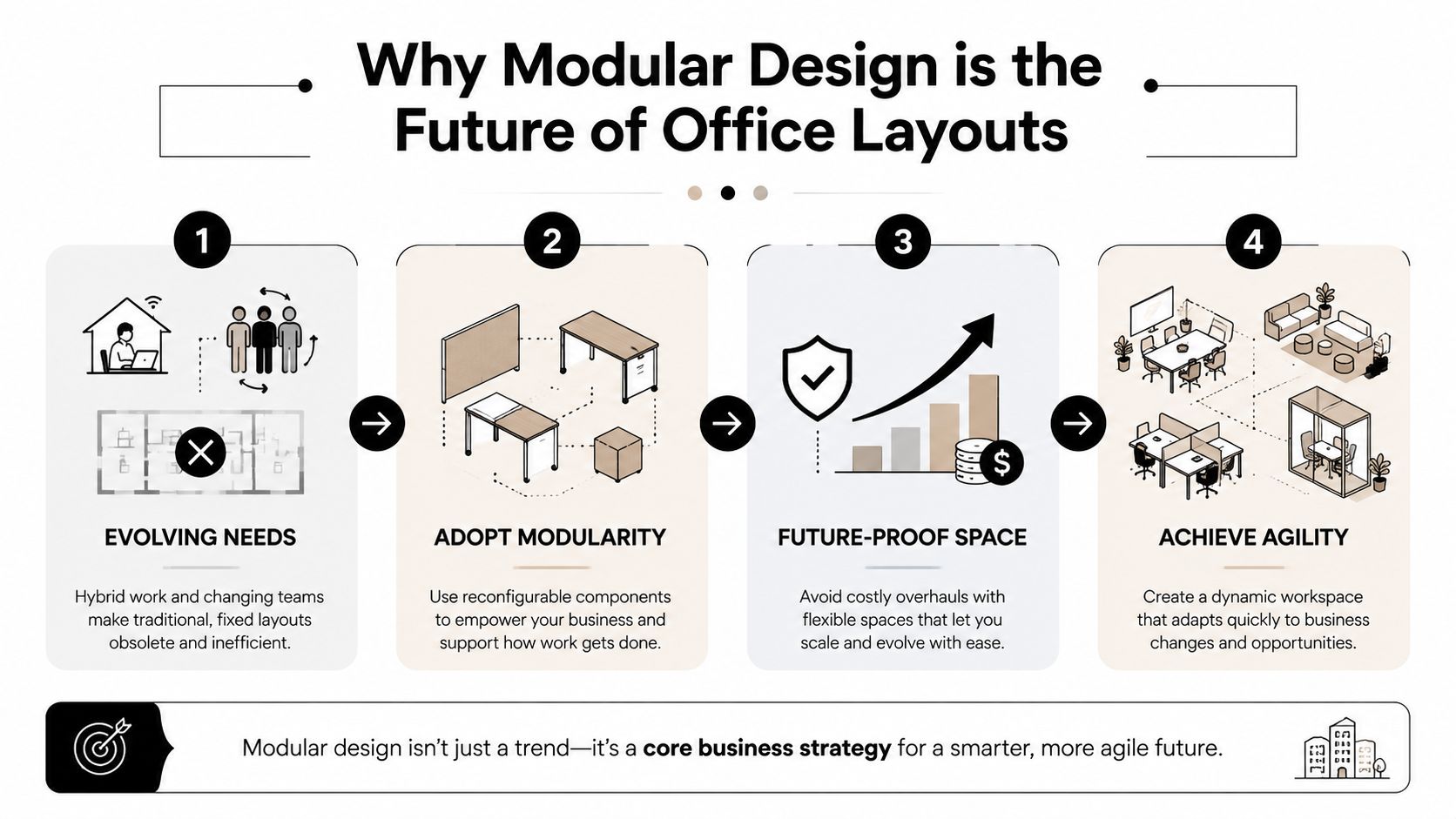
As you can see, this kind of thoughtful, modular approach is about more than just furniture; it's a strategic move that builds agility into your very workspace. This process is the heart and soul of smart space planning. For a deeper look at creating a layout that’s a perfect fit, check out our comprehensive office space planning guide.
Planning a Layout for Flow and Well-Being
When we design a modular office, we're thinking about more than just reconfigurable furniture. The goal is to create a strategic plan that nurtures health, boosts productivity, and establishes an effortless workflow. A great layout should encourage movement and well-being, turning the office into an environment that actively supports your team.
It all starts with picturing how people will actually move through the space. We’ve all been in offices where the main walkways are tight and cluttered—it’s frustrating and inefficient. High-traffic paths need to be wide and clear, creating logical routes from the entrance to common areas and work zones. Think of it like designing a city: main arteries connect different departments, while smaller streets provide access to individual workstations. You can see some of these principles in action in our guide to modern office layout ideas.
The real power behind a modular office workstation design is its built-in ergonomic flexibility. This is non-negotiable for today's diverse teams, where the same desk might be used by different people on different shifts or for completely different tasks.
Designing for Individual Needs and Comfort
This is where modularity truly proves its worth—letting you cater to individual needs without giving up the benefits of a standardized system. For instance, modular workstations are specifically designed to allow user-by-user adjustments for things like desk height, monitor placement, and how accessories are arranged.
This means a single workstation model from Cubicle By Design can serve multiple roles just by reconfiguring it.
- An accountant might need more surface area for paperwork and an L-shaped desk that provides a corner for focused, heads-down tasks.
- A project manager, on the other hand, could thrive with a smaller primary desk as long as it's near a shared collaborative zone outfitted with glass office partitions.
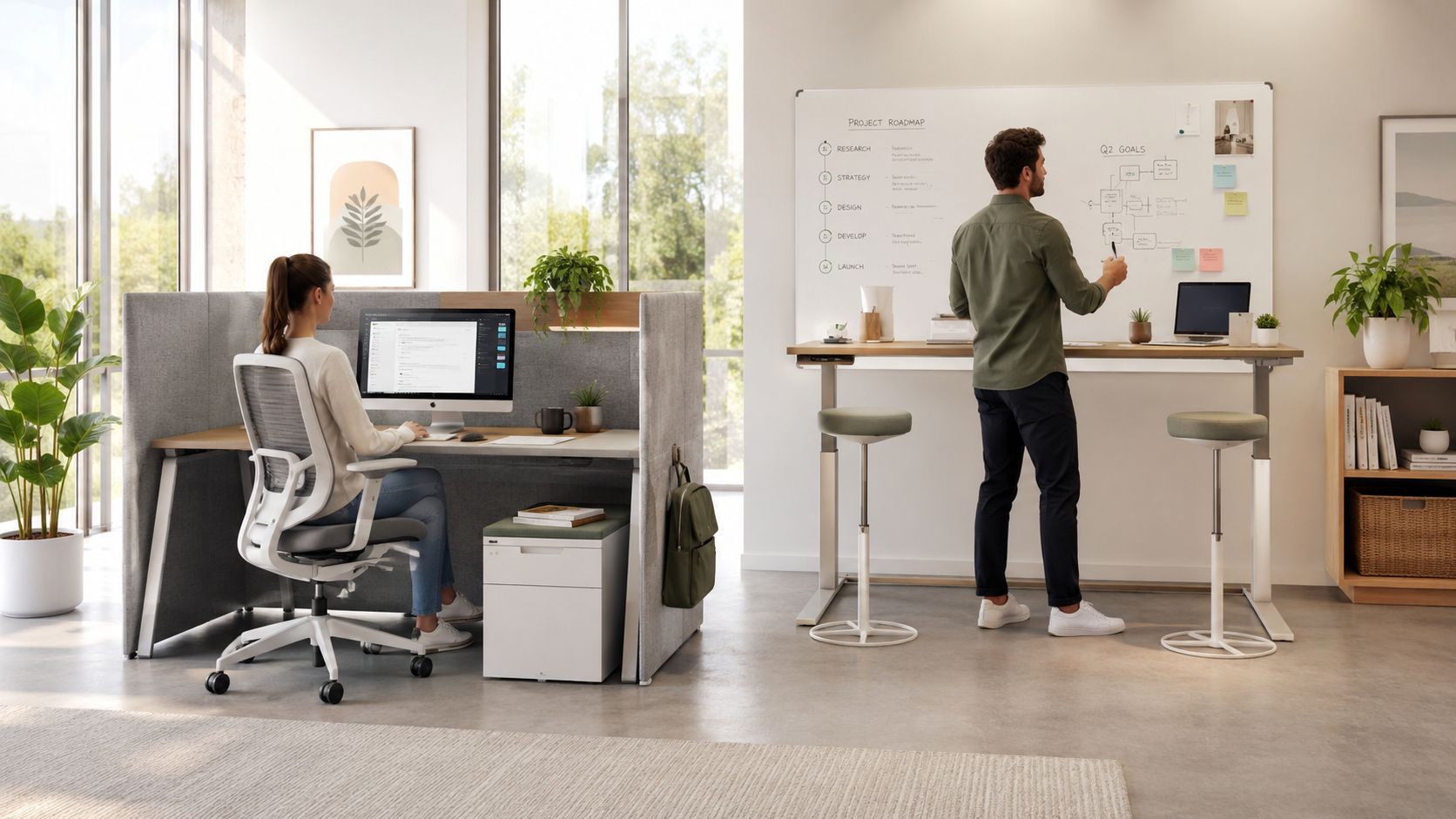
When you plan a layout that embraces these different work styles, you create a space that doesn't just look cohesive but genuinely works for every single person on your team. The best way to start bringing these concepts to life is to simply experiment. Our interactive Cubicle Designer tool lets you play around with these exact variables, helping you visualize the perfect balance between standardization and personal comfort.
Selecting and Configuring Your Workstation Components
Once your layout is mapped out, the fun really begins. This is where you get to choose the actual components for your modular office workstations, turning those blueprints and ideas into a workspace your team can actually use. Think of it less like just picking furniture and more like assembling the perfect kit-of-parts for your crew.
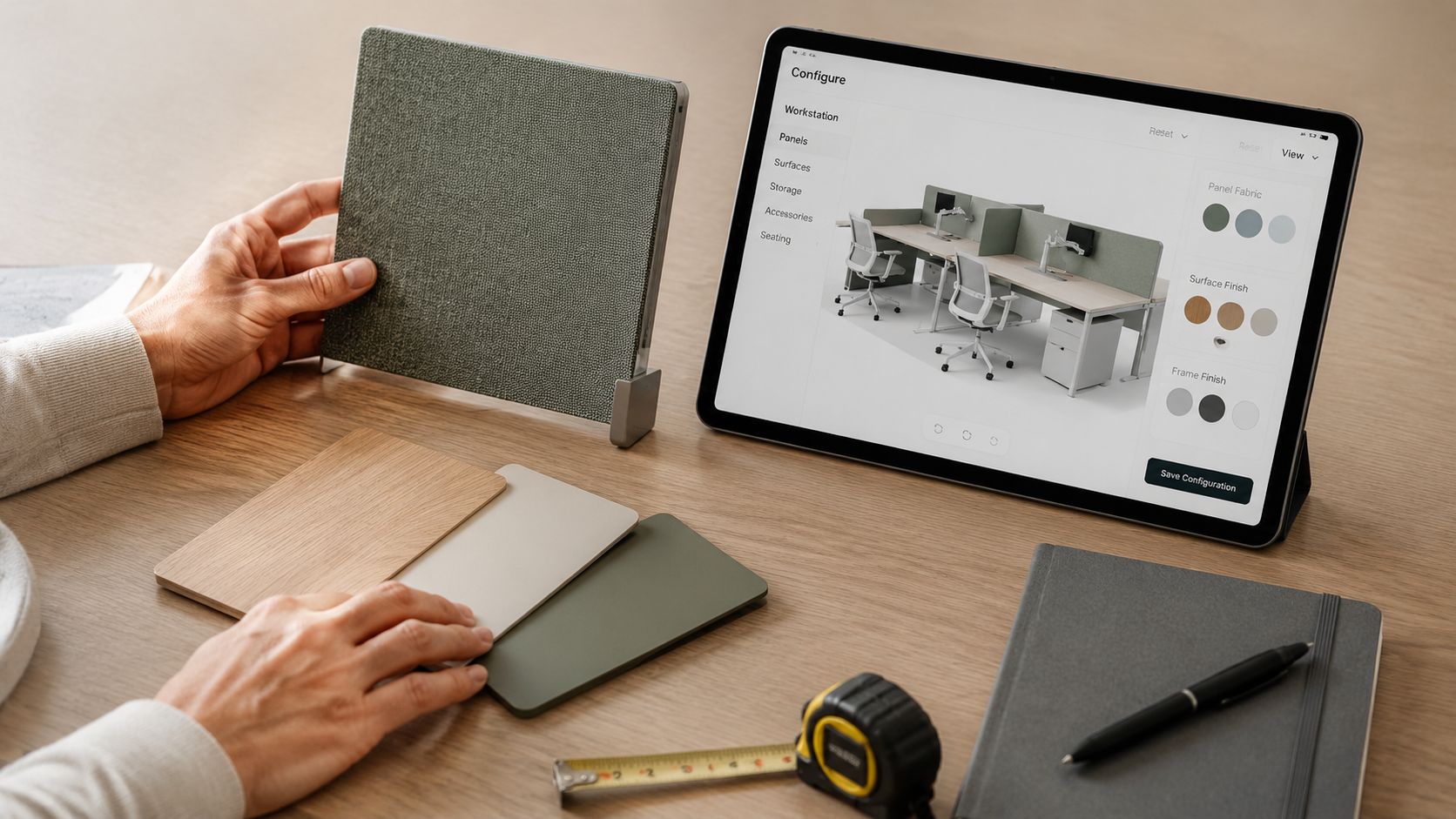
Your first decisions will revolve around the core elements: panels, work surfaces, and storage. Every choice here directly shapes the look, feel, and function of the space. For instance, if you need quiet zones for deep focus, taller, fabric-covered panels are a fantastic choice. On the other hand, lower panels help maintain that open, collaborative vibe a lot of teams thrive on.
One of our favorite pro-tips is to pair solid panels with glass office partitions. It’s the perfect way to get acoustic privacy without sacrificing natural light and sightlines.
Balancing Key Component Features
Getting your workstation configuration right is all about finding the perfect balance. You’ll be making some trade-offs, so it helps to know what they are ahead of time.
- Surface Depth: Does your team need room for blueprints or multiple large monitors? Deeper surfaces are great for that, but they do eat up more floor space. For mostly digital work, standard depths are usually more than enough.
- Storage Integration: Can everyone get by with simple under-desk pedestals, or do you have teams that need taller storage towers for binders and physical files? Integrated storage keeps things neat but will add to the cost and footprint of each station.
- Finishing Touches: The little things matter. When picking out storage, understanding your hardware options is key for both aesthetics and daily use. You can check out Neasden Hardware's cabinet guide for some great ideas on how to dial in those details.
Modular workstations are built with interchangeable components like desks, partitions, and storage. This inherently supports employee satisfaction and autonomy, as the space can adapt to them—not the other way around. This flexibility is crucial when things change, letting you reconfigure or expand instead of starting from scratch.
Rolling out the new workstations in phases—maybe starting with a single department—is a great way to minimize disruption and keep the budget manageable. It effectively turns your workstation system into a platform you can build on over time.
You can see how these pieces come together in our guide to modular office desk systems. Getting these combinations right is how you create a space that feels truly custom-built for your people, and the research shows this pays off in both sustainability and satisfaction.
Bringing It All Together: Power, Data, and Finishes
A great workstation design is more than just a sturdy frame. The real magic happens when you flawlessly integrate the practical needs of technology with the aesthetic touches that define your office culture. This is where we get into the details that separate a functional space from an exceptional one.
Think of it this way: a well-planned power and data strategy should be completely invisible. Cables are neatly tucked away, outlets are exactly where you need them, and your team never has to crawl under a desk to find a plug.
This isn’t just about avoiding the dreaded “cable spaghetti”—it’s a matter of safety, convenience, and maintaining a clean, professional look. Modular raceways are your best friend here, creating a dedicated, hidden channel for all that wiring. Before you finalize, ask yourself how many outlets each person really needs. Two might sound fine, but with multiple monitors, phone chargers, and other devices, four is often the more realistic number.
The best tech integrations are the ones you don't notice. When power and data are effortless, your team can focus on their work, not on finding an extension cord.
Defining Your Space With the Right Finishes
With the technical side sorted, we can focus on the aesthetics. This is where you bring your brand’s personality to life. The materials you select for your workstations—from the panel fabrics to the desktop laminates—are powerful tools for shaping your office environment.
Fabric Panels: Don't just pick a color you like; choose one that aligns with your brand. These panels also pull double duty by absorbing sound, which is a huge plus in any busy office.
Laminates and Trim: The finish on your work surfaces sets an immediate tone. A light wood laminate can make a space feel bright and expansive, while a darker solid color can lend a more serious, focused atmosphere.
Coordinating Elements: A cohesive design feels intentional and professional. To complete the look, you can even discover luxury office window treatment ideas that perfectly complement your new workstations.
Getting power and data wired correctly is crucial. For a deeper dive into the technical side, you can learn about the role of the cubicle power pole and how it helps create that clean, seamless installation.
Common Questions on Modular Office Design
When businesses start planning a workspace transformation, we find the same great questions pop up time and time again. Let's walk through some of the most common ones we hear at Cubicle By Design to give you a clearer picture of the process.
The first thing everyone wants to know is, "What's the budget?" It's a fair question, but the truth is, the cost of a modular office workstation setup can vary dramatically. A simple, clean workstation might only be a few hundred dollars. On the other hand, a fully-loaded, high-end station with premium finishes, integrated power, and ergonomic extras could run several thousand.
The real beauty of modular design is its scalability. You can start with a smart, budget-friendly layout today and then add more sophisticated components or expand the entire system as your company grows and your needs change.
This makes a modern modular office workstation design accessible even if you're starting with a tighter budget. It’s a true investment that grows right along with you.
Can We Reconfigure the Workstations Ourselves?
Absolutely—and this is one of the most powerful features of a modular system. We engineer our modern workstation cubicles with standardized connectors and lightweight components. That means they can be reconfigured with just a few simple tools and very little training.
Of course, for a complete office overhaul, you'll probably want our professional installation team to handle it. But for smaller, day-to-day adjustments? Your own facilities staff will be more than capable. For example, they could easily:
- Change a desk's orientation for a new team member.
- Add a storage unit or shelving to an existing workstation.
- Swap a solid panel for a glass one to open up sightlines.
This kind of flexibility is priceless for companies navigating hybrid work or experiencing rapid growth, where adapting on the fly is essential. The entire system from Cubicle By Design is built on this principle of easy adaptation.
How Do Modular Systems Handle Privacy and Acoustics?
Controlling noise and giving people visual privacy are non-negotiables in a productive office, and modular designs offer a fantastic range of solutions. The simplest tool in your kit is panel height. Taller panels are great at blocking sound and sight, which is crucial for roles that demand deep focus or for busy areas like call center cubicles.
But it's not just about height; materials make a huge difference. Fabric-covered panels are phenomenal for soaking up ambient sound and cutting down on office chatter. A popular strategy we're seeing more and more is combining solid panels with glass office partitions. This approach gives you the best of both worlds—maintaining a bright, open feel while still defining individual spaces and controlling acoustics.
What Is the First Step to Get Started?
The best way to begin is simply to see what’s possible. We always recommend browsing our collection of workstation cubicles to get a feel for the different styles and systems we offer. It’s a great way to understand the components and aesthetics you can choose from.
Once you have some ideas, you've got a couple of great options. If you know what you want, you can jump straight into our Cubicle Designer tool and start playing with layouts. Or, if you'd prefer some guidance, just reach out to our team. We're here to help you figure out your needs, plan the perfect layout, and put together a detailed quote for your project. Our goal is to make the entire process easy, ensuring you end up with a workspace your team will love.