

Introduction To Office Glass Wall Partitions
Office glass wall partitions strike a unique balance between openness and seclusion. They let sunlight spill into every corner while still marking out dedicated work zones. In short, glass partitions blend modern design with practical noise control.
Why Office Glass Wall Partitions Elevate Workspaces
Open offices can feel airy—but that can come at the expense of focus. Glass wall systems act like a clear boundary: you see what’s happening around you, yet you enjoy a degree of quiet when you need it. It’s the best of both worlds.
Consider these core benefits:
- Natural Light Distribution: Transmits up to 80% of daylight, cutting down on artificial lighting and energy bills.
- Visual Connectivity: Keeps teams in view, fostering unity without physical crowding.
- Acoustic Control: Laminated or double-glazed panels can reach an STC 50 rating, taming distracting noise.
- Modular Flexibility: Demountable frames let you reshape layouts on the fly—no major construction required.
These perks are ideal for hybrid work models, where staff move between shared areas and private offices. Glass walls feel more premium than cubicles, yet offer the same reconfigurable ease.
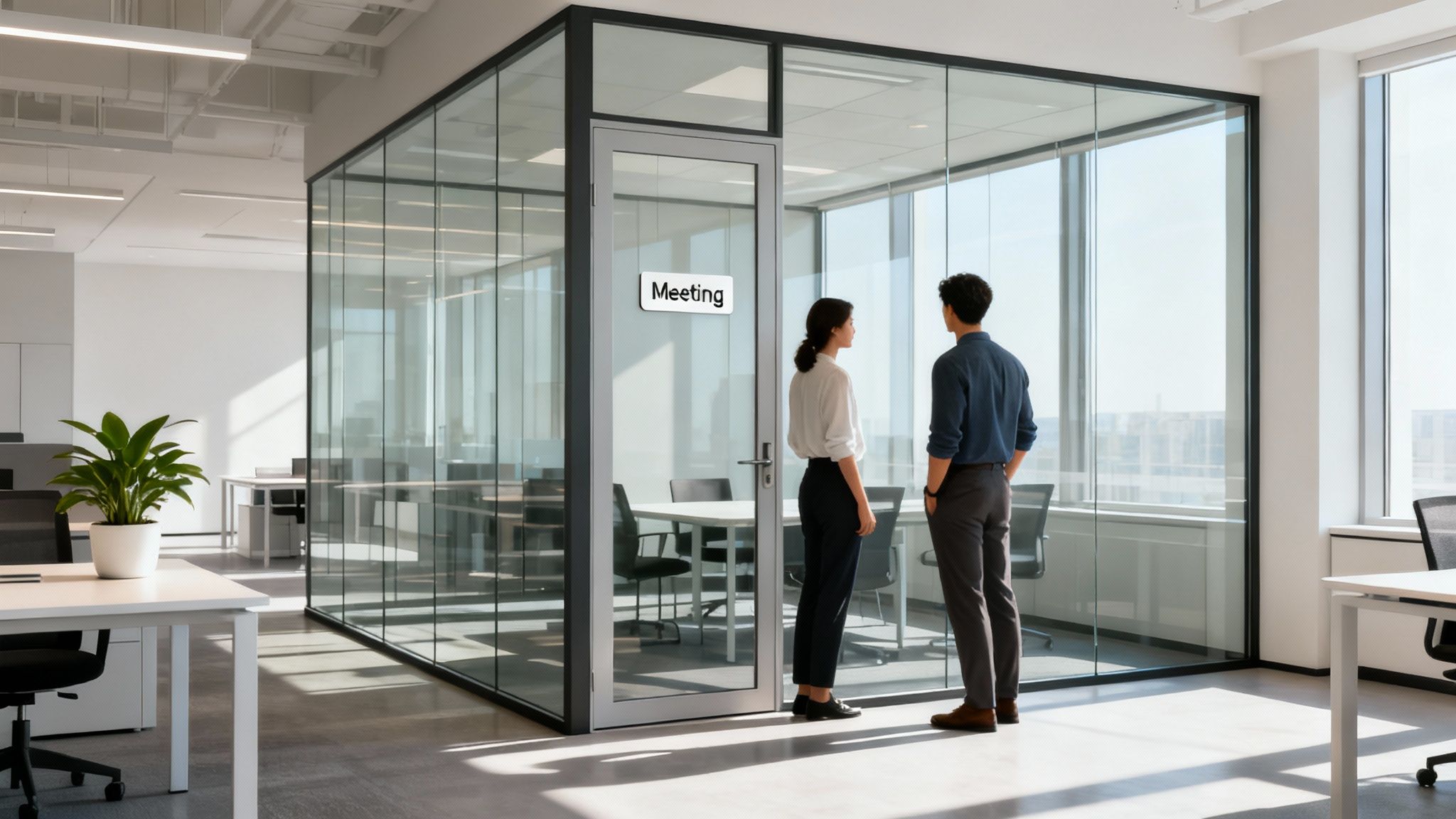
Key Features That Set Glass Walls Apart
Far from cold panes and steel frames, today’s glass partitions integrate seamlessly with your workspace:
- Frame Choices: Opt for the framed 700 or 800 series or the sleek, frameless 500 series.
- Blinds & Films: Add privacy or custom branding on demand—no need to replace the glass.
- Power & Data Channels: Hide cables inside mullions so desks stay uncluttered.
“A glass wall is like a picture frame that displays your team at work without locking them behind closed doors.”
– Workspace Designer
This guide walks you through every essential decision point:
- Framed vs. frameless options
- Acoustic and privacy performance
- Sizing and glazing choices
- Cost and ROI considerations
- Installation and compliance tips
- Space-planning examples and case studies
You’ll move seamlessly from initial concept to final installation.
Learn more about glass partition applications in our guide on glass partition walls for offices.
Graphical layouts in our look book spark fresh ideas. Explore Cubicle By Design solutions to see how glass walls blend with furniture and optimize your workspace today.
Understanding Key Concepts
Glass wall partitions bring natural light and a sense of openness without letting one area spill into another. Think of them as aquarium windows: you can see straight through, yet each zone stays defined.
At the core, these systems rely on modular and demountable components. You get the freedom to reconfigure an entire floor plan with hand tools—almost as effortless as swiveling a chair, but on a building scale.
- Modular Assemblies lock panels into place using minimal tools.
- Demountable Frames let you remove entire panels intact when layouts shift.
- Framed Vs Frameless choices let you weigh visual heft, budget, and style.
Putting together a modular glass system feels like completing a puzzle—each piece snaps in and adapts as your office picture changes.
Daylighting And Transparency Benefits
Glass walls draw daylight deep into the workspace. With up to 80% of visible light passing through, you’ll cut back on overhead fixtures and trim your energy bills.
That extra brightness also reduces eye strain and supports natural circadian rhythms by eliminating shadowy corners.
For instance, positioning glass partitions next to window banks can push ambient light an extra 20 feet into the floorplate.
80% of natural light transmission translates to up to 20–30% energy savings in mixed layouts.
The diagram below shows common partition types from Wikipedia.
This sketch highlights how glass options stack up against solid walls in real-world interiors.
Integration With Workstation Layouts
Glass walls aren’t just decorative—they integrate smoothly with cubicle banks and desk clusters. See-through barriers carve out private offices or team huddle areas, all while keeping everyone visually connected.
- Align panels to desk grids using low-profile mullions.
- Match Series 7 cubicles for a unified metal finish.
- Tuck private-office cubicles beside glass walls for extra sound control.
These tactics reduce corridor clutter and make the transition between open and closed spaces feel deliberate.
Glass partitions surged in popularity alongside open-plan offices in the late 20th century. Market analysts estimate a global glass partition market of USD 4.8 billion in 2025, growing to USD 6.46 billion by 2035 at a CAGR near 3%. (Learn more about glass partition market growth on BusinessResearchInsights.com).
To see how Series 500 or framed Series 700 and 800 solutions fit your workspace, try the Cubicle By Design Custom Cubicle Designer or browse our product category.
You can also explore pairings with private office cubicles or workstation cubicles to build zones that balance focus and collaboration.
These insights will guide you toward an office glass partition system that aligns with both your design vision and practical requirements.
Comparing Framed And Frameless Glass Walls
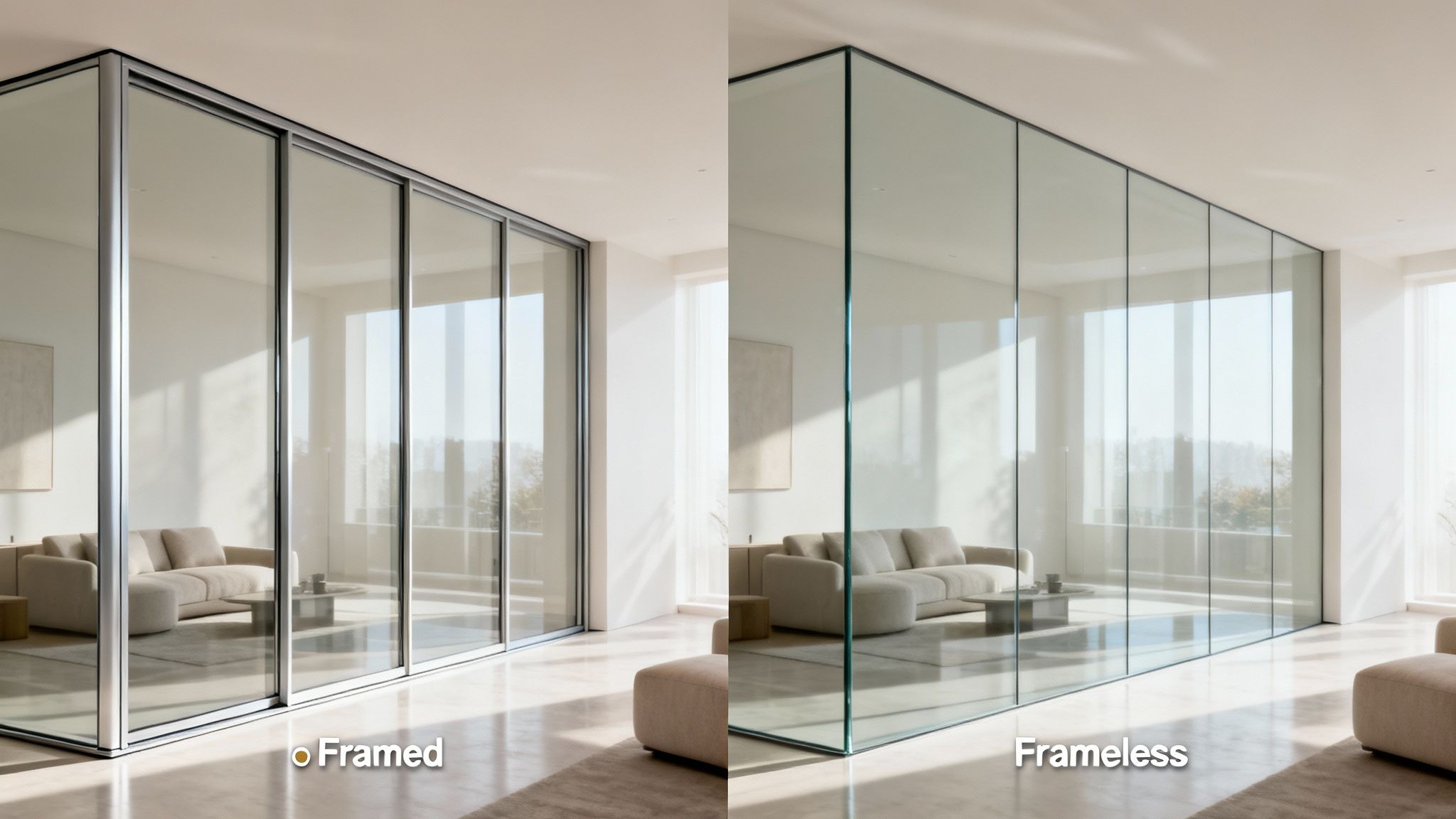
Choosing the right office glass wall partitions often comes down to balancing style, cost, and downtime. Framed systems feature visible profiles and a lower entry price. Frameless walls, by contrast, give you uninterrupted sightlines and an elevated ambience.
Installation times vary, too. A framed run typically takes 2–3 days per office segment, while frameless glazing often wraps up in 1–2 days, keeping projects on schedule and staff productive.
- Framed partitions: dependable cost control and design variety
- Frameless units: clear transparency and a premium finish
Evaluate Framed Glass Walls
Framed glass walls use metal or wood mullions to surround each panel. That framework makes weather-tight sealing straightforward and often costs 20–30% less than frameless.
- Profile Variety: Choose from multiple colors and finishes
- Reliable Sealing: Gaskets and caulking deliver solid acoustic performance
- Upfront Savings: Lower initial investment without sacrificing durability
For a hands-on test drive, experiment with our Custom Cubicle Designer and see framed layouts come to life.
Evaluate Frameless Glass Walls
Frameless systems rely on point-supported fittings or slim edge channels. With no visible frames, daylight flows through uninterrupted, but that minimalist look carries premium pricing.
- Maximum Transparency: Panels appear to float, boosting daylight penetration
- Upscale Feel: Ideal for executive suites and high-end conference rooms
- Speedy Glazing: Silicone joints can cut installation down to a day
Innovations such as acoustic laminates, laminated safety glass, and switchable (smart) panes are nudging average prices higher, even as installation volumes hold steady. Dive deeper at TechSci Research.
Comparison of Framed and Frameless Glass Wall Features
Here’s a quick side-by-side look at how each system measures up:
| Feature | Framed Glass Walls | Frameless Glass Walls |
|---|---|---|
| Cost | Lower initial investment | Higher upfront investment |
| Aesthetics | Defined profiles | Seamless, edge-to-edge clarity |
| Installation Time | Moderate (2–3 days per office segment) | Fast (1–2 days per office segment) |
| Acoustic Performance | Solid with gasket seals (STC 45) | Superior with laminated glass (STC 50+) |
| Customization | Wide range of finishes and colors | Limited finishes, focus on glass clarity |
Even though price points differ, both framed and frameless walls deliver reliable performance. It’s all about matching their strengths to your project goals.
Choosing The Right System
Begin by listing your top priorities—budget, design vision, acoustic needs, and timeline. Then weigh them against the attributes above. Don’t forget to factor in maintenance and potential reconfigurations down the road.
- Lock in a realistic budget and expected ROI.
- Identify acoustic and privacy requirements across departments.
- Go framed if customization and cost control are key.
- Opt for frameless when sightlines and a luxury finish matter most.
- Plan your installation in phases to minimize office disruption.
Below is a screenshot showing private office cubicles integrated with glass walls to create dedicated work areas.
This example highlights how framed panels pair with cubicles to maintain both structure and visual continuity.
“Framed systems offer versatile customization while frameless designs elevate premium appeal.”
– Workspace Designer Insight
For a full breakdown of options, see our guide on Glass Wall Systems for Offices.
Explore related solutions:
- Cubicle By Design homepage
- Cubicle category
- Private Office Cubicles
- Workstation Cubicles
Now you have the insights to configure glass partitions that balance open collaboration with focused, private work zones. Visit our site to configure your system.
Acoustic And Privacy Considerations
Glass partitions flood your workspace with daylight, yet they often feel like sieves when it comes to controlling noise. Striking the right balance between an open feel and genuine privacy hinges on understanding acoustic performance. We measure this using Sound Transmission Class (STC) ratings.
Laminated panels typically hit around STC 35, while tempered double-glazed units climb to STC 45 or higher.
- A vinyl interlayer in laminated glass soaks up mid-range noise
- Double-glazed tempered glass adds an air gap for extra isolation
- Acoustic gaskets seal edges and keep flanking noise at bay
These figures guide you on where to place partitions—whether in an open bullpen or alongside private offices.
Sound Rating Table
Here’s a quick comparison of common glass types and their STC ratings:
| Glass Type | STC Rating | Notes |
|---|---|---|
| Single Laminated | 35 | Basic absorption |
| Double Tempered | 45 | Strong isolation |
| Smart Switchable | 40–45 | Variable transparency |
Add seals and integrated blinds to push performance even higher. High-grade weatherstripping under frames and doors helps muffle hallway noise.
Seals And Blinds
Blinds sandwiched between glass panels block sightlines and act as a second sound barrier.
- Built-in blinds drop into place on demand
- Neoprene gaskets close invisible gaps around the perimeter
Right sealing can boost your STC by 5 points or more.
Smart Glass Use Cases
Switchable glass toggles from clear to frosted with an electric control. It offers on-demand privacy without extra hardware—and keeps acoustic performance steady in both states.
“Smart glass blends convenience with control, offering privacy without compromising sound quality.”
Beyond sight and sound, there’s an energy advantage: over 70% of modern commercial buildings use glass partitions for aesthetics and collaboration, cutting lighting costs by 20–30% through daylighting. Read more in the report from Global Growth Insights.
Privacy Resources
For deeper tips on balancing visibility and sound control, explore our office cubicle privacy guide.
You can also combine glass walls with dedicated panels from our private office cubicles to craft quiet executive suites.
Benefits And Metrics
When you reduce noise and let daylight reach deeper, the ROI speaks for itself. Offices that upgraded saw a 25% drop in noise complaints and up to 30% savings on lighting.
Use this simple checklist to secure top sound performance:
- Select glass rated STC 45+
- Install neoprene seals around all edges
- Add integrated blinds or acoustic films
- Test acoustics with a decibel meter
Decorative laminated films can boost privacy and raise STC by 3 points while preserving transparency. Whether you choose floor-to-ceiling panels or framed systems, partner with Cubicle By Design for expert design, code compliance, and seamless installation.
Cost Estimation And ROI Decisions
Accurate project budgets for office glass wall partitions always start with square footage. Nothing else makes sense until you know the space you’re working with.
Next up, you’ll dial in glazing preferences—single, laminated or double—and ballpark cost per linear foot. This early step shapes almost every number that follows.
For a truly custom take, plug your specs into our Custom Cubicle Designer. It’s the quickest way to see price tags matched to your vision.
Key cost influencers include:
- Material Type: Premium double tempered glass or budget-friendly single laminated panels.
- Frame Profile: Slim aluminum mullions versus near-invisible edge channels.
- Installation Complexity: Uneven floors, built-in wiring chases and air-sealing add hours on site.
- Add-Ons: Integrated blinds, privacy films, acoustic seals or smart glass toggles.
Simple ROI Model
Putting numbers on paper usually boils down to three buckets: energy savings, productivity gains and lease premiums. Here’s a rough sketch:
- Lighting Energy Savings: Natural daylight can trim lighting bills by around 25%.
- Productivity Gains: Quiet, private spaces often deliver up to 5% more focused work time.
- Potential Lease Uplift: Sleek glass interiors may command 10–15% higher rent.
Run that out over a typical 10-year span and most glass partition investments break even in 2–3 years.
Learn more about cost breakdowns in our Cubicle Price Guide.
Cost Ranges And ROI For Glass Wall Configurations
Use this table as a quick reference for what various glass wall types cost and when you might see returns.
| Configuration Type | Cost Per Sq Ft | Typical ROI Period | Notes |
|---|---|---|---|
| Single Laminated Glass | $65–$75 | 36–48 months | Basic sound absorption, budget option |
| Double Tempered Glass | $90–$120 | 24–36 months | Higher STC, better daylighting |
| Frameless Premium Glass | $130–$160 | 18–30 months | Seamless look, fastest payback |
| Framed Aluminum System | $70–$100 | 30–42 months | Balanced cost and customization |
This table should help you gauge upfront costs alongside likely payback timelines.
Interpreting The Data
The chart below compares acoustic performance and daylight gains for popular glass partitions.
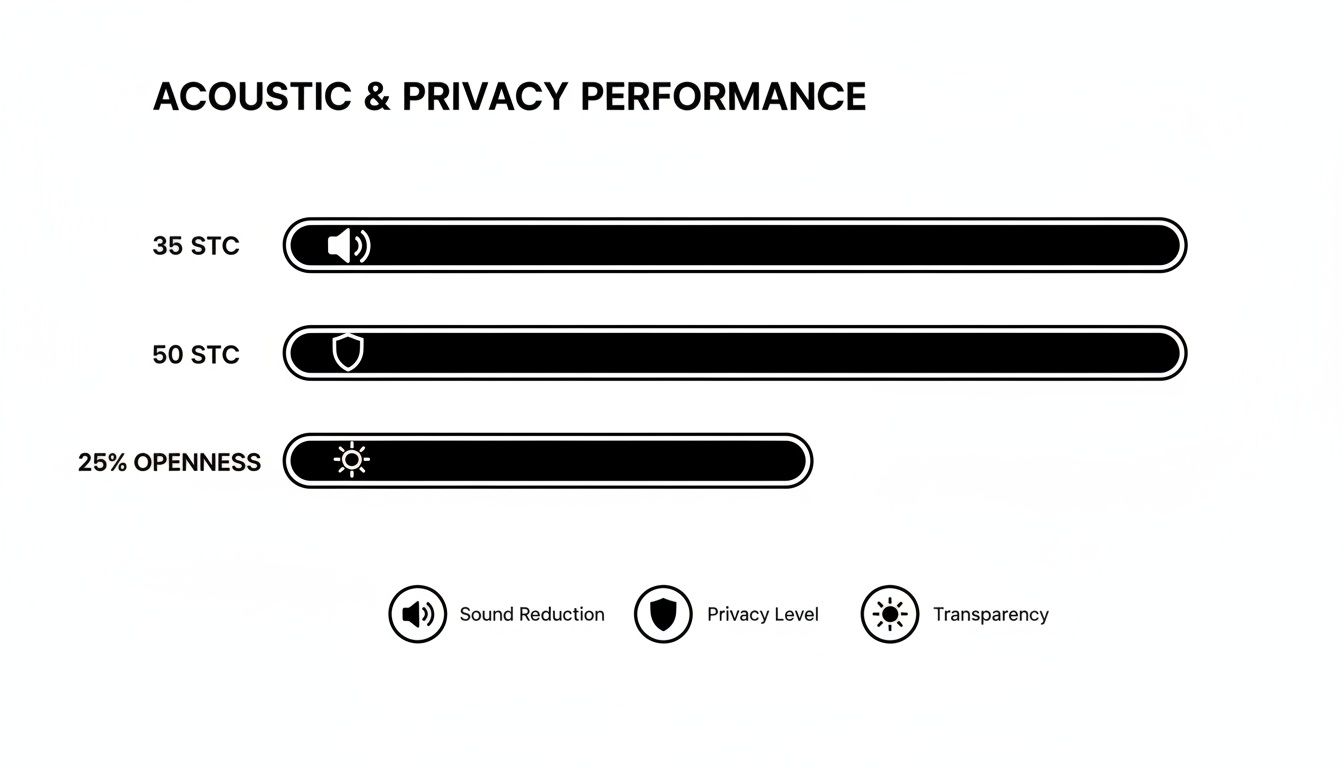
- Double-glazed walls hit an STC rating of 50 and boost daylight by 25%.
- Laminated panels typically land around STC 35, offering decent privacy on a tighter budget.
Best Practices For Budgeting
- Secure Multiple Quotes: Compare framed versus frameless bids.
- Factor In Change Orders: Budget an extra 10% for surprises.
- Coordinate Trades: Sync electrical, data and structural work to cut revisions.
- Schedule In Phases: Stagger installations to minimize business interruption.
“A well-planned glass wall install can deliver ROI in under two years when savings and productivity gains are accounted for.”
– Cubicle By Design Project Manager
Regional And Design Factors
- Urban vs Suburban: Labor costs can swing by 15–25%.
- Custom Finishes: Anodized frames add roughly 5–8% to material spend.
- Building Height: Above three floors, lifts or scaffolding might be required.
- Permit Fees: Local approvals can tack on 1–3% of total project cost.
Leveraging Scale For Savings
- Bulk Material Purchase: Ordering in volume often drops glass costs by 10%.
- Standardization: Repeating frame profiles slashes setup fees.
- Phased Procurement: Lock in pricing for future phases under one contract.
- Pre-Fabrication Savings: Off-site assembly can cut installation labor by 15%.
Tracking ROI Metrics
- Monitor Energy Bills: Compare pre- and post-install lighting usage.
- Survey Occupants: Simple feedback forms reveal privacy satisfaction.
- Review Lease Rates: Track rent increases tied to your enhancements.
- Audit Maintenance Costs: Log cleaning and seal replacement over time.
Combining these strategies makes your budget more reliable and boosts confidence in your ROI forecast.
Contact our team for a custom cost analysis and ROI prediction.
Start planning with Cubicle By Design today by exploring our homepage and product galleries.
Visit our cubicle category for integrated solutions.
Combine glass walls with private office cubicles or workstation cubicles to maximize functional design.
Discover full glass wall solutions at Cubicle By Design for confident budgeting.
Installation And Compliance Best Practices
Every successful glass wall project begins well before the first panel arrives on site. It starts with rolling up our sleeves for a detailed site assessment to uncover hidden challenges underfoot.
Uneven floors or unexpected obstacles can bring a smooth schedule to a grinding halt and drive up costs. Catching those issues early sets the tone for a seamless install.
Site Assessment And Subfloor Preparation
Think of this step as laying the foundation of a sturdy house. We measure, inspect, and plan, so your glass walls stay true for years.
- Check floor flatness within 5 mm over a 10-foot span
- Verify that the subfloor can carry the weight of glass panels
- Spot any ducts, wiring, or outlets that could get in the way
- Confirm clear routes for moving materials and tools
Once we have a full picture, we might apply a leveling compound or add shims beneath track systems. That groundwork keeps panels aligned like perfectly stacked books on a shelf.
Modular Panel Assembly Steps
Modular glass walls click together almost like a giant, architectural jigsaw puzzle. Follow these steps and you’ll see why installers call it “a joy to assemble.”
- Lay out the track and mark anchor positions according to the plan
- Drill and secure base tracks with anchors, then apply sealant
- Position mullions, ensuring each vertical member is dead plumb
- Slide in glass panels or frames, double-checking alignment at every stage
- Seal all joints with fire-rated caulking or gasket systems
“A well-prepared subfloor and precise anchoring can reduce installation time by up to 20%,” says a Cubicle By Design project manager.
Code Requirements And Permits
Compliance isn’t optional—it’s your insurance against costly rework. We break down everything into clear checkpoints.
| Permit Type | Scope | Typical Timeline |
|---|---|---|
| Building Permit | Review of structural plans | 2–4 weeks |
| Fire Department | Sprinkler layout and safety | 1–3 weeks |
| Accessibility Review | ADA-compliant egress paths | 1–2 weeks |
Inspections usually happen at footing, framing, and final completion stages. By coordinating with local authorities early, we avoid last-minute snags. When your layout strays from standard modules, we bring in architects or engineers to certify everything meets structural and egress codes.
Demountable Systems And Future Moves
One of the biggest perks of demountable glass partitions is the ability to adapt. Think of them like LEGO® bricks—you can take them apart and rebuild as needs change.
This flexibility can trim up to 30% off the cost of future renovations compared to permanent drywall. For more hands-on tips, check out our guide on office furniture installation.
Keeping thorough records—permits, inspection reports, and as-built drawings—makes any future makeover a breeze. A final walkthrough confirms every seal, joint, and finish is spot on.
With these best practices in place, your glass wall project will hit deadlines, satisfy regulations, and stand the test of time. Partner with Cubicle By Design and let our experience guide you from start to finish. Schedule your site assessment today!
Space Planning And Case Studies
Real-world examples ground space planning in tangible results. We’ve mapped out three distinct scenarios—a retrofit, a new build and a hybrid workspace—to show you what’s possible.
- Retrofit Example breathed new life into an existing floorplan, lifting daylight by 30% while tightening up sound control.
- New Build Project used Series 7 framed partitions to fit 25 workstations with 100% visibility.
- Hybrid Design blended private offices and open hubs with Series 500 frameless walls for a layout that adapts on the fly.
Layout Patterns And Metrics
In the retrofit job, we stretched glass panels along the window line to turn gloomy hallways into bright corridors. The change was dramatic—more natural light streamed in, and overhead lighting kicked in far less often.
Here’s how the numbers stack up:
- Daylight Penetration: 10 to 28 feet depth
- Lighting Reduction: 20% lower energy consumption
- Headcount Density: bumped up 15% without crowding
- Satisfaction Score: rose from 68% to 85%
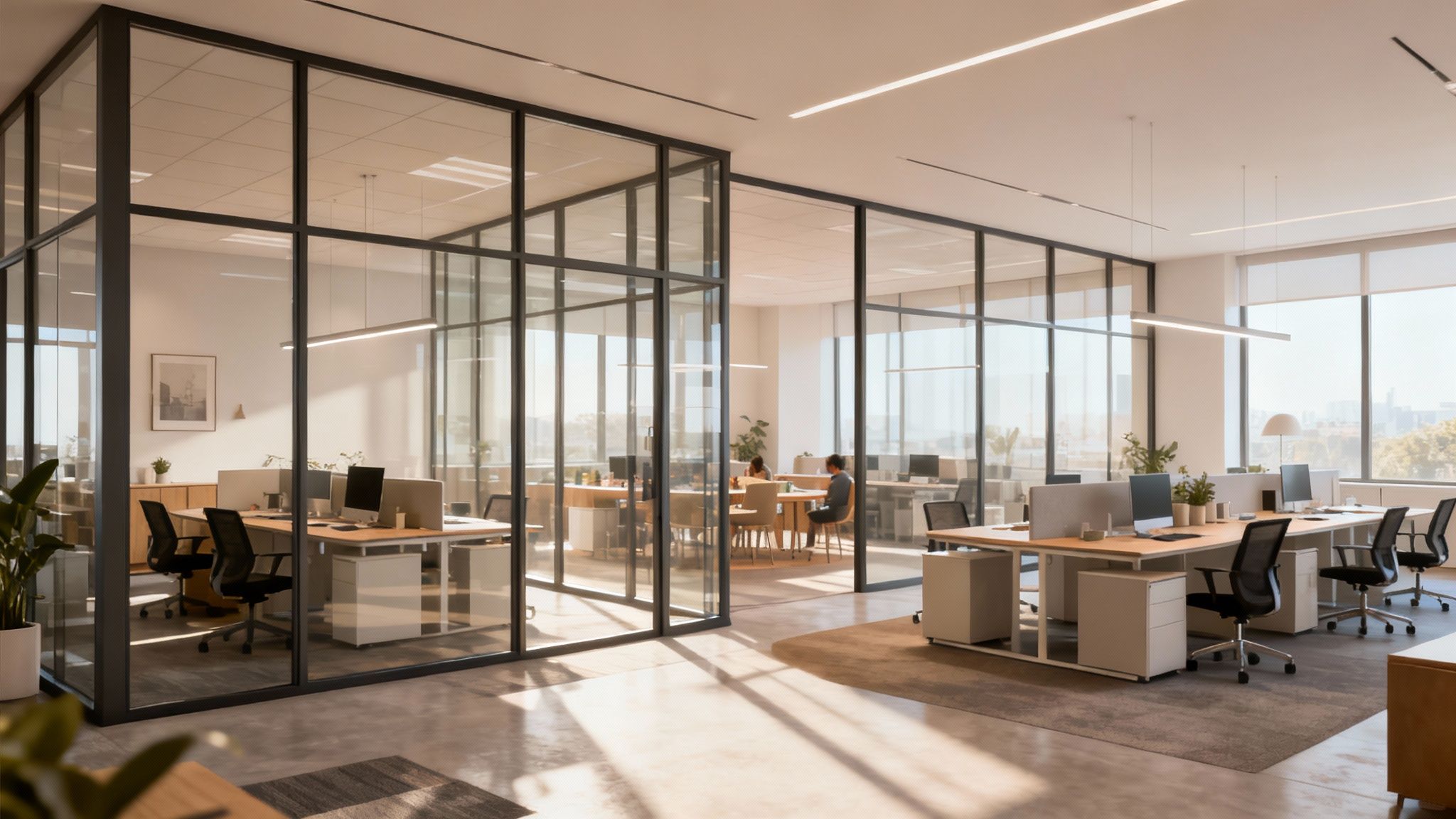
This shot highlights how transparent walls neatly define team zones while preserving open sightlines for quick standups.
Applying Lessons And Tips
- Assess natural light paths and place partitions close to window lines.
- Choose the right profile—Series 7 framed or Series 500 frameless—based on your design vision and budget.
- Track post-install metrics, focusing on daylight gains and user feedback.
“Mini case studies show the power of precise space planning in driving both efficiency and employee satisfaction.”
Each scenario proves that pairing glass partitions with cubicle systems balances privacy and collaboration effortlessly.
Case Study Takeaways
Matching your glass type to the use case is key. Retrofits often need extra acoustic seals to tame legacy HVAC noise, while new builds can hide wiring neatly inside mullions. Hybrid setups call for agile walls that shift from meeting nooks to open lounges in moments.
Key Metrics to Track for Your Project:
- Monitor daylight penetration depth with a lux sensor, comparing before and after data.
- Survey employee satisfaction on privacy and visual connection using simple, clear forms.
- Measure space utilization by logging occupants per 1,000 sq ft over time.
Client feedback highlights 92% approval for these glass-and-cubicle layouts.
Ready to apply these design strategies? Visit Cubicle By Design to explore our custom solutions.