
Glass Partition Walls for Office Design

A Guide to Glass Partition Walls for Office Design

Walk into any modern office, and you’ll probably feel a difference. The old, solid walls that boxed everyone in are disappearing, replaced by something much more open and alive. Glass partition walls for office spaces are no longer just a trend; they’re the standard for businesses that want to spark collaborative energy while still giving people space to focus. They create bright, connected workplaces without totally sacrificing acoustic privacy or the ability to concentrate.

Reimagining the Modern Office with Glass Partitions

For years, designers have been stuck on the classic open-office problem: how do you get people to collaborate without creating a non-stop distraction factory? Traditional drywall builds isolated silos, but wide-open floor plans often become a mess of noise and privacy issues. Glass partition walls are the elegant answer, striking a nearly perfect balance between the two extremes.

This guide is all about why these structures have become a cornerstone of today’s office design. Drawing on our experience here at Cubicle By Design, we’ll walk you through everything that matters—from the look and feel to the practical benefits and budget planning. Think of this as your roadmap for blending glass walls with your existing furniture, like the versatile cubicles we offer, to create a workplace that’s not just beautiful, but incredibly productive. To see how this fits into the bigger picture, check out our thoughts on current workplace design trends.

The Growing Demand for Flexible Spaces

The shift to glass isn’t just about looks; it’s a smart business move that reflects how work itself has changed. The market numbers back this up. The global glass partition market was valued at USD 4.8 billion in 2025 and is on track to hit USD 6.46 billion by 2035. This boom is driven by a massive demand for flexible, light-filled workspaces, which make up over 70% of the market’s growth.

By taking down solid walls, glass partitions build a culture of transparency and approachability. They let natural light flood the space, which is proven to lift moods, reduce eye strain, and just make people feel better at work.

This creates what we call “visual connectivity.” Your teams feel like part of a whole, even when they’re working in separate areas. The end result is a dynamic environment that works just as well for heads-down tasks in a private office as it does for those spontaneous brainstorming sessions that happen in shared spaces. For some great real-world examples of how glass can completely transform a professional space, take a look at these office building glass projects.

Choosing the Right Glass Partition for Your Needs

Not all glass partitions are built the same. When you start looking into them, it can feel a bit like choosing a canvas for a painting—each option sets a completely different tone and serves a unique purpose for your office culture. Getting familiar with the choices is the first step to finding the perfect fit.

Your first big decision is between framed and frameless systems. Think of framed glass partitions as having a classic, structured look, much like a framed picture. The aluminum frame gives a defined border and a sense of sturdiness, which works well in more traditional offices or can add a cool industrial vibe.

On the other hand, frameless glass partitions give you that seamless, ultra-modern feel. They create the illusion of a single, continuous wall of glass, opening up sightlines and making the whole space feel exceptionally bright and airy. It’s a minimalist approach that’s perfect for contemporary offices going for a sleek, clean design.

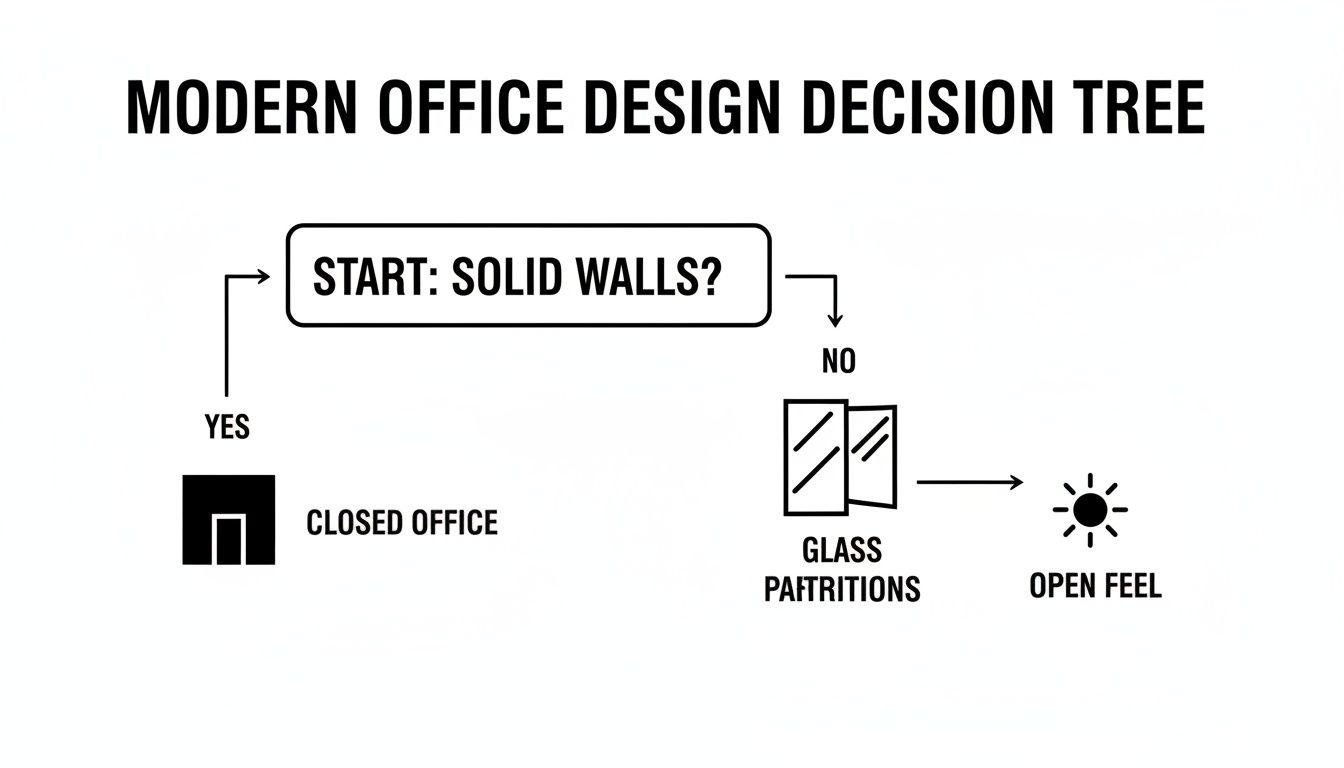
This decision tree shows how moving away from solid walls toward glass partitions fundamentally shifts an office toward a more open and collaborative feel.

A decision tree showing how solid walls lead to closed offices, while glass partition walls for offices create an open and modern feel.

As you can see, the choice between solid and glass is a major fork in the road that defines the entire atmosphere of a workspace.

Decoding Glass Types and Acoustic Performance

Once you’ve settled on the frame, the type of glass you choose has a huge impact on both privacy and productivity. The main options here are single-glazed and double-glazed glass, and the difference is all about sound control.

  • Single-Glazed Glass: Just like it sounds, this is a single pane of glass. It’s a budget-friendly choice that lets tons of natural light flow through, making it great for visually separating areas where top-tier acoustic privacy isn’t a must-have.
  • Double-Glazed Glass: This is the heavy-hitter for sound insulation. It features two panes of glass with an air or gas-filled gap in between that acts as a sound barrier, seriously cutting down on noise transfer. It’s the go-to for meeting rooms, executive offices, and any spot where conversations need to stay private or focus is key.

To get technical for a moment, sound insulation is measured with a Sound Transmission Class (STC) rating. The higher the STC number, the better the soundproofing. A typical wall might sit around an STC of 35, but specialized acoustic glass partitions can hit 50 or more, which is enough to make normal speech on the other side pretty much inaudible.

Choosing the right glazing is a strategic balancing act. You’re weighing the need for quiet, focused work against budget and aesthetic goals to create an environment where everyone can be productive.

To help visualize these options, here’s a quick comparison of the common types you’ll encounter.

Comparing Glass Partition Types

Partition Type Key Feature Best For Acoustic Performance
Framed Aluminum frame provides structure and a defined look Traditional or industrial-style offices needing durability Good to Excellent
Frameless Seamless, minimalist aesthetic for maximum light and openness Modern, contemporary spaces aiming for a sleek design Fair to Good
Single-Glazed A single pane of glass, cost-effective and bright Interior dividers where acoustic privacy is not critical Fair
Double-Glazed Two panes with an air gap for superior sound insulation Conference rooms, private offices, and quiet zones Excellent
Frosted/Etched Provides visual privacy while allowing light diffusion HR departments, meeting rooms, or branded applications Varies by glazing
Smart/Switchable Can switch from transparent to opaque on demand High-tech boardrooms and multi-purpose spaces Varies by glazing

Ultimately, the right choice depends on the specific needs of each space within your office, blending visual style with practical function.

Customization and Advanced Glass Technologies

Modern glass partitions are so much more than just clear panels. Customization options let you get creative and match the look and function to your brand and your team’s needs.

For instance, frosted or etched glass is a popular way to get visual privacy without sacrificing natural light, making it a favorite for conference rooms or HR departments. You can even have company logos or custom patterns etched right onto the glass for a unique, branded touch.

Technology is also changing what’s possible. Innovations like smart glass, which can go from clear to opaque with the flip of a switch, are really taking off. In fact, the switchable glass market is projected to grow from $6.42 billion in 2025 to $10.42 billion by 2030. While a top-tier soundproofed glass partition can run $140 to $300 per square meter, that investment in quiet can boost focus in an open office by as much as 15-20%.

These advanced systems work beautifully alongside other flexible office solutions. To see how these partitions fit into a bigger picture, you can explore our guide on modular office walls. The key is to match the right features to your unique needs to make sure your investment pays off in both style and function.

The Real-World Payoff of a Brighter Workplace

Glass partition walls do more than just look clean and modern. They bring some powerful, real-world changes to the daily work experience, turning your office layout from just a floor plan into a genuine asset for your company.

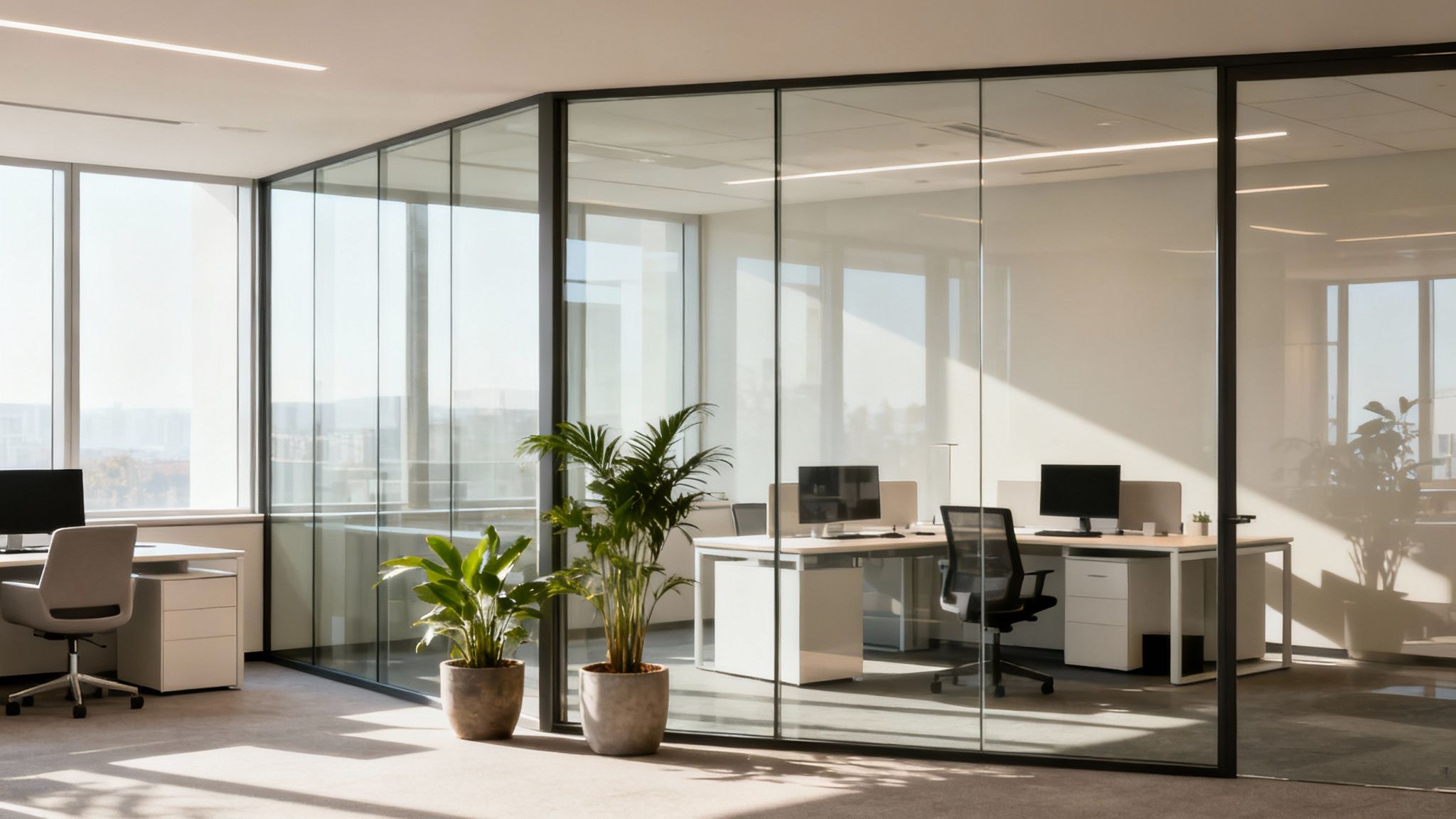
Modern office interior with glass partition walls for office, desks with computers, and plants enhancing the bright atmosphere.

The first thing you’ll notice is the flood of natural light. Sunlight isn’t just about brightness; it’s a huge factor in employee well-being. Study after study has shown that offices with plenty of natural light see major drops in employee eyestrain, drowsiness, and headaches.

This simple change leads directly to a more energized and focused team. When people feel better physically, their ability to concentrate and do deep work skyrockets, creating a more productive and positive atmosphere all around.

Building a Culture of Visual Connection

Glass partitions create what we call visual connectivity—a subtle but powerful tool for building a cohesive and transparent company culture. Unlike solid walls that chop up the office into isolated silos, glass lets team members actually see one another, which helps build a sense of community and shared purpose.

This connection makes it easier for people to collaborate on the fly. An employee can glance over and see if a manager is free for a quick question without having to interrupt, or team members can give a quick wave across the room, strengthening those professional bonds.

Glass walls hit a sweet spot. They give you the acoustic separation needed for focused work while getting rid of the psychological isolation that traditional walled-off offices are famous for.

This balance is the perfect solution to the old open-office debate. You get all the collaborative energy and transparency of an open plan, but without the constant noise and distractions that kill productivity. To see more about how physical design impacts work, check out our guide on how office trends boost employee productivity.

A Secret Weapon for Attracting Talent

In today’s job market, the office environment is a huge deal for top talent. A dated, dark, or boxed-in office can be a major turn-off for skilled professionals who have come to expect a modern and dynamic place to work.

A bright, open, and thoughtfully designed office with glass partitions sends a clear signal about your company’s values.

  • It Shows Transparency: A transparent office suggests a transparent culture where communication and collaboration aren’t just buzzwords.
  • It Puts Well-being First: When you invest in an environment that maximizes natural light, it shows you genuinely care about your employees’ health and comfort.
  • It Looks Forward-Thinking: The design itself becomes a recruiting tool, showing your company is a modern, innovative place to grow a career.

At the end of the day, glass partitions do more than just divide a room—they create an environment where people actually want to be. This not only helps you attract new talent but is also key to keeping your best employees, making your office a cornerstone of your company’s long-term success.

How to Plan Your Budget for Glass Partitions

Figuring out the costs for glass partition walls for your office is the first real step in getting your project off the ground. Budgeting for these systems isn’t like picking something out of a catalog; the final number is a mix of the materials you choose, how much you customize them, and the labor to put it all together. Once you get a handle on these pieces, you can make smart decisions that fit your budget and your design vision.

The total investment really comes down to a few key things. The specific type of glass, the framing system, the style of the door hardware, and any custom finishes—they all play a big part in the final cost. By breaking it down, you can see exactly where your money is going and find places to be strategic with your spending.

Breaking Down the Core Cost Factors

Think of budgeting for glass walls like customizing a new car. The base model has one price, but every feature you add or upgrade changes the final number. It’s the same idea here. Your biggest cost drivers will be the glass itself and the structure holding it up.

  • Glass Type: Your most budget-friendly option is standard tempered glass. If you need better soundproofing, upgrading to acoustic or double-glazed glass will increase the price. The same goes for specialty options like smart glass that can switch from clear to opaque with the flip of a switch.
  • Framing System: Frameless partitions look sleek, but they often need thicker, more expensive glass to keep everything secure. Framed systems, on the other hand, can work with a wider range of glass thicknesses. The material and finish of the frame—like standard aluminum versus a powder-coated black—will also impact your cost.
  • Doors and Hardware: The door you choose—swinging, sliding, or pivot—and the hardware that goes with it can add a surprising amount to the budget. Things like handles, locks, and hinges, especially high-end minimalist hardware, typically cost more than standard options.

Understanding Price Ranges and Installation Fees

Let’s talk numbers to give you a clearer picture. In 2025, you can generally expect pricing to range from $85 to $200 per square meter. This is influenced by how complex the job is and any high-end features you add. These systems are becoming incredibly popular. In fact, the U.S. Department of Energy reported that in 2023, over 25% of new commercial office buildings used glass partitions. They aren’t just for looks; they’re valued for their ability to cut energy use by up to 20-30% by letting in more natural light, a huge plus for getting green building certifications.

Beyond the materials, always budget for installation. This is not a DIY job. Professional installation is essential to ensure safety, perfect alignment, and a clean, finished look. This fee usually covers the site visit, delivery, the labor itself, and cleanup.

A common mistake is just looking at the material cost and forgetting about installation. A precise, professional installation is what makes your glass walls perform well and last for years, so it’s a critical part of your overall budget.

Smart Strategies to Maximize Your Investment

Budgeting well doesn’t mean just picking the cheapest option. It’s about making smart choices that give you the most bang for your buck. A well-thought-out layout can be the perfect balance of cost and function.

For instance, you could use premium, double-glazed glass for areas where quiet is a must, like boardrooms or Private Office Cubicles. Then, for other areas, you can use more cost-effective single-glazed panels. Another great approach is mixing glass walls with traditional systems. You can create focused work areas by combining glass fronts with budget-friendly workstation cubicles, giving you the best of both worlds: light, openness, and cost control.

For a deeper dive into how to budget for different office setups, our comprehensive workstation cubicles price guide has some great insights that can help shape your overall spending plan.

The Installation Process from Start to Finish

Bringing glass partition walls for office spaces to life is a precise, multi-step journey. It’s about turning a design concept into a functional, beautiful reality. Understanding the process from the get-go helps set clear expectations and ensures the project runs smoothly, causing as little disruption to your business as possible. Think of it as a carefully managed sequence designed to deliver a flawless result.

The real work begins long before a single tool arrives on-site. The first and most critical stage is the initial design consultation and planning. This is where your vision really starts to take shape.

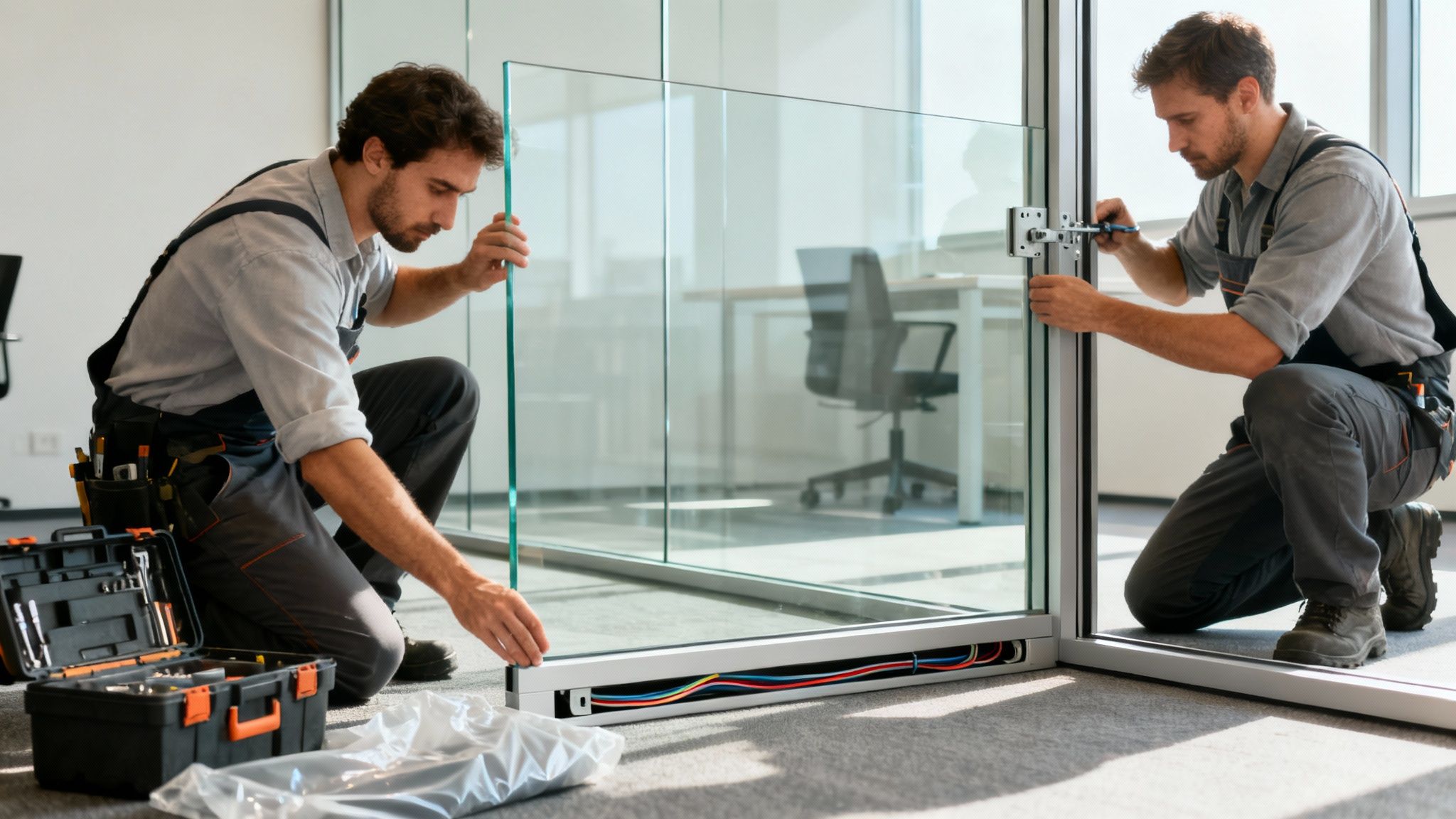
Two professional installers fitting a glass partition wall for an office, ensuring a perfect and secure installation.

Step 1: Consultation and Precision Measurement

During this phase, our team works closely with you to understand your goals. Are you trying to improve acoustics, let more natural light in, or create defined zones for different teams? This is also when we take meticulous site measurements, which are absolutely essential for a perfect fit. Even a tiny error here can cause significant delays and extra costs down the line.

To help you visualize the final layout before committing, tools like our Cubicle Designer are invaluable. It lets you map out where the walls, doors, and even furniture will go, giving you a clear digital preview of how your new office will flow.

Step 2: Material Procurement and Lead Times

Once the design is locked in and measurements are confirmed, we move on to ordering the materials. The lead time—the wait between placing the order and the materials arriving—can vary. It all depends on factors like the type of glass, frame finishes, and any custom elements you’ve chosen.

On a typical project, you can expect a few weeks for material fabrication and delivery. This waiting period is actually the perfect time to prep your office space for the upcoming construction and coordinate with our team on the installation schedule.

Our project managers will keep you in the loop every step of the way, providing a transparent timeline so you know exactly what to expect. This proactive communication makes sure everyone is on the same page and ready for the on-site work. To get a more detailed breakdown of this phase, you can learn more about our specific glass architectural wall installation services.

Step 3: On-Site Installation and Integration

When installation day arrives, our professional team gets to work with a sharp focus on efficiency and minimizing disruption. We get it—your business needs to keep running. That’s why we coordinate our work schedule to fit your operational needs, often working during off-hours if that’s what it takes.

A key part of the installation is seamlessly integrating power and data cabling. The frames of our glass partition systems are specifically designed to discreetly house these essential wires. This gives you a clean, modern look with no messy, exposed cables, ensuring your new spaces are just as functional as they are beautiful.

The installation process itself typically involves:

  • Site Preparation: Clearing and preparing the installation area to ensure a safe and clean workspace.
  • Frame Assembly: Carefully building the foundational framework according to the approved design plans.
  • Glass Placement: Expertly lifting and setting each pane of glass into the frame, ensuring a secure and perfect fit.
  • Finishing Touches: Attaching door hardware, sealing joints, and performing a final quality check on every single component.

Finally, we do a thorough walkthrough with you to make sure every last detail meets your expectations. This transparent, professionally managed process guarantees that your new glass partition walls are installed correctly, safely, and ready to transform your workplace.

Putting It All Together: Your Project Checklist

Okay, turning that vision of a modern, light-filled office into a reality takes a solid plan. Think of this checklist as your roadmap. It pulls together everything we’ve talked about into a step-by-step guide to keep your glass partition walls for office project on track, from the first sketch to the final walkthrough. Let’s make sure you’re making confident, informed decisions every step of the way.

Each phase builds on the one before it, helping you nail down your needs, set a realistic budget, and pick the features that will create a workspace that’s not just beautiful, but truly functional.

Phase 1: Define Your Core Objectives

Before you even think about looking at glass samples, you need to know why you’re doing this. What’s the end goal? Getting clear on your objectives now will make every other decision down the line so much easier. What problems are you actually trying to solve?

  • What’s the Main Goal? Are you trying to flood a dim office with natural light? Do you desperately need better acoustic privacy for focused work? Or is the big push to foster a more open, collaborative culture?
  • What’s the Vibe? What look are you going for? Super sleek and minimalist with seamless frameless glass, or something a bit more structured and industrial with a black-framed system?
  • Who Needs What? Start mapping out which teams will use the new spaces. Are these client-facing conference rooms that need to impress? Private offices for executives who need confidentiality? Or flexible breakout zones for brainstorming?

Phase 2: Assess Your Space and Needs

With your goals in hand, it’s time for a reality check. Walk your current office layout and start identifying the specific requirements for different areas. This is where you connect your big-picture vision to the nuts and bolts of your floor plan.

This isn’t just about taking measurements. It’s about really understanding how your team gets work done and designing a space that supports them, whether they’re in deep-focus mode inside Private Office Cubicles or hashing out ideas in a team huddle.

A good assessment ensures your new glass walls solve existing headaches without creating new ones. A great place to start playing with ideas is our interactive Cubicle Designer—it can really help you visualize different layouts.

Phase 3: Plan Your Budget and Features

Now we get to the fun part: matching your needs with your budget. Having a clear financial picture from the start helps you prioritize what’s a “must-have” versus a “nice-to-have,” so you can make smart trade-offs without sacrificing your main goals.

Here’s a simple checklist to walk you through the key decisions for planning your glass partition project. It’s designed to break down a complex process into manageable steps.

Your Project Planning Checklist

Planning Step Key Consideration Action Item
Establish Budget What’s your total project budget? Remember to include materials, installation, and a 10-15% contingency for surprises. Start getting quotes based on linear footage and overall complexity.
Select Glass Type Do you need single-glazing for an open feel, or is double-glazing for acoustic control a priority? Assign glass types to different zones based on their privacy and sound-blocking needs.
Choose Frame System Are you going with framed partitions for a defined, industrial look, or frameless for that seamless, “barely there” aesthetic? Match the frame style to your office vibe and budget.
Finalize Doors Do you need space-saving sliding doors, or do traditional swinging doors fit the space and function better? Pick doors and hardware that complement the partition style and flow.
Consider Customization Will you need frosted or banded glass for privacy? How about adding your company logo or branding elements? Factor in any custom finishes to your final cost and timeline.

By working through these steps, you can move forward with confidence, knowing you have a solid plan in place. And of course, if you need a hand figuring out how to perfectly integrate your new glass walls with versatile cubicle systems, our team at Cubicle By Design is always here to help.

Your Top Questions About Glass Walls, Answered

When you’re thinking about bringing glass partitions into your office, it’s natural to have a few practical questions. How do they hold up day-to-day? Are they a smart long-term investment? Let’s walk through some of the most common questions we hear from office managers and designers.

How Hard Is It to Keep Glass Walls Clean?

This is one of the first questions people ask, and the answer is always a pleasant surprise: they’re incredibly easy to maintain. A quick wipe-down with a standard glass cleaner and a microfiber cloth is all it takes to handle daily smudges and fingerprints.

Concerns about cleaning are understandable, but knowing how to achieve streak-free windows is the only trick you need. Unlike drywall that gets scuffed and needs repainting every few years, glass is a tough, non-porous surface that looks brand new for years with minimal effort.

Can Glass Partitions Be Reconfigured Later On?

Yes, and this is where glass walls truly shine. Traditional construction is permanent, but modular glass walls are designed to be demountable. This means they can be taken down and reinstalled in a new layout with hardly any mess, dust, or downtime.

This flexibility is what makes them a future-proof investment for any growing business. As your team expands or your layout needs to change, your office can adapt right along with you, saving a small fortune on future renovation projects.

For companies planning to scale or those navigating hybrid work models, this agility is a game-changer. It ensures your office layout stays functional and relevant for years to come.

Are Glass Partition Walls Safe and Durable?

Absolutely. Safety is non-negotiable in a commercial space, and modern glass partition systems are engineered to meet tough building codes. We rely on specialized safety glass to make sure they’re as durable as they are beautiful.

You’ll typically see two types of glass used:

  1. Tempered Glass: This glass goes through a special heat-treatment process that makes it about four times stronger than regular glass. If it ever does break, it’s designed to crumble into small, dull-edged pebbles, which dramatically reduces the risk of injury.
  2. Laminated Glass: Think of this as a glass sandwich. It has a tough plastic interlayer that holds the pane together even if it shatters. The glass might crack, but the pieces stay bonded to the interlayer, preventing dangerous shards from falling.

Both of these options are incredibly resilient and meet all commercial safety standards, making them a secure and reliable choice for any busy office. They offer that perfect blend of sleek design and robust performance, whether you’re building out individual workstation cubicles or defining entire departments.


At Cubicle By Design, we specialize in creating flexible, modern, and productive workspaces. Our team is ready to help you plan and implement the perfect glass partition solution for your office. Explore our full range of products and design services at https://cubiclebydesign.com/.

Read More

Office Glass Partition Walls: Modern, Acoustic, and Cost-Effective Solutions by Cubicle By Design

Office glass partitions are room dividers made from glass panels, designed to create separate offices, meeting rooms, or zones within a larger space without sacrificing an open, light-filled feeling. They are a fantastic modern alternative to traditional drywall, offering far more flexibility and a much cleaner look. At Cubicle By Design, we help businesses leverage these systems to build dynamic and efficient workspaces.

Reimagining the Modern Workspace with Glass Partitions

Walk into a cutting-edge office today, and you’ll likely notice something different. The days of stuffy, solid-walled offices and isolating cubicles are fading fast, replaced by something brighter, more connected, and a lot more collaborative. Office glass partition walls are at the heart of this shift.

These aren’t just panes of glass; they’re strategic tools that fundamentally change how teams work together. They strike that perfect balance between the modern desire for open, light-filled spaces and the age-old need for quiet, focused work. Think of them as the key to unlocking a more dynamic and energized office. At Cubicle By Design, we’ve seen firsthand how these systems can turn a monotonous floor plan into a motivational powerhouse.

Why Glass Walls Are a Cornerstone of Modern Office Design

The move toward glass partitions isn’t just some passing fad—it’s a direct response to what today’s workforce needs to succeed. Companies are ditching opaque barriers that create silos, opting instead for solutions that foster a sense of community and well-being. This isn’t a new idea, but it’s gained serious momentum over the last decade.

In fact, the adoption of glass partitions has become a defining feature of modern office design. By 2023, over 40% of corporate offices worldwide had already integrated these systems. This isn’t just a local trend; it’s a global embrace of glass for its ability to promote both transparency and pure functionality. You can discover more insights on the glass partition market here.

By allowing natural light to flow deep into an office, glass walls don’t just cut down on energy bills—they make people feel better. Studies have consistently shown that good access to natural light can reduce eye strain, fight off afternoon drowsiness, and even cut down on headaches.

The Strategic Benefits Beyond Aesthetics

While they look incredibly sleek, the real value of glass walls goes far beyond just good looks. They offer seriously practical solutions to common workplace problems, making them a smart investment for any business looking to improve its space. These systems are a huge part of successful workplace design trends that put both employee experience and business efficiency first.

To make it simple, here are the core advantages in a nutshell.

Key Benefits of Glass Partition Walls at a Glance

Benefit Impact on Your Office
Enhanced Collaboration Visual connection encourages spontaneous chats and strengthens team spirit.
Improved Flexibility Modular systems can be moved and reconfigured as your company evolves.
Acoustic Privacy Double-glazed or laminated glass creates quiet zones without total isolation.
Increased Natural Light A brighter space leads to a healthier, happier, and more productive team.

Ultimately, glass partitions do more than just divide a room. They help you build a more adaptable, collaborative, and human-centric workplace.

Choosing Your Style: Framed vs. Frameless Systems

Picking between framed and frameless office glass partitions is a lot like choosing between a classic framed painting and a sleek, modern canvas print. They both look fantastic, but they create entirely different moods in a room. This isn’t just a minor detail; it’s a foundational choice that will shape your office’s atmosphere, workflow, and overall vibe.

Framed systems give you a strong, structured look—think industrial or traditional—while frameless systems deliver that seamless, all-glass aesthetic that feels open and cutting-edge. To figure out which is right for you, we need to dig into the practical differences in how they look, how they’re installed, how well they block sound, and what they cost.

The Bold Statement of Framed Glass Systems

Framed glass partitions are the workhorses of office design. They’re known for being incredibly durable and having a strong visual presence. The metal framing, which is usually aluminum, outlines each glass panel and creates a distinct grid-like pattern that can define a space with real authority and style.

You can think of these systems as having a visible skeleton. This structure adds to that classic or industrial feel, but it also provides serious support, making it a great choice for high-traffic hallways and busy common areas. The frames also create a tighter seal around the glass, which usually means better acoustic performance. This makes them perfect for carving out quiet spaces, like our Private Office Cubicles.

The Minimalist Appeal of Frameless Glass Walls

If your goal is to maximize natural light and create the illusion of a much bigger space, frameless glass partitions are the answer. These systems use the bare minimum of hardware. Glass panels meet edge-to-edge, held together by discreet clamps and nearly invisible seals. The end result is a stunning, uninterrupted wall of glass that feels both weightless and incredibly sophisticated.

This ‘all-glass’ look is a huge hit in modern office design because it builds a culture of transparency and connection. It lets sunlight pour across the entire floor plan, and studies have shown that more natural light can reduce employee drowsiness by 56% and headaches by 63%. It’s the go-to style for companies wanting to foster collaboration without putting up solid, view-blocking walls.

The demand for this clean look is so high that frameless glass partitions now command 42.8% of the market share. Companies are redesigning their spaces to find that sweet spot between collaboration and privacy, and this style nails it.

This decision tree can help you connect your main goal—whether it’s more light, better focus, or easier collaboration—with the right type of system.

As the flowchart suggests, if flooding your space with light is the top priority, a frameless system is your best bet. On the other hand, framed options are the clear winner for creating focused, quiet zones.

Framed vs. Frameless Glass Partitions Comparison

To make the choice even clearer, here’s a side-by-side comparison of the two systems. Think of this as a quick cheat sheet to see which style’s pros and cons align best with your office’s needs.

Feature Framed Glass Partitions Frameless Glass Partitions
Aesthetics Structured, bold, industrial look with visible aluminum frames. Sleek, minimalist, ‘all-glass’ appearance with minimal hardware.
Acoustics Generally superior soundproofing due to better seals from the frame. Good sound control, but the seals between panels are less robust.
Light Flow Excellent light transmission, but frames create visual breaks. Uninterrupted flow of natural light, making spaces feel larger.
Durability Extremely durable and well-suited for high-traffic areas. Very durable, but edges can be more vulnerable to direct impact.
Cost Often more budget-friendly for standard configurations. Can be more expensive, but installation may be faster.
Best For Private offices, conference rooms, and areas needing high noise control. Open-plan environments, collaborative spaces, and modern designs.

Ultimately, both are fantastic options. The decision comes down to what you’re trying to achieve: the robust, quiet focus of a framed system or the bright, open transparency of a frameless one.

Making the Right Choice for Your Space

Your final decision will come down to balancing looks, function, and budget. Here’s a quick breakdown to help you think it through:

  • For Acoustic Privacy: If keeping sound in (or out) is your top concern for meeting rooms or executive offices, a framed system is almost always the better choice. Double-glazed framed partitions offer the best soundproofing you can get.
  • For Maximum Openness: If you want a bright, airy, and visually connected office, a frameless system simply can’t be beaten. It’s the best way to make a smaller space feel much larger and more welcoming.
  • For Budget Considerations: Framed systems can sometimes be a bit easier on the wallet, especially for standard layouts. However, the installation for frameless systems can be faster, which might help balance out the total project cost.
  • For Installation Complexity: No matter which you choose, professional installation is a must to ensure everything is safe, secure, and performing as it should. To get a feel for the process, take a look at our guide on glass architectural wall installation.

The right system isn’t just a physical divider; it’s a tool that helps shape your company culture. A frameless wall sends a message of transparency and collaboration, while a framed wall can signify stability and focus.

The best way to really know what will work is to see it for yourself. You can play around with different layouts and see how these styles look in your space with our free Cubicle Designer tool. It’s a great way to turn an idea into a solid plan for your new workspace.

Mastering Acoustics and Privacy in Glass Offices

An open office aesthetic is fantastic, but it shouldn’t come at the cost of a chaotic, noisy environment. While office glass partition walls are celebrated for creating bright, connected workspaces, their real magic is how they deliver acoustic serenity and visual privacy right where you need it most. It’s all about choosing the right type of glass to transform an open floor plan into a collection of calm, focused zones.

Young man working on a laptop in a modern office with bright office glass partition walls behind him.

The key to unlocking this peace and quiet is a term you’ll hear a lot: Sound Transmission Class (STC) rating. Think of it as a noise-canceling score for your walls. The higher the STC number, the better the partition is at stopping sound in its tracks.

A standard, single-pane glass wall might have an STC rating in the low 30s. That’s enough to muffle conversations, but you’ll still hear what’s going on. But with the right technology, glass partitions can hit STC ratings of 40 or higher, putting them on par with traditional drywall and ensuring confidential conversations stay that way.

How Different Glass Types Control Sound

Not all glass is created equal when it comes to acoustics. The secret to serious sound control is in how the glass panels themselves are built. Different techniques are used to disrupt and absorb sound waves before they can travel from one room to the next.

Here are the main types you’ll run into:

  • Standard Tempered Glass: This is your baseline. It’s a strong, durable safety glass, but it offers only minimal acoustic help. It’s best for areas where noise just isn’t a major concern.
  • Laminated Acoustic Glass: This is a clever sandwich. It features a thin, invisible layer of plastic (polyvinyl butyral, or PVB) between two panes of glass. This middle layer acts as a vibration-dampening core, making it much better at blocking mid-to-high frequency sounds—like human speech.
  • Double-Glazed (Insulated) Glass: This system is the heavy hitter. It uses two separate panes of glass with an air or gas-filled gap in between. That gap creates a powerful insulating barrier that’s exceptionally good at blocking a wide range of sound frequencies, making it the top choice for executive offices or boardrooms.

The right choice really depends on the needs of the space. For a bustling sales floor, standard glass might be fine. But for sensitive HR meetings or legal consultations, investing in double-glazed systems is a must.

A well-designed office uses a mix of acoustic solutions. A high-STC glass wall for a meeting room combined with sound-absorbing ceiling tiles and carpets in the open area creates a balanced acoustic environment for everyone.

More Than Just Sound: Visual Privacy Solutions

Acoustic control is only half the battle. Visual privacy is just as important for creating comfortable and secure workspaces. Fortunately, glass partitions offer a whole spectrum of creative solutions to control who sees what, without having to resort to clunky blinds or curtains.

These options let you dial in the perfect level of privacy, from subtle obscurity to complete opacity. You can make sure your team has the confidentiality it needs to perform at its best. For a deeper dive into creating secluded spaces, our guide on achieving office cubicle privacy offers even more strategies.

Modern Solutions for Visual Privacy

Privacy Type How It Works Best For
Frosted or Etched Glass The glass is sandblasted or acid-etched to create a translucent, blurred effect. Conference rooms and individual offices where you want to hide details but still let light stream through.
Decorative Film A vinyl film with patterns, gradients, or branding is applied directly to the glass. Adding a layer of design and branding while providing partial or full visual privacy in a cost-effective way.
Switchable Smart Glass An electrical current passes through a film, turning the glass from clear to opaque with the flick of a switch. High-tech boardrooms and executive suites where on-demand privacy is needed for confidential meetings.

By combining advanced acoustic glass with these smart visual privacy options, you can design an office that feels open and collaborative yet provides the quiet and confidentiality that productive work demands. It’s this strategic blend that makes a workspace not just beautiful, but truly functional.

Strategically Planning Your Office Layout

Putting up office glass partition walls isn’t just about slicing up a room; it’s about designing a smarter, more productive workflow. A well-planned layout is more than just good looks—it actively supports how your team works day-to-day, encourages the right kinds of conversations, and shapes an environment where people can truly focus. Think of it as the blueprint for turning a basic floor plan into a dynamic, efficient workspace.

Modern office interior featuring bright office glass partition walls, a meeting room, and workstation cubicles.

The first step is to start thinking in zones, not just rooms. Every office has different kinds of activity, and your layout needs to serve all of them. By placing glass walls strategically, you can define these areas without throwing up solid barriers that kill collaboration and block off the space.

Designing Functional Zones with Glass

Your real goal here is to create a seamless flow between different work modes. Glass partitions are the perfect tool for the job. They give you the separation you need while keeping that feeling of openness and connection across the entire office.

Here’s a practical way to think about creating your key zones:

  • Collaborative Hubs: These are your high-energy spots for brainstorming and teamwork. You can use clear glass walls to enclose these spaces near common areas. This keeps the sound from spilling out but lets the creative energy stay visible, which can actually inspire others.
  • Deep Work Areas: Everyone needs a quiet place to get into the zone. Try to position these areas away from high-traffic paths and use acoustically rated glass partitions to cut down on distractions. Adding frosted or etched glass can give an extra layer of visual privacy without making the space feel dark. Consider layouts with our workstation cubicles to maximize focus.
  • Formal Meeting Rooms: When it’s time for client meetings or sensitive discussions, double-glazed glass walls are the way to go for maximum acoustic privacy. It sends a message of professionalism and security while still feeling connected to the rest of the office.

This kind of thoughtful space division is what makes a workspace truly successful. To really nail it, it’s best to consider the entire office building layout plan and see how glass elements fit into the bigger picture.

Harnessing Natural Light for a Better Workplace

One of the biggest wins you get from planning with glass is the ability to pull natural light deep into your office. Traditional walls are notorious for creating dark interior hallways and offices, making you rely on artificial lighting that can cause eye strain and that classic afternoon slump.

Glass partitions, on the other hand, act like channels for sunlight, letting it flood every corner. This one simple change can have a massive impact on both your team’s well-being and your bottom line. It’s been shown time and again that access to natural light boosts mood, sharpens focus, and even reduces absenteeism. It all adds up to a healthier, more productive crew.

The rise of rapid urbanization has made office space a premium commodity. By using glass, you can create a layout that feels expansive and bright, even in a smaller footprint.

In fact, you can see this trend in action—around 80% of new urban commercial buildings are now designed with glass partitions in mind. This approach allows for an average 20% space optimization compared to solid walls, which is a huge advantage when you’re trying to keep real estate costs down.

The Power of Modularity and Future-Proofing

Maybe the smartest reason to go with glass partition systems is their modularity. Unlike drywall, these walls aren’t a permanent decision. They are designed to be demountable, which means you can reconfigure them as your company grows and your needs evolve.

This flexibility is a massive asset. If a department suddenly expands or you need to carve out a new project room, the layout can be changed over a weekend with very little mess or disruption. This makes glass partitions a smart, sustainable investment that grows right along with your business.

For help creating a layout that works for you now and in the future, explore our expert office space planning and design services.

Navigating Costs, Installation, and Long-Term Care

So, let’s talk about the practical side of things. You see the appeal of office glass partition walls and how they can transform a space, but what’s the real story when it comes to the investment? From the initial quote to the installation day and beyond, getting a handle on the costs and logistics is key to smart planning. This is where we break down the numbers and the process, so you can feel confident your glass partitions will deliver value for years to come.

Breaking Down the Costs of Glass Partitions

The final price for a glass wall system isn’t a simple, one-size-fits-all number. It’s more of a recipe, where your design choices, performance needs, and the project’s complexity are all key ingredients. The best way to get a firm number is always a custom quote, but understanding what drives the cost will help you set a realistic budget from the get-go.

A few big factors will shape your total investment:

  • System Type: Frameless systems often carry a higher material cost because they require thicker, perfectly finished glass. On the flip side, their installation can sometimes be quicker, which helps balance out the overall project price.
  • Glass Specifications: The type and thickness of the glass are major variables. A standard single-pane tempered glass is your most budget-friendly option. If you need serious soundproofing or high-tech features, you’ll be looking at double-glazed acoustic glass or switchable smart glass, which represent a more significant investment.
  • Hardware and Finishes: Even the little things matter. The style and finish of frames, door handles, and hinges play a part. A standard brushed aluminum finish is going to be more economical than a custom powder-coated color or premium designer hardware.
  • Customization: Anything outside the standard playbook—like curved glass, custom-etched logos, or extra-tall panels—will naturally add to the final cost.

It’s easy to get fixated on the upfront price, but don’t forget the long-term ROI. Glass partitions are incredibly durable and low maintenance. You won’t be spending money patching and repainting drywall every few years, and their flexibility saves a fortune on future reconfigurations.

The Critical Role of Professional Installation

Here’s a piece of advice I can’t stress enough: installing glass partitions is a job for the pros. This is not a DIY weekend project. While it might look straightforward, getting a flawless, safe, and secure installation requires a level of precision and expertise that only comes with experience.

Professional installers are trained to handle every detail, from taking hyper-accurate site measurements to safely maneuvering heavy glass panels into place. They ensure every seal is perfectly aligned to block sound leaks and that the entire structure is solid. A proper installation is the difference between a system that looks incredible and performs perfectly for a decade, and one that causes headaches down the road.

At Cubicle By Design, our teams live and breathe this stuff. To get a better sense of what’s involved, you can learn more about our professional office furniture installation services.

Long-Term Care and Simple Maintenance

One of the best things about office glass partition walls is how ridiculously easy they are to take care of. Forget about drywall that gets scuffed, dented, and needs constant touch-ups. Glass is a tough, non-porous surface that asks for very little in return.

Keeping your partitions looking brand new is simple:

  1. Regular Cleaning: A simple mix of water and mild soap, or just a standard glass cleaner, is all you need. Use a soft, lint-free cloth to avoid streaks. Just steer clear of abrasive powders or scouring pads that could scratch the surface.
  2. Hardware Checks: Every once in a while, give the door handles, hinges, and other hardware a quick check to make sure everything is tight and secure. A quick turn of a screwdriver is usually all it takes.
  3. Seal Inspection: About once a year, take a quick look at the seals between the glass panels and where they meet the floor and ceiling. This makes sure the soundproofing is still holding up perfectly.

That’s pretty much it. With just a tiny bit of effort, your glass partitions will maintain their clean, modern look for years, making them one of the most sustainable and cost-effective choices you can make for a modern office.

Understanding Safety and Building Code Essentials

When you’re planning a modern office, it’s easy to get caught up in the look and feel of things like office glass partition walls. And while that’s the exciting part, safety is the foundation every great installation is built on. Diving into safety standards and building codes might sound intimidating, but it’s actually pretty straightforward once you know what to look for.

Getting this right isn’t just about ticking boxes. It’s about creating a genuinely secure environment for your team and protecting your business from liability down the road.

The heart of glass partition safety comes down to the glass itself. Your everyday window glass—known as annealed glass—has absolutely no place in an office wall. Regulations require specialized safety glass that’s engineered to prevent serious injury if it ever breaks. Working with an expert like Cubicle By Design means you can rest easy knowing every single panel we install meets these critical standards.

The Non-Negotiable Role of Safety Glass

Think of safety glass as an insurance policy. You hope you never need it, but you absolutely have to have it. Building codes demand its use in partitions, doors, and any large glass features where people might accidentally bump into it.

You’ll mainly come across two types:

  • Tempered Glass: This glass goes through a serious heating and rapid cooling process that makes it four to five times stronger than regular glass. But its real magic is in how it breaks. Instead of creating dangerous, sharp shards, it shatters into small, dull, pebble-like pieces that are far less likely to cause harm.
  • Laminated Glass: This is basically a glass sandwich. It’s made of two or more layers of glass fused together with a tough plastic interlayer (PVB). If laminated glass cracks, that interlayer does an amazing job of holding all the fragments in place, keeping the barrier intact and preventing glass from scattering everywhere.

Decoding Fire Ratings and Compliance

Beyond impact safety, fire resistance is another huge deal, especially in commercial buildings. Certain walls, particularly those along escape routes, might need to have a specific fire rating. This rating tells you exactly how long a partition can hold back a fire and stop it from spreading.

Fire-rated glass and framing systems are designed to contain a fire for a set amount of time—like 20, 45, or 60 minutes—giving everyone precious time to evacuate safely. When you’re picking materials, even decorative films for the glass, you have to be sure they don’t compromise the wall’s fire rating. It’s always a good idea to get familiar with understanding UL fire safety standards to make sure everything is compliant.

Ensuring Accessibility for Everyone

A modern workspace has to work for everyone. The Americans with Disabilities Act (ADA) lays out clear rules to make sure people with disabilities can move through and use the office without barriers. For glass partitions, this usually means focusing on a few key things:

  • Clearance Requirements: Doorways need to be wide enough for easy wheelchair access.
  • Door Hardware: Handles and levers should be easy to use with one hand, without needing to grip them tightly.
  • Visual Cues: Large, clear panes of glass need some kind of marking or “distraction graphic” at specific heights so people don’t accidentally walk into them.

Navigating all these codes and regulations is a core part of what we do. From our modular cubicles to complex glass wall systems, we make sure every component aligns with local building codes and ADA standards. The end result is a workspace that’s not only beautiful but also safe, compliant, and welcoming for every single person on your team.

Got Questions About Office Glass Walls? We Have Answers.

Making the move to a more modern, open-feeling office is a big decision, and it’s totally normal to have questions. When you’re thinking about integrating office glass partition walls, you need clear, straightforward answers. We’ve gathered the most common questions we hear from clients to give you the practical info you need to move forward with confidence.

Think of this as a quick-reference guide to reinforce some of the key ideas we’ve covered, helping you find what you need fast.

How Good Are Glass Partitions at Blocking Office Noise?

They are incredibly effective, but only if you choose the right type of glass. A basic, single pane of glass will only offer minimal sound reduction, but the specialized options can make a world of difference. For instance, acoustic glass—like laminated or double-glazed panels—can hit an STC rating of 40 or higher, which is right up there with traditional drywall.

The real secret is matching the glass specification to what the room will be used for. It’s also critical to have a professional installation that properly seals up any potential sound leaks around the frames and joints.

A lot of our clients are surprised when they learn that a double-glazed glass wall can be just as good at blocking sound as a standard insulated stud wall. It’s all about creating an air gap that disrupts the sound waves, which just goes to show you don’t have to sacrifice a quiet space for an open feel.

Are Office Glass Partition Walls Safe and Durable?

Absolutely. Any reputable supplier, including Cubicle By Design, will only use tempered or laminated safety glass, which is what building codes demand. These materials are specifically engineered to handle the demands of a commercial environment.

Tempered glass is roughly five times stronger than regular glass and is designed to crumble into small, dull-edged pieces if it ever breaks, which dramatically reduces the risk of injury. Laminated glass has a polymer layer sandwiched inside that holds the pane together even if it shatters, keeping the barrier intact. Both are built to handle the daily rigors of a busy office, from accidental bumps to frequent cleaning, making them a safe and long-lasting choice.

Can We Move or Reconfigure Glass Partitions Later On?

Yes, and this flexibility is honestly one of their biggest selling points. Many systems, often called “demountable walls,” are designed from the ground up to be non-permanent fixtures. This means they can be carefully taken down and reinstalled in a new layout with very little disruption, dust, or waste.

This modular design makes them a smart, sustainable investment, especially for businesses that expect to grow or change how they use their space. You can adapt your office as your team evolves without the high costs and mess that come with traditional demolition and construction.

How Much Natural Light Will We Actually Get with Glass Walls?

Glass partitions are simply unmatched when it comes to maximizing natural light in an office. A clear, full-height glass wall allows pretty much all the available sunlight to flow deep into your space, brightening up interior areas that would otherwise be stuck with artificial lighting all day.

This doesn’t just create a more vibrant and welcoming atmosphere; it has real, tangible benefits for your team. Studies have shown that employees who get more natural light report 56% less drowsiness and 63% fewer headaches. It’s a simple change that can lead to a healthier, more alert, and more productive group of people.


Ready to create a brighter, more flexible, and productive workspace? The experts at Cubicle By Design can help you plan, design, and install the perfect office glass partition walls for your unique needs. Explore our solutions and see how we can transform your office.

Explore our full range of modular cubicles and office solutions today!

Read More