

Buying used office furniture is more than just a way to save a few bucks—it's a sharp strategic move. It gives you access to high-quality, durable pieces from premium brands for a fraction of what they’d cost new. This isn't about compromising; it's about getting the most value for every dollar you spend. At Cubicle By Design, we've seen countless businesses leverage this strategy to create incredible workspaces without breaking the bank.
Why Savvy Businesses Choose Used Office Furniture
Let's get straight to it: the decision to bring pre-owned furniture into your workspace is no longer just a frugal tactic. It's become a core business strategy.
For facilities managers and business owners, the old mindset of 'new at all costs' is giving way to 'value and quality first.' What’s driving this shift? It's a desire to make smarter investments that positively impact the bottom line, employee comfort, and the company's reputation.
The most immediate and obvious benefit is financial. Opting for used pieces can stretch your budget in a big way, often freeing up 50-70% of the cost compared to buying new. Think about what that really means. It's not just about saving money; it's about reallocating that capital to other critical areas like tech upgrades, employee wellness programs, or that marketing campaign you've been putting off. It’s the difference between just furnishing an office and actively investing in its growth.
Access Premium Quality for Less
One of the biggest perks of buying used is getting your hands on commercial-grade brands that might otherwise be completely out of reach. We’re talking about iconic names like Herman Miller, Steelcase, or Knoll. These brands are legendary for their ergonomic design, top-notch materials, and sheer longevity—all things that directly boost employee comfort and productivity.
A brand-new ergonomic chair from one of these top-tier manufacturers can easily run over $1,000. A gently used model? You might find one for a third of that price. This means a startup or a growing business can give its team the supportive, high-performance seating they deserve without wrecking the budget. The same logic applies to desks, storage, and especially modular systems.
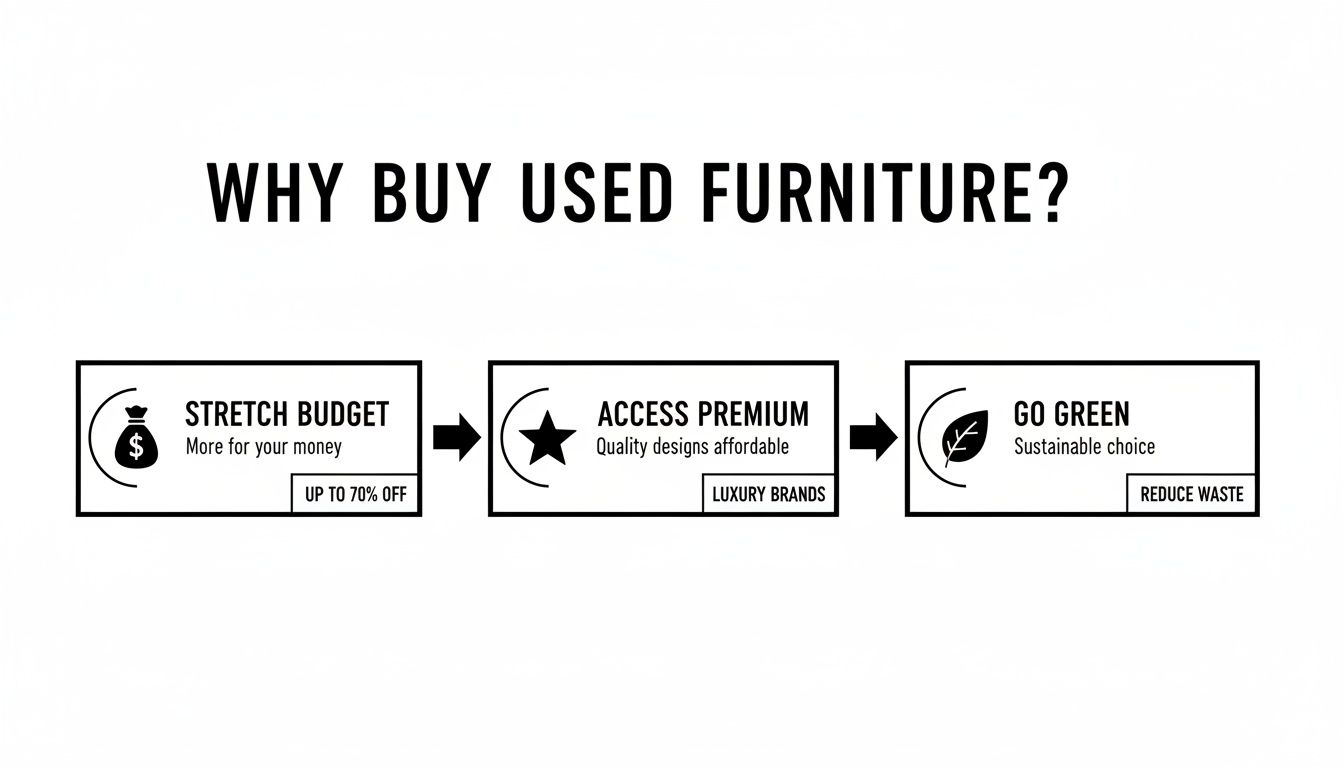
As you can see, the key drivers—stretching the budget, accessing premium brands, and promoting sustainability—build a powerful case for choosing pre-owned pieces.
A Commitment to Sustainability and Smart Management
Beyond the financial wins, choosing used furniture is a tangible way to shrink your company's environmental footprint. Every desk, chair, or filing cabinet you buy pre-owned is one less item headed for a landfill. This lines up perfectly with the growing corporate focus on sustainability and responsible operations.
It’s all part of a bigger picture. Smart asset lifecycle management is about extending the useful life of valuable equipment, which naturally reduces waste and consumption.
Choosing used furniture isn’t just a transaction. It’s a strategic decision that reflects a company’s commitment to being fiscally responsible and environmentally aware. It shows you understand that value and quality aren't exclusive to brand-new items.
This trend is backed by some serious market growth. Analysts project the second-hand furniture market will hit nearly USD 100 billion by 2037, which tells you this is now a mainstream approach. This growth is partly fueled by the rise of hybrid work, which has led companies to reconfigure their spaces more often. The result? A steady supply of high-quality, nearly new inventory hitting the market.
For a deeper dive into making this decision for your own space, you can explore our guide on whether to buy new or used cubicles.
Quick Comparison: New vs Used Office Furniture
Here’s a quick breakdown of the core differences to help you decide which path is right for your project.
| Factor | New Office Furniture | Used Office Furniture |
|---|---|---|
| Cost | Highest upfront investment. | Significant savings, typically 50-70% less. |
| Lead Time | Can be long, often 6-12 weeks for custom orders. | Much shorter; items are often in stock for quick delivery. |
| Quality | Varies widely by brand and price point. | Access to high-end, commercial-grade brands for less. |
| Customization | Fully customizable colors, finishes, and fabrics. | Limited customization; what you see is what you get. |
| Condition | Brand new, perfect condition with full warranty. | Varies from like-new to showing signs of wear; warranties may be limited. |
| Sustainability | High environmental impact from manufacturing and shipping. | Low environmental impact; extends the life of existing products. |
Ultimately, whether you choose new or used depends on your specific priorities. If your budget is tight and you value sustainability, used is an excellent choice. If you need exact specifications and a full warranty, new might be the better fit.
Where to Find Quality Pre-Owned Furniture
Sourcing great used office furniture can feel like a treasure hunt, but only if you don't know where to look. While your first instinct might be to jump on generic online marketplaces, the real gems are usually found elsewhere. The key is to connect with sellers who actually live and breathe commercial-grade furniture, not just someone clearing out their garage.

This is exactly why specialized dealers are my first recommendation. Unlike an anonymous seller on a classifieds site, a dedicated company curates its inventory, thoroughly inspects every piece for quality, and often provides critical services like space planning and installation. It completely changes the game from a risky gamble to a smart, strategic investment.
Specialized Dealers and Liquidators
Honestly, the most reliable places to find quality used office furniture are professional dealers and liquidators. These businesses are pros at acquiring large volumes of furniture from companies that are moving, downsizing, or upgrading their look. This means you get access to a steady stream of matching items from top-tier brands.
Going through a dealer has some serious perks over a private sale:
- Curated Inventory: They’ve already done the hard work of filtering out the junk. You’re looking at pieces that meet a certain standard, so you’re far less likely to end up with wobbly desks or chairs with busted mechanics.
- Volume and Consistency: Need to furnish a whole department? A dealer is your best shot at finding a large set of identical task chairs or matching workstations.
- Extra Services: Many dealers go beyond just selling furniture. They can help with space planning and even handle the delivery and professional installation, which is an absolute lifesaver for complex systems.
Office liquidators are another fantastic avenue. Their entire business is built on clearing out office spaces quickly, so you can often score high-end pieces at rock-bottom prices. The only catch? You have to be ready to move fast, because their best stuff disappears in a flash.
Auctions and Online Marketplaces
Auctions—both in-person and online—can be an absolute goldmine if you know what you're doing. When companies go out of business, they often auction off all their assets, including furniture that's barely been used. You can even broaden your search by looking into resources for finding the best online estate sales for treasures, as you can sometimes find high-end home office furniture that works perfectly in a commercial space.
And yes, platforms like Craigslist or Facebook Marketplace can have some deals, but they come with a much bigger dose of risk. You're usually dealing with a private seller, which means no warranties, no returns, and you're on your own for pickup and transport.
The real value in buying used office furniture isn't just in the lower price—it's in the inspection. Knowing what to look for separates a cosmetic flaw from a deal-breaking structural issue, ensuring your investment lasts.
If you go this route, an in-person inspection is non-negotiable. Seriously. For more tips on what to look for in your area, check out our guide on finding used office cubicles near me.
What to Inspect Before You Buy
Knowing where to look is only half the battle. Once you've found a piece you like, you have to give it a thorough, hands-on inspection. Don't just give it a quick glance—really put it through its paces.
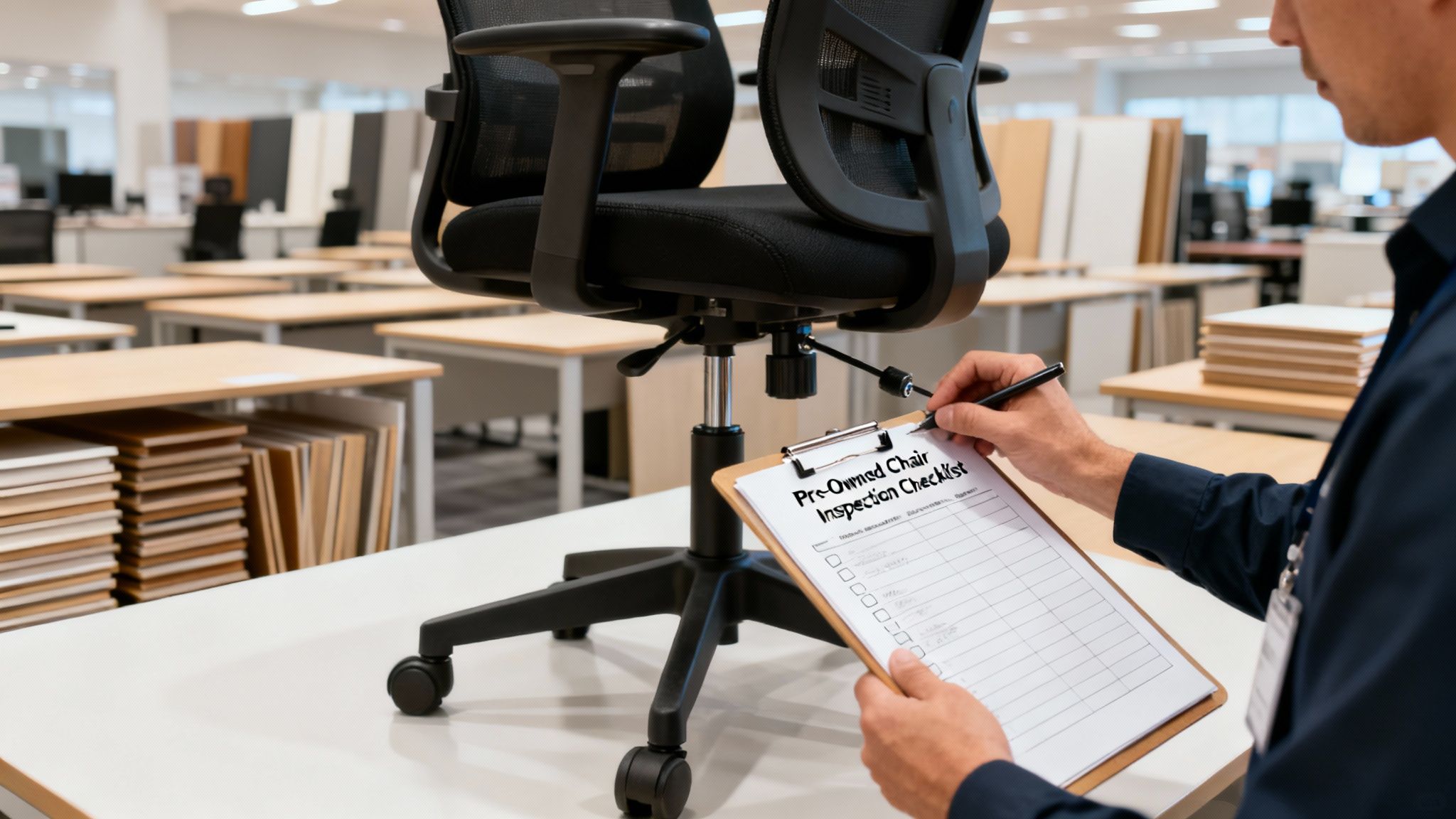
Here’s a practical checklist I use when assessing common office furniture:
For Ergonomic Chairs:
- Test the Gas Lift: Sit down and adjust the height up and down a few times. If the cylinder is failing, it'll sink slowly or won't hold its position at all.
- Check All Adjustments: Fiddle with everything. Armrest height and width, seat depth, back tilt lock—if it's supposed to move and it doesn't, that's a major red flag.
- Inspect the Upholstery: Look for big tears, noticeable stains, or any funky smells. A little wear is fine, but major damage can be a pain to fix.
- Roll the Casters: The chair should glide smoothly. If the wheels stick or stutter, it’s an annoyance you'll deal with every single day.
For Desks and Tables:
- The Wobble Test: Put your hands on the surface and give it a good shake. A little wobble might just need a tightened screw, but if it feels unstable, it's likely a structural problem.
- Examine Surfaces: Scan for deep scratches, swollen particleboard from water damage, or laminate that's peeling away at the edges.
- Check Drawers: Open and close every drawer. They should slide like butter, not stick or catch on the way in or out.
For Modular Cubicles:
- Panel Condition: Check fabric panels for rips and stains. If there are glass panels, look closely for any cracks or deep scratches.
- Structural Integrity: Make sure all the connectors and hardware are there. Missing proprietary parts for certain systems can make assembly completely impossible.
- Electrical Components: If the cubicles have built-in power, ask if the electrical systems have been tested. You don't want to mess with faulty wiring—it's a serious safety hazard.
By being meticulous about where you source your furniture and how you inspect it, you can confidently find pre-owned pieces that deliver real, long-term value.
The Real Financial Impact of Buying Used
The sticker price is what usually gets people thinking about used office furniture, but the real financial win goes much deeper. It’s not just about getting a deal on a single desk; it’s about understanding the total cost of ownership and the massive return a smart used-furniture strategy can deliver.
Let’s get out of the theoretical and into a real-world scenario.
Imagine you’re setting up a new office for a 20-person team. You need the works: desks, good chairs, storage, and a proper conference room. If you go all-new, especially with quality commercial-grade pieces, you’re looking at a huge capital expense right out of the gate.
But what if you take a blended approach? You could strategically mix new pieces with high-quality, pre-owned items. Maybe you spring for brand-new ergonomic chairs (always a good investment) but source gently used desks and filing cabinets that are only a few years old and in fantastic shape. That one decision completely changes your budget.
A Tale of Two Budgets
Let's run the numbers for our hypothetical 20-person office. These are conservative estimates, but they paint a clear picture.
| Item Category (for 20 people) | All-New Estimated Cost | Used/Blended Estimated Cost | Potential Savings |
|---|---|---|---|
| Ergonomic Chairs | $16,000 (@ $800/chair) | $8,000 (@ $400/chair) | $8,000 |
| Desks/Workstations | $20,000 (@ $1,000/desk) | $10,000 (@ $500/desk) | $10,000 |
| Storage & Filing | $6,000 | $2,500 | $3,500 |
| Conference Room | $8,000 | $3,500 | $4,500 |
| Total Estimated Cost | $50,000 | $24,000 | $26,000 |
This isn’t some minor discount. That’s a 52% reduction in your upfront cost. The $26,000 you just saved isn’t just a number on a spreadsheet—it's capital you can pour back into things that actually grow the business, like new tech, a crucial marketing campaign, or better employee benefits.
The real power of buying used isn't just the money you save. It's what that saved money allows you to do. It transforms a necessary expense into a strategic opportunity.
The savings here are real and significant. Across the board, you can expect well-maintained used workstations and chairs to cost anywhere from 30–70% less than their brand-new counterparts. In a global office furniture market projected to hit over $72 billion, that kind of savings is too big for any smart business to ignore.
Budgeting Beyond the Price Tag
Of course, the price you negotiate is just one part of the equation. A smart financial plan has to account for the whole picture to avoid any nasty surprises down the road.
Your comprehensive budget should always include line items for:
- Delivery and Freight: Don't get caught off guard here, especially with large or heavy items. Always get a firm quote upfront, because shipping costs can swing wildly.
- Professional Assembly and Installation: For things like modular workstations, this is non-negotiable. It’s about safety, stability, and making sure everything is set up correctly.
- Potential Touch-ups: It's wise to set aside a small contingency fund for minor cosmetic fixes, like a paint touch-up pen for a metal cabinet or a deep clean for some upholstery.
By planning for these costs from day one, you ensure your project stays on budget and you actually get to enjoy the financial benefits. For a really detailed breakdown of what to expect, particularly with cubicles, our comprehensive cubicle price guide is an invaluable resource.
This approach gives you the look and function of a high-end office for a fraction of the cost, delivering a powerful and immediate return on your investment.
Integrating Used Pieces into Your Office Design
This is where the rubber meets the road. Making a mix of new and used furniture look intentional, rather than like an accident, is what separates a savvy facilities manager from someone who just bought a bunch of stuff. The goal is a workspace that feels cohesive and professional, not like a garage sale collection.
When you buy used office furniture, the real win comes down to how well you integrate it. Let’s be honest, a common hurdle is compatibility, especially with modular systems like cubicles. You absolutely have to verify that the panels, connectors, and surfaces from a used set will play nice with what you already have.
Ensuring Modular System Compatibility
Modular furniture is great for flexibility, but that doesn’t mean every system clicks together like Legos. Far from it. Even within the same brand, different product lines or manufacturing years can have tiny variations in connectors or panel thickness that make them completely incompatible. Trust me, this is a critical detail to lock down before you swipe the company card.
When you’re looking at used cubicles, you have to get granular. Don't just ask if they are "6×6 workstations." Dig deeper. Ask for the exact product line, the part numbers for the connectors, and the precise panel dimensions. Any reputable dealer will have this info on hand—if they don't, it’s a red flag.
The single biggest mistake I see people make when buying used cubicles is assuming the parts are interchangeable. A connector that’s off by a fraction of an inch can make an entire workstation unusable. Your great deal just turned into a very expensive headache.
This is exactly why a detailed space plan is your best friend. Planning it all out first lets you visualize the entire layout before a single panel shows up. You can play with different setups and make sure every piece has a purpose and fits perfectly. Our online Cubicle Designer tool is perfect for this, allowing you to build and visualize your layout with ease.
Power and Data Integration
I can't tell you how many times I've seen this happen: a team gets a great deal on some used workstations, only to realize the power setup is from a bygone era. An office design from five years ago might not support the tech demands of today, where every single employee has a laptop, two monitors, and a phone that all need juice.
When you're inspecting used cubicles, you need to put on your electrician hat and look closely at the electrical components:
- Power Poles and Base Feeds: Is the wiring that connects the cubicles to the building's power source damaged or frayed?
- Receptacles: Are the outlets modern, three-prong grounded ones? Check for cracks, looseness, or any signs of wear and tear.
- Data Ports: Make sure the ports are right for your network cables (like Cat6) and are in good shape.
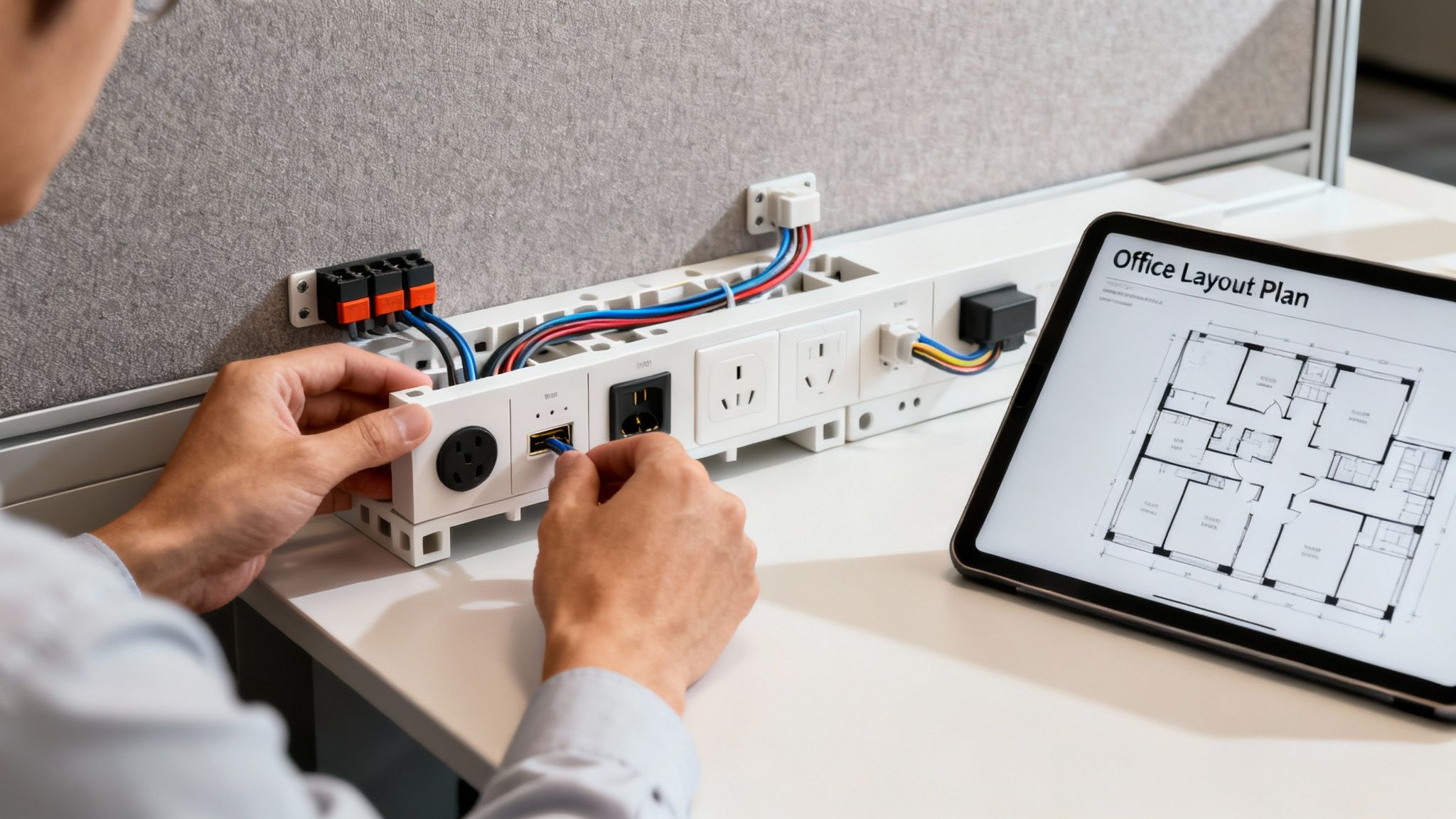
Even if the wiring looks pristine, you still have to confirm it meets your team's needs. Do the math and figure out how many outlets you need per person. Frankly, it’s often smarter—and safer—to just invest in new electrical components for used cubicles.
Creating a Unified Aesthetic
Blending different furniture lines without making the office look chaotic is a bit of an art form. The secret is to find a common thread that ties everything together. This could be a consistent color, a material, or a specific design element.
For example, you could pair some classic used wooden desks with brand-new chairs and storage cabinets that all have black frames. That consistent black accent creates a deliberate, unified look. Another great strategy is to reupholster used chairs in your company’s standard fabric—instantly, a bunch of random chairs look like a matching set.
Don't forget the power of decor. Area rugs, a fresh coat of paint, and branded elements can create distinct zones and unify the entire space. A well-placed rug can define a collaborative lounge area filled with mixed-and-matched used pieces, making them feel like an intentional grouping. For some real-world examples of how to pull this off, check out some of our favorite office cubicle design ideas to see how the pros do it.
The Importance of Professional Installation
Finally, and this is non-negotiable for any complex system, you need professional installation. This is especially true for modular workstations and cubicles, where proper assembly is directly linked to safety and stability. A pro team knows how to level the panels, secure every connector just right, and handle the power and data integration without creating a fire hazard.
Trying to DIY a large installation often ends with wobbly walls, misaligned desks, and sketchy electrical work. The cost of professional installation is a small price to pay for the peace of mind that your team’s workspace is safe, functional, and built to last. It protects your investment and makes sure all those carefully chosen used pieces work just as they should from day one.
How to Clean and Maintain Your Furniture
Your job isn't over just because the delivery truck pulled away. Getting a great deal on used office furniture is one thing; unlocking its real, long-term value is another. That’s where a smart approach to cleaning and maintenance comes in. A little proactive care will make your pre-owned pieces look fantastic, protect your investment, and keep the office environment clean and professional for your whole team.
Think of this as the playbook for getting the most out of every single item you just brought in. A bit of attention now turns a good buy into a great long-term asset.
First Steps and Deep Cleaning
Before a single employee sits down, every piece of used furniture needs a thorough, initial cleaning. This isn't just about making things look good—it's about basic hygiene. You have no idea what the last environment was like, so starting with a completely clean slate is non-negotiable.
Of course, you can't just use one cleaner for everything. Using the wrong product can cause real damage. Here's a quick rundown:
- Fabric Upholstery: First, look for a manufacturer's tag with a cleaning code. You'll often see a 'W' for water-based cleaners or an 'S' for solvents. If you can't find one, start by vacuuming everything with an upholstery attachment. For any spots or stains, test a mild fabric cleaner on a hidden area first.
- Laminate and Wood Veneer: You can’t go wrong with a simple mix of mild soap and water on a microfiber cloth. This is usually all you need to cut through any grime. Stay away from harsh chemicals or abrasive sponges that will scratch the surface or strip the finish right off.
- Metal Frames and Legs: For most painted or powder-coated metal, a damp cloth does the trick. If you’ve got chrome or polished aluminum, a dedicated metal polish will bring back that original shine and buff out minor scuffs.
Your initial deep clean sets the standard. This is the step that truly transforms a piece from "used" to "ours." It erases its past life and gets it ready for a productive future in your workspace.
If you’re dealing with a large batch of items, like dozens of task chairs that have seen better days, don't be afraid to call in the pros. A professional upholstery cleaning service has the right equipment and know-how to get the job done right, ensuring every piece is consistently and hygienically clean.
Ongoing Preventative Maintenance
Once everything is clean and in place, your focus should shift to preventative care. The whole idea is to catch small issues before they spiral into big, expensive problems. These are simple, routine checks that your facilities team can easily build into their schedule.
Putting together a quarterly maintenance checklist is the best way to stay on top of it. Your list should include things like:
- Tightening Hardware: Do a quick walk-through and check all desks, chairs, and tables for loose bolts or screws. A quick tighten with a wrench can stop a wobbly leg from turning into a total structural failure.
- Lubricating Mechanisms: The moving parts on ergonomic chairs—think casters, height adjustments, and tilt mechanisms—work so much better with a little silicone lubricant every few months.
- Inspecting for Damage: Make it a habit to look for new nicks, scratches, or peeling laminate. When you catch these things early, a quick touch-up is all you need before the damage spreads.
Knowing When to Refurbish
Sometimes, a piece of furniture has great bones but just looks a little tired. That’s where refurbishment comes in. It’s a fantastic way to give high-quality items a second life and even customize them to match your company's brand aesthetic.
Deciding whether to do it yourself or call a professional usually comes down to scale and complexity. A small scratch on a desk leg? A furniture marker can fix that in seconds. But reupholstering 50 task chairs is definitely a job for the pros.
Refurbishment can breathe new life into your assets. For any business preparing to leave a space, understanding these options is a key part of planning for responsible office cleanouts and getting the most value out of your existing furniture.
Common Questions About Buying Used Furniture
Even with all the benefits, I get it—diving into the world of pre-owned furniture can bring up some valid questions. It’s smart to have all the facts before you commit. Let's walk through the most common concerns we hear from office managers and business owners weighing their options.
Does Used Office Furniture Come with a Warranty?
This is a big one, and the answer is nuanced. The original manufacturer's warranty almost never transfers to a second owner. Once a chair or desk is resold, that original 10-year coverage is typically void. This is probably the single biggest risk you take when buying from a private seller on a marketplace.
A reputable dealer, however, is a different story. While you won't get the original manufacturer's guarantee, a professional seller often stands behind their products. They might offer their own limited warranty, maybe covering structural integrity or specific mechanical parts for a set period. It’s a key differentiator that provides real peace of mind.
A dealer's willingness to offer their own guarantee is a strong signal of quality. If they’re confident enough to back it up, you can be too. Always ask about it before you buy.
How Do I Make Sure Used Cubicles Fit My Space and Tech Needs?
This comes down to two things: precise measurements and expert planning. Guesswork is your absolute enemy here. Start by getting the exact dimensions of your office, noting every column, doorway, and odd corner.
Next, you really want to partner with a team that offers space planning services. We use tools like our Custom Cubicle Designer to create a detailed floor plan. This ensures every single piece fits perfectly before it even leaves the warehouse. When it comes to technology, inspecting the electrical systems in used workstation cubicles is vital. You have to confirm they can handle your team's power and data load—otherwise, you're in for a world of headaches.
What Are the Biggest Mistakes to Avoid?
From my experience, the costliest mistakes are almost always avoidable with just a little bit of foresight. Here are the top issues we see time and time again:
- Skipping an in-person inspection. Photos can be incredibly deceiving. You absolutely need to see and test the furniture yourself to catch hidden wear and tear.
- Forgetting the "soft costs." People get a great price on the furniture but fail to budget for delivery, freight, and professional installation. Those costs can turn a great deal into a financial surprise.
- Assuming compatibility. Buying modular parts like cubicles without confirming the product line and connector types match is a recipe for disaster.
- Ignoring power requirements. It's so easy to underestimate your team's need for outlets and data ports, leading to a scramble for messy, unsafe power strips and extension cords later.
Can I Still Find Modern Styles in the Used Market?
Absolutely. The rapid pace of office redesigns, especially with the big shift to hybrid work, means there's a constant flood of modern, high-end furniture hitting the secondary market. You can find everything from sit-stand desks to sleek lounge chairs and glass-paneled private office cubicles that are only a few years old.
The secret is to work with a dealer who maintains a large, curated inventory. This gives you the selection you need to get a contemporary look on a sensible budget, without having to sacrifice quality or style.
At Cubicle By Design, we're here to help you navigate this process with confidence. From space planning all the way through installation, our team ensures you get the absolute best value for your investment. Explore our solutions and see how we can help you design a better workplace. Visit us today!