

To really get a handle on employee turnover, you have to look beyond just one single thing. It’s a mix of offering competitive pay, making sure your managers are actually good leaders, showing people a clear path forward in their careers, and building a genuinely positive place to work. When you focus on these areas, you stop reacting to people leaving and start building a proactive strategy that makes them want to stay and grow with you.
The Real Cost of High Turnover and Why It Matters
Let’s be real—losing a team member stings, and it hits a lot more than just morale. It’s a direct blow to the bottom line. The endless cycle of hiring, training, and waiting for new people to get up to speed isn’t just a hassle; it’s a massive drain on your money, productivity, and all the valuable knowledge that just walked out the door.
When someone leaves, their work doesn’t just disappear. It gets dumped on the rest of the team, and that’s a fast track to burnout, disengagement, and a serious dip in morale. Productivity naturally takes a hit while the new hire learns the ropes, trying to get to the same level as the person they replaced.
The Financial Drain of a Revolving Door
The cost of doing nothing is honestly staggering. Globally, companies lose an estimated $2.9 trillion a year because of voluntary turnover. Think about this: replacing just one employee can cost anywhere from 30% to a whopping 400% of their annual salary, especially for more senior or specialized roles.
This trend is even more obvious with younger workers. Millennials and Gen Z now make up 51% of the workforce, and on average, they switch jobs every 2.5 years. A huge reason they cite? Disengagement and frustration with bad managers.
This infographic really puts the financial and workforce impact of high turnover into perspective.
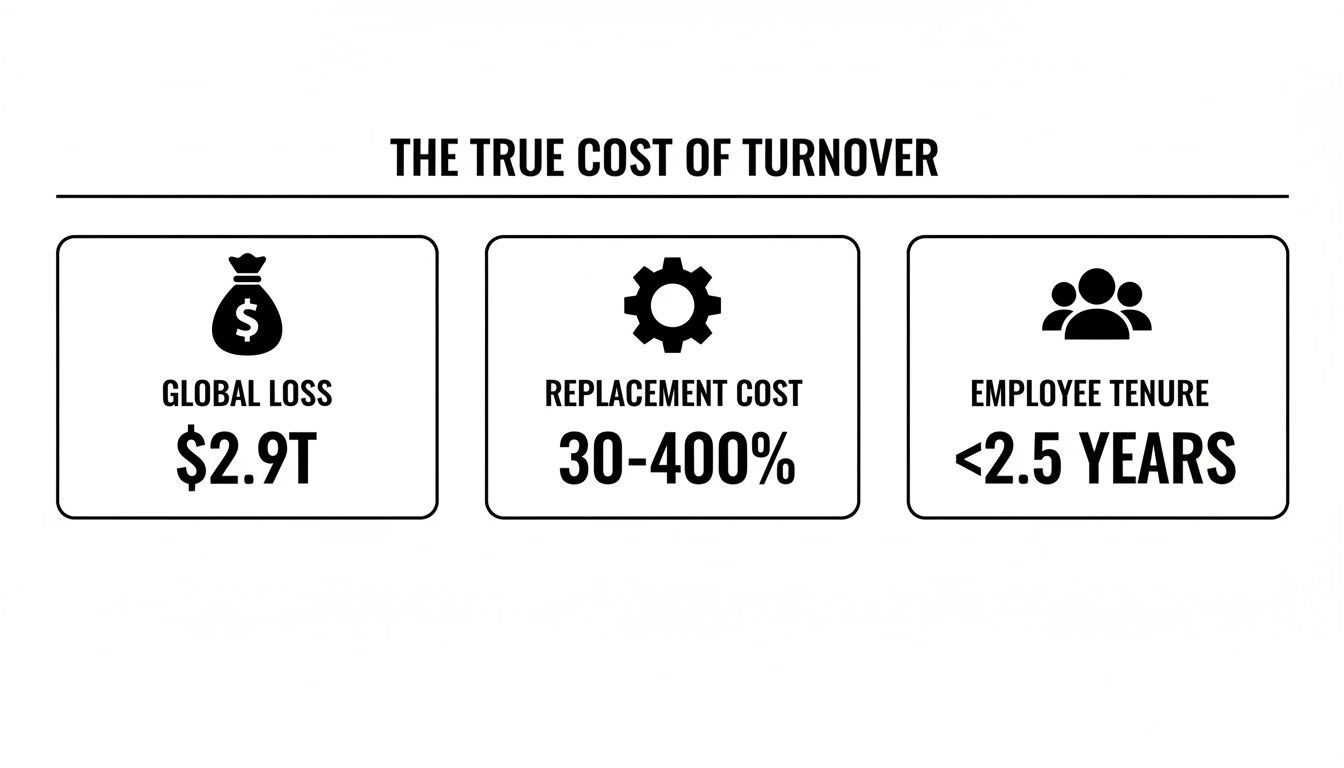
The numbers make it crystal clear: turnover isn’t just an “HR problem.” It’s a critical business expense that eats directly into your profits. Getting a firm grip on these numbers is the first step to justifying any real investment in retention. This guide can help you calculate the true cost of employee turnover.
Core Pillars of a Retention Strategy
To fight back against these costs, you need a plan. When you treat retention as a core business function instead of an afterthought, you can build a workplace people don’t want to leave. At its heart, it all comes down to focusing on what your employees need to succeed.
“High turnover is a symptom of deeper organizational issues. Addressing the root causes—be it management, culture, or lack of growth—is the only sustainable solution. Retention isn’t about preventing people from leaving; it’s about creating an environment they don’t want to leave.”
To help you get started, we’ve broken down the foundational pillars every organization should be focusing on to build an engaged and resilient team.
Core Pillars of Employee Retention at a Glance
This table gives you a quick summary of the key strategic areas that are absolutely crucial for reducing employee turnover effectively.
| Strategy Pillar | Key Focus Area | Primary Impact |
|---|---|---|
| Hiring & Onboarding | Attracting talent that fits your culture and giving them a structured, welcoming first 90 days. | Cuts down on early departures and makes new hires feel connected right from the start. |
| Compensation & Benefits | Offering competitive pay, transparent salary ranges, and benefits that actually support modern life. | Tackles one of the biggest reasons people job hunt and shows them they’re truly valued. |
| Career Development | Creating clear growth paths, mentorship programs, and opportunities for people to learn new skills. | Builds loyalty by showing employees they have a long-term future right where they are. |
| Workplace Environment | Designing a physical and cultural space that supports well-being, focus, and collaboration. | Boosts daily job satisfaction and helps prevent the kind of stress that leads to burnout. |
Focusing on these pillars isn’t just about plugging holes; it’s about building a stronger, more stable foundation for your entire organization.
Building a Retention-Focused Hiring and Onboarding Process
If you think retention efforts start after an employee’s one-year review, you’re already behind. Great retention begins before they even see a job offer. The seeds of long-term commitment are sown the moment a candidate interacts with your company. A rushed or misleading recruitment cycle is one of the fastest ways to guarantee that new hire will be polishing their resume within a few months.
The goal isn’t just to fill a seat. It’s to find people who are not only skilled for the job but are genuinely a good fit for your company’s culture, mission, and pace. This means shifting your mindset from reactive hiring to proactive, retention-focused recruiting.

Attracting the Right Candidates from the Start
Your hiring process kicks off the second a potential candidate reads your job description. This is your very first chance to set clear, honest expectations.
An effective job post does way more than list technical skills. It should paint an authentic picture of the day-to-day reality of the role. If your office is a fast-paced, highly collaborative environment, say that. If the job demands a lot of independent work, make that crystal clear.
During interviews, you have to dig deeper than the standard skill-based questions. I’m a big fan of behavioral questions that get candidates talking about how they’ve handled real-world challenges—the kind they’re likely to face in your workplace.
A few culture-fit questions I’ve found useful:
- “Describe a time you had to adapt to a major change at work. How did you handle it?”
- “Tell me about a project where you collaborated closely with a team. What was your role, and how did you contribute to the group’s success?”
- “What kind of work environment helps you do your best work?”
The answers here reveal so much more about a candidate’s work style and resilience than a simple list of qualifications ever could. For more ideas on creating an environment that reflects your values, you can explore how to synchronize your office culture and office space.
Designing a 90-Day Onboarding Experience That Sticks
Once you’ve made the hire, the focus pivots to onboarding. This isn’t just about paperwork and getting their laptop set up. This is a critical period. A structured onboarding program is your best defense against early turnover, especially since many new employees decide whether they’ll stay long-term within their first six months.
A great onboarding experience validates a new hire’s decision to join your company. It confirms they made the right choice by showing them they are supported, valued, and have a clear path to success from day one.
A successful 90-day plan should immerse new hires in the company, connect them with their peers, and empower them to start contributing meaningfully. It’s not a week-long orientation; it’s a phased journey.
A Practical Roadmap for the First 90 Days
Trying to cram everything into the first week is a recipe for disaster. Breaking the onboarding process into manageable phases prevents information overload and builds momentum. Here’s a simple but effective structure that works.
- Week 1: Orientation and Immersion. The first week is all about making the new person feel welcome. Focus on introductions, a tour of the office (or digital workspace), and a clear overview of the company’s mission. Assigning an “onboarding buddy” is a fantastic way to give them an informal, friendly resource for all those little questions they might be afraid to ask their manager.
- First 30 Days: Learning and Training. Now, the focus shifts to role-specific training. Set clear, achievable goals for their first month. Schedule regular check-ins with their manager to review progress, answer questions, and offer constructive feedback. This is the time to build their foundational knowledge.
- Days 31-60: Contribution and Integration. At this point, the new hire should start taking on more responsibility and contributing to team projects. Get them involved in cross-departmental meetings so they can see how their role fits into the bigger picture. The manager’s job here is to guide them while encouraging autonomy.
- Days 61-90: Ownership and Future Planning. By the end of three months, your new employee should be operating with confidence and taking real ownership of their work. The final step is a formal 90-day review. This isn’t a performance critique; it’s a conversation to discuss achievements, address challenges, and set goals for the next six months. It solidifies their place on the team and shows you’re invested in their future.
Rethinking Compensation and Benefits for Modern Talent
In a fiercely competitive market, just offering a “fair” salary isn’t going to cut it anymore. While solid pay is the foundation, it’s really just the starting point. Today’s talent looks at their compensation as a total package—it’s a direct reflection of how much their employer genuinely values their skills, time, and overall well-being.
Ignoring this shift is a costly mistake. I’ve seen it time and again. Beefing up your pay and benefits is a surefire way to reduce turnover, especially since financial incentives are a huge driver for the 40% of employees who consider leaving their jobs.
With turnover rates averaging 13.5% in the US, 16.8% in the UK, and 11.9% in Canada, the costs add up fast. When you consider that replacing a key employee can cost up to 210% of their salary, getting proactive about compensation isn’t just nice—it’s a smart financial move.
To really get a handle on turnover, you have to build a rewards strategy that feels both fair and genuinely supportive of modern life. This means looking beyond the paycheck to create a holistic experience that makes people feel secure and truly appreciated.
Conducting Regular Salary Audits
So, how do you know if your pay is actually competitive? You can’t just guess. This is where a salary audit comes in. It’s the process of benchmarking your company’s pay against current market rates for similar roles, both in your industry and your city.
This isn’t a one-and-done task, either. The market is always moving, so you should plan on running these audits at least once a year. This regular check-in helps you spot pay gaps before they become the reason someone starts polishing their resume.
A transparent pay structure is a cornerstone of trust. When employees understand the “why” behind their compensation and see a clear path for salary growth, they are far less likely to feel undervalued or believe the grass is greener elsewhere.
Once you’ve done your audit, the next move is to build a transparent pay structure. This means setting up clear salary bands for different roles and experience levels. Making this information accessible demystifies compensation and builds a powerful sense of fairness, showing your team you’re committed to paying people equitably.
Building a Benefits Package That Actually Matters
While salary covers the bills, your benefits package is what really shows you’re invested in an employee’s quality of life. The old-school health-and-dental plan is just table stakes now. Today’s workforce expects—and deserves—a lot more.
High-impact benefits that really resonate with modern talent are all about flexibility, well-being, and personal growth. Think about adding some of these perks to your lineup:
- Meaningful Mental Health Support: Go beyond a basic Employee Assistance Program (EAP). Offer access to therapy apps like Talkspace, cover counseling sessions with low or no co-pays, and give people company-wide mental health days. This demonstrates you’re serious about their psychological well-being.
- Flexible Work Schedules: For many people, time is the new currency. Giving employees the autonomy to choose hybrid models, compressed workweeks, or flexible start and end times allows them to balance their work and personal lives on their own terms.
- Professional Development Funds: People stay where they can grow. A dedicated fund for courses, certifications, or conference attendance is a clear signal that you’re invested in their career and long-term success with the company.
- Generous Paid Time Off (PTO): A strong PTO policy that encourages employees to truly unplug is one of the best defenses against burnout—a major reason people quit.
If you want to make your offerings even more impactful, it’s worth exploring how a thoughtful approach can completely transform your workplace. Take a look at our guide on how to enhance your company culture with the right employee benefits.
Ultimately, a modern total rewards package sends a clear message: we see you as a whole person, not just a cog in the machine. This approach doesn’t just help you attract top talent—it gives them compelling reasons to stick around and build a future with your company.
Fostering Career Growth and Meaningful Work
Once you’ve nailed down competitive pay and solid benefits, the conversation has to shift. It needs to get deeper. The real, powerful driver of retention is purpose. People are wired to want to grow, to contribute, and to feel like their work actually matters.
If your team members feel like they’re stuck in a dead-end job with no clear future, even a great salary won’t keep them around for long. This is where you move beyond a simple transactional relationship and build a true partnership. Fostering career growth isn’t just about handing out promotions; it’s about showing your team you are genuinely invested in their long-term success. A lack of growth opportunities is one of the top reasons high-performers start polishing their résumés.

Implementing Growth-Focused Conversations
Let’s be honest, the annual performance review is often a source of anxiety. It tends to focus on past mistakes rather than future potential. To really get growth on track, you need to separate these conversations completely.
Start holding regular, future-focused career development check-ins that are totally distinct from performance evaluations. These discussions should happen at least twice a year. The whole point is to understand an employee’s personal and professional aspirations. You need to ask questions that open up a genuine dialogue about where they want to go and how the company can help them get there.
Some great questions to get the ball rolling include:
- What skills are you most interested in developing over the next year?
- What kind of projects would you be really excited to work on?
- Where do you see your career heading in the next three to five years?
This simple shift proves you see employees as more than just their current job title. It shows you’re a partner in their journey. For anyone looking to take charge of their own trajectory, our guide offers some fantastic small business tips to climb the corporate ladder.
“When an employee sees a clear path forward within your organization, they stop looking for paths outside of it. Career development isn’t a perk; it’s a core retention strategy.”
Creating Mentorship and Upskilling Programs
Career conversations are great, but they need to lead to tangible action. That’s where formal programs come in. They provide the structure and resources people need for genuine skill development, which is a powerful way to keep turnover low.
A mentorship program is a fantastic, low-cost way to get started. Pairing junior employees with experienced senior leaders bridges knowledge gaps, builds a sense of community, and offers invaluable guidance. It helps newer staff figure out the company culture and see a real-life example of what long-term success looks like.
Beyond that, funding upskilling opportunities is a direct investment in your talent. This can take a few different forms:
- Tuition Reimbursement: Offer support for employees pursuing degrees or certifications relevant to their field.
- Learning Stipends: Give each person an annual budget to spend on courses, conferences, or workshops that they choose.
- Internal Training: Develop your own in-house workshops to teach new software, leadership skills, or cross-departmental functions.
These initiatives do more than just build skills—they build loyalty. When you invest in your people’s growth, they invest their talent and commitment right back into your company.
Connecting Daily Tasks to the Bigger Picture
Finally, never underestimate the power of meaning. When people understand how their day-to-day tasks contribute to the company’s mission, they are significantly more engaged. It’s the difference between feeling like a cog in a machine and feeling like a valued contributor to a shared goal.
Managers are absolutely critical here. They need to consistently connect individual and team responsibilities to the bigger company objectives during meetings and one-on-ones. When someone on their team launches a new feature or closes a big deal, they should celebrate not just the task’s completion but its impact on the business.
Giving employees autonomy and ownership over their projects strengthens this connection even further. Trusting your team to make decisions empowers them and deepens their sense of responsibility. It transforms a job into a fulfilling career, creating a powerful reason for your best talent to stay and thrive.
Designing a Workplace That Supports Productivity and Wellbeing
Think about it: the physical space where your team spends 40+ hours a week is a huge part of their daily experience. If that space is cramped, noisy, or just plain uncomfortable, it’s more than a minor annoyance. It’s a constant source of friction that leads to distraction, stress, and eventually, burnout.
Over time, those daily frustrations add up. A great employee might start looking for a company that seems to care more about their well-being. That’s why strategic office design isn’t just a “nice-to-have” anymore—it’s a critical piece of the retention puzzle. When you invest in a thoughtfully crafted workspace from Cubicle By Design, you’re sending a clear message: we care about your comfort, your ability to focus, and your health.

Creating Zones for Different Work Styles
The modern workday isn’t one-size-fit-all, so why should your office layout be? A completely open floor plan can be a nightmare for someone who needs quiet to do deep, concentrated work. On the flip side, a sea of isolated cubicles can kill the collaborative spark.
The best solution is to offer a mix of zones tailored to different tasks. This approach, sometimes called “activity-based working,” gives people the freedom to choose the right setting for what they need to do at that moment. You’re giving your team the tools and the space to do their best work, however they work best.
If you need some inspiration, checking out different office cubicle design ideas can spark some great concepts for creating a more supportive and dynamic environment.
Here are a few key zones to consider:
- Focus Zones: Think heads-down, uninterrupted work. These spots are perfect for private office cubicles with higher walls and sound-dampening materials to cut down on distractions.
- Collaboration Hubs: These are your open, inviting spaces. Equip them with whiteboards, big monitors, and comfy seating to get the brainstorming and teamwork flowing.
- Social and Break Areas: A comfortable lounge or a well-stocked kitchenette gives employees a place to decompress, connect with colleagues, and just recharge for a few minutes.
The Critical Role of Ergonomics and Acoustics
Two of the most overlooked—but absolutely crucial—elements of a great workspace are ergonomics and acoustics.
Poor ergonomics are a silent killer of productivity. An old, non-adjustable chair or a poorly positioned monitor can lead to chronic pain, discomfort, and more sick days. Investing in high-quality, adjustable furniture isn’t just an expense; it’s a direct investment in your team’s physical health and ability to do their job without pain.
And then there’s noise. Constant background chatter is a major source of stress and mental fatigue. One study found that office distractions can eat up more than two hours of an employee’s day. Improving your office acoustics doesn’t have to be a massive project. It can be as simple as:
- Installing sound-absorbing panels or baffles on walls and ceilings.
- Using carpeting and other soft materials to cut down on echo.
- Arranging furniture strategically to create natural sound barriers.
Investing in the Right Workstations
An employee’s primary workstation is their home base. Getting it right is fundamental. Equipping them with the right workstation cubicles shows you respect their need for a comfortable, functional space.
Modern cubicles are a far cry from the soul-crushing boxes of the past. Today’s systems are designed to balance privacy with the need for connection.
When you’re choosing your office furniture, think about features that support both individual work and team needs. You can even use a cubicle designer tool to play with different layouts, ensuring everyone has enough personal space, integrated storage, and easy access to power.
A well-designed workstation is more than just furniture. It’s a tool that empowers employees, respects their need for focus, and tangibly demonstrates the company’s commitment to providing a superior work environment. This tangible support is a powerful factor in retention.
Ultimately, designing a supportive workplace is a proactive retention strategy. It directly addresses the daily pain points that can accumulate and drive your best people away. By creating an office that is comfortable, functional, and adaptable, you build a powerful, unspoken reason for your top talent to stick around.
Frequently Asked Questions About Reducing Employee Turnover
Diving into employee retention brings up a lot of questions. I get it. It’s a complex issue. Here are some of the most common ones I hear from managers and HR leaders, with some straight-to-the-point answers to help you sharpen your own strategy.
What Is the Single Most Effective Strategy to Quickly Reduce Employee Turnover?
If you want the biggest bang for your buck, focus on your front-line managers. Period. While a well-rounded strategy is best for the long haul, study after study confirms the number one reason people quit is their direct boss. A bad manager will torpedo all your other retention efforts, no matter how good they are.
Investing in solid leadership training for your managers will give you the fastest, most noticeable results. You don’t need a massive program; just focus on the core skills: clear communication, giving feedback that actually helps, genuinely recognizing people for their work, and leading with a bit of empathy. A great manager can make up for a heavy workload or slightly lower pay, but a bad one will chase off even your most loyal people.
To get started, try a few simple things:
- Regular Manager Check-ins: Make one-on-one meetings a non-negotiable part of their week. And they can’t just be about project status—they need to cover career goals and how the employee is really doing.
- Provide Coaching Resources: Give them access to leadership workshops, books, or even an external coach. Help them get better at their job.
- Create a Feedback Loop: Use anonymous surveys so employees can give honest feedback about their managers without fear. This will show you exactly who needs more support.
How Can Small Businesses with Limited Budgets Compete on Retention?
Small businesses can absolutely hold their own against the big corporations; you just have to play a different game. You probably can’t win a bidding war on salary, so don’t even try. Instead, lean into what makes you unique: your culture, your flexibility, and your sense of community.
Focus on the high-impact, low-cost strategies that huge companies can’t easily replicate. Offer real work-life balance with flexible hours or hybrid schedules. Build a tight-knit team where every single person feels seen and heard—something that’s nearly impossible in a 10,000-person behemoth.
For small businesses, culture isn’t just a buzzword; it’s a competitive advantage. A supportive, flexible, and engaging environment can create a level of loyalty that a slightly higher salary elsewhere simply can’t buy.
Put a recognition program in place that isn’t just about money. Public praise, an extra day off, or the chance to take the lead on a cool new project can be incredibly powerful. Spend your time having real, personalized career conversations with your team. These are the things that build loyalty and often matter more than a small pay bump.
How Do I Measure the Success of My Employee Retention Initiatives?
You need to look at both the hard numbers and the softer, more human feedback. Combining quantitative and qualitative data is the only way to get the full picture of what’s working.
First, you have to track the key metrics. Look at your overall turnover rate quarterly and annually. But the real story is in the details, so you need to segment that data.
- Voluntary vs. Involuntary Turnover: Are people choosing to leave, or are you letting them go? Big difference.
- Department or Manager: Is one specific manager or team a revolving door? That’s a major red flag.
- Tenure: Are you losing new hires in the first 90 days, or are your seasoned veterans heading for the exit?
Next, get qualitative feedback through employee engagement surveys and quick pulse checks. Are the scores for management, career opportunities, and job satisfaction trending up? Finally, conduct thorough exit interviews to find out why people are really leaving. Comparing this data from before and after you launch your new initiatives will tell you exactly how you’re doing. For a deeper look at what you can do, it’s worth checking out these proven strategies to reduce staff turnover.
Does Office Design Really Impact Employee Turnover?
Yes, absolutely. The physical workspace has a huge, direct impact on an employee’s daily life—their productivity, their stress levels, everything. An office with terrible acoustics, constant interruptions, or uncomfortable chairs is a recipe for burnout and frustration. Over time, those daily annoyances add up and make people start looking elsewhere.
A well-designed office provides different types of spaces for different kinds of work. You need quiet zones with private office cubicles for deep focus, open areas for collaboration, and comfortable break rooms where people can actually connect. The design of your office sends a message about what you value.
When you invest in ergonomic furniture and take steps to control noise, you’re showing your team that you care about their well-being. It’s a tangible way to boost job satisfaction and signal that your company is a great place to work. A thoughtful office layout is a powerful—and often overlooked—retention tool. You can explore a ton of modern cubicles and even use a cubicle designer to map out a space that helps you keep your best people.
Ready to create a workplace that makes your team want to stay? At Cubicle By Design, we specialize in designing functional and supportive office environments. Explore our workstation cubicles and start building a better workplace today.