


When you hear the word “cubicle,” what comes to mind? For many, it’s the image of a sterile, isolating box—a “cube farm” from a bygone corporate era. But modern office cubicle design isn’t about creating boxes anymore. It’s about building flexible, human-centric workstations.
This is a deliberate shift away from the past and toward adaptable environments that actually support focus, well-being, and the collaborative spirit of today’s workplace.
From Cube Farm to Creative Hub: The Cubicle’s Journey
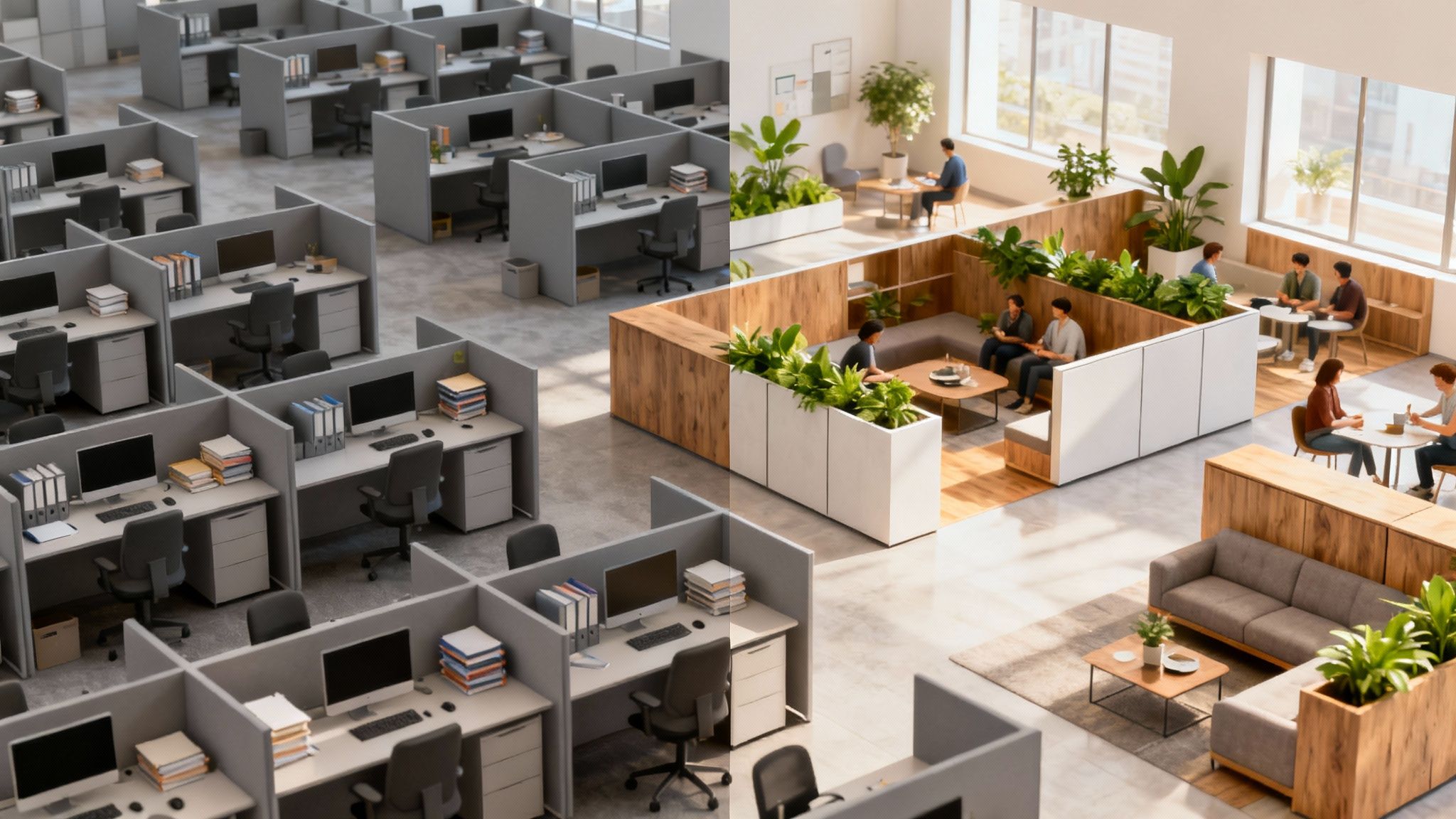
To really get what makes today’s workstations so effective, you have to look back at their surprising origin story. The cubicle wasn’t invented to shove employees into a corner; it was conceived to liberate them. The history shows a wild ride from an idealistic dream to a symbol of corporate monotony—and now, thankfully, a return to its smarter roots.
It all started back in the 1960s. Offices were rigid and hierarchical. Executives got the private offices with windows, while everyone else was packed into open “bullpen” arrangements with virtually no privacy or personal space. It was noisy and impersonal.
The Original Vision for a Flexible Office
Robert Propst, a researcher at the Herman Miller furniture company, saw this problem and came up with a solution: the “Action Office.” His idea was revolutionary at the time. It introduced a three-walled, moveable partition system that completely upended how companies thought about office architecture.
The goal was simple: give employees a good measure of privacy while keeping the overall environment open and flexible. If you’re interested in the nitty-gritty, you can dig deeper into the evolution of the office cubicle in our guide.
But the Action Office was so much more than just walls. It was a complete system designed for the person using it, featuring varied desk heights to encourage movement, tackable surfaces for notes, and materials that absorbed sound. Propst wanted to build a workspace that could adapt to the individual—a personal hub for productivity. It was a concept way ahead of its time, meant to empower workers, not cage them.
The initial intent behind the cubicle was not to create uniformity, but to provide a versatile and customizable workspace that could be adapted to the specific needs of each employee and their tasks.
How the Idea Was Simplified
There was just one problem: Propst’s sophisticated vision was expensive. As competitors jumped into the market, they stripped the Action Office down to its most basic elements—three simple walls and a desktop. This cheap, bare-bones version was easy to churn out, allowing companies to cram more people into less space. Economics won out over experience.
This cost-cutting approach is what led to the dreaded “cube farm.” We’ve all seen it: endless rows of identical, high-walled cubicles that prioritized packing people in over creating a decent place to work. The design became a punchline, a symbol of corporate conformity that left employees feeling isolated and disconnected. The very tool created to give people autonomy became a source of misery.
The history of the cubicle is a great lesson in how easily good design can get lost in translation. Understanding this context makes it clear why today’s modern office cubicle design is more than just a cosmetic refresh. It’s a full-circle return to Propst’s original principles, but updated for the needs of a modern workforce.
Today’s systems solve the old problems of isolation and rigidity by focusing on flexibility, ergonomics, and smart technology integration. By learning from the mistakes of the past, we’re finally building workspaces that truly support employee well-being and drive real productivity.
What Modern Office Cubicle Design Really Means
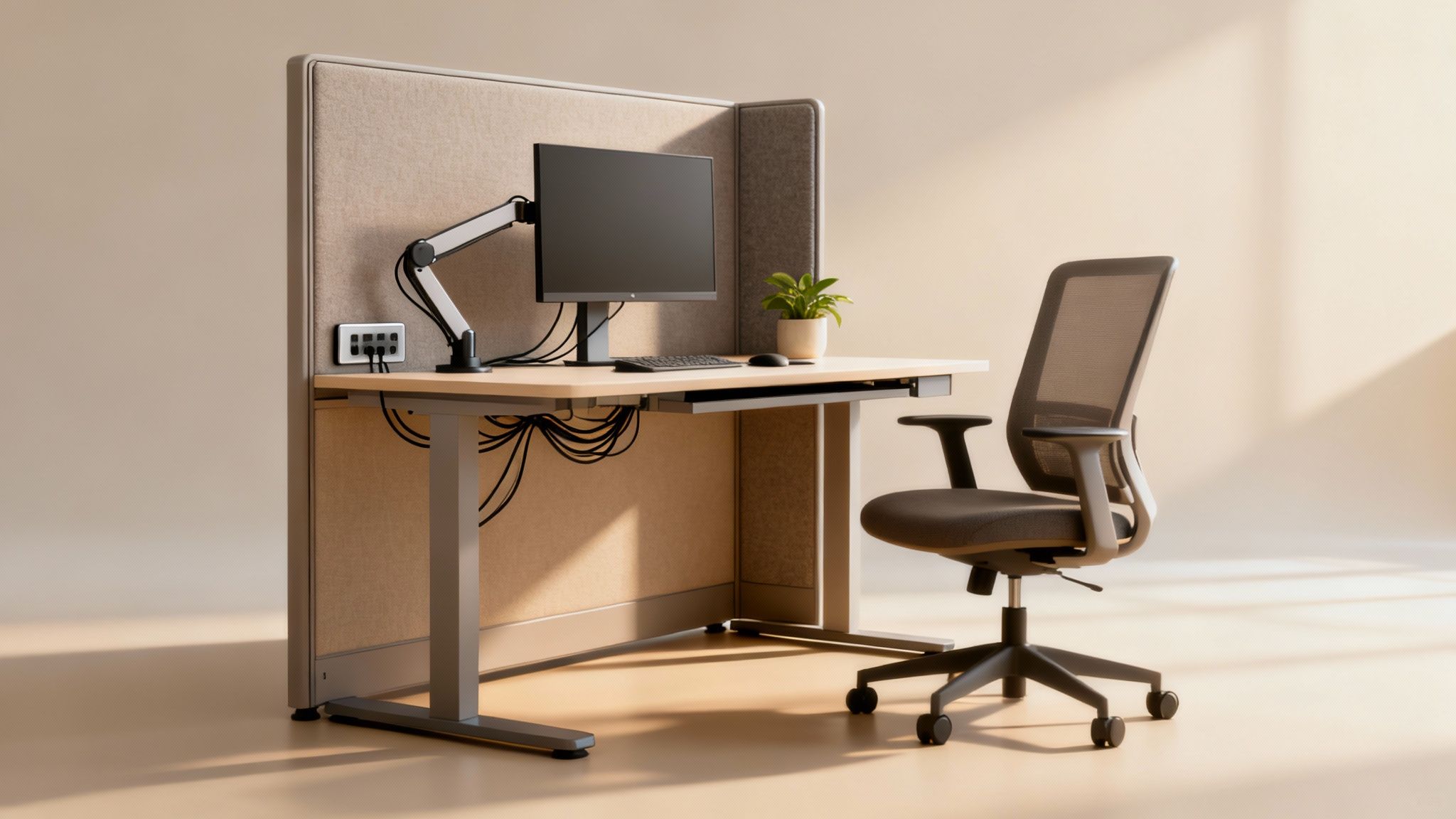
If you’re picturing three drab, fabric-covered walls, it’s time for an update. Today, modern office cubicle design isn’t about a piece of furniture—it’s a whole philosophy for creating an adaptable, employee-focused environment. It’s a complete break from the one-size-fits-all box that defined offices for decades.
Think of a modern cubicle less like a box and more like a personal command center. It’s a highly functional, connected home base built to support everything from deep, focused work to a quick, informal check-in with a teammate.
This whole shift is happening for one simple reason: the way we work has changed. The static, repetitive tasks of the past are gone, replaced by dynamic, project-based work that demands both concentration and collaboration. The modern cubicle is a direct answer to that need.
Moving Beyond the Physical Walls
The big ideas behind this new design philosophy are all about flexibility and personal well-being. Unlike their rigid ancestors, modern systems are built to be configurable. This means they aren’t just dropped into an office; they’re truly integrated into its workflow.
Let’s be honest, the original cubicle boom was driven by practical concerns. The energy crisis of the 1970s, for example, was a huge catalyst, as companies scrambled to cram more people into less space to cut real estate costs. It worked for increasing density, but it often forgot about the human element—a problem modern designs are here to solve. You can actually see how historical shifts shaped the evolution of modular workspaces and their impact.
Today, the focus has pivoted from just space efficiency to employee effectiveness. The goal is to create workstations that can be easily changed to suit different teams, projects, or even just an individual’s preference.
The Key Principles of Modern Workstations
Modern office cubicle design stands on a few foundational pillars that set it apart from the old-school models. These aren’t just add-on features; they are the essential building blocks of a supportive work environment.
Here are the concepts at the heart of the design:
- Intelligent Flexibility: Modern cubicles are often modular, so they can be reconfigured as your teams grow or projects pivot. This kind of adaptability keeps your office layout from becoming obsolete.
- Seamless Technology Integration: These workstations are designed with tech built right in, featuring integrated power, data ports, and smart cable management to keep things clean and functional. They’re ready for the devices your team uses every single day.
- True Ergonomic Support: We’re talking more than just an adjustable chair. Modern cubicles incorporate things like sit-stand desks and monitor arms. This focus on physical well-being helps reduce strain and keeps people comfortable all day long.
- Acoustic and Visual Privacy: Instead of total isolation, today’s designs use materials like frosted glass and sound-dampening panels. The goal is to give employees a sense of privacy without completely cutting them off from the buzz of the office.
A modern cubicle isn’t just a workstation; it’s a tool. It’s designed to empower employees by giving them a space that supports their specific tasks, whether that requires quiet focus or easy access to collaborators.
Ultimately, modern office cubicle design is reclaiming the original promise of a flexible, human-centric workspace. It proves that with thoughtful planning, a cubicle can be a cornerstone of a productive and engaging office, not an obstacle to it.
The Five Pillars of a High-Performing Cubicle
Not all workstations are created equal. A truly modern office cubicle is much more than just a desk and three walls—it’s a carefully balanced ecosystem designed to support the person working inside it.
Think of it like building a high-performance car. You can’t just drop in a powerful engine and call it a day; you need the right suspension, controls, and chassis all working together. A high-performing cubicle is no different. It rests on five essential pillars that combine to create an environment where people can actually do their best work.
Those five pillars are Ergonomics, Acoustics, Lighting, Materials, and Technology Integration. When you get these elements right, a simple workstation becomes a powerful tool for focus and comfort. But if you neglect even one, the whole setup can feel off, leading to distraction and frustration.
Pillar 1: Ergonomics
The absolute foundation of any productive workspace is ergonomics—the science of designing an environment to fit the person, not forcing the person to fit the environment. Get it wrong, and you’re looking at physical strain, fatigue, and a serious drop in productivity.
A modern cubicle tackles this head-on. The single most impactful feature is the sit-stand desk. Giving people the freedom to switch between sitting and standing throughout the day is a game-changer for energy levels and overall health.
Pair that with a fully adjustable chair that offers proper lumbar support and monitor arms that get screens right at eye level, and you’ve eliminated the root causes of most neck and back pain. You can dive deeper into how ergonomics is the secret to a happy workplace in our detailed guide.
Pillar 2: Acoustics
In a busy office, noise is the number one enemy of deep work. The constant chatter, ringing phones, and foot traffic can shatter anyone’s concentration. This is where acoustics come into play. Modern cubicles are engineered to provide auditory privacy without making people feel like they’re in a sensory deprivation tank.
This balance is achieved through a few key elements:
- Sound-Dampening Panels: The walls of modern cubicles are often made from thick, sound-absorbing fabrics that soak up ambient noise instead of letting it bounce around the office.
- Strategic Height: Panels don’t have to scrape the ceiling to be effective. Even mid-height partitions do a fantastic job of cutting down on direct-line sound, creating a much quieter personal bubble.
- Glass with a Purpose: While glass walls keep things feeling open and airy, they can also be specified with acoustic ratings to block sound, giving you the best of both worlds—transparency and tranquility.
A well-designed acoustic environment gives employees the freedom to focus without needing noise-canceling headphones just to get through their task list.
Pillar 3: Lighting
You can’t underestimate the impact of good lighting. It affects everything from mood and energy to eye comfort. The harsh, flickering fluorescent lights of old-school offices are notorious for causing headaches and fatigue. Modern cubicle design throws that whole concept out the window in favor of smarter, more personalized lighting.
This means integrating ambient, task, and natural light. Built-in LED fixtures, often with adjustable brightness and color temperature, let individuals tailor the light for whatever they’re working on. On top of that, layouts using lower partitions and glass are specifically designed to maximize the reach of natural daylight, which is consistently linked to happier, more satisfied employees.
Pillar 4: Materials and Finishes
The materials used in a cubicle define its entire look and feel. The days of monotonous gray fabric are long gone. Today’s options are all about creating a visually appealing atmosphere that reflects a company’s brand and culture.
For example, light wood laminates can create a warm, natural feel, while sleek metallic finishes offer a more industrial, modern edge. Frosted or clear glass panels make the entire space feel larger and more connected. These aren’t just cosmetic choices; they contribute to the overall psychological comfort of the workspace.
Pillar 5: Technology Integration
Finally, a modern cubicle has to play nice with the technology we rely on every single day. A workstation buried in a mess of power strips and tangled cords is a functional and visual nightmare. True integration means designing for technology from the very beginning.
This includes features like:
- Built-in Power and USB Ports: Placing outlets conveniently at desk level means no more crawling on the floor to plug in a laptop.
- Integrated Cable Management: Hidden channels and trays built right into the cubicle’s structure keep all those wires for monitors and chargers neatly organized and completely out of sight.
- Support for Multiple Devices: Work surfaces are now designed with enough depth and strength to easily accommodate multiple monitors, laptops, and all the other tools of the trade.
By focusing on these five pillars, you move beyond just buying furniture and start creating a genuinely high-performing work environment. Each element plays a critical role in building a modern office cubicle that supports your team’s health, focus, and ultimate success.
Unlocking Flexibility with Modular and Glass Systems
Let’s face it: traditional office furniture is static. Once it’s in, it’s a major headache to move, locking you into a layout that can quickly become outdated as your company evolves. But today’s workplace has to be agile. This is where modular and glass systems completely change the game.
The word “modular” might make you think of simple movable walls, but it’s a much bigger concept in modern cubicle design. Think of it as a sophisticated set of building blocks for your entire office. It’s a full ecosystem of components that work together—desks, storage, power, and partitions—all designed to be rearranged with almost no downtime.
With a modular approach, you can shift from a grid of individual workstations to a collaborative project hub in just a few hours, not weeks. Your whole workspace becomes a fluid asset, ready to adapt to whatever your business needs next.
The Power of Modularity: An Agile Workspace
Imagine your office layout less like a permanent building and more like a software program. With modular systems, you can “update” your workspace whenever you need to. Bringing on a new team? You can add workstations seamlessly. Need a dedicated “war room” for a big project? A few cubicles can be quickly reconfigured into a larger, semi-private zone.
This kind of adaptability is a direct response to the speed of modern business. It’s no surprise that flexible workspaces are becoming a top priority for companies that want to stay responsive and efficient. The ability to pivot your physical layout gives you a real competitive edge.
Modularity transforms your office from a static cost center into a strategic asset. It empowers you to reshape your environment on demand, ensuring your workspace actively supports your business goals instead of constraining them.
This flexibility also makes modular systems a smart financial move. Instead of paying for costly renovations every time your needs change, you just reconfigure the pieces you already own. It extends the life of your furniture and gives you a much better long-term return on your investment.
Glass Walls: Balancing Openness and Privacy
While modularity provides the structural agility, glass partitions solve one of the biggest workplace dilemmas: how to balance privacy with an open, connected culture. We all know the problems—high-walled cubicles created total isolation, but fully open offices often lead to constant noise and distractions.
Glass walls are the perfect middle ground. They give you the acoustic separation employees need to focus on tough tasks, but without cutting them off from the energy of the office. That visual connection to the broader team helps maintain a sense of community and prevents the loneliness that plagued older office designs.
This image shows just how well glass walls and modular components work together to create a bright, functional workspace.
The frosted glass provides a bit of visual privacy for focused work while still keeping the whole space feel open and airy.
On top of that, glass maximizes the flow of natural light throughout the office. This doesn’t just cut down on energy bills; it’s been proven to make employees happier and healthier. By combining the transparency of glass with the functionality of modular partitions, you create a workspace that is both productive and inspiring.
For companies looking to go this route, understanding the details of a professional glass architectural wall installation is a key step to getting it right. By embracing modular and glass systems, you unlock a new level of control, creating an environment that’s ready for whatever comes next.
How to Plan a Smart Cubicle Layout
Putting together a great workspace is so much more than just buying some furniture and sticking it in a room. A truly smart layout is the result of careful, deliberate planning that lines up your physical space with how your teams actually get things done. The goal is to build an environment that actively supports productivity, not just one that houses it.
This whole process starts long before you even think about picking out your first cubicle. It begins with a deep dive into your company’s day-to-day rhythm. Who really needs to talk to whom? Which teams need quiet zones to concentrate, and which ones feed off the energy of constant interaction? Nailing down the answers to these questions is your first step toward a modern office cubicle design that works.
Analyzing Your Team’s Workflow
Before you can build a better workspace, you have to truly understand the one you have now. Watch how your teams operate. Do your software developers need to be siloed away to focus on complex code, while your sales team thrives on the high-energy buzz of back-and-forth communication?
Mapping these interactions is everything. A great layout strategically clusters teams that collaborate frequently, which cuts down on wasted steps and sparks those spontaneous problem-solving moments. It’s all about creating the path of least resistance for communication and movement throughout the workday.
The most effective cubicle layouts are not based on seniority or department names, but on the flow of work itself. When the physical environment mirrors the workflow, the entire organization becomes more efficient.
Exploring Tangible Layout Configurations
Once you have a solid handle on your workflow, you can start exploring specific layout ideas that actually support it. Modern cubicle systems offer incredible versatility, letting you create configurations that were simply impossible with the old, static furniture of the past.
Here are a few popular models that really deliver:
- Pinwheel Configurations: Instead of rigid, straight rows, a pinwheel setup clusters four workstations around a central point. This is fantastic for creative or project-based teams. It gives each person a defined personal space but makes it effortless for them to just turn and chat with their immediate neighbors.
- Hybrid Models: This is one of the most powerful approaches out there. It’s all about creating distinct zones within the same office. You might have a “focus zone” with higher-walled, acoustically treated cubicles for deep work, right next to an open, collaborative hub with low partitions and shared project tables.
- Spine-and-Rib Layouts: In this configuration, a central “spine” carrying all the power and data runs through the office, with cubicle “ribs” branching off from it. It’s a remarkably efficient way to manage cabling and creates clear, organized traffic flow.
To get a better sense of what could work for your space, it helps to see the possibilities. You can explore a great overview of popular cubicle configurations to check out visual examples and get some inspiration.
This infographic really nails the core benefit of modular systems—their ability to change with you.
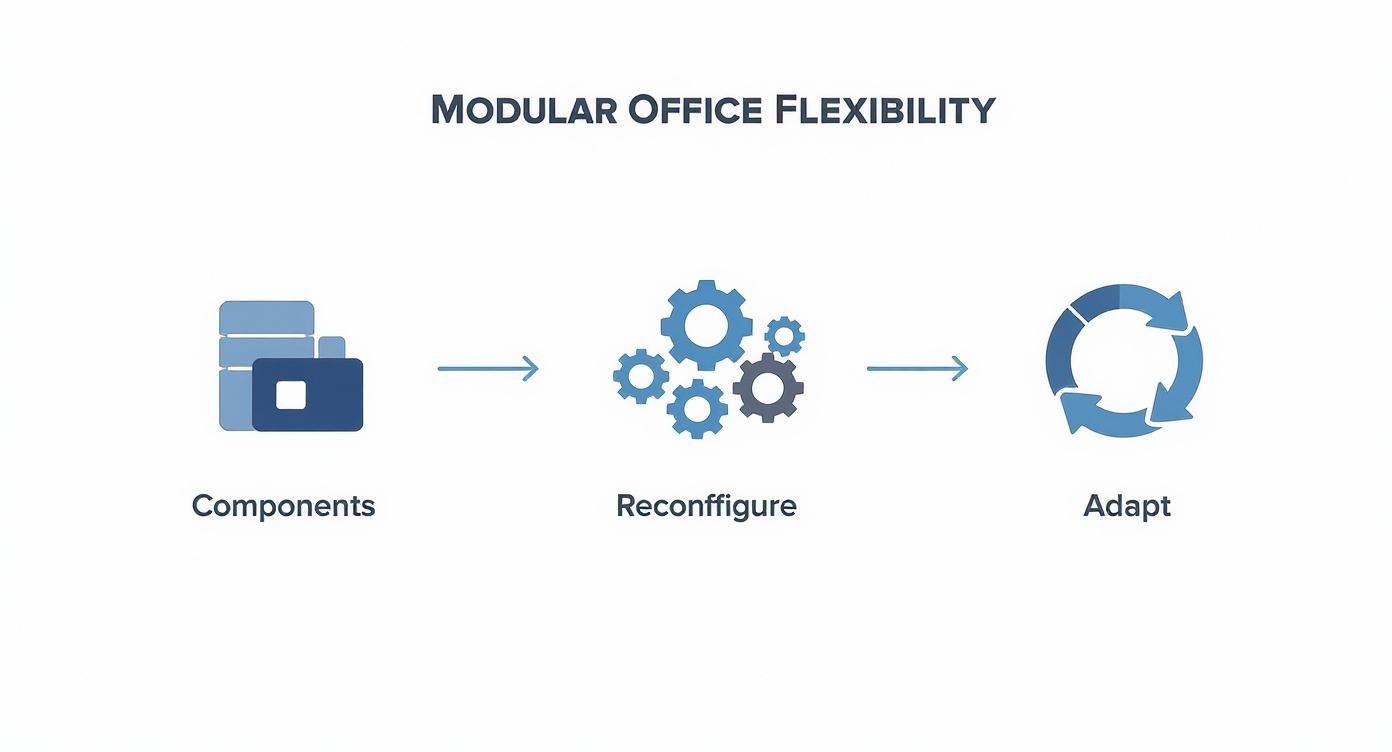
The process is simple: start with the right components, reconfigure them as your team evolves, and adapt the entire space to new challenges over time.
Demystifying the Budgeting Process
Budgeting for a new office layout is about more than just the sticker price on a cubicle. To get a realistic number and really maximize your investment, you need to think about all the moving parts that make up the final cost. A well-planned budget prevents nasty surprises and ensures you get the most bang for your buck.
Several key variables will shape your total spend:
- Materials and Finishes: Of course, premium materials like glass partitions, sleek wood laminates, and high-grade acoustic fabrics are going to cost more than the standard options.
- Size and Complexity: The footprint of each workstation and the intricacy of the layout itself will directly impact both material and installation costs.
- Ergonomic Features: Adding things like electric sit-stand desks or fully adjustable monitor arms is an investment in your team’s well-being, but it adds to the upfront cost.
- Technology Integration: The number of power and data outlets needed at each station can affect the price, especially if you need complex wiring runs.
- Installation and Delivery: Don’t forget to factor in the real-world costs of shipping, professional assembly, and hauling away the old furniture if you need to.
By breaking down your budget into these pieces, you can make smarter decisions about where to invest and where you might be able to save. It’s a strategic approach that empowers you to create a functional, cost-effective layout that genuinely helps your team succeed.
Common Questions About Modern Office Cubicles
As you start looking into modern office cubicle design, it’s completely normal for practical questions to pop up. This is a big decision that goes way beyond just aesthetics—it’s a real investment in your team’s comfort and ability to get work done. Let’s dig into some of the most common questions and give you the straightforward answers you need.
Are Cubicles Still Relevant in the Age of Open Offices?
Absolutely. In fact, you could argue they’re more relevant now than ever before, precisely because so many companies have experienced the downsides of a fully open office. The dream was collaboration, but the reality was often constant noise and zero privacy, which are productivity killers.
Modern cubicles offer a “best of both worlds” solution. They fix the biggest problems with open plans by giving people the acoustic and visual privacy they need to actually concentrate. But by using lower partitions and glass, they still keep that sense of connection that was totally lost in the old-school, high-walled cube farms.
This setup is perfect for activity-based working, where people can choose the right spot for the task at hand. The modern cubicle becomes a personal “home base” for focused work, while open, collaborative areas are just a few steps away for team huddles. It’s that balance that really boosts both individual focus and team morale.
How Much Does a Modern Cubicle Actually Cost?
The price of a modern cubicle can swing pretty wildly depending on what you need, kind of like buying a car. The model and the features you add make all the difference. It helps to think of it in a few tiers.
A basic, no-frills workstation is going to start somewhere in the $800 to $1,500 range per unit. These are your functional workhorses, with standard surfaces and panels.
The sweet spot for most businesses is the mid-range, which typically falls between $1,500 and $3,500. Here, you get much better materials, some acoustic dampening, and essential ergonomic features like electric sit-stand desks. This is where you really start to see the investment pay off in your team’s well-being.
For the top-of-the-line setups, you can expect to go over $4,000 per unit. These are the fully custom systems with premium glass, integrated tech, and all the modular bells and whistles you can imagine, usually reserved for executive suites or design-forward spaces.
Think of your cubicle budget not just as a furniture expense, but as a direct investment in your team’s daily performance and long-term health. Also, remember to factor in the associated costs of space planning, professional delivery, and installation.
How Do You Balance Privacy and Collaboration?
The secret isn’t finding one perfect cubicle for everyone. The key is creating a varied office “ecosystem” with different types of spaces for different kinds of work. A smart layout doesn’t force a one-size-fits-all solution.
Here are a few ways to make that happen:
- Create Focus Zones: Use cubicles with taller, sound-absorbing panels for roles that require deep concentration—think developers, writers, or accountants.
- Build Collaborative Hubs: For teams that need to talk all the time, like sales or marketing, cluster workstations with lower partitions to make conversation easy and natural.
- Strategically Place Shared Spaces: The real magic happens when you place dedicated collaborative areas—like meeting pods, project tables, or comfy lounge areas—right next to these cubicle clusters.
This gives your team the freedom to move between their personal desk and a shared space, letting them pick the right environment for whatever they’re working on at that moment.
Can We Upgrade Our Old Cubicles to Be More Modern?
Yes, and it’s a great, cost-effective way to get the benefits of modern design without ripping everything out and starting from scratch. You can make some high-impact changes that totally transform the look and feel of your existing workstations. For anyone weighing their options, our guide on whether cubicles are right for your office can offer some more perspective.
Start with the upgrades that give you the most bang for your buck. Swapping out tall, fabric panels for lower or frosted glass ones can instantly make the whole office feel brighter and more open. The single best ergonomic upgrade you can make is replacing fixed-height desks with electric sit-stand surfaces, which can often be fitted right into your existing cubicle frames.
Even small additions can make a huge difference. Think about adding individual LED task lights to reduce eye strain or modern ergonomic accessories like monitor arms. A few thoughtful upgrades can turn an outdated setup into a place where people are more comfortable, flexible, and productive.
Ready to design a better workplace with furniture that adapts to your team? At Cubicle By Design, we specialize in creating flexible, modern office solutions that fit your budget and goals. From space planning to professional installation, we’re here to help you build an environment that drives productivity and supports your team.
Start designing your ideal workspace today at Cubicle By Design.