


Trying to fit a functional office into a tight space can feel like an impossible game of Tetris. But there's a secret weapon: modular office furniture. It's the key to creating a productive, adaptable workspace without the bulk of traditional, heavy-handed desks. It’s all about using flexible, reconfigurable pieces to make every single square inch count.
Why Modular Furniture Is the Smart Choice for Small Spaces
If you're staring at a cramped room and wondering how you'll ever make it productive, you're not alone. The old way of thinking—shoving heavy, fixed desks into corners and hoping for the best—just doesn't cut it anymore. Today's workplace, whether it’s a corporate satellite office or a home setup, demands agility. This is where modular office furniture really shines.
Forget bulky, immovable desks. Think of flexible, interconnected systems you can reconfigure on the fly as your needs evolve. This adaptability is the game-changer that sets modular solutions apart from the rest.
Unpacking the Core Benefits
The move toward hybrid and remote work has only accelerated this trend. We see companies downsizing their physical footprints and individuals needing to get more out of their home offices every day. It’s no longer just about fitting in a desk; it’s about creating a multi-functional environment that can support different kinds of work.
The core benefits of going modular are pretty clear:
- Scalability: You can start with a single workstation and easily add more as your team grows. You’re not locked into a fixed layout, which saves a ton of money and headaches down the road.
- Cost-Efficiency: Instead of gutting the entire office and buying new furniture sets, you can just add or swap out individual components. That long-term value is a huge advantage over traditional pieces.
- Smart Design: These systems are engineered for efficiency. They often build storage, privacy panels, and power solutions right into the workstation, which kills clutter and frees up precious floor space.
The most successful workspaces aren’t necessarily the largest, but the most intentional. The goal is to use every square foot to support collaboration, culture, and flexibility.
This shift in strategy is backed by the numbers. The global office furniture market, which includes these flexible solutions, was valued at USD 59.7 billion in 2025 and is projected to skyrocket to USD 134.8 billion by 2035. This growth is being driven almost entirely by the demand for adaptable systems that fit how we work now.
Real-World Scenarios
Picture a small startup that needs to rearrange its layout overnight to bring in a new project team. With a modular setup, they can reconfigure their workstation cubicles in a few hours, not days. Or think about a home office that needs to be a quiet focus zone by day, a professional video call background in the afternoon, and a family study area by night. Components like modular office walls can create that crucial sense of separation and order without any permanent construction.
At Cubicle By Design, we see these scenarios play out every single day. Our job is to provide solutions that solve these real-world problems. By embracing modularity, you're not just buying furniture—you're investing in a system that grows and changes right alongside you.
Mastering Your Small Space Measurement and Layout
Before you even think about picking out modular office furniture for small spaces, we need to talk about the single most important step: getting to know your room. An accurate plan is the bedrock of a functional workspace. It’s what separates a confident design project from a chaotic mess of furniture that just doesn't fit.
Guesswork is your enemy here. It leads to cramped layouts and costly returns. So, let’s grab a tape measure and do this right.
The Devil Is in the Details: Measuring Like a Pro
Start with the basics: measure the room’s length and width to get your total square footage. But don't stop there. In a compact office, every inch counts, and it’s the little things that will trip you up.
A common mistake is just measuring from wall to wall. You have to account for every single obstacle and quirk of the room. Get specific and document the precise location and size of:
- Doors: Measure the door itself, but don't forget the swing path. A standard door that swings inward can gobble up nearly nine square feet of what you thought was usable floor space.
- Windows: Note their width, how high they are from the floor, and the depth of the sill. This will dictate where you can place taller items like filing cabinets or cubicles with higher walls.
- Power Outlets & Data Ports: Mark every single one on your sketch. There's nothing worse than designing the perfect layout only to realize your desks are a jungle of extension cords away from the nearest outlet.
- Structural Elements: Columns, radiators, awkward jutting corners—these things aren’t moving. Measure them and plan around them from the start.
The goal isn’t just seeing if furniture will fit. It’s about figuring out how people will actually move and work in the space. A great design isn't measured in square feet, but in how it feels to use it every day.
Once you have these numbers, sketch out a simple floor plan. You can use graph paper or a free online tool—it doesn’t have to be fancy. This visual map becomes your single source of truth and prevents expensive mistakes down the line. If you want to dive deeper into creating a truly effective workspace, our guide on comprehensive office space planning and design is packed with expert strategies.
Zoning: Your Secret Weapon for Small Spaces
With your floor plan in hand, it's time to think like a designer. Don't see one small room; see several distinct, functional zones. "Zoning" is just a simple way of dedicating specific areas to different activities, and it brings a sense of order to even the tightest floor plan.
Even in a tiny office, you can carve out clear zones for:
- Focus Work: These are the spots for heads-down, concentrated tasks. Ideally, you’ll place these away from the main walkway, maybe near a window for some natural light.
- Collaboration: It doesn't need to be a full conference room. A small shared table or a cluster of two workstations can create a natural spot for quick team sync-ups without derailing everyone else.
- Storage: Group all your storage into one consolidated area. This is where you can make vertical space your superpower. Think tall, narrow shelving or overhead bins built right into your cubicles.
This strategy stops the entire room from feeling like a jumbled, chaotic free-for-all. It creates clear pathways and helps different work styles coexist peacefully.
Choosing the Right Layout for Your Small Office Shape
The actual shape of your room plays a huge role in what layout will work best. A long, skinny room needs a totally different approach than a square one.
To help you visualize what might work, here’s a quick comparison of a few common modular layouts and the room shapes they’re best suited for.
| Layout Template | Best For (Room Shape) | Pros | Cons |
|---|---|---|---|
| Perimeter Layout | Square or Rectangular | Maximizes open central space, which makes the room feel much larger and more open. | Can feel a bit formal and isn't always the best for encouraging spontaneous collaboration. |
| Linear "Galley" | Long and Narrow | Creates a very clear, efficient walkway and makes the most of the room's length. | Can feel cramped if the aisle becomes too narrow; furniture placement is less flexible. |
| Cluster or "Pod" | Square or Wide | Fantastic for small teams. It fosters easy communication and a strong sense of teamwork. | Can eat up central floor space and might feel crowded if not planned with enough breathing room. |
| L-Shape Corner | Any Shape | A brilliant way to make use of corner space that often gets completely wasted. | Can create a "dead zone" in the deep corner if you don't plan for accessible storage. |
Each option has its trade-offs, but seeing them laid out like this can spark ideas you might not have considered for your specific footprint.
By nailing your measurements and thinking strategically about zones and layouts, you’re building a solid foundation. This is the prep work that ensures your investment in modular office furniture for small spaces pays off, creating a workspace that doesn't just work, but helps your team do their best work.
Okay, you've got your floor plan dialed in. Now for the fun part: picking the actual furniture that brings your small office to life.
This isn't just about grabbing a few desks and chairs. It's about being clever and choosing multi-functional pieces that work harder for you. When you get the right modular office furniture for small spaces, you'll be amazed at how a tight room can suddenly feel organized, efficient, and even spacious.
Think of it like this: every piece of furniture is a tool. A simple hammer does one thing. A multi-tool does a dozen. We're hunting for the multi-tools of the office world.
Private Focus vs. Collaborative Workstations
First thing's first—what kind of work actually happens in this space? Answering this one question will point you to the right core components. Do people need to bury their heads in deep, uninterrupted work, or is the team constantly bouncing ideas off each other?
-
Private Office Cubicles: These are built for concentration. With higher walls and a more defined personal bubble, private office cubicles are the go-to for roles that demand quiet. They create a mental barrier against distractions, which is gold in a busy, compact office.
-
Workstation Cubicles: On the flip side, workstation cubicles usually have lower panels and feel more open. They're designed to encourage chatter and are perfect for teams that need to communicate on the fly. This setup helps keep a small space from feeling cramped or stuffy.
This simple process flow breaks down the planning into three core stages, helping you see the path from an empty room to a finished workspace.

As you can see, choosing the right components is that final "optimize" step that makes all your careful measuring and zoning pay off.
The Power of Multi-Functional Heroes
In a small office, every single piece of furniture has to earn its keep. Single-use items are a luxury you just can't afford. The trick is to find components that pack multiple functions into one streamlined footprint.
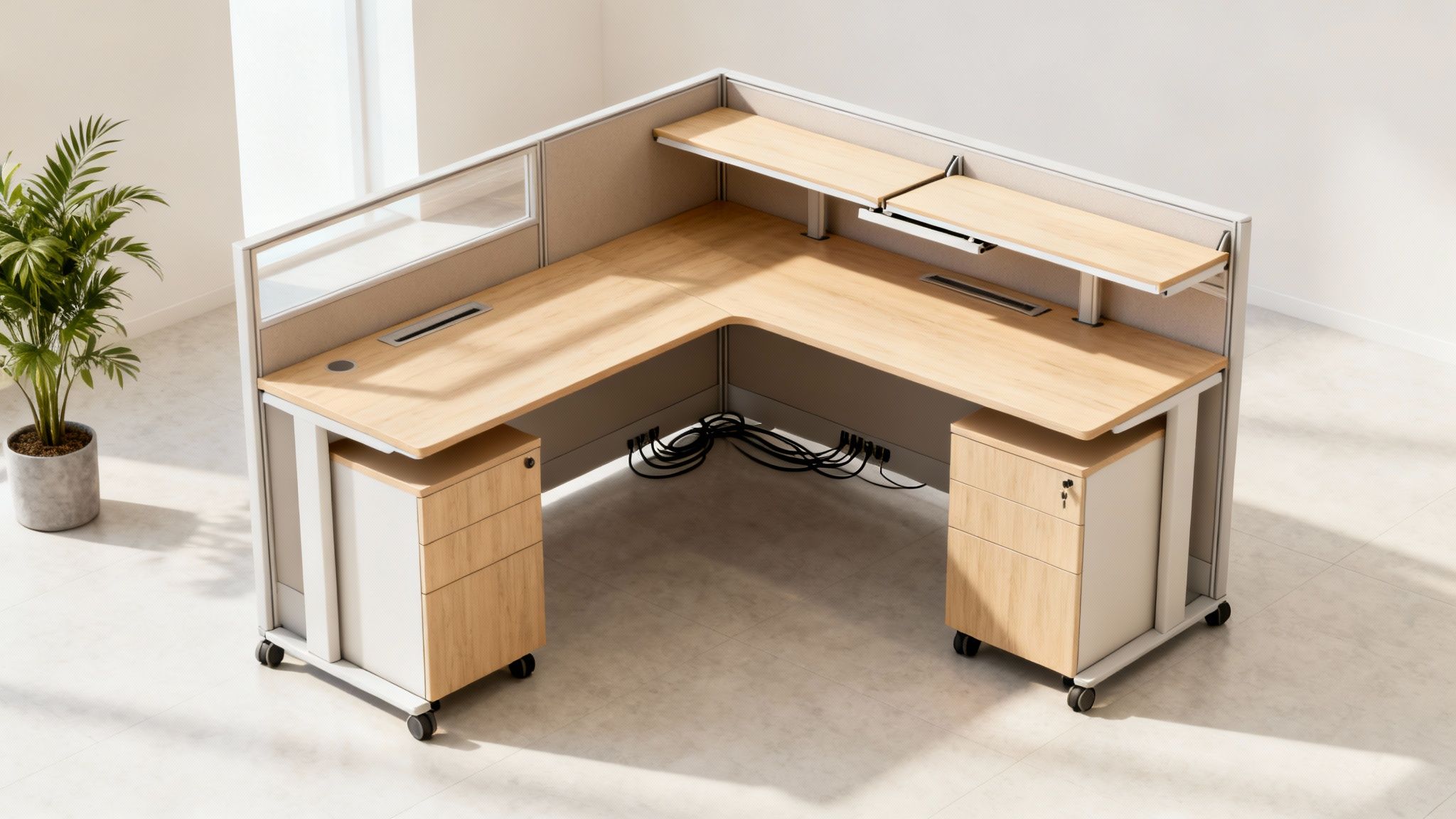
Mobile pedestals are a classic example. These rolling file cabinets tuck right under a desk, giving you secure storage without eating up more floor space. But they can also be pulled out to serve as a temporary extra surface or shifted around to make room for a new team member. Easy.
Smart design isn’t measured in square footage, but in experience. By choosing multi-functional components, you’re designing for efficiency and a better daily workflow, not just filling a room.
The industry numbers back this up. The North American modular furniture market was a USD 30.3 billion business in 2023 and is expected to grow to USD 43.6 billion by 2032. Why? Because businesses everywhere are demanding these kinds of space-efficient designs.
Materials and Ergonomics Matter
Don't forget that how furniture looks is just as important as how big it is. Dark, heavy materials can make a small room feel like a cave. You want to create an illusion of space, and that means choosing lighter finishes.
Keep these material options in mind:
- Light-Colored Laminates: Think white, light gray, or natural wood tones. They reflect light and make the whole space feel brighter and bigger.
- Glass Panels: Using frosted or clear glass for cubicle dividers keeps sightlines open while still giving people a bit of acoustic and psychological separation.
- Slim Profiles: Always go for desks and panels with thin, clean lines. Bulky, thick furniture will just swallow up your space.
Finally, and this is a big one, never sacrifice ergonomics to save a few inches. A compact setup still has to support your team's health and well-being. Look for adjustable-height desks, chairs with solid lumbar support, and monitor arms that get screens off the desk surface while promoting good posture.
We've put together a helpful guide on finding good desks for small spaces that nails this balance between ergonomics and efficiency. When you're ready to start playing with ideas, our interactive Cubicle Designer tool lets you experiment with every component to see what works best for you.
Solving Noise and Privacy in a Compact Workspace
Let's be honest: one of the biggest challenges in a small office is dealing with the constant buzz of activity. When everyone’s elbow-to-elbow, a single phone call can easily break the concentration of the entire room. This is where modular office furniture for small spaces really shines, going beyond just saving space to become a crucial tool for productivity.
It’s not just about the furniture itself, but how you put it to work. Certain modular pieces, like high-walled cubicles or panels wrapped in sound-absorbing fabric, are absolute game-changers for office acoustics. These components act as physical barriers, blocking sightlines and, more importantly, disrupting the path of sound waves to create much-needed pockets of quiet.
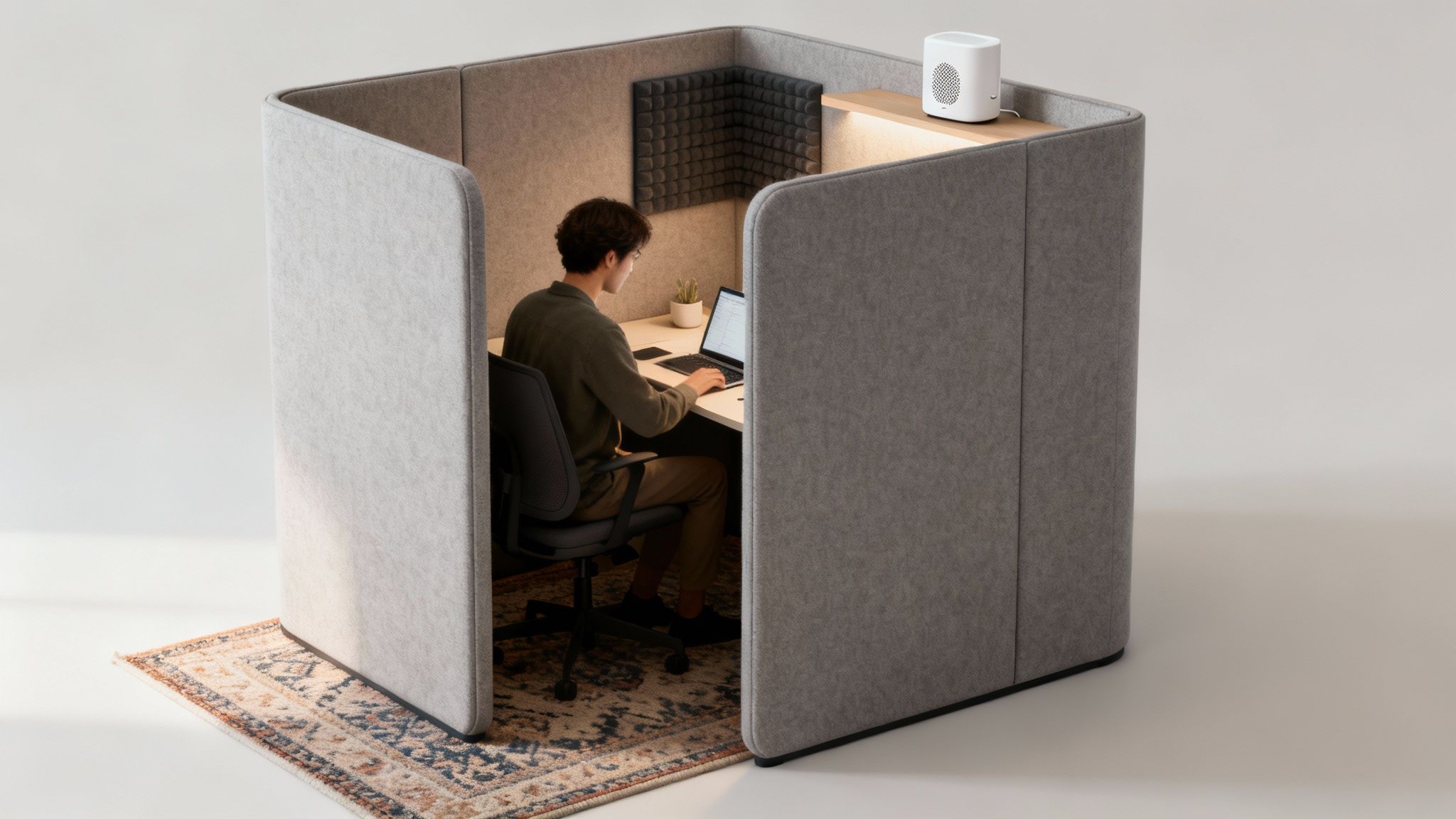
This kind of intentional separation fosters a sense of psychological privacy, letting employees focus without feeling like they’re constantly being watched or overheard. The real goal is to build an environment where deep, focused work can happen, even when a teammate is just a few feet away.
Using Modular Components for Acoustic Control
The true beauty of modular systems is how you can configure them to tackle your specific acoustic issues. You get to mix and match components to create a custom-fit solution for your office's unique noise profile—a targeted approach you just can't get with traditional furniture.
Think about incorporating these strategies:
- High Panels for Focus Zones: For areas meant for heads-down work, use cubicle panels that are at least 65 inches high. That height is incredibly effective at blocking most line-of-sight distractions and significantly muffling conversational noise from nearby workstations.
- Fabric-Covered Panels: Always opt for panels covered in acoustic-grade fabric when you can. Hard surfaces like laminate or glass bounce sound around the room, but these soft materials absorb it, which helps lower the overall ambient noise level.
- Staggered Layouts: Try to avoid lining up desks in long, straight rows. A staggered or offset layout naturally breaks up the direct path sound travels, stopping noise from ricocheting from one end of the office to the other.
The most productive small offices aren't the quietest ones—they're the ones that give people control over their sensory environment. Smart furniture choices provide that control without sacrificing a collaborative atmosphere.
This is a core principle we build into our designs at Cubicle By Design. We know a great layout balances the need for both collaboration and quiet focus, which is why our systems offer such a wide range of panel heights and materials.
A Holistic Approach to a Quieter Office
While your furniture is your first line of defense, creating a truly focused workspace requires a multi-layered plan. You can boost the acoustic performance of your modular setup with a few simple environmental tweaks that work together to soak up and mask distracting sounds.
Think beyond the cubicle walls and try these complementary tactics:
- Soften the Surfaces: Hard floors and bare walls are basically echo chambers. Adding soft materials like area rugs, curtains, or even fabric-covered art can absorb a surprising amount of ambient noise.
- Add Acoustic Wall Panels: If your room has a serious echo problem, dedicated acoustic panels mounted on the walls can make a world of difference. They come in all sorts of styles and colors, so they can double as a design element.
- Introduce White Noise: A simple white noise machine or a sound masking system creates a gentle, unobtrusive background hum. This raises the ambient noise floor just enough to make human speech less intelligible and, therefore, far less distracting.
By combining smart modular furniture choices with these simple environmental adjustments, you create a complete acoustic solution. You can transform your compact office from a place of constant interruption into a genuine haven for productivity. Getting this balance right is everything, and you can learn more about creating that separation by exploring the fundamentals of office cubicle privacy.
Bringing Your Vision to Life with a Custom Cubicle Designer
You've done the hard work of measuring, sketching layouts, and figuring out which components you need. Now it's time to bridge the gap between that vision in your head and a concrete, visual plan. This is where a lot of people get stuck, trying to imagine how all the pieces will fit together in the real world.
Thankfully, you don't have to guess anymore. Modern design tools let you move your ideas from a napkin sketch to a dynamic, interactive model. You can build your exact room digitally, play with different configurations, and see the results instantly. It’s all about confirming your layout works before a single box shows up at your door.
Translating Your Plan into a 3D Model
The first move is to take your precise room measurements and create a digital canvas. A powerful, free tool like the Cubicle By Design Custom Cubicle Designer makes this surprisingly simple. You just plug in your wall dimensions, mark where the doors and windows are, and—voilà—you have a digital twin of your office.
Once the room is built, the real fun starts. You can begin dragging and dropping different modular components right into your layout. This is a hands-on way to test all your theories. Will that L-shaped desk really fit best in the corner? Are those panels high enough to give people the privacy they need? You get immediate, visual answers to these critical questions.
This screenshot from the Custom Cubicle Designer shows the tool's intuitive drag-and-drop interface, where you can select and place various cubicle components.
This visual approach lets you experiment with different arrangements and see exactly how each piece impacts the flow and feel of your office.
A Practical Walkthrough: A Tiny 10×12 Foot Office
Let’s put this into practice. Imagine you’ve got a tiny 10×12 foot room (that’s just 120 sq. ft.) and you need to fit three people in there comfortably. Sounds like a nightmare with traditional desks, but it’s a perfect puzzle for a modular system.
Here's how we'd tackle it with the designer tool:
- Define the Room: First, we'd build the 10×12 foot digital room, making sure to add the door swing and any windows. This immediately shows us the true usable footprint we’re working with.
- Select Core Components: To save space, we’d probably go for a back-to-back or clustered "pod" layout instead of lining desks up against the walls. We could grab three compact workstations and start arranging them.
- Add Panels and Storage: Next, we'd drop in low divider panels between the stations. This gives everyone their own defined space without making the room feel like a closet. For storage, we'd use mobile pedestals that tuck under each desk and add some integrated overhead shelving to take advantage of vertical space.
- Integrate Power: Finally, we can map out where electrical hookups are needed. This ensures everyone has clean, accessible power without tripping over a jungle of extension cords.
What felt like a daunting challenge becomes a manageable, step-by-step project. You're not just hoping it works; you're building a proven solution piece by piece. To see more about how it works, you can transform your office with our interactive cubicle designer.
Customizing Finishes and Generating a Realistic Rendering
A great layout isn’t just about function—it's also about how the space feels. Once the configuration is locked in, you can start playing with finishes. The ability to toggle between light wood tones, crisp whites, or modern grays helps you see how your choices will impact the room's brightness and perceived size. You can even swap out fabric colors for the panels.
A 3D rendering does more than show you what fits. It gives you the confidence that you've made the right choices for your space, your team, and your budget before committing to a purchase.
The rise of modular furniture is directly tied to this kind of smart planning. These systems can reduce the need for excessive office space by up to 30%—a huge win for any small business.
After you've finalized everything, the tool generates a realistic rendering. This isn't just a flat floor plan; it’s a 3D image that shows you what your new office will actually look like. This final visualization is the perfect tool for getting buy-in from your team and moving forward with total confidence.
Still Have Questions About Modular Furniture?
Even the best-laid plans can leave you with a few lingering questions. When you're making an investment in modular office furniture for small spaces, it's smart to iron out the practical details. Let's tackle some of the most common questions we hear from business owners just like you.
How Hard Is It to Put This Stuff Together?
This is probably the number one question we get, and for good reason. The good news is that one of the biggest draws of modular furniture is its straightforward assembly. Most systems are designed with simple, intuitive connectors that don't require a whole workshop of specialized tools. Putting together a single workstation on your own is usually no big deal.
However, when you're talking about a full office installation with multiple cubicles, we really do recommend bringing in the pros. This makes sure every panel is perfectly stable, every connection is rock-solid, and all the electrical components are wired correctly and safely—a service we're proud to offer at Cubicle By Design.
The real magic, though, happens later. When your team grows or your workflow shifts, reconfiguring your layout is a world away from the hassle of traditional furniture. Instead of starting over, you just adapt what you already have. It's a far more flexible and cost-effective approach for a growing business.
Will I Actually Have Enough Storage?
Absolutely. In fact, this is where modular systems truly shine. They're engineered to think vertically and integrate storage in clever ways that get rid of those bulky, space-hogging filing cabinets of the past.
Instead of separate pieces, you get components that build storage right into the workstation.
- Overhead Storage Bins: These are perfect for using the empty air above the desk, keeping things accessible but out of your immediate workspace.
- Integrated Shelving: Some divider panels can be fitted with shelves, turning a simple wall into a functional spot for binders, books, or displays.
- Mobile File Pedestals: These are the unsung heroes of the small office. They slide right under the desk and can be rolled out when needed, giving you secure storage without taking up a permanent chunk of your floor plan.
By building storage into the furniture, you end up with a more organized space that feels open and uncluttered. You can see some of these smart solutions in our collection of workstation cubicles.
Good design in a small office isn't measured in square footage, but in experience. The right modular furniture creates a workspace that feels intuitive, organized, and supportive of daily tasks.
This approach makes every square foot work harder for you, keeping things orderly and productive.
What’s the Real Long-Term Value Here?
While the initial price tag for modular and traditional furniture can look similar, the long-term value is in a completely different league. It all comes down to one word: adaptability. A traditional desk is just a desk. It's never going to be anything else.
A modular system, on the other hand, is a flexible asset that evolves with you. When you hire more people, launch a new team, or need more collaborative zones, you just add, subtract, or rearrange your existing pieces. You’re not stuck throwing out perfectly good furniture and starting from scratch.
This built-in scalability saves a ton of money over the life of your office. Instead of facing a huge capital expense every few years for a total overhaul, you make small, smart adjustments as you go. It's a forward-thinking approach that helps you plan for the future, whether you need private office cubicles or more open stations.
Ready to design a smarter, more flexible workspace? At Cubicle By Design, we specialize in creating modular office solutions that make every square foot count. Explore our full range of cubicles or bring your vision to life with our free Custom Cubicle Designer today.