

A small office chair isn't about compromising on comfort or features. It's about being smart—a strategic piece of equipment designed to give you full-size ergonomic support in a compact, space-saving package.
Why Your Small Space Demands a Smarter Chair
Ever find yourself staring at a tight office layout, wondering how you'll ever fit comfortable, productive seating in there? You’re not alone. The challenge of outfitting smaller workspaces—from cozy cubicles to bustling home offices—means you can't just pick any old chair. You need a smart one.
Think of a specialized small office chair like a high-performance engine in a compact car; it delivers all the power without wasting an inch of space. This idea is central to modern office design, where every square foot counts. For facilities managers and business owners, the goal is always to build an environment that’s both efficient and inviting, and the right chair is a huge part of that. You can find more inspiration by exploring our guide on office design ideas for small spaces.
The Problem with Bulky Seating
Trying to force a standard, oversized chair into a small office is a recipe for frustration. It blocks walkways, makes it impossible to open desk drawers, and leaves employees feeling cramped and stressed. That kind of environment doesn't just slow down foot traffic; it can tank focus and overall job satisfaction.
A poorly chosen chair in a tight space doesn't just occupy square footage—it actively works against productivity by creating physical and mental friction for the user. The right chair, however, removes these barriers.
This is exactly why a purpose-built small office chair is so critical. These chairs are engineered from the ground up with smaller footprints, narrower bases, and options like no arms or adjustable arms that let them slide right under a desk. They're made to fit perfectly in tight spots, whether it's a series of workstation cubicles or more enclosed private office cubicles, where every inch is precious.
A Strategic Investment in Productivity
Choosing the right compact chair isn't an expense; it's an investment that pays you back. When an employee is comfortable and their workspace is free of clutter, their ability to concentrate and get work done skyrockets. A well-designed small office chair delivers the essential ergonomic support to fight off fatigue and discomfort, even when space is at a premium.
At Cubicle By Design, we believe furniture should adapt to you, not the other way around. It doesn't matter if you're designing a whole floor of cubicles with our cubicle designer tool or just setting up a single home office—the principles are the same. This guide will walk you through the key things to look for, helping you make a decision that boosts both comfort and output.
Decoding the Dimensions of a Compact Chair
You’ve seen it happen. The new chairs arrive, and they look fantastic—until you realize they’re just a few inches too wide to tuck neatly under the desks. That’s why guessing games are out when you're buying a small office chair. It's a costly mistake, and avoiding it means getting out the measuring tape.
It’s not enough for the chair to simply look small. What really matters is how its dimensions work with your existing space, from the height of your desks to the width of your walkways. A few key numbers will tell you whether a chair will be a seamless fit or a daily frustration.
Mapping Your Workspace for a Perfect Fit
Before you even start browsing chair catalogs, you need to measure your own territory. It doesn't matter if you're working with a row of workstation cubicles or a tight home office corner; knowing your limits is step one. A couple of inches can be the difference between a functional layout and a frustrating bottleneck.
Pull out your tape measure and grab these three numbers:
- Desk Height: Measure from the floor to the underside of the desk surface. This tells you the seat height range you need, ensuring your team can sit with their feet flat on the floor and their arms resting comfortably at a 90-degree angle to the keyboard.
- Knee Space Width: Measure the open space between the desk legs where the chair will live. A true compact chair usually has a base width under 25 inches, allowing it to slide in smoothly without any bumps or scrapes.
- Aisle Clearance: Don't forget the space behind the chair. You need to leave enough room for people to walk by without having to squeeze past. In lower-traffic areas, 36 inches is a safe minimum to aim for.
Getting these details right is especially critical when dealing with fixed furniture. Our guide to standard cubicle desk sizes digs deeper into how these measurements come into play in a typical office setup.
This quick visual breaks down exactly why choosing the right small chair is more than just a space-saving trick.
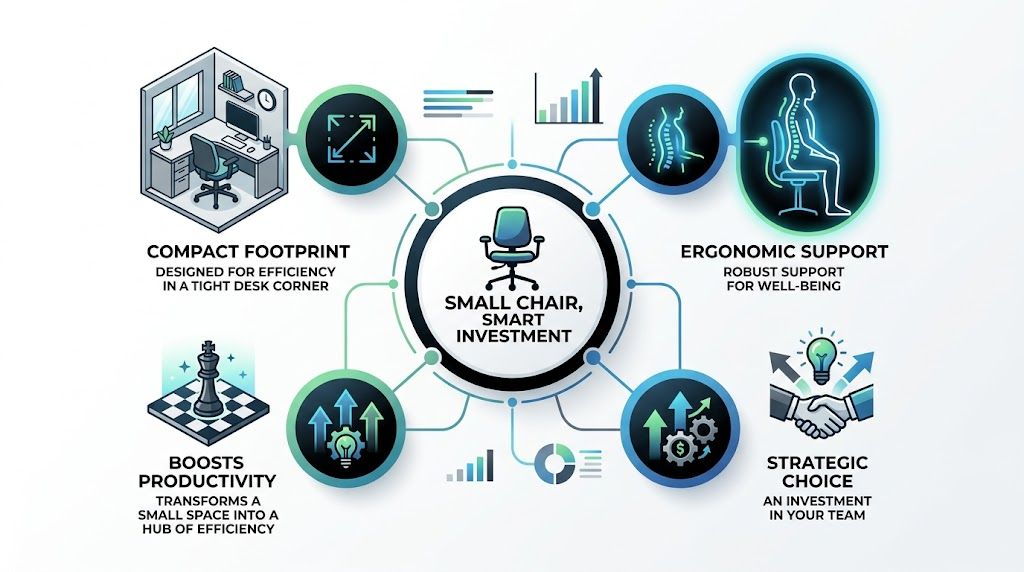
As you can see, a smaller chair isn't a compromise. When chosen well, it’s a smart investment that boosts comfort and focus without overcrowding your floor plan.
Core Chair Dimensions to Scrutinize
Once you know the numbers for your space, you can start comparing them to chair specifications. Ignore the fancy marketing photos for a moment and go straight to the product spec sheet.
The total footprint of a chair is more than its seat—it's the entire three-dimensional space it occupies, including its base, height, and the area needed for a user to swivel and recline without obstruction.
Here are the key chair dimensions to check against your measurements:
- Seat Width and Depth: Look for a seat width between 17 and 20 inches for most compact models. Just as important is the depth—a range of 15 to 19 inches is ideal. This allows a person to sit all the way back, get proper back support, and still have a little space between the edge of the seat and the back of their knees.
- Back Height: Small chairs typically come in low-back or mid-back designs. Low-back models are great for encouraging active posture and are best for shorter periods of sitting. A mid-back chair gives you a bit more support up to the shoulder blades, striking a good balance for people who are at their desks for longer stretches.
- Total Footprint (Base Diameter): This is a big one. The diameter of the star-shaped base determines how nimble the chair is. To keep it from becoming a tripping hazard in a tight cubicle or hallway, look for a base diameter under 25 inches.
Ergonomics Without Compromise in a Smaller Footprint
There’s a common myth floating around that if you choose a small office chair, you have to give up the ergonomic support that keeps you comfortable and focused. That’s just not true anymore. Today's compact chairs are smartly engineered to deliver outstanding support, proving you can save space without sacrificing well-being.
Think of it this way: a high-quality small office chair is like a perfectly tailored suit. A basic, non-adjustable chair is more like a one-size-fits-all option from a discount rack. One is built to fit your unique shape and movements, while the other forces you to conform to its generic design. The right adjustments are what make all the difference, turning a simple chair into a personalized tool for productivity.
The Non-Negotiable Adjustments
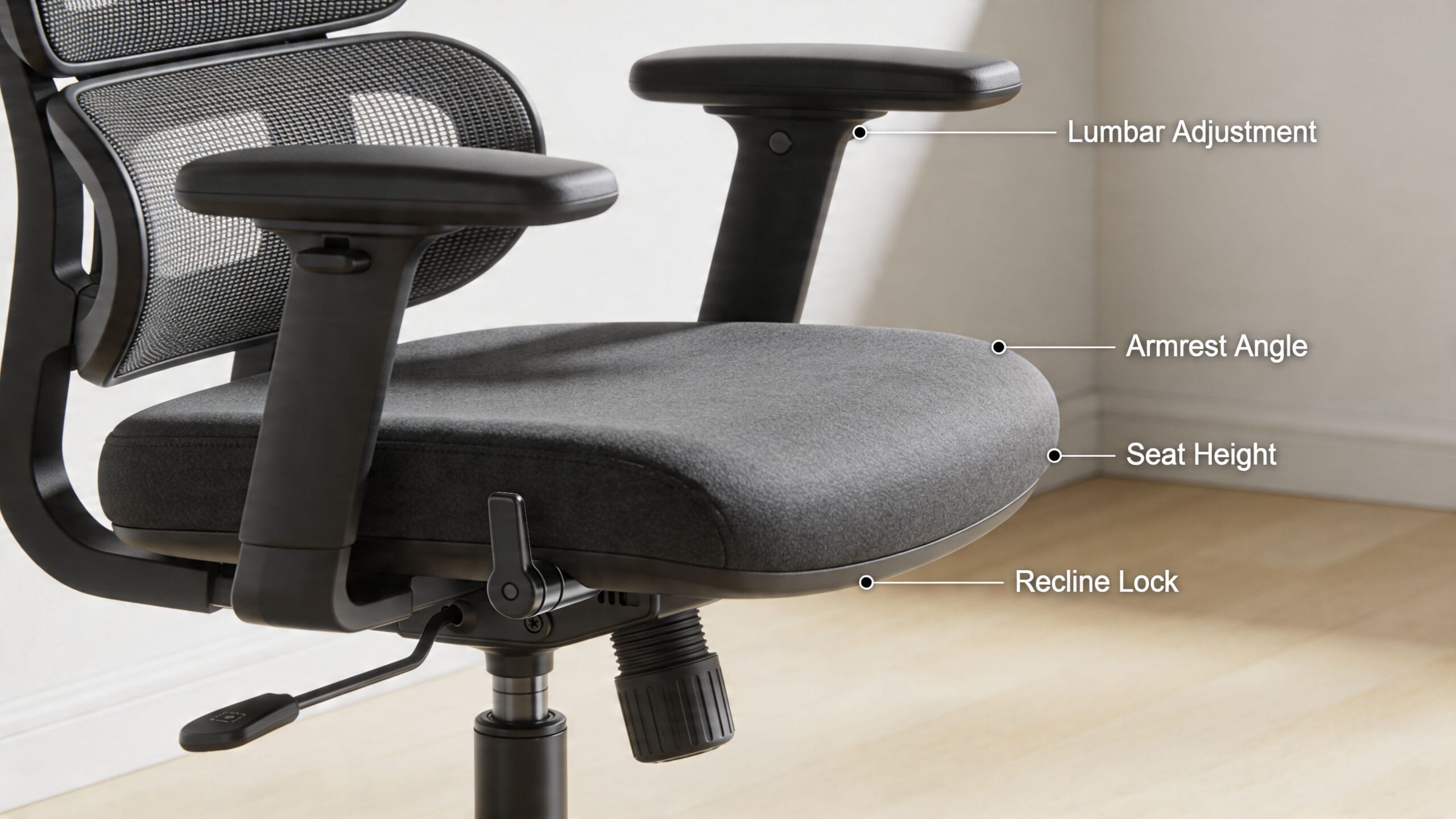
When you're shopping for a compact chair, there are a few key features that are simply non-negotiable. These adjustments work together to prevent aches and pains, fight off fatigue, and keep your mind on your work, not on your aching back.
- Adjustable Lumbar Support: This is the big one. Your chair needs to support the natural S-curve of your lower back to stop you from slouching. Look for support that you can move up, down, and even in and out to get the fit just right.
- Multi-Directional Armrests: Don't settle for static armrests. You want arms that adjust up and down, side-to-side, and forward and back (often called 3D or 4D arms). This lets you bring them in close to support your forearms, taking the strain off your neck and shoulders.
- Seat Height Control: This is fundamental. Your feet should rest flat on the floor with your knees at roughly a 90-degree angle. A simple lever for height adjustment is crucial for healthy posture and circulation.
- Seat Depth Adjustment: People have different leg lengths, and your chair should account for that. This feature lets you slide the seat pan forward or back, leaving a small gap (about 2-3 fingers wide) behind your knees to prevent pressure points.
- Recline and Tilt Functions: A good chair should move with you. A recline function with tension control lets you lean back without feeling like you’re about to tip over, promoting small movements that keep you from getting stiff.
When these features are set up correctly, they can completely transform your workday. Our guide to ergonomic office equipment digs deeper into how these components build a healthier workspace.
How Good Ergonomics Boosts Your Bottom Line
Investing in ergonomic chairs isn't just a nice-to-have for employee comfort; it's a proven business strategy. When your team isn't distracted by back pain or neck strain, they can concentrate better and work more efficiently. It’s a direct line to improving your company’s performance.
A supportive chair is not a perk; it's a productivity tool. By reducing physical discomfort, you unlock mental clarity and a higher capacity for deep work.
The numbers don't lie. Research shows that ergonomic small office chairs deliver significant returns, with some studies pointing to 15-20% productivity improvements and an incredible 67% drop in absenteeism related to musculoskeletal issues. That translates to an ROI of anywhere from 3:1 to 10:1. You can read the full research on ergonomic office chairs and their impact to see the data for yourself.
Ultimately, providing a quality small office chair is an investment in your people. It sends a clear message that you care about their health, which builds loyalty and cuts down on costly sick days. Whether you're outfitting a single office or an entire floor of cubicles, choosing chairs with the right ergonomic features is one of the smartest decisions you can make.
Choosing Materials That Deliver Long-Term Value
When you buy a new small office chair, you're making an investment, not just ticking a box on a procurement list. To make sure that investment pays off, you have to look past the price tag and get serious about the materials. The right choices will give you years of solid performance, while the wrong ones will have you shopping for replacements sooner than you think.
Think of it like buying tires. You wouldn't put standard street tires on a truck destined for rugged, off-road work. In the same way, the materials you choose for your office chairs need to stand up to the demands of your specific environment, whether it's a high-energy call center or a quiet executive suite.
The Right Upholstery for Your Space
The surface you actually sit on and lean against plays a huge role in comfort, durability, and even how easy the chair is to maintain. Each option brings something different to the table.
Breathable Mesh: This is a go-to for any modern small office chair, and for good reason. Its open-weave design lets air flow freely, which is a lifesaver for keeping cool during long days. A good quality, high-tensile mesh is also surprisingly strong and molds to your back for flexible, all-day support.
Durable Fabric: You can't go wrong with classic fabric upholstery. It feels soft and comfortable and comes in an endless variety of colors to perfectly match your office decor. While it's built to handle daily wear and tear, it is more prone to stains and takes a bit more effort to clean than other materials.
Easy-to-Clean Vinyl: If your office is a place where spills are inevitable or where hygiene is the absolute top priority, vinyl is your best friend. It’s non-porous and can be wiped clean in seconds, making it the perfect choice for healthcare settings, breakrooms, or other high-traffic areas.
Choosing the right upholstery is a balance of aesthetics, comfort, and practicality. The table below breaks down the key differences to help you decide.
Small Office Chair Material Comparison
| Material | Pros | Cons | Best For |
|---|---|---|---|
| Mesh | Excellent breathability, modern look, flexible support | Can be abrasive on some clothing, lower-end mesh can sag | Warm climates, long work sessions, users who run hot |
| Fabric | Wide color/texture variety, soft & comfortable feel, durable | Can trap heat, harder to clean, susceptible to stains | General office use, matching specific branding colors |
| Vinyl | Extremely easy to clean, water & stain resistant, hygienic | Not breathable (can feel hot/sticky), can crack over time | Healthcare, labs, cafeterias, high-spill environments |
Ultimately, the best material is the one that fits your office's daily reality.
Frame and Base: The Foundation of Strength
The frame and base are the unsung heroes of a great office chair. They're the skeleton that determines its stability and how long it will last. This is often where you can spot the difference between a true value and a cheap chair that will fail you.
The unseen components of a chair—its base, casters, and internal frame—are the true indicators of its long-term durability. A shiny finish can hide a weak foundation, so it's crucial to know what to look for underneath.
You'll typically see two main options for the base:
- Nylon: This is a heavy-duty plastic that's both lightweight and budget-friendly. Don't let the word "plastic" fool you; high-quality nylon is incredibly strong and is the standard on many reliable office chairs that deliver fantastic performance for everyday use.
- Aluminum: For a more premium look and rock-solid durability, you'll want aluminum. It’s exceptionally strong, won’t corrode, and can often handle higher weight capacities. A polished or brushed aluminum base is a clear sign you're looking at a higher-end chair built for years of intense use.
Don't Overlook the Casters
Finally, let's talk about the wheels. These small parts, known as casters, have a surprisingly big impact. Using the wrong kind of caster won't just make rolling around a chore; it can actively damage your floors.
- For Carpet: You'll want hard casters. Usually made of a hard nylon, they are specifically designed to glide smoothly over carpet fibers without getting bogged down.
- For Hard Floors: You absolutely need soft casters. These wheels have a softer coating, like polyurethane, that grips hard surfaces like wood, tile, or vinyl. This prevents scratching and allows the chair to roll quietly and smoothly.
By paying close attention to these material details, you can be confident your chair is a smart investment that will provide lasting comfort and real value. To see how these principles apply to a range of seating options, check out our guide to affordable modern office furniture.
Integrating Chairs with Your Office Layout
Finding a great small office chair is a fantastic start, but it's only half the battle. A chair, no matter how perfect, only really shines when it works in concert with the entire office environment. This is where you go from just buying furniture to creating a truly high-functioning workspace.
Think of it this way: choosing a chair without considering your layout is like picking a powerful car engine without knowing what car it’s going into. That powerful engine is completely useless if the chassis can't handle it. In the same way, a fantastic ergonomic chair that’s too big or clumsy for your floor plan will just create bottlenecks, block walkways, and kill the very productivity it was meant to boost.
The size and mobility of a chair are absolutely essential, especially when you're working within the tight footprint of a cubicle system. The goal is a smooth experience where your team can move and work without fighting their furniture.
Pairing Chairs with Modular Cubicles
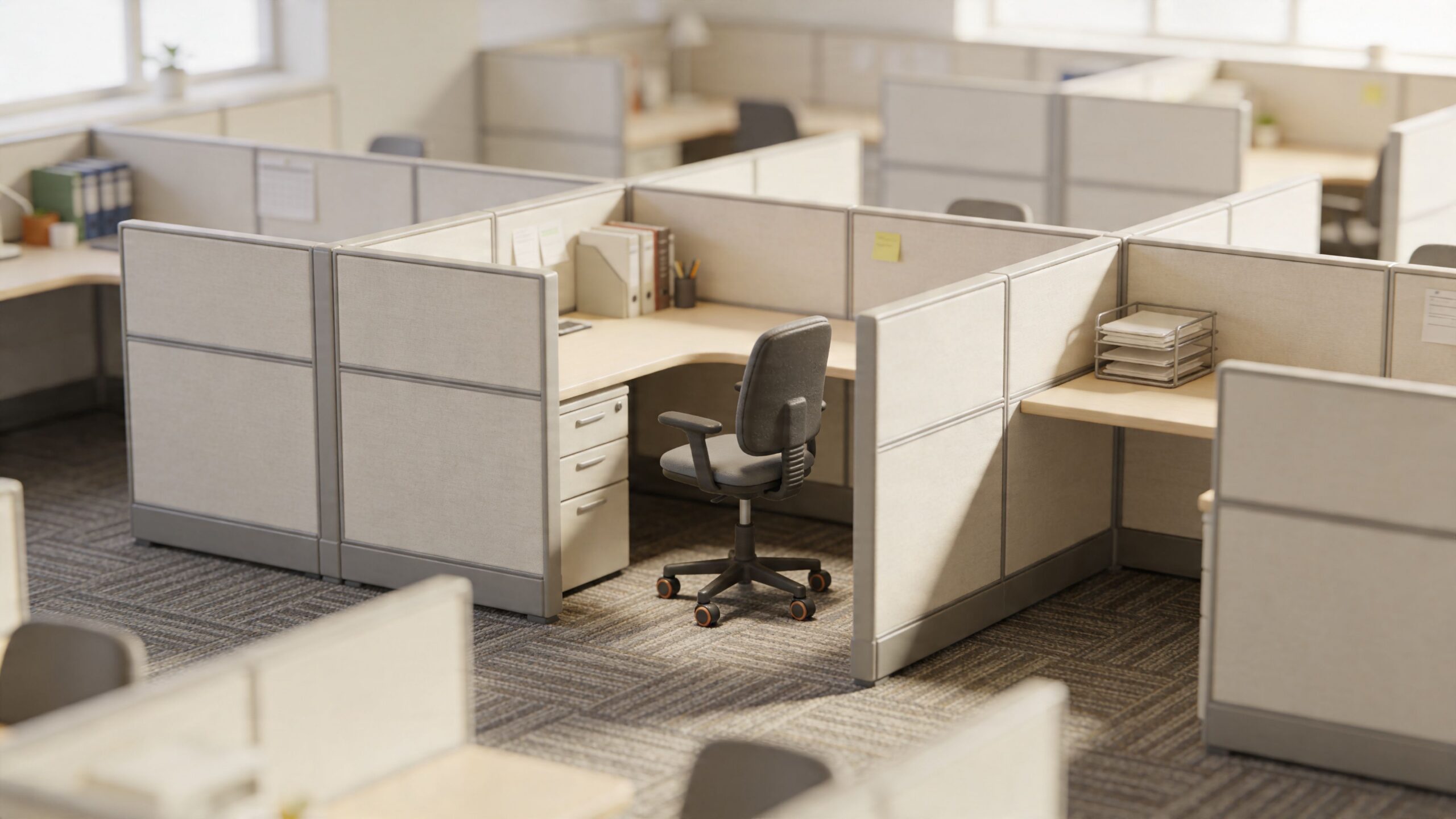
Modular cubicles are the workhorses of many modern offices, and a well-chosen small office chair is their best friend. These chairs are built to navigate the compact space of a standard workstation, letting employees swivel, reach for files, and roll around without feeling trapped.
When you're laying out your floor plan, think about how that chair fits in with other office furniture and chairs. For instance, a chair with a base diameter under 25 inches will tuck completely under the desk. This simple detail is huge—it frees up floor space and keeps your walkways clear, which is crucial for creating an efficient and ADA-compliant office.
When you pair the right seating with a system like our workstation cubicles, you get a space that not only works better but also feels more comfortable and looks more professional.
Chairs for Private Offices and Open Plans
This idea of smart integration isn’t just for cubicle farms. A small office chair is often the better pick even in bigger spaces like private office cubicles. A massive, bulky executive chair can suck the air out of a room, making it feel cramped and cluttered. A more compact chair delivers the same high-end ergonomic support while keeping the space feeling open and airy.
In open-plan offices with benching systems, the right chair becomes even more critical. Here are a few things to keep in mind:
- Acoustics: In a bustling open office, every little bit of sound control helps. Chairs with soft casters and fabric upholstery can do a surprising amount to absorb noise.
- Mobility: Low-profile chairs make it easy for people to pull up to a colleague’s desk for a quick chat, fostering collaboration without a major reshuffling of furniture.
- Aesthetics: Using a consistent style of small office chair across the entire floor creates a clean, unified look that subtly reinforces your company’s brand and professionalism.
The market certainly shows how important this is. Chairs accounted for 33% of the global office furniture market revenue back in 2024. And as small office chairs become the go-to choice for startups and hybrid teams, knowing how to integrate them is what separates a good layout from a great one. You can see more on the trends shaping today's offices in these office furniture marketing statistics.
Visualizing the Perfect Fit
The absolute best way to make sure your chairs and layout will work together is to see them in action before you spend a dime. Guessing is a recipe for expensive mistakes and logistical nightmares down the road. This is where planning tools are a game-changer.
A well-integrated office is greater than the sum of its parts. Visualizing how chairs function within your layout ensures that every element, from the desk to the walkway, works in concert to maximize space and empower your team.
By using a tool like our Custom Cubicle Designer, you can stop guessing and start seeing. It lets you play with different setups, test clearances, and visualize exactly how a small office chair will move and function in your unique space. This kind of foresight ensures that every piece of your office puzzle fits together perfectly from day one.
Your Procurement Plan for Maximizing ROI
Alright, you've decided it's time for new small office chairs. Now comes the part that makes it a reality: your procurement plan. A smart strategy isn't just about hunting for the lowest price tag; it's about finding the absolute best value to get the most out of your investment. This means looking past the initial cost to see the long-term wins in employee wellness, productivity, and simple durability.
The first step is building a realistic budget. When you're planning for office upgrades, it's easy to focus only on the invoice, but you have to factor in the bigger picture. As many are learning, there's a very real the hidden cost of workforce well-being. A chair that costs more today but saves you from the expense and disruption of employee health issues down the road is always the better buy.
Budgeting for Real Value
Let's be honest: not all chairs are built the same, and the price tells a story about the engineering, materials, and warranty that come with it. Knowing what you're getting for your money is what separates a good purchase from a great one.
Here’s a general breakdown of what to expect at different price points:
- Entry-Level (Under $300): These chairs will get the job done for basic needs but often skimp on serious adjustability and use lower-grade materials. They might work for very light, short-term use, but you'll likely be replacing them much sooner.
- Mid-Range ($300 – $800): For most businesses, this is the sweet spot. Chairs in this bracket usually offer the full range of ergonomic adjustments, use durable materials like high-tensile mesh, and come with solid warranties of 5-10 years.
- Premium ($800+): When you step up to this level, you’re investing in world-class engineering, premium materials like polished aluminum, and advanced comfort features. These chairs are built to withstand heavy, all-day use for a decade or more and are backed by extensive warranties, often 10+ years.
Bulk Purchases vs. Single Chairs
Your buying strategy will look very different depending on how many chairs you need. Buying one chair for a home office is simple—you just focus on your personal fit and comfort. Outfitting an entire office, however, is a whole different ball game that requires serious planning.
For bulk orders, working with a full-service dealer like Cubicle By Design can be a lifesaver. We can help you secure volume pricing, coordinate the complex logistics of delivery, and manage a professional installation team to get everything set up perfectly. This kind of partnership takes the headache out of a big project, making sure you stay on schedule and on budget. If you're looking for more ways to make your budget stretch, our guide on buying used office furniture is a great resource.
An Investment That Pays Dividends
At the end of the day, a quality chair isn't an expense—it's an asset that pays you back. The market trends back this up completely. The global office chairs market was valued at USD 14.69 billion in 2024 and is on track to hit USD 22.22 billion by 2032, with North America leading the way.
What's driving this growth? Companies are finally seeing the clear, measurable ROI from investing in their team's health. Studies have shown productivity can jump by 15-20%, and absenteeism linked to musculoskeletal issues can drop by as much as 67%.
A well-chosen small office chair is a direct investment in your team's health and your company's productivity. It delivers returns through higher engagement, fewer sick days, and a more positive work environment.
By keeping your focus on the warranty, maintenance needs, and long-term value, you can be confident that every dollar you spend is a direct contribution to a healthier, more productive workplace.
Common Questions About Small Office Chairs
When you're outfitting a smaller space, every detail counts. You've probably got a few questions running through your mind as you zero in on the right compact chairs. Let's tackle some of the most common ones we hear from clients to help you get it right.
What Is the Ideal Seat Depth for a Small Office Chair?
The sweet spot for seat depth is all about leaving a small gap—about 2 to 4 inches—between the edge of the seat and the back of your knees when you're sitting all the way back. For most people, this means a seat depth somewhere between 15 and 19 inches feels just right.
Look for compact chairs that have a seat depth adjustment. It's a game-changer for any office, ensuring you can fine-tune each chair to fit everyone on your team, from your tallest employee to your most petite.
Are Mesh Back Chairs Durable Enough for a Busy Office?
Absolutely. A high-quality mesh chair is more than tough enough for a high-traffic office environment. The secret is finding a model that uses a high-tensile strength mesh. This type of material is specifically engineered to hold its shape and resist sagging or tearing, even with daily use.
Besides being tough, mesh offers incredible breathability, which makes a huge difference in comfort over a long workday. To make sure you’re getting a chair that will last, always check the warranty and look for a BIFMA certification. That seal means it’s passed a battery of tough tests for safety and durability.
How Do I Choose the Right Casters for My Office Flooring?
Matching the chair's wheels, or casters, to your floor is crucial. It protects your flooring from damage and makes sure people can move around smoothly. The rule is simple: hard casters for soft floors, and soft casters for hard floors.
- For Carpet: You'll want hard casters. These are usually made from a tough nylon and are what you'll find on most standard office chairs. They're designed to glide easily over carpet.
- For Hard Surfaces: If you have hardwood, tile, or laminate floors, you need soft casters. These wheels have a softer coating, often polyurethane, that prevents scratches and allows them to roll quietly and smoothly on hard surfaces.
Ready to find the perfect seating solution for your workspace? The experts at Cubicle By Design can help you plan, select, and install the ideal chairs for your needs. Explore our full range of office furniture solutions at cubiclebydesign.com.