17 Jan Transform Your Workspace with Modular Office Cubicles | Cubicle By Design
If you’ve ever stared at a fixed office layout, you know how limiting and frankly, outdated, it can feel. For any business trying to navigate growth, hybrid work, or just the day-to-day shuffle, the answer isn’t to knock down walls—it’s modular office cubicles.
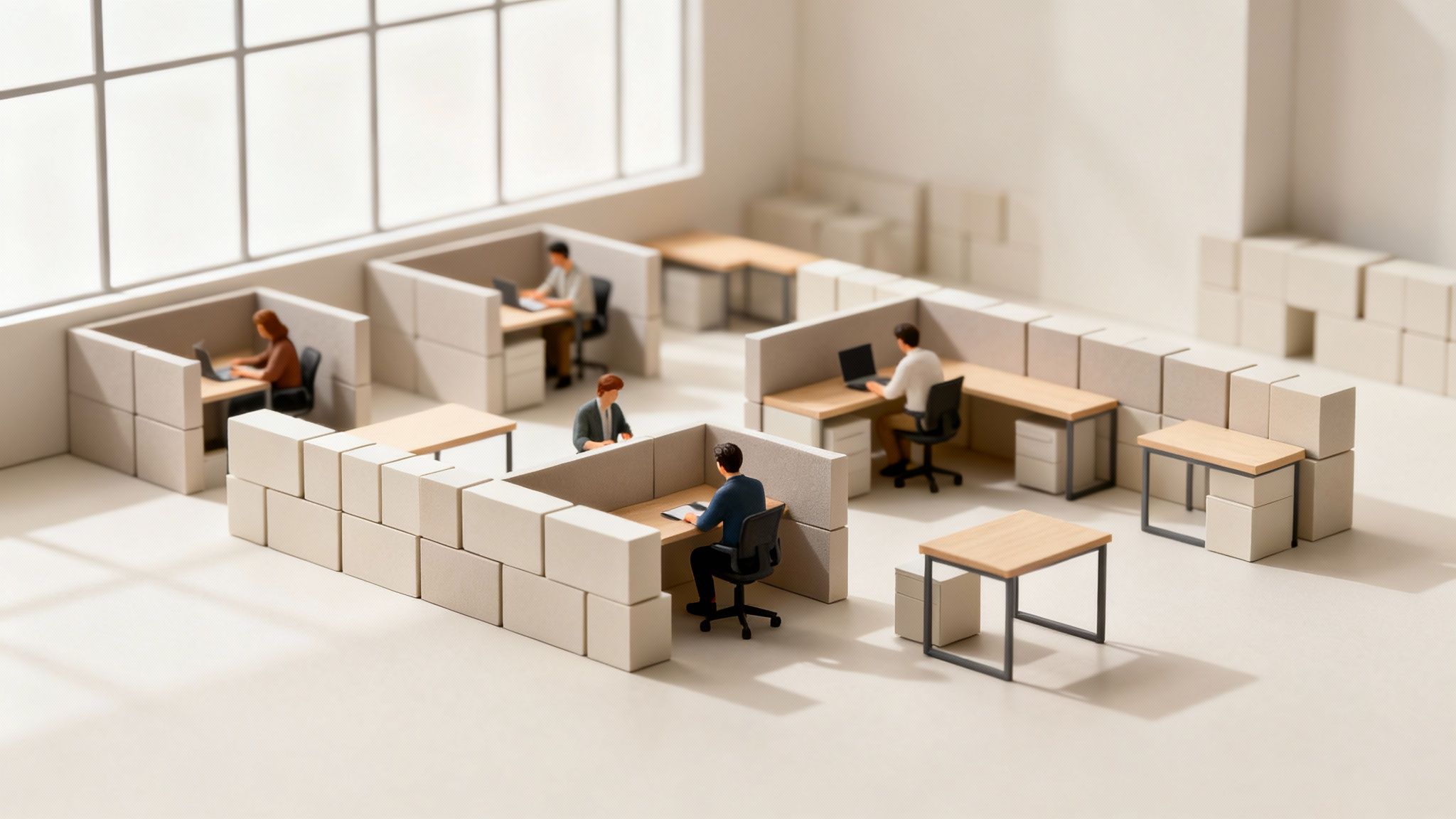
Think of it this way: traditional office construction is like building a house with glue instead of screws. It’s permanent. Modular systems, on the other hand, are like a high-end LEGO set for your workspace, giving you the power to reconfigure, expand, or shrink your layout with incredible ease.
The Blueprint for a Flexible Modern Office
In a world where business needs can change seemingly overnight, your physical office has to keep up. Traditional construction, with its drywall and permanent floor plans, often locks companies into one way of working. That rigid setup quickly becomes a major headache when a team needs to grow, a new department pops up, or you decide to create more collaborative zones. The old way of thinking forced businesses to adapt to the office; the new way makes the office adapt to the business.
This is where modular office cubicles completely change the game. They aren't permanent fixtures. Instead, they're a system of pre-engineered components—panels, work surfaces, storage units, and even glass walls—that click together to create anything from open-plan workstations to fully private offices. If you want to dive deeper into the basics, we have a whole guide explaining what modular furniture is. It’s this system-based approach that gives you an incredible amount of freedom.
Why a Modular Blueprint Matters
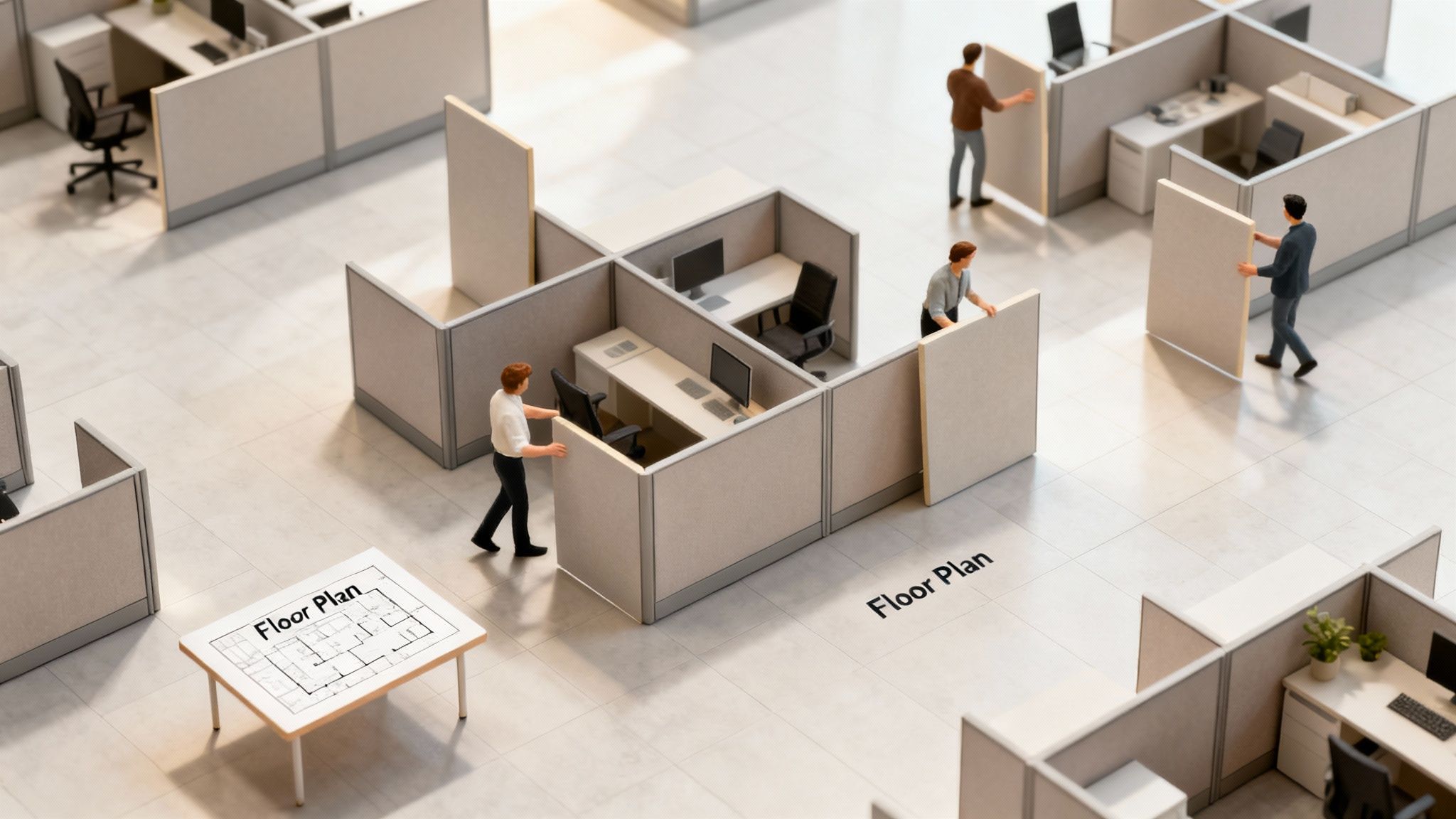
Adopting a modular mindset isn’t just about buying furniture; it's an investment in an adaptable, long-term infrastructure for your company. This kind of blueprint lets you react quickly to organizational shifts without the massive disruption and high costs of a full-blown renovation.
A modular blueprint gives you control over your workspace's destiny. You can reconfigure a department over a weekend, add private offices without calling a construction crew, and scale your footprint up or down as your headcount fluctuates.
At Cubicle By Design, we live and breathe this stuff—we help businesses create these dynamic environments every day. Whether you're just starting to explore our versatile cubicles or you need something specific like private office cubicles or collaborative workstation cubicles, the principle is the same: you get the power to design a smarter, more responsive workplace.
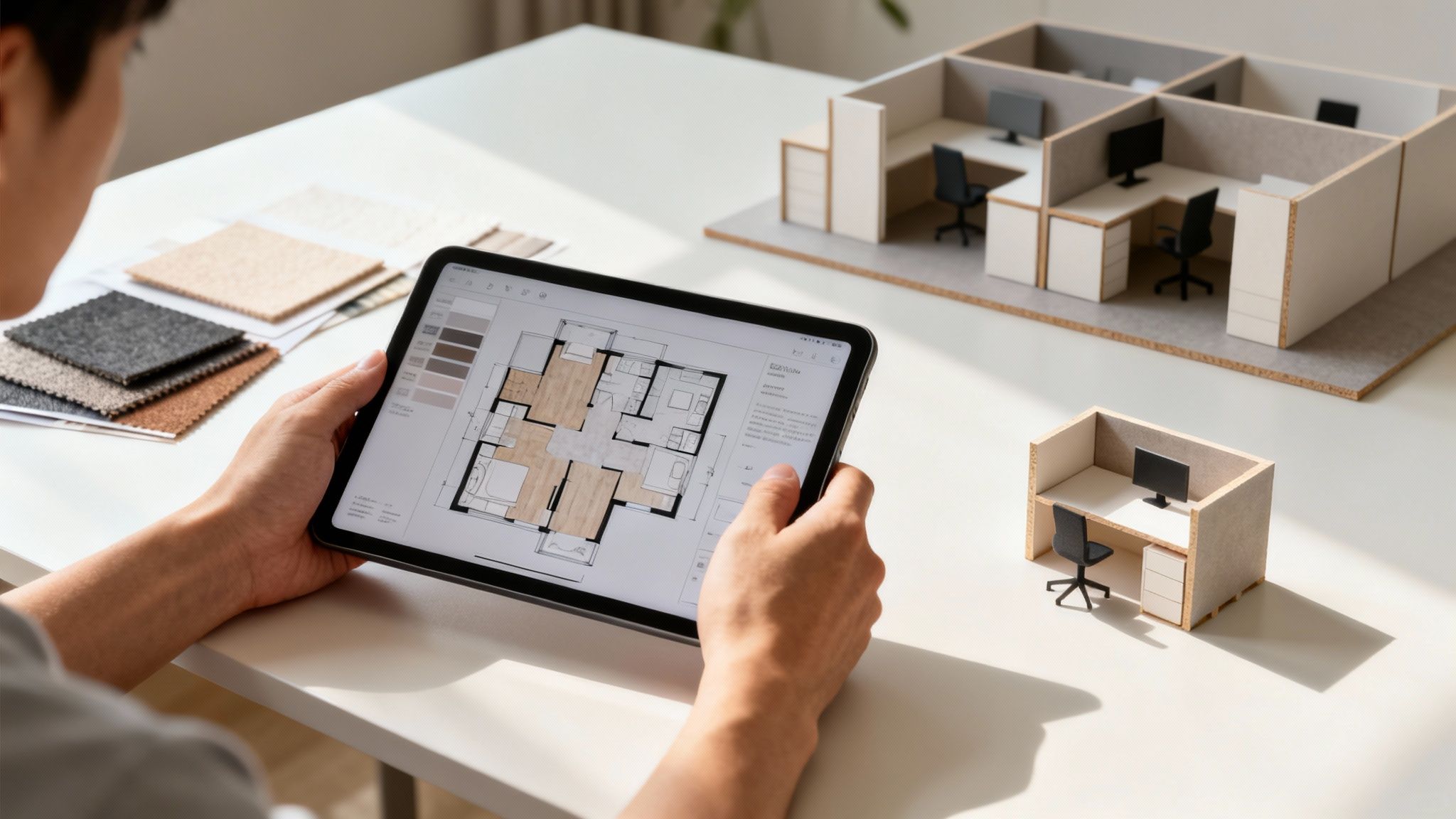
Our interactive Cubicle Designer tool is the perfect first step to turn this blueprint into a reality, letting you play with different layouts to build the perfect setup for your team.
The Real-World Benefits of a Modular System
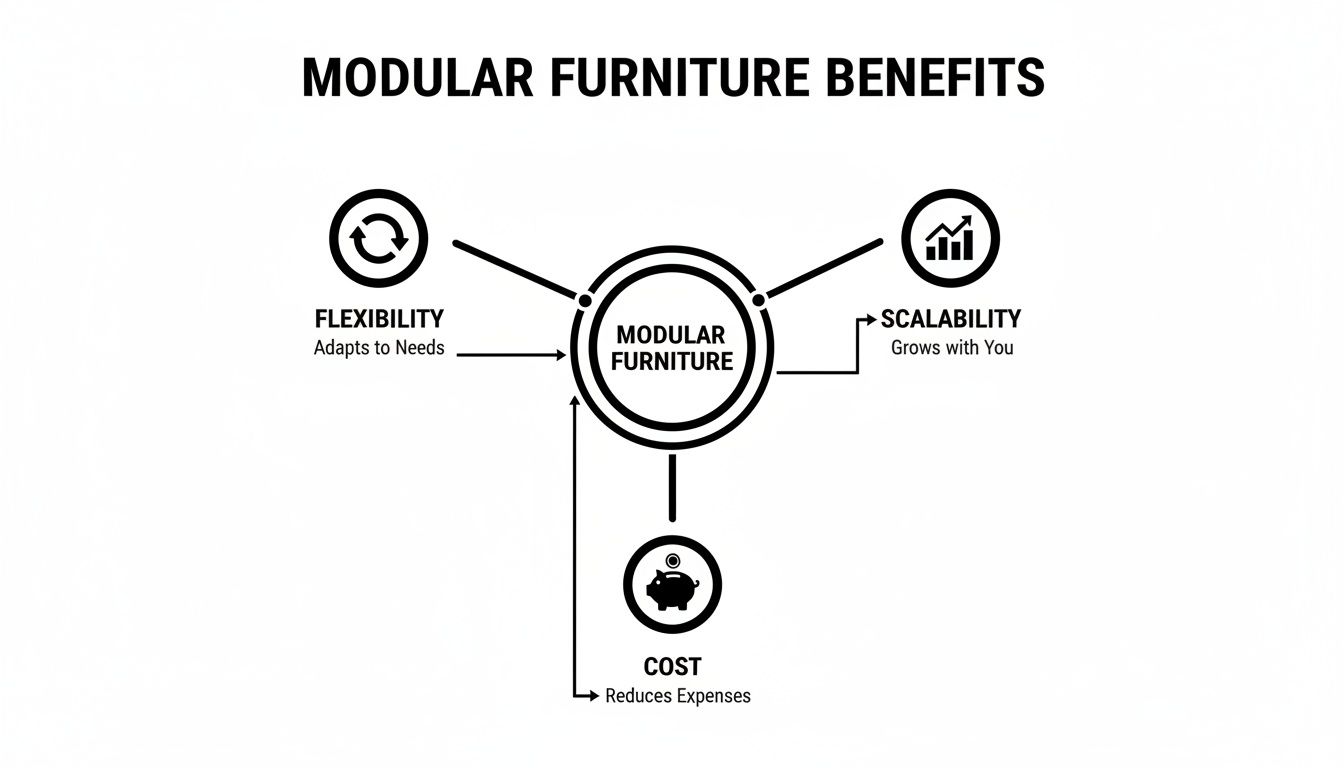
Okay, so we know modular systems are flexible. But what does that actually mean for your business, your bottom line, and your team's day-to-day sanity? It’s about more than just movable walls; it’s a strategic decision that pays off in real, tangible ways. Let's dig into the three biggest advantages you'll see.
Scalability On Demand
Imagine this: your startup just landed a huge contract and you need to bring on ten new developers—yesterday. With a traditional, fixed-wall office, you’re staring down the barrel of noisy construction, dust, and weeks of downtime just to make room. A modular system, on the other hand, can turn that massive headache into a simple weekend project.
Because all the components are designed to work together like building blocks, you can add, subtract, or completely rearrange workstations to fit your team’s changing size. This means you can:
- Expand Rapidly: Need to add a new department? You can pop in new workstation cubicles without throwing the entire office into chaos.
- Downsize Efficiently: Shifting to a hybrid work model? You can shrink your layout to save on rent, all without scrapping your initial furniture investment.
- Reconfigure Instantly: That row of individual pods can become a collaborative hub for a new project in a matter of hours, not weeks.
When your office can grow and shrink with you, your physical space stops being a roadblock and starts being an asset.
Long-Term Cost Efficiency
While the upfront cost of a good modular system might seem similar to other office furniture, the real savings come over the long haul. You're avoiding the gut-wrenching costs of traditional construction. There’s a reason the global modular office furniture market is booming—it was valued at USD 12.5 billion in 2026 and is on track to hit USD 20.3 billion by 2031. Businesses are catching on to the smarter investment.
By investing in a system that can be reconfigured and reused, you sidestep the recurring expenses of demolition, construction, and disposal associated with permanent walls. Every time you adapt your layout, you're tapping into the value you've already paid for.
And what happens when you move? Your investment comes with you. Modular cubicles can be taken apart, moved, and put back together in your new location. If you’re planning a move, using a comprehensive office relocation checklist can make the whole process smoother.
An Enhanced Employee Experience
Let’s be honest: a one-size-fits-all office rarely fits anyone well. Modular systems give you the power to create a workspace that actually works for the people in it. When your team has the right environment, focus and morale go way up.
For example, you can give your finance team the quiet they need with private office cubicles built with high, sound-dampening walls. At the same time, your marketing team can get low-walled, open pods perfect for hashing out ideas on the fly. This isn’t just about furniture; it’s about showing your employees you’re thinking about their needs.
You can finally create an office that offers the best of both worlds:
- Privacy and Focus: Carve out quiet zones where people can actually concentrate.
- Collaboration: Design open, interactive hubs that encourage teamwork.
- Personalization: Give people a say in how their own space is set up.
At Cubicle By Design, we help businesses strike this exact balance with our huge range of cubicles. You can even start playing with ideas right now using our online Cubicle Designer.
Deconstructing the Modular Cubicle
When you're looking at modular office cubicles, you're not just buying a desk with some walls tacked on. You're really investing in a complete system of interconnected parts, where every single piece has a purpose and a surprising range of customization. Think of it like building a custom PC—you start with the case, but then you choose the processor, motherboard, and all the other components that make it work exactly how you need it to.
Getting to know these individual components is what separates a good office layout from a great one. It’s how you go from a vague idea of "needing more workstations" to a specific, smart plan for your space. Let's break down the essential building blocks.
The Core Building Blocks: Panels and Surfaces
The two most fundamental pieces of any cubicle are its panels and work surfaces. These are the parts that create the structure, define each person's space, and give your team a place to actually get work done.
Panels are the vertical walls of the cubicle, but they do a lot more than just divide space. They're your primary tool for managing acoustics and setting privacy levels. The options here are vast:
- Height: You can go with low panels (around 42 inches) to encourage conversation and collaboration, or choose taller panels (65 inches or more) to create quiet, heads-down workstations.
- Material: Need to dampen sound? Go with sound-absorbing acoustic fabrics. Want something easy to clean and modern? Laminates are a great choice. You can even use elegant glass panels to keep things private without blocking natural light.
- Functionality: Some panels are "tackable," which is perfect for pinning up notes and reminders. Others have built-in accessory rails, so you can easily mount monitors and shelves without drilling a single hole.
Work Surfaces are simply the desktops, but they're far from simple anymore. Modern systems offer all sorts of shapes and finishes to fit different work styles. You've got L-shaped surfaces for corner setups, curved "cockpit" style desks that put everything within easy reach, and traditional straight surfaces for clean, linear rows.
The real magic of modular office cubicles is seeing how these pieces combine. A tall, fabric-wrapped panel paired with a big L-shaped desk creates a perfect private hub for an accountant. Meanwhile, a cluster of low-paneled workstations with straight desks is an ideal setup for a collaborative sales team.
It's All in the Details: Integrated Storage and Organization
Clutter is the absolute enemy of productivity. Modular cubicles tackle this problem head-on with storage solutions that are built right into the system, keeping everything organized without eating up precious floor space. These aren’t just afterthoughts; they're designed to be a seamless part of the workstation.
This table gives a quick overview of the essential components and how you can tailor them to your needs:
| Component | Function & Purpose | Common Customization Choices |
|---|---|---|
| Panels | Form the walls of the cubicle; provide privacy, acoustic control, and structural support. | Height (low, medium, high), material (fabric, glass, laminate), tackable surfaces, power integration. |
| Work Surfaces | The main desk area where work is performed. | Shape (L-shape, U-shape, straight, curved), size (depth and width), finish (woodgrain, solid colors). |
| Pedestals | Under-desk filing and storage for personal items and documents. | Mobile or fixed, file/file or box/box/file drawer configurations, locking options. |
| Overhead Storage | Bins or shelves mounted to panels for storing binders, books, and supplies off the desk. | Open shelves, flipper door bins, various widths and finishes to match the system. |
| Power & Data Raceways | Channels in the panels that house electrical wiring and data cables for a clean, safe setup. | Base-level or belt-line access, number of outlets and data ports per workstation. |
By mixing and matching these elements, you can ensure every employee gets the exact setup they need to stay organized and focused. For a deeper dive into how these components create different layouts, check out our guide on cubicle configurations and their components.
Powering and Connecting Your Team
In any modern office, easy access to power and data is a must. One of the biggest wins for modular office cubicles is how they handle all the cables and tech. Instead of a chaotic mess of extension cords snaking across the floor, the entire infrastructure is built directly into the panels.
This is done using "raceways"—hidden channels that run along the base or middle of the panels. These raceways neatly contain all the electrical wiring and data cables, delivering outlets and network ports right where you need them. It’s a clean, safe, and incredibly functional system.
This kind of built-in efficiency is a huge reason the market is growing so fast. The global office cubicles market, valued at USD 61 billion in 2023, is on track to hit USD 104.8 billion by 2031. It’s clear that businesses are demanding these kinds of organized and forward-thinking solutions.
Once you understand how these different pieces—panels, surfaces, storage, and power—all fit together, you can start to really visualize your ideal workspace. Each component is a decision point, a chance to fine-tune the environment to perfectly match how your team works.
Designing Your Ideal Workspace Layout
Taking the idea of modular design and turning it into a real, working office layout—that's where the magic happens. It’s one thing to understand the parts, but it’s another to arrange them strategically to solve your company’s unique challenges. A great layout isn't just about cramming desks into a room; it’s about building an environment that actively helps your teams work, talk, and get things done.
The first step? Think in terms of zones and workflows. Who needs to collaborate all the time? Who needs dead silence to concentrate? Where do people tend to gather, and how can you manage the foot traffic so it isn’t disruptive? Answering these questions helps you map out a floor plan that just feels right from day one.
Creating Purpose-Built Work Zones
With modular office cubicles, you can finally ditch the one-size-fits-all approach and design specific areas for different kinds of work. This zoning strategy is the key to keeping everyone happy and productive in a single space.
Here are a few common ways to do it:
- Focused 'Pods' for Deep Work: Got programmers, writers, or accountants who need to get in the zone? Create small clusters of high-walled private office cubicles. Using panels that are 65 inches or taller with acoustic fabric is a game-changer for cutting down ambient noise, creating a quiet sanctuary for heads-down work.
- Efficient Rows for High-Volume Teams: Call centers or data entry teams often thrive in organized, linear layouts. Here, you can use medium-height panels to set up uniform workstation cubicles. This gives everyone their own space while still making it easy for managers to supervise and for the team to feel connected.
- Collaborative Hubs for Project Teams: For your creative or project-based teams, low panels and shared surfaces are perfect for sparking those spontaneous conversations and brainstorming sessions. Arranging these workstations in a pinwheel or small group creates a natural hub for teamwork.
This graphic really breaks down how all the essential pieces come together to make these custom setups a reality.
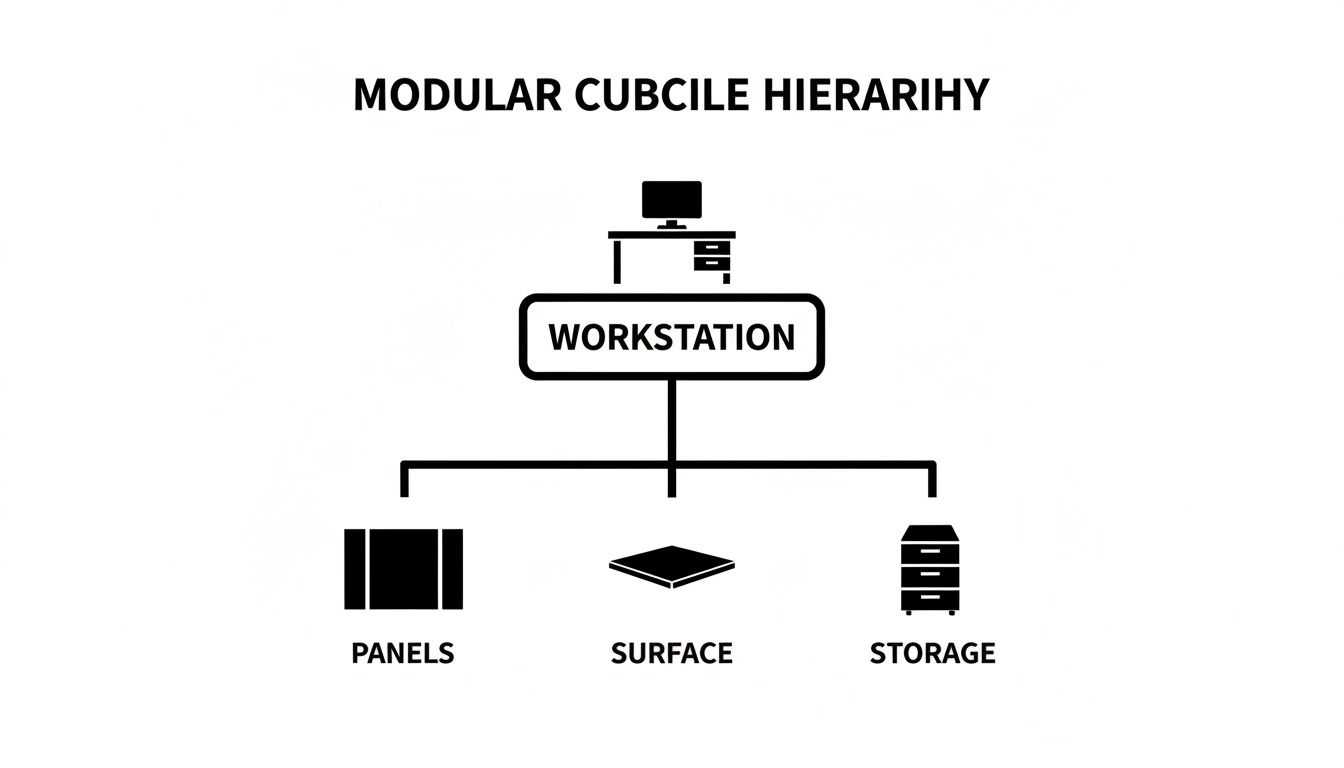
As you can see, every workstation is just a system of interchangeable parts—panels, surfaces, and storage—that you can mix and match in countless ways to build the exact layout you need.
Principles of Smart Space Planning
Beyond creating zones, smart space planning is about thinking through the entire flow and feel of the office. A well-designed layout considers density, pathways, and technology to create a workspace that’s as comfortable as it is functional. As you get ready for the switch, it’s also a good time to think about logistics. Before the new setup arrives, you’ll need a clean slate. Using professional office cleanout and IT equipment disposal services can be a huge help in efficiently clearing out old furniture and tech to prep your space.
An effective workspace layout is a strategic asset. It guides employee interaction, supports different work styles, and can directly influence productivity and job satisfaction by removing daily friction points like noise, clutter, and inefficient pathways.
A few key principles to keep in mind:
- Managing Traffic Flow: Make sure you have clear, wide pathways between cubicle clusters to prevent bottlenecks. The main "walkways" should be kept free of clutter so people can move around without disturbing those who are focused on their work.
- Balancing Density: It’s tempting, but avoid cramming too many workstations into one area. Giving people proper breathing room not only makes the office more comfortable but also helps with noise control and makes the whole space feel more open and less chaotic.
- Integrating Technology Seamlessly: Plan for your power and data needs right from the start. Modular systems with built-in raceways are brilliant for this—they keep all the cables hidden but accessible, which means no more trip hazards or messy-looking wires.
Pulling all of this together can feel a bit overwhelming, but you don't have to go it alone. Getting some expert help can make all the difference. To see how the pros handle this, you can learn more about our dedicated office space planning and design services, where we help you get the most out of every square foot. By combining thoughtful design with the versatility of modular office cubicles, you can create an environment that’s built for today and ready for whatever comes next.
Planning Your Budget for Modular Cubicles
Let's get down to brass tacks. While dreaming up a flexible, modern workspace is the exciting part, the conversation always circles back to one critical question: what's this going to cost? Budgeting for modular office cubicles isn't about finding a single price tag. It's about understanding all the little things that add up and recognizing the long-term value you're getting.
Unlike buying a simple desk or chair, the price of a modular workstation is really the sum of its parts. Every single choice you make—from the height of the walls to the finish on the desktop—shapes the final number. This is actually a good thing, because it puts you in the driver's seat. You get to decide where to invest in premium features, like better acoustics for privacy, and where you can be a bit more economical.
Key Factors That Influence Price
When you know what drives the cost of these systems, you can make smart trade-offs. It allows you to put your money where it matters most for your team's day-to-day work, all while sticking to your financial plan.
Here are the main things that will move the price needle:
- Panel Height and Material: It's simple—taller panels cost more than shorter ones. Likewise, if you opt for panels with special sound-dampening materials or sleek glass inserts, you'll see a bigger investment than with standard fabric ones.
- Integrated Power and Data: How wired you need to be matters. Basic power outlets at the base of a panel are pretty cost-effective. But if you need easy-access power and multiple data ports right at desk level for every workstation, that will add to the cost.
- Work Surface Size and Finish: A larger, premium laminate work surface is naturally going to be priced higher than a smaller desktop with a standard finish.
- Storage Components: The more storage you add, the more it will cost. Things like overhead bins for binders, rolling filing cabinets, and open shelving all contribute to the final price of each station.
For a really detailed look at how these pieces come together on a price sheet, our comprehensive cubicle price guide is a fantastic resource. It'll help you get a much clearer picture of your project costs.
Total Cost of Ownership: A Smarter Financial Outlook
The real story behind the cost of modular office cubicles isn't just the check you write today. It's about the total cost of ownership over the entire life of your office. This is where modular systems leave traditional construction in the dust.
An investment in modular is a capital expense that holds its value. Drywall becomes a sunk cost the second it's put up, but your cubicle system can be reconfigured, moved, and used again, saving you a fortune on future construction and headaches.
Think about that for a second. When your team expands or you realize the current layout just isn't working, you don't have to call in a demolition crew. You simply reconfigure the assets you already own. That kind of adaptability delivers a return on investment that fixed walls can never hope to match.
Modular Cubicles vs. Traditional Office Construction: A Cost-Benefit Analysis
When you’re weighing your options, looking at modular systems versus building out traditional drywall offices is a common crossroads. The initial invoice is only one part of the story; the real differences emerge in flexibility, long-term value, and operational impact.
This table breaks down the clear financial and practical advantages:
| Factor | Modular Office Cubicles | Traditional Construction |
|---|---|---|
| Initial Cost | Upfront investment in reusable furniture assets. | Includes labor, materials, permits, and finishing costs. |
| Flexibility | Layouts can be reconfigured with minimal cost and downtime. | Any change requires costly demolition and new construction. |
| Relocation | Assets can be disassembled and moved to a new location. | The entire investment is lost; you must start from scratch. |
| Depreciation | Treated as a depreciable asset (furniture), often with tax benefits. | Becomes a permanent part of the building with less favorable depreciation. |
| Disruption | Reconfigurations can happen quickly, often over a weekend. | Involves weeks of noise, dust, and significant operational disruption. |
Ultimately, choosing a modular system is a strategic financial move. It shifts your spending away from a cycle of expensive, one-and-done construction projects and toward a single, flexible investment that grows and changes right alongside your business.
Partnering with Cubicle By Design
Picking out the right modular office cubicles is a huge step, but honestly, it’s only half the battle. The other half—and you could argue it's the more critical part—is choosing a partner who can actually guide you from a rough idea to a fully functioning workspace. A great partner doesn't just sell you furniture; they bring the expertise and support to make sure your project gets done right, on time, and within your budget.
That’s where we come in. At Cubicle By Design, we are that full-service partner. Our whole goal is to take the complex, often stressful process of outfitting an office and make it feel straightforward and manageable. We get it. You're not just buying cubicles; you’re building an environment where your team can do their best work.
This hands-on approach is more important than ever. The demand for adaptable office solutions is soaring—the modular furniture market was valued at USD 88.4 billion in 2025 and is expected to hit USD 134.7 billion by 2035. With that kind of growth, having an experienced guide in your corner is a game-changer.
A Comprehensive Support System
Our support begins long before the first panel arrives at your door. We’ve built a complete set of services to cover every single stage of your office transformation. We don't do "one-size-fits-all" here. Instead, everything we do is tailored to what you actually need.
This includes:
- Expert Space Planning: Our team digs into your floor plan to optimize it for workflow, collaboration, and smart use of space, making sure every square foot pulls its weight.
- Dedicated Project Management: You'll have a single point of contact to guide you through it all, handling the logistics and keeping everything on track so you don't have to.
- Professional Installation: Our seasoned installers take care of the entire assembly, ensuring your workstation cubicles and private office cubicles are set up correctly and safely from the start.
The Power of the Custom Cubicle Designer
One of the coolest tools we offer is our online Custom Cubicle Designer. This interactive tool puts you in the driver's seat, letting you build, experiment, and visualize the perfect setup before you commit to anything. You can play around with different layouts, materials, and add-ons to create a workspace that truly matches your vision.
Partnering with an expert team means you get more than just products; you get a strategic ally committed to designing a better workplace. We handle the complexities so you can focus on your business.
This customer-first mindset is at the heart of everything we do. We’ve built our name on being a reliable, knowledgeable resource for businesses of all sizes. To get a better feel for our philosophy, you might want to read about why so many businesses rely on Cubicle By Design for their office needs. From exploring our wide range of cubicles to seeing the final installation through, we’re with you every step of the way.
Got Questions About Modular Office Cubicles? We’ve Got Answers.
As you get closer to reimagining your workspace, it’s only natural for practical questions to pop up. Planning a new office layout has a lot of moving parts, and getting clear answers upfront is the key to a smooth, predictable process. Here are some of the most common questions we hear from clients diving into modular office cubicles.
How Long Does Installation Actually Take?
This is where you see one of the biggest wins for modular systems: speed. Unlike traditional construction that can drag on for weeks with endless noise and dust, modular components are engineered for incredibly fast assembly.
Believe it or not, a standard project with a dozen or so workstations can often be knocked out over a single weekend. That means your team can leave the office on Friday and walk into a completely refreshed layout on Monday with absolutely zero operational downtime. Bigger or more complex jobs might take a bit longer, but the timeline is still just a fraction of what you’d be looking at with drywall.
Can We Mix New Cubicles with Our Existing Furniture?
This is a huge concern for businesses looking to upgrade in stages, and the short answer is yes—with a little planning. While different brands might not snap together like Legos, modern modular systems are designed to be freestanding and completely self-supporting.
This means you can easily place new workstation cubicles right alongside your existing desks or build out new private offices without worrying about a perfect match with the old system. We do this all the time, helping clients blend new, modern pieces with their current furniture in a way that feels intentional and cohesive, not pieced together.
The whole point of a modular approach is flexibility. That flexibility should absolutely extend to your current assets, letting you modernize your space at a pace that works for your budget and your team.
What’s the Real Difference Between Panel Options?
The panels you pick are a huge deal. They do more than just divide space; they have a major impact on the look, feel, and function of your office, giving you direct control over privacy, acoustics, and light.
- Fabric Panels: Think of these as the workhorses for sound control. Sound-dampening fabric panels are fantastic for creating quiet, focused workstations and cutting down on that distracting ambient office buzz.
- Laminate Panels: If you’re going for a sleek, modern vibe, laminate is a great choice. These panels are durable, a breeze to clean, and offer excellent visual privacy. Just know they don’t absorb sound quite like fabric does.
- Glass Walls: Glass panels, sometimes called "storefronts," are perfect when you want private office cubicles that still feel open and connected to the rest of the team. They let natural light pour through the space while providing surprisingly good acoustic separation.
A great way to get a feel for the possibilities is to browse the different cubicles available and see how these materials can be mixed and matched.
How Do These Systems Handle All Our Wires and Cables?
A jungle of tangled cables isn't just ugly—it's a safety hazard. Modular systems were designed to solve this problem from the ground up with integrated "raceways." These are simply hidden channels built right into the base or middle of the panels.
These raceways neatly house all your electrical wiring and data cables, delivering power outlets and network ports directly to each person's desk. Everything stays organized, safe, and completely out of sight. It’s a clean, brilliant solution built for how we actually work with technology today.
Ready to build a workspace that truly works for you? At Cubicle By Design, we help you navigate every decision, from the first sketch to the final installation. Start bringing your vision to life with our powerful and easy-to-use Custom Cubicle Designer today.