

13 Jan 10 Facilities Management Best Practices for a High-Performance Workplace | Cubicle By Design
In today's competitive business environment, a well-managed facility is no longer just a backdrop for work. It is a strategic asset that directly drives productivity, enhances employee well-being, and fortifies the bottom line. The discipline has shifted dramatically from a reactive, fix-it-when-it-breaks model to a proactive, data-driven strategy essential for operational excellence. Adopting proven facilities management best practices is the key to creating a safe, efficient, and inspiring workspace that can adapt to the evolving demands of your workforce.
This definitive guide moves beyond theory to provide a practical roadmap. We will explore 10 essential strategies that top-performing organizations are implementing right now to transform their physical environments. You will gain actionable insights into critical areas, from implementing a robust preventive maintenance schedule to optimizing your floor plan for maximum efficiency. We'll cover how to integrate smart building technology, champion sustainability initiatives, and foster a culture of safety and compliance.
Throughout this comprehensive list, we will demonstrate how strategic space planning and the use of flexible solutions, such as modular workstation cubicles and private office setups, can be instrumental in achieving these goals. By the end of this article, you will have a clear, step-by-step framework for elevating your facility from a necessary cost center into a powerful competitive advantage. Partnering with experts at Cubicle By Design can help bring these best practices to life, ensuring your office is not just functional but a true catalyst for success.
1. Preventive Maintenance Planning & Scheduling
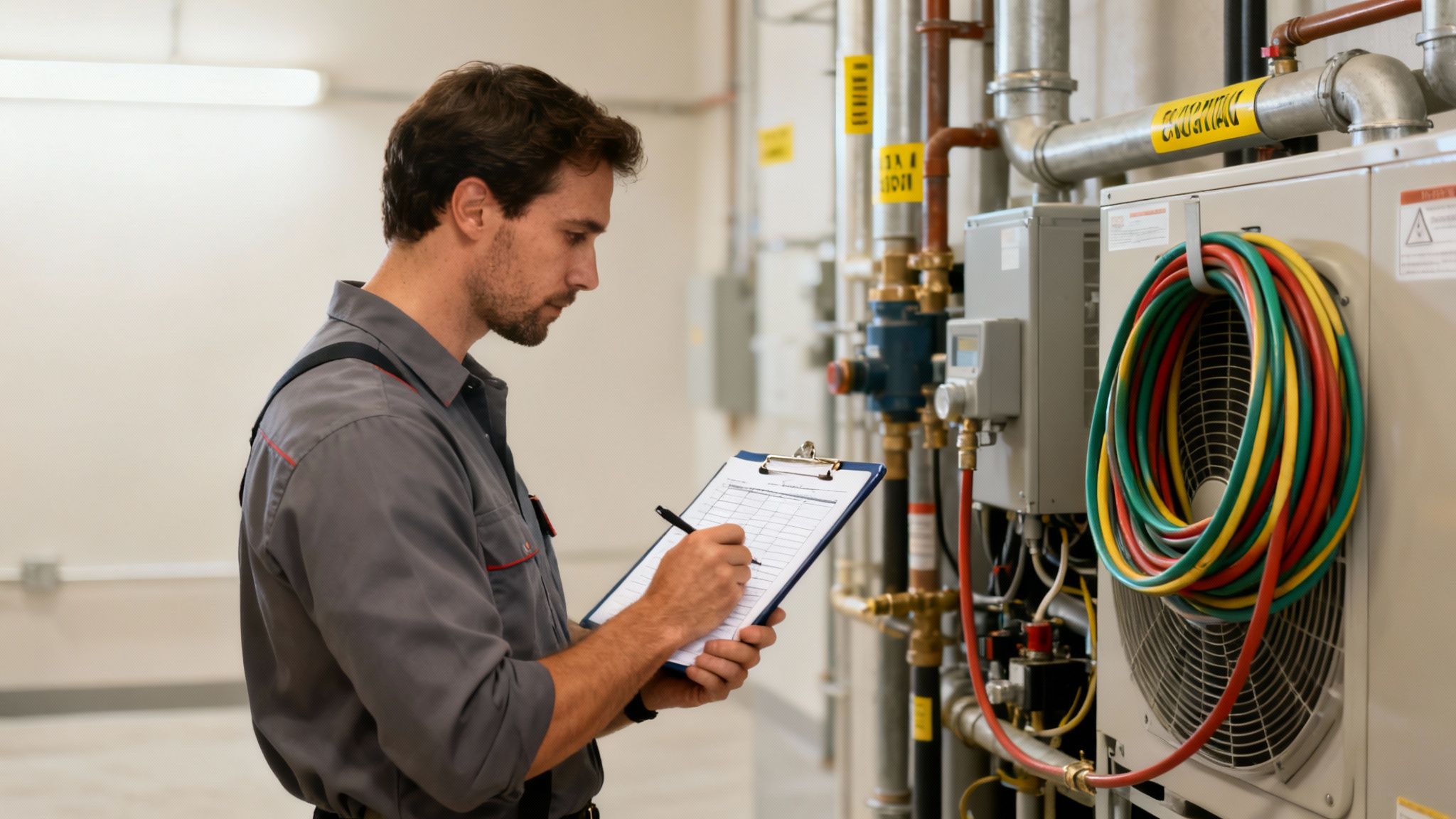
Shifting from a reactive "break-fix" model to a proactive, preventive maintenance strategy is a foundational pillar of effective facilities management best practices. This approach involves scheduling regular inspections, planned servicing, and component assessments to identify and address potential issues before they escalate into costly failures. By anticipating needs, you can minimize unexpected downtime, extend the lifespan of critical assets, and ensure a consistently safe, comfortable, and productive work environment. For instance, a scheduled check-up on the power and data components within your workstation cubicles can prevent a productivity-killing outage that affects an entire department. This strategic foresight is the cornerstone of operational excellence and long-term cost control.
Why It Matters
A reactive approach means you are always behind, dealing with emergencies that disrupt operations and strain budgets. Preventive maintenance puts you in control, allowing for planned, methodical upkeep that aligns with business goals and operational schedules. A large enterprise campus, for example, can maintain its extensive cubicle systems with quarterly electrical inspections, while a call center might schedule bi-annual ergonomic assessments of task seating to prevent employee discomfort and boost morale.
Key Insight: The goal of preventive maintenance is not just to prevent failures but to transform facilities management from a cost center into a strategic business partner that enhances operational reliability and employee well-being.
Actionable Implementation Steps
- Create a Maintenance Calendar: Develop a detailed schedule aligned with fiscal quarters for easier budget planning. Prioritize systems based on their impact on business continuity (e.g., HVAC, electrical in cubicles, server room cooling).
- Document Everything: Log all inspections, repairs, and component replacements in a centralized system. This data helps identify recurring issues, track asset performance, and justify budget requests for upgrades or replacements.
- Partner with Vendors: Collaborate with key suppliers for proactive assessments. For example, a furniture partner like Cubicle By Design can offer expert inspections of modular walls and cubicle components, identifying surface wear or potential structural issues before they become major problems.
- Establish Performance Baselines: Define key performance indicators (KPIs) for critical systems. Monitor metrics like energy consumption, equipment uptime, and the number of maintenance work orders to measure the effectiveness of your program.
2. Space Planning & Utilization Optimization
Effective facilities management best practices extend beyond physical maintenance to the strategic arrangement of the workspace itself. Space planning and utilization optimization is a data-driven approach to designing office layouts that maximize efficiency, support diverse work styles, and enhance employee productivity. It involves analyzing how space is currently used and reconfiguring it to better align with organizational goals, whether that's fostering collaboration, enabling focused work, or accommodating hybrid schedules. For instance, a growing tech company can use a Custom Cubicle Designer to model flexible desk arrangements, ensuring the layout can adapt as the team expands without requiring a costly relocation. This strategic space management turns the physical office from a static expense into a dynamic asset that supports business agility.
Why It Matters
A poorly utilized office leads to wasted real estate costs, decreased employee morale, and inefficient workflows. Strategic space planning addresses these challenges by creating an environment tailored to the actual needs of the workforce. A financial services firm transitioning to a hybrid model, for example, can use modular walls to create a mix of private, focus-oriented spaces and open collaborative zones, reducing its overall square footage by 20% while boosting productivity. Similarly, an enterprise call center can use strategically placed cubicles to improve acoustics and minimize distractions, directly impacting employee performance and satisfaction.
Key Insight: Optimizing your space isn't just about fitting more people in; it's about creating an intentional environment that actively enhances workflow, collaboration, and employee well-being, ultimately driving better business outcomes.
Actionable Implementation Steps
- Analyze Current Usage: Conduct employee surveys and observational studies to understand how different teams use the space. Use this data to identify underutilized areas and high-demand zones, moving beyond assumptions to make informed decisions.
- Embrace Modularity: Choose furniture systems that offer flexibility for future changes. Modular solutions like the workstation cubicles offered by Cubicle By Design allow for easy reconfiguration as business needs evolve, protecting your initial investment.
- Model Before You Build: Leverage space planning tools to create and visualize different layout configurations. This virtual modeling helps you test ideas, gather feedback, and avoid costly mistakes before committing to a physical build-out. To see how this works in practice, learn more about our comprehensive office space planning guide.
- Measure and Refine: Establish and track key metrics like cost per workstation, employee density (employees per 1,000 sq ft), and utilization rates for different areas. Use these KPIs to measure the success of your design and identify opportunities for further refinement.
3. Integrated Facilities Management (IFM) Systems
Adopting an Integrated Facilities Management (IFM) system represents a strategic leap from managing siloed functions to orchestrating them through a single, unified platform. This approach consolidates maintenance, asset tracking, vendor management, real estate, and compliance into a centralized software hub. By doing so, you gain complete operational visibility, allowing you to coordinate services, track work orders, manage budgets, and make data-driven decisions. For example, a large enterprise can use an IFM system to manage inventories and relocations of workstation cubicles across multiple national sites, all while tracking maintenance schedules for the HVAC systems in those same locations. This holistic view is a key component of modern facilities management best practices.
Why It Matters
Operating with separate systems for maintenance, space planning, and asset management creates data silos, leading to inefficiencies, redundant work, and missed opportunities. An IFM platform breaks down these barriers, providing a single source of truth that aligns facilities operations with broader business objectives. A healthcare system, for instance, can simultaneously track medical equipment maintenance records and workspace utilization, ensuring both compliance and efficient use of its real estate portfolio. This integration transforms facilities data from a simple record into a strategic asset.
Key Insight: The true power of an IFM system is its ability to connect disparate data points, revealing relationships between asset performance, maintenance costs, and space utilization to unlock significant operational efficiencies and cost savings.
Actionable Implementation Steps
- Start with Core Functions: Begin by implementing modules for your most critical needs, such as maintenance work orders and asset tracking for your cubicle systems, before expanding into more complex areas like sustainability or real estate management.
- Ensure System Integration: Select a platform that can seamlessly integrate with your existing HR and procurement software to automate processes like employee onboarding and vendor payments.
- Establish Data Governance: Before implementation, create clear data standards and naming conventions for assets, locations, and work types. Consistent data is essential for accurate reporting and analytics.
- Prioritize Mobile Access: Choose an IFM vendor with a robust and user-friendly mobile app. This empowers on-site technicians and staff to update work orders, access asset information, and log issues in real-time.
4. Workplace Wellness & Ergonomic Design Integration
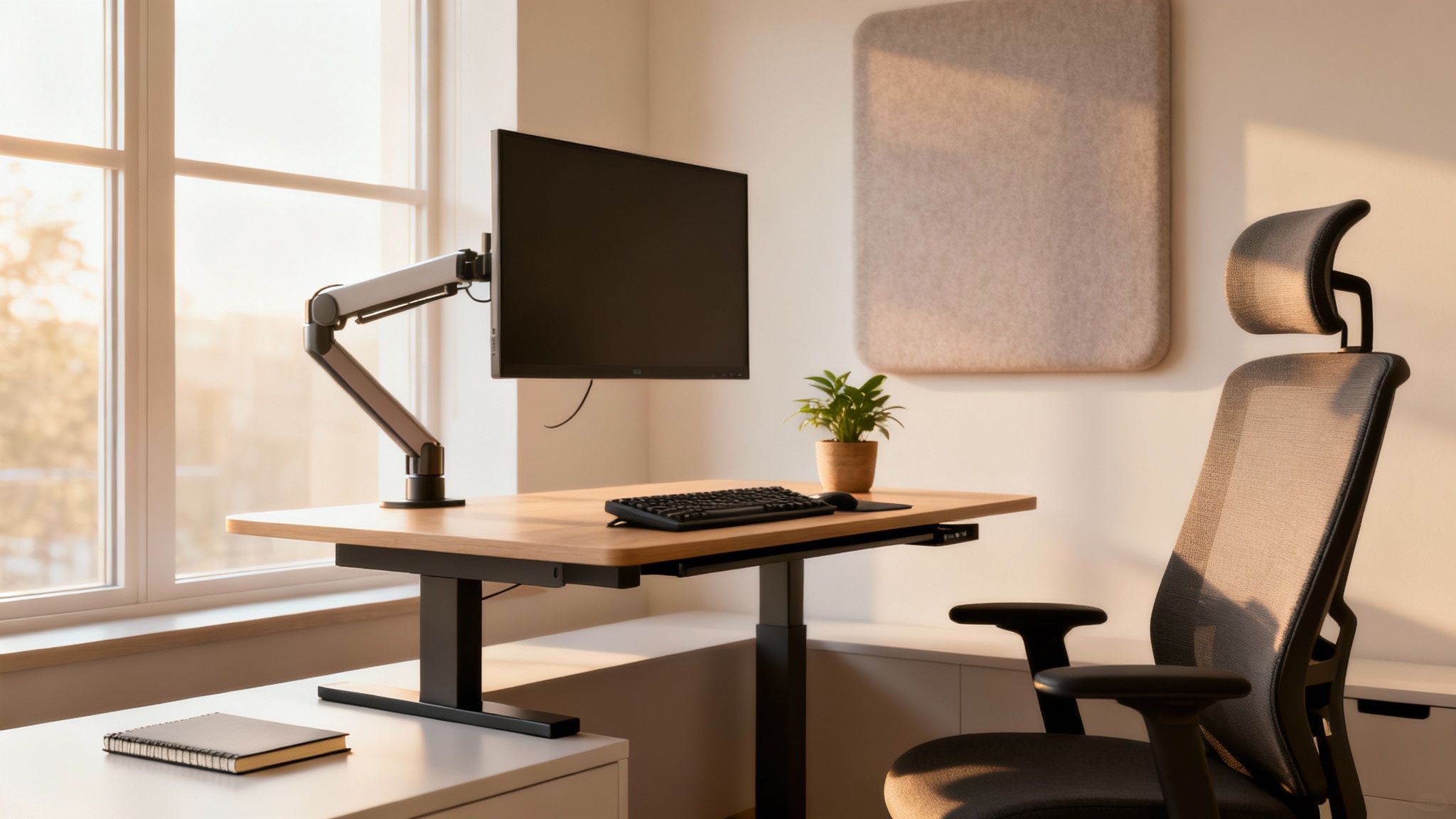
Integrating workplace wellness and ergonomic design is a critical component of modern facilities management best practices. This approach goes beyond basic safety to create environments that actively support employee health, comfort, and productivity. It involves the strategic selection of adjustable furniture, thoughtful layout planning for lighting and acoustics, and the provision of spaces that cater to both physical and mental well-being. For instance, a tech firm can equip its workstation cubicles with sit-stand desks and monitor arms, directly addressing ergonomic risks and boosting employee focus. This holistic strategy transforms the workplace from a purely functional area into a supportive ecosystem that enhances human performance.
Why It Matters
A poorly designed workspace can lead to physical strain, mental fatigue, and increased absenteeism. Prioritizing ergonomics and wellness demonstrates a commitment to employee health, which improves morale, reduces injury-related costs, and enhances talent retention. A financial services company, for example, can mitigate the high-stress nature of its call center by installing acoustic panels in its cubicle systems and providing truly supportive seating. Making the right choices in furniture and layout is a direct investment in your most valuable asset: your people.
Key Insight: Effective ergonomic design is not a one-time setup but an ongoing process of assessment, adjustment, and education that adapts to the evolving needs of your workforce, making the facility a strategic tool for organizational health.
Actionable Implementation Steps
- Conduct Ergonomic Audits: Regularly assess workstations to identify high-risk areas. Use checklists based on OSHA guidelines to evaluate posture, monitor height, keyboard placement, and seating support.
- Invest in Adjustable Furniture: Prioritize modular furniture that allows for personalization. Equip workstations with adjustable-height desks, articulating monitor arms, and high-quality task chairs. Investing in the best ergonomic office chairs often yields the highest return on investment in wellness.
- Provide Employee Training: Educate staff on how to properly adjust their chairs, desks, and monitors. Host brief workshops or provide digital guides to empower employees to create their own comfortable and safe setups.
- Manage Environmental Factors: Address lighting, air quality, and acoustics. Use layered lighting to reduce eye strain, ensure proper ventilation, and implement sound-masking or acoustic solutions in open-plan areas to minimize distracting noise.
5. Sustainability & Green Facilities Management
Integrating environmental stewardship into operations is a critical component of modern facilities management best practices. This forward-thinking approach focuses on energy efficiency, waste reduction, and sustainable procurement to minimize ecological impact while simultaneously reducing long-term operating costs. Green facilities management transforms the workplace into a healthier, more responsible environment. For instance, a tech headquarters can pursue LEED certification by specifying systems like workstation cubicles made from recycled content, directly contributing to sustainability goals while creating a productive workspace. This commitment to green principles is not just an ethical choice; it's a strategic business decision that enhances brand reputation and operational resilience.
Why It Matters
Ignoring sustainability risks higher utility bills, increased regulatory scrutiny, and a negative perception among environmentally conscious clients and employees. A green facilities strategy addresses these risks by creating a resource-efficient operation that aligns with corporate social responsibility values. For example, a corporation can implement a furniture reuse program, donating decommissioned cubicle systems to non-profits instead of sending them to a landfill, which saves on disposal fees and generates community goodwill. This approach turns potential liabilities into tangible assets.
Key Insight: Sustainability in facilities management is about creating a circular system where resources are conserved, waste is minimized, and the workplace environment actively supports both ecological health and employee well-being, driving value beyond simple cost savings.
Actionable Implementation Steps
- Conduct a Green Audit: Start by assessing your current energy consumption, waste streams, and procurement policies to identify the highest-impact areas for improvement. This provides a baseline for setting realistic goals.
- Prioritize Sustainable Procurement: Choose vendors with transparent environmental practices. When sourcing office furniture, opt for modular solutions from partners like Cubicle By Design that can be reconfigured and reused, extending asset life and reducing waste.
- Track and Report Metrics: Establish key performance indicators (KPIs) such as waste diversion rates, energy use per square foot, and carbon footprint. Regularly report on progress to stakeholders to demonstrate the value of your initiatives.
- Educate and Engage Employees: Foster a culture of sustainability through clear communication, workplace signage, and training on recycling programs and energy conservation. Empower your team to become active participants in your green strategy. Learn more about how you can transform your small business and go green.
6. Technology Infrastructure & Smart Facilities Integration
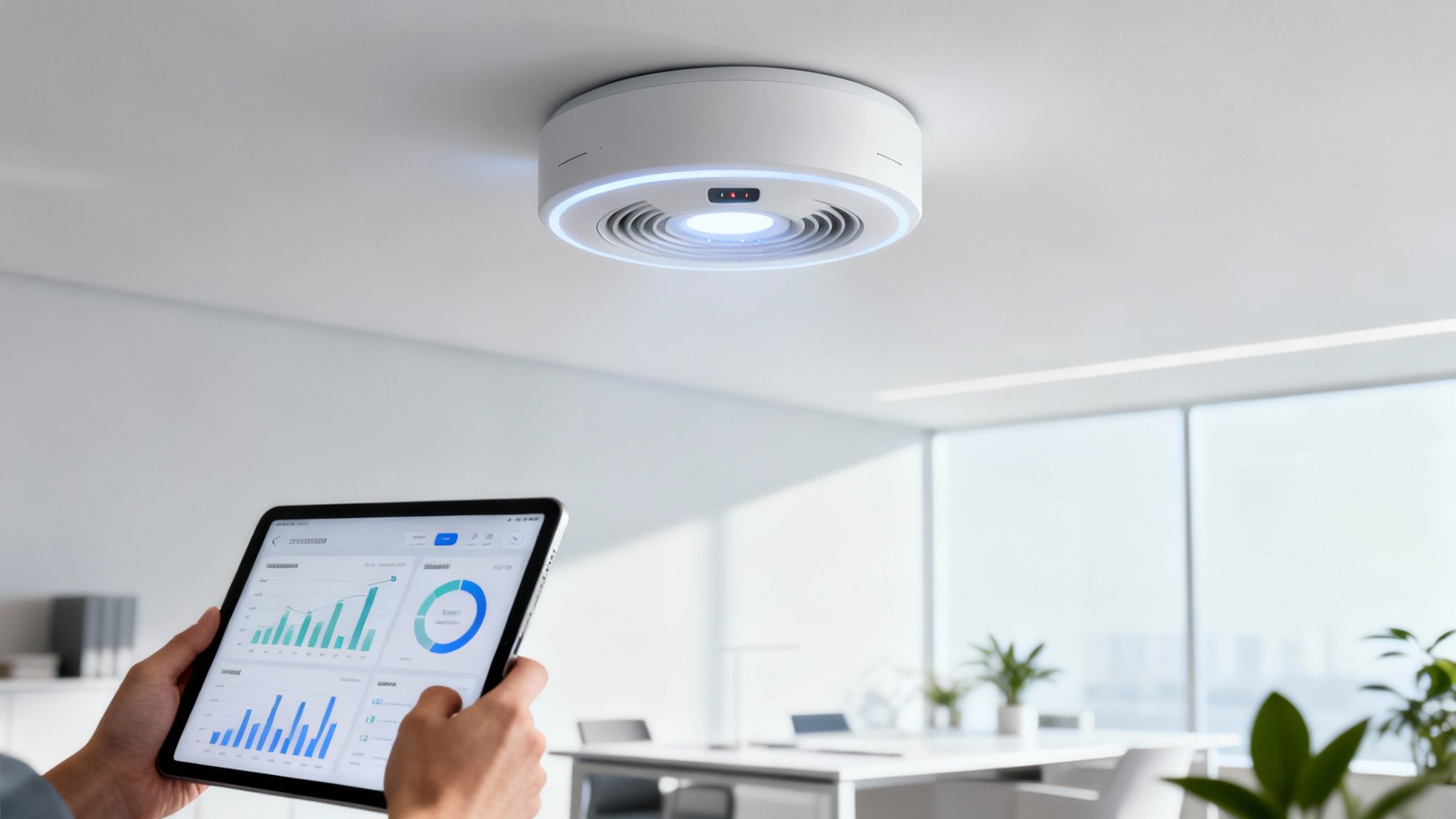
Integrating smart technology into your facility's infrastructure transforms it from a static environment into a responsive, data-driven ecosystem. This approach involves leveraging IoT sensors, building management systems (BMS), and advanced analytics to monitor and optimize everything from energy consumption and space utilization to air quality and security. By embedding this intelligence into the workplace, you enable proactive adjustments that enhance efficiency and the employee experience. For instance, a hybrid workplace can use desk booking systems integrated with its workstation cubicles to provide real-time availability, streamlining the on-site experience for a flexible workforce.
Why It Matters
A traditional facility operates on assumptions and historical data, leading to wasted energy, underutilized space, and a one-size-fits-all environment. Smart facilities provide granular, real-time data that empowers managers to make informed decisions that directly impact the bottom line and employee well-being. A call center, for example, can monitor noise levels and air quality, automatically triggering HVAC adjustments to maintain an optimal environment. This data-backed approach is a cornerstone of modern facilities management best practices, ensuring resources are allocated precisely where they are needed most.
Key Insight: Smart facility integration is not about collecting data for its own sake; it's about translating that data into actionable intelligence that creates a more efficient, sustainable, and human-centric workplace.
Actionable Implementation Steps
- Start with a Pilot Program: Before a full enterprise rollout, test your technology on a single floor or department. Use this pilot to identify challenges, gather feedback, and prove the ROI for wider implementation.
- Prioritize Cybersecurity: Choose IoT platforms and systems with robust, end-to-end encryption and strong security protocols. Optimizing your facilities' technological infrastructure requires diligent asset management; explore key IT Asset Management best practices to safeguard your network and data.
- Integrate with Existing Systems: Select technologies that can seamlessly connect with your current workplace management software, employee apps, and building systems to create a unified and user-friendly experience.
- Train Your Team: Ensure facilities staff are thoroughly trained on system operation, data interpretation, and basic troubleshooting. Empowering your team is critical to maximizing the value of your technology investment.
- Set and Track KPIs: Establish clear performance metrics for energy savings, occupancy rates, maintenance response times, and employee satisfaction. Regularly review this data to refine your strategy and demonstrate the program's success.
7. Change Management, Employee Engagement & Phased Implementation
Successfully reconfiguring a workspace or transitioning to a new operational model involves more than just moving furniture; it requires a people-centric strategy. This approach combines change management principles with a phased implementation to guide employees through transitions smoothly. By engaging stakeholders early, communicating transparently, and rolling out changes incrementally, facilities managers can significantly improve adoption rates, boost morale, and achieve better project outcomes. For instance, instead of a disruptive, company-wide overhaul, a large enterprise might introduce new workstation cubicles on a floor-by-floor basis, using pilot groups to gather feedback and refine the process. This methodical, human-focused strategy is a critical component of modern facilities management best practices, ensuring that physical changes align with organizational culture and employee needs.
Why It Matters
Abrupt, poorly communicated changes to an employee's physical workspace can lead to resistance, decreased productivity, and a drop in morale. A structured change management plan addresses the human side of facilities projects, transforming potential detractors into advocates. A startup growing from 20 to 100 employees can use a phased approach to install modular cubicles as new teams are formed, making the expansion feel organic rather than disruptive. This strategy ensures that the new environment is not just functional but also actively supports employee well-being and collaboration. To dive deeper, you can explore how to promote camaraderie with modern cubicles.
Key Insight: The success of a facilities project is measured not only by its budget and timeline but also by the successful adoption and positive reception from the employees who use the space every day.
Actionable Implementation Steps
- Form a Steering Committee: Create a cross-functional team with representatives from HR, IT, and affected departments to guide the project. This ensures diverse perspectives are considered from the outset.
- Communicate Early and Often: Develop a communication plan that uses multiple channels like town halls, newsletters, and an intranet hub to keep everyone informed about the project timeline, goals, and progress.
- Run Pilot Programs: Identify a small, representative group of employees to test new layouts or furniture, such as private office cubicles, before a full-scale rollout. Use their feedback to make critical adjustments.
- Gather Continuous Feedback: Implement surveys, focus groups, and suggestion boxes at each phase. Visibly act on the feedback received to build trust and show that employee input is valued.
8. Cost Management & Total Cost of Ownership (TCO) Analysis
Effective facilities management best practices extend beyond operational efficiency to encompass sophisticated financial strategy. Adopting a Total Cost of Ownership (TCO) approach means evaluating investments not just by their initial purchase price but across their entire lifecycle. This includes acquisition, installation, energy consumption, maintenance, and eventual disposal or reconfiguration costs. By analyzing the long-term financial impact, you can make smarter procurement decisions that deliver greater value and support sustainable budget planning. For instance, a TCO analysis might reveal that investing in high-quality, reconfigurable private office cubicles is more cost-effective over five years than purchasing cheaper, fixed-wall solutions that require expensive demolition for future layout changes.
Why It Matters
Focusing solely on upfront costs can lead to significant, unforeseen expenses down the road. A TCO framework provides a comprehensive financial picture, empowering facilities managers to justify investments that might have a higher initial price but a lower overall cost. A growing startup, for example, can use TCO to justify investing in modular systems that adapt to team growth, avoiding the repeated expense of discarding and replacing furniture. Similarly, comparing the TCO of new versus refurbished assets can reveal significant savings, a strategy detailed further in this guide to buying used office furniture. This strategic financial lens ensures every dollar spent contributes to long-term operational resilience and value.
Key Insight: TCO analysis transforms facilities procurement from a simple transaction into a strategic financial decision, aligning asset management directly with the organization's long-term fiscal health and growth objectives.
Actionable Implementation Steps
- Establish Standard Cost Categories: Define and track key TCO metrics: acquisition, installation, utilities, maintenance, labor, and replacement/disposal costs. This creates a consistent framework for every evaluation.
- Model Multiple Scenarios: Develop conservative, moderate, and optimistic cost projections to understand the potential range of financial outcomes. Factor in variables like inflation and potential changes in operational needs.
- Include "Soft" Costs: Account for indirect expenses such as project management time, employee training on new equipment, and potential productivity loss during installation or downtime.
- Leverage TCO in Vendor Negotiations: Use your analysis as a tool for discussions with suppliers. A partner like Cubicle By Design can provide data on the lifecycle costs of their systems, helping you build a more accurate and compelling TCO model.
9. Vendor Relationship Management & Strategic Partnerships
Shifting the perspective from viewing vendors as transactional suppliers to treating them as strategic partners is a critical evolution in modern facilities management best practices. This approach involves cultivating deep, collaborative relationships with key providers, such as furniture suppliers, maintenance contractors, and technology integrators. By fostering open communication, shared goals, and mutual trust, you can unlock greater value, innovation, and reliability that goes far beyond simple cost savings. For example, a long-term partnership with a furniture provider for your private office cubicles can lead to priority support, proactive space planning advice, and access to new product lines before they hit the market. This collaborative model transforms procurement from a purely administrative function into a strategic advantage.
Why It Matters
A purely transactional vendor relationship is limiting; it prioritizes short-term cost over long-term value, service quality, and resilience. Strategic partnerships align vendor capabilities with your business objectives, ensuring they are invested in your success. A growing enterprise, for instance, can work with a primary vendor to standardize its cubicle systems across multiple locations, ensuring brand consistency, simplifying maintenance, and securing volume discounts that improve the total cost of ownership. This deeper engagement drives continuous improvement and supports operational agility.
Key Insight: Strategic vendor partnerships create a resilient ecosystem where suppliers act as extensions of your team, proactively identifying opportunities and mitigating risks to enhance facility performance and support core business functions.
Actionable Implementation Steps
- Establish Vendor Scorecards: Develop clear key performance indicators (KPIs) to measure vendor performance. Track metrics like on-time delivery, quality of work, cost-effectiveness, and responsiveness to create an objective basis for evaluation.
- Conduct Regular Business Reviews: Schedule quarterly or semi-annual meetings to discuss scorecard results, address challenges, and collaboratively plan for future needs. This creates a forum for strategic alignment and continuous improvement.
- Share Forecasts and Plans: Provide key partners with insights into your future needs, such as office expansions or reconfigurations. This allows them to better plan their capacity and resources, often resulting in better pricing and service for you.
- Integrate Partners in Planning: Involve trusted vendors like Cubicle By Design in the early stages of a project. Their expertise can offer innovative solutions and help you avoid costly design mistakes, especially when using tools like a cubicle designer to map out a new layout.
10. Compliance, Safety & Risk Management Framework
Establishing a systematic framework for compliance, safety, and risk management is a critical component of modern facilities management best practices. This approach moves beyond simply meeting minimum requirements; it involves proactively identifying, assessing, and mitigating risks related to building codes, safety regulations, and accessibility standards. It's a structured process of audits, training, and documentation designed to prevent incidents, reduce liability, and create a secure environment for all occupants. For example, a financial services firm must ensure its private office cubicles not only offer acoustic privacy but also comply with data security and fire safety codes. This holistic strategy protects the organization's people, assets, and reputation.
Why It Matters
Ignoring compliance and safety isn't just negligent; it's a significant financial and operational risk. Violations can lead to heavy fines, legal action, operational shutdowns, and irreparable damage to brand reputation. A well-defined framework ensures the facility adheres to all relevant regulations, from local building codes to federal mandates like the ADA. A critical element of any robust facilities management strategy is strict adherence to regulations like the Australian workplace safety standards, which protect health and safety. Similarly, a growing tech company must ensure its open-plan cubicle systems are designed with proper egress paths and accessibility in mind to comply with fire safety and ADA requirements from day one.
Key Insight: A strong compliance and risk management framework transforms safety from a reactive checklist into a proactive, integral part of the organizational culture, safeguarding employees and positioning the company as a responsible leader.
Actionable Implementation Steps
- Conduct a Baseline Audit: Perform a comprehensive audit against all applicable codes and standards (OSHA, ADA, NFPA) to identify existing gaps. Use this baseline to create a prioritized action plan.
- Create a Compliance Calendar: Develop a schedule for mandatory inspections, permit renewals, and required training sessions. Align this with your operational calendar to minimize disruption and ensure deadlines are met.
- Document Rigorously: Maintain a centralized digital log of all compliance activities, including inspection reports, training records, incident reports, and communications with regulatory bodies. This documentation is crucial during audits.
- Provide Regular Training: Equip your facilities team and all employees with ongoing training on emergency procedures, ergonomic safety, and hazard recognition. This fosters a culture of awareness and responsibility.
Top 10 Facilities Management Best Practices Comparison
| Initiative | 🔄 Implementation Complexity | ⚡ Resource Requirements | 📊 Expected Outcomes | 💡 Ideal Use Cases | ⭐ Key Advantages |
|---|---|---|---|---|---|
| Preventive Maintenance Planning & Scheduling | Medium — scheduled processes, training | Medium — maintenance staff/CMMS, vendor support | Fewer breakdowns; downtime ↓; asset life +20–40% | Large campuses, call centers, corporate facilities | Improves reliability, lowers emergency costs |
| Space Planning & Utilization Optimization | Medium–High — analysis + stakeholder buy‑in | Medium — space audits, planners, tools | Real estate footprint ↓15–30%; productivity ↑ | Growing orgs, hybrid workplaces, cost reduction drives | Maximizes space efficiency and workflow |
| Integrated Facilities Management (IFM) Systems | High — software integration, change mgmt | High — licensing, IT, training, data governance | Silos eliminated; response times ↓30–40%; KPI visibility | Multi‑site enterprises, healthcare, education | Centralized control, automation, compliance |
| Workplace Wellness & Ergonomic Design Integration | Medium — design + behavior change | Medium–High — ergonomic furniture, training | Injuries ↓15–25%; productivity ↑10–20% | High‑density offices, call centers, talent-focused firms | Boosts health, retention, and focus |
| Sustainability & Green Facilities Management | Medium–High — certifications & supply changes | Medium–High — efficient systems, sustainable materials | Energy costs ↓20–35%; improved ESG/air quality | HQs seeking LEED/WELL, organizations with ESG goals | Lowers operating costs and improves brand/ESG |
| Technology Infrastructure & Smart Facilities Integration | High — IoT, BMS, cybersecurity | High — sensors, platforms, IT support | Energy ↓15–25%; utilization insights +25–40%; predictive maintenance | Smart campuses, hybrid workplaces, data-driven ops | Real‑time data, automation, personalized environments |
| Change Management, Employee Engagement & Phased Implementation | Medium — ongoing coordination & pilots | Medium — communications, training, project leads | Adoption ↑30–50%; disruptions minimized | Large transformations, phased rollouts, cultural change | Higher adoption, smoother transitions, better feedback |
| Cost Management & Total Cost of Ownership (TCO) Analysis | Medium–High — detailed modeling & assumptions | Medium — financial analysts, benchmarking data | Total spend ↓20–30%; better long‑term investment choices | Procurement decisions, vendor selection, budgeting | Financial clarity, justified lifecycle investments |
| Vendor Relationship Management & Strategic Partnerships | Medium — governance and reviews | Medium — vendor management, contract resources | Service quality ↑25–40%; cost savings via volume | Recurring procurement, large-volume purchasing | Better service, discounts, joint innovation |
| Compliance, Safety & Risk Management Framework | Medium–High — regulatory expertise & audits | Medium — audits, training, documentation | Incidents ↓30–50%; lower liability and fines | Regulated sectors (healthcare, finance), large offices | Risk reduction, legal compliance, insurance benefits |
Integrating Best Practices to Design a Better Workplace
Navigating the landscape of modern facilities management requires more than just reacting to daily issues; it demands a proactive, strategic, and integrated approach. The ten facilities management best practices detailed in this article are not isolated tactics but interconnected pillars that form the foundation of a high-performance work environment. From the foundational logic of a Preventive Maintenance Plan to the forward-thinking implementation of Smart Facilities Technology, each practice contributes to a larger ecosystem where efficiency, employee well-being, and organizational goals are in perfect alignment.
Mastering these concepts transforms the role of a facilities manager from a building operator into a strategic business partner. By systematically integrating these principles, you are not merely maintaining a physical space; you are actively cultivating an environment that drives productivity, enhances collaboration, and strengthens your company's culture and brand identity.
From Strategy to Execution: Your Actionable Roadmap
The journey from understanding these best practices to implementing them can seem daunting. The key is to approach it methodically, focusing on incremental improvements that deliver tangible results. Your next steps should be clear and deliberate.
- Start with an Audit: Begin by evaluating your current operations against the ten best practices. Where are your strengths? Where are the most significant gaps? Use the KPIs and checklists provided in each section to create a baseline. This data-driven assessment will highlight your most pressing priorities.
- Prioritize for Impact: You cannot tackle everything at once. Identify the initiatives that will deliver the greatest return on investment or solve the most critical pain points. Is your space utilization inefficient? Start with Space Planning & Utilization Optimization. Are you struggling with vendor costs and performance? Focus on building a Strategic Vendor Partnership framework.
- Leverage Technology and Partnerships: You don't have to go it alone. Implementing an Integrated Facilities Management (IFM) system can centralize data and automate workflows, creating massive efficiency gains. Similarly, partnering with specialists in areas like ergonomic design or modular office furniture can provide the expertise needed to execute your vision flawlessly. This is where strategic partnerships become invaluable, turning complex projects into manageable successes.
The Human-Centric Core of Modern Facilities Management
Ultimately, the most profound takeaway is the shift towards a human-centric model. Best practices like Workplace Wellness & Ergonomic Design and Change Management & Employee Engagement underscore a critical truth: a facility’s greatest asset is the people within it. A thoughtfully designed workspace directly impacts employee satisfaction, health, and productivity.
This is where strategic space planning becomes a physical manifestation of your company culture. Flexible, modular solutions are the tools that allow you to bring these principles to life. Whether you are creating focused work areas with private office cubicles or fostering collaboration with open-plan workstation cubicles, the physical environment must be adaptable to the evolving needs of your team. This adaptability is the hallmark of truly effective facilities management best practices. By designing spaces that are as dynamic as the work being done within them, you create a workplace that is not just built for today but engineered for the challenges and opportunities of tomorrow.
Ready to translate these best practices into a tangible, high-performance workspace? The experts at Cubicle By Design specialize in creating flexible, scalable office environments that align with your strategic goals. Explore our extensive range of cubicles or use our interactive cubicle designer tool to start building a space that truly works for you.