


Cubicle Hanging Shelves: Your Guide to an Organized Desk
If you’ve ever found yourself staring at a desk completely buried under documents, sticky notes, and stray supplies, you know the frustration all too well. Cubicle hanging shelves are the refreshingly simple answer to that chaos. They’re designed to take all that unused vertical wall space and turn it into practical, easy-to-reach storage.
By getting your essentials up and off your desk, you instantly clear your work surface. More importantly, you create the mental space you need to actually think and get things done.
Why Cubicle Hanging Shelves Are a Must-Have for a Tidy Workspace
A disorganized desk isn’t just a physical mess—it’s a mental one. All that visual clutter can be a real drain on your focus and drag down your efficiency. This is where cubicle hanging shelves become more than just a nice accessory; they’re a core tool for taking back control of your work environment.
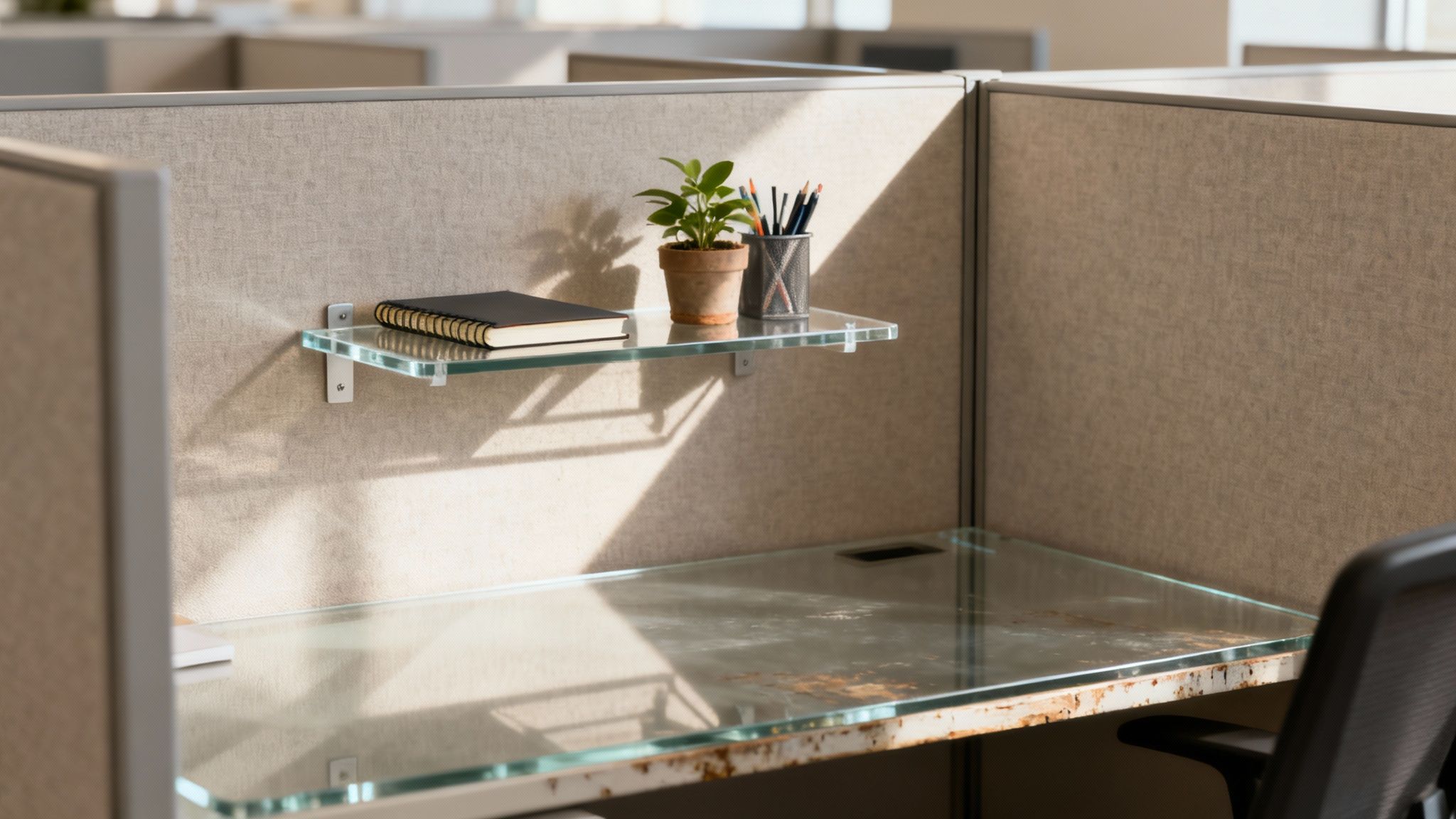
They let you tap into that often-ignored vertical real estate right above your desk. Suddenly, you can move items off your primary work surface and give them a designated, organized home.
The effect of this small adjustment is huge. All at once, your keyboard, monitor, and the documents you’re actively working on have room to breathe. This strategic shift is a basic principle of smart workspace management and can make a massive difference in your day-to-day workflow.
The Growing Trend of Vertical Organization
This shift toward vertical storage isn’t just a personal preference; it’s part of a much bigger trend in office optimization. As more companies realize the value of efficient layouts, the global market for these kinds of products is booming.
As of 2024, the market size for cubicle shelf hanging was valued between USD 1.47 billion and USD 2.18 billion, which really shows how widely they’ve been adopted. This growth highlights a clear investment from businesses in tools that make employees happier and more productive.
Thinking vertically unlocks a whole new dimension of organization. A hanging shelf turns a cramped, flat surface into a multi-layered, functional system. Your most-used items are visible and within arm’s reach, but they aren’t adding to the clutter.
This guide will walk you through everything you need to know, from picking the right materials to getting the installation just right. We’ll even explore different office cubicle design ideas to help you set up a space that’s not just organized but perfectly suited to how you work. With the right setup, your cubicle can go from being a source of stress to a hub of productivity.
How to Choose the Right Cubicle Hanging Shelves
Picking out the perfect hanging shelf for your cubicle goes way beyond just looks. It’s really about finding a functional partner for your specific needs and workspace. Think of it like buying the right tires for your car—style is nice, but it’s the performance and fit that actually get you where you need to go safely. This guide will walk you through finding the ideal storage solution.
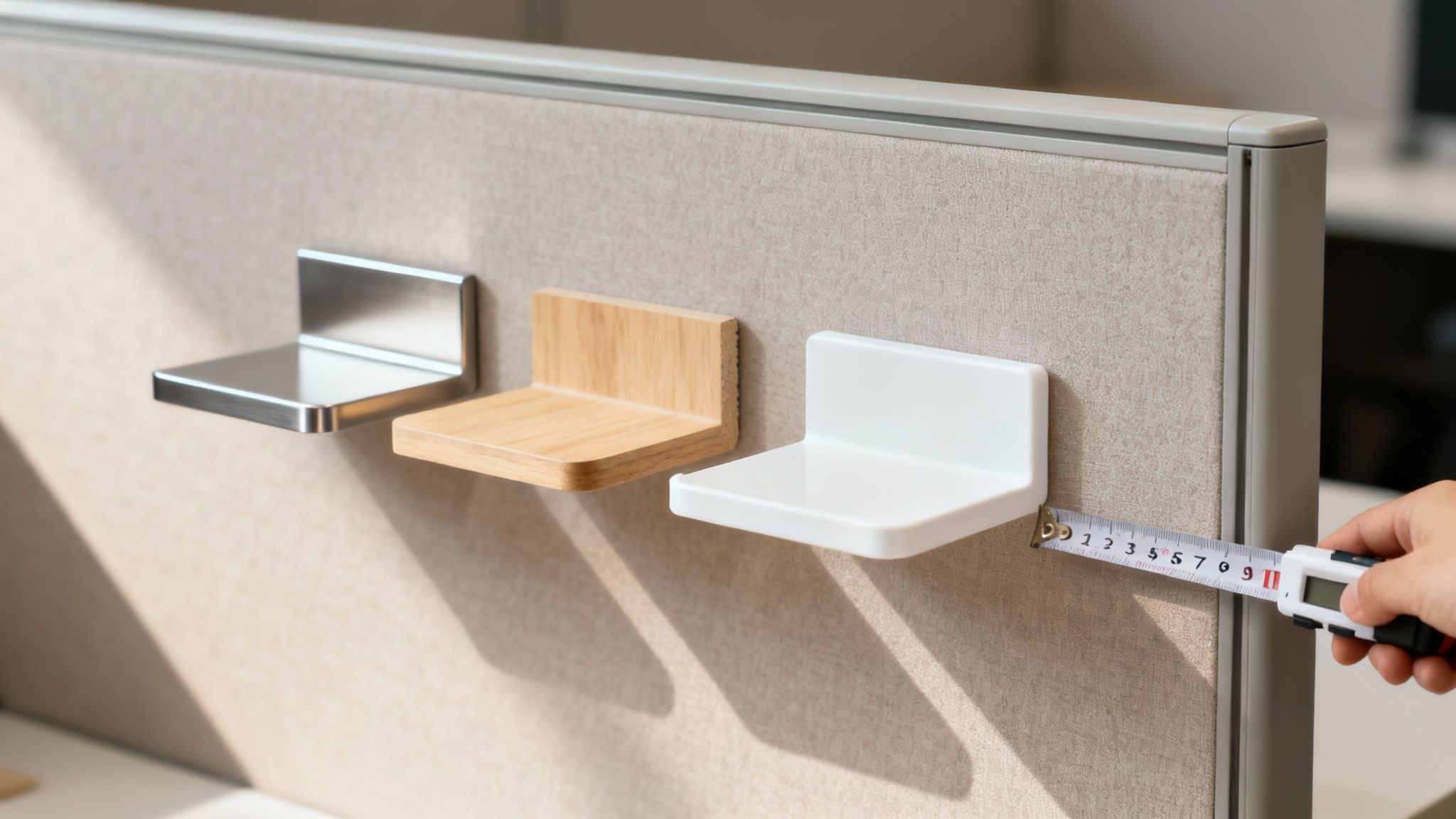
First thing’s first: what kind of storage do you actually need? You might just be looking for a sleek, single-tier shelf to hold a few daily essentials, like your notebook and a coffee mug. Or, if you’re trying to wrangle binders, stacks of paper, and personal items, a multi-level unit is probably a much more practical choice to get truly organized.
Picking the Perfect Material
The material of your hanging shelf has a huge say in its durability, its look, and even its feel. Each option brings something different to the table, and the right choice depends on your office vibe and what you plan on storing.
To make it simple, let’s break down the most common choices.
Comparing Common Materials for Cubicle Shelves
| Material | Key Advantages | Best For | Considerations |
|---|---|---|---|
| Metal | Unmatched durability and high weight capacity. Typically made from steel or aluminum for a clean, modern look. | Heavy binders, textbooks, multiple tech gadgets, or anything requiring serious support. | Can look a bit industrial, which might not fit warmer, more traditional office aesthetics. |
| Wood | Provides a classic, warm, and high-end feel. Can be made from solid wood or composite materials. | Personalizing a space, holding decorative items, and adding a touch of natural style. | Often heavier than metal or plastic and may have a lower weight capacity. Can be more expensive. |
| Plastic | Lightweight, budget-friendly, and available in a huge variety of colors for easy customization. | Lighter items like framed photos, small succulents, pens, and basic office supplies. | Lacks the sturdiness for heavy loads and can sometimes look less professional than metal or wood. |
Ultimately, choosing a material isn’t just a practical decision; it’s an aesthetic one. The right material can either blend in seamlessly with your existing furniture or become a stylish accent piece that really makes your space your own.
Ensuring a Perfect Fit
Let’s be blunt: compatibility is everything. A shelf that doesn’t fit is more than just a waste of money—it’s a potential safety hazard waiting to happen. The trick is to know your cubicle’s design and match it with the correct mounting system.
Start by grabbing a ruler or a set of calipers and measuring the thickness of your cubicle wall. It’s a simple step, but it’s crucial. Most shelf manufacturers will list a compatible thickness range, something like fits walls 1.5″ to 2.5″ thick. Knowing this single number will immediately narrow your options and save you a major headache.
Next, figure out the mounting mechanism you need. The most common style is the universal over-the-panel hook. These are great because they require zero tools—you just slide them right over the top of the wall. But if you’re planning to store heavier items or want a more permanent setup, some shelves use pin-mounts that push directly into the panel’s fabric for a rock-solid, stable fit.
Getting these details right ensures your new shelf will be a perfect and lasting addition. For a deeper dive into outfitting your entire workspace, our complete office furniture buying guide is a great resource for making smart decisions.
Understanding Weight Limits and Mounting Systems
A cubicle hanging shelf is only as good as its anchor. Before you can enjoy all that new vertical storage, it’s critical to get a handle on the technical side of things—specifically, weight limits and the right mounting hardware. This isn’t just about the shelf itself; it’s about what your cubicle panel can safely support.
Think of it like a bridge—both the structure and its supports have to be strong enough for the load they’re expected to carry. A common mistake is ignoring the manufacturer’s specified weight limit, which can lead to damaged equipment or even create a safety hazard. Most cubicle shelves are built to hold between 10 to 25 pounds, perfect for your everyday office supplies, binders, and a bit of decor, but not for heavy electronics.
Before you buy, always check two things: the weight capacity of the shelf and the structural integrity of your cubicle wall. This simple step is all it takes to prevent overloading and keep your workspace secure.
Choosing the Right Mounting Mechanism
How your shelf attaches to the wall is just as important as how much it can hold. Different mounting systems are designed for different types of cubicle panels and load requirements. Picking the right one guarantees a secure fit without damaging your office furniture.
You’ll generally find two main categories of mounting hardware for cubicle hanging shelves:
- Tool-Free Brackets: These are by far the most common and user-friendly option. They usually have hooks or clamps that just slide right over the top of the cubicle panel. You don’t need any tools, they won’t leave any marks, and you can move them around in a snap. This makes them ideal for lighter loads and flexible setups.
- Secured Pin and Screw Systems: If you’re storing heavier items or need a more permanent installation, these systems offer much better stability. They often use small metal pins or prongs that you push directly into the fabric of the cubicle wall, anchoring the shelf firmly in place. Some even include a small screw to tighten the bracket for a truly no-wobble fit.
The mounting system is the foundation for your vertical storage. A simple slide-on bracket is perfect for daily planners and photos, while a pin-mount system gives you the confidence you need for holding a whole row of heavy binders.
Getting the installation right is the key to long-term stability. While most shelves are designed for an easy setup, understanding the basics of proper assembly can prevent a lot of common headaches. For anyone managing a larger office reconfiguration, getting professional guidance on office furniture cubicle assembly can ensure every single component is installed safely and correctly. At the end of the day, matching the mounting hardware to your specific needs is what keeps your items where they belong and your cubicle walls in great shape.
Your Step-by-Step Shelf Installation Guide
So, you’ve got your new cubicle hanging shelves out of the box. You’re just a few moments away from a much more organized workspace. Installing these is usually a breeze, but walking through the steps ensures your shelf is level, totally secure, and ready to go without any second-guessing.
First things first, do a quick inventory. Lay out all the components and make sure you have all the brackets, screws, or pins that came with the unit. It’s also a smart move to clear off the part of your desk directly under where the shelf will hang.
The Installation Process Made Simple
Alright, let’s get that shelf up on the wall. The whole process is designed to be quick and easy, and you often won’t even need any tools.
- Attach the Brackets: If the mounting brackets came separate from the shelf, go ahead and attach them first. Most designs have pre-drilled holes, so it’s as simple as lining them up and using the provided hardware to secure them.
- Position the Shelf: Now, carefully lift the shelf and hook the mounting brackets over the top of your cubicle wall. Slide it down until it sits flush against the panel and feels stable. This is your chance to find the perfect height—you want it within easy reach, but not so low that it blocks your line of sight.
- Check for Level: Nobody likes looking at a crooked shelf all day. Grab a small bubble level (or just use a level app on your phone) to make sure it’s perfectly horizontal. A tiny adjustment now makes a huge difference.
- Secure and Test: If your model has locking pins or screws to tighten for extra stability, now’s the time to put them in place. Once it’s all set, give the shelf a gentle but firm press with your hand to test it. You should feel zero wobble; it needs to be solid.
This visual guide hits on the key safety checks you’ll want to run through for a secure setup.
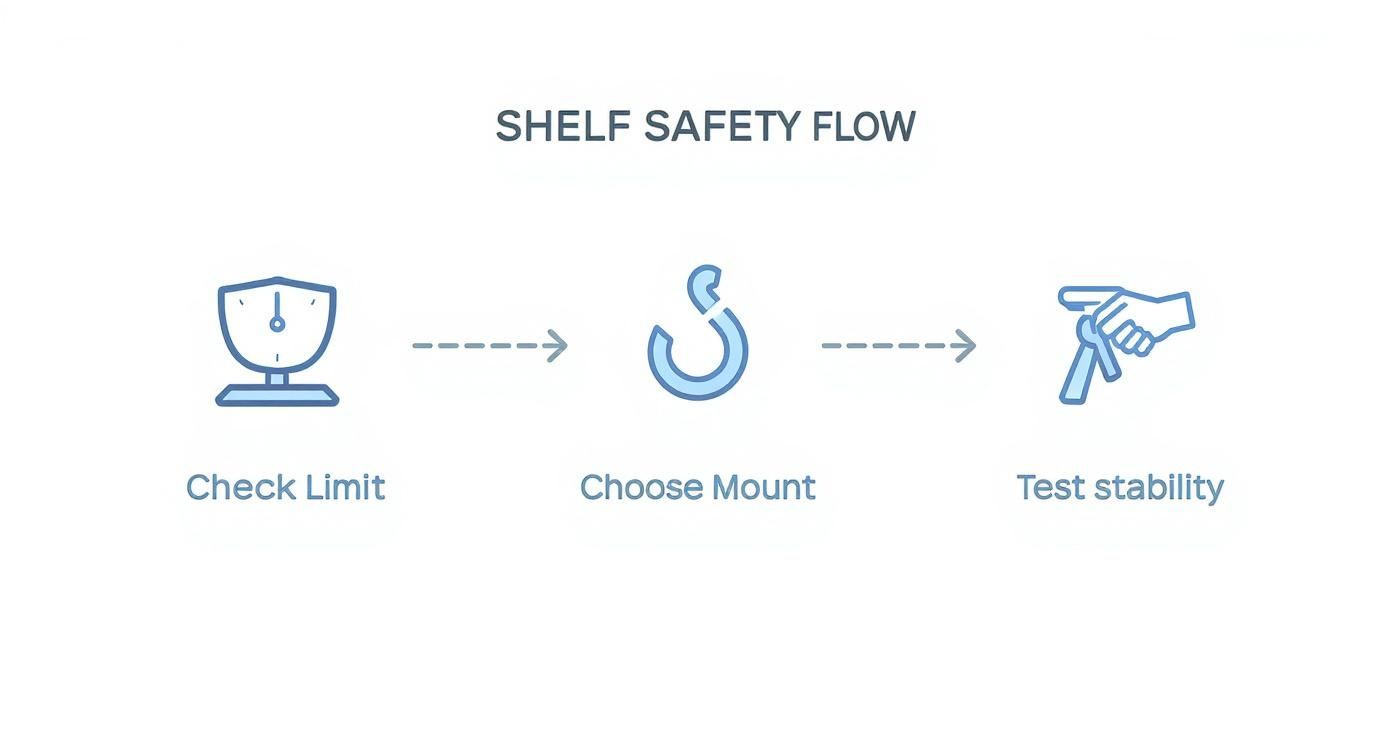
It really all comes down to those three pillars for a safe and successful install: checking the weight limit, using the right mount for your wall type, and testing for stability before you load it up.
Final Safety and Placement Tips
With your shelf up, a few final thoughts will make sure it stays a safe and useful part of your desk. Be mindful of what you put on it and where you’ve placed it.
The goal is to add storage without adding risk. A well-placed shelf keeps important items accessible, but a poorly placed one can be a hazard to you and your equipment.
Try to avoid placing the shelf directly over your monitor or laptop. Even though it’s secure, it’s just good practice to prevent any accidental spills or falling items from causing a very bad day. It’s also wise to double-check your company’s rules on cubicle modifications before you make any permanent changes.
If you’re outfitting an entire office or handling a big reconfiguration, don’t go it alone. Bringing in a professional team can be a lifesaver. Experts can manage everything from assembly to perfect placement, ensuring every single workspace is set up correctly and safely. For those larger projects, consider professional services for office furniture installation and disposal to make the whole process completely seamless.
Organizing Your Shelves for Better Productivity
With your new cubicle hanging shelves securely installed, the real fun begins: turning them into a true engine for your workflow. A shelf is just a shelf until you give it a purpose. Thinking strategically about organization transforms this simple storage solution into a powerful tool that cuts down on clutter, reduces physical strain, and helps you stay focused.
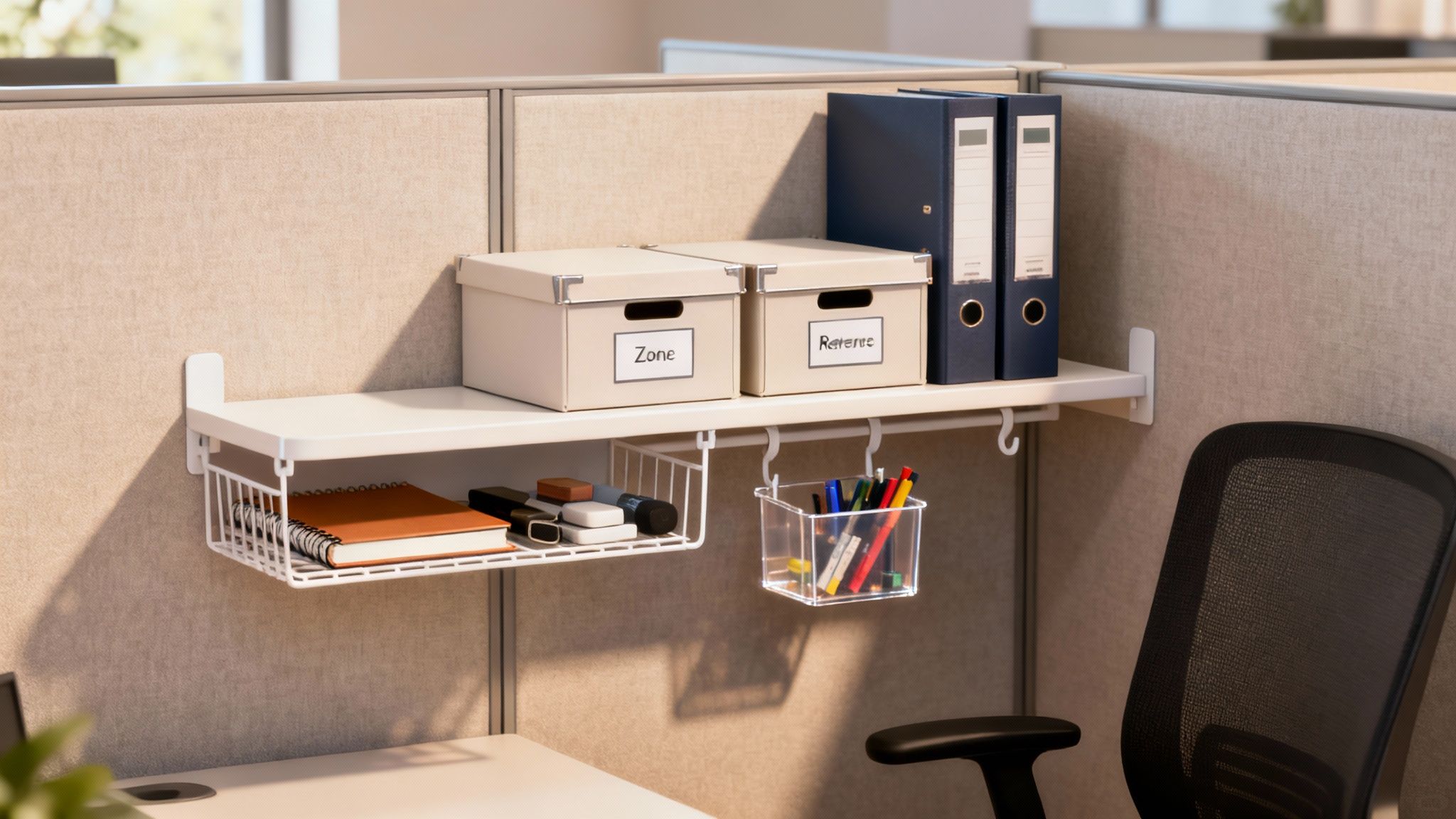
The trick is to think in terms of zones. Your most frequently used items—like your daily planner, key notebooks, and favorite pens—should live in your primary zone, within immediate arm’s reach. This simple ergonomic tweak means you aren’t constantly twisting or stretching, which saves little bursts of energy that really add up over the course of a day.
Creating Your Productivity Zones
Look at your shelving system like a tiered landscape. Each level needs a specific job. This simple approach turns a random collection of stuff into an intuitive system that actually supports the way you work.
Here’s a simple framework to get you started:
- The “Now” Shelf (Closest): This is for your high-priority items. Dedicate this shelf to your current projects, to-do lists, and the tools you can’t work without. When everything you need for immediate tasks is in one spot, you get rid of the mental friction that comes from hunting things down.
- The “Soon” Shelf (Middle): Use this space for reference materials, binders, or supplies you need regularly but not constantly. It’s the perfect home for items related to upcoming projects or weekly tasks.
- The “Later” Shelf (Highest): This top tier is ideal for archival storage. Think of it as a place for completed project folders, extra office supplies, or personal items you want to keep nearby but out of the way.
This structured approach is a cornerstone of effective workspace management. In fact, improving how you handle physical documents is a huge step, and you can learn more about how good file management impacts your office to build on these habits.
Mastering the Details with Bins and Dividers
Even with a great zoning system, loose items like paper clips, sticky notes, and charging cables can create visual noise. Small bins, trays, and vertical file holders are the final touch for a truly organized shelf. They neatly contain all those little things, making your entire setup look clean and professional.
By assigning a specific home to every item, you eliminate decision fatigue. You’ll no longer waste mental energy wondering where something is—or where it should go.
This drive for better organization is reflected in broader office trends. The market for complementary products like cubicle hanging folder racks, for example, hit valuations between USD 1.2 billion and USD 1.47 billion in 2024. This growth shows that businesses are recognizing the powerful link between an organized workspace and employee efficiency. By thoughtfully arranging your shelves, you’re not just tidying up; you are designing a more productive and less stressful work environment.
Got Questions About Cubicle Shelves? We’ve Got Answers.
Even the most straightforward office upgrade can come with a few questions. When it comes to adding hanging shelves to your cubicle, getting the details right from the start saves a lot of headaches later. We hear these questions all the time, so let’s walk through the answers to make sure you find the perfect storage solution.
Getting the fit right isn’t just a matter of convenience—it’s about safety and stability. A wobbly shelf is a disaster waiting to happen.
How Do I Know if a Hanging Shelf Will Fit My Cubicle Wall?
This is the most critical question, and thankfully, the answer is simple: measure the thickness of your cubicle panel. Seriously, don’t just eyeball it.
Most shelves are designed for a specific range, often something like 1.5 to 2.5 inches. Grab a ruler or a pair of calipers and get an exact measurement of your panel. With that number in hand, you can check the product specs and buy with total confidence, knowing you’ll get a snug, secure fit.
What’s a Safe Weight Limit for a Cubicle Shelf?
Weight capacity varies quite a bit between models, but you’ll typically find they can hold anywhere from 10 to 25 pounds. Always, always check the manufacturer’s limit. It’ll be printed right on the box or in the online product description.
As a general rule, stick to standard office supplies—binders, notebooks, a few personal items. Don’t be tempted to load them up with heavy equipment like a big office printer or a computer tower. Overloading a shelf is the quickest way to damage both the shelf and your cubicle wall.
Pushing the weight limit is a common mistake that can compromise the shelf’s stability over time. Don’t risk it.
Can I Install These Shelves Without Any Tools?
Absolutely. In fact, many of the most popular hanging shelves are designed for a completely tool-free installation. They usually feature simple brackets that just slide right over the top of the cubicle wall. It’s a quick, painless process.
That said, some sturdier models built to handle more weight might need a little help. This could be as simple as tightening a small screw to lock the bracket in place or pushing a mounting pin into the panel fabric for an extra-secure anchor point.
Are There Special Shelves for Heavy Things Like Monitors?
Yes, but they aren’t your standard hanging shelves. A computer monitor’s weight and balance require a much beefier solution to keep it stable and safe. Standard shelves are absolutely not recommended for this job.
What you’re looking for are VESA-compatible cubicle monitor mounts. These are engineered specifically to handle the weight of a screen and attach firmly to different types of panel walls. It’s the only way to ensure your valuable equipment stays put.
Ready to reclaim your desk space with smart, vertical storage? At Cubicle By Design, we specialize in creating efficient, modern office environments that just work. Explore our customizable cubicle solutions and let’s find the perfect fit for your team.