

Picking the right office furniture for a small business is much more than just filling an empty room. It's about building the engine for your company's productivity. A thoughtfully planned office directly impacts workflow, keeps your team happy, and ultimately helps your bottom line. It transforms a major expense into a smart, long-term investment.
Your Blueprint for a Productive Small Office
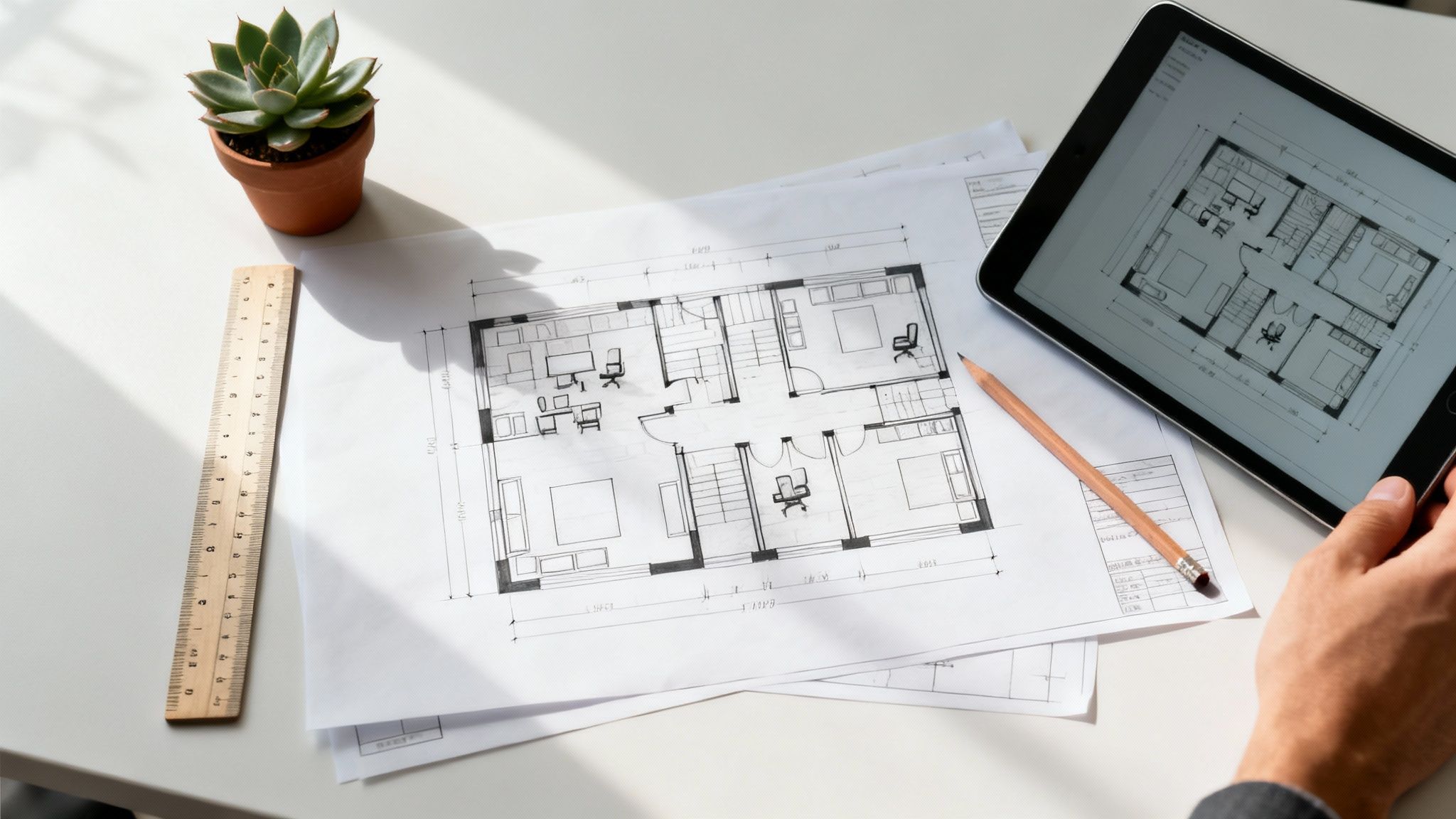
Before you start browsing desks and chairs, you need a solid blueprint. Just as an architect wouldn't dream of building a house without a detailed plan, you shouldn't furnish your office without a clear strategy. This is where you translate your company’s culture and daily workflow into a physical space, making sure every piece serves a purpose.
Taking this strategic approach helps you dodge common small-business pitfalls, like ending up with a cramped, awkward layout or buying furniture that doesn't fit how your team actually works. A good plan ensures your workspace can grow and adapt right alongside your business.
Defining Your Core Needs
The foundation of your blueprint comes down to answering a few critical questions about your team and how they operate. This isn’t just about a simple headcount; it’s about really understanding the dynamics of your daily operations.
Getting these fundamentals right from the start will guide every decision you make, from the overall layout to the specific furniture you choose. It can feel like a lot to juggle, which is why the experts at Cubicle By Design are here to help you navigate the process with our office space planning and design services.
So, where do you begin? Start by getting clear on these essential questions:
- Current and Future Headcount: How many employees do you have right now? More importantly, where do you realistically see that number in the next two or three years? Planning for that growth now saves you from expensive and disruptive rearrangements down the road.
- Work Styles and Collaboration: Does your team thrive on constant interaction, needing open, shared spaces to bounce ideas around? Or do they need quiet, focused areas for deep work? Most small businesses find they need a mix of both.
- Essential Adjacencies: Who needs to sit near whom? Mapping out which departments or team members need to be close to each other is a simple but powerful way to create a smooth, efficient workflow.
Getting these basics down on paper is the first step toward a functional office. The table below breaks down the key questions you should be asking yourself.
Initial Office Planning Checklist for Small Businesses
| Planning Area | Key Questions to Consider | Why It Matters for Your Business |
|---|---|---|
| Headcount & Growth | How many people now? How many in 2-3 years? Will you use freelancers or hybrid staff? | Prevents overcrowding and ensures you're not paying for unused space. Scalability is key. |
| Team Workflow | Do teams need to collaborate constantly or work in quiet focus? Are meetings frequent? | The layout should support your work style, not fight against it. A mismatched layout kills productivity. |
| Department Adjacency | Which teams need to be close for efficiency (e.g., Sales and Marketing)? | A logical flow between departments reduces wasted time and improves communication. |
| Shared Resources | Where will printers, scanners, and break areas go? How accessible do they need to be? | Central, easy-to-access resources prevent bottlenecks and keep things running smoothly. |
Answering these questions honestly gives you a rock-solid foundation for designing a space that truly works for your team.
The Growing Importance of Smart Office Design
Investing in a well-designed office isn't just a modern trend; it’s a smart business move. The global office furniture market was valued at $57.51 billion in 2024 and is on track to hit $99.58 billion by 2032.
What does that tell us? It shows a massive shift toward creating better, more ergonomic workspaces. Businesses of all sizes are realizing that the right environment is a genuine competitive advantage. This makes your planning phase more critical than ever. For more on this trend, check out the market analysis from Fortune Business Insights.
Designing a Smart and Efficient Small Office Layout
Now that you've got your needs on paper, it's time to turn that vision into a physical space. Designing a great office layout is a bit like city planning—every pathway and zone needs a clear purpose to keep things from grinding to a halt. For a small business, this is even more critical. Every single square foot has to pull its weight.
A smart layout isn't just about squeezing everyone in. It's about actively improving how your team works, encouraging the right conversations, and just making the office a better place to be. The goal is a space that feels intentional, not like a random collection of desks. This means thinking hard about how your team actually moves, talks, and concentrates during a typical day.
Mastering Space and Flow
The first rule of small office design is managing traffic flow. Picture the paths your team walks every day: to the printer, the coffee pot, or over to a coworker's desk. These "highways" need to be wide open to prevent traffic jams and interruptions.
A classic mistake is shoving desks too close together or blocking a natural walkway with a filing cabinet. As a rule of thumb, shoot for at least 36 inches of clearance for your main walkways. It's a simple guideline that prevents that cramped, cluttered feeling and makes the whole office feel more organized and professional.
A well-planned layout can increase employee productivity by up to 20%. This isn't just about making things look nice; it's about removing the little frustrations that get in the way of real work. When your team isn't constantly navigating a crowded floor, they can focus on what actually matters.
Another piece of the puzzle is workstation density. It’s tempting to cram in as many people as possible, but that’s a quick recipe for noise, distraction, and chaos. Finding that sweet spot is a balancing act, and the right office furniture for your small business is what helps you get there.
Creating Dedicated Zones for Different Tasks
Even the tiniest office gets a huge boost from "zoning." This strategy is all about recognizing that different tasks require different environments. By carving out specific areas for specific activities, you support the diverse needs of your team.
- Focus Zones: These are your library-quiet spots for deep work. You don't need full walls—you can create the feeling of a focus zone with taller cubicle partitions or by simply positioning desks against a wall, away from the main hustle and bustle.
- Collaboration Zones: This is where the magic of teamwork happens. It could be as simple as a small cluster of armchairs, a high-top table for quick stand-ups, or a corner with a big whiteboard. The key is making it an obvious and inviting spot for those impromptu brainstorming sessions.
- Break Zones: Giving people a dedicated place to step away from their screens is non-negotiable for preventing burnout. It doesn’t have to be a sprawling cafeteria. A small kitchenette counter or a cozy corner with a sofa can make a world of difference for team morale.
Zoning helps manage the overall noise level and gives people subconscious cues about how to use the space, making the whole office run more smoothly for everyone.
Visualizing Your Plan Before You Build
Sketching a layout on paper is one thing, but actually seeing it come to life is another. This is where you can lean on modern tools to save yourself a ton of headaches. Instead of just guessing how that new desk pod will fit, you can build a digital mock-up and test-drive different arrangements.
Our online Cubicle Designer tool is perfect for this. You can drag and drop furniture, play with different workstation setups, and see exactly how your choices will affect the flow and feel of the room. This step alone can save you from costly mistakes and gives you total confidence before you order a single piece of furniture. For more inspiration, check out our guide on office design ideas for small spaces for some practical tips you can use right away. Using a visual planner turns your abstract ideas into a concrete, actionable blueprint for a workspace that truly works.
Choosing the Right Furniture for Your Team's Workflow
Once you’ve sketched out a layout, it’s time to pick the furniture systems that bring that vision to life. This isn't just about picking out desks and chairs that look good. The right office furniture for a small business is about matching the physical tools to the way your team actually works.
Today, you have a ton of options, and each one is built for different work styles and company priorities. Your choice will shape the entire vibe of your office, from noise levels to how easily people can get things done. Are you building a quiet, focused library or a bustling, interactive workshop? Let's dig into the most common setups.
This decision tree can help you visualize how your main priority points toward different furniture solutions.
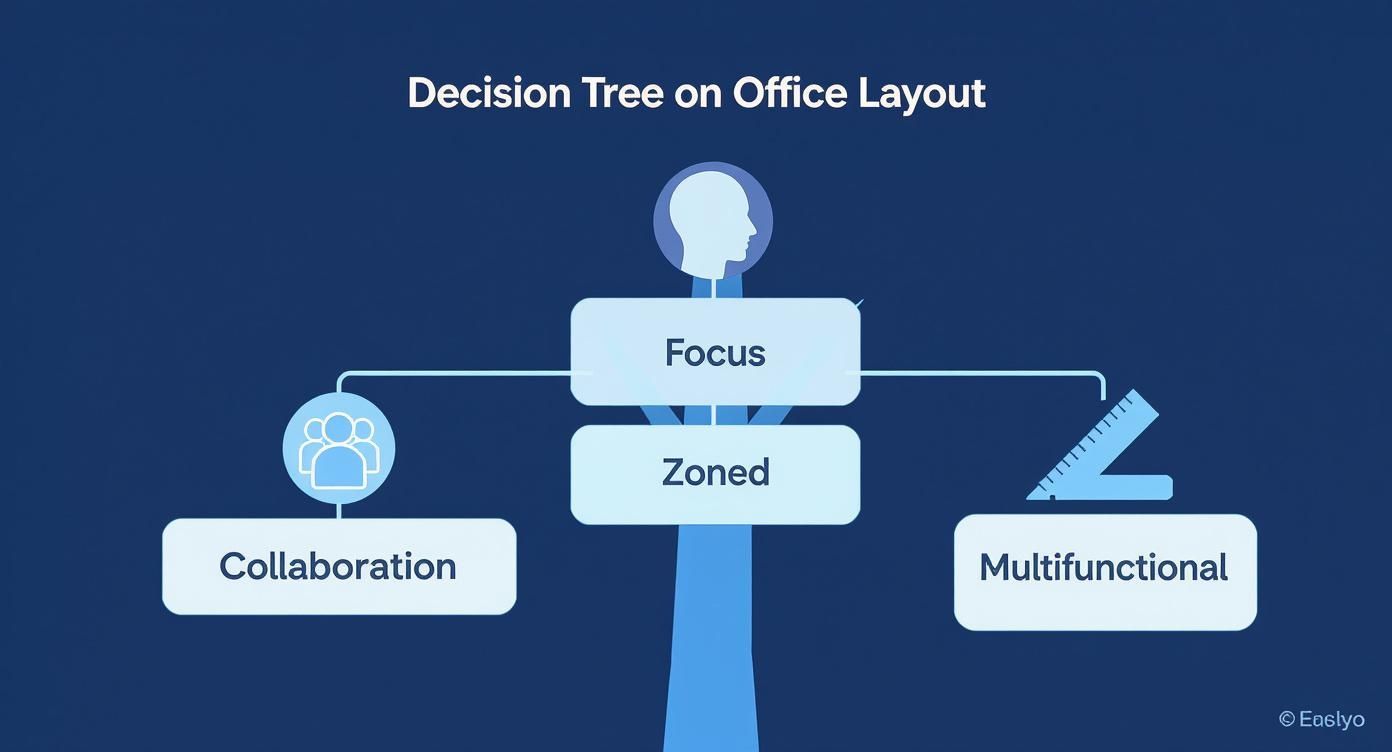
The takeaway here is simple: let your top priority—whether it’s heads-down focus, teamwork, or just making every square foot count—drive your furniture decisions from the start.
The Flexible Power of Modular Systems
For a growing business, things change. Fast. Modular office furniture is built for exactly that reality, offering flexibility that’s hard to beat. Think of it like a set of building blocks—you can add, remove, and rearrange pieces as your team grows or your needs shift. This keeps you from getting stuck with a rigid layout that stops making sense a year down the road.
This adaptability makes modular systems a smart long-term play. Instead of a massive overhaul when you hire a few new people, you can just tack on another workstation or some storage. These systems are especially powerful for small businesses trying to squeeze maximum value out of a tight space. To see them in action, check out some of our modular office furniture for small spaces.
Finding the Balance with Workstation Cubicles
The classic cubicle isn't the soul-crushing gray box it used to be. Today's workstation cubicles have evolved to strike a really nice balance between having your own space and feeling connected to the team. With lower walls and options for glass panels, they give employees a defined personal area for focus without totally cutting them off from everyone else.
Well-designed cubicles provide a sense of personal territory, which can cut down on distractions by over 40% compared to a completely open office. That boost in focus goes straight to the quality of work and keeps your team happier.
This setup is perfect for teams with different kinds of roles. Some people need quiet time for deep work, while others need to chat with their neighbors. Cubicles give you a structured environment that helps manage noise and visual clutter, making the whole office feel more pulled-together and professional.
When Private Office Cubicles Make Sense
Some roles just demand more privacy. Think leadership, HR, or anyone handling sensitive information. For them, a private office cubicle is the answer. These are essentially mini-offices, built with taller walls and often a lockable door, creating a fully enclosed, quiet space right within your main office floor.
They give you the privacy and status of a traditional walled office but with the flexibility and lower cost of a cubicle system. It's a savvy move for a small business that needs to create an executive suite or a confidential meeting area without calling in the contractors for a full build-out.
Deciding which way to go means weighing all these factors against your budget, your floor plan, and your company culture. To make it easier, here’s a quick side-by-side comparison.
Furniture Solution Comparison for Small Businesses
This table breaks down the most popular furniture types, helping you see at a glance which one aligns best with your team's needs, space, and budget.
| Furniture Type | Best For | Space Efficiency | Cost Level | Privacy Level |
|---|---|---|---|---|
| Modular Benching | Highly collaborative teams, high-density layouts, and tech startups. | Very High | Low-Medium | Very Low |
| Workstation Cubicles | Teams with mixed roles, balancing focus and collaboration. | High | Medium | Medium |
| Private Office Cubicles | Leadership, HR, or roles requiring confidentiality and deep focus. | Medium | Medium-High | High |
| Glass Partitions | Creating separate zones while maintaining an open, light-filled feel. | High | High | High (Acoustic) |
Ultimately, the best choice is the one that removes friction and helps your team do its best work. Whether that’s the high-energy buzz of benching or the quiet hum of private workstations, the right furniture is a powerful tool for growth.
Investing in Ergonomics and Employee Well-Being
Let's be honest: for any small business, your team is everything. Investing in their comfort and health isn't just a "nice to have" perk; it's a direct investment in your company's productivity and long-term success. Focusing on ergonomics is about creating a physical environment that cuts down on fatigue, prevents nagging workplace injuries, and keeps morale from taking a nosedive.
When your people are comfortable, they can focus better and work more efficiently. They're also far less likely to miss days due to back pain or discomfort. This makes choosing the right office furniture for a small business a strategic decision, one that pays you back in both output and employee retention.
The Core Components of an Ergonomic Workstation
Building an ergonomic workspace doesn't need to be complicated. It really just comes down to a few key pieces of furniture designed to support the body’s natural posture and movements throughout the day. Getting these fundamentals right is your first real step toward a healthier office.
Start with the most critical elements that form the foundation of any productive desk setup. Our guide on ergonomics as the secret to a happy workplace goes much deeper into these principles.
Here are the essentials to focus on:
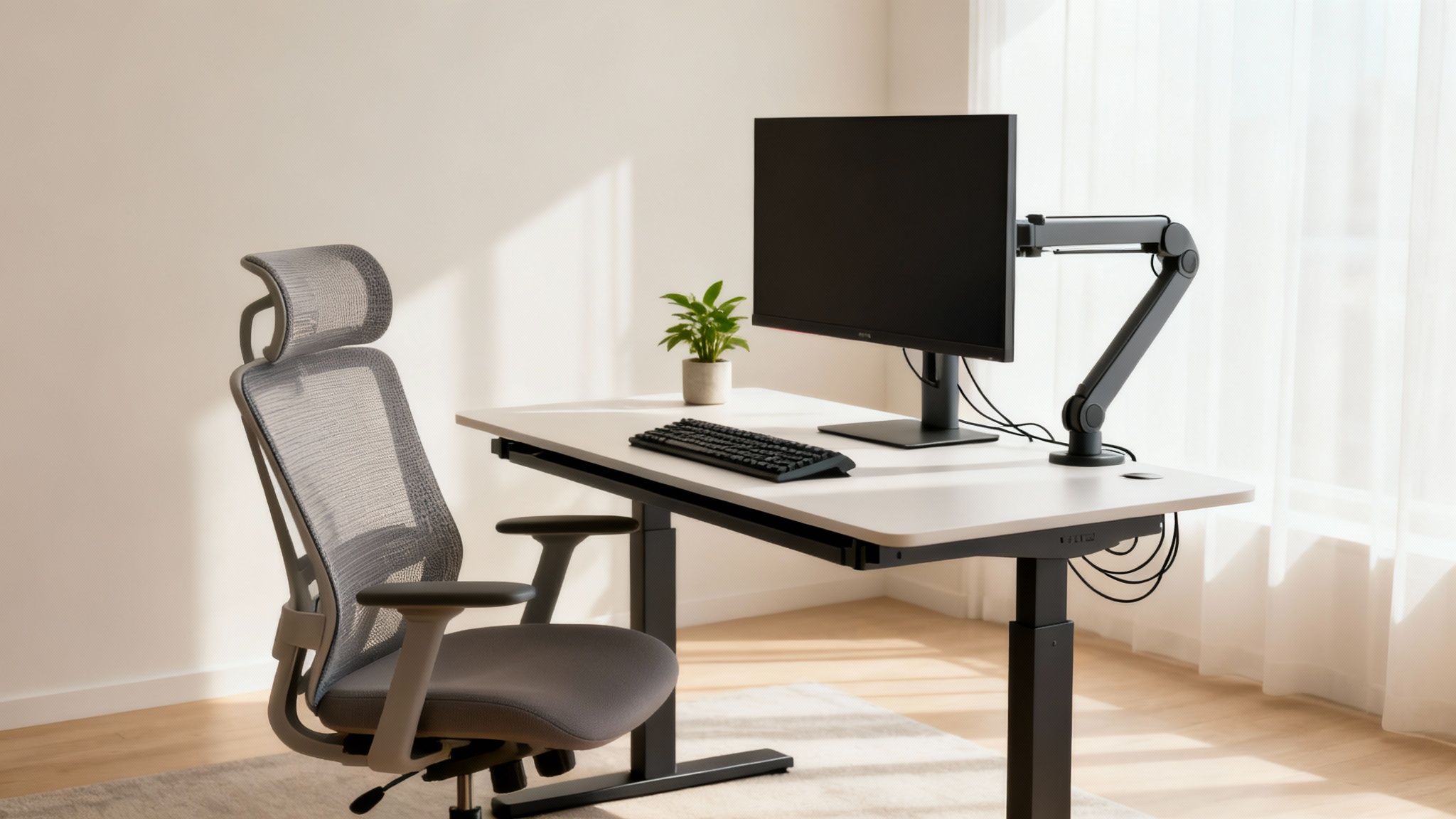
- The Ergonomic Chair: This is the absolute centerpiece. You're looking for chairs with adjustable height, solid lumbar support to protect the lower back, and adjustable armrests to take the strain off the shoulders. The right chair encourages good posture and can dramatically reduce the physical stress of sitting for hours on end.
- Sit-Stand Desks: The ability to switch between sitting and standing is a total game-changer for well-being. Adjustable-height desks fight the fatigue and health risks that come with sitting all day, boosting energy levels and focus.
- Monitor Arms and Stands: Hunching over a laptop screen is a fast track to neck and shoulder pain. A monitor arm or stand lets each employee position their screen at the perfect eye level, promoting a neutral neck and spine. It’s a simple fix with a huge impact.
Setting Up for Success
Just having the right furniture isn't quite enough; it has to be set up correctly for each person. A few simple tweaks can make a world of difference. When you empower your team with the knowledge to adjust their own space, you ensure they get the full benefit of your investment.
A properly configured ergonomic workstation can increase employee productivity by as much as 18%. This boost comes from eliminating physical distractions and improving focus, letting your team perform at their best.
A well-adjusted workspace is where the real value of ergonomics is unlocked. It turns a static desk into a personalized tool for better, more comfortable work.
An Investment Recognized Globally
The push for better, more supportive offices is a worldwide trend. The global office furniture market is projected to hit about $51.8 billion in revenue by 2025, with a huge chunk of that growth driven by the demand for ergonomic solutions.
This shows a broad understanding among businesses of all sizes that investing in employee comfort is essential for productivity. By focusing on ergonomics now, your small business can gain a serious competitive edge in attracting and keeping top talent.
Making Smart Budgeting and Purchasing Decisions
Office furniture is a major investment, and for a small business, every single dollar has to count. When you're ready to buy, it’s tempting to just hunt for the cheapest option. But the goal isn’t just about spending less upfront; it’s about securing the best long-term value for your growing company.
Thinking strategically about your budget means balancing initial costs with the kind of durability and quality your business deserves. This approach ensures your furniture supports productivity for years to come, rather than becoming a costly headache you have to solve all over again.
Calculating Your Total Furniture Budget
One of the most common missteps small businesses make is focusing only on the price tags of desks and chairs. A real-world budget has to account for the entire project, leaving no room for surprise expenses that can completely derail your plans. A good rule of thumb is to plan for $500 to $2,000 per employee, but treat that as a starting point.
To get a much clearer picture, you need to think in terms of cost-per-workstation. This calculation should cover not just the main furniture pieces but all the associated expenses that come with them.
- Delivery and Freight: The cost to get everything from the warehouse to your front door.
- Professional Installation: This is non-negotiable. Proper assembly ensures safety and stability, and it's almost always required to keep your warranty valid.
- Ancillary Costs: Don't forget taxes, any electrical work needed for new outlets, and a contingency fund of 10-15% for those inevitable "just in case" moments.
Tallying up these factors gives you a comprehensive budget that reflects the true investment, letting you move forward with confidence.
New vs. Refurbished: Which Is Right for You?
With a budget in place, the next big question is whether to buy new, used, or refurbished office furniture. Each path has its own distinct advantages, and the right choice really hinges on your specific priorities, budget, and timeline. No matter which route you take, working with a trusted provider like Cubicle By Design ensures you get quality pieces you can depend on.
A common misconception is that "used" and "refurbished" are the same thing. They're not. Refurbished furniture from a reputable dealer is professionally restored to like-new condition—often with new fabric, fresh finishes, and inspected components—offering a much higher standard of quality and reliability than a typical second-hand find.
This distinction is critical. It’s the difference between buying someone’s leftovers and getting a premium product at a fantastic value.
Comparing Your Purchasing Options
| Option | Key Advantages | Best For |
|---|---|---|
| New Furniture | Full customization of finishes and fabrics, pristine condition, and comprehensive manufacturer warranties. | Businesses that need a very specific aesthetic, have a longer lead time, and want the longest possible product lifespan. |
| Refurbished Furniture | Significant cost savings (30-50% less than new), like-new appearance, and environmentally friendly. Often comes with a dealer warranty. | Budget-conscious businesses that want high-quality, durable furniture without the new price tag and need a faster turnaround. |
Choosing refurbished furniture, like expertly restored workstation cubicles, gives you access to premium, commercial-grade brands that might otherwise be completely out of reach. It's a financially savvy way to furnish your office without compromising on quality or ergonomics.
Thinking About Long-Term Value
The smartest purchasing decisions always look beyond the initial invoice. For any small business, the total cost of ownership is a crucial concept. This isn't just the purchase price; it includes durability, potential maintenance costs, and the length of the warranty.
Think about it: a cheap, flimsy chair that needs to be replaced in two years is far more expensive in the long run than a durable, warrantied chair that lasts for a decade. Investing in commercial-grade furniture—whether it’s new or refurbished—ensures you get products built to withstand the daily wear and tear of a real office. This long-term thinking protects your investment and frees up your capital for other business needs down the road.
Bringing Your New Office Space to Life
You’ve made the plans, set the budget, and picked out your furniture. Now for the exciting part: bringing that vision to life. This is where an empty room transforms into a buzzing, productive workspace, but success hinges on getting the final steps right.
Professional Installation Is Non-Negotiable
Trying to assemble everything yourself might seem like a clever way to trim the budget, but it's a huge gamble for a small business. Think of professional installation less as a luxury and more as an essential part of your investment.
Trained technicians know exactly how to build complex systems, ensuring everything is sturdy, safe, and built to last. A wobbly desk or an unstable partition isn't just an annoyance; it's a safety hazard.
More importantly, most furniture warranties are only valid if certified installers do the work. A DIY job could void your coverage entirely, leaving you on the hook for any future repairs or replacements. It’s just not worth the risk. You can get the full rundown in our guide on office furniture installation.
Infusing Your Brand Through Customization
Your office furniture is more than just a place to sit; it's a massive, three-dimensional billboard for your brand. This is your chance to create a space that feels uniquely you, moving beyond off-the-shelf options to inject your company’s personality into every corner.
It’s easier than you might think:
- Fabrics and Finishes: Start by choosing panel fabrics, laminates, and metal finishes that align with your brand's color palette. This one step creates a cohesive, professional look that instantly impresses both clients and new hires.
- Smart Storage Solutions: Do your people need lockable drawers, overhead bins for binders, or open shelving for collaborative projects? Custom storage can be integrated to fit the actual workflow of your team.
- Glass and Acrylic Panels: Using frosted or clear glass panels is a fantastic way to balance the need for privacy with a modern, open-air aesthetic.
These aren't just minor tweaks. They transform standard furniture into a bespoke environment that genuinely reflects your company's culture and what you stand for.
The days of drab, one-size-fits-all office furniture are over. Businesses now recognize how much ergonomic and customizable setups impact employee well-being and productivity, and it’s driving a massive shift in the market.
This isn't just a hunch; the numbers back it up. The global office furniture market hit an estimated $107.26 billion in 2024 and is projected to climb to $180.20 billion by 2032. This boom shows that small businesses are serious about investing in workspaces that are both functional and inspiring.
Integrating Power and Data Seamlessly
Nothing kills a professional vibe faster than a messy tangle of cords under every desk. It’s not just ugly; it's a tripping hazard waiting to happen. The best office furniture for a small business is designed with this in mind, offering built-in solutions for managing power and data cables.
Look for systems with integrated electrical raceways. These are essentially hidden channels, usually built into the base of cubicle panels, that conceal all your wiring. They allow you to run power outlets and data ports directly to each desk, keeping cables completely out of sight. It’s a simple feature that makes a world of difference, ensuring your team stays connected in a clean, safe, and efficient space.
Common Questions About Outfitting a Small Business Office
Jumping into the world of office furniture for the first time? It can feel like a lot. To help you feel more confident about your decisions, we've put together some straightforward answers to the questions we hear most often from small business owners.
How Much Should We Really Budget for Office Furniture?
This is the big one, isn't it? A solid starting point is to plan for $500 to $2,000 per employee. That range typically gets you a good desk, a supportive chair, and some basic storage. Of course, this can swing depending on the quality, brand, and any custom touches you want.
To get a sharper estimate, think in terms of cost-per-workstation. And here’s a pro tip: always add an extra 10-15% to your final number. This little buffer covers delivery, professional installation, and those inevitable surprises, like realizing you need more power outlets. If you want to see what fits your budget, you can browse our full range of cubicles to get a feel for the options.
What's the Best Way to Squeeze the Most Out of Our Floor Plan?
When space is tight, modular benching systems or low-walled workstation cubicles are your best friends. Benching is fantastic because it minimizes the footprint of each desk, creating a more open, collaborative vibe.
The real secret to maximizing your space is to measure everything twice and use a layout planning tool before you buy a single thing. Being able to visualize different setups with a tool like our free Cubicle Designer helps you nail the balance between headcount and usable common areas.
A little planning upfront prevents that cramped, overcrowded feeling and ensures your layout actually helps people work better from day one.
Should We Go for an Open Plan or Stick with Cubicles?
Honestly, the right answer comes down to your team's day-to-day work and the culture you're building. Open-plan layouts are great for teams that are constantly bouncing ideas off each other. They can make a small office feel much bigger, but the trade-off is often more noise and distraction.
Cubicles, on the other hand, offer that much-needed privacy for roles that demand deep focus. Many small businesses we work with find their sweet spot with a hybrid approach. They might use low-walled cubicles or benching for the main floor and then add a few private office cubicles for quiet work, confidential calls, or leadership. It’s a smart way to get the best of both worlds, supporting different work styles in one cohesive space.
Ready to design a workplace that helps your small business thrive? The team at Cubicle By Design is here to help you plan, source, and install the perfect furniture for your needs.
Start building your ideal office today.