


If you're running a business from home, there's a good chance your workspace started out as a temporary solution. A laptop on the kitchen table. Paperwork stacked beside yesterday's mail. A spare bedroom that became an office because it had a door and decent Wi-Fi.
That setup is common. It's also where many small business owners miss a legitimate tax deduction.
The small business home office deduction isn't just a line on a tax form. It's a way to treat your workspace like what it is: part of the business. When it's handled correctly, it can support both tax savings and better day-to-day operations. The businesses that benefit most are usually the ones that stop thinking of the home office as an afterthought and start treating it as a real work environment.
Small Business Home Office Deduction 2026 Guide
Your Home Office Could Be a Major Tax Write-Off
A lot of owners assume the home office deduction is risky, too complicated, or only worth claiming if they have a perfectly staged office with custom built-ins. In practice, the bigger issue is hesitation. According to CPA Services on home office deductions for small businesses, 7.6 million filers claimed the deduction in the cited data set, which represented only 32% of eligible filers.
That tells you two things. First, the deduction is more widely available than many people think. Second, many eligible business owners leave it untouched because they're unsure where the line is between a valid claim and a problem claim.

I've seen the same pattern with consultants, designers, coaches, online sellers, and owner-operators. They know they work from home. They know the space matters. But they don't know whether the room qualifies, which method to use, or what records they need to keep.
Why this deduction gets overlooked
Usually, the confusion starts with the rules. The IRS gives you two ways to calculate the deduction: a simplified method and a regular method. One is easier. The other can be more detailed and, depending on the situation, more favorable. The right choice depends on how your office is set up, how disciplined your bookkeeping is, and whether the space is clearly separated from personal use.
Practical rule: If your workspace is doing real business work every week, it's worth checking whether it qualifies before you file.
If you're still unsure about the basics, this guide on who qualifies for home office expenses gives a useful high-level explanation before you dive into the calculation side.
A better way to think about it
The strongest home office claims usually come from business owners who can show two things at once: the space is tax-compliant, and the space is functional. A dedicated work area isn't only easier to defend. It's easier to work in. That matters when your office handles billing, scheduling, bookkeeping, client calls, shipping, design work, or administrative decisions that keep the business running.
Determining Your Eligibility for the Home Office Deduction
Before you calculate anything, you need to answer one question: does the space qualify?
For most small business owners, the answer turns on two IRS standards. The area must generally be used exclusively and regularly for business, and it must usually be your principal place of business, as explained by the IRS home office deduction guidance.
Exclusive and regular use
Exclusive use is where many claims fail.
If you work at the dining room table during the day and your family eats dinner there at night, that area usually doesn't qualify. If you use a spare bedroom only for your business, that is much stronger. The same logic applies to a corner of a basement, loft, or den. It doesn't have to be an entire room, but it does need to be a clearly defined area used only for business.
Regular use means the business use is ongoing, not occasional. A space you use consistently for client work, administration, video calls, design sessions, bookkeeping, or order processing is much easier to support than a setup you use only now and then.
A practical way to assess this is to look at the physical setup.
- Qualifies more easily: A dedicated room with a desk, files, computer, and business equipment used only for work.
- May qualify if defined well: A portion of a larger room that is clearly set apart and used only for business.
- Usually does not qualify: A kitchen counter, living room sofa, or guest room that still functions as personal household space.
If you're struggling to define the footprint of the workspace, a guide to office space size planning can help you think through layout and separation in practical terms.
Principal place of business
The second test is more nuanced. Your home office will usually qualify if it is your principal place of business. That doesn't mean you can never work anywhere else. It means the home office is the main place where you conduct core business activities, especially management and administration.
That can include work such as:
- Billing and invoicing
- Bookkeeping and recordkeeping
- Scheduling
- Ordering supplies
- Client communication
- Planning and administration
A contractor might spend time at job sites but still run the business from a dedicated office at home. A therapist may see some clients elsewhere but handle scheduling and business administration from home. A woodworker may use a garage studio for production while doing planning and paperwork in an office inside the home, depending on how the business is structured and used.
A home office claim is strongest when the business owner can point to a specific space and explain exactly what business activity happens there every week.
What does not help your case
Some business owners focus too much on appearance and not enough on use. A nice desk doesn't create eligibility. A stylish room with a sofa bed, television, and personal storage can undermine it. The tax question is functional, not decorative.
That said, a well-designed office often supports compliance because it makes exclusive use easier to maintain. When a workspace has clear boundaries, proper storage, and the right furniture, people are less likely to let it drift into mixed personal use.
Choosing Your Calculation Method Simplified vs Regular
A business owner with a clean, dedicated office can still choose the wrong deduction method. I see that happen when someone picks the simplified method because it sounds easier, even though their actual home-office costs are high. I also see the reverse. Someone spends hours allocating utilities, insurance, and depreciation for the regular method, only to find the tax result was not meaningfully better.
The choice is practical. Pick the method that gives you a defensible deduction without creating recordkeeping work you will struggle to maintain.
What the simplified method does well
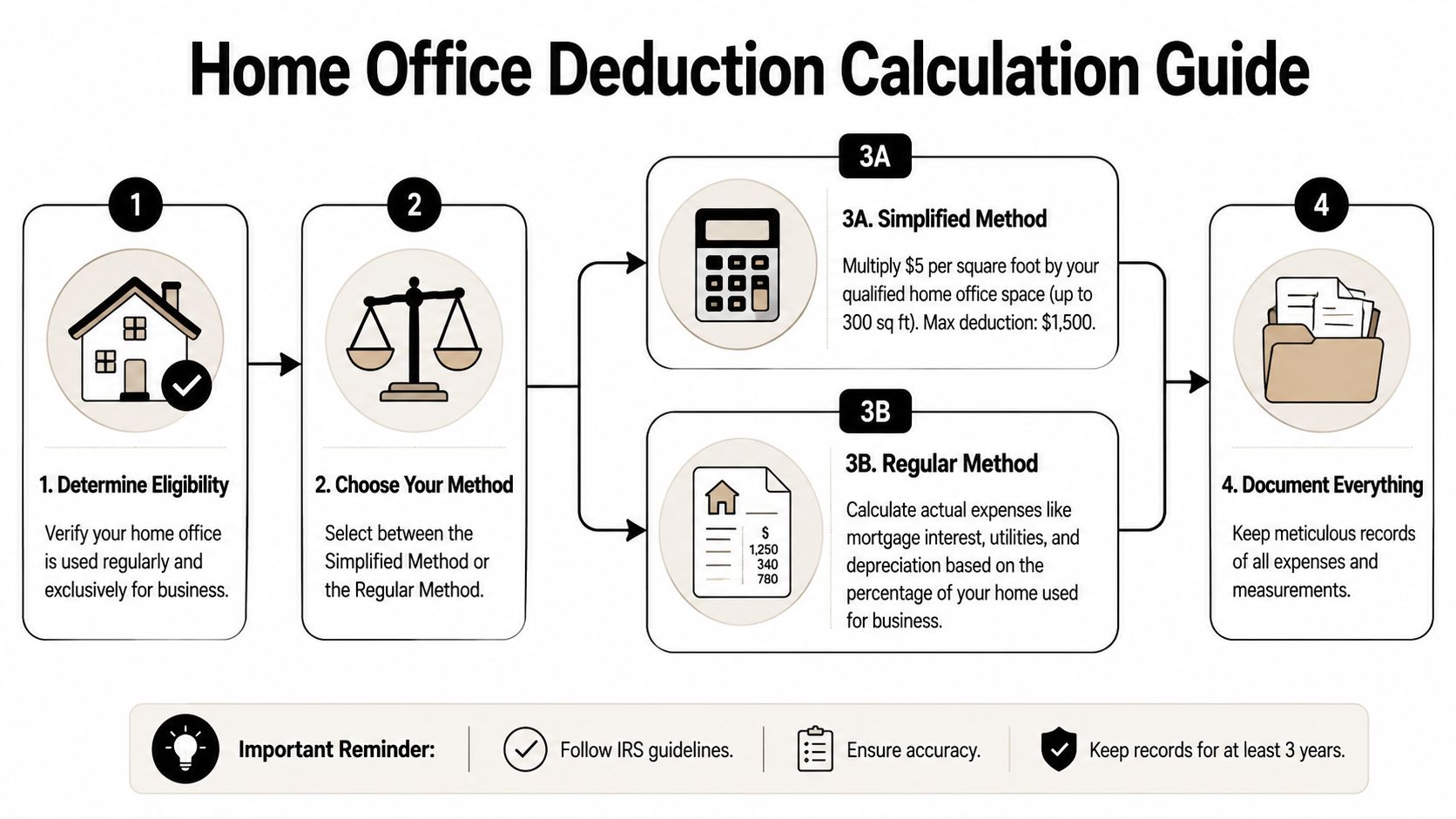
The simplified method uses a flat rate of $5 per square foot for qualifying office space, up to 300 square feet, with a maximum deduction of $1,500. It also avoids home depreciation and the depreciation recapture issues that can come with the regular method for the years you use it.
That trade-off appeals to many sole proprietors and single-member LLC owners. If the office is relatively small, household costs are moderate, or bookkeeping is already stretched, the simplified method often keeps the deduction clean and manageable.
It is also a better fit for owners who want predictable administration. You still need to document that the space qualifies, but you do not have to sort every indirect housing expense for the deduction itself.
Where the regular method earns its keep
The regular method ties the deduction to the actual cost of maintaining the business portion of the home. That usually makes more sense when housing costs are high, the office takes up a meaningful share of the home, or the owner already keeps detailed records.
There is more work involved. You need a reliable measurement of the office, the total home size, and a system for separating direct office expenses from indirect household expenses. For some owners, that extra effort produces a larger deduction. For others, it creates paperwork that is hard to maintain consistently.
The question is not which method sounds better. It is which method you can support with records a year from now if the return is ever questioned.
Simplified Method vs. Regular Method at a Glance
| Factor | Simplified Method | Regular Method |
|---|---|---|
| Calculation basis | Fixed rate based on office square footage | Actual home expenses allocated by business-use percentage |
| IRS benchmark | $5 per square foot | No flat benchmark |
| Space limit | Up to 300 square feet | Based on actual qualified space |
| Maximum under cited IRS benchmark | $1,500 | Depends on actual expenses |
| Recordkeeping burden | Lighter | Heavier |
| Depreciation treatment | No home depreciation, no later depreciation recapture for years used | May involve depreciation rules |
| Best fit | Smaller spaces, simpler records, lower admin tolerance | Strong bookkeeping, higher home costs, owners who want a more tailored calculation |
Workspace design affects this decision more than many owners expect.
A cramped guest room with mixed storage, personal items, and no clear boundaries is harder to measure, harder to document, and harder to keep compliant. A purpose-built office with defined work zones, business storage, and furniture sized for the room is easier to maintain under either method. Owners planning a better setup should review office space planning and design strategies that make the room more functional and easier to document as a true business space.
The best method is the one that fits both your tax picture and the way you actually run the office day to day.
How to Calculate Your Deduction with Examples
You clear off a spare bedroom corner, buy a real desk, add storage so business files are not mixed with household clutter, and finally have a workspace that functions like part of the business. The tax deduction starts to make sense once that space is measured and tied to actual numbers.
Start with the room itself. Measure the office square footage carefully and keep the backup, whether that is a sketch, a floor plan, or photos with dimensions. If you are using the regular method, measure the full home too. Those two numbers drive the calculation.
Example using the simplified method
The simplified method is straightforward. A qualifying office that measures 150 square feet produces a $750 deduction using the standard $5 per square foot amount discussed earlier. If the office is larger, this method still caps the deduction at $1,500.
That simplicity has real value. Owners with a modest workspace, limited home expense records, or low tolerance for extra paperwork often prefer it. The trade-off is that a well-built office with higher home costs may produce a larger deduction under the regular method.
Example using the regular method
The regular method takes more work, but it can better reflect what the office costs you.
The IRS explains in Tax Topic 509 on business use of the home that the business-use percentage is based on office square footage divided by total home square footage. You then apply that percentage to indirect home expenses. Direct office expenses are generally fully deductible.
Use a simple example:
- Office size: 200 square feet
- Home size: 2,000 square feet
- Business-use percentage: 200 ÷ 2,000 = 10%
From there, the treatment changes by expense type:
- A home utility bill is generally an indirect expense, so you would apply the 10% business-use percentage.
- Home insurance, rent, mortgage interest, and similar whole-home costs are generally handled the same way.
- A repair done only inside the office is generally a direct expense, so it is usually treated as 100% deductible.
- Work done in a shared household area does not become an office-only expense just because you pass through that area on the way to work.
That last point causes a lot of mistakes. Business owners often overstate the deduction by grouping office costs and household costs together instead of separating them clearly.
Direct expenses versus indirect expenses
This distinction is easier to manage when the office is set up like a true workspace instead of a part-time spare room. A defined work area, dedicated storage, and furniture chosen for business use make recordkeeping cleaner too.
| Expense type | How it is generally treated |
|---|---|
| Repair to the office walls only | Direct expense, generally 100% deductible |
| Utility bill for the home | Indirect expense, allocated by business-use percentage |
| Home insurance | Indirect expense, allocated by business-use percentage |
| Rent or mortgage interest | Indirect expense, allocated by business-use percentage |
| Office-only fixture repair | Direct expense, generally 100% deductible |
If you are still building out the room, this office furniture buying guide for business workspaces can help you choose pieces that fit the space and make the office easier to document as business-only.
Furniture and equipment also follow their own tax treatment. A desk, file cabinet, monitor arm, or office shelving is not usually part of the home office calculation itself. Those items may be deducted or depreciated separately, so owners who want a clearer framework for recording equipment depreciation should track them apart from home expenses.
Where the deduction is reported
If you use the regular method, many sole proprietors complete Form 8829 for business use of the home and then carry the allowable amount to Schedule C. That process forces discipline. You have to show the measurements, classify expenses correctly, and support the percentage you used.
Before you work through the forms, this walkthrough video is worth watching for a practical overview.
What works in real life
The owners who handle this well usually keep the process simple and consistent.
- Measure once and save the backup. Keep a sketch, floor plan, or note showing how you calculated the office square footage.
- Sort expenses as you incur them. Office-only costs should not be mixed with whole-home expenses.
- Run both methods before filing. The easier option is not always the better financial result.
- Document the workspace itself. Photos help show that the area is set up for business and used that way.
A home office deduction is easier to defend when the workspace is real, functional, and clearly separated from personal life.
Furnishing Your Office and Handling Assets
The space itself is only part of the story. A serious home office usually includes desks, seating, storage, lighting, monitors, dividers, shelving, and sometimes built-out features that make the area usable for focused work. Those purchases aren't just operational decisions. They can also be business assets.
That matters because many owners underinvest in the room and then wonder why they can't keep it organized, comfortable, or clearly separate from personal life. A poor setup creates workflow problems. It can also blur the line between household use and business use.
Furniture can support both productivity and compliance
A defined office often works better when the furniture matches the work. A consultant may need a desk with enclosed storage for files. A designer may need a larger surface and monitor arms. A call-heavy business may need acoustic separation and a more contained workstation.
In some home layouts, physical separation is the difference between a space that looks mixed-use and one that clearly functions as business-only. That's one reason business owners sometimes use purpose-built dividers or glass office partitions to define a dedicated zone inside a larger room.
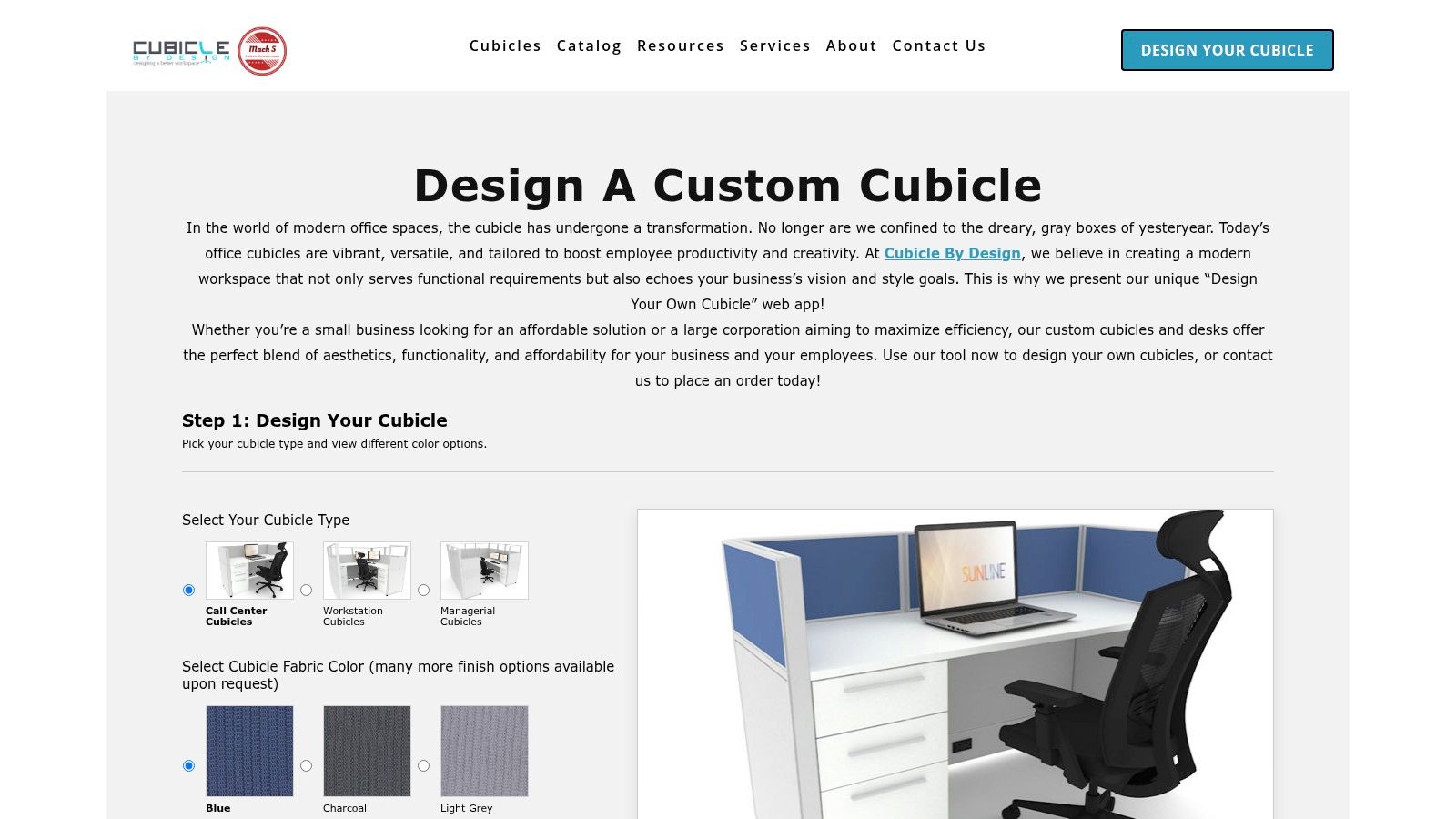
If you're planning the layout, the Custom Cubicle Designer is useful for visualizing footprint, privacy, storage, and work surface choices before you buy. For owners who want a more structured setup, custom office cubicles and workstation cubicles can create a cleaner separation between business activity and household space.
Immediate expensing or depreciation
When you buy furniture or equipment for the business, the tax treatment can vary. In many cases, owners weigh immediate expensing against depreciation over time. The practical decision often comes down to current profitability, cash flow, how long the asset will serve the business, and how much administrative complexity you're willing to manage.
A common approach is:
- Choose immediate expensing when you want the current-year deduction and the purchase is clearly tied to active business use.
- Choose depreciation when you prefer to spread the cost over time or when that treatment better fits your broader tax picture.
For a plain-English overview of how equipment depreciation works in a related context, Steingard Financial's guide to recording equipment depreciation is a helpful reference.
Buy for the work you actually do
Therefore, I advise clients to stop shopping like a homeowner and start shopping like an operator.
- For heads-down work: prioritize ergonomics, storage, and surface area.
- For calls and virtual meetings: think about backdrop, acoustics, lighting, and privacy.
- For shared home environments: use partitions, enclosed storage, and clear boundaries.
- For budget-sensitive setups: consider used office furniture liquidation options to build a more professional space without overspending.
If your business is phone-intensive, call center cubicles also show how a compact footprint can still support privacy and concentration. The point isn't to recreate a corporate floor plate at home. It's to create a space that functions like a real business environment and stays that way.
Best Practices to Avoid Audit Red Flags
Claiming the deduction is one job. Supporting it is the other.
Most problems don't come from the deduction itself. They come from weak boundaries, poor records, and claims that don't match the reality of the space. If the office is half guest room, receipts are mixed with personal spending, and the square footage was estimated casually, the deduction becomes harder to defend.
What clean claims tend to have in common
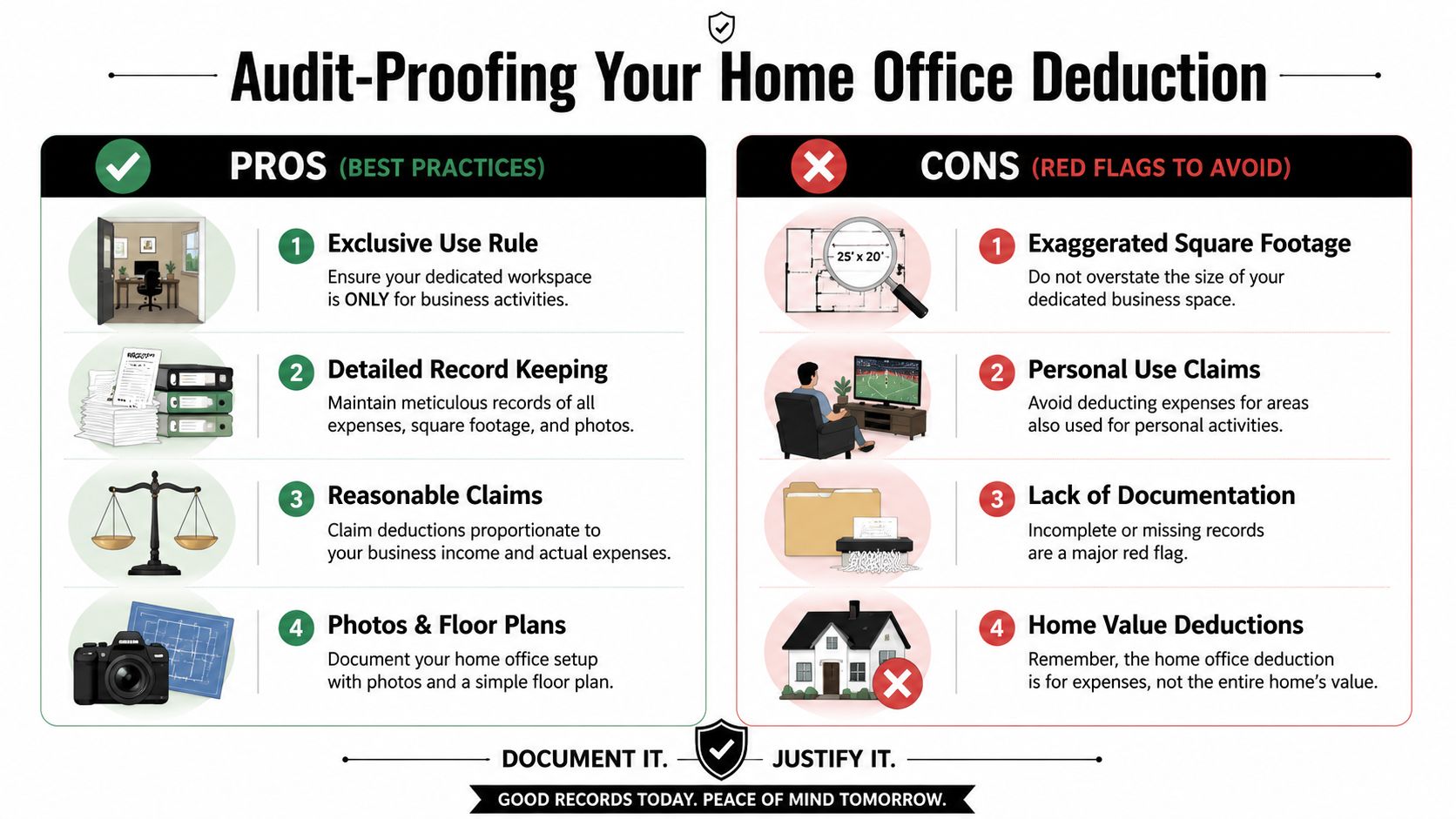
The strongest filings usually share a few habits:
- A clearly dedicated area: the office is visibly separate and not doing double duty as personal space.
- Consistent recordkeeping: receipts, bills, and notes are saved in one system.
- Reasonable measurements: the office size matches the actual floor plan.
- Business-only expense treatment: household costs and office costs are not casually blended.
If your documentation system is weak, a practical Vorby tax organization guide can help you build a receipt process that's easier to maintain throughout the year.
Common mistakes that create trouble
These are the patterns I would avoid first:
Using a mixed-use room
A room that serves as an office, guest room, and hobby area is hard to defend under the exclusive-use rule.Claiming space you can't map
If you can't point to the office boundary on a sketch or in photos, the number is too loose.Combining personal and business purchases
One card, one account, and one pile of receipts makes the claim look careless.Treating the office like storage overflow
Holiday boxes, personal gym equipment, or household clutter undercut the business-only story.
A simple documentation routine
Use a repeatable system, not memory.
- Take annual photos: Capture the office as it is used.
- Save a floor sketch: Keep basic measurements with your tax file.
- Store receipts by category: furniture, repairs, utilities, insurance, and office-only items should be easy to pull.
- Use separate business payment channels: that alone reduces confusion at filing time.
A lot of this overlaps with good workplace operations. Guidance on facilities management best practices can be surprisingly relevant, even in a home office, because the same principles apply: documented assets, clear space use, and orderly maintenance.
Good tax support usually looks like good business management. If your office is organized, measured, and used consistently, your deduction is easier to justify.
The small business home office deduction works best when you treat the room as part of the business, not just part of the house. That's the dividing line.
If you're ready to create a more functional, clearly defined workspace, Cubicle By Design offers practical solutions for planning and furnishing offices that support real work. Whether you need better separation, smarter storage, or a more professional workstation layout, their team can help you build a space that works day to day and is easier to document as a true business environment.