29 Dec Standard Office Cubicle Dimensions: A Practical Guide | Cubicle By Design
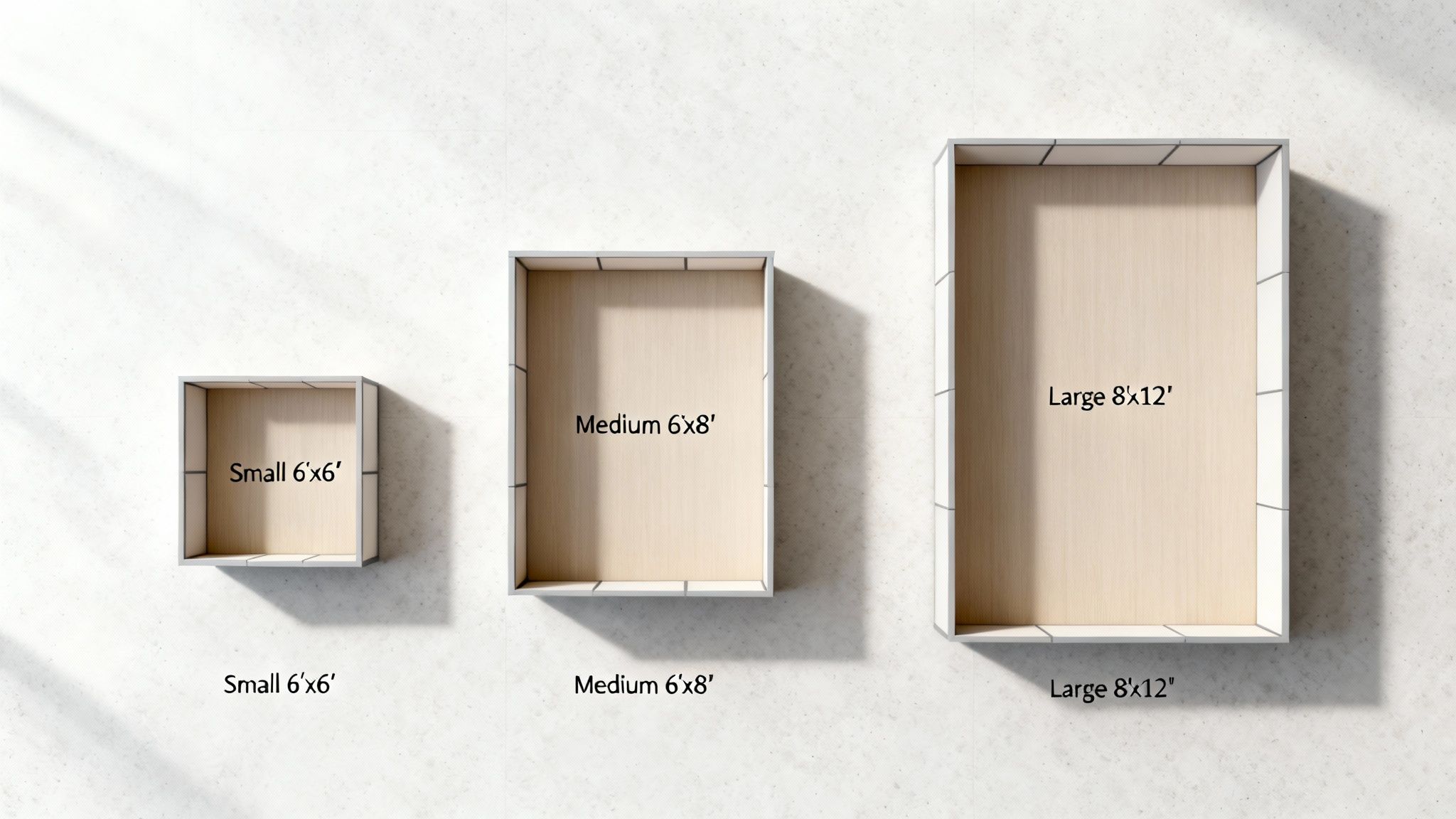
Choosing the right cubicle is one of the most important decisions when designing an office. What are the most common cubicle sizes? In the world of office furniture, the big three are 6'x6', 6'x8', and 8'x12'. You can think of these as the small, medium, and large options that have become industry standards over time. They didn't just become popular by chance; they represent the sweet spot between giving an employee enough personal space and making the most of your office floor plan. At Cubicle By Design, we help businesses find that perfect balance.
Decoding Standard Office Cubicle Dimensions
Picking the right cubicles can feel like a high-stakes game of Tetris, but it gets a lot easier once you understand the logic behind standard office cubicle dimensions. Don’t just see them as numbers on a page; these are the foundational building blocks of a productive, comfortable office. The footprint you choose has a ripple effect on everything, from individual focus to how easily your teams can collaborate.
Each of these standard sizes was designed with a specific type of work in mind. A compact 6'x6' is often perfect for focused, heads-down tasks, while a more spacious 8'x12' might be necessary for a manager who needs a small meeting area within their own space. It all comes down to the day-to-day reality of your team's roles and the gear they need to do their jobs.
(If you ever get stuck on the lingo, our handy guide to cubicle terminology is a great resource to keep in your back pocket.)
The Evolution of the Modern Cubicle
The ubiquitous 6'x6' cubicle is a product of decades of workplace evolution. At 36 square feet, it became the go-to choice because it strikes a practical balance between giving someone their own territory and fitting enough people on a floor.
The whole concept dates back to the 'Action Office II' in 1968, which was a pretty revolutionary idea for flexible, modular workspaces. But by the 1980s, corporate cost-cutting took over. That idealistic vision morphed into the dense "cube farms" many of us picture, with companies shrinking footprints down to 4.5'x4.5' just to pack 30-40% more people in, often at the expense of comfort.
The right cubicle footprint is more than just a measurement; it's a strategic decision that shapes your office culture, workflow, and employee satisfaction. It defines the boundary between personal focus and team interaction.
Visualizing Your Options
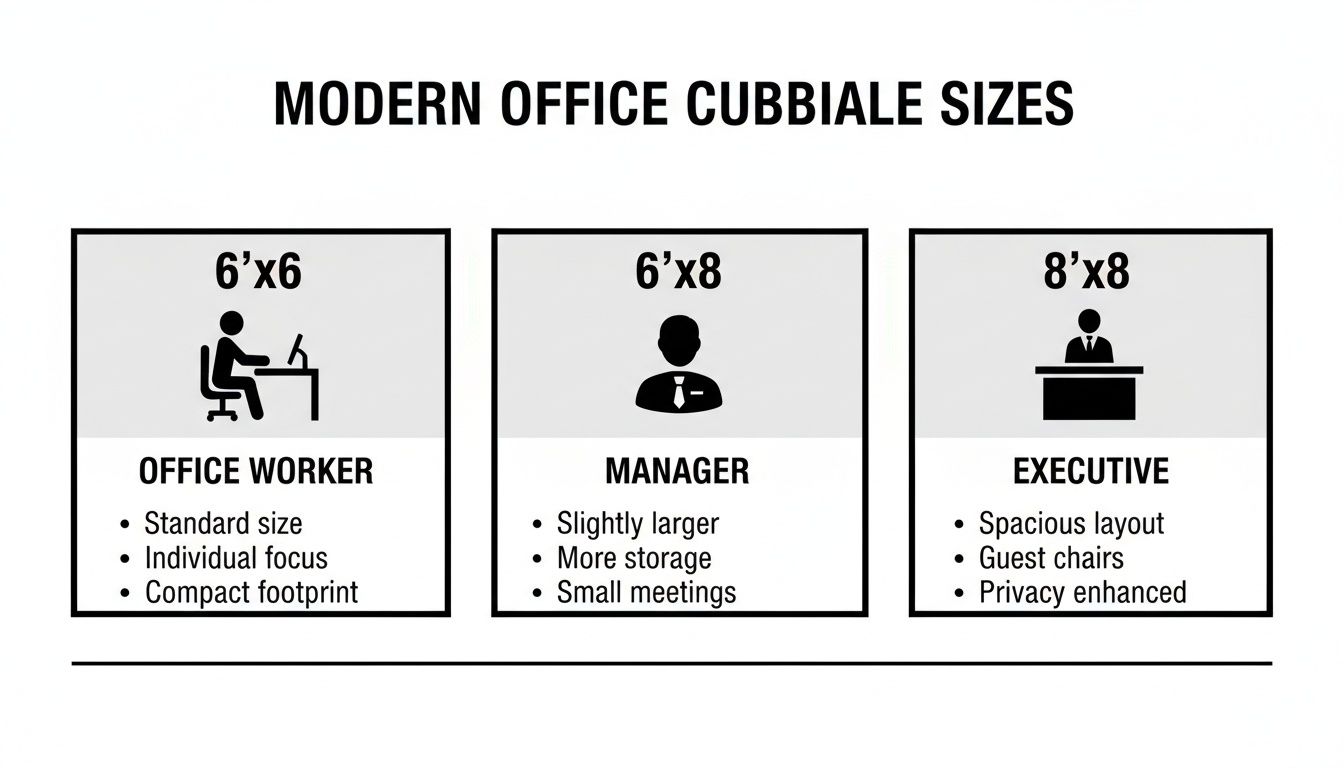
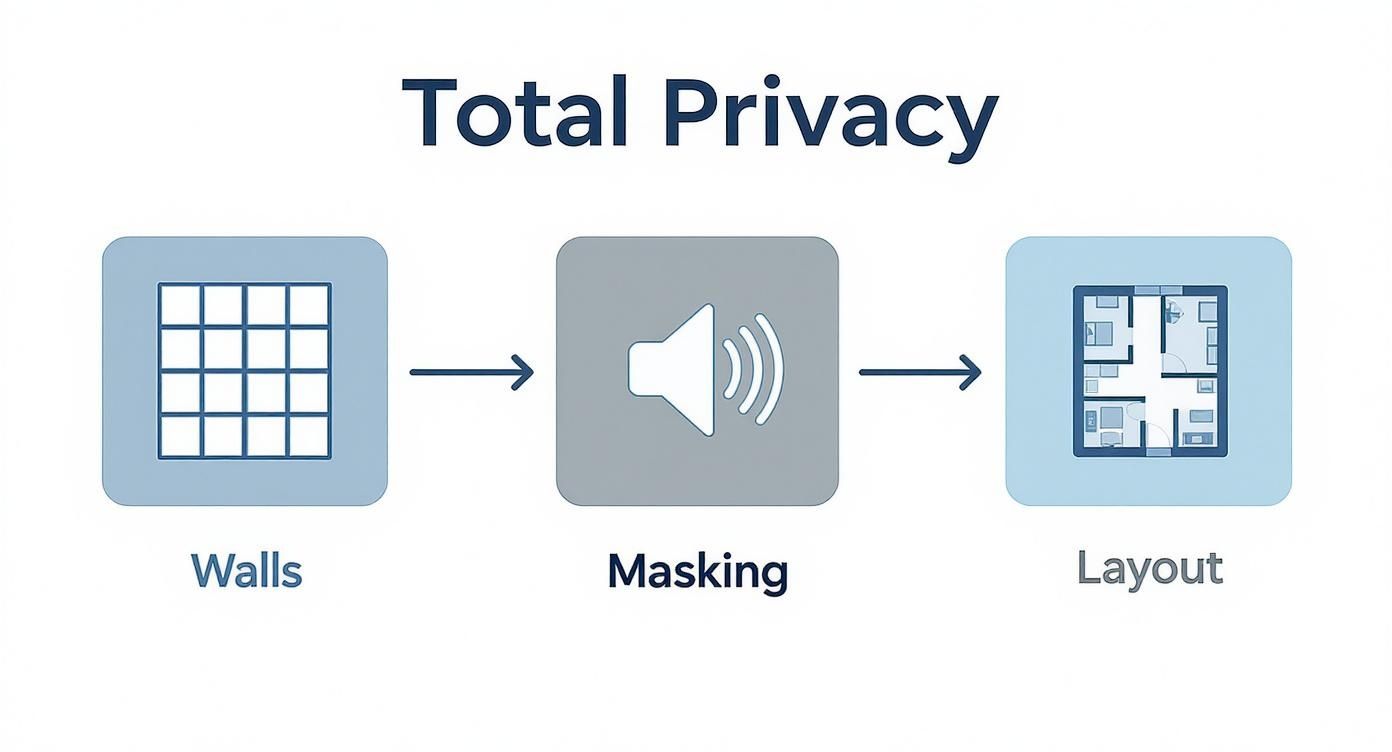
To make this a bit clearer, the diagram below breaks down the three core cubicle types and what they're best used for, from solo workstations to more team-focused setups.
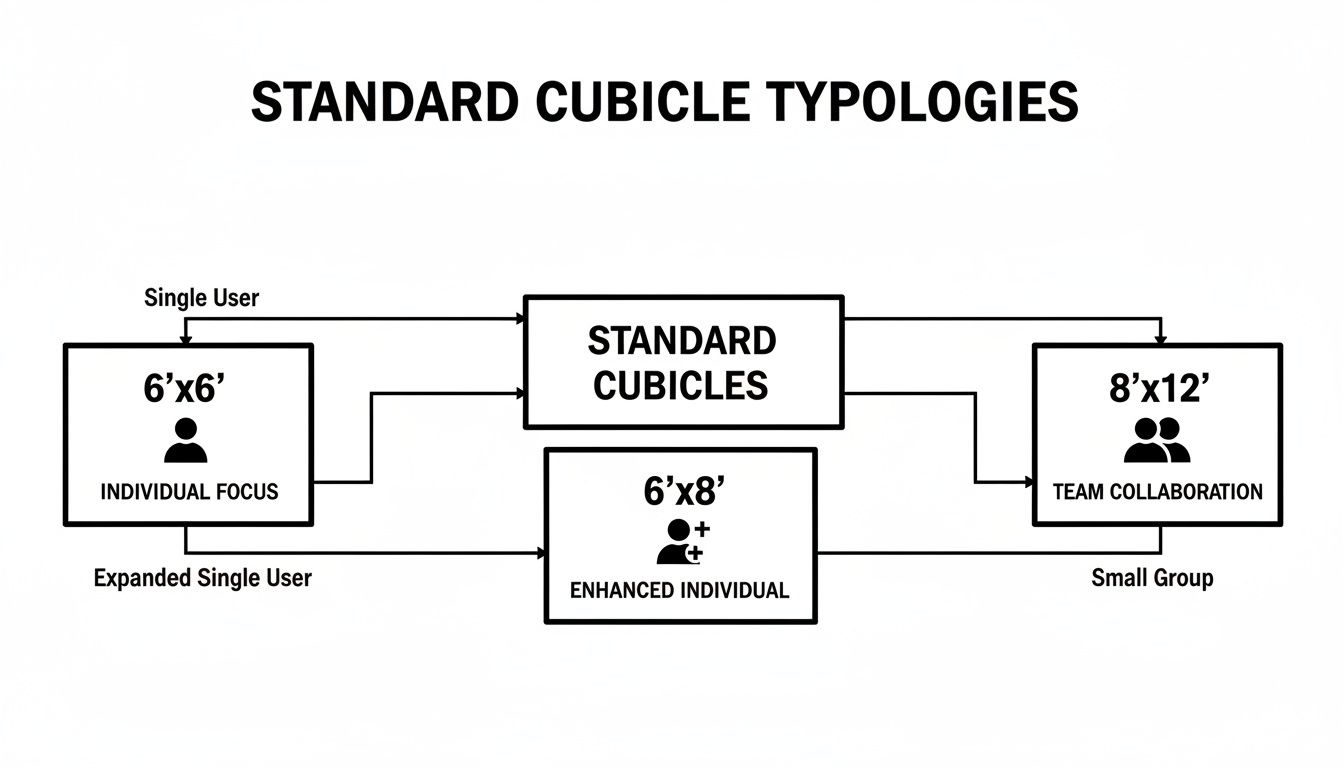
As you can see, each step up in size is meant to accommodate more complex work styles and more equipment. This simple visual guide can help you start pointing toward the best fit for your team, whether that’s a bank of individual workstation cubicles or a few larger private office cubicles for your senior staff.
How to Choose the Right Cubicle Footprint
Picking the right cubicle footprint isn't about just filling up floor space—it's about setting your team up to win. The dimensions you choose should directly support what each person does all day. Think of it like a perfectly tailored suit: a great fit makes everything feel effortless and efficient, while a bad one just causes friction. Each of the standard office cubicle dimensions has a job to do, whether it's for heads-down focused work or for leading a team.
When you match the size of the workstation to the demands of the job, you’re building an environment where people have exactly what they need to do their best work. This is more than just buying furniture; it's a strategic part of your office design. To get a better handle on this whole process, our guide on professional office space planning and design is a great place to start.
The Versatile 6'x6' Footprint
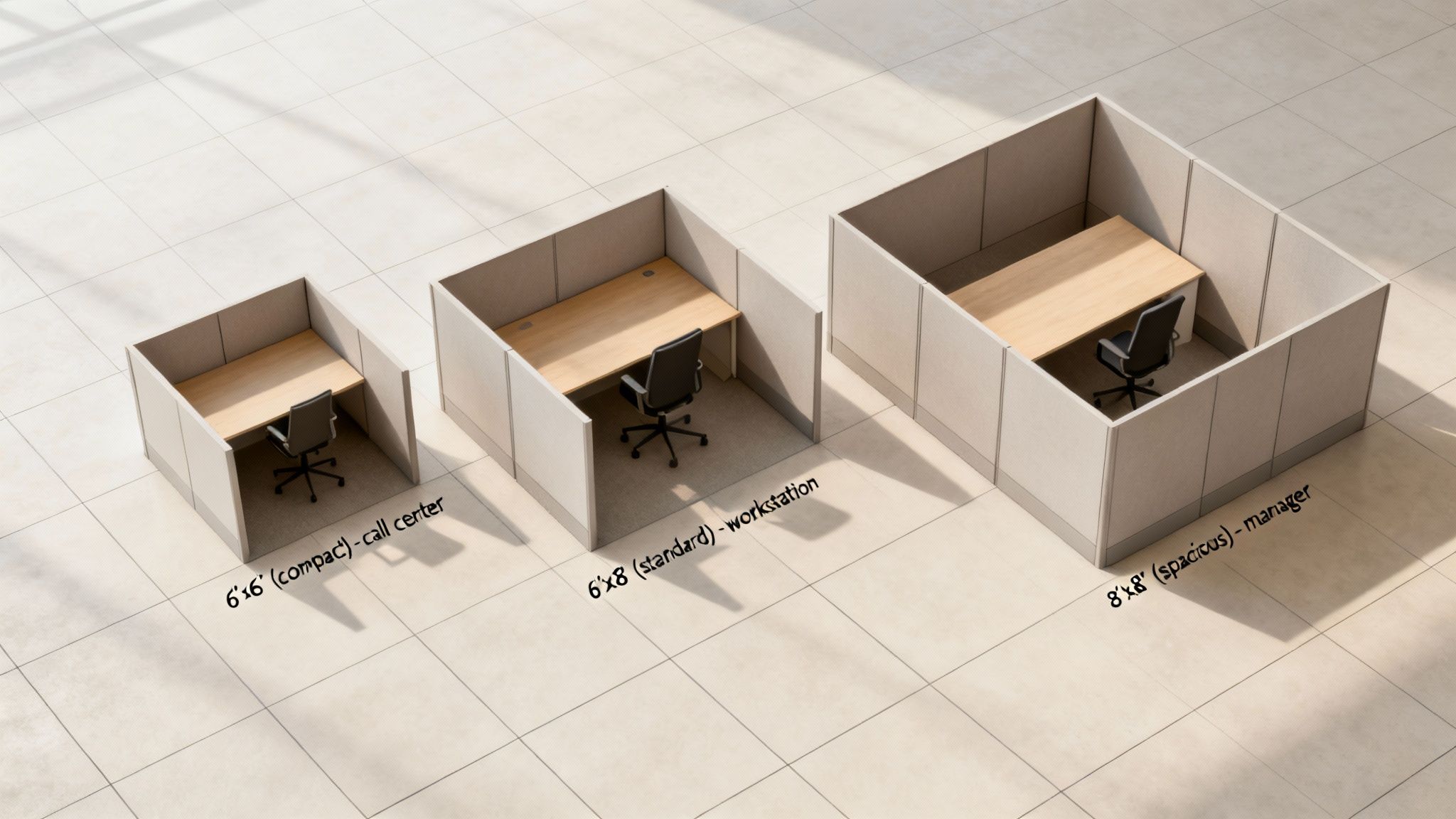
The 6'x6' cubicle is the tried-and-true workhorse of the modern office. Clocking in at 36 square feet, it’s the perfect size for roles that require a high degree of focus, like call center agents or administrative staff.
This compact footprint gives you enough room for a monitor, keyboard, and your essential papers without ever feeling claustrophobic. It’s an awesome choice for creating high-density work zones where individual productivity is the name of the game.
The Spacious 6'x8' Footprint
Sometimes, a job just needs more elbow room. When you've got dual monitors, piles of documents, or specialized equipment, the 6'x8' cubicle is the perfect step up. This size really came into its own in the '70s and '80s as computers and all their peripherals started demanding more desk space.
This footprint is ideal for people like accountants, graphic designers, or engineers who need to spread out with blueprints or reference materials. That extra bit of space, totaling 48 square feet, makes a huge difference in keeping a workflow smooth and organized.
The Commanding 8'x12' Footprint
For your team leads, supervisors, and managers, the 8'x12' cubicle is more than just a desk—it’s practically a mini-office. With a generous 96 square feet of space, it can easily handle a larger desk, personal storage, and even a couple of guest chairs for those quick one-on-one chats.
This size gives managers a private space to get their own work done while still being right there on the floor with their team. It projects a sense of leadership and provides the privacy needed for sensitive conversations or strategic planning.
Choosing the right footprint is one of the most fundamental decisions in workspace design. By matching cubicle dimensions to job functions, you invest directly in your team's ability to perform at their best.
Whatever your team needs, we at Cubicle By Design can help you find the perfect solution. From standard sizes to completely custom layouts, our team is here to help you plan a workplace that actually works. You can even play around with different setups yourself using our online Cubicle Designer tool.
Finding the Right Cubicle Panel Height
While a cubicle’s footprint sets the stage for your office layout, its wall height directs the action.
Think of the walls as the volume knob for your office culture. You can turn them up for intense, heads-down focus or dial them back to encourage teamwork and conversation. Getting the height right is a huge part of designing a workspace that actually supports how your team needs to work.
Panel height directly impacts privacy, noise levels, and the overall feeling of openness in your office. It's a delicate balance. Go too low, and distractions can easily derail productivity. Go too high, and you might accidentally create isolated silos where collaboration goes to die. The goal is to find that sweet spot for each team's specific function.
This is where the flexibility of modular systems from Cubicle By Design becomes a real game-changer. You’re not stuck with one-size-fits-all. You can mix and match heights to create distinct zones, crafting an environment that supports every work style.
Low Walls For Collaboration
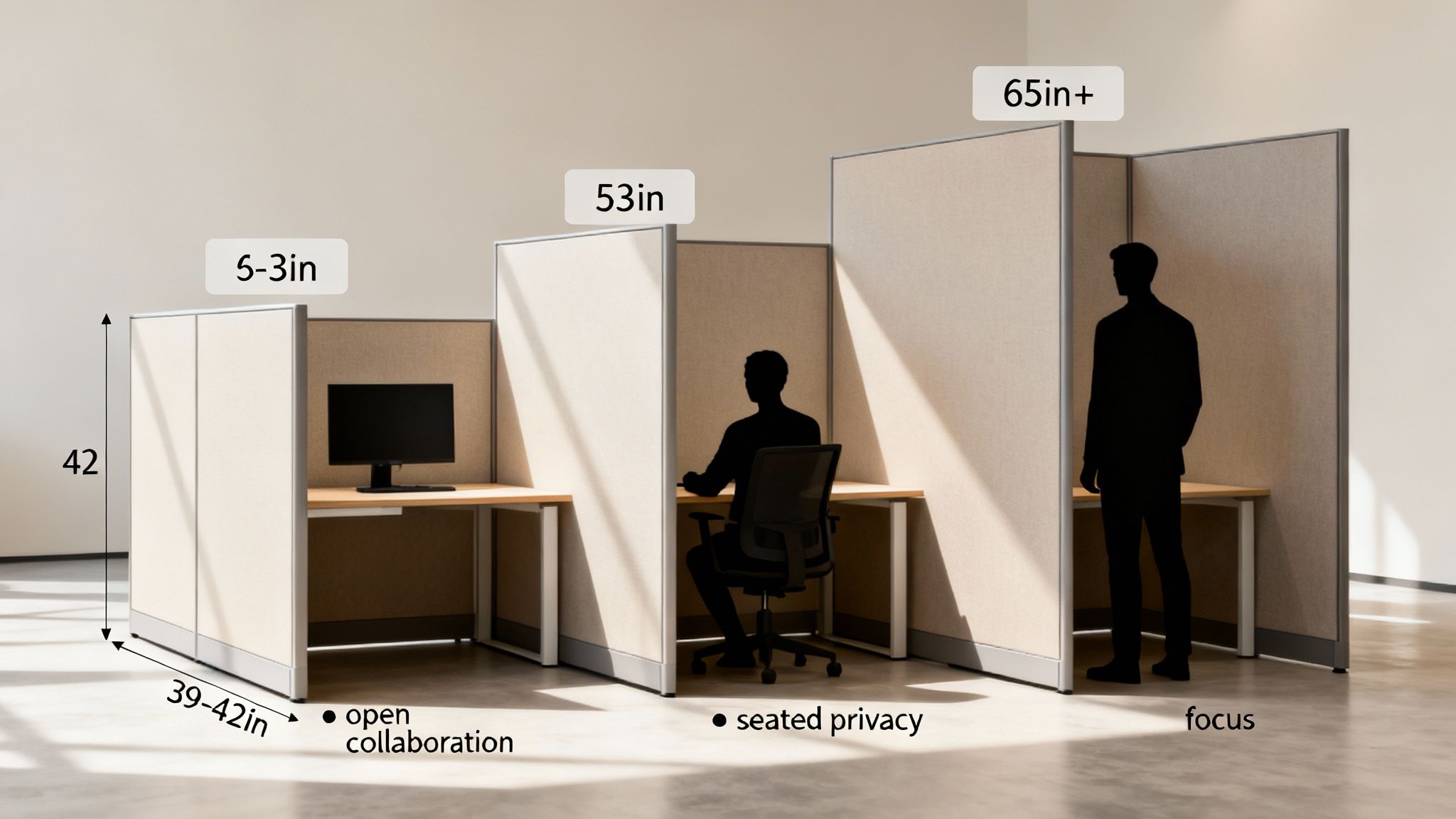
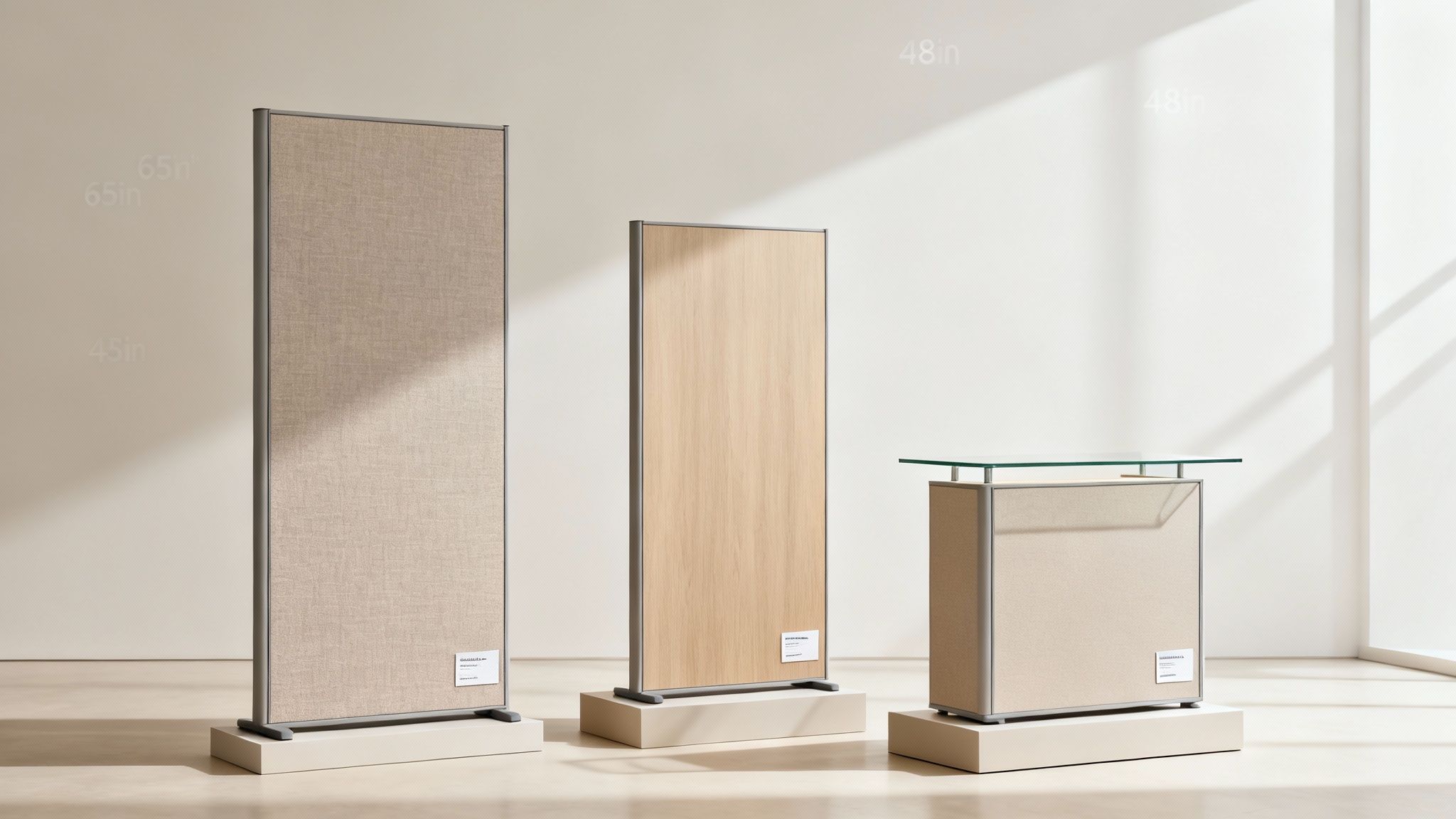
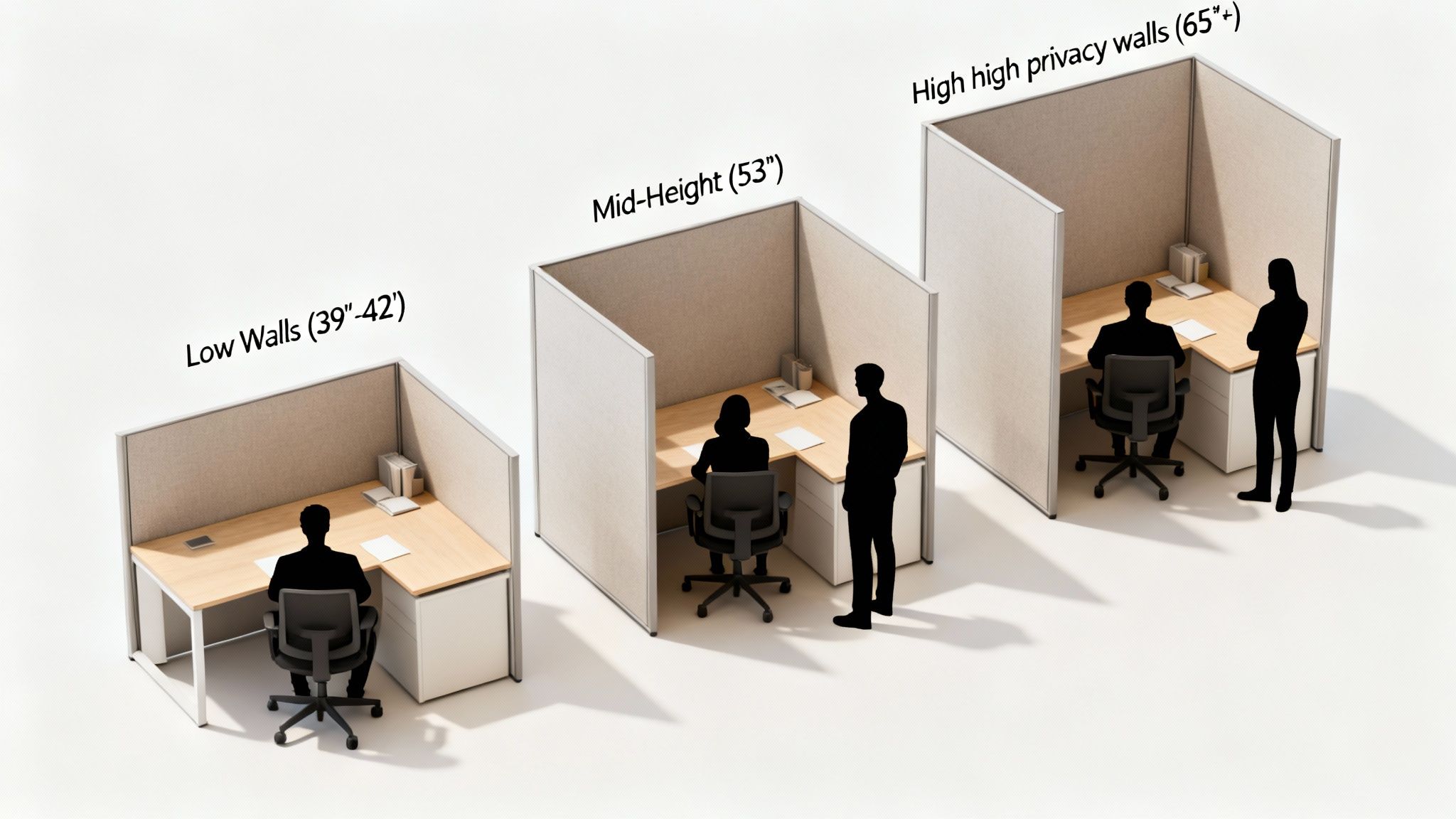
Low-height panels, typically between 39 to 42 inches, act like friendly neighborhood fences. They do a great job of defining each person's workspace without completely blocking sightlines, making them perfect for teams that thrive on constant communication and quick collaboration.
These walls are just high enough to provide a sense of personal territory while seated, but low enough for team members to easily make eye contact and chat without even leaving their chairs. This setup is a home run for creative departments, sales teams, or any group where spontaneous conversations spark the best ideas.
Mid-Height Walls For Balanced Focus
Mid-height walls, usually hovering around 53 inches, offer the best of both worlds. This is an incredibly popular choice for standard office cubicle dimensions because it provides what's known as "seated privacy." When an employee is sitting down, the walls are high enough to block most visual distractions, allowing for focused, productive work.
Yet, the moment they stand up, they can see across the office, ask a colleague a question, or join a nearby discussion. This height strikes a fantastic balance, fostering concentration without sacrificing the open, connected feel of a modern office.
Cubicle wall height is a powerful tool for shaping behavior. By strategically choosing different panel heights, you can architect an office environment that naturally guides employees toward the right balance of focus and interaction.
High Walls For Maximum Privacy
When the job demands confidentiality and minimal interruptions, high walls are the only way to go. Panels that are 65 inches or taller create a true private sanctuary, significantly cutting down on both noise and visual distractions. For a deeper dive, check out our guide on achieving office cubicle privacy.
These taller setups are essential for roles in HR, finance, or legal departments where sensitive information is handled every day. They’re also a key feature of larger managerial cubicles, like the 8’x12’ footprint, which actually evolved from early flexible office concepts. While the original 1960s designs got a bad rap during the "cube farm" era, the backlash in the 1990s led 60% of Fortune 500 firms to adopt these larger, more private spaces for supervisors. You can learn more about this fascinating journey from the history of office layouts at ROSIinc.com.
To make it even clearer, let's break down how each panel height changes the dynamic of your workspace.
Cubicle Panel Height Comparison
| Panel Height | Privacy Level | Best For Collaboration | Ideal Work Style |
|---|---|---|---|
| 39" – 42" | Low | Excellent | Open-plan, high-interaction roles (e.g., sales, creative teams). |
| 53" | Medium | Good | Balanced roles needing both focus and team access (e.g., marketing, project management). |
| 65"+ | High | Limited | Heads-down, confidential work (e.g., HR, finance, legal, programmers). |
Ultimately, choosing the right height isn't about picking one number for the entire office. It's about understanding the unique needs of your teams and creating tailored zones that help everyone do their best work.
Planning Your Office Flow and Layout
Picking out the right standard office cubicle dimensions is a huge part of the puzzle, but it's the space between the cubicles that really brings an office to life. You can have the best workstations in the world, but if getting to them is a nightmare, you’ve got a problem.
Think of your office layout like a city map. The cubicles are the buildings, sure. But the walkways and main aisles are the streets and avenues that let people get where they need to go without causing a five o'clock traffic jam by the printer. A great layout feels natural and intuitive, guiding people from their desk to the breakroom or a meeting without a second thought. This is the secret to a well-functioning office.
Establishing Clear and Safe Pathways
The number one rule of thumb for office layout? Give people room to move. Cramped, narrow aisles are more than just an annoyance; they create bottlenecks and can be a genuine safety hazard in an emergency.
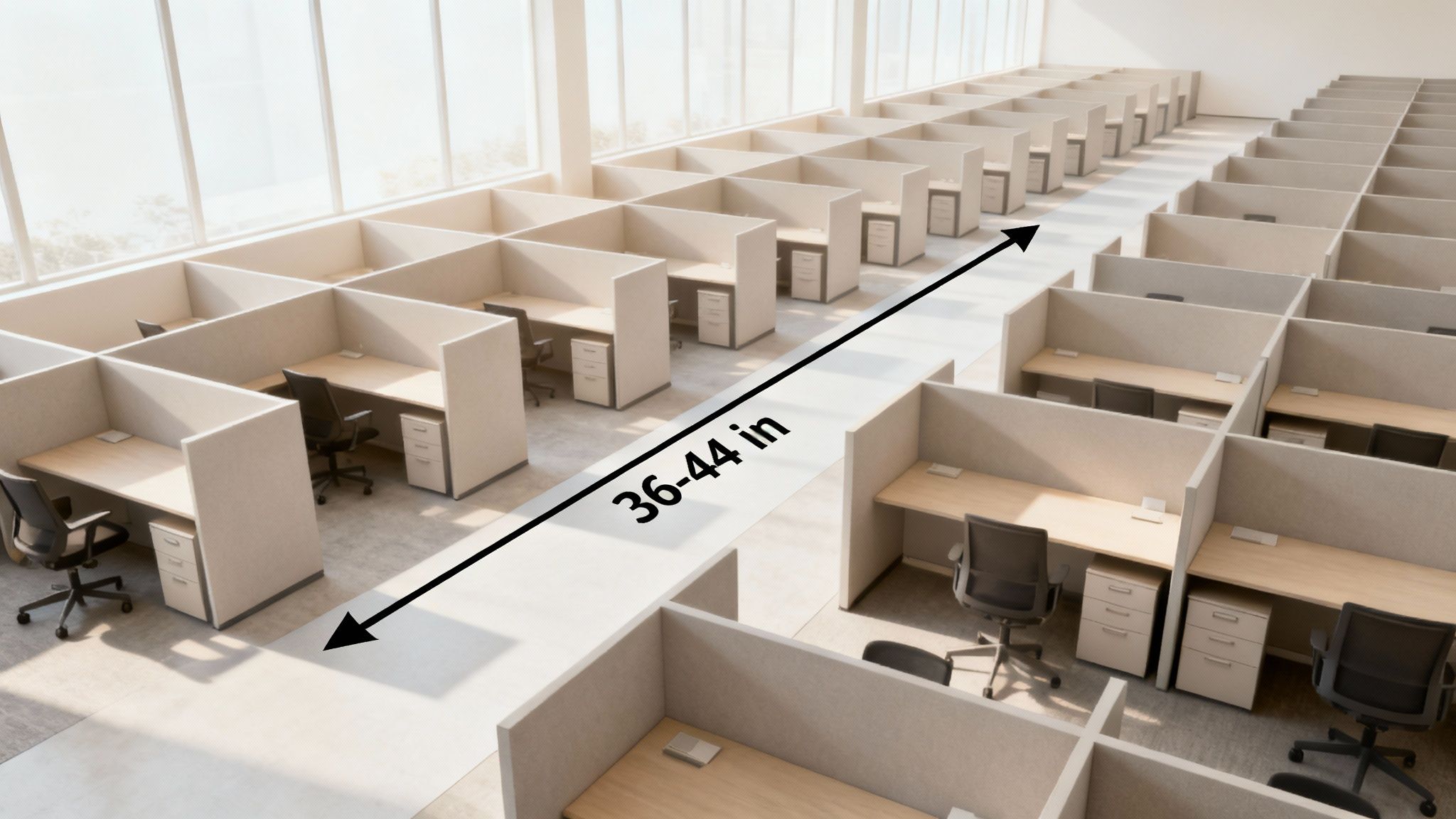
As a starting point, stick to these minimums:
- Secondary Walkways: For the aisles between individual rows of cubicles, aim for at least 36 inches of clear space.
- Main Thoroughfares: For the major arteries leading to exits, conference rooms, or the kitchen, you'll want 44 inches or more.
These numbers aren't pulled out of a hat. They’re the sweet spot that allows two people to pass by each other without doing an awkward shuffle, ensuring the flow of traffic stays smooth all day long.
ADA Compliance and Accessibility
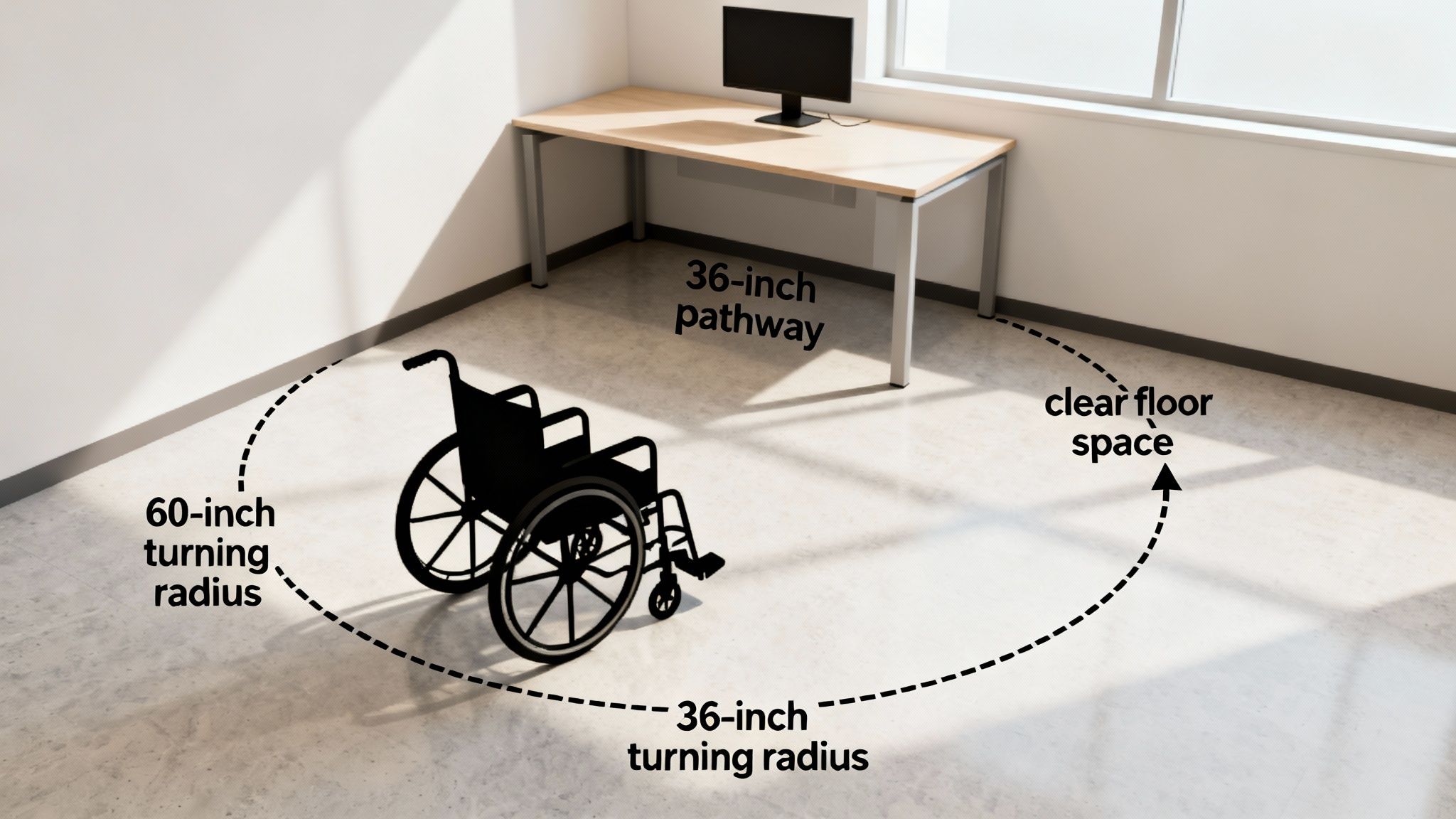
Beyond simple convenience, your layout absolutely must comply with the Americans with Disabilities Act (ADA). This isn't optional—it's the law. But more than that, it's about creating a workspace that’s truly accessible to everyone on your team, including those who use wheelchairs or other mobility aids.
A truly functional office is an inclusive one. Planning for ADA compliance from the start isn't just about following rules—it’s about creating a workspace where every team member can navigate safely and independently.
This means thinking about details like turning radius in aisles and ensuring every workstation is approachable. It can feel like a lot to juggle, but at Cubicle By Design, we bake these considerations into the planning process. We'll help you design a layout that is not just efficient but fully code-compliant, taking all the guesswork out of these critical requirements.
To see how this fits into the bigger picture, it helps to review essential facilities management best practices, which cover how space utilization impacts the entire operation. By putting clear pathways and accessibility at the top of your list, you’re not just arranging furniture—you’re building an office that is safe, efficient, and welcoming for your whole team.
Design Your Perfect Cubicle Layout Online
Reading about standard office cubicle dimensions is one thing, but actually bringing your vision to life is where the real fun begins. It can feel like a huge leap going from abstract concepts like footprints and panel heights to a concrete floor plan. This is the moment you translate what your team needs into a tangible, functional design you can see and tweak.
Instead of messing around with rough sketches and guesswork, you can use powerful online tools to build a virtual model of your future office. It’s the perfect way to bridge the gap between theory and reality, helping you make smart decisions before you spend a dime. You get to play with different setups and make sure every last square foot is pulling its weight.
From Blueprint to Reality
Here at Cubicle By Design, we’ve made this whole process dead simple. We created our online Cubicle Designer tool to put you in the driver’s seat, letting you build, customize, and visualize your ideal office layout from the ground up.
The tool guides you through each step of the process. You can:
- Select a Footprint: Kick things off with standard sizes like 6'x6' or 6'x8', or plug in custom dimensions for a truly unique fit.
- Adjust Panel Heights: Dial in the perfect balance of privacy and collaboration by choosing between low, mid-height, and high walls. You can even pop in some glass panels for a more modern, open vibe.
- Choose Finishes: Pick from a massive range of fabrics, laminates, and trim colors to make sure everything matches your company's brand and style.
- Add Components: Easily drag and drop essentials like overhead storage bins, locking pedestals, and electrical outlets right where you need them.
Seeing your layout before you buy is the single best way to avoid expensive mistakes and guarantee the final design nails every one of your requirements—from workflow to employee comfort.
This hands-on approach really demystifies the design process. You can experiment with clustering workstations together or creating separate zones with private office cubicles. As you build, you get a crystal-clear picture of how each choice affects the flow and feel of your space.
Take Control of Your Office Design
Using an interactive designer turns space planning from a headache into an engaging, creative project. It cuts out the uncertainty by giving you a realistic preview of your finished office, which helps you line up your vision with your budget. You can learn more about how to transform your office with our interactive cubicle designer.
Ready to get your hands dirty? Dive in and see what’s possible.
Common Questions About Cubicle Dimensions
When you start planning a new office layout, the little details can really pile up. Even after you get a handle on footprints and panel heights, the practical questions always seem to find their way to the surface. We get it.
So, we've gathered some of the most common questions we hear from office managers and facility planners just like you. Think of this as getting a head start—we’re here to give you clear, straightforward answers based on years of helping businesses sort out their perfect space.
What Is the Most Common Office Cubicle Size?
Hands down, the 6'x6' footprint is the king of the cubicle world. It's the most popular and versatile size you'll find, offering a solid 36 square feet of personal space. This is the sweet spot for most general office work.
Why is it so popular? Because it gives an employee enough room for a computer, a bit of paperwork, and their own personal items without feeling boxed in. At the same time, it’s efficient, allowing you to create a functional office without eating up all your valuable square footage. It’s that perfect balance of employee comfort and smart use of space.
How Much Space Should Be Between Cubicle Rows?
Giving people room to move is essential for a safe and functional office. You don't want people bumping into each other just to get to their desk.
As a general rule of thumb, make sure your main walkways are at least 44 inches wide. For the secondary paths between rows of cubicles, a minimum of 36 inches is a good starting point. This keeps foot traffic flowing smoothly and avoids annoying bottlenecks.
But—and this is a big one—you absolutely must check your local building codes and the Americans with Disabilities Act (ADA) guidelines. These rules have very specific requirements to ensure the entire office is accessible, especially for individuals using wheelchairs. Working with a professional space planner is the best way to make sure your layout is both efficient and fully compliant.
Can I Mix Different Cubicle Sizes in One Office?
Absolutely! In fact, we highly recommend it. A modern, dynamic office isn't about a sea of identical boxes. It’s about creating an environment that supports different kinds of work.
For example, you could have a block of 6'x6' cubicles with mid-height walls for your main team, giving them a nice balance of focus and the ability to collaborate. In another area, you might place 6'x8' workstations for employees who need more surface area for things like dual monitors or large drawings.
And for managers who need space for private conversations? A larger private office cubicle, maybe an 8'x12' with high panels, gives them the room and privacy they need. Today’s modular systems are built for this kind of flexibility.
"A well-planned office isn't about uniformity; it's about providing the right tool for the job. Mixing cubicle dimensions allows you to create specialized zones for collaboration, deep focus, and leadership, all within a cohesive and efficient layout."
How Do I Plan for Power and Data in My Layout?
This is a step you can't afford to treat as an afterthought. Power and data need to be part of the plan from day one.
Modern cubicles are designed with this in mind. They have built-in raceways—hollow channels, usually along the base of the panels—that let you run all your electrical wiring and data cables right to the workstation. It's a clean, safe solution that keeps cords hidden and eliminates tripping hazards.
When you're designing the layout, you’ll need to map out where your power sources are coming from, whether that’s outlets in the floor, on the walls, or from power poles dropped from the ceiling. Here at Cubicle By Design, our team helps you with this every step of the way. We’ll work with you to make sure your power plan fits perfectly with your cubicle layout, so your new space is ready to go from the moment you move in.
Ready to stop guessing and start designing? The team at Cubicle By Design can help you navigate every aspect of your office layout, from choosing the right standard office cubicle dimensions to ensuring a flawless installation. Explore our full range of cubicles or visit us at https://cubiclebydesign.com/.