
03 Feb The Ultimate Guide to Office Cubicle Hanging Shelf Solutions | Cubicle By Design
Let’s be honest, we’ve all been there—staring at a desk buried under piles of paper, sticky notes, and supplies. It can drain your focus and add a layer of stress to the day you just don't need.
Reclaim Your Desk with Vertical Storage
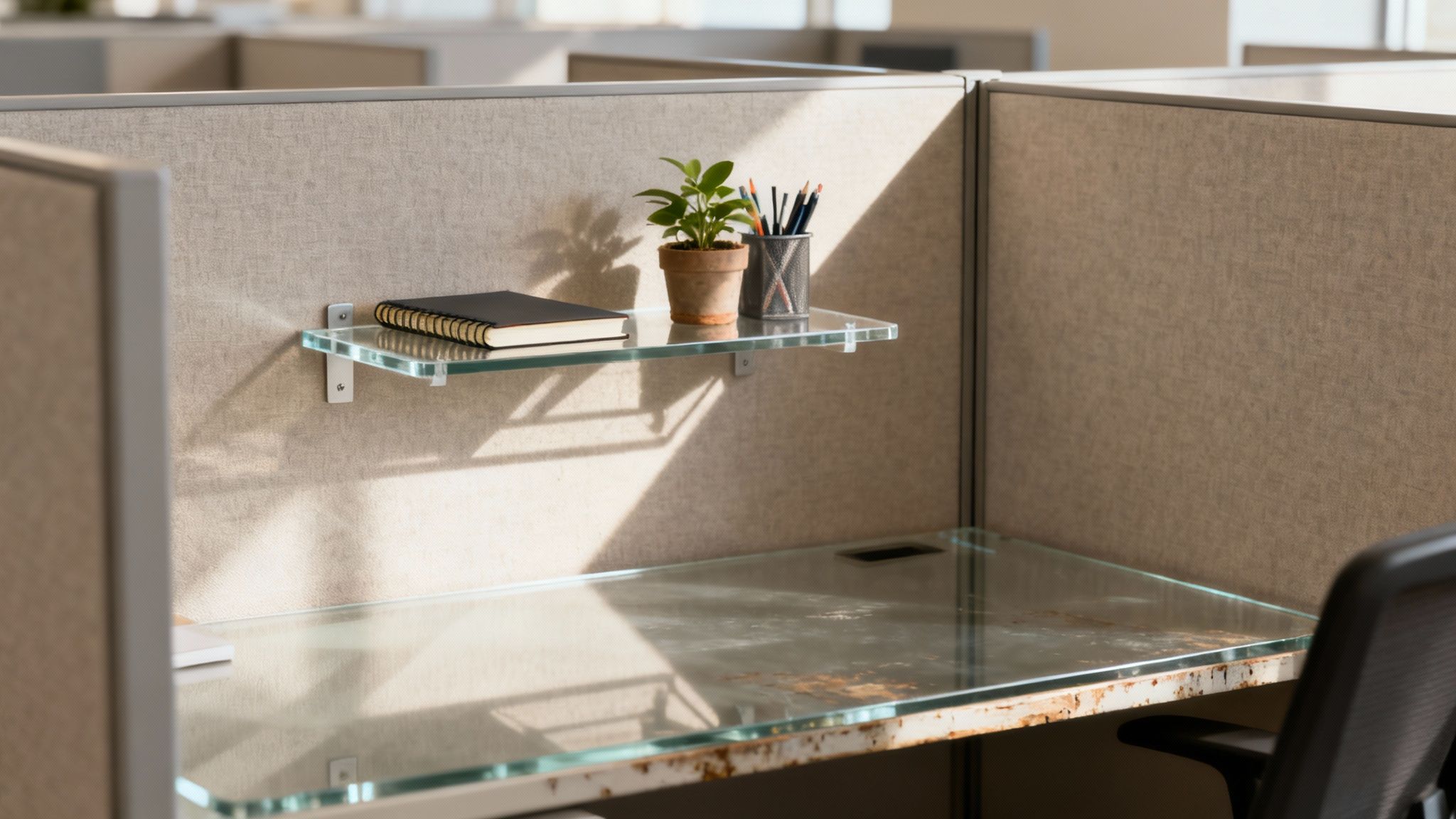
This common struggle with limited desk real estate is precisely what an office cubicle hanging shelf is designed to solve. Think of it as a simple, effective tool for taking back your workspace by converting that unused vertical wall space into practical, easy-to-reach storage. It’s a total game-changer for anyone looking to declutter.
Imagine getting all your essential items neatly organized and within arm's reach, but completely off your main work area. This isn’t just about being tidy; it’s about creating an environment where you can actually focus and be efficient. Going vertical is transforming how modern offices are designed. For more ideas on making the most out of tight spots, check out our guide on office design ideas for small spaces.
The Growing Demand for Vertical Solutions
This shift toward vertical organization isn't just a passing trend; it’s a smart response to how modern workspaces are evolving. As companies look for every efficiency advantage, the demand for smart storage has skyrocketed.
The market for cubicle shelving hit USD 2.1 billion worldwide and is projected to climb to USD 4.3 billion by 2033. The reason is simple: studies show these shelves can boost storage capacity by 40% in a standard cubicle, cutting down on the desk clutter that kills focus. It's a clear-cut way to enhance productivity.
The growth is fueled by a simple truth: vertical storage just works. It helps you create a personalized, functional hub without giving up precious elbow room. To see how this concept applies beyond the cubicle, this guide on smart wall shelving offers some great perspectives on space optimization.
Integrating Shelves into Your Office
The real power of hanging shelves is unlocked when they're part of a thoughtful office design from the get-go. Modular furniture systems, like the ones we offer at Cubicle By Design, make it easy to incorporate smart storage right into your layout.
Whether you're setting up individual workstation cubicles or designing more enclosed private office cubicles, planning for vertical storage from the start turns potentially chaotic spaces into streamlined hubs of efficiency. You can even use our cubicle designer tool to see exactly how everything will fit together.
By exploring our diverse range of cubicles, you’ll quickly see how integrated solutions can build a better, more productive workplace for everyone.
Why a Hanging Shelf Is Your Cubicle's Best Friend
An office cubicle hanging shelf is a lot more than just a place to put things. Think of it as the command center for your workstation, designed to fit right in and make your daily grind smoother. It’s like a chef’s kitchen where everything has a purpose and a place—it just makes the whole process more efficient. These shelves aren't just accessories; they're essential tools that genuinely improve productivity, comfort, and even morale.
Instead of just adding storage, a good shelf system can completely change how you use your workspace. Let’s dig into what makes a hanging shelf a must-have for turning a standard cubicle into a highly functional personal office.
Create Your Productivity Cockpit
We’ve all been there: a cluttered desk is a productivity killer. When you’re constantly hunting for a document, a pen, or that binder you need, you lose focus and momentum. A hanging shelf creates an organized "cockpit" where your most important tools are always visible and within arm's reach, but never in your way.
This has a direct impact on your efficiency. By getting key items off your main desk, you free up that prime real estate for your keyboard, mouse, and the task at hand. It's a small change that cuts down on the mental friction of a messy space, letting you stay locked in on what actually matters.
Enhance Your Ergonomic Health
Poor posture and repetitive strain are a real problem in most offices, and they often start with how your equipment is positioned. A simple hanging shelf can be a surprisingly effective ergonomic tool to help fight back against aches and pains.
By raising a second monitor or frequently used materials to eye level, you stop craning your neck all day. It’s a simple adjustment that helps prevent the neck and shoulder strain that builds up over a long workday. The whole point is to create a setup that cuts down on awkward movements and encourages a healthier posture.
"A well-organized workspace is fundamental to both physical and mental well-being. By using vertical space effectively, employees can reduce physical strain and the cognitive load associated with clutter, leading to a more comfortable and productive day."
Good ergonomics isn't just about feeling comfortable today; it's about your long-term health. Keeping essentials at a comfortable height means less twisting and reaching, which makes for a much safer and more pleasant place to work.
Personalize Your Space and Boost Morale
A cubicle is more than just a box to work in—it's a personal space where people spend a huge chunk of their week. Giving employees the freedom to personalize that space has a real, positive impact on job satisfaction and their sense of ownership.
The problem is, adding personal touches like photos, plants, or mementos can eat up valuable desk space fast. A hanging shelf is the perfect fix. It gives you a dedicated spot for those items, so you can show off your personality without sacrificing an inch of your work surface.
That feeling of control is a huge morale booster. An employee who feels comfortable and a bit "at home" in their workspace is almost always more engaged and motivated. This is why well-designed workstation cubicles so often come with built-in storage.
At Cubicle By Design, we believe in creating environments that help people do their best work. Whether it's individual cubicles or more secluded private office cubicles, adding elements like shelves is an easy win for a better workplace. You can even see how these additions would look using our powerful cubicle designer tool.
How to Choose the Right Hanging Shelf for Your Cubicle
Picking the right office cubicle hanging shelf is more than just an aesthetic choice. It’s about getting a secure, functional fit that actually works for your space. Get it wrong, and you could end up with a wobbly, unstable setup or even damage your office furniture.
Think of it like buying tires for a car—performance and a proper fit matter far more than just how they look. Getting these details right from the start saves a lot of frustration and ensures your new storage is a genuinely helpful part of your daily routine. We'll break down everything you need to know, from panel thickness to weight capacity, so you can find the perfect match.
Start with Panel Thickness and Attachment Style
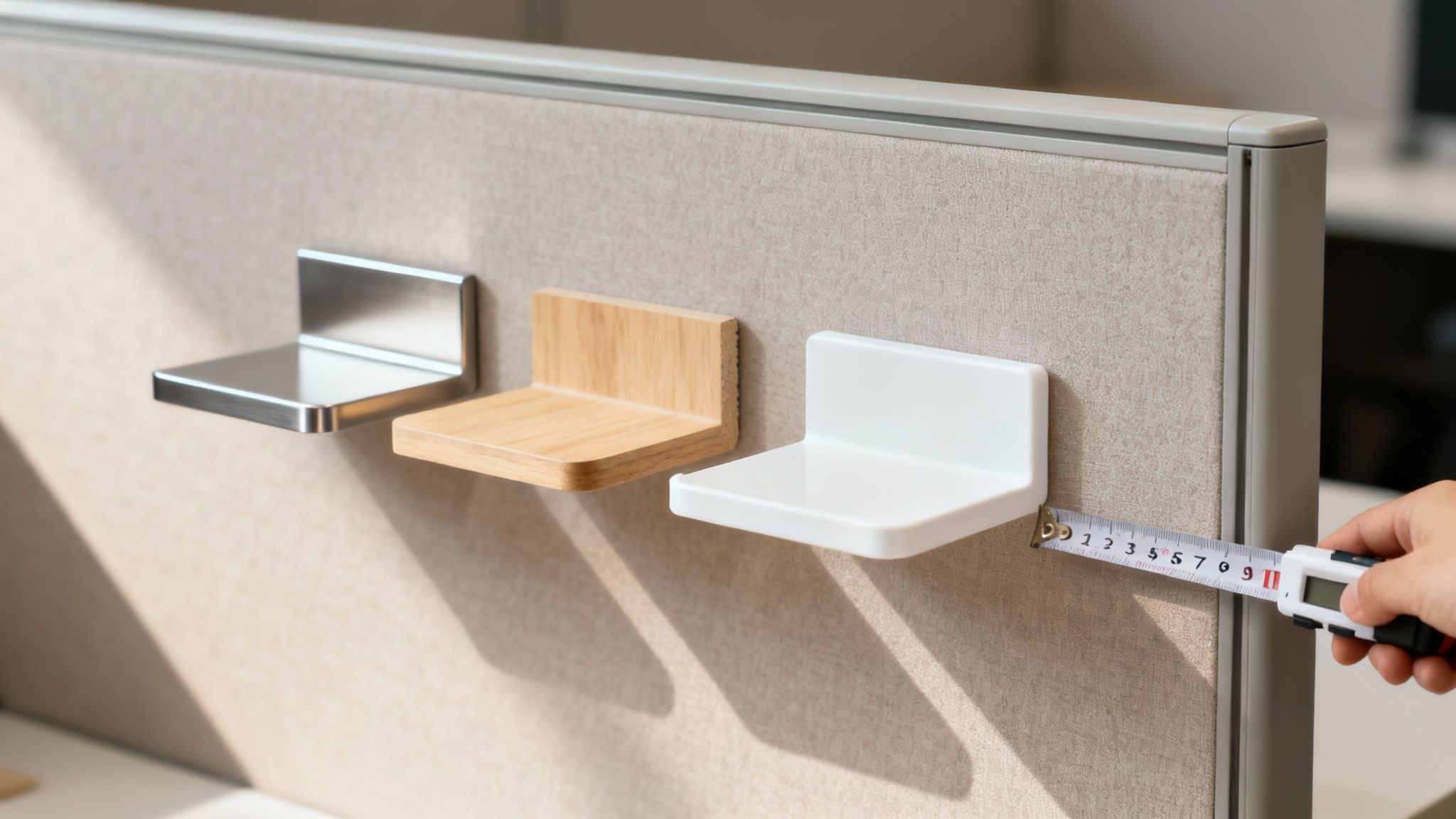
Compatibility is king. The absolute first step, before you even start browsing, is to measure the thickness of your cubicle wall. This one measurement is the most critical checkpoint for figuring out if a shelf will even fit.
Most shelf brackets are designed for a specific range, like walls between 1.5 to 2.5 inches thick. Don't just eyeball it; grab a ruler or calipers for an exact number. This simple act will immediately narrow your options and save you the headache of returning an ill-fitting shelf.
Once you have your panel thickness, you can look at how the shelf actually attaches. There are two main styles you'll run into:
- Universal Over-the-Wall Hangers: These are the most common and couldn't be easier to use. They just slide right over the top of the cubicle panel. No tools, no marks. This style is perfect for lighter loads and for anyone who likes to reconfigure their space every now and then.
- Specialized Hooks and Pin Mounts: If you need to store heavier items or want a more permanent installation, look for systems that use pins or prongs. These push directly into the fabric of the panel, creating a much more stable and secure anchor point for your shelf.
Demystify Weight Capacity and Load Ratings
Every single shelf has a weight limit, and it's a huge mistake to ignore it. A "20 lb load rating" isn’t just about the shelf itself breaking; it’s about its ability to safely support that weight without damaging the cubicle wall it's attached to.
A cubicle hanging shelf is only as strong as its anchor. Always respect the manufacturer's weight limit to prevent overloading, which can compromise the structural integrity of both the shelf and the cubicle panel itself.
To put that into real-world terms, a typical office shelf is built to hold between 15 to 25 pounds. That’s plenty for everyday items like binders, notebooks, a plant, and some personal photos. It is not, however, designed for something heavy like a large office printer. Always check the capacity before you buy and remember to distribute the weight evenly, putting heavier stuff closer to the support brackets.
Choose the Right Material for Your Needs
The material of your shelf plays a big role in its durability, appearance, and what it’s best used for. Picking the right one ensures it not only holds up over time but also complements the look of your office.
A great way to get a feel for all your options is by checking out a comprehensive office furniture buying guide, which can help you make smart decisions about your entire workspace.
To help you compare, here's a quick look at the most common materials and what they're good for:
Cubicle Hanging Shelf Feature Comparison
| Shelf Material | Typical Load Capacity | Best For | Compatibility Notes |
|---|---|---|---|
| Durable Steel | 25-50 lbs | Holding heavy binders, textbooks, or multiple pieces of small tech equipment. | Offers a clean, modern, and industrial look. Its high strength makes it a reliable choice for serious storage needs. |
| Versatile Laminate | 15-30 lbs | Displaying personal items, reference books, and adding a touch of classic warmth. | Provides the look of wood at a more affordable price and can easily match existing office furniture finishes. |
| Cost-Effective Plastic | 10-20 lbs | Lightweight items like framed photos, small plants, and basic office supplies. | Available in a wide variety of colors, making it a great budget-friendly option for personalization and light-duty organization. |
Ultimately, making a smart choice comes down to these key factors: measure your panel, know the weight of what you need to store, and pick a material that fits both your function and your office style. For a guaranteed secure and stable fit, especially with complex modular systems, consulting with the experts at Cubicle By Design ensures every accessory integrates perfectly with your specific cubicle setup.
Weaving Shelves into a Modular Office Design
A hanging cubicle shelf isn't just some accessory you tack on later; it's a critical piece of a smart, cohesive office design. Modern modular office systems are actually built from the ground up with accessories like these in mind. This allows for a seamless fit that turns a simple desk area into a highly functional personal office.
When storage is part of the initial plan, the result is a workspace that just works better and looks cleaner. It’s a much more effective approach than trying to add storage after the fact.
Planning for Integrated Storage
The real magic of modular furniture is its flexibility. Everything is engineered to work together in harmony. This is where planning becomes so important for seeing how the final layout will come together.
By thinking about shelves, drawers, and overhead bins from day one, you’re not just adding furniture—you’re creating a complete, efficient ecosystem that’s built around your team's actual workflow. For some context on how this scales up, looking at larger storage partitioning systems shows how integrated storage is a core principle of efficient space planning.
More Than Storage: Enhancing Privacy and Defining Space
Strategically placed shelving does more than just hold your stuff—it can completely change the feel and function of a space. In an open office with low-wall cubicles, a well-placed shelf can make a big difference in both visual and acoustic privacy.
By adding that vertical element, a hanging shelf helps carve out a more defined, focused personal space. It's a small addition that can break sightlines and absorb some of the ambient chatter, making for a quieter, more concentrated work environment. For any facilities manager, it’s a simple but powerful trick to boost employee comfort and productivity without a massive redesign.
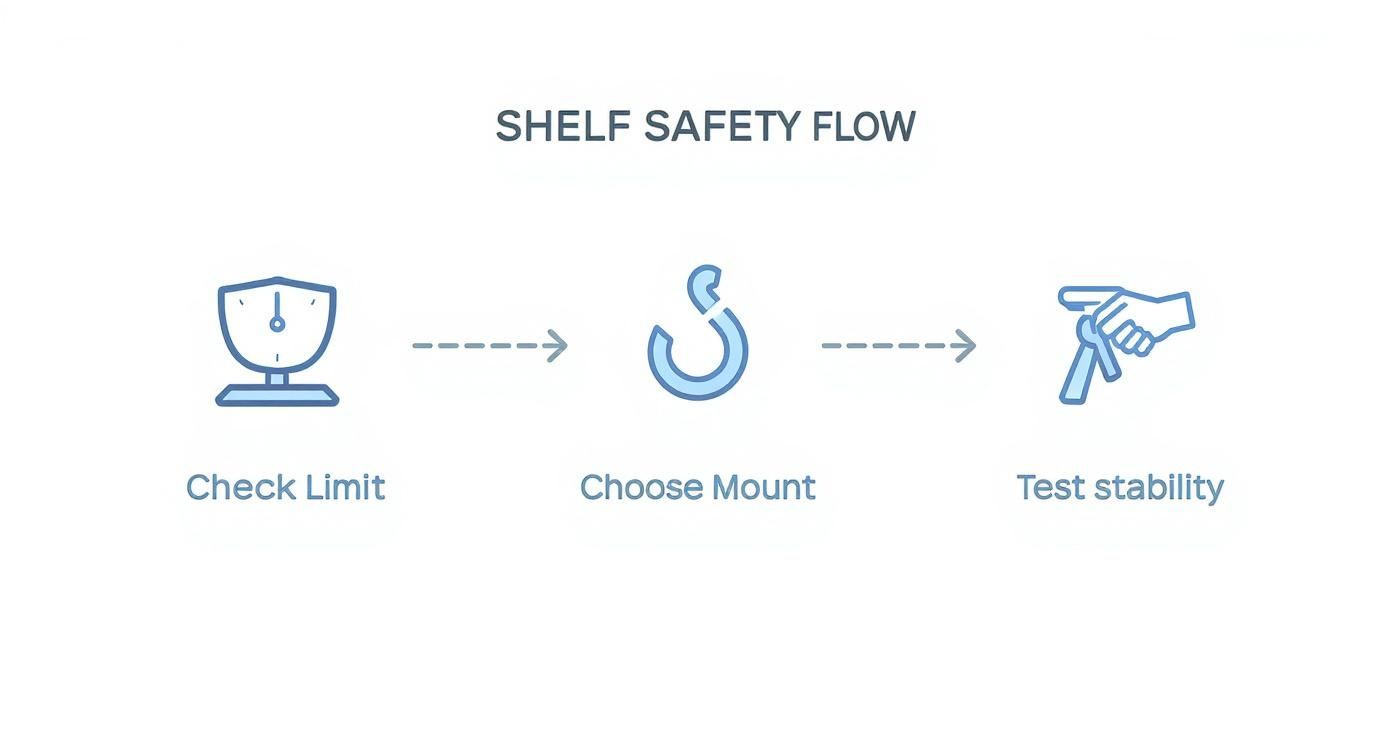
This decision tree infographic can help you visualize the key steps to picking the right hanging shelf for your specific needs.
As the guide shows, a great fit starts with the practical stuff: measuring correctly, matching your style, and knowing what it needs to hold.
Creating Complete and Collaborative Workstations
A hanging shelf’s role can change depending on the type of workstation, and that versatility is exactly what makes modular design so powerful.
- Collaborative Pods: In a team cluster, shared shelves can hold project materials, prototypes, or communal resources. This keeps shared items organized and accessible, naturally encouraging teamwork.
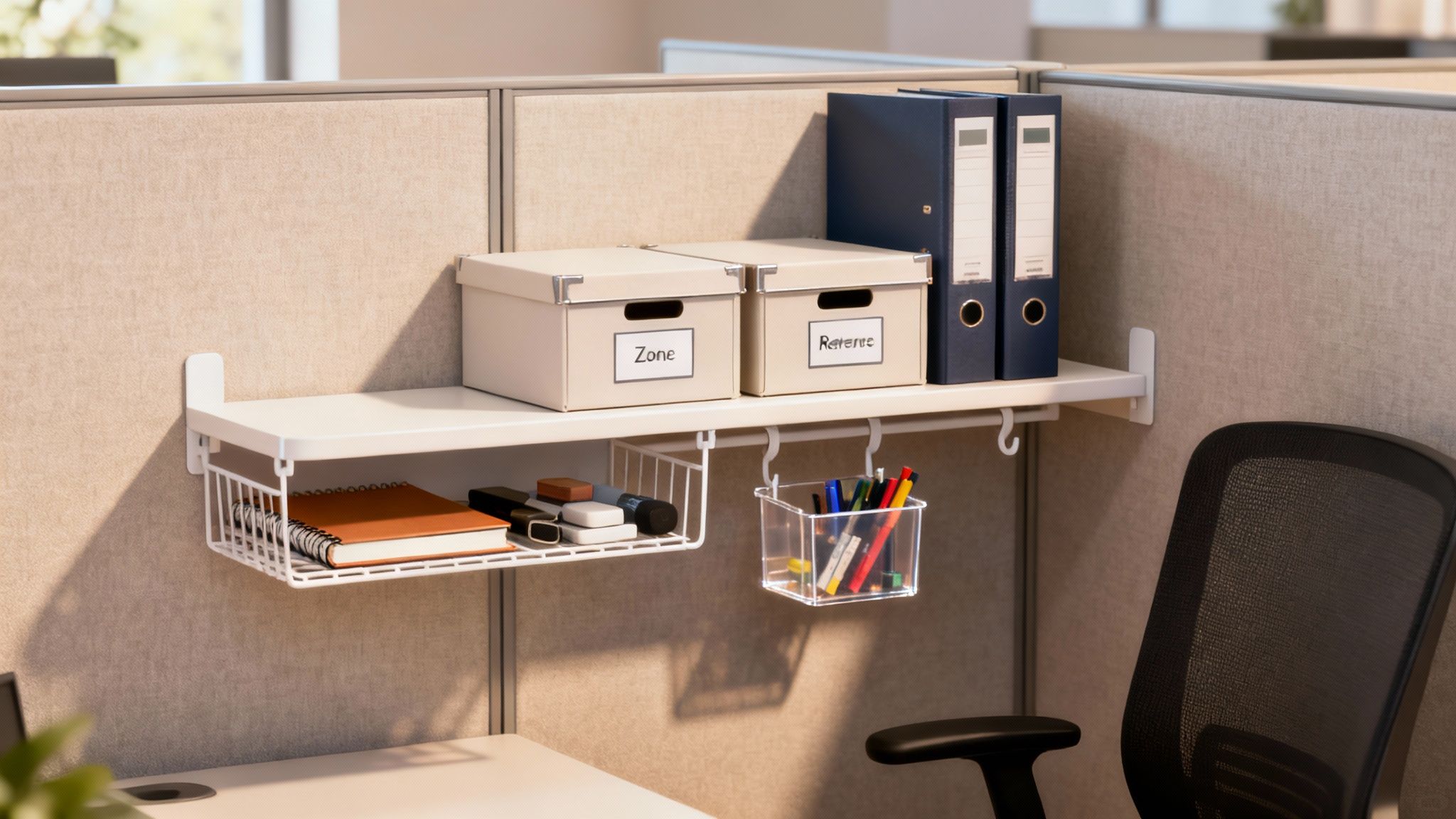
- Private Offices: For more enclosed spaces, shelves work alongside other storage like overhead bins and pedestals. They help create a complete system where everything has a home, from archival binders to personal photos.
The big idea here is that a modular system lets storage be an active part of how the workspace functions. Being able to customize and integrate accessories like shelves is what makes these systems so adaptable to any business.
Ultimately, by treating a hanging cubicle shelf as a fundamental building block rather than a simple add-on, you can design a more dynamic and productive workplace.
Proper Installation and Long-Term Care
Getting your new office cubicle hanging shelf securely in place is the final, crucial step to reclaiming your workspace. Doing it right from the start is the best way to make sure it lasts. While most designs are pretty intuitive, following a safe process is non-negotiable. Think of this as a general guide—your manufacturer's instructions always get the final say.
Most of the time, installation is a simple, tool-free affair that focuses on getting a secure fit for immediate stability.
- Attach the Brackets: If the mounting brackets came separate, go ahead and attach them to the shelf first using the hardware provided.
- Position the Shelf: Carefully lift the shelf and hook the brackets right over the top of your cubicle wall. Let it slide down until it sits flush and feels totally stable.
- Check for Level: Grab a small level (or even a level app on your phone) to make sure the shelf is perfectly horizontal. A tiny adjustment now saves you from a crooked look later.
- Secure and Test: If your model has locking pins or tightening screws, lock them in now. Once it's in place, give the shelf a firm but gentle press to check for any wobble. It should feel completely solid before you even think about putting anything on it.
Ensuring a Safe and Stable Setup
Safety is, without a doubt, the most important part of this whole process. A poorly installed shelf isn't just an eyesore; it's a hazard to you and your equipment. The two golden rules are respecting the load capacity and making sure the brackets are seated correctly.
You should never, ever exceed the stated weight limit. It's also smart to distribute the weight evenly across the surface, placing heavier items like binders closer to the support brackets. This simple step prevents the shelf from bowing and putting too much stress on the cubicle panel itself.
A secure installation is the foundation of a safe workspace. Always confirm that brackets are fully seated on the panel and that the shelf is stable before placing any items on it. This simple check prevents accidents and protects your investment.
If you're managing a big office-wide setup or just feel unsure, getting a professional opinion is a game-changer. For larger projects, looking into professional office furniture installation services ensures every single component is installed correctly and safely across the entire office.
Simple Maintenance for Lasting Use
Once your shelf is up, a little bit of care will keep it looking great and functioning safely for years to come. All it takes is a few simple, periodic checks to protect your investment and maintain a safe, organized environment.
Think of it like routine car maintenance—a quick inspection here and there can prevent bigger problems down the road.
Here are a few quick tips for long-term care:
- Periodic Checks: Every few months, just give the shelf a gentle check for any signs of looseness or wobble. Make sure the brackets are still tight against the cubicle panel.
- Proper Cleaning: Clean the shelf based on its material. A damp cloth is perfect for most laminate and metal surfaces, but you'll want to avoid harsh chemicals that could damage the finish.
- Spotting Wear and Tear: Keep an eye out for any signs of stress, like bending in the middle, cracked brackets, or deep scratches. Catching these minor issues early can stop them from turning into serious safety concerns.
Design a Better Workplace with Cubicle By Design
Ultimately, slipping an office cubicle hanging shelf onto a panel is just one small move in the much bigger game of creating a workplace that people actually enjoy working in. It's where all the pieces—smart organization, good ergonomics, and a bit of personal flair—snap together to create a space that just works.
At Cubicle By Design, we offer solutions that go way beyond just selling you furniture. Think of us as your partner in crafting an office that’s built for your team, from that first lightbulb moment all the way through the final, professional installation.
A Holistic Approach to Office Design
We’re firm believers that a great office is designed with intention, not by accident. Every single element, from the layout of the workstation cubicles down to the smallest accessory, should play well together. Our team brings the expertise to make sure your space is thoughtfully planned out to support how your company actually operates.
This big-picture approach is critical for today's offices. The global market for cubicle shelving has already shot up to USD 1.47 billion, which shows a massive demand for smarter storage. For us, that number just proves how valuable it is to integrate smart shelving into custom setups to get more done. In fact, studies on workspace design have shown that organized environments can boost employee efficiency by 15-20%. You can discover more insights about the growing cubicle shelf market and see why this is a trend worth paying attention to.
This is exactly why we offer a full range of cubicles specifically designed so that accessories like shelves can be added in seamlessly.
From Digital Design to Professional Installation
Building a better workplace starts with a clear vision. Our online Custom Cubicle Designer tool lets you bring that vision to life right on your screen. You can play around with different layouts, try out finishes, and add storage options, making sure every detail is just right before you pull the trigger.
This tool helps you see exactly how an office cubicle hanging shelf—or any other component—fits into the grand scheme of things. Once your design is locked in, our project management and installation crews take the baton, handling all the logistics to make sure the setup is smooth and professional.
"A well-designed office isn't just about aesthetics; it's about creating a system where people can do their best work. It's an investment in productivity, collaboration, and employee well-being."
We manage every step of the process so you can stay focused on your business. You can learn more about why so many businesses rely on Cubicle By Design for their complete office furniture needs.
Your Partner in Creating a Better Workplace
Whether you need to outfit a single department with a few flexible workstations or design an entire floor of private office cubicles, our mission is the same: to help you build an environment that boosts both productivity and comfort.
We invite you to explore our solutions and see for yourself how integrated storage can completely change the feel and function of your office. We’re not just a furniture vendor; we are your dedicated partner in designing a workspace that helps your team succeed today and is ready for whatever comes next.
Frequently Asked Questions
Even a seemingly simple upgrade like adding a shelf can bring up a few questions. When it comes to an office cubicle hanging shelf, getting the small details right from the start is key. You want to make sure your new storage solution is safe, stable, and a perfect fit for your needs.
Here are some quick answers to the questions we hear most often. This should help you finalize your decisions and use your new vertical storage with complete confidence, turning that cluttered desk into a real hub of productivity.
Can I Install Any Hanging Shelf on My Existing Cubicles?
Not always, and this is probably the most important thing to check. Success really depends on your cubicle wall's thickness and panel style. Most shelf brackets are designed for a specific range, so measuring your panel first is a critical first step.
Trying to force an incompatible shelf onto a panel can lead to a wobbly, unstable fit—or worse, it could damage the panel itself. For a guaranteed perfect match with systems like the ones in our cubicles, we always recommend talking it over with an expert.
What Is a Safe Weight Limit for a Typical Cubicle Shelf?
Weight limits can vary a lot based on the shelf's material and how the brackets are designed, but they typically hold anywhere from 15 to 50 pounds. A standard shelf meant for everyday office items will usually handle around 20-25 pounds just fine.
Always check the manufacturer's stated capacity and never push it. Overloading a shelf can damage the cubicle and creates a serious safety hazard for anyone working nearby.
As a good rule of thumb, always place heavier items like binders closer to the support brackets. This distributes the load evenly and is a simple habit that prevents the shelf from bowing over time.
How Can Hanging Shelves Improve Office Ergonomics?
Hanging shelves are a fantastic, low-cost way to make a workspace more ergonomic. For starters, they clear off your main desk surface. This frees up room to position your keyboard and mouse at the proper height and distance, which helps reduce wrist strain.
They also let you elevate items you use a lot, like a secondary monitor or reference binders, to eye level. It’s a simple change, but it makes a big difference in reducing the neck and shoulder strain that comes from constantly looking down or twisting to grab things.
Does Cubicle By Design Offer Shelves for Its Cubicle Systems?
Yes, absolutely. We offer a whole range of integrated storage solutions, including hanging shelves designed specifically for our cubicle systems. This ensures a perfect fit, a matching finish, and a secure, professional installation every time.
When you work with our team or use our online Cubicle Designer tool, we can build these essential storage options right into your plan from the very beginning.
Ready to reclaim your desk space with smart, vertical storage that fits perfectly? Cubicle By Design can help you integrate the ideal shelving solutions into your new or existing workstations. Explore our full range of cubicles and see how a well-designed workspace can transform your office.