
30 Mar Create Impactful Modern Office Spaces: Trends & Strategies | Cubicle By Design
Forget everything you thought you knew about the office. The modern office isn't just a building with desks anymore—it's a space built around how people actually work in 2026. It’s less like a container for your team and more like a dynamic hub that fuels creativity and connection. Crafting a modern office space that inspires is what we do best at Cubiclebydesign.com.
What Defines Modern Office Spaces Today
The whole idea of "the office" has changed. It's no longer just a place people are required to show up. Instead, it’s a powerful tool that can make or break your productivity, team collaboration, and even your company culture. Today's best workspaces are flexible, tech-savvy, and designed to support a wide range of tasks and work styles, especially with hybrid schedules becoming the norm.
For a while there, everyone was talking about the "death of the office." But the data tells a different story. After a few years of adjustment, people are coming back. A 2026 Global Workplace & Occupancy Insights report from CBRE shows that global office use has climbed from just 38% in 2024 to 53% in 2026. The office isn’t dead; it’s just evolved.
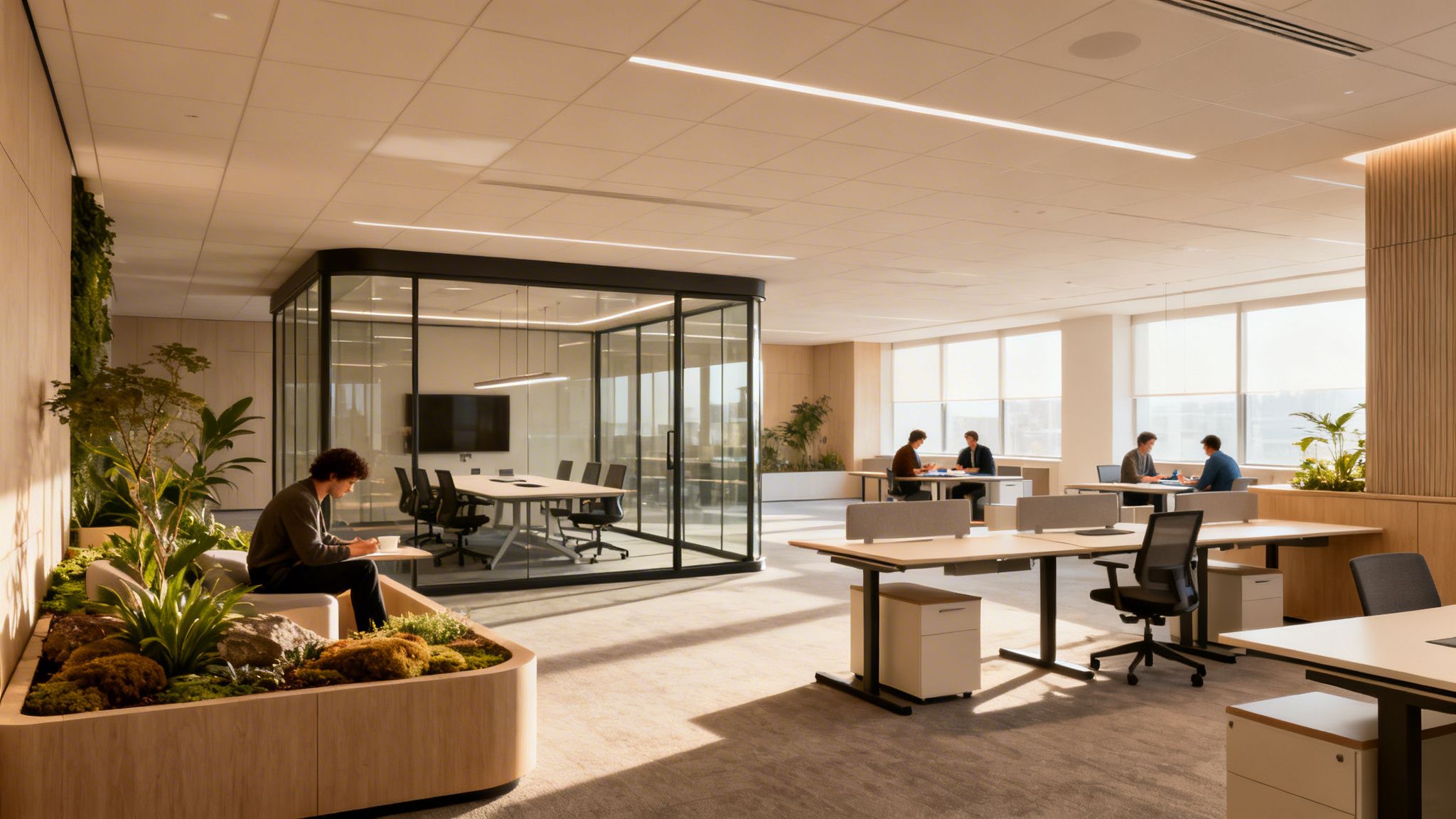
From Static Rooms to Strategic Hubs
Traditional offices were all about cramming as many identical desks as possible into a fixed floor plan. Modern design flips that script. It’s not about forcing people to work one way; it's about giving them choices that match what they need to do throughout the day. This is the core of what we do at Cubicle By Design—creating smart, responsive spaces that work for you, not against you.
To see this shift in action, it helps to compare the old way of thinking with the new.
Key Shifts from Traditional to Modern Office Design
This table breaks down how much has changed, moving from the rigid models of the past to the dynamic spaces we see taking over today.
| Design Aspect | Traditional Office (Pre-2020) | Modern Office (2026+) |
|---|---|---|
| Layout | Fixed, uniform rows of desks or cubicles | Dynamic zones for different activities |
| Purpose | A place for mandatory attendance | A destination for collaboration and community |
| Flexibility | Static and hard to change | Modular and easily reconfigured |
| Technology | Basic power and wired internet | Fully integrated power, data, and AV tools |
| Focus | Space efficiency and hierarchy | Employee well-being and choice |
| Atmosphere | Formal, sterile, and functional | Comfortable, inspiring, and human-centric |
What this really shows is a move away from the office as an obligation and toward the office as a valuable resource.
So, what makes these new spaces tick? A few key ideas stand out:
- Activity-Based Working (ABW): This means offering different kinds of spaces for different tasks. Think quiet pods for deep focus, open lounges for brainstorming, and private rooms for calls.
- Seamless Technology: Power, fast Wi-Fi, and easy-to-use video conferencing tools are everywhere, so your team can connect with anyone, anywhere, without a hitch.
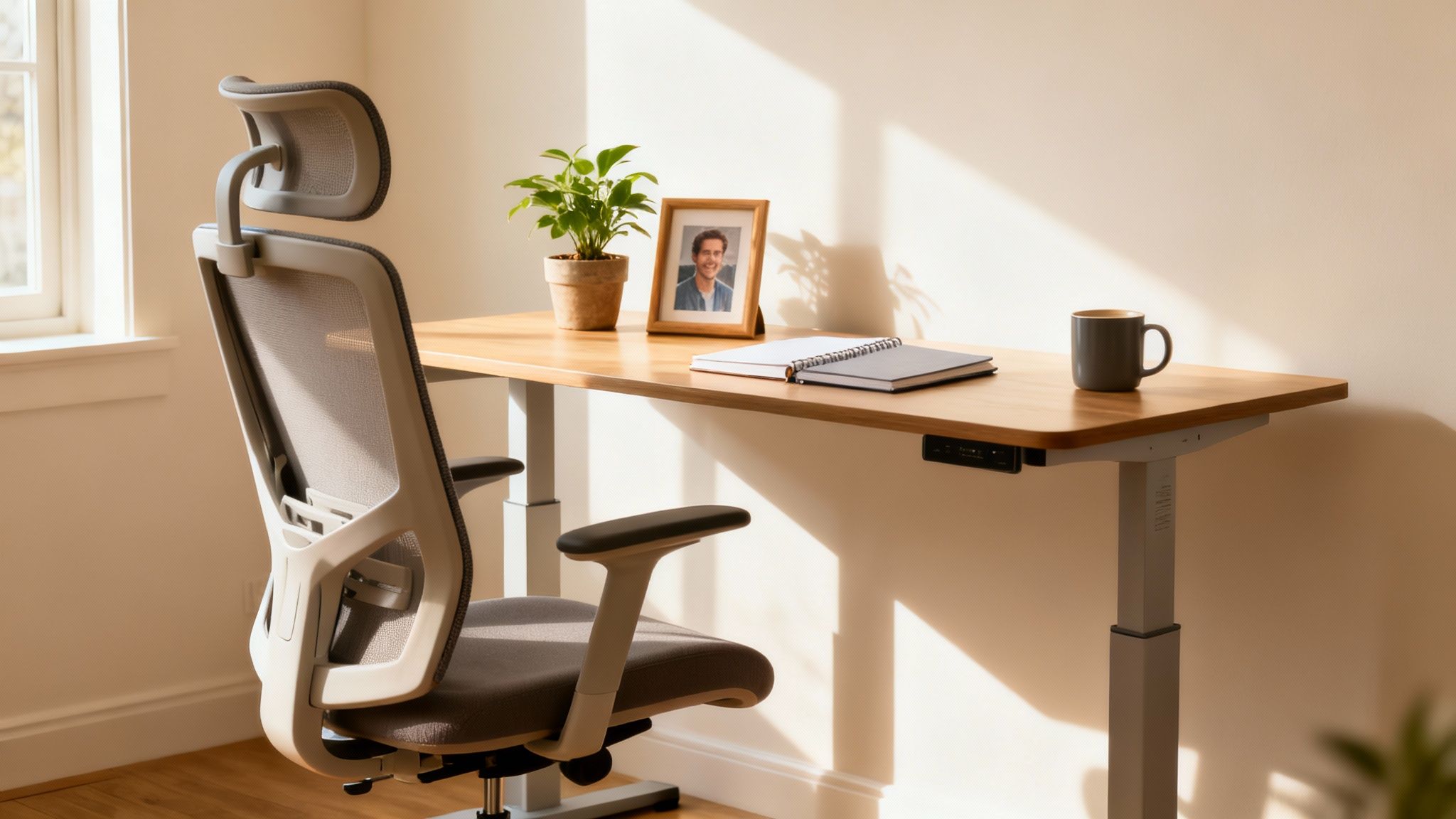
- A Focus on Well-being: Good design makes people feel good. This includes bringing in lots of natural light, adding plants (biophilic design), and providing truly ergonomic chairs and desks.
- Modularity and Flexibility: The best offices can adapt. Using elements like modular workstation cubicles and movable walls means you can change your layout as your team's needs evolve.
A modern office is defined by its ability to adapt. It functions as a dynamic hub for collaboration, a quiet sanctuary for deep work, and a cultural anchor that brings teams together, all within a single, flexible footprint.
Ultimately, today's office needs to be a destination—a place employees want to go because it helps them do their best work and connect with their colleagues. It’s a world away from the old model where showing up was just part of the job description.
For more inspiration, you can dive into our guide on the latest workplace design trends.
The Four Pillars of High-Performing Office Design
Putting a few desks and chairs in a big room doesn't magically create a modern office. A truly great workspace isn't just about looking good—it's built on a foundation of four core principles that work together. Getting these right is the difference between an office that just exists and one that actively helps your team thrive.
Think of these as the four legs of a very sturdy table. If one is wobbly, the whole thing is off-balance.
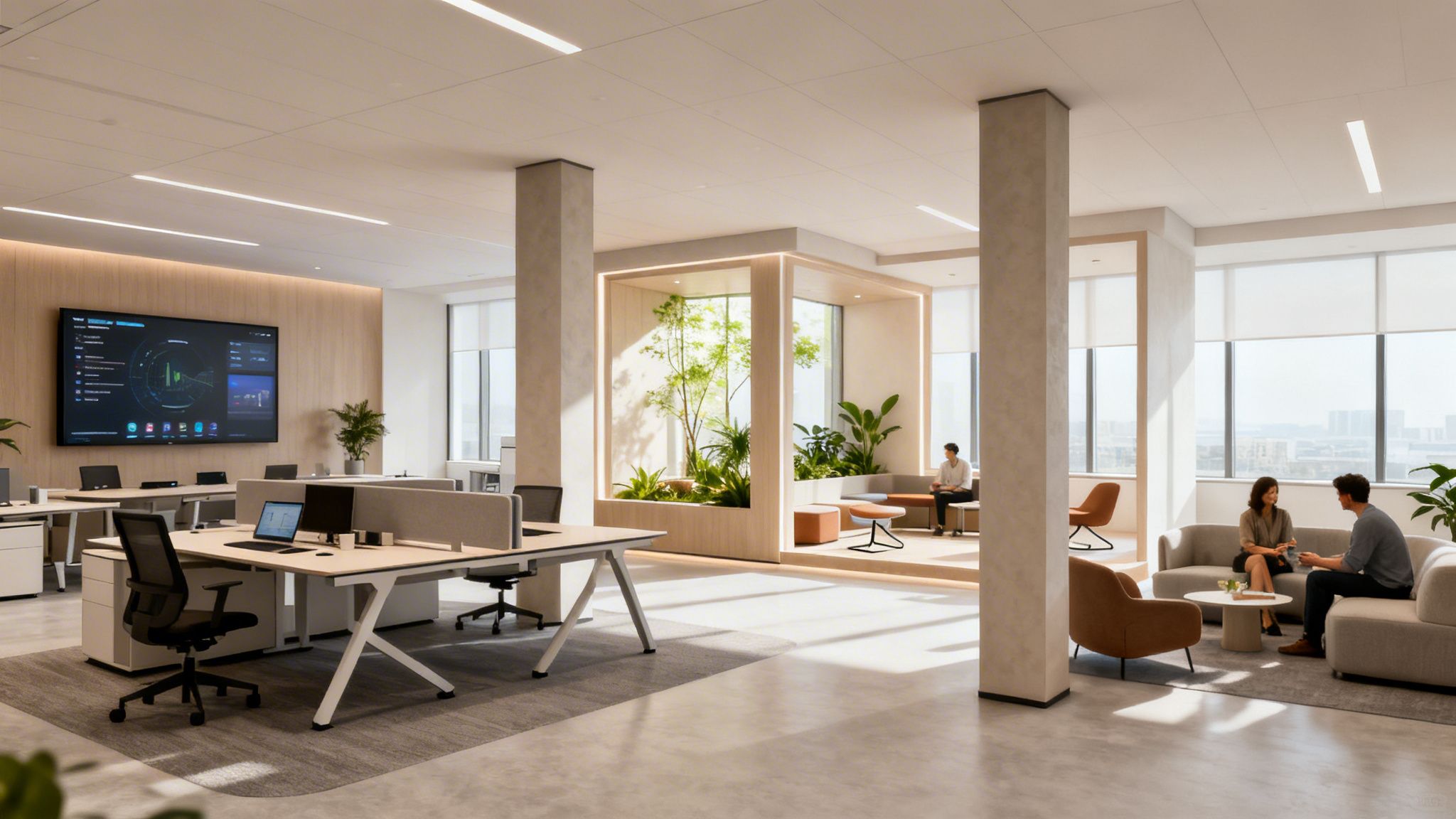
Pillar 1: Flexibility and Adaptability
The first and most important pillar is flexibility. Your business changes, so why should your office be set in stone? A modern office has to keep up, whether you're bringing on a new team, starting a sprint project, or simply need to switch between group work and quiet focus.
This is where modular design comes into play. It's about thinking of your office like a set of building blocks, not a static floor plan. For instance, our versatile workstation cubicles can be put together, taken apart, and rearranged to create brand new layouts without calling in a construction crew.
A flexible office lets you react to business needs in real time. You can expand a project team's area overnight or carve out a quiet zone for deep work with minimal fuss, making sure your space always serves the task at hand.
Pillar 2: Technology Integration
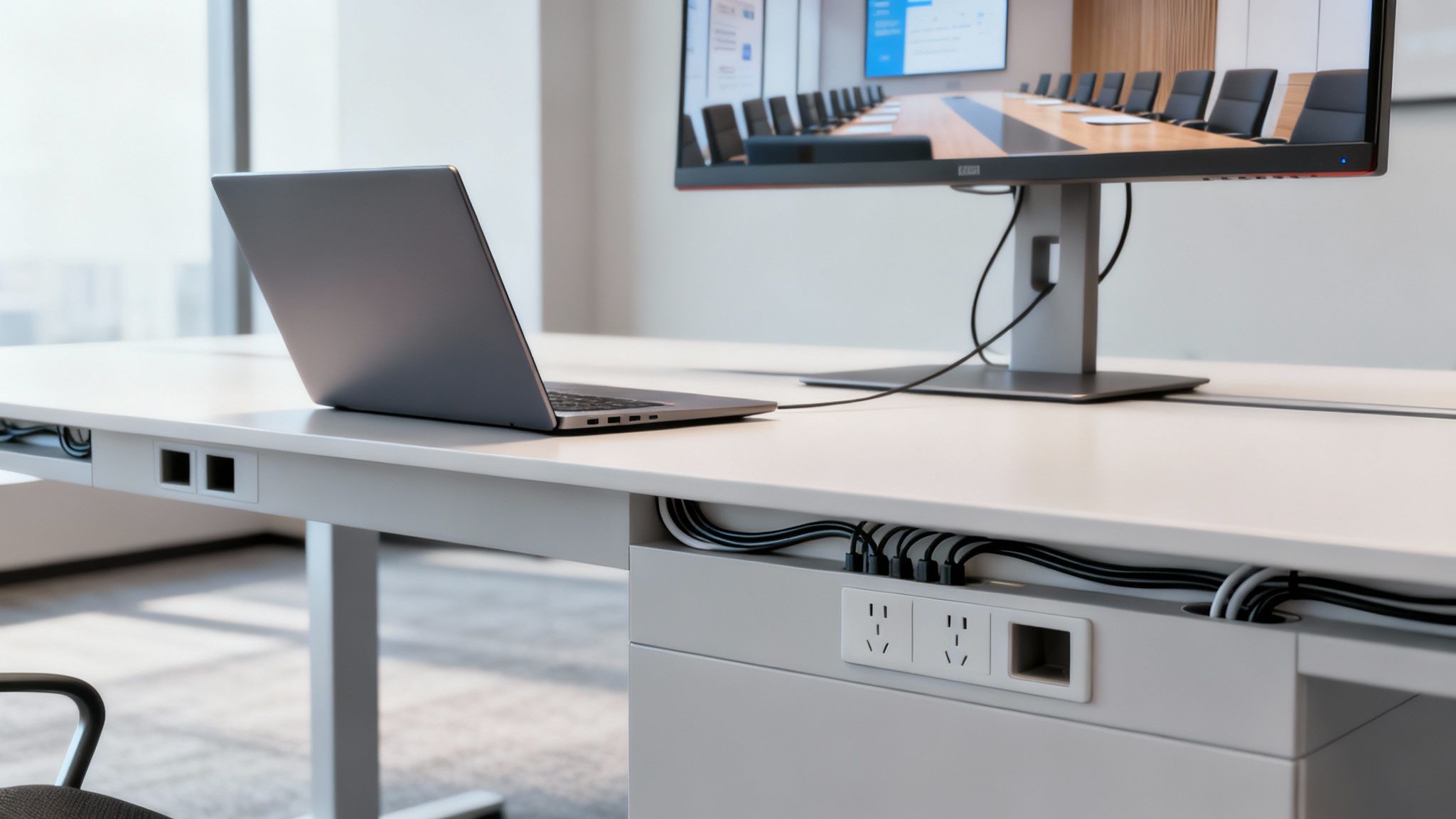
In any office today, technology is the central nervous system. The second pillar is making sure that system works without a hitch. Power, data, and communication tools need to be so easy to access that no one even thinks about them. Your team should never have to crawl under a desk to find an outlet or drop a video call because of a weak signal.
This means getting the little things right:
- Integrated Power and Data: Workstations must have built-in electrical and data ports. No more extension cords snaking across the floor.
- Smart Room Booking: Simple booking systems for meeting rooms and private booths eliminate the friction of scheduling conflicts.
- High-Quality AV Tools: Every conference room needs reliable video conferencing gear. Clear audio and video are non-negotiable for connecting with remote colleagues.
When the tech just works, your team can focus on their actual jobs instead of playing IT support.
Pillar 3: Employee Well-Being
A healthy team is a productive team, and a happy team sticks around. The third pillar, employee well-being, is about much more than a fruit bowl in the breakroom. It’s about designing a space that actively supports your employees' physical and mental health. This is such a critical topic that we have a whole guide exploring what workplace ergonomics really involves.
A few key components make a huge difference:
- Ergonomic Furniture: High-quality, adjustable chairs and desks aren't a luxury; they're essential for preventing strain and burnout.
- Biophilic Design: Simply adding natural elements like plants, wood tones, and stone textures has been proven to lower stress and spark creativity.
- Natural Light: Getting as much daylight as possible into the office is a massive mood and energy booster. Good lighting design, with tools like architectural downlights, fills in the gaps to create a comfortable, glare-free environment.
Investing in your team's well-being shows you care, and in today's market, that’s a powerful tool for attracting and keeping great people.
Pillar 4: Fostering Community
Last but not least, a modern office has to be a place that builds a real sense of community. While remote work has its perks, the office is where spontaneous conversations happen, where mentorship takes root, and where your company culture comes to life. This fourth pillar is about designing a space that encourages those connections.
You need to create "collision points"—areas where people naturally run into each other. Think strategically placed coffee bars, comfy lounges, and open common areas. The goal is to create an atmosphere where a casual chat can spark the next big idea and strengthen the bonds between teammates. At Cubicle By Design, we believe a great workplace finds the perfect balance between individual focus and that incredible collective energy.
Creating Adaptable Layouts for a Flexible Future
Flexibility is the engine that drives a modern office. Think of your workspace less like a permanent, fixed structure and more like a dynamic 'kit of parts' that you can reconfigure whenever you need to.
An adaptable layout gives you the power to react to new projects, shifting team sizes, and evolving work styles—all without a complete and costly overhaul.
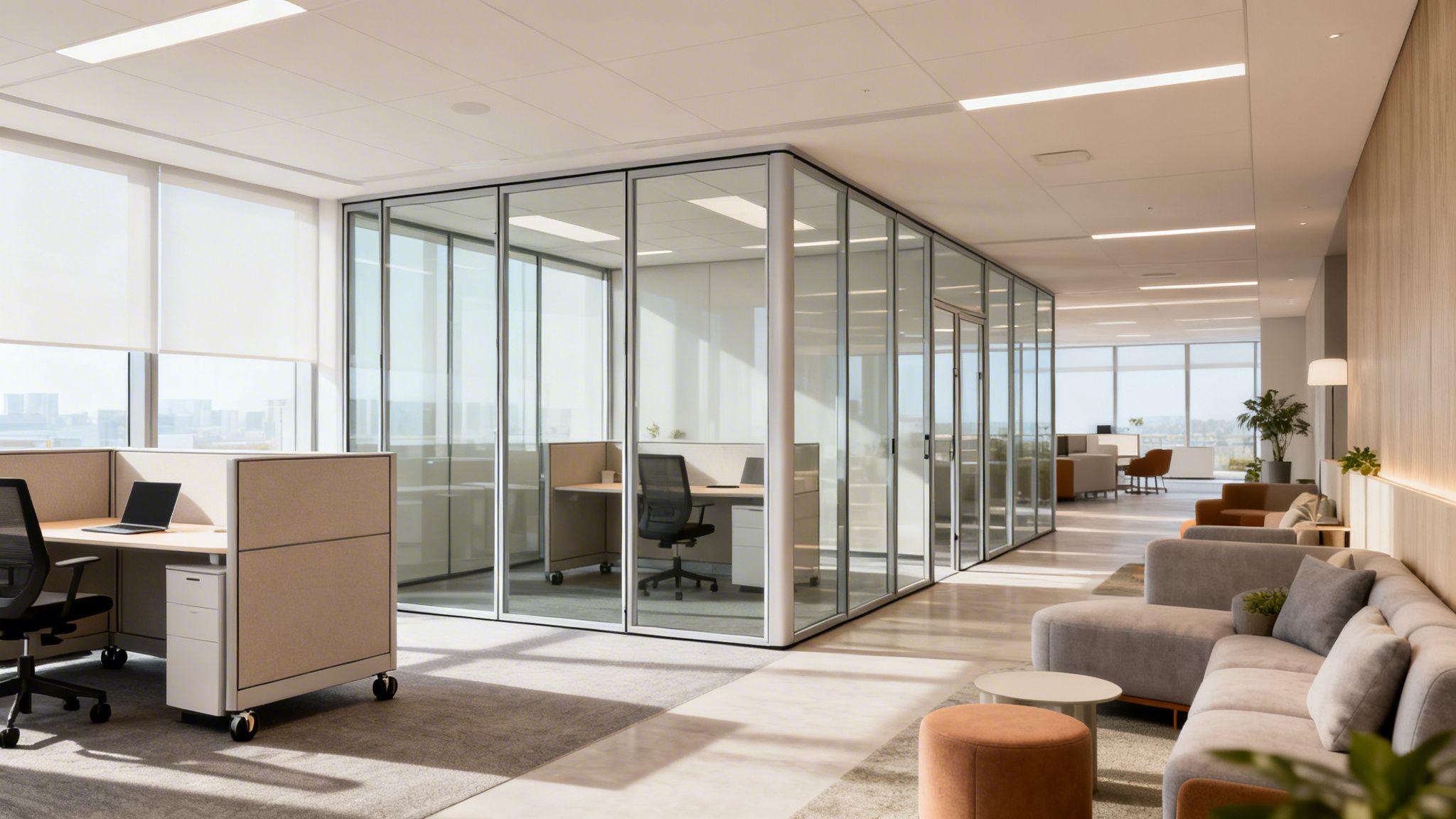
The goal here is a responsive environment that serves your team right now, not just how it was set up years ago. You want a workspace that can be changed quickly and easily, ensuring your real estate remains a true asset.
Mastering Smart Zoning
One of the biggest mistakes we see is companies feeling forced to choose between a totally open floor plan or a sea of isolating cubicles. The reality is, the most effective modern office spaces use a hybrid approach called zoning. It’s a strategy that involves creating different zones, each designed for a specific kind of work.
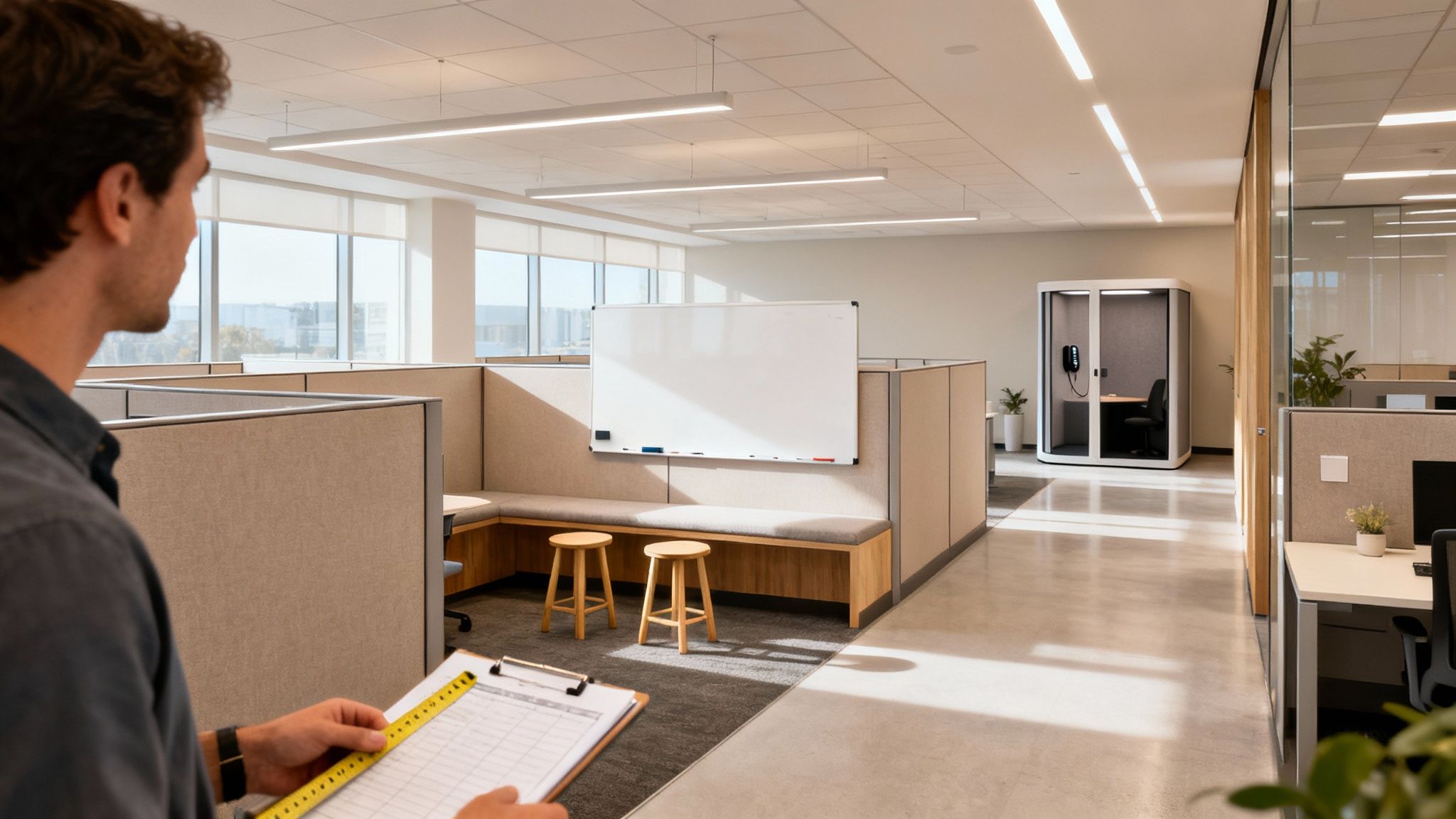
With smart zoning, you get to balance the collaborative energy of an open area with the quiet focus people need to get deep work done. You might set up one area for team brainstorming with whiteboards and casual seating, while another corner becomes a 'library' or quiet zone where calls are off-limits. This gives employees control over their own environment.
Zoning isn't about building permanent walls; it's about using furniture, movable partitions, and acoustic elements to create distinct 'neighborhoods' within your office. It allows for both collaboration and concentration to coexist peacefully.
The Power of Modular Systems
The real key to unlocking this flexibility is modular design. Modular furniture and architectural pieces are specifically designed to be reconfigured, making them the perfect fit for an office that needs to adapt. Instead of being locked into one layout for years, you can make meaningful changes practically overnight.
This isn't just a trend; it's a measurable advantage. We've seen that offices with flexible zoning achieve a 25% higher occupancy rate than those with old-school, fixed layouts. And the confidence in this model is clear, with the global coworking market projected to grow from $20.96 billion in 2025 to over $58 billion by 2033, as noted by researchers at Allwork.Space.
This is where thoughtfully designed systems really shine. Our own configurable cubicles, for instance, can be arranged to create anything from private touchdown spots to collaborative pods for team projects. To get a better handle on the concept, check out our guide that explains what modular furniture is and how it can completely change a space.
Designing a Dynamic and Responsive Office
Putting together a layout that can evolve with your business means combining a few key elements. Each one contributes to a workspace that feels both open and functional, giving your team plenty of choice.
Here are a few practical strategies to build out a flexible floor plan:
- Use Demountable Glass Walls: These are fantastic for creating semi-private offices or meeting rooms. They keep things bright and open by letting light flow through the space, but they still provide crucial acoustic separation. Best of all, unlike drywall, they can be moved and reinstalled as your needs change.
- Create 'Third Spaces': These are the areas outside of a traditional desk where people can work, meet, or just relax. Think comfy lounges, café-style high-top tables, or small nooks for informal chats. These spaces encourage spontaneous interaction and give employees a welcome change of scenery.
- Deploy Movable Furniture: Put your furniture on wheels! Using mobile whiteboards, lightweight tables, and movable storage empowers your team to customize their immediate environment for whatever they're working on at that moment.
- Invest in High-Performing Cubicles: Not all cubicles are the same. Modern workstation cubicles are designed for flexibility, with different panel heights and integrated tech. Need a quiet zone for the finance team? Our Private Office Cubicles offer enhanced privacy without the permanence of fixed walls.
By embracing these strategies, you're building an office that's ready for whatever comes next. It’s an investment in agility that pays off every time your company grows or pivots. For a closer look at our solutions, visit Cubicle By Design or get started with our Custom Cubicle Designer.
Solving For Acoustics And Privacy In The Modern Office
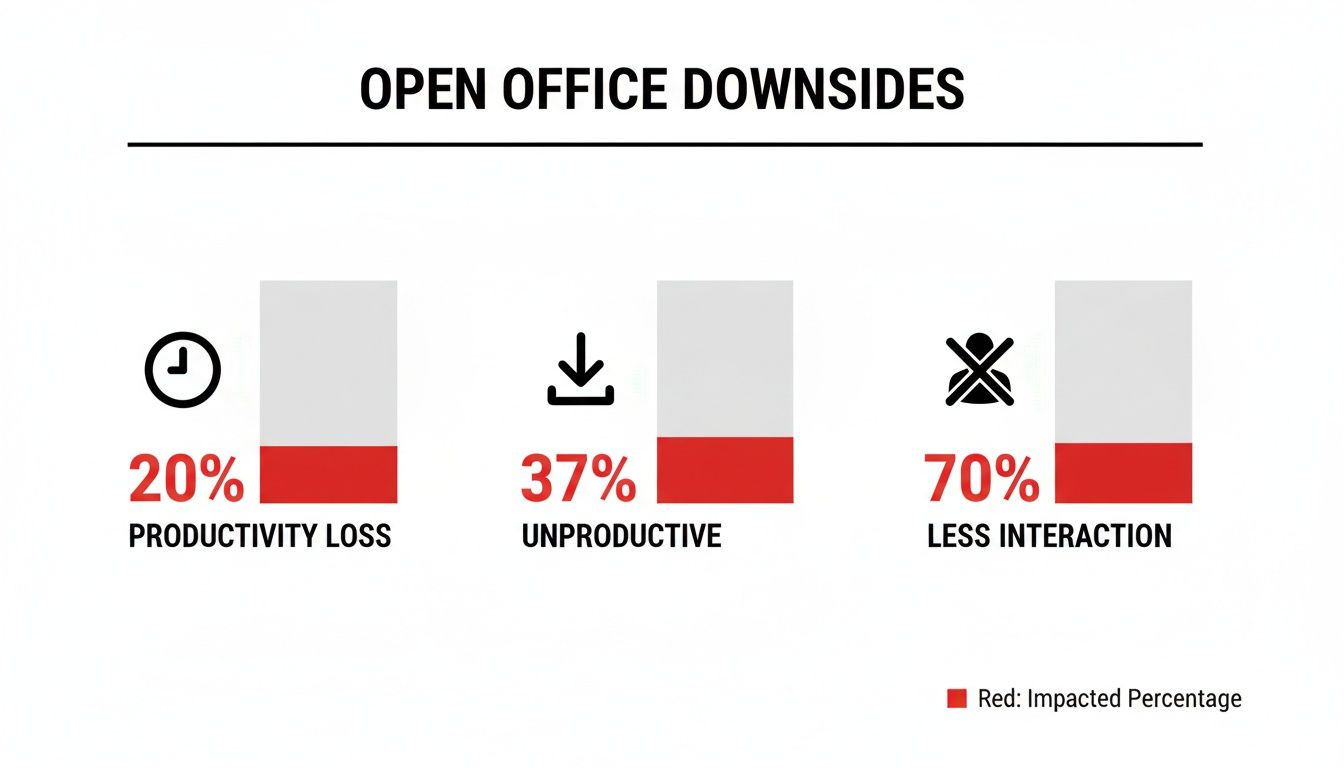
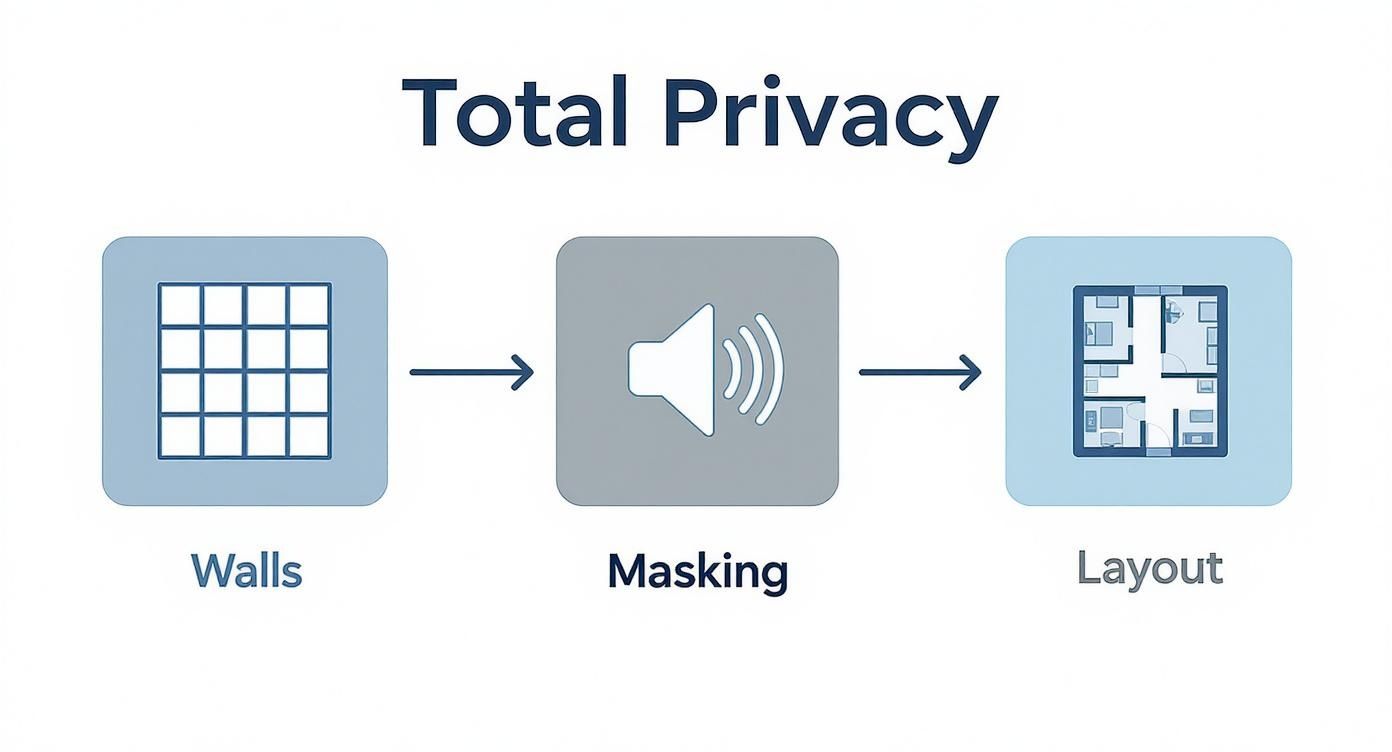
In any office trying to foster open collaboration, finding a quiet spot for deep work can feel downright impossible. Let's be honest: unwanted noise is probably the number one complaint you hear, and it's a massive productivity killer. With video calls now a daily routine for hybrid teams, getting a handle on your office's soundscape is more critical than ever. It's not just about making things quieter; it's about giving your team the ability to actually perform.
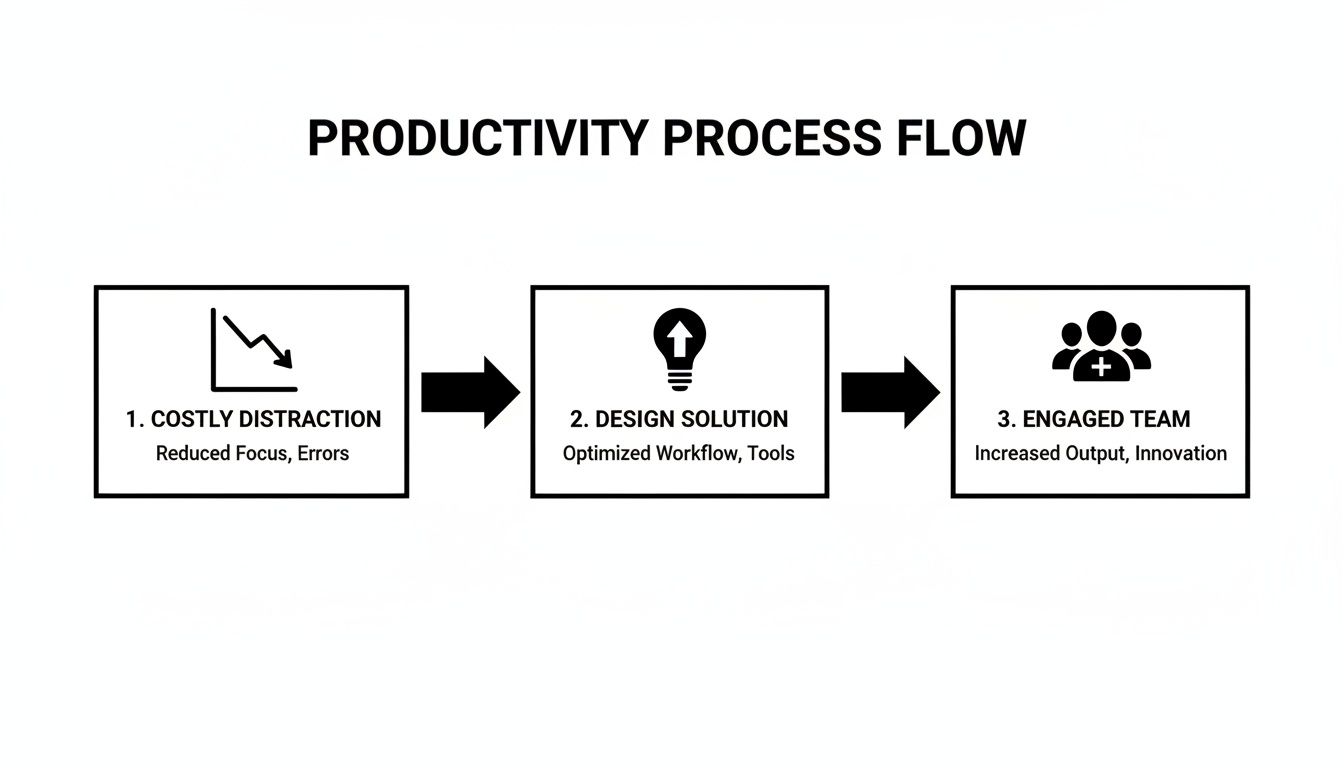
So, how do you fix it? The path from a noisy, distracting office to a focused one is simpler than you might think.
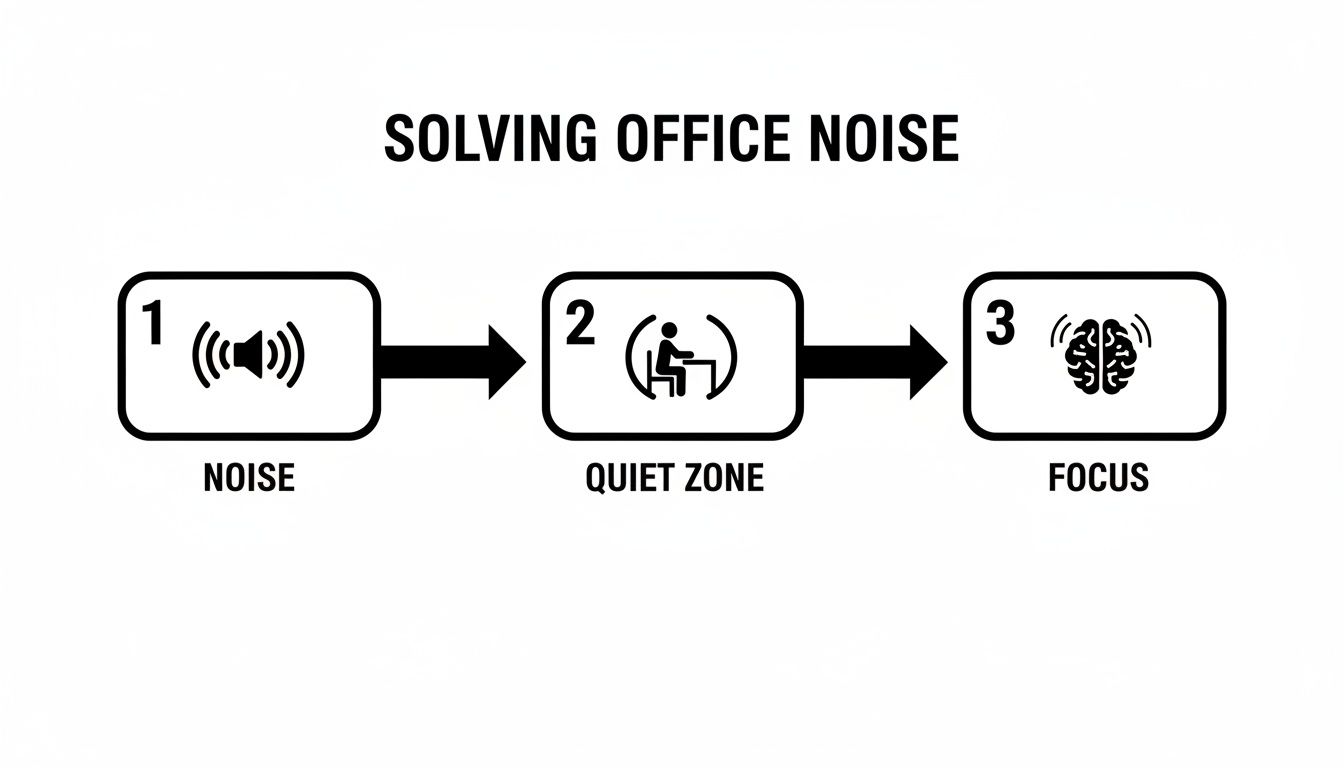
The idea is straightforward: when you carve out dedicated quiet zones, you can turn that disruptive chatter into a productive hum where real work gets done. It's a simple fix for a very common problem.
The Rising Demand For Quiet
The big push toward open layouts had a side effect nobody wanted—a focus crisis. Poor acoustics are a top complaint in almost every workplace, and people have less patience for noise than ever before. This has kicked off a huge demand for enclosed focus rooms, office pods, and quiet zones. It's a major behavioral shift that means modular cubicles with good acoustic separation are no longer just a "nice-to-have." They’re essential.
The real trick to modern office design is finding that sweet spot between encouraging spontaneous collaboration and protecting an individual's need to concentrate. A great workspace has a clear plan for both.
This is where your furniture choices can completely change the game. Instead of building permanent, rigid walls that close everyone off, you can solve the noise problem with high-performing furniture.
Using Furniture As Your Acoustic Solution
One of the smartest ways to manage noise is to build acoustic solutions right into your floor plan with your furniture. You can create different zones for different noise levels without losing that open, modern feel.
Here are a few practical ways to help your team reclaim their focus:
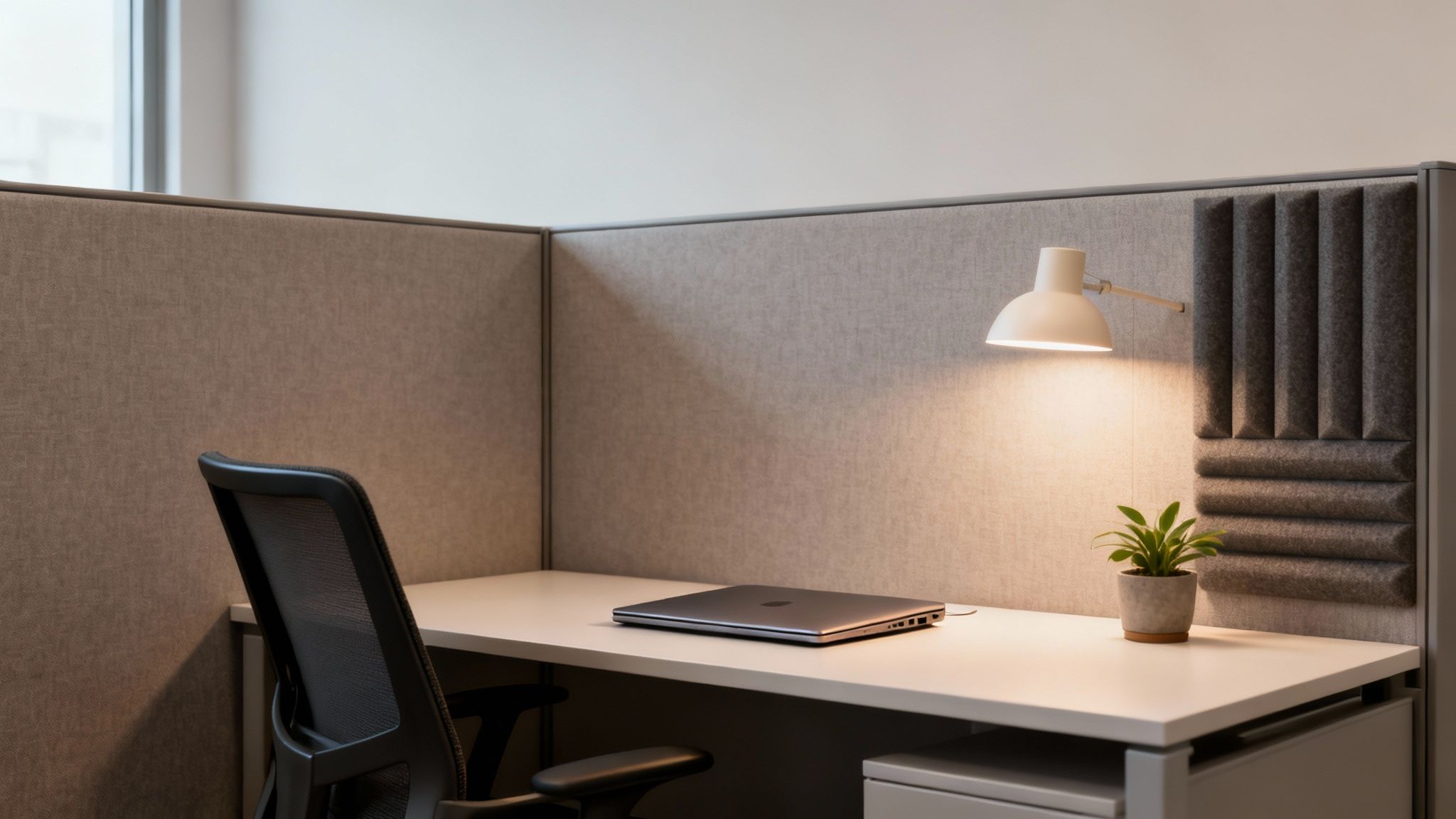
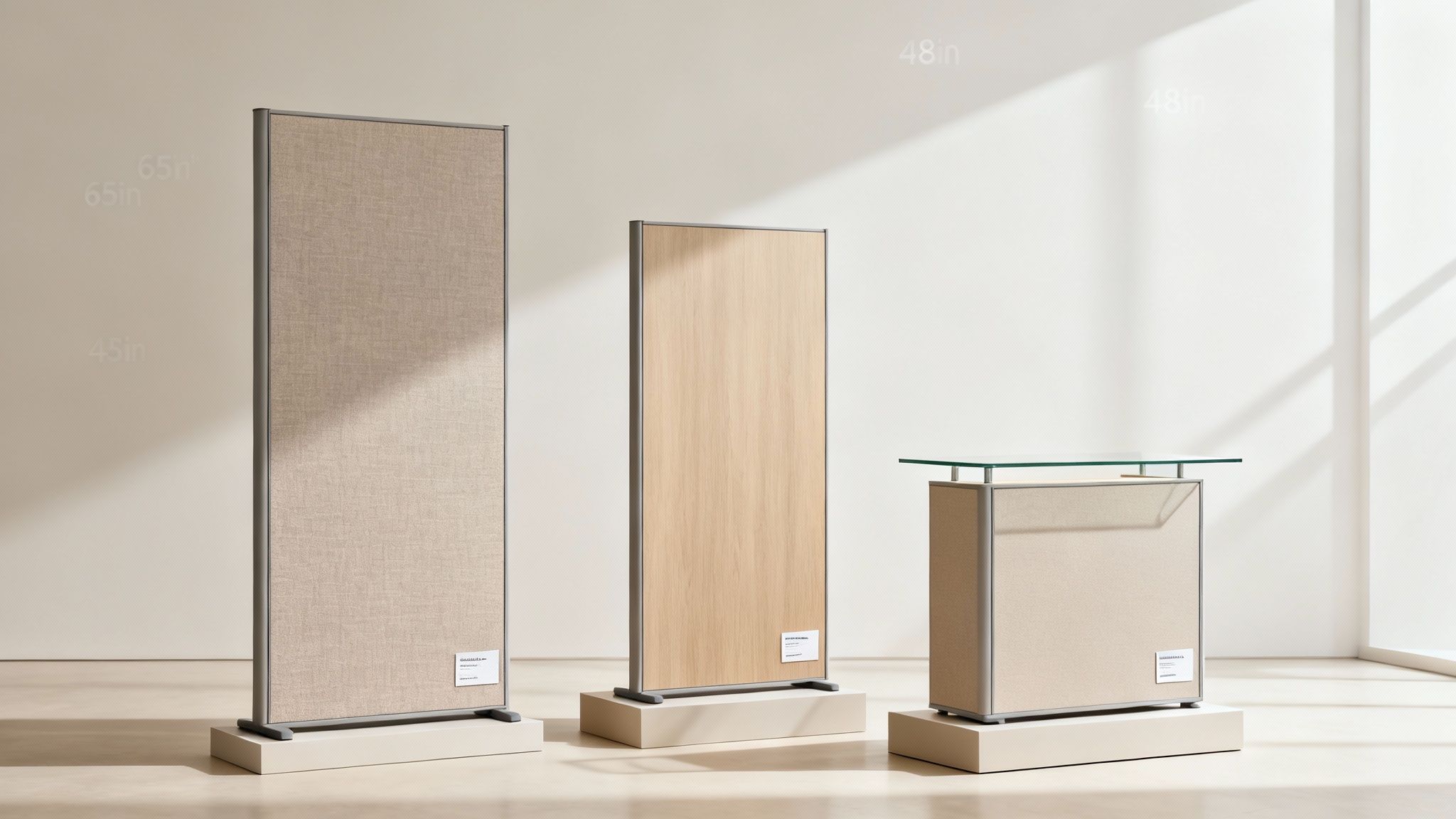
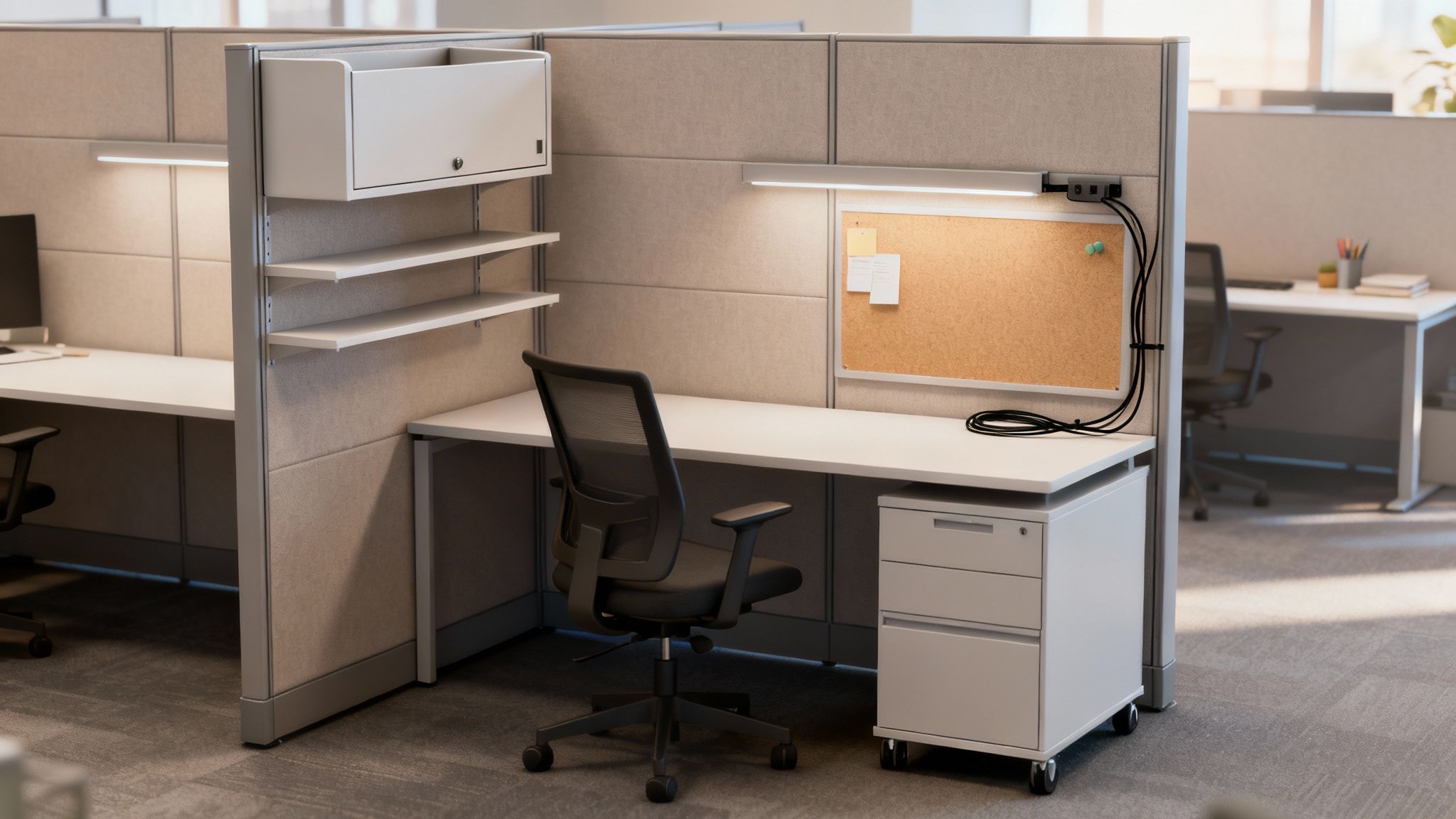
- Bring in High-Panel Cubicles: Not all cubicles are the same. Modern systems with higher, sound-absorbing fabric panels give each person a buffer from ambient noise. They're perfect for teams who are on the phone a lot or handle detailed work.
- Create Designated Quiet Zones: You can use furniture to set up "library rules" areas. Arrange seating and desks in a specific zone and let everyone know its purpose. It becomes a sanctuary for heads-down work.
- Add Acoustic Dividers: Freestanding acoustic panels and desk-mounted screens are a super flexible way to add sound-dampening right where you need it. You can move them around as your team's needs change.
We cover this topic in much more detail in our guide to office acoustics solutions.
Achieving Privacy Without The Isolation
Privacy isn't just about blocking sound. It's about giving employees their own personal space where they can concentrate without feeling like they're on stage. In most modern office spaces, the goal is to provide that sense of enclosure without going back to the isolating, high-walled offices of the past.
This is where really thoughtful product design makes a difference. For example, our Private Office Cubicles are built specifically to provide fantastic acoustic and visual privacy. They use higher panels and can even be set up with doors, giving you a true "office within an office."
This approach gives people the focus they need while still keeping them connected to the rest of the team. It's the perfect solution for managers, HR professionals, or anyone who deals with sensitive information, letting them work securely right inside an open-plan office. You can check out our full range of cubicles or even start mocking up a layout with our Custom Cubicle Designer.
Your Action Plan for a Modern Office Transformation
So, you’re ready to transform your office. It's a big project, but don't let that intimidate you. The key is breaking it down into a clear, manageable plan. We think of it as a four-phase journey: Assessment, Design, Procurement, and Implementation.
Following this simple roadmap takes you from a rough idea to a workspace that genuinely supports your team and your company's future.
Phase 1: The Assessment Phase
Before you pick out a single chair or paint swatch, you have to do your homework. This first phase is all about understanding what your people actually need to do their best work. Honestly, rushing this part is the biggest mistake we see companies make.
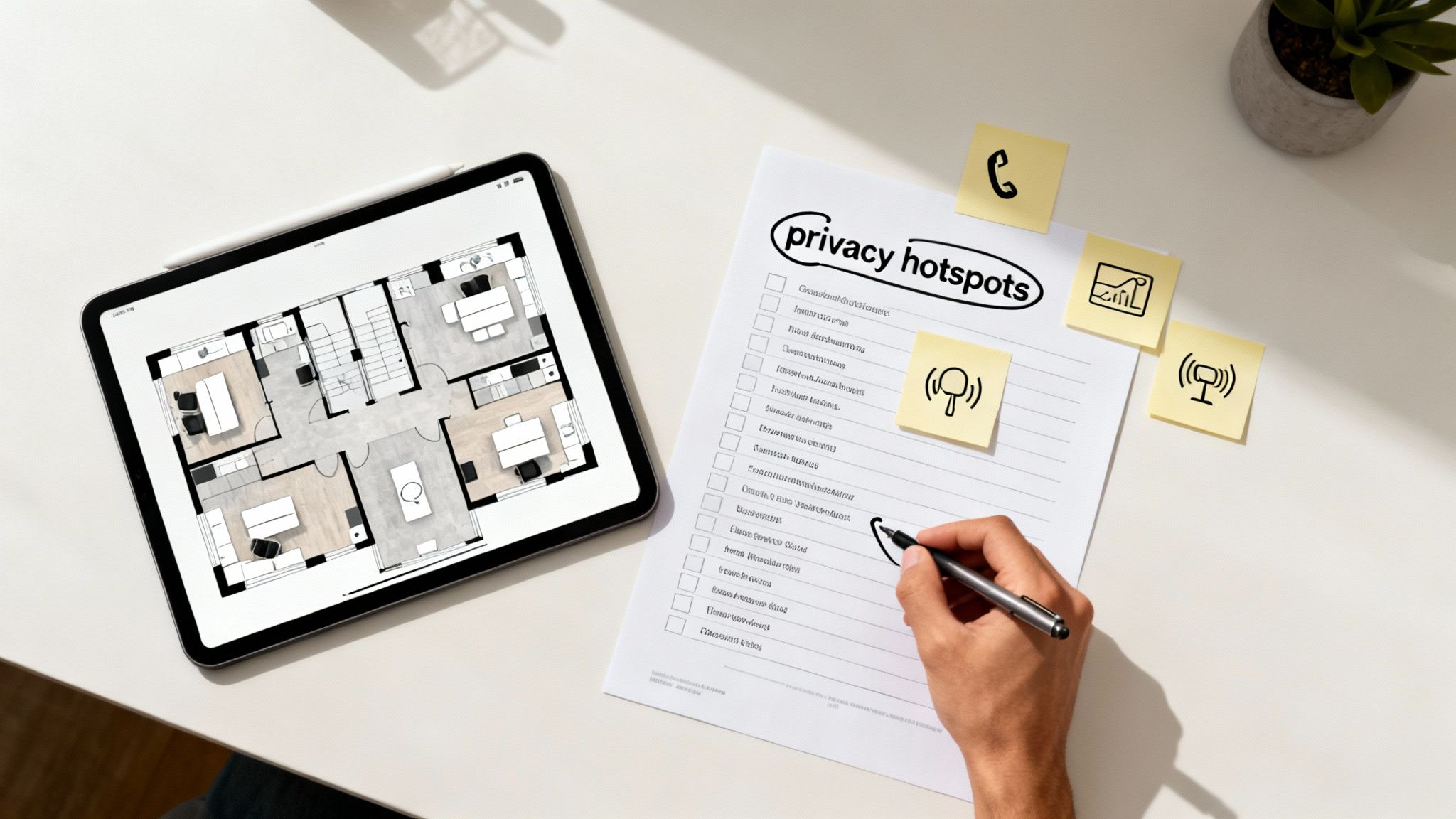
Start by getting direct feedback. Anonymous employee surveys are a great tool. Ask specific questions about their daily tasks, noise levels, what they love, and what drives them crazy about the current setup. Then, watch how your spaces are actually used. You’ll quickly spot which meeting rooms are ghost towns and which common areas have become bottlenecks.
All this research becomes the foundation for your new design, ensuring every choice you make is backed by real data, not just assumptions.
The Modern Office Planning Timeline
Mapping out a major office project can feel overwhelming, but a clear timeline turns a mountain into a series of manageable hills. Below is a sample timeline to give you a realistic idea of the process, from the first conversation to move-in day. Think of it as your project's North Star.
| Phase | Key Activities | Estimated Duration |
|---|---|---|
| 1. Assessment & Strategy | Employee surveys, space utilization studies, leadership workshops, defining project goals and budget. | 2-4 weeks |
| 2. Design & Visualization | Developing floor plans, creating 3D renderings, selecting finishes and materials, getting initial quotes. | 3-6 weeks |
| 3. Procurement | Finalizing vendor selection, placing furniture orders, coordinating with contractors (electrical, data). | 1-2 weeks |
| 4. Manufacturing & Delivery | Furniture and materials are manufactured and shipped. This is often the longest lead-time item. | 6-10 weeks |
| 5. Implementation & Install | Site prep, furniture delivery and assembly, electrical/data installation, final walkthrough. | 1-3 weeks |
| 6. Move-In & Review | Team moves into the new space, followed by post-occupancy feedback collection. | 1 week |
Remember, this is a general guide. Your specific timeline will depend on the scale of your project and the lead times for your chosen materials, but it gives you a solid framework to start planning.
Phase 2: The Design Phase
With all that valuable feedback in hand, it's time for the fun part: designing the new layout. This is where you get to solve the problems you uncovered and build a floor plan that truly works for your team. The goal isn't just to make it look good; it's to create different zones for different kinds of work—collaboration, deep focus, and casual social moments.
This is the perfect moment to play with ideas using a visualization tool. Our online Custom Cubicle Designer lets you experiment with different layouts, cubicle heights, and finishes right in your browser. You can map out how private office setups, like our popular Private Office Cubicles, can exist alongside more open and collaborative workstation cubicles.
The design phase is where your modern office stops being an idea and starts becoming a tangible plan. A well-considered design aligns your physical space directly with your business goals and work processes.
During this phase, it's also smart to think about the day-to-day reality of running the new space. For any office owner, understanding the basics of good commercial building maintenance is key to keeping your new environment functional and looking great for years.
Phase 3: The Procurement Phase
Once your design is locked in, it’s time to order the furniture and materials. This is all about making smart investments that hit the sweet spot between your budget, quality, and long-term durability. You want to find vendors who are partners in the process, not just order-takers.
Here are a few quick tips for a smooth procurement process:
- Think Modular: Invest in systems that can be reconfigured down the road. It’s a much better long-term value than furniture that’s fixed in place.
- Get Detailed Quotes: Make sure your quotes include everything—delivery, installation, and site prep—so there are no nasty surprises on the final invoice.
- Check Warranties & Lead Times: Know the warranty on your big-ticket items like chairs and workstations, and double-check that the delivery timeline fits your project schedule.
Making the right choices here ensures your modern office spaces are built to last. You can explore our entire collection of cubicles and workstations to see systems that fit all kinds of design and budget needs.
Phase 4: The Implementation Phase
This is it—the final push where your plans and drawings become a physical reality. A smooth installation is all about clear communication and tight coordination between your furniture provider, installers, and your own team.
A detailed project schedule is your best friend here. It should map out every key date for furniture delivery, installation, IT setup, and the final move-in. Having a single point of contact, like a dedicated project manager from Cubicle By Design, can make this final stage feel almost effortless. For a much deeper dive, check out our detailed office space planning guide for more expert tips.
By moving through these four phases, you can tackle your office transformation with confidence, creating a space that sets your team up for success.
Budgeting for Your New Office Without Surprises
Talking about the budget for a new office can be stressful, but it helps to think of it as a strategic investment instead of just a cost. A great modern office space is the result of smart financial choices that will support your company's growth for years.
A realistic budget is much more than the sticker price on the furniture. It needs to account for installation, tech infrastructure, and a cushion for those little "just-in-case" moments that always seem to pop up. A good budget is your financial roadmap, turning a vision into a functional reality without any painful surprises.
Building a Realistic Financial Plan
Your first move is to break down the costs into clear, simple categories. This is the best way to keep small items from falling through the cracks and blowing up your budget later. While furniture is often the biggest line item, it’s definitely not the only one.
A solid, comprehensive budget should cover:
- Furniture & Workstations: This includes all your desks, chairs, and of course, our range of cubicles.
- Installation & Labor: Don't forget the cost of having professionals assemble and place everything correctly.
- Technology & Cabling: Factor in the expense of running power and data to every single workstation.
- Shipping & Delivery: These costs can be surprisingly significant, so make sure they're included in your quotes.
- Contingency Fund: Always set aside 10-15% of your total budget for unexpected costs. It's far better to have it and not need it than the other way around.
By creating this detailed breakdown, you get a much clearer picture of the total investment, which makes the whole financial planning process a lot more accurate.
Maximizing Your Return on Investment
It's tempting to just go for the lowest initial price when you're working with a budget. However, the smartest investments are always the ones that deliver long-term value. This is especially true with office furniture, where adaptability is the real key to a great return on investment (ROI).
Modular furniture, for example, offers a fantastic long-term ROI simply because it can be reconfigured as your business grows and changes.
Look beyond the initial price tag. A slightly higher upfront cost for flexible, durable furniture can save you thousands down the road by eliminating the need to buy all new workstations every time your team structure changes.
This is exactly how we approach projects at Cubicle By Design. We help clients find solutions like our versatile workstation cubicles and private office cubicles that can adapt right along with them.
You can even play around with different layouts using our Custom Cubicle Designer to see for yourself how a modular system can meet your needs today and tomorrow. When you choose an adaptable system, you’re not just buying furniture—you’re investing in your company's agility.
Your Modern Office Questions, Answered
Moving to a modern office layout brings up a lot of questions for business owners and office managers. We get it. You want to get it right. Here are the answers to some of the most common things we're asked about designing the future of your workplace.
How Do I Choose Between an Open-Plan Layout and Cubicles?
This is the big one, and the good news is you don’t have to choose. The most successful modern office spaces today rarely go all-in on one or the other. Instead, they think in terms of zones.
Use open, collaborative areas for team projects and brainstorming sessions where you want that buzz and easy communication. Then, you can place modular cubicles to carve out quiet zones for focused, heads-down work. This "activity-based" approach gives your team the best of both worlds, letting them pick the right space for the task at hand. For example, our versatile workstation cubicles can create team "neighborhoods" that still offer the acoustic and visual privacy people need to concentrate.
What Is the Biggest Mistake to Avoid When Designing a Modern Office?
Hands down, the single biggest mistake is falling in love with a look while completely ignoring how your team actually works. A beautiful office that makes it harder for people to do their jobs is a failed investment, plain and simple.
Before you even think about paint colors, you have to dig into your team's daily workflows. Ask them about their biggest frustrations, especially around noise and privacy. Plan for the tech you have now and the tech you'll need in a few years. Putting function first ensures your office will be a real asset for years. This is the core of how we at Cubicle By Design help our clients build spaces that truly work.
An office should be a tool for productivity, not just a showpiece. Functionality, flexibility, and employee well-being should always drive the design process, with aesthetics serving to enhance—not dictate—the final layout.
How Can I Implement a Modern Office Design on a Tight Budget?
You can absolutely create a fantastic modern office on a tight budget. The secret is to be smart about where your money goes. Focus your spending on high-impact, long-term investments.
Prioritize two key areas: high-quality ergonomic chairs and flexible, modular workstations. They might seem like a bigger upfront cost, but these systems can be reconfigured as your company grows or your needs change. This saves you the huge expense of starting over from scratch down the road.
From there, you can use more affordable elements like paint, branded wall graphics, and live plants to bring the space to life. We specialize in creating modern layouts that get the most value out of real-world budgets. You can play around with different setups and see how they affect cost with our Custom Cubicle Designer.
How Important Is Employee Well-Being in Modern Office Design?
It's everything. Well-being isn't a "nice-to-have" anymore; it’s a core part of attracting and keeping great people, not to mention boosting productivity. In 2026, a workplace that clearly cares about its employees' health gives you a serious competitive edge.
And it’s about more than just a comfy chair. It means:
- Letting in the light: Making the most of natural daylight.
- Breathing easy: Ensuring great air quality and ventilation.
- Bringing nature in: Using plants and natural materials (biophilia).
- Moving around: Offering options like sit-stand desks and different types of seating to encourage movement.
Solutions like our Private Office Cubicles can deliver that quiet, low-stress environment people need to do their best thinking.
Ready to get more of your questions answered and start planning your perfect modern office? The team at Cubicle By Design is here to help with everything from space planning to the final installation. Explore our complete range of solutions and let's build a better workplace together.