

A lot of office managers end up in the same place. The lease is signed, the team is growing, the furniture works well enough, but the space feels cold. Rows of laminate, standard task chairs, and bright white walls can get the job done without giving anyone a reason to enjoy being there.
That tension is what makes modern rustic office furniture so appealing. It adds warmth, texture, and visual character without giving up the discipline a real workplace needs. The best versions don’t try to turn an office into a lodge or a coffee shop. They use wood grain, darker metals, and grounded colors to soften a systems-based environment that still has to support power, storage, privacy, circulation, and daily wear.
Facilities teams usually aren’t asking for a style exercise. They’re trying to solve practical problems. They want a workplace that feels more human, helps with recruiting and retention, and still supports modular planning, shared workstations, and phased purchasing. That’s where modern rustic can work surprisingly well. It gives the office a finished point of view without forcing you to abandon cubicles, glass fronts, or standardized workstation planning.
An office can feel warmer without becoming less efficient. It can look more intentional without becoming harder to clean, maintain, or expand.
Beyond Beige Walls An Introduction to Modern Rustic
One common scenario goes like this. A company has moved past its startup phase, but the office still looks temporary. The desks were chosen for speed, the conference room furniture doesn’t relate to the workstations, and the break area looks like it belongs to a different tenant. Nothing is broken, but nothing feels cohesive either.
Modern rustic often becomes the answer when the team wants the office to feel more grounded and less generic. Not rough. Not overly decorative. Just more inviting. In practice, that usually means pairing clean planning with materials that feel less synthetic. Wood tones, matte black frames, muted textiles, and a few high-character pieces do a lot of work when the base office is otherwise sleek.
Why this style works in real offices
The strength of the look is balance. Rustic elements introduce warmth, but modern structure keeps the workplace professional. That matters in offices where clients visit, interviews happen, and teams need a space that supports focused work instead of distracting from it.
Facilities managers also like it because the style can scale. You don’t need every piece to look custom-made. You can keep the planning logic of a modular office and add warmth through finish choices, shared-area tables, shelving, storage fronts, and a few focal surfaces.
Practical rule: If the office has to support change, the foundation should stay modern and modular. Bring in the rustic character through finishes and accents, not through hard-to-reconfigure furniture choices.
The most successful spaces use modern rustic as a layer, not a costume. A wood-grain panel finish on workstations. A black-framed glass room with a solid wood conference table. Open shelving with a heavier grain pattern in a reception zone. These choices add identity without creating layout problems later.
That’s the difference between a stylish office and a usable one. Style should help the space feel intentional. It shouldn’t make everyday operations harder.
Defining the Modern Rustic Aesthetic
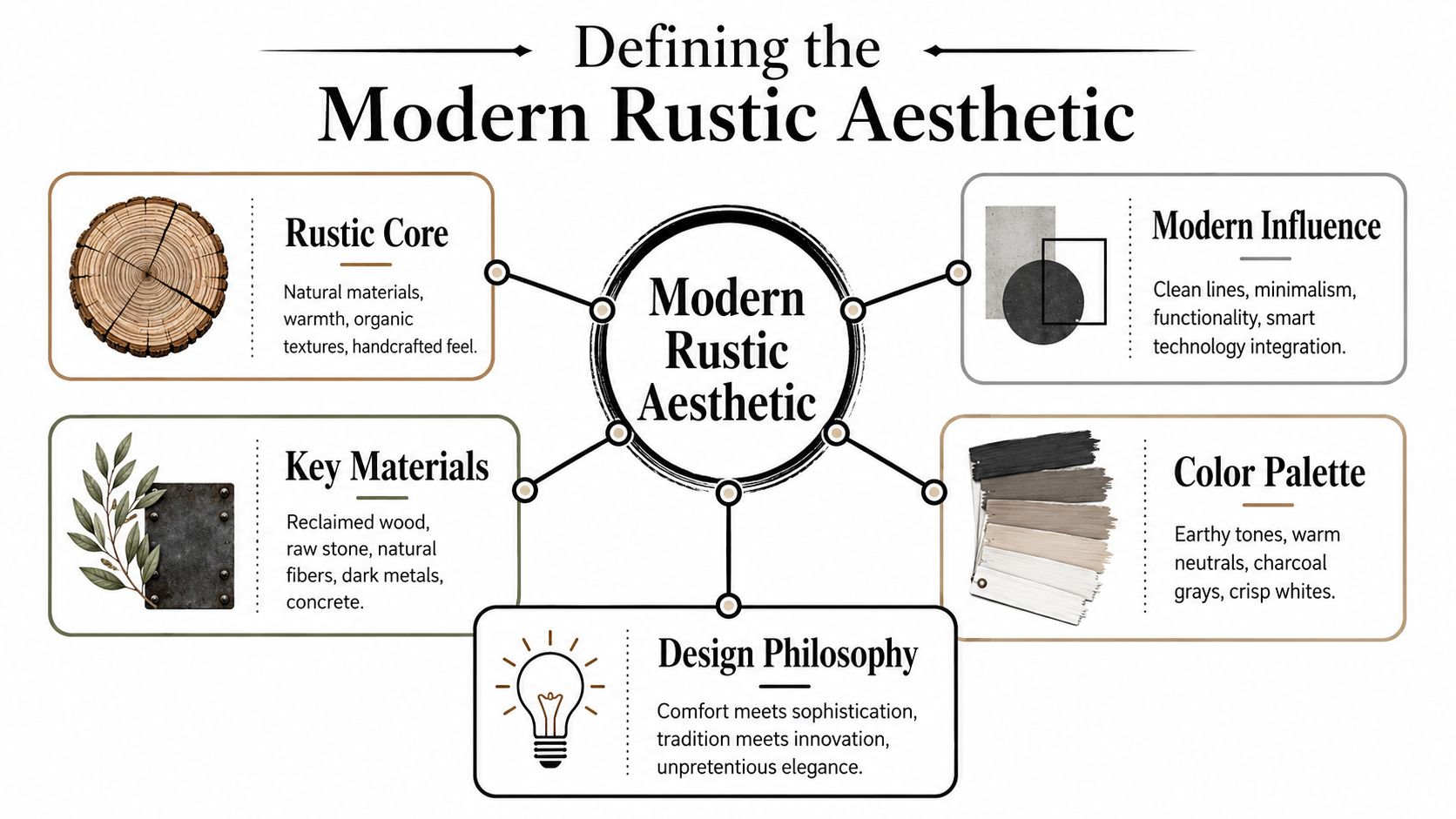
Modern rustic office furniture is easiest to understand as a combination of opposites that are chosen on purpose. The rustic side brings texture, visible grain, and a sense that materials came from the physical world. The modern side brings restraint, clean silhouettes, and a bias toward function.
By the 2010s, the style had become an established category in design and commercial décor, built around reclaimed wood, metal accents, neutral palettes, and clean lines. Its roots go back further. After postwar modernism popularized minimal, mass-produced office furnishings in the 1950s and 1960s, rustic elements came back into interiors as a deliberate contrast, as described in this overview of the history of rustic desk design.
The style formula that actually works
Think of it as a design recipe with five ingredients:
- Natural texture means wood grain, subtle variation, and surfaces that don’t look overly polished.
- Clean geometry keeps the office from feeling heavy. Straight edges and simple forms matter.
- Dark metal accents add definition. Black, charcoal, and brushed-metal details help anchor the wood tones.
- A restrained palette lets the materials stand out. Earth tones, whites, blacks, and grays usually carry the scheme.
- Purposeful contrast keeps the look current. A rustic surface next to glass or steel is what makes the style feel modern.
If one of those ingredients takes over, the whole look starts drifting. Too much texture and the office feels themed. Too much minimalism and the rustic note disappears.
What buyers often get wrong
The most common mistake is assuming rustic means distressed everything. It doesn’t. In a workplace, excessive weathering, rough plank tops, and decorative farmhouse cues can make the office feel less professional and harder to maintain.
A better approach is selective contrast. Choose one or two surfaces that carry the rustic identity, then let the rest of the environment stay calm and precise. That’s why ideas from cozy office design often translate well to commercial planning. Warmth comes from layering, not from filling every corner with visual texture.
The goal isn’t to recreate a cabin. It’s to make a modern office feel less anonymous.
That’s the aesthetic in practical terms. Warm material expression, controlled by modern lines.
Choosing Key Materials Finishes and Ergonomics
The material choices determine whether modern rustic office furniture will age well or become a maintenance problem. In commercial use, appearance alone isn’t enough. Surfaces get leaned on, storage gets overloaded, cables tug against frames, and desks get moved during reconfigurations.
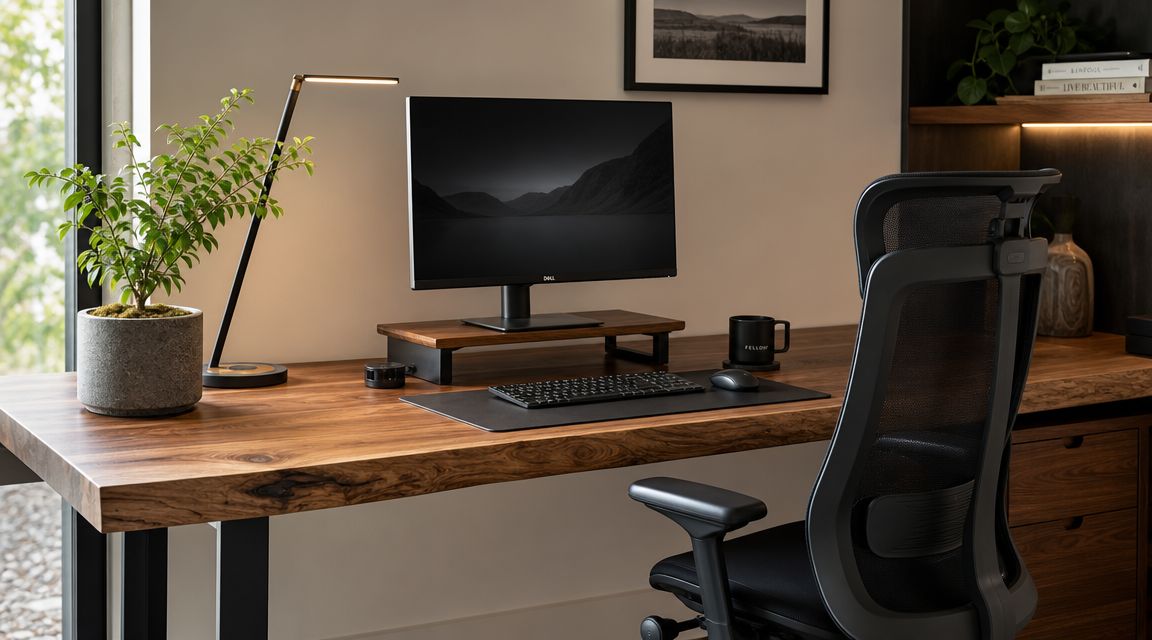
That’s why hybrid construction is the right baseline for most offices. Guidance for rustic office furniture consistently points toward sturdy wood or engineered wood paired with steel frames or legs because that combination gives the workspace both warmth and structural stability. Lowe’s category guidance for rustic office furniture supports that practical standard in commercial-style applications, especially where desks and storage need to resist repeated use and repositioning through mixed wood and metal construction.
What to specify for high-use spaces
These combinations generally hold up best:
| Component | What works well | What usually causes problems |
|---|---|---|
| Desk tops | Thick hardwood-look or engineered-wood surfaces with smooth finish | Deeply textured tops that catch dust and make writing difficult |
| Bases | Welded or bolted steel legs and support frames | Decorative all-wood bases with limited rigidity |
| Storage | Casegoods with reinforced shelving and easy-clean fronts | Open rustic shelving everywhere, especially in high-traffic zones |
| Meeting tables | Clean slab-style tops with protected edges | Live-edge surfaces in rooms that need laptops, note-taking, and frequent cleaning |
The look can still feel authentic without using fragile materials. In fact, the better the office functions, the more convincing the design feels.
Ergonomics matters more than style language
Rustic character should never interfere with posture, reach, monitor placement, or chair adjustment. If a desk looks good but has an uneven edge, a coarse writing surface, or awkward leg clearance, it’s the wrong desk for focused work.
That’s why I prefer rustic cues on visible planes, not critical touchpoints. A wood-grain modesty panel works. A black steel leg frame works. A smooth top surface works. A rough reclaimed writing edge where someone spends the full day typing usually doesn’t.
When teams are coordinating finishes, it helps to review examples of a grey wooden desk because that kind of mid-tone finish often bridges the gap between rustic warmth and contemporary neutrality better than orange-heavy or heavily distressed woods.
Match the finish to the maintenance plan
Surface choice should reflect who cleans the office and how often. Rustic flooring and furniture finishes can look beautiful, but not every textured treatment is practical in a busy workspace. If you’re evaluating how wood character reads under real light and real foot traffic, these expert tips for beautiful hand scraped floors are useful because they show the difference between visual richness and day-to-day upkeep.
On the ground: The best commercial rustic finish is usually the one people notice from six feet away, not the one they have to fight with at arm’s length.
That principle keeps ergonomics, cleaning, and durability aligned.
Integrating Rustic Elements with Modern Office Systems
Many projects encounter their make-or-break moment. A standalone rustic desk is easy. A full office with modular workstations, shared touchdown areas, enclosed rooms, and circulation requirements is harder. The key is deciding where the rustic note belongs and where the modern system should stay in charge.
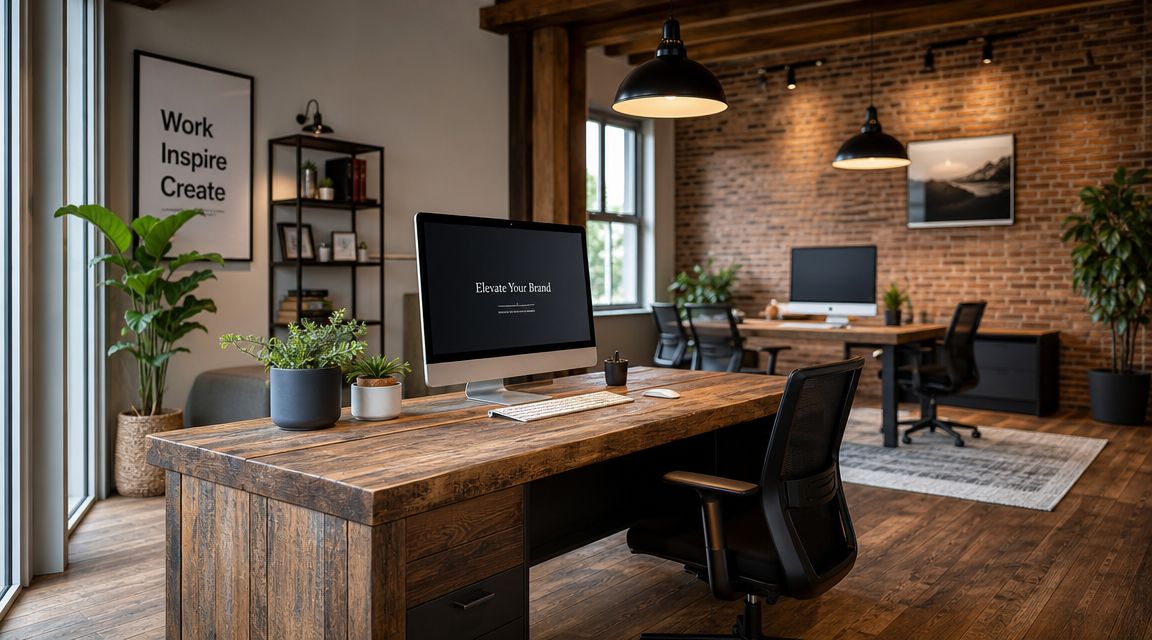
Design guidance for modern rustic offices recommends keeping reclaimed or heavily textured surfaces out of the immediate high-touch workspace. Rustic elements work better as focal points, while task-facing surfaces stay cleaner and more contemporary for usability and maintenance, as outlined in this advice on designing a modern rustic office that inspires you.
Where rustic should lead
Use stronger rustic expression in the places people experience visually before they use physically.
Good candidates include:
- Reception fronts with wood-grain panels and black detailing
- Conference tables that act as the room’s anchor
- Breakroom shelving where texture adds warmth without affecting keyboard work
- Credenzas and side storage that soften the edge of workstation-heavy floors
- Phone room or huddle room accent walls where wood tones add depth
These are the zones where character carries the most value. They help the office feel distinctive without complicating repetitive work.
Where modern systems should stay dominant
Workstations, benching layouts, shared desking, and enclosed office fronts need to perform first. That means consistent dimensions, manageable surfaces, cable routing, privacy control, and easy parts replacement.
In these areas, modern rustic usually works best through finish selection rather than furniture shape. A workstation with a wood-look surface, charcoal fabric, and black metal trim can feel fully aligned with the style even if the product itself is a disciplined systems piece. The same is true for enclosed rooms built with glass partition walls for offices. Glass gives you openness and clean geometry, while rustic materials can provide the warmth inside the room.
A conference room is the clearest example. Put a substantial wood table inside a glass-walled enclosure with simple task seating and controlled lighting, and you get contrast without conflict.
A simple mixing strategy
Use this three-part rule when balancing the office:
- Keep the architecture quiet. Floors, walls, partitions, and workstation planning should create a calm base.
- Choose one hero material. Usually that’s the wood tone.
- Repeat the metal finish. Blackened steel, matte black, or another dark metal should recur often enough to unify the scheme.
This pacing matters. If every zone tries to make the same statement, the office gets noisy.
A short visual example can help frame the idea:
What doesn’t work
Some combinations routinely underperform:
- Too many live-edge pieces in open plan areas. They look impressive at first and then create layout friction.
- Barn-style motifs mixed into otherwise sleek offices. They read as decorative rather than integrated.
- Overusing reclaimed textures on desk surfaces, shared counters, and collaboration tops.
- Mismatched wood tones across vendors. Warm oak, gray wash, dark walnut, and red-brown finishes rarely settle themselves into harmony by accident.
Treat rustic as a visual accent system. Treat the office infrastructure as a performance system.
That distinction keeps the workplace cohesive. It also makes future reconfiguration far easier.
Your Guide to Procurement and Budgeting
The good news is that modern rustic office furniture is no longer a niche hunt. The U.S. office furniture market reached about $12.3 billion in 2023, and the broad range of rustic desks and workstations sold across mass-market and specialty channels shows that the style now exists from budget-friendly products to premium handcrafted pieces, as reflected in this broad rustic desks and workstation market view.
That matters because facilities teams don’t need to choose between “cheap and generic” or “beautiful and custom.” There’s a middle path. Most successful projects mix standardized core furniture with a smaller number of upgraded focal pieces.
Decide where to spend and where to save
A useful budgeting split looks like this:
- Spend more on shared focal points. Conference tables, reception surfaces, and client-facing rooms shape the office identity.
- Save on repetitive workstation components. Use modular systems with strong finish coordination rather than custom pieces for every employee.
- Protect the budget through finish discipline. One wood tone and one metal finish across the project reduces mistakes and substitutions.
This is also where pre-visualization helps. Before issuing purchase approvals, it’s smart to review broader criteria in an office furniture buying guide so the team evaluates performance, phasing, and finish consistency together rather than as separate decisions.
Off-the-shelf versus custom
Not every office needs bespoke furniture. Off-the-shelf options often work well for heads-down stations, touchdown desks, and support areas if the proportions and finishes are right. Custom or semi-custom solutions make more sense when the office has unusual dimensions, a branded reception need, or a strong desire to coordinate wood textures across multiple room types.
A practical rule is to customize what people notice first and standardize what they use repeatedly.
Here’s a simple comparison:
| Approach | Best use | Main advantage | Main caution |
|---|---|---|---|
| Off-the-shelf | Workstations, storage, fast rollouts | Faster sourcing and easier replacement | Finish matching can be inconsistent |
| Semi-custom | Mixed-use offices with some special zones | Better balance of flexibility and identity | Requires tighter review before ordering |
| Custom | Reception, boardrooms, statement areas | Strongest visual impact | Higher coordination burden |
Plan for moves storage and phased installs
Procurement doesn’t end with purchase. Offices often phase renovations, hold furniture during build-outs, or move pieces between locations. If that’s part of your project, a practical guide for moving and furniture storage is worth reviewing because finish damage, moisture exposure, and stacking mistakes can undo good buying decisions.
Buy the office in layers. Install the durable system first. Add the signature rustic pieces where they’ll be seen and maintained properly.
That approach protects both the budget and the final look. It also gives operations teams more control if headcount or layout assumptions change during the project.
Final Touches A Space Planning Checklist
The last stage is where a promising design either feels polished or slightly off. By this point, desks, tables, and finishes have been chosen. What still needs attention are the details that determine whether the office is comfortable to use every day.
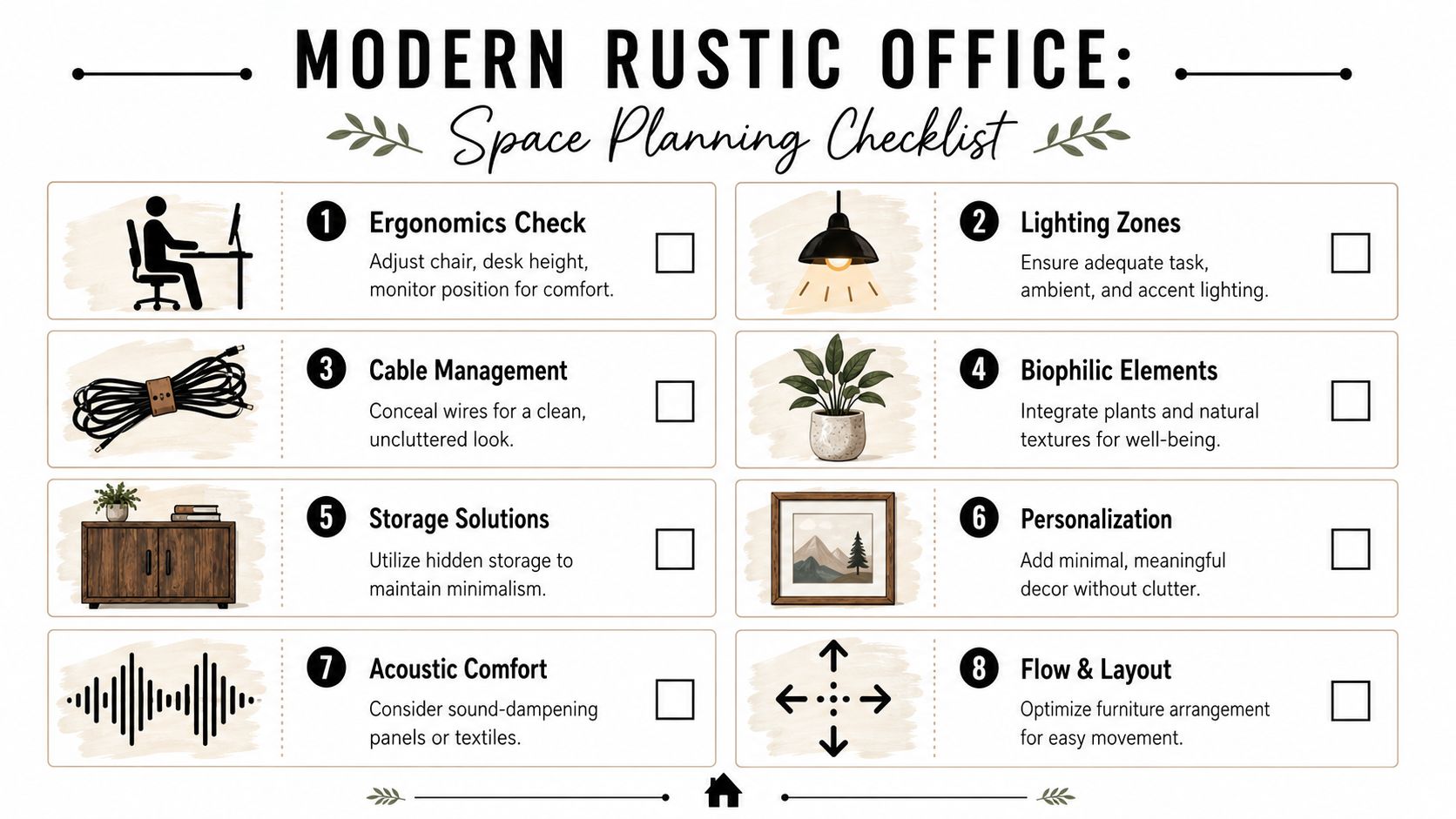
Lighting is usually the first one. Wood tones can look flat under harsh overhead fixtures or too orange under the wrong lamp temperature. Acoustic comfort is another. Rustic palettes often include hard surfaces, and hard surfaces can make a room sound busier than it looks. Then there’s cable control, storage discipline, and simple circulation. None of those are glamorous, but all of them affect whether the office feels calm.
Final review before installation
Use a checklist for the room as a whole, not just individual products.
What to confirm on the floor plan
- Traffic flow: Make sure tables, guest seating, and storage doors don’t narrow the path between work areas.
- Task lighting: Give focused work its own lighting support instead of relying only on ambient fixtures.
- Acoustic balance: Add fabric panels, rugs in select zones, or upholstered seating where hard finishes dominate.
- Cable management: Keep cords hidden or routed cleanly. Rustic styling breaks down fast when wires are visible everywhere.
- Storage discipline: Use enclosed storage where visual clutter builds up quickly, especially near shared workstations.
- Finish consistency: Review wood and metal samples in the same light before approving final orders.
Keep the space flexible
A well-planned office should still work when teams change. That means avoiding overscaled statement pieces in circulation paths, preserving reconfiguration options in open areas, and making sure accessory choices don’t lock the office into one inflexible arrangement.
This is where broader office space planning and design thinking matters. A good rustic-modern office doesn’t only photograph well. It supports movement, privacy, collaboration, cleaning, and future updates without losing its identity.
The finished office should feel warmer than a standard corporate layout, but it should still behave like a professional workplace.
If that test is met, the project usually succeeds. The office looks more human, more deliberate, and more aligned with how people want to work.
If you’re planning a workplace refresh and want modular systems, glass walls, and workstation layouts that can support a modern rustic direction without losing function, Cubicle By Design is a strong place to start. You can explore the Custom Cubicle Designer, review options for custom office cubicles, compare glass office partitions, plan scalable layouts for call center cubicles, and browse workstation cubicles to build an office that feels warm, efficient, and ready for real-world use.