

Workspace Price Guide A 2026 Breakdown for Your Office
A lot of office projects start the same way. You have a floor plan, a headcount, a move-in date, and a spreadsheet that already feels too optimistic.
The first mistake most buyers make is assuming workspace price is just the cost of a cubicle or office desk. It isn't. This figure includes the station itself, panel height, surface size, storage, finish level, freight, installation, power access, and the inevitable decisions about privacy versus density. By the time private offices, meeting areas, and support spaces enter the picture, the budget can drift fast.
That confusion is normal. Even outside traditional office furniture, published workspace pricing often stops at the headline seat cost and leaves out the all-in picture after meeting rooms, private areas, and add-ons are considered. Coworking Cafe notes that the true all-in workspace price is complex and hard to benchmark on a simple per-desk basis.
What helps is breaking the budget into decisions you can control. Start with the base workstation. Then separate what is optional from what is operationally necessary. Then price the services that make the project real, not just the products that look good in a quote.
For teams planning a new layout, expansion, or reconfiguration, that usually starts with disciplined office space planning and design. A clean plan protects the budget better than last-minute value engineering ever will.
Introduction
Most clients come in asking a fair question: “What does a workspace cost?” The honest answer is that the number only becomes useful when you attach it to a layout, a work style, and a level of finish.
A quiet admin team doesn't need the same setup as a call center. A hybrid office doesn't budget the same way as a full-capacity workplace. A management suite with enclosed offices and glass fronts won't price like a benching plan with open low panels. If you skip those differences and focus only on a single per-seat number, you'll underbudget.
Why the first quote is rarely the full quote
A product price usually covers the furniture package as specified. It may not fully reflect site conditions, delivery complexity, electrical access, or how much labor the installer needs to assemble and level the system. That's where new buyers get surprised.
Practical rule: If a quote looks much lower than the field, check what it leaves out before you assume it's the better deal.
The better approach is to budget in layers:
- Base furniture cost for workstations, desks, private offices, and shared spaces
- Specification upgrades such as fabric grade, glass, trim, and storage
- Project services including freight, receiving, installation, and punch-list work
- Future flexibility so the office can change without forcing a full replacement
What buyers should watch early
The early choices that move price the fastest are usually these:
- Footprint: Bigger stations use more panel, more surface, and more components.
- Privacy level: Taller panels and more enclosed designs cost more than open layouts.
- Material package: Standard laminates and fabrics keep budgets controlled. Premium selections raise upfront cost.
- Support spaces: Conference areas, touchdown stations, and private rooms can reshape the whole budget.
When clients understand those levers early, the conversation changes. It stops being “How cheap can we make this?” and becomes “Where should we spend, and where should we stay disciplined?”
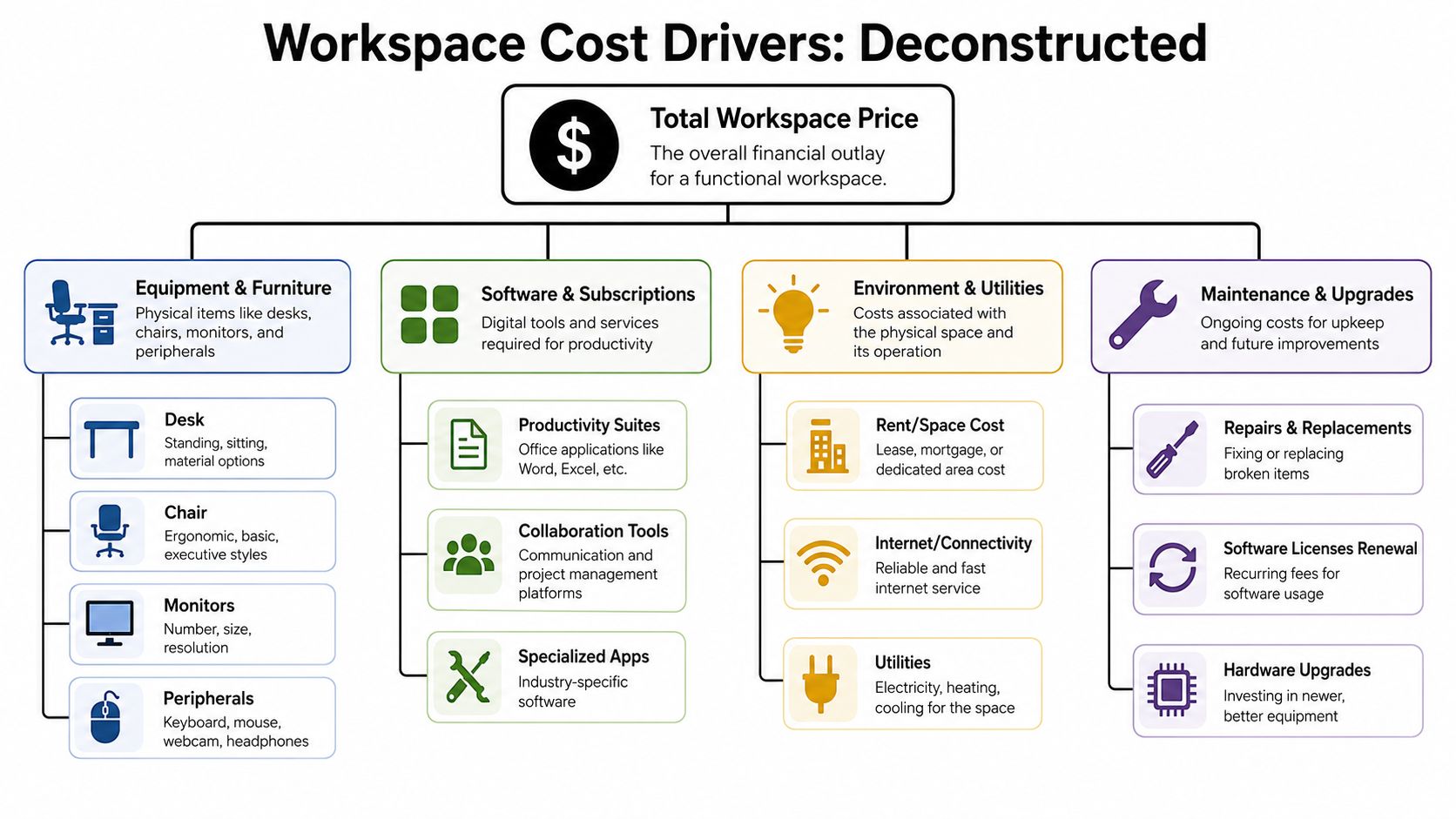
Deconstructing Your Workspace Price What Really Drives Cost
A client can approve two workstation layouts with the same headcount and still see a large price gap. In practice, the difference usually comes from specification choices inside each station, not from the seat count alone.
Size and panel height
The fastest cost jump often starts with the footprint. A 6×6 station uses more panel, more worksurface, and more connectors than a compact benching setup. Raise the panel height, and the budget moves again because the system needs more material and often more time to install and align correctly.
Privacy has a cost, but it also has a purpose.
A small open station can work well for sales, admin, or teams that spend more time talking than heads-down focusing. A larger station with mid-height or tall panels usually fits roles that need concentration, frequent calls, or more visual separation. The right choice depends on how the space is used day to day, not just on what looks efficient in a floor plan.
For rough benchmarking, a standard 6×6 mid-height cubicle workstation ranges from $1,200 to $2,500 per station, while a full glass-walled private office package ranges from $5,000 to $9,000, depending on size, door hardware, and acoustic properties.
Those categories should not be compared as if they solve the same problem. If you're weighing standard stations against custom office cubicles or enclosed fronts with glass office partitions, you are choosing between different levels of privacy, structure, and installation complexity.
Materials and finish levels
Finish package is one of the clearest pricing levers in a furniture project. Standard laminates and entry-grade fabrics keep the upfront number lower. Veneer, upgraded textiles, glass accents, and higher-end trim raise the furniture cost and can hold up better in reception areas, executive offices, and other client-facing spaces.
That trade-off should be intentional. I usually tell clients to spend where wear, visibility, or brand perception justify it, and stay disciplined in back-office areas where standard finishes perform well.
A practical breakdown looks like this:
| Finish choice | Budget impact | Best fit |
|---|---|---|
| Standard laminate and entry fabric | Lowest upfront cost | Back-office teams, growth space, high seat counts |
| Upgraded laminates and better fabric grades | Moderate increase | Mixed-use offices, leadership neighborhoods |
| Veneer trim and premium textiles | Highest upfront cost | Reception, executive space, brand-forward environments |
If you're trying to compare how suppliers frame these inputs, directories like Southern Tier Resources services can provide a market view. Final pricing still comes down to matching the finish package to the actual use case.
Storage, surfaces, and accessories
Costs accumulate. One pedestal does not seem expensive. Add one at every station, then layer in overhead bins, wardrobes, tackboards, monitor arms, power modules, and cable management, and the accessory package starts to rival the base workstation upgrade you were debating earlier.
Worksurface design matters too. Straight surfaces are usually the most efficient to specify and install. L-shapes, shared returns, corner stations, and deeper tops can improve workflow for accounting, design, operations, and management roles, but each change adds parts, planning, and labor.
Buyers who want to sort through those options before final drawings are locked often start with a modular workstation price guide so they can separate required features from nice-to-have upgrades.
The base station rarely blows up the budget by itself. The total climbs when storage, upgraded surfaces, and accessories get added one decision at a time.
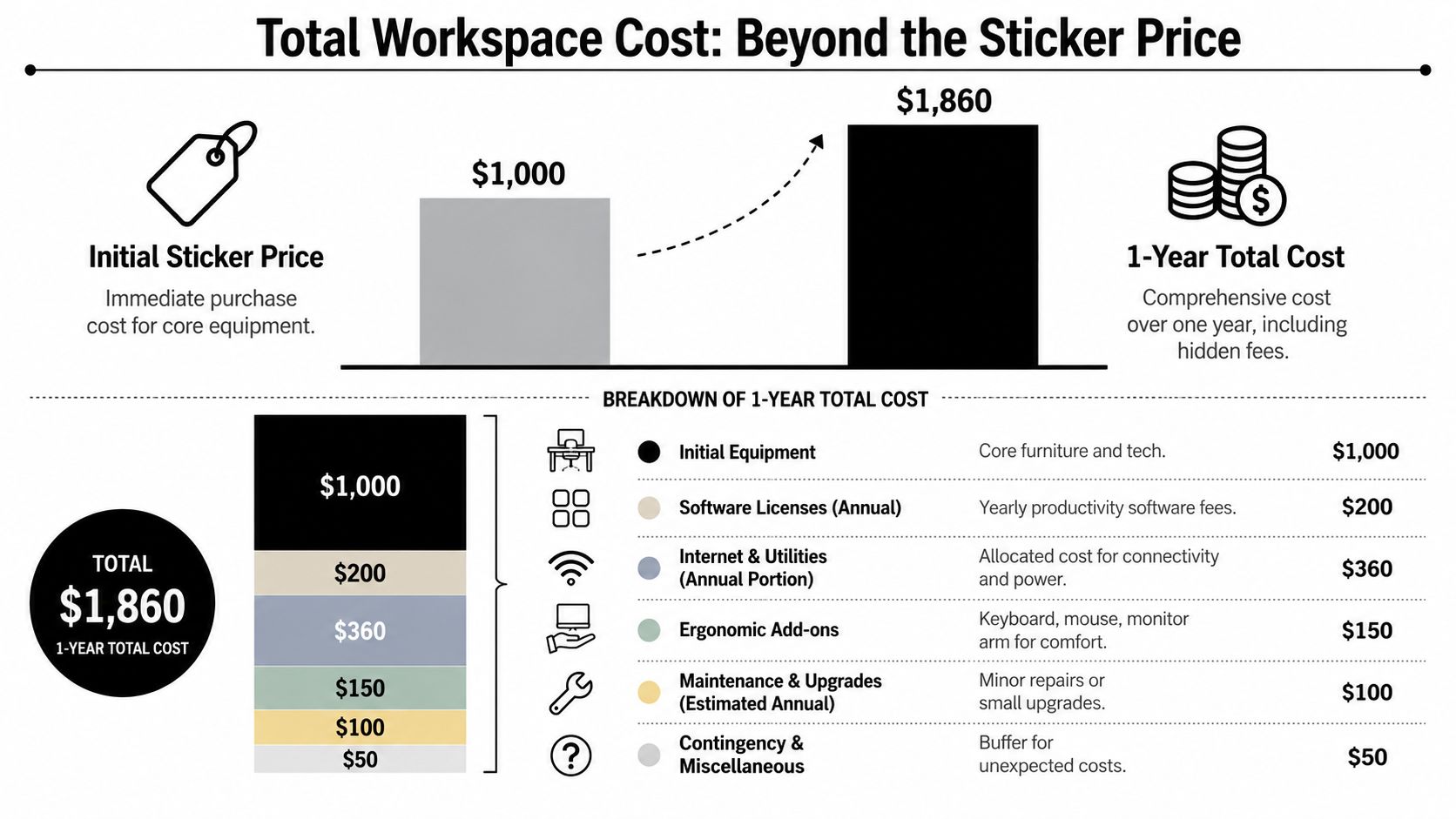
Beyond the Sticker Price Uncovering Total Project Costs
A workspace quote can look settled until the first scheduling call. Then project costs show up: freight, receiving, installation labor, building access rules, punch-list corrections, and warranty limitations tied to how the job was assembled.
Installation versus self-installation
Installation changes the total cost of ownership more than many first-time buyers expect. Panel systems have to be leveled, aligned, connected correctly, and fitted to the site conditions. If that work is rushed or handled by a team without the right experience, the savings on labor can disappear in callbacks, damaged parts, and warranty disputes.
I usually tell clients to judge labor the same way they judge the furniture itself: by scope, not by the lowest line item. A proper crew handles staging, assembly, field adjustments, debris removal, and closeout. Buyers comparing labor options should review what is included in office furniture installation services before treating a smaller number on the quote as a true savings.
Three common cost scenarios
Hidden costs tend to follow the jobsite, not the catalog. The same workstation package can land at very different totals depending on how the building operates and how much coordination the project needs.
| Scenario | What usually happens | Budget effect |
|---|---|---|
| Simple local delivery into a standard office | Easier receiving, fewer access restrictions, straightforward assembly | More stable total project cost |
| Multi-floor installation with elevators, phased occupancy, or after-hours work | More crew coordination, longer install windows, added supervision | Higher labor cost and more scheduling risk |
| Tight construction timeline with power, cabling, and punch-list overlap | More trade coordination and more chances for sequencing errors | Greater chance of change orders and delays |
One overlooked line item is communications setup. If the project also includes phones or call routing, teams should understand hosted PBX prices early so the furniture budget and technology budget are scoped together instead of colliding late in procurement.
Freight, receiving, and site conditions
Freight cost is shaped by more than mileage. Building docks, elevator reservations, delivery windows, storage limits, and the order materials come off the truck all affect labor time and risk on site. A low product number can stop being competitive once difficult access and extra handling are priced in.
Occupied offices add another layer. Installers may need to work in phases, protect finished surfaces, keep aisles clear, and return for final adjustments once staff move in. Those are real labor hours, and they belong in the budget from the start.
Price the site conditions early. Stairs, narrow corridors, limited loading access, and after-hours installation all add cost whether they are discussed upfront or discovered on delivery day.
Warranties and long-term protection
Warranty value depends on how the full project is put together. Buyers should ask who handles replacement parts, how claims are documented, whether finish lots can still be matched later, and what happens if one damaged component affects an entire run of stations.
That is the difference between a product price and a workspace price. The all-in number includes the furniture, the effort to get it into the building correctly, and the support needed to keep it serviceable over time.
Example Workspace Configurations and Price Ranges
Abstract pricing only helps so much. Most buyers need to see what a realistic configuration looks like before the budget starts to make sense.
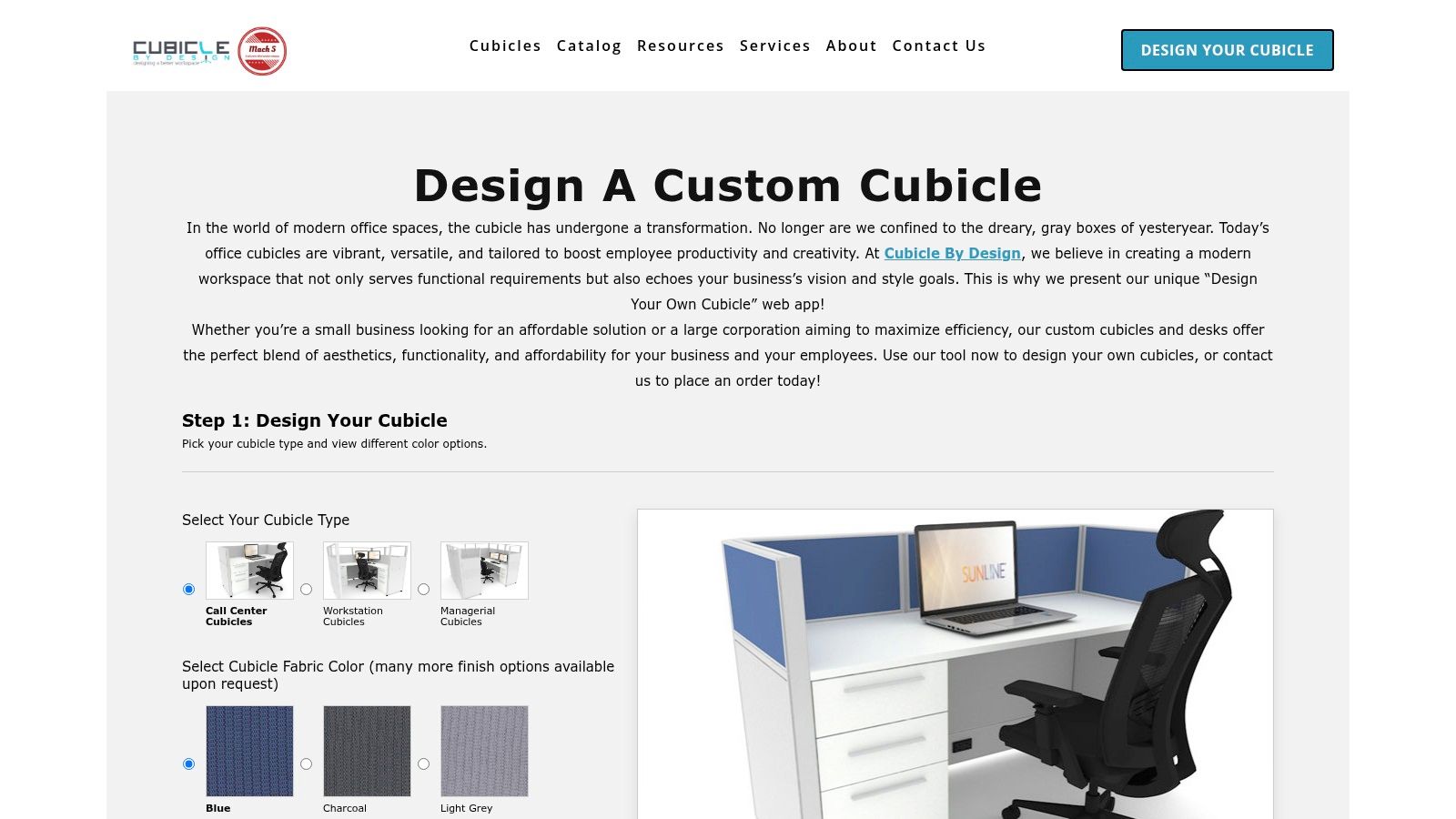
A useful starting point for planning is the online popular cubicle configurations reference, because layout type drives more pricing variation than most first-time buyers expect.
Lean startup pod
This is the practical entry point for many early-stage firms. Think compact footprints, lower panels, standard laminate surfaces, and only the storage each user needs.
What usually works:
- Open collaboration: Lower panels keep sightlines open.
- Simplified specification: Standard finishes hold the budget together.
- Selective upgrades: Add only the accessories the role demands.
What usually doesn't:
- Overbuilding privacy: High panels in a highly collaborative team often waste money.
- Over-accessorizing: Giving every station every add-on raises cost without improving workflow.
Scalable call center row
This layout is built for repeatability. The goal is consistent station size, practical acoustic control, and efficient cable management. Buyers exploring dense operational seating should look at call center cubicles and compare them with general workstation cubicles because the planning assumptions are different.
A benchmark helps here: a standard 6×6 mid-height cubicle workstation ranges from $1,200 to $2,500 per station. A call center layout may land below or above that band depending on footprint, height, and accessories, but it gives you a grounded reference point.
For call-heavy teams, furniture isn't the only variable. Voice infrastructure also affects the all-in workspace price, especially if you're furnishing a support floor or sales pod. IT and operations teams that need to understand hosted PBX prices alongside furniture costs usually make cleaner budget decisions because they price the workstation as an operating environment, not just a desk.
Modern corporate hub
This is the mixed environment many companies want now. Open workstations for general staff. Glass-front offices or enclosed rooms for leadership and private conversations. Shared touchdown areas. Conference rooms with better presentation quality. More finish coordination.
Here the range expands quickly because private office packages change the material and hardware package. A useful benchmark is that a full glass-walled private office package can range from $5,000 to $9,000, depending on size, door hardware, and acoustic properties.
The most expensive layout isn't always the one with the most glass. It's often the one that mixes several furniture standards without a disciplined ruleset.
When buyers use a planning tool like the Cubicle Designer, they usually get clarity faster because they can test panel heights, dimensions, and options before asking for a formal quote. That helps narrow the specification before freight and installation are layered in.
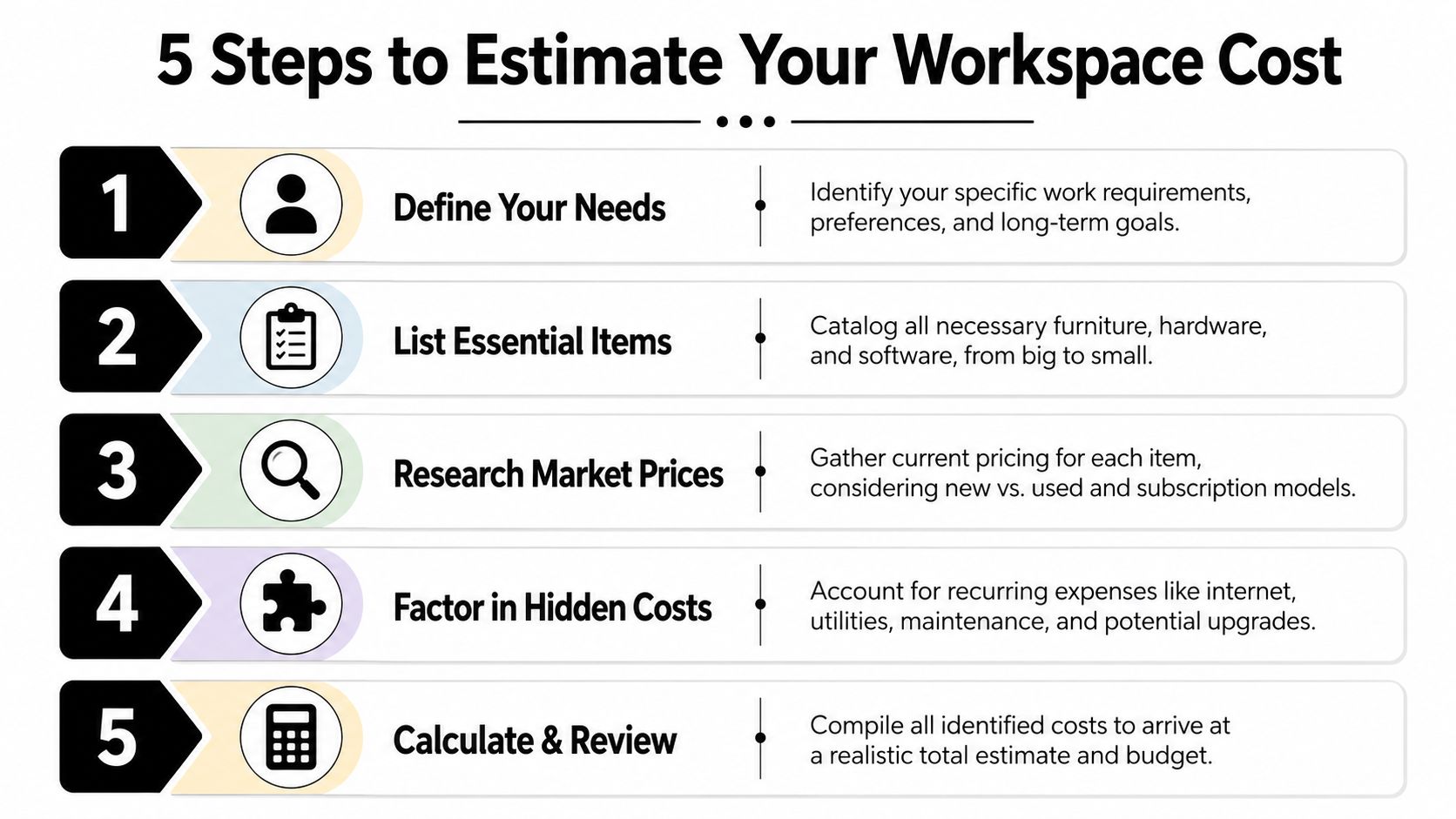
How to Estimate Your Workspace Cost in 5 Steps
A client will often come in with a simple target like "we need 24 workstations." By the time we price the actual job, the budget depends just as much on circulation, delivery conditions, electrical access, and installation sequencing as it does on the furniture itself.
That is why a usable estimate follows the same path the project follows in the field.
Step 1 Count people and measure the room
Start with headcount, but separate assigned seats from shared seats, hoteling positions, and guest touchdown areas. A hybrid team can often reduce dedicated stations, yet still need more enclosed rooms and more shared surfaces than expected on peak days.
Then measure the room like a planner, not just a tenant. Note columns, entry paths, glazing, sprinkler lines, power locations, and ADA clearances. Those details decide what fits and what costs more to install.
Step 2 Choose the workstation standard
Set the rule set before you choose colors and accessories. Decide the typical footprint, panel height, storage level, and privacy standard for each team type.
Ask a few direct questions:
- Does the team spend long hours on focused individual work
- Do they need acoustic screening, visual privacy, or both
- Will the layout stay stable for several years, or change with hiring
This step has a major budget effect because one extra finish upgrade is minor. Changing the workstation standard across an entire floor is not. If you need a framework for comparing systems, this office furniture buying guide helps buyers sort through size, use case, and long-term flexibility before they request pricing.
Step 3 Price the options that change function or lifespan
Add only the options that solve a real problem. In practice, that usually means power access, storage, screens, durable surfaces, and pieces that support a specific workflow.
Use a simple filter:
- Does the role use it every day?
- Will it reduce wear, replacement, or service calls?
- Will it help the space perform better over time?
That keeps the estimate grounded in total ownership cost instead of a long list of small upgrades that look harmless until they are multiplied across the whole office.
Step 4 Add every service outside the furniture line
Early budgets usually fall short. Be sure to include freight, receiving, delivery windows, installation, field adjustments, punch-list work, debris removal, and any building rules that slow the crew down or require after-hours access.
If power, data, or phone service is part of the project, coordinate those costs now instead of treating them as someone else's line item. Teams that are already managing IT budgets effectively usually build stronger workspace budgets because they price the office as an operating environment, not just a furniture purchase.
Step 5 Turn the estimate into a quote you can approve
At this stage, the goal is clarity. Lock the quantities, standard sizes, finish level, service scope, and site assumptions so the quote reflects what will be ordered and installed.
At Cubicle By Design, we see fewer revisions when clients define those assumptions before requesting final numbers. A good quote should show where the money is going, what is included, and which items could still move if the layout or schedule changes.
Budgeting advice: The best savings usually come from cleaner specifications, fewer field changes, and a system you can reuse or reconfigure later. Lowest first cost and lowest project cost are often two different numbers.
Smart Budgeting and Procurement Tips for Your Office
A workable office budget holds up after ordering, delivery, installation, and the first round of changes. That is the standard to use when you review pricing.
Compare quotes on equal assumptions
Two proposals can look close on paper and still produce very different final invoices. I see this often when one vendor includes delivery, installation, punch-list corrections, and warranty support, while another prices furniture only and leaves the rest to the client or general contractor.
Review each quote line by line against the same scope:
- Product scope: Matching panel heights, worksurface sizes, storage, fabric grades, and accessory counts
- Service scope: Matching freight, receiving, installation, debris removal, and site-condition assumptions
- Support after install: Matching warranty coverage, response expectations, and replacement terms
A broader operations view helps here. Teams balancing furniture spending with technology overhead often benefit from guidance on managing IT budgets effectively because workspace cost control usually spans facilities, IT, and operations.
Favor systems that can be reconfigured
If the headcount, department mix, or hybrid schedule may change within the next few years, flexibility has real financial value. A lower purchase price can disappear quickly if every reorganization requires new product, patchwork field fixes, or downtime for construction.
Modular furniture systems usually make those changes easier to handle than built-in construction. Panels, storage, screens, and worksurfaces can often be reused in a new layout instead of scrapped and replaced. Buyers comparing those long-term trade-offs can use an office furniture buying guide to evaluate whether a cheaper first quote will still be the better decision after one move, one team expansion, or one policy change.
Use one accountable process
The smoothest projects have clear ownership from floor plan to final install. That does not require buying every item from one source. It does require one party to confirm dimensions, coordinate trades, flag building restrictions, and resolve scope gaps before the crew arrives.
That coordination matters because many workspace overruns start in the handoff points. Facilities assumes IT is handling power poles. IT assumes the furniture vendor included cable routing. The installer arrives and finds the site is not ready. Then the project absorbs change orders, return trips, and schedule slippage.
For buyers who want one place to start, Cubicle By Design provides product configuration, planning support, and installation coordination for modular office environments.
If you're pricing a new office, expansion, or reconfiguration, start with the practical questions first: how many people need seats, what kind of work they do, how much privacy they need, and how often the layout may change. Then ask for a quote that reflects the full project cost, not just the furniture line. That is how you get closer to the true all-in workspace price.