
A Guide to Modular Office Wall Systems | Cubicle By Design

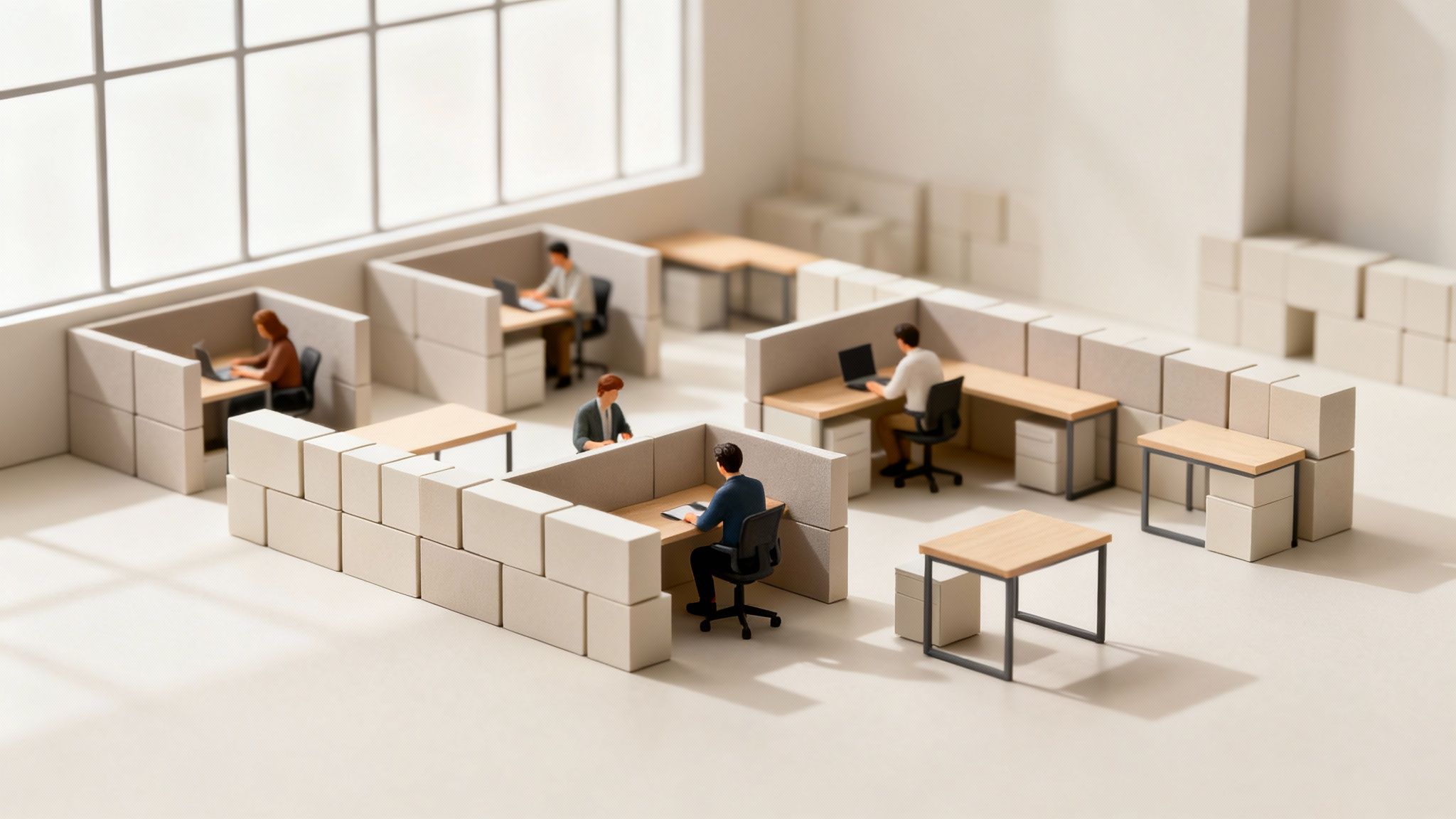
Imagine being able to redesign your office layout as easily as you move a desk. That’s the real magic behind a modular office wall. Don’t think of these systems as permanent walls, but more like a high-end, customizable kit of parts for your workspace. They’re like architectural LEGOs, giving you the power to adapt to hybrid work models, shifting team sizes, and whatever business challenges come next. At Cubicle By Design, we help businesses harness this flexibility.

A Smarter Way to Define Your Workspace

Traditional construction is a commitment. Once the drywall is up, the dust settles, and the paint dries, your floor plan is locked in. A modular office wall, on the other hand, is a much more dynamic and intelligent way to shape your space. It’s a system of pre-engineered, factory-built panels designed to be assembled, taken down, and reassembled with incredible speed.

This approach lets you create private offices, quiet pods for focused work, and open collaboration zones without the mess and permanence of conventional building. To get a better feel for this concept, you can learn more about what modular furniture is and how it’s completely changing the modern office.

From Concept to Reality

The true value of a modular office wall is its ability to evolve with you. When a team gets bigger or a new project demands a different kind of space, these walls can be quickly demounted and set up in a new configuration. The whole process is clean, fast, and, most importantly, protects your initial investment.

Instead of demolishing and rebuilding, you simply reconfigure. This strategic advantage is why so many businesses are turning to modular systems to future-proof their physical environments.

This isn’t just a niche trend; it’s part of a massive shift in how we build. The wider modular construction market was valued at around USD 103.6 billion in 2024 and is expected to rocket past USD 162 billion by 2030. This growth shows just how widely prefabricated building methods are being adopted.

For office interiors, this translates into huge time savings. Manufacturers report that installation can be 30–60% faster than building with traditional drywall. For you, that means your teams are in their new space and back to work weeks sooner than you’d expect.

Modular Walls vs Traditional Drywall

To really get it, you have to understand the core differences between the old way and the new. One is a permanent, one-and-done solution, while the other is a reusable, adaptable asset that keeps paying you back.

Here’s a quick breakdown of how they stack up.

Feature Modular Office Wall Traditional Drywall
Installation Speed Drastically faster. Can often be installed in just days with minimal mess. Slow and disruptive, involving multiple crews and a long, messy schedule.
Flexibility A true asset. Easily taken down and reconfigured as your needs change. Completely permanent. Any changes require messy demolition and rebuilding.
Cost & ROI Higher upfront material cost, but lower labor and a fantastic long-term ROI. Lower initial material cost, but high labor costs and zero reuse value.
Environmental Impact Very little waste. Panels are reusable and often made from recycled content. Creates a ton of construction waste (dust, debris) that ends up in landfills.

Ultimately, choosing a modular office wall is an investment in your company’s agility. It gives you the power to create a workspace that not only works for you today but is ready for whatever tomorrow brings.

Exploring Different Modular Wall Types

Picking the right modular office wall isn’t a one-size-fits-all kind of deal. It’s more about striking the right balance between looks, acoustics, and how your team actually works day-to-day. The real beauty of these systems is their sheer variety, letting you find something that clicks perfectly with your company’s culture and what you need to get done. Whether you’re aiming for total transparency or complete privacy, there’s a solution out there.

This decision goes way beyond just aesthetics. Each type of modular wall brings something different to the table in terms of sound control, how much light it lets through, and how easily you can change things up later. All of these factors directly shape how your teams focus, collaborate, and feel in their space.

Frameless and Framed Glass Walls

Glass partitions have become a go-to for modern offices trying to create a bright, open, and connected vibe. When you’re looking at your options, it’s worth checking out modern solutions like glass walls and doors that offer a great mix of flexibility and visual punch. They generally come in two main flavors, each with its own distinct personality.

Frameless glass walls are the ultimate in minimalist design. We’re talking large panes of tempered or laminated glass held in place at the top and bottom, giving you a nearly invisible barrier that lets natural light flood the space. This style is a fantastic choice for conference rooms or breakout areas where you want to keep that open feeling without letting conversations bleed out.

Framed glass walls, on the other hand, have a more structured, traditional look. That metal framing isn’t just for show; it adds a strong design element while also beefing up the wall’s sturdiness and acoustic performance. You’ll often see these used for private offices where a bit more sound dampening is a must. To really dive deep, you can explore the specifics of glass partition walls for offices and see how they can completely change a room.

Solid Panel Walls for Maximum Privacy

When focus and confidentiality are absolutely critical, solid panel walls are the answer. These systems are built from the ground up for superior sound blocking, making them the default choice for executive suites, HR departments, or any spot where conversations need to stay under wraps. They’re perfect for carving out quiet zones in an otherwise buzzing office.

Think of solid panels as the acoustic heavyweights of the modular world. Their construction is specifically designed to absorb and block sound waves, creating true sanctuaries for deep work.

These walls also come with a huge array of customization options to make sure they match your brand’s style. You can pick from finishes like:

  • Fabric-wrapped panels: These add a touch of warmth and texture, and they pull double-duty by absorbing even more sound.
  • Wood veneers: For a classic, sophisticated look that brings a natural element into the office.
  • Durable laminates: Available in just about any color or pattern you can imagine, offering a practical and stylish finish.
  • Writable surfaces: Turn any wall into a brainstorming powerhouse with whiteboard or magnetic capabilities.

This level of personalization means creating a private office cubicle doesn’t require you to compromise on style or your brand identity. You get complete acoustic privacy while keeping a professional, cohesive design.

Hybrid Systems: The Best of Both Worlds

Why force yourself to choose between transparency and privacy when you can have both? Hybrid systems are designed to seamlessly blend glass and solid panels into a single, cohesive wall. It’s a hugely popular approach because it strikes the perfect balance, letting light flow through the glass sections while giving you privacy and sound control exactly where you need it.

For instance, a hybrid wall might have a solid base for privacy and durability, with a glass panel on top to keep the space from feeling boxed in. This design is incredibly versatile and can be tweaked to fit the unique needs of different departments, creating an environment that’s both dynamic and highly functional.

What Are the Real Benefits of Modular Office Walls?

When you think about dividing a room, you might just picture a simple barrier. But a modern modular office wall does so much more. It’s a strategic tool that directly boosts your company’s flexibility, focus, and financial health. These aren’t just panels; they’re solutions designed to tackle the real challenges of today’s fast-moving workplaces.

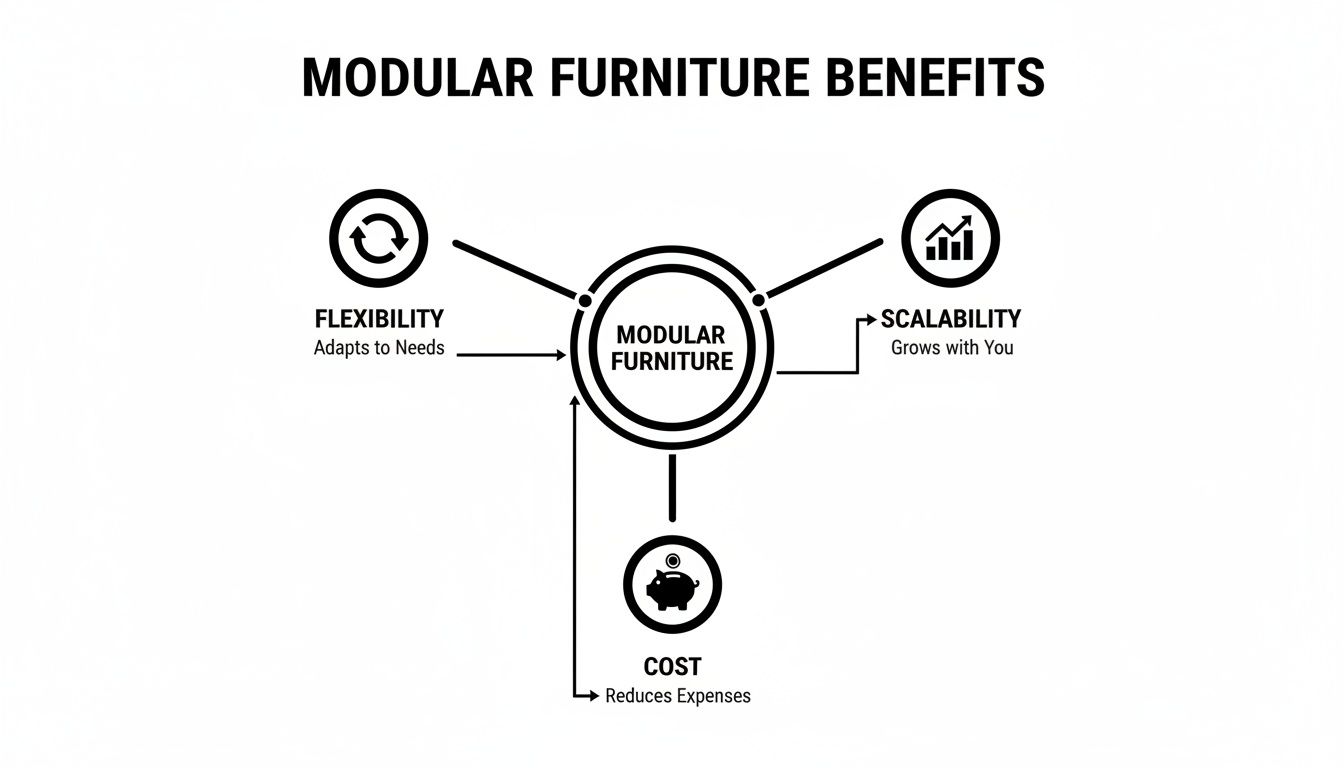
The true value comes from how they perform across four key areas.

These benefits range from adaptability that future-proofs your investment to serious acoustic control that helps your team get real work done. Put them all together, and you get an office that’s not just more efficient, but healthier and more engaging for everyone.

Unmatched Flexibility and Scalability

Imagine you just landed a huge new client. You need to get a new project team of ten people up and running in a month. With traditional construction, that’s a nightmare of dust, delays, and high costs. But with a modular wall system? You can reconfigure an entire section of your office over a single weekend.

This incredible flexibility is the number one reason people choose modular. It allows your workspace to grow, shrink, and adapt right alongside your business.

  • Add private offices as your management team grows.
  • Create dedicated collaborative zones for new projects.
  • Downsize or reassign space with almost no disruption or cost.

This on-demand adaptability means your office layout is never set in stone. You can get ahead of change instead of just reacting to it. To see how this works in practice, you can explore the benefits of a modern office cubicle and how they share these modular principles.

Superior Acoustic Performance

An open office can look great, but we all know that constant noise is a productivity killer. A modular office wall is specifically engineered to control sound, creating quiet, private spaces where people can actually concentrate. This isn’t just about blocking noise; it’s about creating acoustic comfort.

“Facility managers love modular walls because a ‘renovation’ that used to take six weeks of dust, noise, and disruption can now be handled cleanly by a small team over a weekend. It transforms a capital-intensive construction project into a simple operational adjustment.”

High-quality systems use specialized seals, sound-rated core materials, and options like double-paned glass to achieve impressive Sound Transmission Class (STC) ratings. This kind of performance is absolutely essential for:

  • Executive Offices: Keeping confidential conversations private.
  • HR and Legal Departments: Protecting sensitive information.
  • Quiet Zones: Giving employees a true sanctuary for deep, focused work.

Enhanced Aesthetics and Natural Light

Forget the dull, drab partitions you might be picturing from the past. Today’s modular wall systems are built with style and elegance in mind. Glass partitions, especially, can completely transform a workspace by opening it up and letting natural light flow through the entire office.

This visual openness does more than just look good—it has a proven positive impact on employee morale and well-being. A bright, airy environment simply feels more energetic and welcoming, which helps build a better, more productive company culture.

Significant Cost and Time Savings

It’s true that the upfront material cost of a modular wall can sometimes be higher than drywall. But that’s not the whole story. The real savings come from slashing labor costs and dramatically speeding up your project timeline. Installation is fast, clean, and requires a much smaller crew.

Even better, modular walls are often considered tangible personal property. This can offer huge tax advantages through accelerated depreciation—something you can’t do with permanent drywall. And because the panels are 100% reusable, your initial investment holds its value. You can reconfigure them over and over, eliminating future demolition and construction costs and making them a much smarter long-term financial decision.

Customizing Your Space to Reflect Your Brand

A modular office wall is so much more than a simple barrier. Think of it as a blank canvas, just waiting for you to paint your company’s unique identity all over it. This is the point where your workspace stops being just a location and starts becoming a branded environment. The potential for customization is huge, letting you move way beyond generic layouts to create something that actually tells your story.

Every surface becomes an opportunity. By thoughtfully picking out materials and features, you can reinforce what your brand is all about, whether you’re going for a look that’s sophisticated, innovative, or all about collaboration.

A World of Finishes and Materials

The first place you get to be creative is with the massive array of available finishes. Each material brings its own distinct character into the space, giving you the power to craft a very specific atmosphere.

Your options include things like:

  • Sophisticated Wood Veneers: These are perfect for creating a warm, classic, and high-end feel in executive offices or the areas your clients see first.
  • Durable Laminates: Available in just about any color or texture you can imagine, they offer a practical and budget-friendly way to match your brand’s color palette perfectly.
  • Writable Surfaces: Why not turn a wall into an interactive brainstorming hub? Integrated whiteboard or magnetic panels can promote creativity on the fly.
  • Custom Graphics: You can put your company logo, core values, or inspirational imagery right on the walls with high-resolution printed graphics.

These choices aren’t just for show. They’re functional tools that help shape your company culture and how work gets done every day. To take it a step further, think about how you can start creating personalized workspaces with custom cubicles that tie into these branding efforts.

Smart Door and Technology Integration

Beyond the surfaces, modular walls allow for the smart integration of crucial elements like doors and technology. The right door can completely change the traffic flow, accessibility, and overall style of a room.

By integrating your brand directly into the architecture, you create a cohesive and immersive experience for both employees and visitors. Every detail, from the color of a panel to the type of door, becomes a subtle reinforcement of who you are as a company.

For instance, sleek sliding doors save valuable floor space and add to a modern, minimalist vibe. On the other hand, elegant frameless glass doors can keep that sense of openness while still providing the acoustic separation you need for a meeting room.

Seamless tech integration is another game-changer. Modern systems come with pre-wired raceways that cleanly hide all your cables, putting power outlets and data ports exactly where your team needs them. This gets rid of messy extension cords and makes sure every workspace is clean, safe, and connected from day one. To get a real feel for how your final selections will look, playing around with different architectural rendering programs can be a huge help.

This level of customization is part of a fast-growing trend. One analysis estimates the global office modular partition market will hit about USD 640 million in 2025. On the ground, vendors are reporting that 30–50% of new product inquiries since 2020 specifically ask for demountable or recyclable components. It’s clear people want adaptable and sustainable office solutions, and these walls deliver.

How to Plan Your Modular Wall Project

Thinking about a modular office wall project can feel like a huge undertaking. But with a solid plan, it stops being a challenge and starts becoming a smart, strategic move for your business. A great outcome isn’t just about picking out some cool-looking panels; it’s about really digging into your space, figuring out your goals, and getting the right people on your team to make it all happen.

The real work begins long before the first wall goes up. It all starts with asking the right questions. What are you actually trying to accomplish here? Do you need to quiet down a noisy call center, build out some private offices for the leadership team, or create flexible hubs for different project teams to gather? Your answers will guide every decision you make down the road.

Evaluating Your Space and Defining Goals

First things first, take a good, hard look at your current office layout. What are the pain points? Where are teams getting constantly distracted by noise? Where do you desperately need more privacy? Getting a handle on these day-to-day functional needs is the absolute first step.

Next, think about the bigger picture. Are you planning to grow the team in the next couple of years? Shifting to a more hybrid work model? A modular wall system is an investment in your company’s agility, so your plan should be built for the future, not just for today.

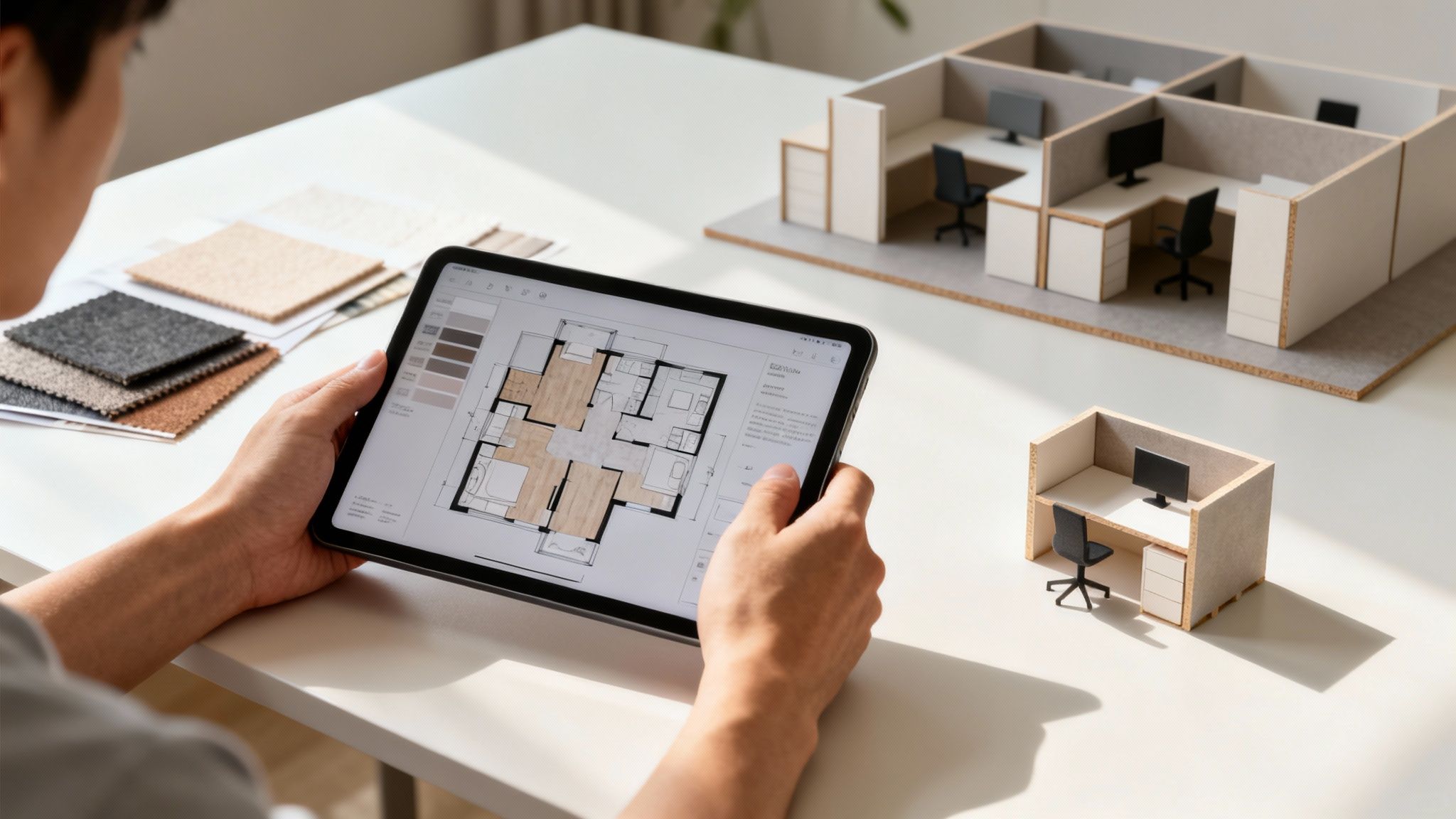
This whole phase is about creating a blueprint for success. To make sure you don’t miss any important details, getting professional guidance is a game-changer. Expert office space planning and design services can help translate your big ideas into a floor plan that’s functional, efficient, and up to code.

Partnering with Experts for a Seamless Experience

Once you’ve got a clear vision, it’s time to find a specialist who can bring it to life. This is where a team like Cubicle By Design really makes a difference. A dedicated partner takes all the mystery out of the process, walking you through everything from the initial chat and design concepts all the way to the final walkthrough. Our Cubicle Designer tool is a great starting point for visualizing your space.

Good project management makes sure every step is handled right:

  • Initial Consultation: A deep dive into your needs, budget, and ideal timeline.
  • 3D Renderings: You get to see exactly how the new layout will look and feel before committing.
  • Installation Coordination: All the logistics are managed to keep disruption to your daily business at an absolute minimum.

This kind of partnership is a huge reason the modular wall systems market is booming. It was valued at around USD 10.5 billion in 2023 and is projected to hit USD 20.8 billion by 2032, all because companies want flexible spaces managed by pros who know what they’re doing.

This infographic shows the key customization steps that come after you have a solid plan in place.

It really highlights how finishes, doors, and tech integration come together to turn a basic floor plan into a fully functional environment that reflects your brand.

Preparing for Your First Consultation

To get the most out of your first meeting, it pays to do a little homework. Showing up with the right information helps your design partner give you much more accurate recommendations and a preliminary quote right off the bat.

A well-prepared client is the foundation of a successful project. By gathering key details upfront, you empower your design partner to create a solution that is perfectly aligned with your vision, budget, and operational needs from day one.

Here’s a quick checklist to get you started:

  1. Floor Plans: Bring any architectural drawings you have. Even a simple, hand-drawn sketch with accurate measurements of the space is a great start.
  2. Functional Requirements: Make a list of how many offices or rooms you need, what they’ll be used for (e.g., intense focus work, team meetings), and if you have any specific acoustic needs.
  3. Budget Considerations: Have a realistic budget range in mind. This helps your partner zero in on the best solutions that won’t break the bank.
  4. Aesthetic Preferences: Collect some inspiration photos or make notes on the look and feel you’re going for—think colors, materials, and finishes.
  5. Technology Needs: Think about where you’ll need power outlets, data ports, or any other tech hookups for your new private offices.

Frequently Asked Questions About Modular Walls

As you start exploring modular office walls, it’s completely normal to have a few questions. Getting a handle on the specifics of cost, performance, and day-to-day practicality is the key to making a decision you’ll feel great about. We’ve pulled together the most common questions we hear to give you clear, straightforward answers.

This is all about tackling the details that matter most when you’re weighing modular solutions against old-school drywall construction. Our goal here is to clear up any confusion and show you how these adaptable systems can be a genuinely smart move for your workspace.

How Does the Cost of Modular Walls Compare to Drywall?

At first glance, the material cost for a modular office wall might seem higher than drywall. But when you look at the total installed cost, it’s often a different story—frequently comparable or even lower. Why? Because you’re saving a ton on labor, the construction timeline is drastically shorter, and there’s almost no waste to haul away.

The real financial win, though, comes in the long run. Modular walls are assets you can use again and again. You can reconfigure them or even pack them up and move them to a new office, completely wiping out future demolition and construction costs. On top of that, they may qualify for tax benefits through accelerated depreciation, which makes them a much savvier financial choice over single-use drywall.

Are Modular Walls as Soundproof as Permanent Walls?

Yes, absolutely. A high-quality modular system is engineered to meet—and often beat—the acoustic performance of traditional walls. It all comes down to the design and the specific materials used to build each modular office wall.

By using components like double-paned glass, acoustically rated solid panels, and specialized seals at all connection points, these systems can achieve excellent Sound Transmission Class (STC) ratings, ensuring speech privacy and minimizing distractions.

Working with a skilled partner like Cubicle By Design means we can help you spec out the perfect configuration to create truly quiet zones for private offices or confidential meetings.

How Difficult Is It to Reconfigure a Modular Wall System?

This is where they really shine. Ease of reconfiguration is one of the biggest selling points. The panels are designed from the ground up to be demountable. A small, trained crew can take down, move, and reinstall the walls with very little disruption to your team, often getting the job done over a single weekend.

You get none of the mess of a typical renovation. No demolition dust, no loud construction noise, and no drawn-out project schedules. This agility lets your workspace adapt on the fly to new teams, different projects, or business growth, making your office truly responsive to your needs.

Can Power and Data Be Integrated into Modular Walls?

Of course. Most modern modular wall systems are designed with built-in raceways or channels that cleanly tuck away all your electrical wiring and data cables. This feature allows outlets and network ports to be placed almost anywhere you need them along the wall.

This pre-engineered approach gives you power and connectivity exactly where it’s needed without a web of extension cords or the hassle of calling in an electrician for on-site work. It keeps everything looking clean and professional while ensuring every workspace is ready to go from day one.

Build Your Flexible Future with Cubicle By Design

Think of a modular office wall as more than just a product; it’s a genuine investment in a workspace that can actually keep up with you. These systems give businesses the power to pivot when needed, dial in the acoustics for real focus, and create a physical space that shows off their unique brand identity. It’s simply a smarter way to build, turning rigid floor plans into dynamic assets that grow right alongside your team.

We’re here to be your dedicated partner in all of this. Our team brings years of hands-on expertise in space planning, custom design, and professional installation to the table. From kicking around initial ideas with our powerful Cubicle Designer tool to the final walkthrough, we manage every last detail. We don’t just sell walls; we help you build a flexible future designed for whatever comes next.

Investing in a modular office wall system is investing in your company’s agility. It’s the framework that allows your physical space to support your business strategy, not hold it back.

Ready to see the difference for yourself? Take a look at our full range of modular cubicles and discover how to create your ideal workspace today.


Ready to design a better workplace? Cubicle By Design is your partner for planning and installing flexible office solutions, from workstation cubicles to stunning private offices. Contact us to start your project.

Read More

Your Guide to Temporary Office Wall Solutions | Cubicle By Design

So, what exactly is a temporary office wall? Think of it as a non-permanent, movable partition system designed to slice up big, open office spaces into smaller, more functional areas. Whether you need a few private offices, a new meeting room, or a quiet zone for focused work, these walls get the job done. Unlike traditional drywall construction, these flexible solutions can be put up, moved around, and taken down with almost no disruption. This makes them a perfect fit for growing businesses that need to change their layout without the headaches and high costs of a full-blown renovation.

The Modern Answer to an Evolving Office

In a business world that seems to change by the minute, a static office layout can seriously hold your team back. Gone are the days of being locked into a single floor plan for years on end. Today’s workplaces have to be flexible—able to scale up for a new project team, create quiet nooks for deep work, or build a private meeting space on the fly. This is exactly where a temporary office wall becomes an essential tool for any company that’s thinking ahead.

Instead of tearing your hair out over disruptive and expensive construction projects, businesses are wising up and turning to modular solutions. These systems offer a genuinely practical way to shape your environment to fit what you need right now, not what you needed five years ago. Think of them as high-end building blocks for your office, letting you create a dynamic workspace that actually helps people be productive and work together.

Why Flexibility Is the New Standard

The need for adaptable space isn’t just a fleeting trend; it’s a direct response to how modern teams actually get work done. A growing startup might need to add five new workstation cubicles one month and then carve out a collaborative project area the next. With temporary walls, making these kinds of changes is surprisingly simple.

  • Cost-Effective Growth: You get to sidestep the huge expense of traditional construction. Adding a new office or reconfiguring a whole department can be done for a fraction of the cost.
  • Minimal Disruption: Installation is quick and clean. We’re talking hours or days, not weeks. This means your team can keep right on working without missing a beat.
  • A Future-Proof Space: As your company changes, your office can change right along with it. Temporary walls can be easily moved or reconfigured to support new team structures and workflows.

At the end of the day, embracing solutions like temporary walls means you’re investing in an agile infrastructure. It gives you the power to build an office that not only looks great but also functions as a strategic asset, ready to adapt to whatever comes your way. Here at Cubicle By Design, we help businesses discover the power of flexible office design, from individual cubicles to entire floor plans.

Exploring the Different Types of Temporary Office Walls

When you hear “temporary office wall,” it’s easy to picture a flimsy, simple screen. But the reality is a whole world of smart, flexible solutions, each designed to tackle specific challenges in the modern workplace. Figuring out which type is right for you is the first step toward creating an office that truly works for your team, your budget, and your style.

The options run the gamut, from basic dividers all the way to sophisticated systems that genuinely rival the look and feel of traditional drywall. This versatility is a huge reason why the entire movable walls market is booming right now. Valued at $4.5 billion, the industry is on track to nearly double to $8.3 billion by 2033. This growth is directly tied to the fact that 70% of global firms are now making reconfigurable layouts a priority. As businesses need to stay nimble, these walls are providing the answer. You can actually explore the full market research to see more on this industry-wide shift.

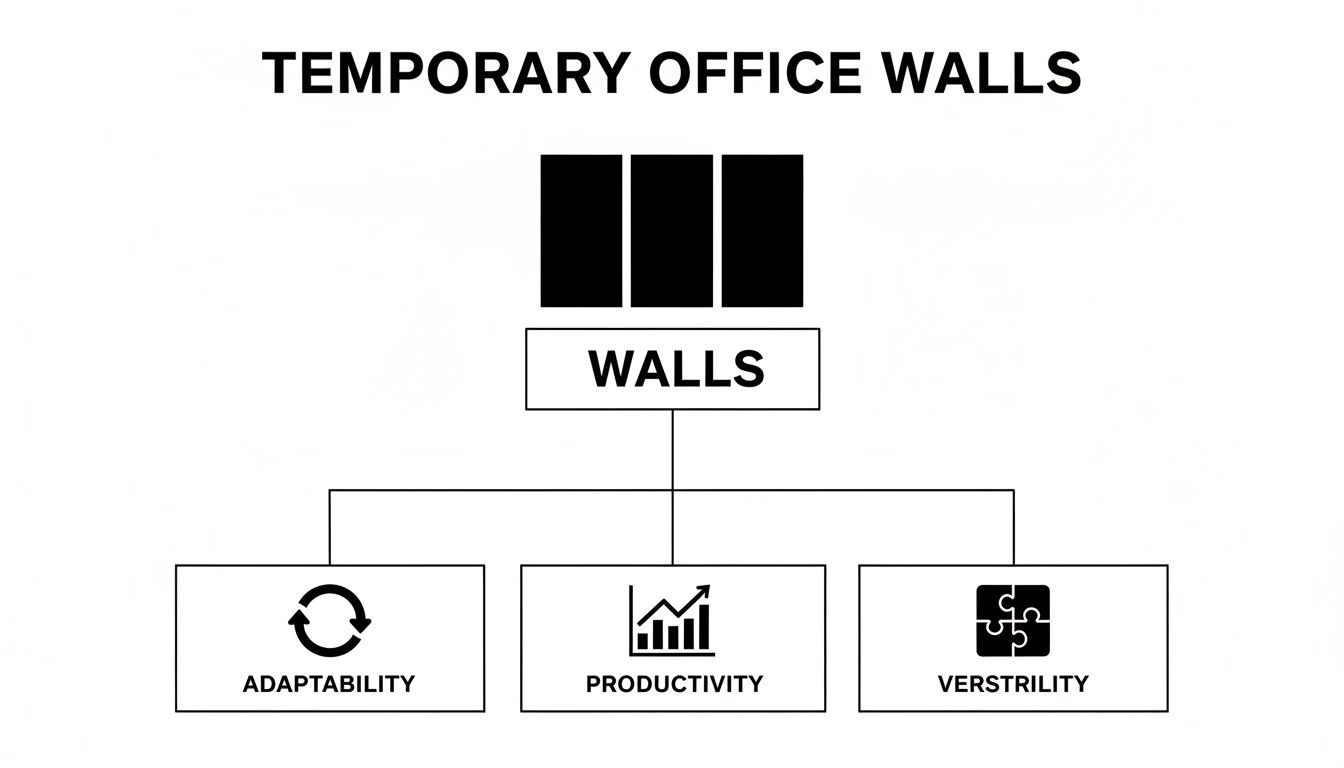
This diagram breaks down the core benefits that are driving so many companies to adopt temporary walls: adaptability, productivity, and pure versatility.

Diagram showing the adaptability, productivity, and versatility benefits of temporary office walls with relevant icons.

As you can see, these systems are about so much more than just dividing a room. They’re practical tools for creating work environments that can adapt on the fly. Let’s break down the most popular types you’ll come across.

Modular Panel Systems

Think of modular panel systems as the ultimate office LEGOs. They’re made up of interlocking panels, usually covered in fabric or a clean laminate finish, that you can click together in countless different ways. They are perfect for quickly creating clusters of workstations or sectioning off an entire department.

Because they’re so incredibly versatile, modular systems are a go-to for growing businesses. You can start with just a few panels to carve out a small team area, and then simply add more as you hire. They also play nicely with existing furniture, which makes them a really practical choice for offices that are constantly evolving.

Glass Wall Systems

If you’re going for a modern, high-end look that promotes transparency and lets natural light flow, glass wall systems are the premier choice. These systems use sleek tempered glass panels set in minimal frames—or sometimes no frames at all—to define spaces like conference rooms or private offices without making the area feel closed off and cramped.

Glass is the ideal way to strike that perfect balance between an open-plan vibe and the very real need for designated, quiet areas. While you get that great visual connection to the rest of the office, you still get a solid degree of acoustic separation. If you’re leaning toward this sleek option, you can learn more by checking out our guide on glass partition walls for offices.

The real magic of glass walls is their ability to maintain an open, light-filled atmosphere. They divide space physically without dividing it visually, which is a huge deal for fostering a collaborative and connected company culture.

Demountable Walls

When real privacy and serious sound control are at the top of your list, demountable walls are the heavy-duty solution you need. These are substantial, floor-to-ceiling systems that give you the acoustic performance and solid feel of traditional drywall. The key difference? Unlike permanent construction, they can be taken down and reinstalled somewhere else.

Demountable walls are perfect for creating private office cubicles or boardrooms where confidential conversations are the norm. They’re a bigger investment upfront, but they provide unparalleled soundproofing and a sense of permanence—all while keeping the flexibility to move when your office layout needs a refresh.

Freestanding Partitions and Room Dividers

For the ultimate in speed and simplicity, nothing beats freestanding partitions. These are lightweight screens that can be set up in minutes to create instant privacy nooks, visually separate different teams, or just guide foot traffic through a big open space.

They won’t give you the same level of acoustic privacy as a full, floor-to-ceiling system, but they are fantastic at cutting down on visual distractions. They’re a cost-effective and highly mobile solution for businesses that need to make quick, temporary tweaks to their floor plan without any real installation.

Comparing Temporary Office Wall Solutions

Choosing the right type of temporary wall really comes down to your specific needs—from acoustics and aesthetics to your budget and how often you plan to reconfigure your space. To make the decision a bit easier, this table breaks down the key features of the most common solutions.

Wall Type Best For Acoustic Rating Flexibility Typical Cost
Modular Panel Systems Creating cubicles and workstations, scaling with growth Low to Medium High $$
Glass Wall Systems Conference rooms, private offices, maximizing light Medium Medium $$$$
Demountable Walls High-privacy offices, boardrooms, soundproofing High Medium $$$
Freestanding Partitions Quick visual separation, temporary privacy nooks Low Very High $

As you can see, a simple freestanding partition is great for a quick fix, while a demountable or glass wall system is more of a long-term investment in a truly flexible infrastructure. Consider what problem you’re trying to solve today, but also think about what your team might need a year from now.

Making the Right Choice for Your Space

Moving past the different styles of temporary walls, we get into the nitty-gritty of picking the right one for your actual workspace. A successful project is about so much more than looks. You have to think about how these walls will function day-to-day. Things like acoustics, power integration, and even local building codes can make or break how well your new space actually works.

When you get these details right, your investment doesn’t just divide a room—it genuinely makes the office more productive and comfortable. The goal is to create an environment where the new walls feel like they were always meant to be there, not like a quick fix. With our free cubicle designer tool, you can visualize your layout and plan these details in advance.

Mastering Acoustics and Privacy

In any office, controlling sound is absolutely essential for focus and keeping conversations confidential. When you’re looking at temporary office walls, the Sound Transmission Class (STC) rating is the most important number to know. It tells you exactly how well a partition blocks airborne sound. The rule is simple: the higher the STC rating, the more sound it stops.

A low STC rating might be fine if you just need a visual barrier between teams, but it won’t do much to muffle a sales call. If you’re building a private office or a quiet meeting room, you’ll need a system with a much beefier rating.

A normal office conversation clocks in around 50-60 decibels (dB). A wall with an STC rating of 40 will make loud speech audible but garbled, while a rating of 50 or higher means you’ll barely hear it at all.

The wall’s material is a huge factor here. Fabric-covered panels are fantastic for absorbing ambient chatter and cutting down on echo, which can make open areas feel less chaotic. On the other hand, solid-core demountable walls offer the best performance for blocking sound, making them the go-to choice for spaces where privacy is the top priority.

Integrating with Existing Infrastructure

A temporary wall doesn’t just appear out of thin air; it has to play nicely with your building’s existing systems. Before you sign on the dotted line, you need a plan for power, data, and even airflow. The good news is that modern modular systems often come with built-in raceways to cleanly hide all your wiring and cables, keeping the space looking sharp and functioning smoothly.

Here are a few key things to map out:

  • Power and Data Access: Figure out exactly where you’ll need outlets, USB ports, and network jacks. Planning this from the start with a system that has integrated cabling is a world away from tripping over extension cords later.
  • HVAC and Airflow: Make sure your new walls won’t block air vents or mess with the heating and cooling. Floor-to-ceiling walls, in particular, might require some tweaks to your HVAC system to keep both sides of the wall comfortable.
  • Lighting and Sprinklers: Double-check that your new layout won’t create dark, gloomy corners or, more importantly, get in the way of your fire suppression system. Local building codes are incredibly strict about sprinkler coverage, and you have to follow them.

Navigating Building Codes and Permits

While many temporary wall systems are considered furniture and don’t need a permit, that’s not a universal rule. The regulations can change quite a bit depending on your city and the specifics of your installation.

As a general rule, any wall that’s hard-wired into the building’s electrical system or goes all the way to the ceiling deck (which can interfere with HVAC and fire sprinklers) is much more likely to require a permit. The smartest move is to always check with your local building authority or your property manager before you start. It’s a simple step that can save you from big fines and the headache of having to tear down your work.

Aligning Aesthetics with Your Brand

Finally, don’t forget that the look and feel of your temporary walls should match your company’s culture. They’re a big visual part of your office, so design matters. Choose finishes, colors, and materials that work with your existing decor to create the atmosphere you’re going for.

Whether you want a sleek, modern look with glass and aluminum or a warmer, more collaborative vibe with fabric panels, the right choice will make your space feel deliberate and welcoming. You can explore our full guide to modular office walls to see just how different styles can be tailored to fit your brand.

Navigating the Costs of Renting vs. Buying

When it comes to temporary office walls, one of the first big decisions you’ll face is whether to rent or buy. This choice goes way beyond the initial price tag—it’s about matching your financial strategy to your company’s real-world needs. Think about your project timelines, your growth plans, and how much flexibility you really need.

The whole rent-versus-buy question often boils down to one thing: how long do you need the walls? If it’s a short-term gig, renting gets you what you need without a big capital spend. But if you’re playing the long game, buying is an investment that can pay off through ownership, tax benefits, and the freedom to change things up whenever you want.

The Case for Buying Your Walls

Purchasing a temporary office wall is definitely an upfront investment, but it’s often the smartest move for the long haul. When you buy, those walls become a company asset. That means you can depreciate them over time, which can create some nice tax advantages and ease the overall financial hit.

This is the perfect route for businesses with a clear, steady growth plan. If you know you’ll need a flexible office layout for the next few years, buying is almost always the more cost-effective choice. You get total control over your space, letting you reconfigure layouts for new teams or projects without ever having to think about rental fees.

The Advantages of Renting

For businesses dealing with short-term projects or a bit of uncertainty, renting is a lifesaver. It keeps your initial investment low, freeing up cash for other critical parts of your business. It’s a fantastic option for temporary project teams, seasonal hiring pushes, or even just to test-drive a new floor plan before you commit to it permanently.

Renting gives you maximum flexibility. If a project ends sooner than expected or your needs suddenly change, you’re not stuck with walls you don’t need anymore. Most rental agreements even bundle in the installation and removal, making the whole process incredibly simple from start to finish. For any need that’s less than a year, renting is usually the most practical and financially sound path.

A huge plus for both options is how much more efficient they are than traditional construction. Temporary walls are key to scaling your space cost-effectively. Many systems go up in under an hour, which can slash renovation costs by 30-40% compared to building fixed walls. It’s no wonder that over 2.5 million flexible workspaces worldwide are jumping on this trend. You can discover more insights about this trend on Archive Market Research.

A Practical Scenario-Based Guide

To make the decision a little easier, let’s look at a few common business scenarios. Seeing how it plays out in the real world can help you figure out which path is right for you.

  • Rent If You Are:
    • Hosting a short-term project: Need to create a dedicated space for a team for the next 3-6 months? Renting is the perfect plug-and-play solution.
    • Testing a new layout: Not sure if an open plan or a more divided office is right for your team? Rent some walls and try out a few setups with very little risk.
    • Managing a tight budget: If you’re short on upfront capital, renting lets you get the workspace you need right now without a huge financial commitment.
  • Buy If You Are:
    • Planning for long-term growth: If you expect your team to expand and your layout to change over the next several years, buying is the smarter long-term investment.
    • Frequently reconfiguring your space: For dynamic businesses that are constantly adapting their environment, owning the walls gives you total freedom to change things up.
    • Seeking to build company assets: Buying adds a depreciable asset to your books, which can offer some significant tax benefits down the road.

To get a better handle on the numbers, you can also explore our complete cubicle price guide. It will give you a much more detailed financial picture to help you make an informed decision.

Installation, Reconfiguration, and Long-Term Care

Picking out the right temporary office walls is a great start, but their real value comes to life over the entire time you use them. We’re talking about everything from a smooth, quiet installation to just how easy it is to shuffle your layout around and keep things looking sharp with minimal maintenance. The whole point is to keep your business nimble without creating headaches.

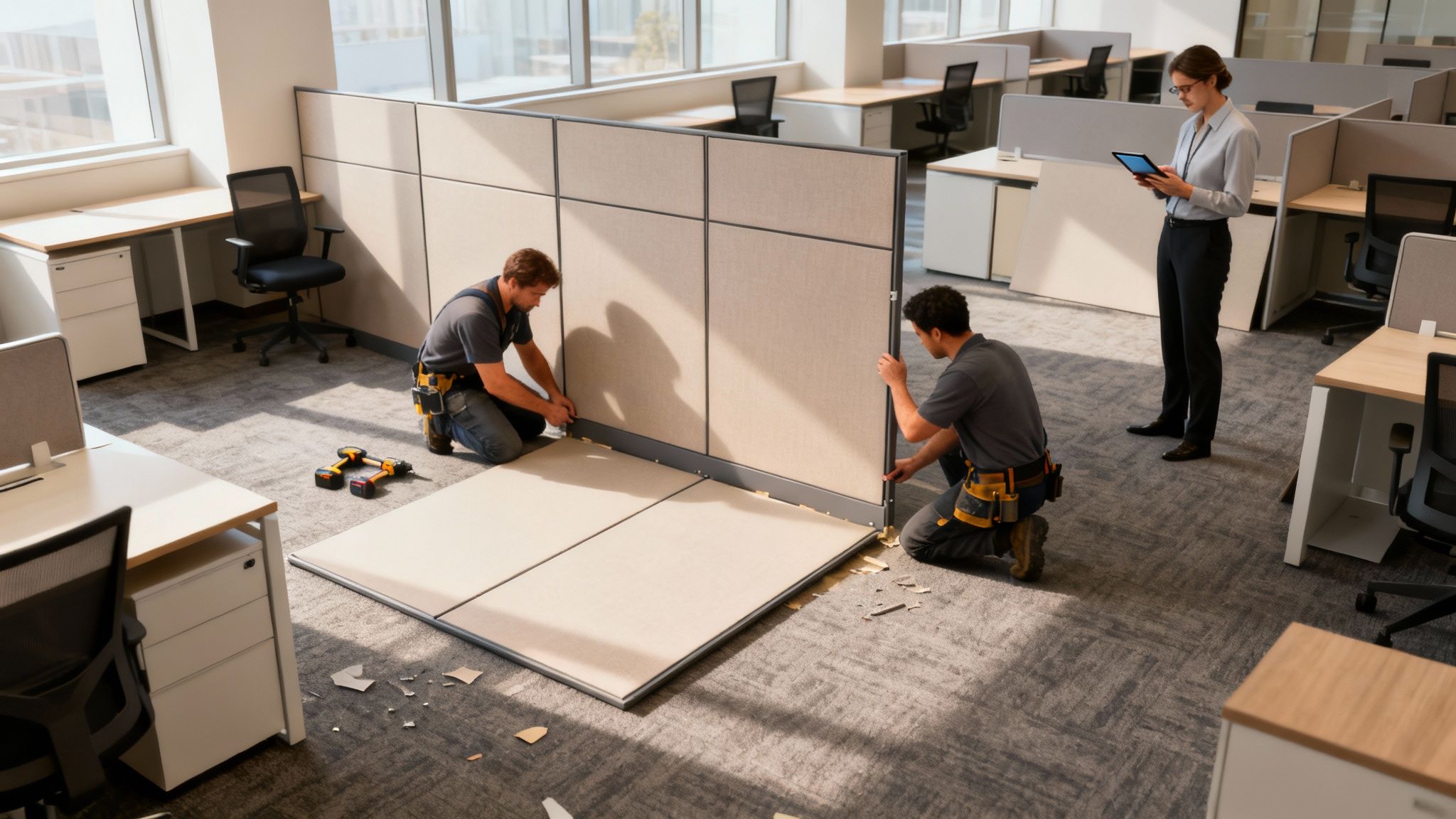
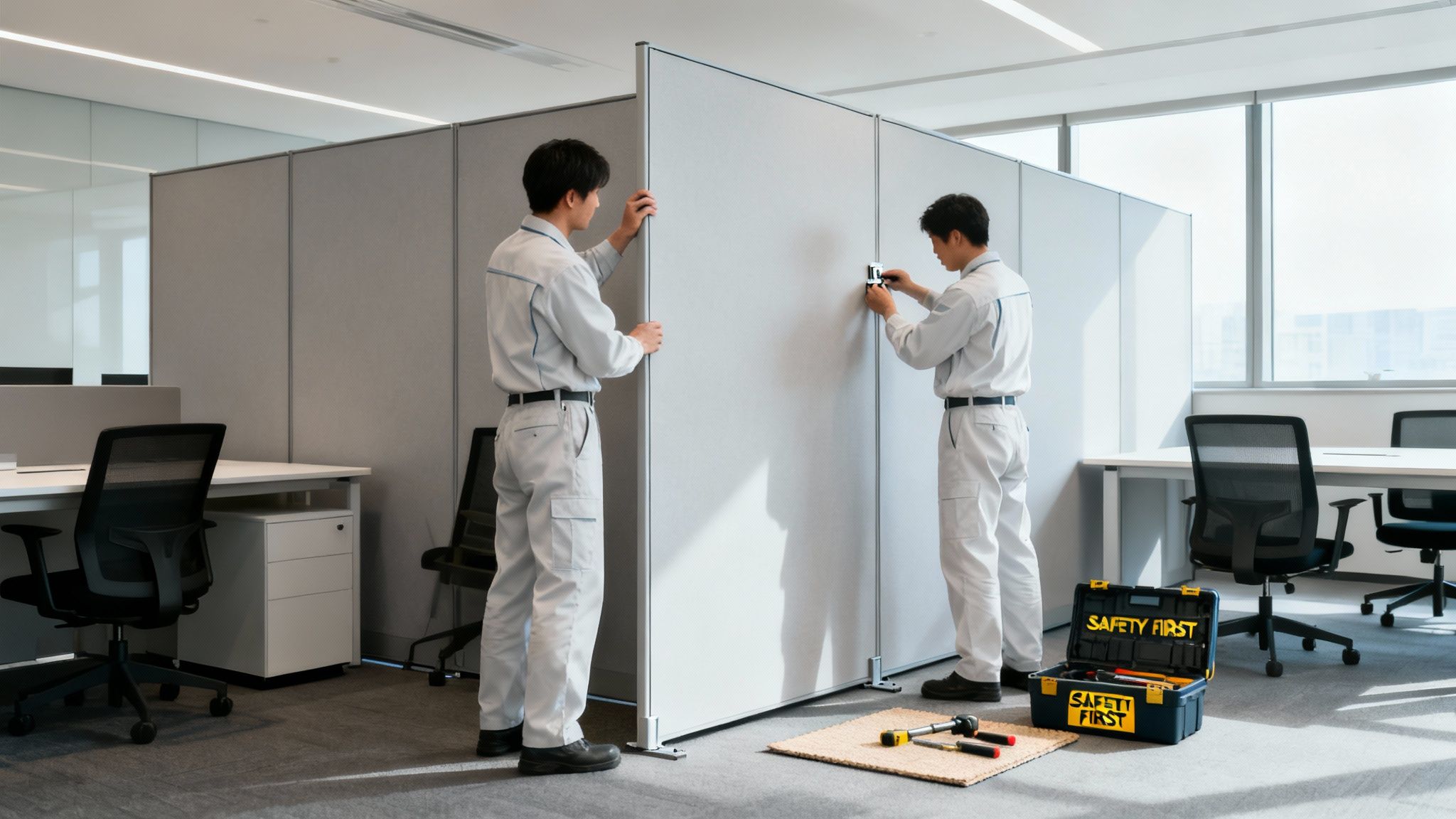
Two men in white uniforms assembling gray office partitions in a bright, modern office.

The initial setup is a breeze. It starts with a professional site visit to make sure the game plan fits your existing space perfectly. From there, trained technicians handle the assembly with as little disruption to your team’s day as possible.

This efficiency is a huge reason why the modular wall systems market hit $10.5 billion and is expected to nearly double to $20.8 billion by 2032. Businesses are jumping on board because they can slash setup time by up to 70% compared to old-school construction.

The Magic of Reconfiguration

Here’s where temporary office walls really shine: their adaptability. Your business changes, so why should your office be stuck in one configuration? When you need to spin up a new project team, add another private office, or carve out a new collaboration zone, rearranging your walls is surprisingly simple.

Unlike drywall—which means dust, noise, and a whole lot of mess—modular walls are built to be moved. The process is clean and straightforward:

  • Systematic Disassembly: Panels are carefully unlocked and taken apart without creating a construction zone in your office. No dust, no debris.
  • Easy Relocation: The parts are lightweight enough to be moved to their new spot without a major production.
  • Quick Reassembly: The system is put back together in the new layout, often in just a few hours.

This power to constantly reinvent your floor plan is what turns a temporary wall from a one-time purchase into a long-term asset. You can get a better sense of what a professional crew can do by checking out our guide on office furniture installation.

Simple Long-Term Care and Maintenance

Keeping your temporary walls looking great for years doesn’t take much work. The care instructions depend on the material, but it’s all pretty simple stuff.

  • Fabric Panels: A quick pass with a vacuum’s brush attachment handles the dust. For small spots, a gentle fabric cleaner does the trick.
  • Laminate Surfaces: These are tough. Just wipe them down with a soft cloth and a mild cleaner to get rid of smudges and fingerprints.
  • Glass Walls: Nothing fancy here. Standard glass cleaner and a microfiber cloth will keep your glass partitions crystal clear and streak-free.

If you’re looking for a deeper, chemical-free clean, methods for steam cleaning walls can be a great option for many surfaces. On top of that, any reputable manufacturer will offer a solid warranty covering material and workmanship defects, so you can have peace of mind that your investment is protected.

Designing a Truly Agile Office Layout

It’s time to move beyond the static floor plan. Let’s talk about how to transform your space into a living, breathing ecosystem that actually helps your team get work done. A temporary office wall isn’t just a divider; think of it as a strategic tool for building a truly agile workplace. This is all about ditching rigid layouts for a more fluid, responsive approach to office design.

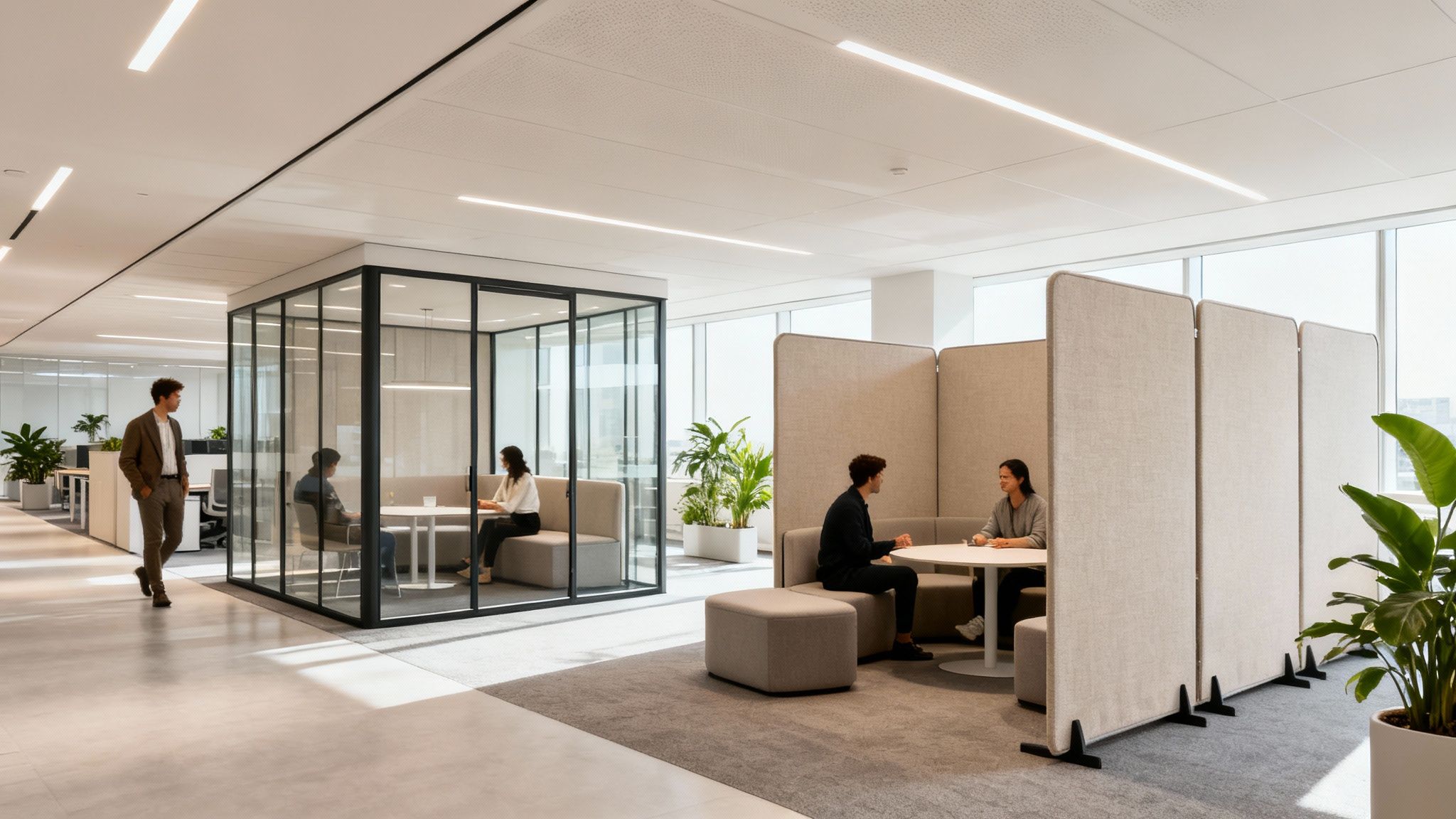
Modern open-plan office with collaborative zones, glass partitions, and acoustic dividers.

When you place these walls thoughtfully, you can carve out specialized zones that cater to different kinds of work. Suddenly, your office goes from a one-size-fits-all box to a versatile environment that supports every task your team tackles.

Creating Purpose-Built Zones

An agile office is really just a collection of intentional spaces. With modular and demountable walls, you can build out these critical areas without the headache and dust of a traditional construction project.

  • Quiet Zones: Use demountable walls with a high-STC rating or fabric-covered panels to create library-like nooks for deep, focused work. These spots are gold for anyone needing to concentrate, shielding them from the unavoidable chatter of a busy office.
  • Collaborative Hubs: Carve out open, energetic areas perfect for brainstorming and team huddles. Low-height partitions or sleek glass walls can define these hubs without completely sealing them off, which helps maintain a sense of connection to the rest of the office.
  • Team Neighborhoods: Group project teams or entire departments into their own zones. This gives teams a home base and a sense of ownership over their space while still keeping them accessible to others.

This whole concept is the backbone of Activity-Based Working (ABW). It’s a design philosophy where employees aren’t chained to a single desk. Instead, they choose the best space for the task at hand, moving between quiet zones, collaborative hubs, and their team neighborhood as their day unfolds.

The Key to Modern Design Philosophies

Trying to implement something like ABW is nearly impossible with a fixed floor plan. Temporary office walls are the key that unlocks this level of flexibility, letting you create a workspace that responds directly to what your team needs, when they need it.

Just look at the high demand for flexible co-working office solutions—it shows how much businesses value adaptable layouts. Temporary walls let you build that same highly functional environment right inside your own dedicated space, giving your team the freedom to do their best work.

It’s time to stop thinking of walls as permanent barriers and start seeing them as powerful tools for growth. Our office space planning and design services can help you figure out exactly how to apply these concepts to your unique workplace.

Common Questions About Temporary Office Walls

Even when you think you have a solid plan, a few practical questions always pop up before pulling the trigger on a new office setup. Investing in temporary office walls is a big move toward making your space more flexible, so it’s smart to clear up any last-minute doubts. This section tackles the real-world questions we hear most often from office managers and business owners, so you can move forward with confidence.

We’ll get into the nitty-gritty of soundproofing, how these systems play with the furniture you already have, and what you can expect in terms of long-term durability. Getting these details right is the key to making sure your new walls work exactly the way you need them to.

How Good Are Temporary Walls at Soundproofing an Office

The short answer? It really depends on the type of wall you choose. The effectiveness varies quite a bit, so you have to match the wall system to the level of privacy you’re trying to achieve.

  • For Maximum Privacy: If you need a space for confidential meetings or focused executive work, floor-to-ceiling demountable walls with solid cores are your best bet. These are the champs of sound control and can achieve high Sound Transmission Class (STC) ratings, effectively blocking conversations.
  • For Reducing Ambient Noise: In a lively open office, fabric-covered modular panels work wonders. They are fantastic at absorbing that background hum and chatter, cutting down on echo and making it easier for everyone to concentrate. They won’t give you a silent room, but the improvement is significant.
  • For Visual Separation: Glass walls look sharp and modern, but standard versions don’t do much for sound privacy. If you love the look but need more quiet, you can upgrade to specialized acoustic glass, which has a sound-dampening layer built right in.

For true, library-level quiet, nothing beats a full-height system with proper seals at the floor and ceiling.

Can I Use These Walls with My Existing Office Furniture

Absolutely. In fact, that’s one of their biggest selling points. Temporary walls are designed from the ground up to integrate with the desks, filing cabinets, and especially the workstation cubicles you already own. This compatibility is what allows you to reconfigure your space without having to buy all new furniture.

You can use them to carve out a few private offices right next to your open-plan area or build new perimeters around a cluster of existing desks. For a truly seamless look, it’s a good idea to measure the height of your current furniture and pick a wall style that complements it. Companies like Cubicle By Design offer a huge selection of cubicles and wall systems that are designed to fit together perfectly.

Think of temporary walls as a modular extension of your current office. They don’t replace what you have; they enhance it, allowing you to add layers of privacy and structure exactly where they’re needed most.

Are Temporary Office Walls Durable Enough for Daily Use

Yes, without a doubt. We’re not talking about flimsy room dividers here. Commercial-grade temporary walls are built to handle the daily grind of a busy office. Reputable manufacturers use tough, high-quality materials like heavy-duty aluminum frames, scratch-resistant laminates, and tempered safety glass that can stand up to years of wear and tear.

The key to longevity, however, is using the right tool for the job. A lightweight freestanding screen is perfect for a low-traffic corner, but it’s not the right choice for a main corridor. For high-use areas like hallways or meeting rooms, you’ll want a more robust modular or demountable system. When you choose the right product and have it installed correctly, these walls become a lasting part of your office infrastructure.


Ready to create a more agile and productive workspace? The experts at Cubicle By Design can help you find the perfect temporary wall solution for your needs. Explore our options and start your office transformation today at https://cubiclebydesign.com/.
Read More
Glass Wall Systems for Offices

Glass Wall Systems for Offices: Create Bright, Flexible Workspaces

Walk into an office where natural light spills from the windows all the way into the inner hallways. You see teams connecting, the whole space feels alive, and collaboration just seems to happen. This isn’t some far-off dream; it’s the reality that businesses are building right now with glass wall systems for offices.

For years, the typical office was a maze of drywall. It created isolated cubicles and private offices that felt dim, stuffy, and disconnected. That design choked off both light and interaction, putting up literal barriers to communication. But today, we’re seeing a huge shift away from that static, closed-off model.

Why Glass Walls Are Reshaping Modern Offices

Modern workplaces are all about being agile and looking after employee well-being, and glass walls are a perfect match. They let sunlight penetrate deep into the building, which is proven to boost mood and productivity. This move toward transparency also helps build a more open and inclusive company culture where people feel more connected.

In fact, one of the biggest modern workplace design trends is this very shift toward brighter, more adaptable spaces.

Embracing Flexibility and Light

This isn’t just about looking good; it’s a real business advantage. The market for glass partition walls is booming, projected to hit USD 3,880.4 million by 2031. A huge reason for this is the need for businesses to reorganize on the fly—over 60% of companies say it’s a top priority. In an age of hybrid work, being able to reconfigure your space in hours instead of weeks is a game-changer. You can find more on these market insights on Metastat Insight.

Glass wall systems are more than just glass and metal; they’re a strategic investment in culture, collaboration, and productivity. They represent a fundamental shift in how we think about the purpose and feel of a workspace.

At the end of the day, these systems are simply a smarter way to build. They fit the needs of modern companies that have to adapt quickly to changing markets and team structures. By swapping out fixed walls for movable, light-friendly partitions, companies like those we work with at Cubicle By Design are creating inspiring, dynamic environments built for the future.

Understanding the Different Types of Glass Wall Systems

When you first start looking at glass wall systems for your office, the sheer number of options can feel a bit overwhelming. But don’t worry—they all really boil down to a few key categories. Each one is built to solve specific challenges, whether you’re prioritizing style, long-term flexibility, or pure function. The easiest way to get a handle on them is to think about their structure and how they operate.

The biggest fork in the road is the choice between framed and frameless systems. It’s exactly what it sounds like. Framed systems have glass panels set inside a visible metal frame, usually aluminum. This gives you a classic, structured look that clearly marks out different areas. It’s also often the stronger choice for structural integrity and keeping sound where it belongs.

On the other hand, frameless systems ditch the bulky hardware. They connect glass panels directly to each other for that seamless, all-glass look. The effect is powerful—it creates a huge sense of openness and a sleek, modern vibe that makes any space feel bigger and more connected.

To help you get a quick read on which style might be a better fit, here’s a simple side-by-side comparison.

Framed vs Frameless Glass Walls: A Quick Comparison

Feature Framed Glass Walls Frameless Glass Walls
Aesthetics Defined, structured, classic industrial look. Sleek, minimal, modern, and seamless.
Best For Private offices, conference rooms, areas needing better sound control. Open-concept areas, collaborative zones, maximizing light.
Privacy Often better acoustic performance due to sealed frames. Can be enhanced with frosted or acoustic glass, but generally less soundproof.
Installation More forgiving of slight imperfections in floors and ceilings. Requires precise measurements and perfectly level surfaces.
Cost Typically more budget-friendly. Often a higher price point due to specialized hardware and glass.

Ultimately, the right choice depends entirely on what you’re trying to achieve with the space.

Digging into the Core Structures

Choosing between framed and frameless really comes down to balancing aesthetics with your day-to-day practical needs. Framed walls are often the go-to for private office cubicles where hushed conversations are the norm. Frameless systems, however, are unbeatable when you want to build collaborative zones without putting up visual barriers.

Beyond the frame, the next major player is the modular system. Think of these like office “Legos.” They’re panels designed from the ground up to be easily installed, taken down, and rearranged. This adaptability is their superpower. As your company grows or teams shift, modular walls can be moved to create new offices, shrink a conference room, or open up a space for a new project—all without the dust, disruption, and cost of traditional drywall construction. That flexibility makes them an incredibly smart long-term investment.

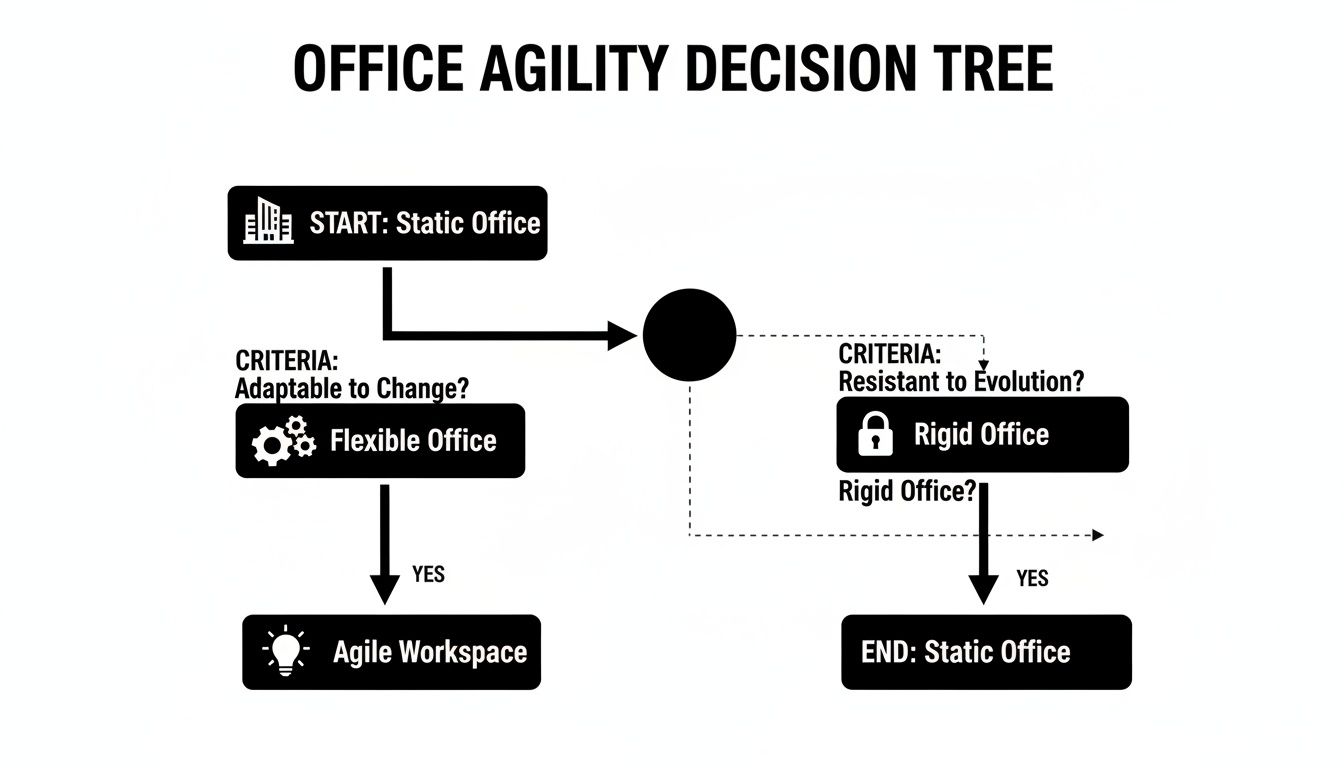
This decision tree gives you a simple way to think about the primary choice between flexible glass walls and static drywall.

The takeaway is pretty clear: if you can see your business changing its layout or team size down the road, glass wall systems offer an agility that old-school construction just can’t touch. You can learn more about how these adaptable solutions work in our complete guide to modular office walls.

How the Panels and Doors Actually Work

The last piece of the puzzle is figuring out how the glass panels and doors will function. The right mechanism is all about the flow of traffic and the purpose of the space you’re creating.

  • Fixed Panels: This is your simplest option. Fixed glass panels are stationary, used to create permanent dividers where you don’t need a door. They’re perfect for separating a hallway from a row of workstation cubicles while still letting tons of light pour through.
  • Sliding Doors: A huge space-saver and a very popular choice. Sliding glass doors glide along a track instead of swinging out, which makes them ideal for tight spots like small meeting rooms or individual private offices where a traditional door would just get in the way.
  • Pivot Doors: These doors create a more sophisticated, modern entrance. They swing open on a pivot hinge mounted at the top and bottom, which allows them to handle larger and heavier glass panels than standard doors. This can create a really grand sense of entry for a boardroom or reception area.

Once you understand these fundamental differences, you’re in a much better position to choose a glass wall system that actually fits your office’s look, culture, and daily operations. The next step is bringing that vision to life.

Solving for Privacy and Acoustics in Glass Offices

Let’s get right to the biggest question on everyone’s mind when they hear “glass wall systems for offices”: privacy. The “fishbowl office” is a real concern, but modern engineering has completely changed the game. You don’t have to sacrifice confidentiality and focus for that beautiful, light-filled aesthetic.

The key is a metric called the Sound Transmission Class (STC) rating. Think of it as a simple score—the higher the number, the better the wall is at stopping sound. A typical drywall office wall lands somewhere around an STC of 35-40, where you might hear muffled voices but can’t make out the words.

Many people assume glass is a poor sound blocker, but that’s an outdated idea. Today’s systems are designed to go toe-to-toe with traditional walls, and often, they win.

Achieving True Acoustic Separation

So, where does the magic come from? It’s all in the construction of the glass itself. While a basic, single pane of glass offers minimal sound control, advanced options can create remarkable acoustic privacy.

Here’s a quick breakdown of how different glass types stack up:

  • Single-Glazed Glass: This is your standard single pane. It provides some basic sound dampening, usually hitting an STC rating in the mid-30s. It’s fine for areas where total silence isn’t a priority.
  • Double-Glazed Glass: This is where things get serious. By using two panes of glass with an air gap in between, you create an insulating layer that deadens sound waves. This can boost the STC rating to 50 or even higher.
  • Laminated Glass: This type features a thin polymer layer sandwiched between two panes of glass. That inner layer is a rockstar at dampening vibrations, which is a huge factor in noise reduction.

An STC rating of 50 is a big deal. At this level, even loud conversations on the other side fade to a barely audible murmur. It’s the perfect solution for executive offices, HR departments, or any space where confidentiality is non-negotiable.

This kind of performance ensures sensitive discussions stay private and your team can get their deep work done without distractions.

Creating Visual Privacy Without Sacrificing Light

Of course, sound is only half the battle. You also need to control who can see what. Luckily, glass walls offer a whole menu of options to create visual separation while still letting that valuable natural light pour into the workspace.

Beyond just privacy, other challenges like glare or hotspots from the sun can be handled with specialized window tint solutions for commercial buildings, making the space more comfortable for everyone.

Some of the most popular choices for visual privacy include:

  • Frosted or Etched Glass: These treatments obscure the view while beautifully diffusing light. You can go for a full frost for total privacy or use custom patterns and branded designs.
  • Switchable Smart Glass: For the ultimate in flexibility, smart glass can shift from perfectly clear to fully opaque with the simple flip of a switch. It’s privacy on demand.

The demand for these solutions is clear. The global glass partition market was valued at USD 4.8 billion in 2025 and is projected to hit USD 6.46 billion by 2035. This boom is fueled by innovations that not only solve for privacy but also boost natural light, which can cut the need for artificial lighting by up to 30%.

By mixing the right STC-rated glass with smart visual privacy options, you get an office that feels open and collaborative without giving up the focus and confidentiality your business needs. It’s the same balance of openness and focus we aim for in our guide on how to improve office cubicle privacy.

How to Budget for Your Glass Wall Project

Let’s talk numbers—one of the most important steps in any office renovation. Budgeting for glass wall systems for offices can feel a bit daunting at first, but it gets a lot clearer once you know what actually drives the cost. Unlike putting up drywall, a glass wall system is really an investment in your office’s future flexibility and overall vibe.

The final price tag isn’t just about the glass itself; it’s a mix of materials, how much you customize it, and the labor to get it installed. I always tell clients to think of it like buying a car. The base model has one price, but as soon as you add premium finishes, a better engine, or high-tech features, that final sticker price starts to climb. It’s the same story here—your choices in glass type, hardware, and door styles will shape your project’s budget.

Key Factors That Influence Your Final Cost

A few key elements have a direct impact on what you’ll end up spending per linear foot. Getting a handle on these helps you make smart decisions that line up with both your budget and your design goals. It’s all about striking the right balance between looks, performance, and price.

The biggest cost drivers you’ll see are:

  • System Type: Frameless systems tend to cost more than their framed cousins. That’s because they need specialized hardware and some serious precision engineering to pull off that clean, seamless look.
  • Glass Specifications: The thickness and type of glass are huge factors. Standard tempered glass is your baseline, but if you upgrade to double-glazed or laminated acoustic glass for better sound control, the price will go up accordingly.
  • Hardware and Finishes: The little details matter. The material and finish of handles, hinges, and framing—think brushed nickel versus standard aluminum—can definitely affect the total cost.
  • Door Mechanisms: A simple pivot door is priced very differently from a sleek, space-saving sliding door system, which needs more complex track hardware to work.

Establishing a Realistic Budget Range

While every project is one-of-a-kind, you can generally expect glass wall systems for offices to run anywhere from $75 to over $250 per linear foot, installed. The lower end of that range usually gets you a basic framed system with standard glass. The higher end reflects frameless designs with acoustic glazing and premium hardware.

This is one of those investments that often pays for itself over time. Because these systems are modular, you can reconfigure your space down the road without the mess and expense of demolition and construction. That saves a ton of money on future layout changes, and the extra natural light can even help lower your electricity bills.

When you’re planning, it’s also smart to set aside a little extra for potential “hidden” costs. Things like site preparation, running electrical if you’re integrating power, or special permits depending on your city can pop up. The best way to avoid surprises is to get a detailed, itemized quote from your installer. For some helpful context on how different office furnishings are priced, check out our comprehensive cubicle price guide. It’s a great resource for overall project budgeting.

This strategic approach ensures you can effectively manage your budget for the glass walls alongside other important expenses like new cubicles. By understanding the cost factors upfront, you can confidently invest in a solution that elevates your workspace for years to come.

What to Expect During the Installation Process

The quality of your glass wall systems for offices isn’t just about the product itself—it’s equally about how smoothly the installation goes. Traditional drywall construction is a messy business, known for dust, noise, and dragging on for weeks. A modular glass installation, on the other hand, is designed from the ground up to be clean, fast, and incredibly efficient.

Knowing what’s coming helps set the right expectations and ensures your project runs like a well-oiled machine from day one.

The real work starts long before a single piece of glass arrives at your office. It all begins with painstaking planning and measurement. A good project manager will double-check every dimension, coordinating with your electricians and flooring crews to sidestep any potential headaches. This prep work is the bedrock of a flawless installation. Getting familiar with the process of professional installation services can also give you a great head-start on what to expect for your own project.

From Design Mock-Up to Final Inspection

With the plans locked in, the project moves into a clear, predictable timeline. Every step is carefully managed to cause as little disruption as possible to your daily operations. Your team can keep right on working.

Here’s a look at the key milestones you’ll see on-site:

  1. Site Preparation: The installation crew preps the area, making sure the floors and ceilings are clear and ready for the tracking systems. This is a crucial step to guarantee the walls are perfectly level and secure.
  2. Track and Frame Installation: Next, technicians install the slim aluminum tracks along the floor and ceiling. This framework is the skeleton that will hold every glass panel firmly in place.
  3. Glass Panel Placement: Once the frame is up, the precision-cut glass panels are carefully lifted and slotted into the tracks. It’s a delicate job, but it happens surprisingly fast.
  4. Door and Hardware Integration: To finish things off, doors are hung and all the hardware—handles, locks, and closers—is installed and tested to make sure everything works perfectly.

Why Modular Installation Is a Smarter Choice

The real magic of a modular glass installation is how clean and efficient it is. Because every component is manufactured to spec off-site, there’s practically no cutting, sanding, or painting happening in your space. This means a dramatic reduction in dust, debris, and fumes, which makes for a much healthier environment for your team.

The speed of a modular glass wall installation is a huge business advantage. A project that might take weeks with drywall can often be wrapped up in just a few days. That minimizes downtime and gets your team into their new space almost immediately.

This streamlined process is at the heart of how we work. We manage every detail, from the initial measurements to the final walkthrough, to make sure the installation is just as impressive as the finished product. To see exactly how we handle things, check out our guide on glass architectural wall installation.

This level of coordination ensures that from the first design mock-up to the final sign-off, your vision becomes a reality with minimal fuss.

Integrating Glass Walls into Your Office Design

Glass walls don’t exist in a vacuum. They work best when they’re a thoughtful part of your entire office ecosystem. The key is to integrate glass wall systems for offices with your existing layout and furniture, creating a space that feels both cohesive and genuinely functional. Think of them as a design tool that enhances your workspace, not just chops it up.

This means you have to look beyond the partitions themselves. How will they interact with desks, collaborative zones, and the natural flow of foot traffic? A well-placed glass wall can amplify all the benefits of an open office while still giving teams the structure and privacy they need to actually get work done.

Blending Transparency with Functionality

One of the smartest strategies is pairing different types of office furniture to strike the right balance. By combining full-height glass walls with low-profile furniture, you can define spaces without sacrificing those valuable sightlines or blocking precious natural light.

Here are a couple of practical ways this plays out:

  • Private Offices and Open Workstations: Imagine enclosing a row of private office cubicles with floor-to-ceiling glass. Right next to them, you place low-height workstation cubicles in the open area. It’s a popular setup for a reason—it gives leaders the privacy they need but keeps them visually connected to their teams, fostering an open and accessible culture.
  • Creating Zones Without Walls: You can use glass partitions to carve out distinct zones for different work styles. A frosted glass wall, for instance, can separate a quiet, heads-down focus area from a lively collaborative hub. It dampens noise and visual distractions without making either space feel boxed in.

This technique—using glass to define function while preserving an open feel—is a true hallmark of modern office design.

Maximizing Natural Light and Openness

The powerful impact of natural light on productivity and well-being is a major reason companies are ditching traditional opaque walls. In the commercial world, glass curtain wall systems are a dominant force, holding a massive 71.6% revenue share in office architecture. Why? Because they allow up to 70% more natural light to pour into a building’s interior, which can slash lighting energy costs by 25-40% in sustainable projects. You can read more about these commercial building trends at Grand View Research.

By strategically placing glass walls, you can guide that exterior light deep into the core of your office. This not only cuts down on energy use but also creates a more vibrant and energizing atmosphere for everyone, no matter where their desk is.

Thinking about your future layout from the very beginning is essential. You can map out how glass walls might work with your desired furniture arrangements using a tool like our Cubicle Designer. This helps you visualize the flow and make sure every single element works together.

Ultimately, integrating glass walls is about creating a smart, flexible environment that supports how people actually work. When you combine them with the right cubicles and office furniture from a trusted partner like Cubicle By Design, these systems become the backbone of a truly modern and adaptable workplace.

Your Questions About Office Glass Walls, Answered

Even after we’ve walked through the benefits, styles, and installation process, a few practical questions almost always come up. It’s totally normal. Let’s tackle the most common ones we hear to clear up any lingering doubts about things like durability, upkeep, and long-term value.

Just How Tough Are These Glass Walls?

When people hear “glass walls,” they often picture something delicate and fragile, but the reality is quite different. The glass used in modern office partitions is incredibly tough. It’s typically tempered glass, which gets its strength from a process of intense heating and rapid cooling.

The result? A panel that’s about four to five times stronger than the standard glass in your home’s windows. It can easily take the everyday bumps and knocks of a busy office. For high-traffic areas or places where you need a bit more security, we can use laminated glass, which adds another layer of safety and durability.

What’s Involved with Cleaning and Maintenance?

Honestly, this is one of the best parts. Glass walls are ridiculously low-maintenance. Unlike drywall that shows every scuff and needs a fresh coat of paint every few years, glass just needs a simple wipe-down.

  • For daily upkeep: A quick spray of glass cleaner and a pass with a microfiber cloth is all it takes to handle fingerprints and dust.
  • For a deeper clean: A simple mix of mild soap and water does the trick. Use a squeegee afterward to get that perfect, streak-free shine.
  • Hardware checks: Every so often, it’s a good idea to give the door handles, hinges, and sliding tracks a quick check to make sure everything is tight and moving smoothly.

Plus, since glass is non-porous, it won’t trap dust or allergens, which is a nice little bonus for your office’s air quality.

Can We Move or Change the Walls Later On?

Absolutely. In fact, this is one of the biggest selling points of modular glass wall systems for offices. They are specifically designed to be flexible. If your team structure changes, you expand, or you just want to try a new layout, the walls can be taken down and reinstalled in a new spot.

This adaptability is what makes glass walls such a smart long-term investment. You’re not just paying for a one-time construction project. You’re getting an asset you can reconfigure as your needs change, all without the mess, waste, and cost of tearing down and rebuilding traditional walls.

How Do Glass Walls Affect a Building’s Property Value?

Installing a high-quality glass wall system is a definite plus for your property value. They create that modern, high-end feel that today’s commercial tenants and buyers are looking for. The natural light, the open sightlines, and the flexible layouts they create are all premium features in the current real estate market.

An investment in this kind of adaptable infrastructure shows you’ve built a forward-thinking workspace, making the property far more attractive and competitive.

Will They Work with Our Existing Furniture?

Yes, they’re designed to play nicely with just about any office furniture you already have. We can use glass walls to enclose a cluster of existing workstation cubicles to create a quiet pod for a specific team, or we can build out a full conference room around your current tables and chairs.

The trick is all in the planning. When you work with a space planner, you can ensure the new glass partitions complement your current setup, creating a layout that feels intentional and works perfectly. It’s a great way to upgrade your space without having to scrap all your existing furniture. You can even use a tool like our Cubicle Designer to play around with layouts and see how it all fits together.


Ready to transform your workspace with the light, flexibility, and style of glass wall systems? The team at Cubicle By Design is here to help you plan, design, and install the perfect solution for your office. Explore our full range of office furniture solutions and start your project today.

Read More

What Is Modular Furniture? A Guide to Flexible Office Design

Think of your office like a set of LEGOs. You can click them together, pull them apart, and build something entirely new whenever you need to. That’s the simple idea behind modular furniture: a system of individual pieces that you can arrange and rearrange to create truly custom workspaces. It’s a concept that frees your business from being locked into a rigid, static layout, giving you the power to adapt your space on the fly.

Redefining the Modern Workspace

For decades, office furniture was a permanent decision. Desks were heavy, unmoving fixtures. Walls were built-in. If you wanted to change the layout, you were looking at a disruptive and expensive construction project.

Modular furniture completely flips that script. Instead of a fixed environment, it gives you a dynamic ecosystem of interconnected parts, each serving a specific function.

Miniature office scene showing people working in modular cubicles with desks and laptops.

This approach is a massive strategic advantage, especially for businesses that are growing or constantly evolving. Having the ability to easily reconfigure your space is a game-changer for things like effective office relocation project management or just adjusting to new team structures without a huge capital investment.

To give you a quick snapshot of the differences, here’s a simple breakdown.

Modular vs Traditional Office Furniture At a Glance

Attribute Modular Furniture Traditional Furniture
Flexibility High Low
Installation Quick, minimal disruption Lengthy, disruptive construction
Scalability Easy to add or remove units Difficult and expensive
Relocation Simple to disassemble and move Often impossible; a sunk cost
Cost Lower upfront & long-term cost High upfront & modification costs
Customization Highly customizable finishes & layouts Limited to initial design

This table just scratches the surface, but it highlights the core reason why so many modern offices are making the switch.

The Power of Adaptability

The real strength of modular design is its incredible adaptability. It allows your physical space to evolve just as quickly as your business strategy does. No more being stuck with a layout that made sense two years ago but feels outdated today.

This agility is exactly why the global modular furniture market hit USD 55.2 billion in 2024 and is projected to climb to USD 86.15 billion by 2030. That growth is a direct reflection of how modern businesses need agile, multifunctional work environments to thrive.

Think about these real-world scenarios where modularity just makes sense:

  • Accommodating Team Growth: A startup hires five new developers. Instead of a major renovation, they can simply add a new cluster of workstations over a weekend, ready for the new team on Monday.
  • Creating Project Hubs: The marketing team needs a “war room” for a big product launch. They can set up a temporary, semi-private collaboration zone and then easily dismantle it when the project wraps.
  • Supporting Hybrid Work: As more employees split time between home and the office, you can create flexible “hot desking” areas alongside permanent private office cubicles to support everyone’s needs.

This shift from static to dynamic is all about matching the office environment to the way we actually work now. An office isn’t just a place to sit anymore—it’s a tool for collaboration, focus, and getting things done. A flexible layout empowers your team to shape their environment for peak performance.

Of course, a great modular setup starts with a great plan. To get the most out of it, you need a solid foundation. You can learn more by checking out our guide on what is space planning, which shows how a thoughtful layout truly unlocks the potential of these solutions. Whether you’re designing from scratch or rethinking your current space, modularity is a future-proof investment in your team’s success.

The Core Benefits of a Flexible Workspace

Knowing what modular furniture is is one thing, but the real “aha!” moment comes when you see how it can directly benefit your business. When you go modular, your office stops being a fixed, rigid expense and transforms into a dynamic asset—one that actively supports your company’s growth, efficiency, and even your team’s well-being.

At its core, modular furniture is about striking a perfect balance between adaptability, smart financial planning, and a genuinely better work environment. These aren’t just small perks; they represent a fundamental shift in how you can control and optimize your physical space.

Unlocking True Workplace Flexibility

If there’s one standout advantage to modular systems, it’s their incredible flexibility. Traditional office furniture locks you into a single layout. Any change, big or small, becomes a costly, disruptive headache. Modular components, on the other hand, are built from the ground up to be reconfigured with minimal fuss.

Imagine your sales team is about to grow by three people next month. With a fixed layout, that might mean starting a frantic search for more office space. With a modular system, you can simply rearrange existing workstation cubicles or add a new cluster over a weekend. No downtime, no drama.

This adaptability makes a difference in day-to-day operations, too. You can:

  • Create temporary project zones for a team on a tight deadline.
  • Set up quiet pods for deep, focused work.
  • Tweak layouts to improve the flow of communication between departments.

Achieving Significant Cost-Effectiveness

While the upfront cost of high-quality modular furniture can be similar to traditional options, the long-term savings are where it really shines. The magic word here is reusability. When your company grows, reorganizes, or moves, you don’t have to toss out all your old furniture and start from scratch. You simply reconfigure or add to what you already have.

This “buy it once, use it for years” approach completely breaks the expensive “rip and replace” cycle that plagues so many businesses. Over the life of your office, this can easily add up to tens of thousands of dollars in savings. Plus, since installation and reconfigurations are so much faster, you also slash labor costs and minimize business disruption.

Scaling Your Office with Ease

For any growing business, scalability is everything. Your office space should be an enabler of that growth, not a roadblock. Modular furniture allows your physical footprint to scale right alongside your headcount, seamlessly. You can begin with a small, focused setup and gradually add components as your team expands, ensuring you only pay for what you need, right when you need it.

This on-demand scalability makes modular furniture a smart, future-proof investment. It ensures your office can evolve from a small startup hub to a bustling corporate headquarters without requiring a complete and costly overhaul at every stage of growth.

This isn’t just a niche idea; it’s a global movement. The modular furniture market was valued at USD 81.3 billion in 2023 and is projected to hit USD 117.6 billion by 2032. Businesses everywhere are demanding spaces that can adapt on the fly, save space, and promote sustainable, reusable design.

Improving Acoustics and Privacy

It’s no secret: open-plan offices can be noisy and full of distractions, killing productivity. Modular systems give you the power to fight back by engineering acoustics and privacy directly into your floor plan.

Panel systems can be ordered at different heights and with sound-absorbing materials to create real acoustic barriers. Taller panels around a specific team’s area can instantly dampen chatter and create a more focused atmosphere. For total quiet, you can use modular walls to build fully enclosed private office cubicles without the mess, expense, and permanence of drywall construction.

This ability to tailor privacy levels across the office is a game-changer for supporting different work styles. To see how this fits into the bigger picture, you can learn more about how office trends boost employee productivity and help create a better work experience for everyone.

The Building Blocks of a Modular Office

Knowing the benefits of modular furniture is one thing, but the real fun begins when you see the actual pieces that make up this adaptable ecosystem. Don’t think of it as just buying a desk; it’s more like putting together a custom toolkit for your office. Every component, every “building block,” is made to fit together, giving you the power to build a workspace that’s a perfect match for your team.

So, what are these core components? They’re the versatile elements that let you build, adapt, and rebuild your office without the cost and headache of traditional construction. From lively collaboration hubs to quiet focus zones, these are the pieces that form the foundation of a truly flexible office.

Modular Cubicles and Workstations

The cornerstone of any modular office is the cubicle or workstation system. You can forget the old, soul-crushing cubicle farms with their monolithic gray walls. Today’s modular cubicles are sleek, incredibly customizable, and built for how people actually work now. They are your primary tool for carving out individual workspaces and defining team areas.

These systems are made of interlocking panels, work surfaces, and storage units that you can snap together in endless configurations. You can set up open-plan benching for a sales team that thrives on buzz, or you can build out stations with higher walls for an accounting department that needs to buckle down. And because nothing is permanently fixed, bringing in a new workstation for a new hire or rearranging a whole cluster of desks can be a simple weekend project.

Demountable Walls for Privacy on Demand

One of the most powerful building blocks in the toolkit is the demountable wall. These are non-load-bearing, movable wall systems—often made of glass—that let you create completely private offices or conference rooms without needing a contractor to put up drywall, studs, and paint. They deliver the same acoustic privacy as a traditional room but with the freedom to be moved or taken down as your needs shift.

This is a complete game-changer for any business trying to strike a balance between open, collaborative zones and quiet spaces for confidential meetings or deep-focus work. You can get a better sense of how these systems work by looking into modular office walls, which are quickly becoming a staple in smart office design. Best of all, unlike drywall, you can take these walls with you if you ever move, protecting your initial investment.

This image really drives home the core benefits these building blocks deliver.

A diagram illustrating the benefits of modular furniture: flexibility, scalability, and cost savings.

As you can see, the key advantages—flexibility, scalability, and cost savings—are all interconnected. They work together to support a smarter, more agile workplace strategy.

Configurable Desks, Tables, and Seating

Beyond the walls and cubicles, the furniture inside the space has to be just as adaptable. This category covers a whole range of components designed for movement and multiple uses.

  • Height-Adjustable Desks: These let employees easily switch between sitting and standing, which is great for health and accommodating different work styles.
  • Mobile Tables: Think lightweight tables on wheels that can be quickly rolled together for a training session, team huddle, or breakout meeting.
  • Modular Seating: This could be anything from sectional sofas in the reception area to soft seating pods that can be arranged to create casual meeting spots right in the middle of an open floor plan.

For a workplace that’s truly dynamic, smaller elements like standing desk converters can be fantastic building blocks, adding another layer of easy personalization to each workstation.

Integrated Power and Data Management

A modern office runs on technology, and a well-designed modular system plans for this right from the start. The final, and arguably most critical, building block is integrated power and data management. Modular furniture panels often come with built-in channels or “raceways” that neatly tuck away all the electrical wiring and data cables.

This isn’t just about looking tidy; it’s about pure function and safety. Integrated cabling gets rid of trip hazards and makes it incredibly simple to get power and network access right to each desk without a spiderweb of extension cords snaking across the floor.

When you decide to reconfigure your layout, the power and data infrastructure moves right along with the furniture. This pre-wired capability is what makes a modular office truly plug-and-play. It allows your business to adapt its physical space without being boxed in by the location of fixed electrical outlets. Together, all these building blocks create a cohesive system that lets you shape—and reshape—your workspace as your company grows.

Designing Your Custom Modular Workspace

Once you get a feel for the individual building blocks, you get to step into the role of an office architect. This is where the real potential of modular furniture comes alive—it’s not just about pushing pieces around, but about creating a workspace that’s a direct reflection of your team’s DNA and your company’s culture. Customization is what turns a pile of parts into a fully functional, branded environment.

This process is so much more than just picking a desk. It’s about intentionally engineering your floor plan for different work styles, from heads-down focus sessions to dynamic group brainstorms. By mixing and matching components, you can build a varied landscape inside your office that supports every single workflow.

Person holds a tablet showing a floor plan, surrounded by fabric samples and miniature modular office models.

Engineering Different Levels of Privacy

One of the first—and most important—decisions is figuring out the right privacy level for different teams and roles. A one-size-fits-all approach almost never works. Modular systems give you the tools to create a whole spectrum of privacy, all within the same office.

  • Low-Privacy Benching: Perfect for high-energy sales or creative teams. Benching systems use low or no panels at all to encourage constant communication and a shared sense of purpose.
  • Mid-Privacy Workstations: By using panels around 42-53 inches high, you can give seated privacy to employees in roles like customer service or marketing. This lets them focus but still easily see and talk to colleagues when they need to.
  • High-Privacy Cubicles: For jobs that demand deep concentration or confidentiality, like accounting or HR, taller panels of 65 inches or more create a serious acoustic and visual barrier. This design kills distractions and supports focused work.

For a deeper dive into making the most of a tight footprint, check out our guide on modular office furniture for small spaces. It’s packed with practical tips on maximizing every square foot without giving up an ounce of function.

Choosing Finishes and Materials

The look and feel of your office have a huge impact on morale and how clients see your brand. Modular furniture opens up a massive palette of finishes and materials, letting you line up your workspace with your company’s identity. You’re definitely not stuck with one color or texture.

You can customize:

  • Panel Fabrics: Pick from dozens of colors and patterns to match your brand, from calm, neutral tones to bold colors that create an energetic vibe.
  • Work Surfaces: Choose from a huge variety of laminates, including classic wood grains, solid colors, and modern patterns to fit your aesthetic.
  • Trim and Accents: Even the metal trim on panels and legs can often be specified in different finishes like black, silver, or white to pull the whole look together.

This level of detail ensures your office isn’t just a place to work, but a physical extension of your brand. It sends a powerful message to both your team and your visitors.

Integrating Storage and Technology

A great workspace is an organized one. Modular systems are brilliant at providing built-in storage solutions that keep clutter from taking over. You can add components like overhead flipper door units, mobile pedestals for personal items, or even full-height tower closets, all designed to fit seamlessly into the workstation.

It’s the same story with technology—planning for it is built right in. As you design your layout, you’ll specify exactly where power and data access points need to go. This proactive planning makes sure every employee has easy access to outlets for their computers and devices, all managed through clean, hidden channels inside the panels. No more messy extension cords tripping everyone up. Your office will be ready for the demands of a modern, tech-heavy workflow from day one.

Ready to see how all this works in the real world? The best next step is to start experimenting yourself. We invite you to explore the Cubicle Designer tool from Cubicle By Design, where you can move from learning to doing. This interactive tool lets you build a custom layout, select finishes, and bring your vision for the perfect modular workspace to life.

The Smart Investment in Modular Furniture

Choosing modular furniture isn’t just a design choice—it’s a strategic financial move that pays you back for years. While the upfront cost might look similar to a traditional office build-out, the real story unfolds over the long haul. That’s where modular systems pull way ahead, delivering a serious return on investment (ROI).

The secret is looking at the total cost of ownership. Traditional construction and fixed furniture have a nasty hidden price tag: the staggering expense of making changes later on. When your company needs to shuffle the floor plan, you’re often stuck with demolition, new construction, and the dead loss of tossing out perfectly good furniture.

Modular furniture completely sidesteps that wasteful “rip and replace” cycle. Since every single piece is designed to be taken apart and put back together in a new way, your initial purchase becomes a permanent asset. This incredible adaptability makes future layout changes faster, cheaper, and way less disruptive to your daily business.

Calculating the Long-Term ROI

The financial upside becomes crystal clear once you look past the first invoice. The real ROI of modular furniture comes from its power to adapt to your business as it grows and changes, all without hitting you with huge new expenses.

Think about these factors:

  • Slashed Reconfiguration Costs: Tweaking a modular layout takes just a fraction of the labor and material costs you’d face with a traditional renovation. You’re simply rearranging assets you already own.
  • Minimal Downtime: An office overhaul can happen in a few hours or over a weekend, not drag on for weeks. Your team stays productive and focused on their work.
  • Asset Retention: Modular parts are assets you can pack up and take to a new office, holding onto their value. Drywall and built-in fixtures? They just get demolished and become a total loss.

By investing in a system that can evolve with you, you’re essentially future-proofing your workspace against the costs of growth, reorganization, and shifting work styles. It’s a proactive way to manage your facility that treats your office furniture like the flexible, long-term asset it is.

The Powerful Sustainability Angle

Beyond the direct savings, modular furniture brings a powerful sustainability benefit to the table, which fits perfectly with modern corporate responsibility. Being able to reuse and reconfigure components drastically cuts down on the amount of waste headed for the landfill. Instead of junking old desks and partitions, you just give them a new purpose in a new layout.

This sustainable approach is a huge reason modular furniture is taking over globally. These solutions slash waste by design, helping companies hit their broader sustainability targets. In fact, manufacturers have reported 20-30% material savings just by using modular production methods, which really shows how efficient the whole system is.

This commitment to sustainability isn’t just good for the planet—it’s good for your brand. It shows a forward-thinking attitude that connects with employees and customers who care about being environmentally conscious. Of course, the installation is a key part of this smart investment, and you’ll want to know what to expect. For more on the logistics, you can learn about our professional office furniture installation process and how we make the transition totally seamless.

Your Top Questions About Modular Office Furniture, Answered

Making a big change to your office layout is a major decision, and it’s smart to have questions. You’re investing in your company’s future, and you need to feel confident about the path forward.

To give you that clarity, we’ve pulled together straight answers to the questions we hear most often from business owners and facilities managers. Think of this as a no-nonsense guide to the practical side of modular furniture, from setup and durability to acoustics and tech.

How Big of a Hassle Is Installation and Reconfiguration?

One of the most common myths we have to bust is that modular systems are complicated to put together. The reality is, a professional office furniture installation is incredibly fast and clean—especially when you compare it to the dust, noise, and weeks (or months!) of disruption that come with traditional construction.

A skilled crew can build out an entire office in a fraction of that time, which means you get back to business with almost no downtime.

But the real magic happens when your needs change. Reconfiguration is what these systems were born to do. What would be a massive renovation project with drywall and contractors becomes a simple weekend job for a small team. Your people can leave on Friday and come back Monday to a space that’s perfectly set up for their new workflow.

Is This Stuff Really Durable Enough for a Busy Office?

Absolutely. There’s a lingering concern that “modular” is just a code word for “flimsy,” but that couldn’t be further from the truth. Commercial-grade modular furniture is engineered specifically for the wear and tear of a high-traffic workplace.

We’re talking heavy-gauge steel frames, high-pressure laminates that resist scratches and spills, and tough fabrics designed to look good for years. The manufacturing standards for quality systems are incredibly strict, often blowing past what you’d find in conventional office furniture.

Here’s the key difference: reparability. If someone damages a single panel or a desktop, you just swap that one piece out. You don’t have to replace the entire workstation. This not only makes modular a smarter financial choice long-term, but it’s also a more sustainable one.

This built-in durability means your investment is secure, giving you a solid foundation for your office for years to come.

Can Modular Systems Keep Up With Our Tech Needs?

Modern modular systems are built from the ground up with technology in mind. You can forget about the messy jungle of extension cords and power strips you see in older offices. These systems are designed with built-in channels and raceways that hide all your power and data cabling.

This integrated approach delivers a few huge wins:

  • Convenient Access: Power outlets and data ports are brought right to the desk surface, exactly where your team needs to plug in laptops, charge phones, and connect to the network.
  • A Clean Look: All that wiring is tucked neatly out of sight, keeping your office looking professional and uncluttered.
  • A Safer Space: Getting loose cables off the floor eliminates one of the most common trip hazards in any office.

This isn’t an afterthought; it’s a core feature. It ensures your office isn’t just flexible in its layout, but also fully capable of supporting your team’s tech.

How Does Modular Furniture Help with Office Noise?

Noise is one of the single biggest complaints in today’s offices. A wide-open floor plan is an acoustic nightmare, but a modular layout gives you the power to control the soundscape.

The panels themselves are your first line of defense. You can specify them with sound-absorbing materials and choose different heights to create physical barriers that cut down on ambient chatter. Putting up taller, fabric-covered panels around a team that needs to focus can make a world of difference.

And for spaces where confidentiality is key, like HR or executive offices, you can go a step further. We can build in demountable walls or even full-height private office cubicles to create truly sound-insulated rooms—all without the cost and permanence of building with drywall. It’s all about finding that perfect balance between collaborative buzz and quiet concentration.


Ready to see how a modular approach could reshape your workspace? The experts at Cubicle By Design are here to help you plan, design, and install a flexible office that’s built for your business. Visit our homepage to see our solutions and start building a better office today.

Read More