19 Jan A Guide to Office Space Planning Services | Cubicle By Design
When you hear "office space planning services," what comes to mind? If it's just pushing desks around on a floor plan, it's time to think bigger. Much bigger. Think of it less like arranging furniture and more like creating a functional blueprint for how your company operates, collaborates, and grows.
What Are Office Space Planning Services
Imagine a city planner laying out a new neighborhood. They wouldn't just drop houses down at random. They’d strategically map out roads to manage traffic flow, designate quiet residential zones, and design public parks to bring the community together. Professional office space planning services do the exact same thing, but for your workplace.
This isn't just about filling square footage; it's about turning that space into a strategic asset. It's about designing a workplace ecosystem where every single element—from the path between departments to the placement of collaboration hubs and quiet zones—is put there for a reason: to eliminate bottlenecks and make every day run smoother.
More Than Just Arranging Furniture
At its heart, space planning is a deep dive into your company’s unique DNA. It goes way beyond aesthetics to answer the really important operational questions:
- How do your teams actually work? We’re talking about analyzing real workflows to make sure the physical layout helps, not hurts, how they get things done.
- What does your company culture value? A business built on open collaboration needs a totally different layout than one that prioritizes quiet, deep-focus work.
- Where is your business headed? A great plan doesn't just solve for today. It anticipates future growth, saving you from expensive and disruptive redesigns down the road.
The goal is to create a space that not only looks great but also delivers a real return on your investment through better productivity and happier employees. We get into the nitty-gritty of this in our guide on what is space planning.
The Driving Force Behind Modern Workspaces
The need for smart, intentional planning has exploded as companies figure out what work looks like today. This shift is mirrored in the tools of the trade. The global market for space and workplace management software—a key part of modern office planning—was valued at $0.9 billion in 2021. It’s expected to shoot past $1.7 billion by 2026, growing at a healthy 13% clip as more businesses get serious about optimizing their offices. You can dig into the numbers in this market forecast from Verdantix.
A well-designed office isn't an expense; it's an investment in your company's most valuable asset—its people. By aligning the physical environment with strategic business goals, you create a powerful engine for productivity and innovation.
The Office Space Planning Journey, Step by Step
Turning an empty floor or an outdated office into a truly functional workspace doesn't happen by accident. It's a journey, and a professional office space planning services provider acts as your guide, making sure every choice we make together aligns with your company's real-world goals. This isn't just about picking out desks; it's a careful, collaborative process broken down into clear, manageable stages.
It all starts with a deep dive into how your organization actually works. Think of this as laying the foundation for a house—if we don't get the groundwork right by understanding your team, your workflows, and your culture, the final layout simply won't hold up. This is where we go beyond just square footage and start talking about the day-to-day realities of your business.
Phase 1: Discovery And Strategic Analysis
The first, and maybe most important, step is all about discovery. A good planning partner will sit down with your key people, from the C-suite to department heads, to get a handle on what you're trying to achieve. This means looking at how you're using your current space, finding the bottlenecks in your workflow, and talking honestly about where you see the company growing.
We get into the nitty-gritty with questions like:
- How do your teams really collaborate? Is it all scheduled meetings, or do you need spaces that encourage those spontaneous, game-changing conversations?
- What does each department need to succeed? Your engineering team might be desperate for quiet zones to do deep-focus work, while the sales team needs a buzzing, collaborative hub.
- What about tech and storage? Planning for power outlets, data ports, and even physical storage from day one is so much cheaper than trying to retrofit everything later.
This phase is all about listening and gathering the raw intelligence that will shape every single design decision that follows. It's the critical first step that sets the whole project up for success.
Phase 2: Conceptual Design And Layout
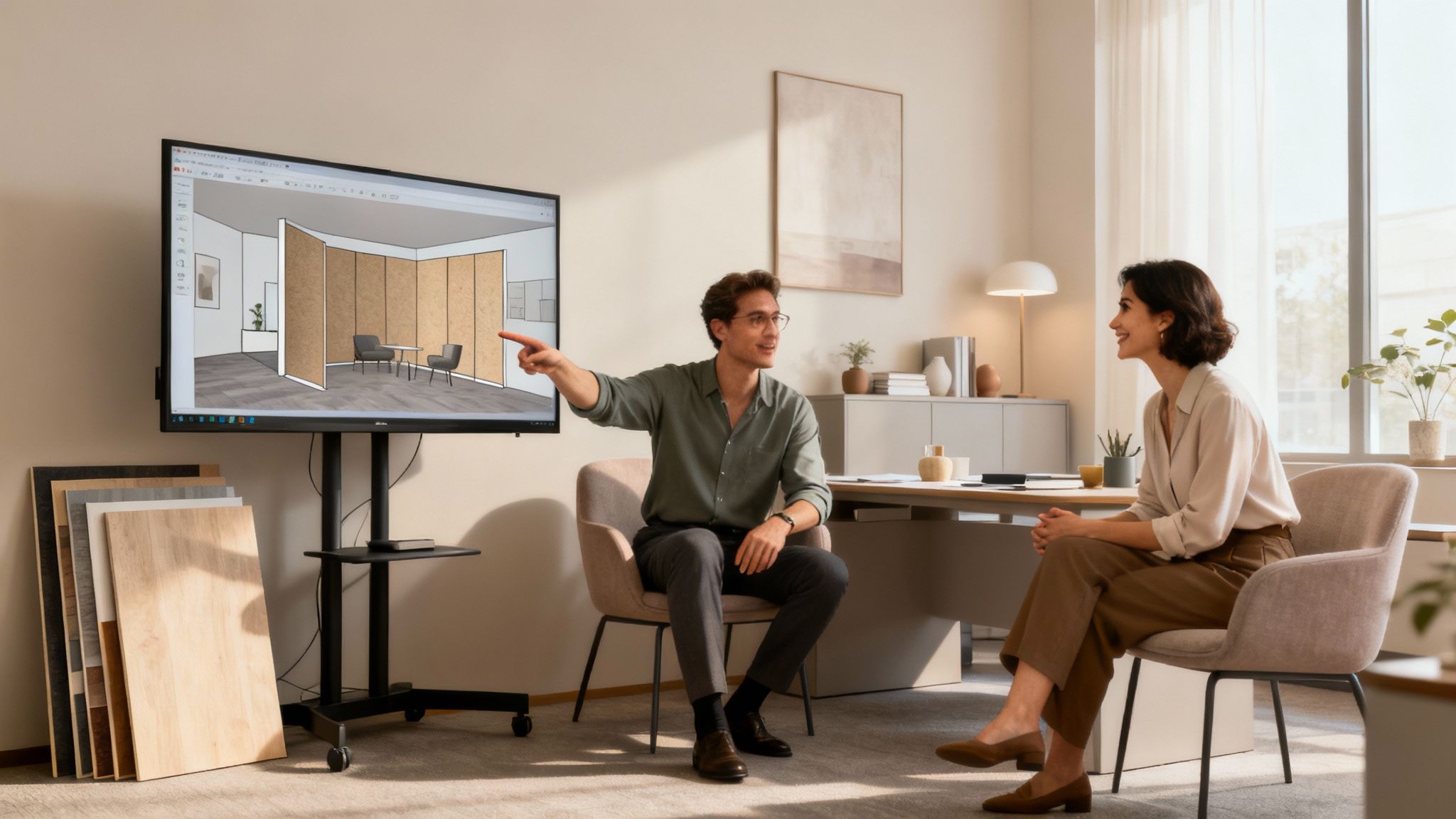
Once we have a solid grasp of your needs, we move into the conceptual design phase. This is where all those ideas and data points start to become something you can actually see. Using specialized software, our designers will sketch out initial 2D layouts—often called block plans—that show how different departments and zones could be arranged in your space.
Think of these early designs as the first draft of your new office. We'll explore different options for traffic flow, adjacencies (like putting marketing and sales next to each other), and the overall vibe of the workspace. The goal is to translate your operational needs into an efficient and logical floor plan of the office.
This stage is a true partnership. Your feedback is absolutely essential as we tweak and refine the concepts until we land on a layout that strikes the perfect balance between function, company culture, and your budget.
As part of this, we'll often create more detailed visualizations to help everyone really feel the space long before any furniture is ordered.
Phase 3: Detailed Specification And Finalization
With a conceptual layout approved, we zoom in on the details. This is the specification phase, where every last element of the new office is chosen, documented, and priced out. We're talking about the exact furniture systems, the finishes, the colors, and all the materials that will bring the design to life.
This is the point where you might use a tool like our online cubicle designer to customize individual workstations down to the last detail.
Key activities in this phase include:
- Furniture Selection: Pinpointing the specific desks, chairs, storage units, and collaborative furniture that fit the design and the budget.
- Finish Specification: Deciding on paint colors, flooring types, fabrics, and other aesthetic touches that create the right atmosphere.
- 3D Renderings: Creating photorealistic images or even virtual walkthroughs of the final design. This gives you a crystal-clear vision of the finished product.
- Budget Confirmation: Locking in the final project cost based on all the selections.
This meticulous work ensures there are no costly surprises down the road.
Phase 4: Project Management And Installation
The final stage is all about execution. With a rock-solid plan in hand, your partner takes over managing the procurement, delivery, and installation of every component. A dedicated project manager coordinates with all the vendors, contractors, and your own team to ensure everything rolls out smoothly, on time, and with as little disruption to your business as possible.
From that first conversation to the final walkthrough, the entire journey is a partnership focused on one thing: turning your vision into a productive, inspiring workplace that truly works for you.
What to Expect from Your Planning Partner
When you bring in an office space planning service, you’re doing more than just hiring someone to draw up a floor plan. You're bringing on a partner who delivers a concrete set of tools to bring your vision to life and, just as importantly, protect your investment. A real pro provides tangible results that take the guesswork out of the process and prevent those costly mistakes down the line.
These key deliverables are what truly separate a professional service from a simple furniture vendor. They give you clarity, confidence, and control over your entire project.
The journey from a big idea to a functioning office starts with clear, precise documentation. This is where professional deliverables make all the difference, creating a roadmap that everyone—from your leadership team right down to the installation crew—can follow. Let’s break down what you should get.
The Foundation: 2D Layouts
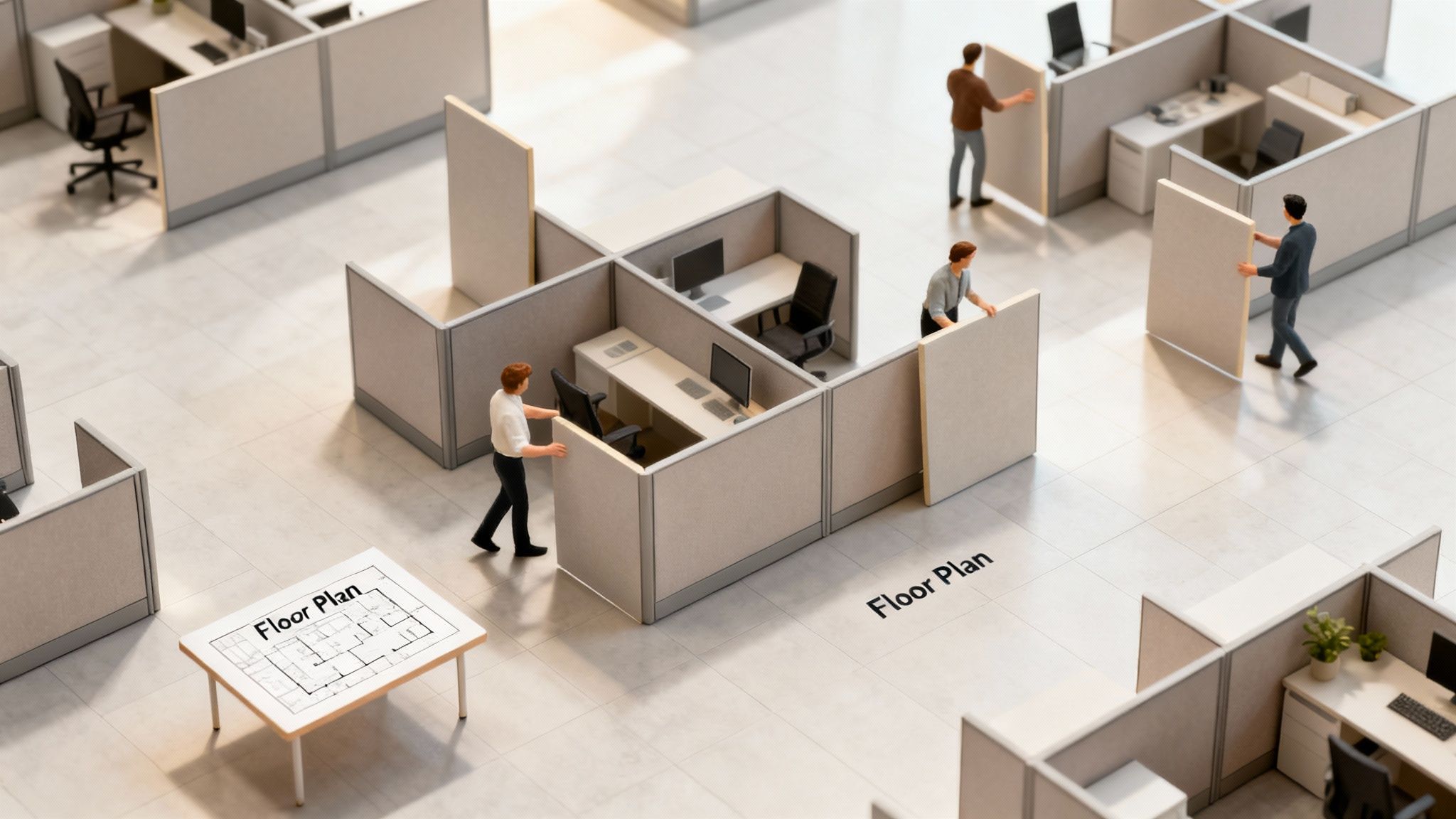
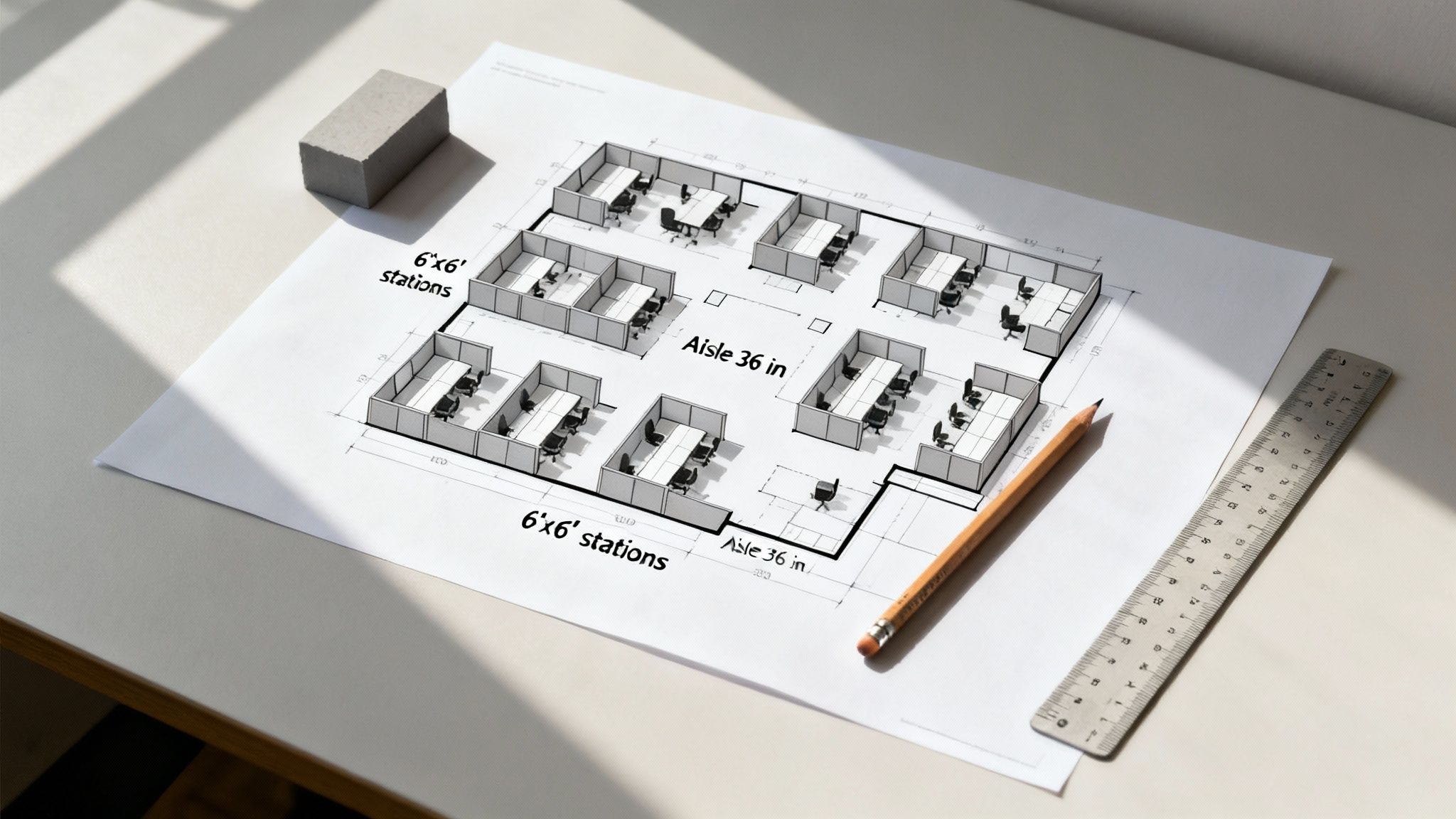
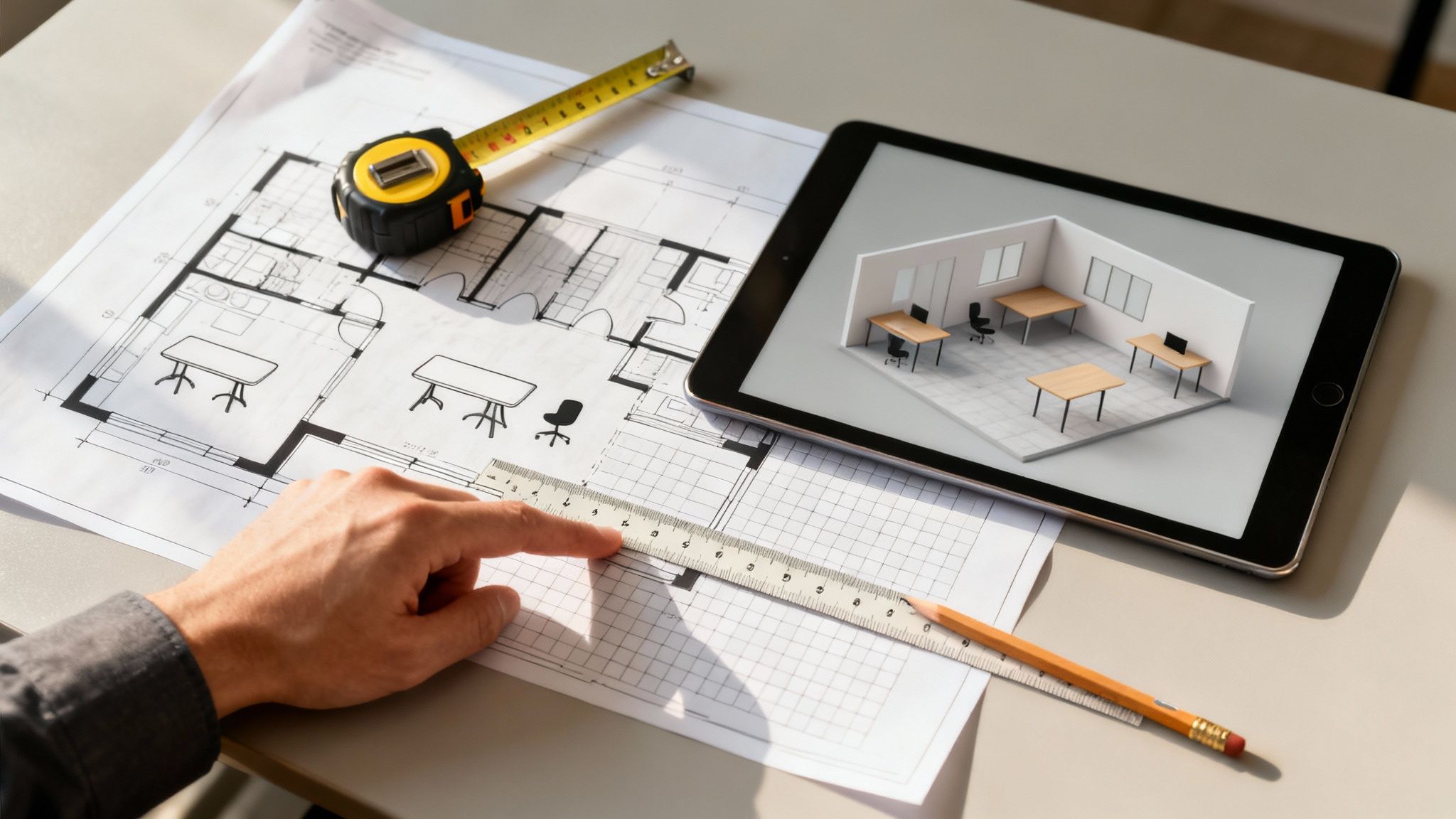
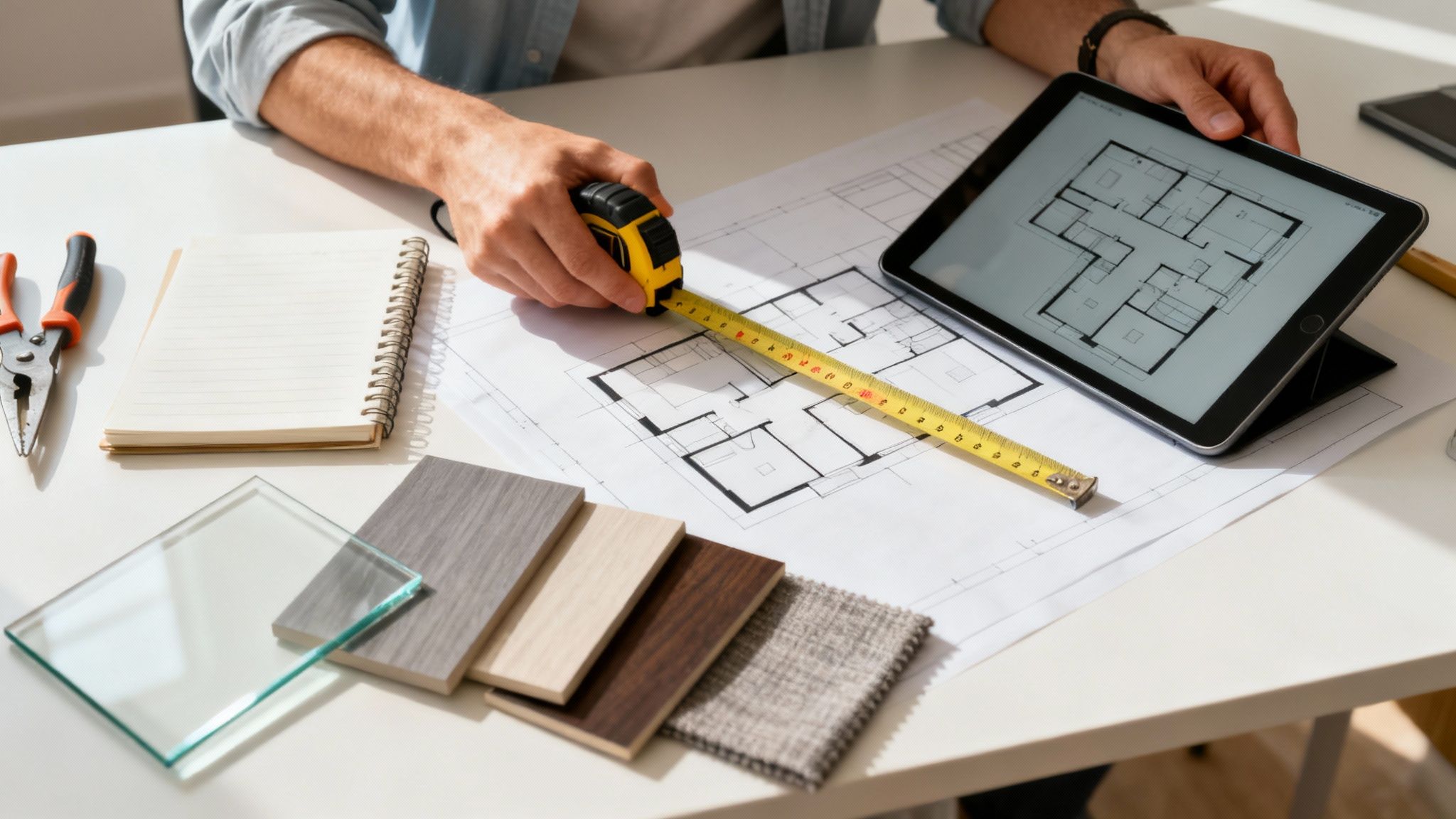
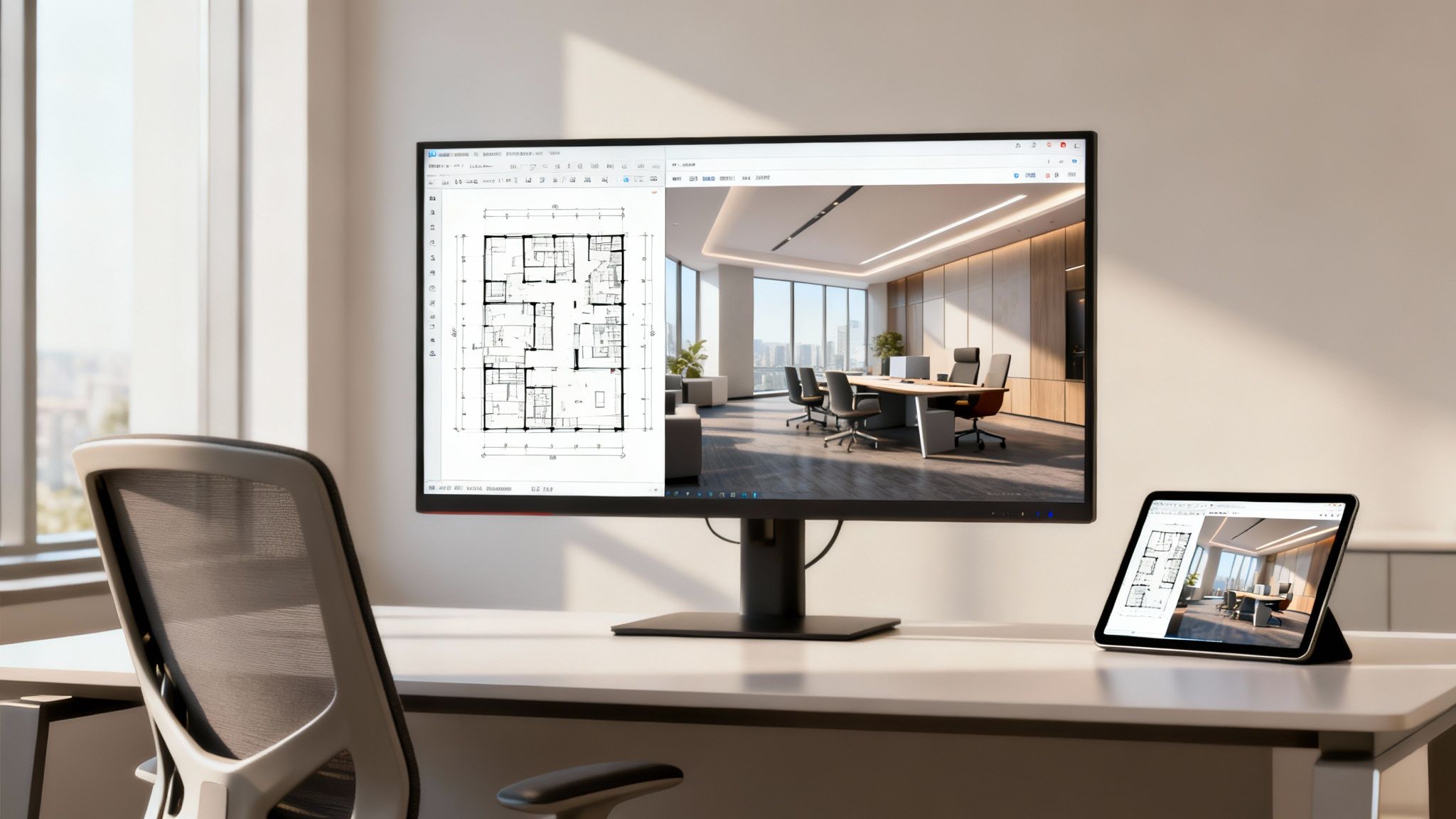
The very first, most fundamental deliverable is the 2D layout. Think of it as the architectural blueprint for your new workspace. It’s a top-down view that precisely maps out every wall, doorway, electrical outlet, and piece of furniture, showing exact dimensions and clearances.
This document is absolutely non-negotiable. First off, it ensures everything physically fits while leaving room for people to actually move around, preventing cramped walkways or awkward dead ends. More importantly, it’s essential for making sure your layout meets building codes and ADA (Americans with Disabilities Act) requirements, which protects your business from some serious legal and safety headaches.
Bringing the Vision to Life: 3D Renderings
If 2D layouts are all about precision, 3D renderings are all about vision. These photorealistic images take that flat blueprint and turn it into a vibrant, three-dimensional model of what your office will actually look like. You’ll see exactly how the colors, textures, lighting, and furniture come together to create the right atmosphere.
This isn't just a "nice-to-have." Immersive 3D renderings and virtual walkthroughs are powerful tools for securing buy-in from stakeholders. When leadership can virtually stand in the new space, they can feel the design’s impact, making approvals faster and a lot more enthusiastic.
These visualizations make sure everyone is on the same page about the final look and feel, so there are no surprises on installation day. They bridge that crucial gap between what’s on paper and what you can picture in your head, confirming that the design concept will create a space your team will genuinely love.
The Details: Furniture Schedules and Budgets
A great design is only successful if you can actually build it—on time and on budget. That’s where a detailed Furniture, Fixtures, and Equipment (FF&E) schedule comes in. This is basically a master spreadsheet listing every single item planned for the space, including:
- Item Identification: Manufacturer, model number, and a unique ID for each piece.
- Specifications: Dimensions, finishes, fabric colors, and any custom options.
- Quantities and Location: How many of each item you need and exactly where they go, referencing the 2D layout.
This schedule works hand-in-hand with a transparent budget breakdown, giving you a clear, line-item cost for every single component. This level of detail is the cornerstone of effective project management. It ensures there are no hidden costs and prevents incorrect orders of items like private office cubicles, keeping the entire project on track financially.
Understanding the Cost of Office Planning
When you're putting together a budget for a new workspace, it's easy to see office space planning services as just another line item to get through. That’s a common mistake. It's much better to think of it as a strategic investment—one that protects your much larger investment in furniture and real estate by making sure every square foot is used effectively from day one.
The reality is, professional planning doesn’t just cost money; it actively saves you money down the road. It helps you dodge common but expensive mistakes, like ordering furniture that doesn't fit, creating a confusing layout that kills productivity, or boxing yourself in with no room for future growth. A solid plan delivers a real return by preventing much bigger headaches and costs later on.
What Drives the Cost of Planning
The price of professional space planning isn't a simple, one-size-fits-all number. Several key factors will shape the final cost, and getting a handle on them will help you budget more accurately. It's a bit like commissioning a custom piece of furniture versus grabbing something off the shelf—the more unique your needs, the more involved the process.
Here are the primary cost drivers:
- Total Square Footage: It’s simple—larger spaces take more time and resources to plan out properly.
- Project Scope: A quick reconfiguration of one department is going to cost a lot less than a full-scale design for a brand-new headquarters.
- Design Complexity: An open-plan office with standard workstations is less complex (and less expensive to plan) than a dynamic space with specialized zones, custom millwork, and built-in tech.
- Level of Project Management: The more hands-on help you need from your partner—from coordinating with contractors to managing the final installation—the more comprehensive the service fee will be.
Common Pricing Models for Planning Services
When you start talking to providers, you'll generally come across two main ways they structure their fees. Each has its own benefits depending on your project.
- Flat Fee or Hourly Rate: Some firms, especially independent design or architectural agencies, will charge a standalone fee for their planning services. This can be based on the project scope or a simple hourly rate, giving you a clear, upfront cost for the design work itself.
- Integrated into Furniture Purchase: Many full-service dealers, like Cubicle By Design, often roll the cost of space planning right into the overall furniture purchase. This is a huge plus for many businesses because you get expert design and layout services as part of your investment in new workstations.
This integrated approach really aligns the goals of the design team with your own. The focus is squarely on creating the most effective and efficient layout possible using the furniture you're already buying. It makes for a seamless process from the first sketch to the final installation.
The Long-Term Financial Impact of Smart Planning
Strategic planning is changing the game in commercial real estate. The global office space market was valued at a massive $2,739.37 billion in 2021 and is projected to hit $3,312 billion by 2025, with a lot of that growth coming from retrofits for hybrid work. As companies adapt, getting space utilization right is the key to maximizing that investment.
Beyond the big picture, a detailed plan helps you see all the related expenses that go beyond just the furniture. For a deep dive into what you can expect, check out our cubicle price guide.
And don't forget ongoing costs. When budgeting for your new layout, it’s smart to also consider the specifics of commercial office cleaning contracts for long-term maintenance. A well-designed space can even help reduce those cleaning costs over time.
How to Choose the Right Space Planning Partner
Picking the right partner for your office redesign is probably the single most important decision you'll make. This isn’t just about finding a company to sell you some furniture. It’s about finding a team that becomes a true extension of your own—one that gets your vision and has the chops to actually bring it to life. A great partner listens to what you need, rather than just pushing a one-size-fits-all solution they have on hand.
Think of your ideal partner as a guide. They're there to help you navigate the tricky parts, like design, budgeting, and installation. They make sure the whole experience, from the first sketch to the final walkthrough, is cohesive and stress-free. It turns what could be a massive headache into a pretty exciting journey.
Evaluate Their Portfolio and Expertise
First things first, you need to dig into their past work. Look for projects similar to yours, whether in size, industry, or even just the general vibe you're going for. A solid portfolio is more than just a gallery of pretty pictures; it proves they’ve been in the trenches and know how to deliver. Pay close attention to how they solved real-world problems for other businesses.
Beyond the aesthetics, look for proof of functional design. Do the layouts they’ve created for other companies look like places where people can actually get work done? A partner’s past work is the best crystal ball you have for predicting your own success.
This is more critical now than ever. With the rise of flexible workspaces, smart office planning is essential. The global coworking market, valued at a staggering $22.01 billion in 2024, is expected to hit $93.68 billion by 2035. This isn't just a fleeting trend. In fact, 59% of companies planning to expand are opting for flexible spaces, which shows just how much businesses need partners who get modern workplace dynamics. If you want to dive deeper, you can explore detailed coworking statistics and insights.
Ask the Right Questions
Once you’ve got a shortlist, it's time to start asking questions. Your goal here is to get a feel for their process, how they communicate, and what happens when things don't go exactly as planned.
Here are a few questions I’d recommend having in your back pocket:
- Process and Collaboration: How will you involve our team in the design process? Who’s going to be our day-to-day contact?
- Budget Management: How do you make sure we stay on budget? What’s the plan if unexpected costs pop up?
- Technology and Tools: What software do you use for layouts and 3D models? Can we see a virtual walkthrough before we commit?
- Timeline and Installation: What’s a realistic timeline for a project like ours? Who handles the chaos of delivery and installation?
- Past Experience: Can you put us in touch with a few past clients who had projects similar to ours?
Their answers will tell you a lot. You'll quickly get a sense of their professionalism and whether they're the right cultural fit. A partner who is transparent and communicative will have no problem walking you through their entire playbook.
Look for an End-to-End Solution
Don't underestimate the value of a partner who can handle everything from start to finish. A firm that manages the initial space plan, the design, furniture sourcing, and the final installation can save you a world of hurt. It prevents costly miscommunications and finger-pointing between different vendors.
This is where full-service office furniture dealers near me really shine, because they combine design expertise with deep product knowledge. They know which solutions will actually fit your workflow and your budget, ensuring the entire project is as seamless and efficient as possible.
Common Office Layout Mistakes to Avoid
A beautiful office is completely useless if it doesn’t work for the people inside it. When you’re jumping into an office space planning project, knowing what not to do is just as important as having a great vision. Avoiding the most common pitfalls is really the key to creating a space that actually boosts productivity instead of accidentally crushing it.
These mistakes can be subtle, but they have a huge impact on daily operations, team morale, and your bottom line. Frankly, learning from the missteps of others is the smartest way to ensure your project is a home run from the moment your team walks through the door.
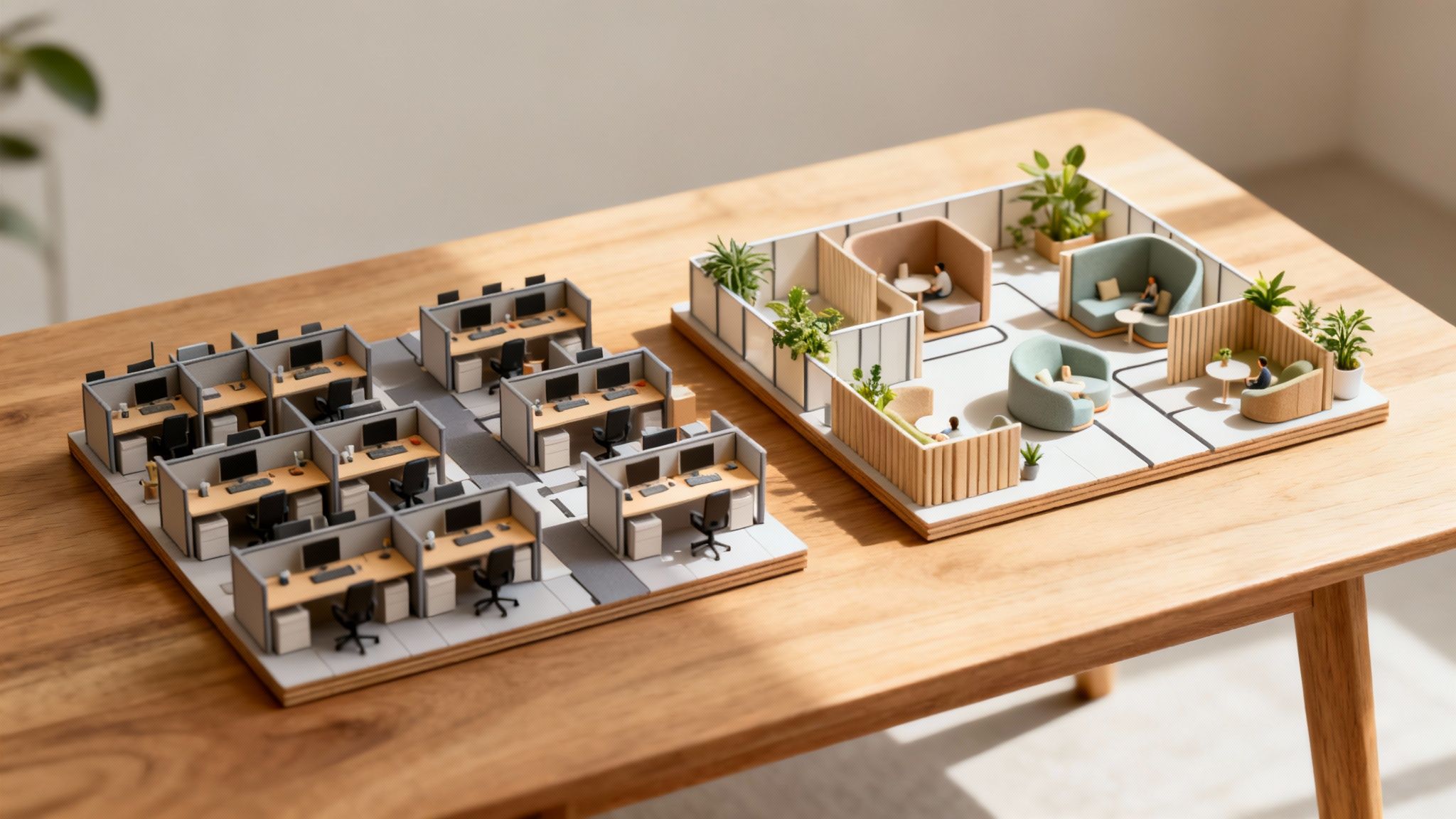
Forgetting About Workflow and Adjacencies
One of the biggest blunders we see is designing a layout based purely on aesthetics or a rigid hierarchy, completely ignoring how teams actually interact. Placing departments that collaborate constantly on opposite ends of the building just creates friction and wastes valuable time. Imagine the marketing team having to trek across the entire office multiple times a day to sync with sales—it’s a recipe for inefficiency.
A professional planner starts by mapping these "workflow paths." They make sure collaborative teams are neighbors and that high-traffic areas like kitchens or copy rooms don't cut right through quiet zones meant for focused work. At Cubicle By Design, we always prioritize function to make sure the final layout actively supports how your business runs.
Neglecting Acoustics and Privacy
The open-office trend promised a new era of collaboration, but for many, it delivered a chaotic mess of distractions. Without proper acoustic planning, the background noise from conversations, phone calls, and even footsteps can completely destroy concentration. In fact, studies show that poor environmental conditions can slash productivity by as much as 10%.
A great design has to balance that collaborative energy with the very real need for individual focus. This means thinking about sound-absorbing materials, creating designated quiet zones, and using flexible solutions like modular walls or private office cubicles to give employees back some control over their environment.
Overlooking Future Growth
Designing a space that’s a perfect fit for your current headcount but has zero room to grow is a classic, short-sighted mistake. If you're planning to expand, a rigid layout will force you into an expensive and disruptive reconfiguration in just a couple of years. It’s a headache you don’t need.
The solution is to build in flexibility right from the start. Using modular workstation cubicles that can be easily rearranged or planning for "soft" areas that can be converted into new desk spaces allows your office to scale right alongside your business. An experienced partner is always thinking about your success five years down the road, not just for opening day.
Ignoring Health and Compliance
Finally, it’s a huge error to neglect the factors that lead to employee discomfort or even illness. Poor ventilation, bad lighting, and layouts that don't meet building codes or ADA standards aren't just mistakes—they're liabilities. It's critical to understand how to avoid sick building syndrome symptoms by prioritizing a healthy indoor environment from the get-go. A professional partner ensures your design isn't just functional but is also safe, compliant, and supportive of your team’s well-being, which is the foundation of any productive workplace.
Still Have Questions? We've Got Answers
Embarking on an office redesign can feel a little overwhelming, and it's natural to have a few questions pop up. We get it. To help clear things up, here are some straight answers to the most common queries we hear about office space planning services.
How Long Does the Office Space Planning Process Typically Take?
Honestly, it all comes down to the size and complexity of your project. A quick refresh of a small office might only take a few weeks from our first chat to the final installation. But if we're talking about a full-scale build-out for a new corporate headquarters, you're likely looking at a timeline of three to six months, sometimes even longer.
It helps to think of the process in a few key stages:
- Discovery & Analysis: Usually 1-2 weeks.
- Conceptual Design: Give this 1-3 weeks.
- Detailed Design & Furniture Selection: This can take anywhere from 2-6 weeks.
- Procurement & Installation: This is often the longest leg of the journey, at 4-12 weeks.
The good news? Working with a team like ours at Cubicle By Design can really streamline things. We keep the design, purchasing, and project management all under one roof, which helps keep the entire process moving smoothly.
Can I Use These Services for a Small Office on a Tight Budget?
Absolutely. In fact, that's where smart planning can make the biggest impact. Effective space planning isn't just for big corporations; it’s about making the most of what you have, no matter the size. A good partner will dig into your budget and find ways to maximize every square foot and every dollar.
They might suggest clever, cost-effective solutions like high-quality remanufactured cubicles or versatile, modular workstation cubicles that can grow and change right along with your team.
Don’t make the mistake of thinking professional planning is out of your reach. We even created tools like our online Custom Cubicle Designer specifically to help you find that perfect sweet spot between what your business needs and what your budget allows.
What Is the Difference Between an Interior Designer and an Office Space Planner?
It's a great question, and while their skills definitely overlap, their core focus is different. Think of it this way: an interior designer is often centered on the aesthetics—the color palettes, the textures, the finishes, and the overall "vibe" of the space. They make it look and feel great.
An office space planner, especially one from a full-service dealer, is laser-focused on function. We're the ones who dive deep into how your team actually works. We analyze workflow, figure out the most efficient use of space, and determine how furniture systems like private office cubicles will support your business goals. Our job is to create a productive machine, ensuring layouts support day-to-day tasks while meeting all the necessary building codes and ADA rules.
Ultimately, a planner’s main goal is to make sure the space works as beautifully as it looks.
Ready to turn your simple floor plan into your company's greatest strategic asset? At Cubicle By Design, our expert team is here to guide you with end-to-end office space planning services, creating a workplace that's efficient, inspiring, and right on budget. Start your journey to a better workplace today.