

Your Guide to a Round Reception Desk

Your Guide to a Round Reception Desk

Your Guide to a Round Reception Desk

A round reception desk is more than just a piece of furniture—it’s a strategic choice. It’s the first thing people see, and it instantly signals a sense of welcome and openness. Unlike a traditional rectangular desk that can feel like a barrier, a curved desk creates an inviting focal point, smooths out foot traffic, and sets a collaborative tone the moment someone walks through your door.

Why a Round Reception Desk Makes a Powerful First Impression

Think of your reception area as the handshake of your business. It’s the very first physical interaction a client, partner, or potential new hire has with your brand. A well-chosen round reception desk can turn that initial moment into a positive, lasting memory. It stops being just a functional object and becomes a statement piece that says a lot about your company culture.

Instead of greeting visitors with a hard, straight edge, a round desk offers a softer, more fluid approach. This design choice just feels more inclusive and less confrontational. It subconsciously tells visitors they’re entering a collaborative and accessible space. It’s the difference between a formal gate and an open courtyard—one directs, while the other invites.

Fostering a Welcoming Atmosphere

The real magic of a circular desk is its ability to create a sense of community. Its shape naturally encourages interaction from multiple angles, letting reception staff engage with visitors on a more personal level. This is a game-changer in busy lobbies where people might be approaching from all different directions.

This isn’t just a feeling; it’s a trend backed by real numbers. The move toward round reception desks fits right in with the larger shift toward open-plan offices and collaborative workplace designs. Within the global office reception furniture market, the desk segment itself makes up about 40% of total sales.

More telling, though, is that sales of round and curved models in North America and Europe jumped by 22% between 2020 and 2024. That’s way faster than the overall market’s growth, showing a clear preference for designs that feel more approachable.

Improving Space and Flow

Looks aside, a round reception desk brings some very practical benefits to the table. Its shape is incredibly efficient for managing the flow of people, gently guiding them around it instead of creating abrupt stops or sharp corners. This is a huge help in smaller or odd-shaped reception areas where a boxy rectangular desk would just feel clunky and in the way.

And let’s not forget safety. The absence of sharp corners is a small but important detail that reduces bumps and bruises in high-traffic zones. You can dive deeper by exploring our design tips for reception cubicles that enhance your brand.

For a quick summary of why a round desk might be the right call, here’s a simple breakdown.

Key Benefits of a Round Reception Desk at a Glance

This table sums up the main advantages of choosing a round reception desk over more traditional designs.

Benefit Description Ideal For
Enhanced Welcome The curved design removes physical and psychological barriers, creating an open and friendly atmosphere. Companies with a collaborative culture, healthcare clinics, and hospitality venues.
Improved Traffic Flow A circular shape naturally guides movement, preventing bottlenecks in busy lobbies and improving accessibility. Lobbies with multiple entry points, smaller reception areas, and high-traffic spaces.
Increased Safety The absence of sharp corners reduces the risk of bumps and injuries, making the area safer for everyone. Environments with children, healthcare facilities, and bustling corporate offices.
Versatile Placement A round desk can serve as a stunning centerpiece in a large, open lobby or be placed strategically in a smaller space. Any space where the goal is to make a strong, positive first impression.

Ultimately, choosing a round reception desk is an investment in your visitor’s experience. It shows you’ve put thought into a design that prioritizes people, making everyone feel valued from the moment they arrive at Cubicle By Design.

How to Plan Your Space for a Perfect Fit

A stunning round reception desk can completely change the vibe of a lobby, but if it’s crammed into the wrong spot, that design dream quickly becomes a logistical nightmare. That’s why proper space planning is so critical. It’s not just about finding an empty corner; it’s about making sure your desk is a functional asset that complements the entire welcome area.

Before you get attached to a particular design, you have to measure your space with a clear purpose. The goal is to land on the perfect diameter for your desk—one that makes a statement without totally overwhelming the room. A desk that’s too big will make your lobby feel cramped and create awkward traffic jams. Go too small, and it’ll just get lost in the space, looking out of place.

Getting the Measurements Right

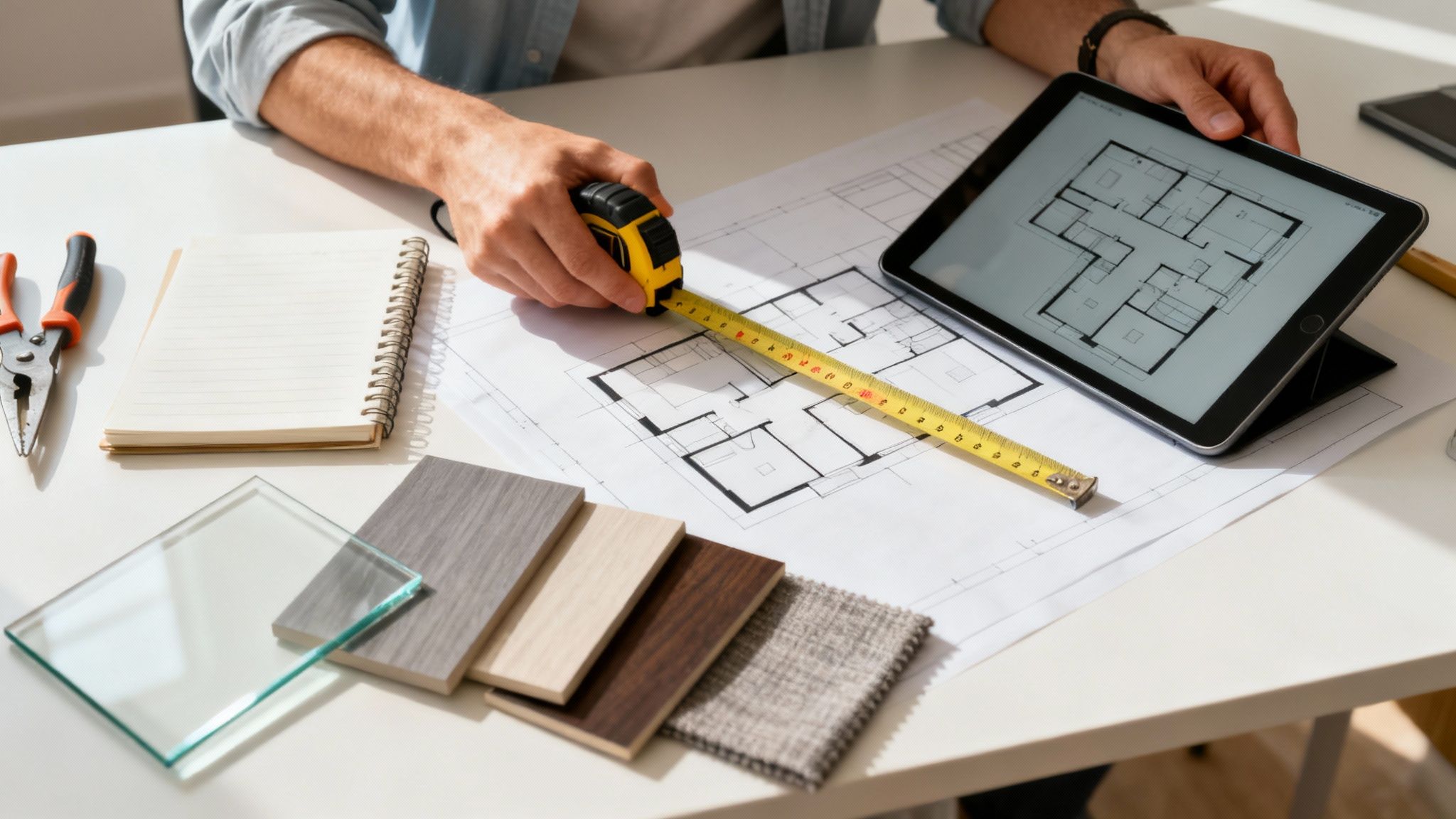
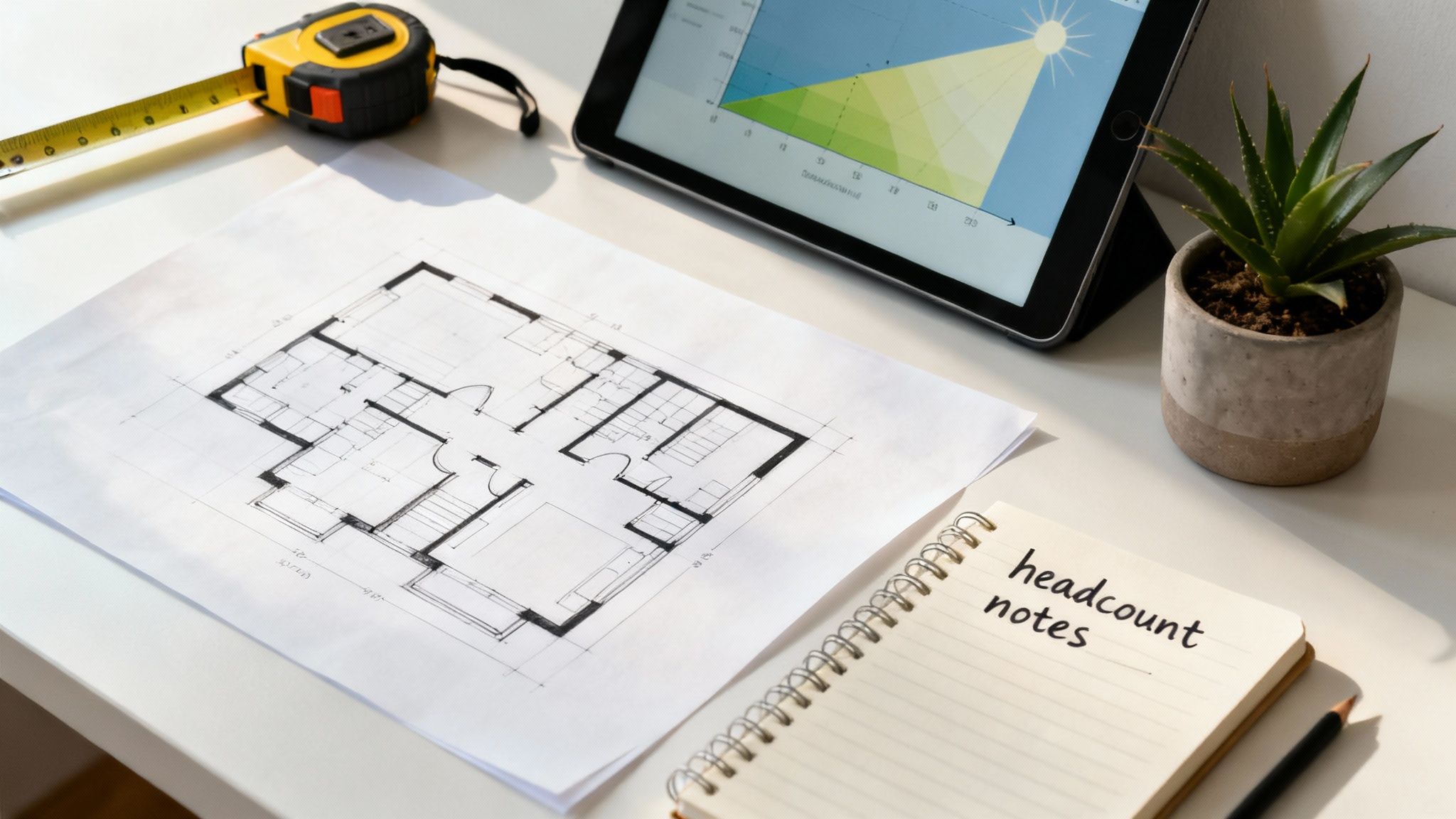
Start by getting the total length and width of your reception area. Make sure to note where all the doorways, windows, and any structural columns are. This gives you a basic map to work from. A solid rule of thumb is to leave at least 3 to 4 feet of clear walking space around the entire desk.

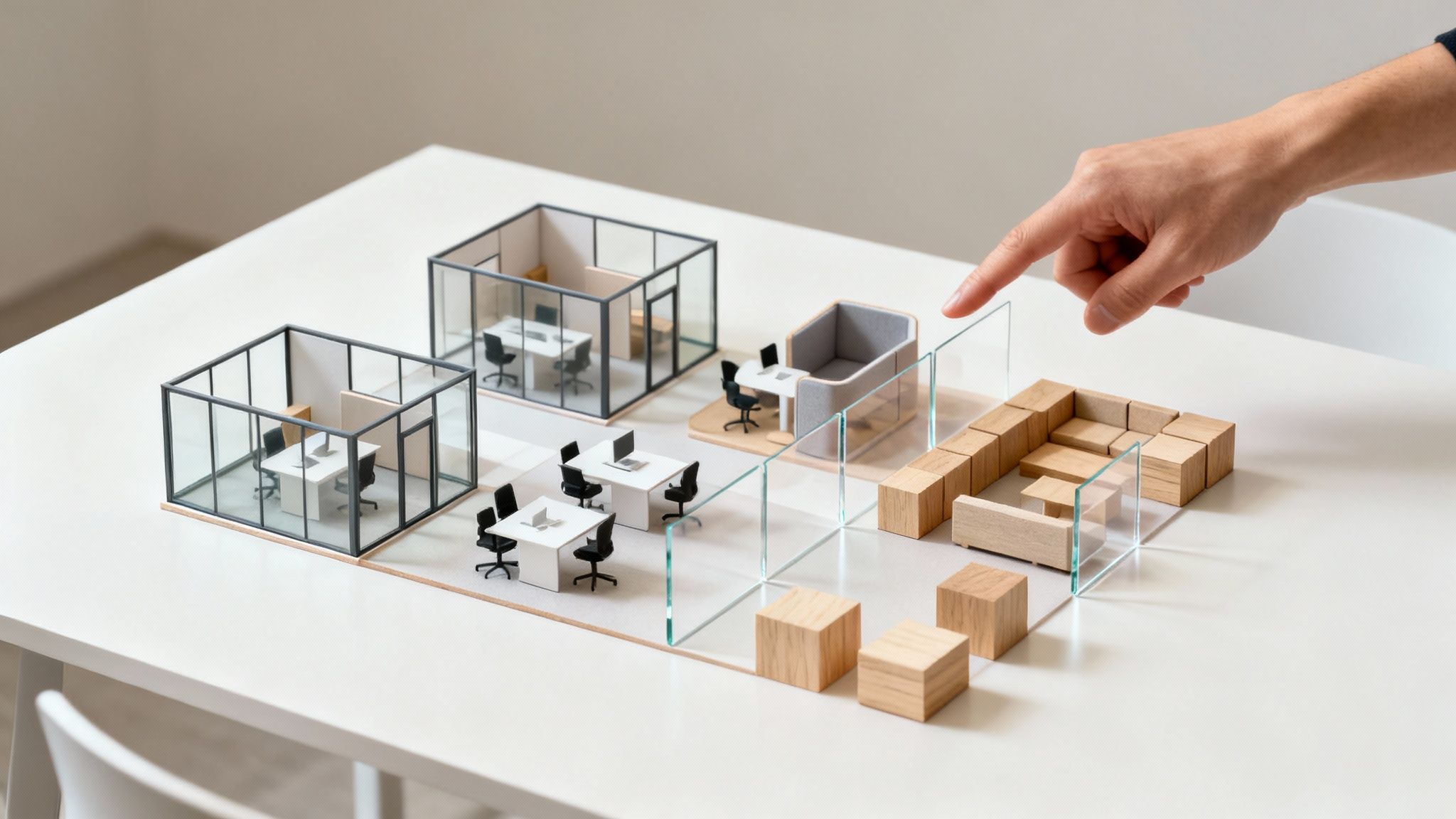
Want a simple but super effective way to see how it will really feel? Grab a roll of painter’s tape. Outline the footprint of the desk you’re considering right on the floor. This lets you physically walk around it, check the natural flow of traffic, and see exactly how much room is left for seating or other lobby furniture.

This little trick helps you visualize whether you’re creating that open, welcoming atmosphere you’re after or accidentally building a barrier.

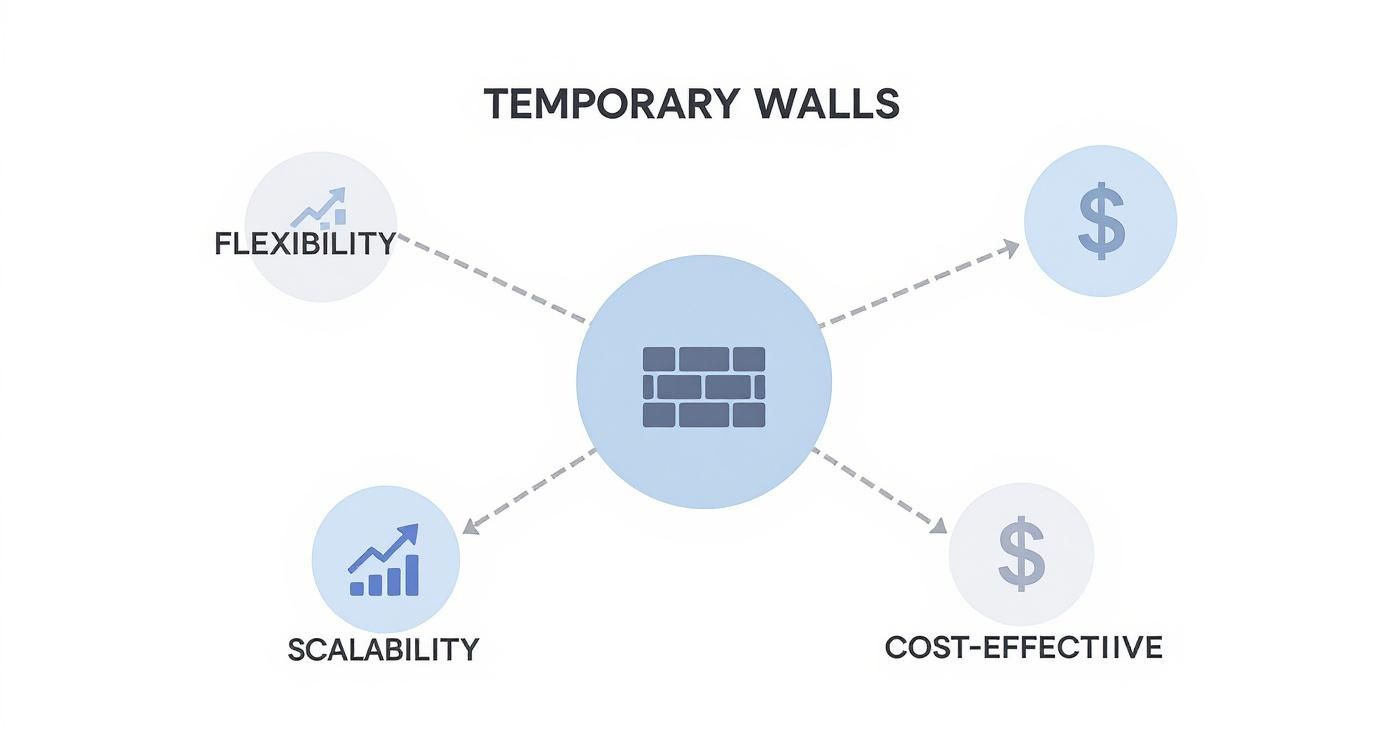
As you can see, choosing a round reception desk is a strategic move to foster a more inviting environment, a world away from the closed-off feel of a standard desk.

Ensuring Accessibility with ADA Compliance

A truly welcoming space is one that’s accessible to everyone. Following the Americans with Disabilities Act (ADA) standards isn’t just a legal box to check—it’s just good, inclusive design. For a reception desk, this means getting specific measurements for height and clearance just right.

Here are the key ADA guidelines you need to know:

  • Accessible Counter Section: At least one part of the counter can be no higher than 36 inches from the floor to the top of the surface.
  • Clear Knee and Toe Space: That lower section needs to have clear space underneath it—at least 30 inches wide, 27 inches high, and 19 inches deep—so a wheelchair can fit comfortably.
  • Clear Floor Space: You also need a clear floor area of at least 30 by 48 inches in front of that accessible counter for an easy approach.

By building these standards into your plan from the very beginning, you make sure your reception area is functional and genuinely welcoming for all visitors and employees. It’s a small detail that says a lot about your company’s culture.

Planning for People and Workflow

Beyond the tape measures and compliance rules, think about how people are actually going to use the space. The area behind the desk is just as important as what’s in front. Your receptionist needs enough room to move around in their chair, get to files, and handle daily tasks without feeling boxed in.

You’re not just dropping a piece of furniture into a room; you’re designing an ecosystem for your guests and your staff. If you need a hand getting it right, our specialists can provide professional office space planning and design to optimize the entire layout. A little thoughtful prep work upfront guarantees your round reception desk fits perfectly, works flawlessly, and makes that powerful first impression you’re aiming for.

Choosing Materials That Define Your Brand

The materials you choose for your round reception desk do more than just look good—they tell a story. Long before a visitor even shakes a hand, the feel of the counter or the look of the wood grain sends a message about your company. Are you innovative and modern? Traditional and established? The right finish turns a piece of furniture into a powerful first impression.

This is where your brand’s personality meets the practical demands of a busy lobby. From the warmth of wood veneers to the sheer durability of modern laminates, every option has its own pros and cons for maintenance, longevity, and of course, your budget.

Comparing Popular Material Choices

Getting a handle on the trade-offs between materials is the first step. Let’s break down the most common choices for a round reception desk.

  • High-Pressure Laminate (HPL): This is the workhorse of office furniture, and for good reason. Laminate is tough, standing up to scratches and stains while being a breeze to clean. It also comes in a massive range of colors and patterns—including some surprisingly realistic wood grains and stone looks—giving you tons of design freedom without breaking the bank.
  • Wood Veneer: For that classic, warm, and elegant feel, you can’t beat real wood veneer. It’s made by applying a thin slice of real hardwood to a stable core material, which is perfect for creating those smooth curves. You get the authentic beauty of wood at a better price point than solid wood.
  • Solid Surface (e.g., Corian): If you’re after a seamless, modern, and practically indestructible finish, solid surfaces are the way to go. This material can be molded into dramatic curves with no visible seams. It’s also non-porous, which makes it hygienic and simple to maintain. Even better, minor scratches can often be buffed right out.
  • Metal Accents: Adding touches of brushed aluminum, stainless steel, or bronze can inject a sophisticated, industrial, or high-tech vibe. Metal is perfect for transaction tops, kick plates at the bottom, or as decorative inlays that create a pop of contrast. Seeing how different materials can be combined is key; for more ideas, check out our guide on the glass top desk with drawers.

Think of it like casting a character for your brand. A financial firm might go for a rich walnut veneer to look stable and trustworthy. A tech startup, on the other hand, could choose a clean white solid surface with metal accents to signal that they’re all about innovation.

Customization That Creates a Signature Piece

Beyond the base materials, the custom details are what really make a round reception desk a one-of-a-kind centerpiece. These are the touches that make it uniquely yours.

Here are a few high-impact options to consider:

  1. Inset Company Logo: Putting your logo front-and-center makes an immediate statement. It can be backlit for a modern glow, crafted from raised metal letters, or integrated with a contrasting material for a more subtle, high-end look.
  2. Ambient LED Lighting: A soft glow under the transaction counter or around the base adds a whole new layer of sophistication. It’s a great way to highlight the desk’s curves and can be set to match your brand’s color palette perfectly.
  3. Mixed Materials: Don’t be afraid to mix it up. Combining a wood veneer base with a sleek solid surface top, for example, creates a rich, textured look that gives the whole piece more depth and personality.

Visualize Your Design Before You Commit

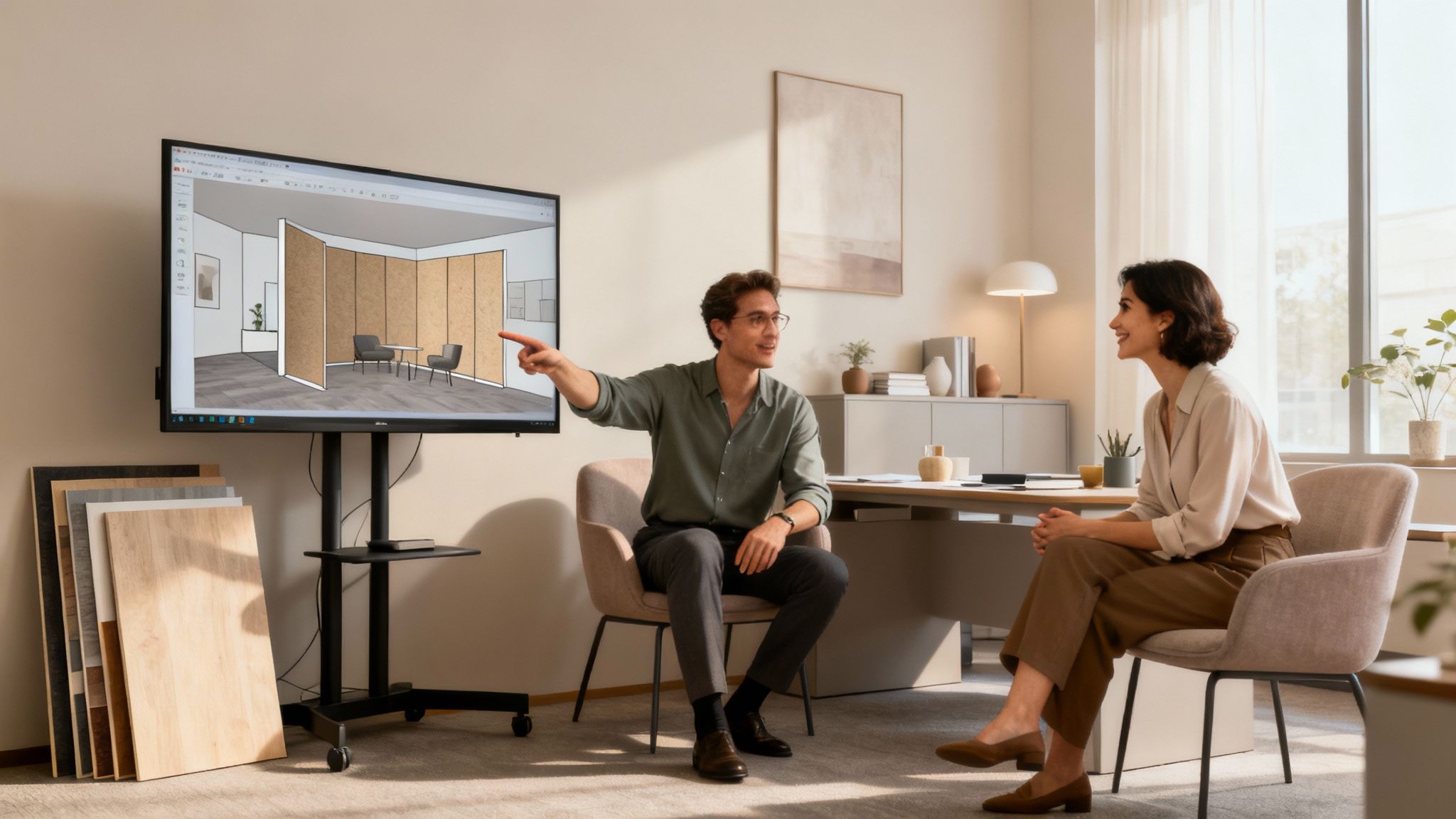
It can be tough to picture how all these choices will come together in the final product. That’s where design tools become your best friend. A platform like the Cubicle By Design Custom Cubicle Designer lets you play around with different material combinations, finishes, and colors in real-time.

Think of it as a digital sandbox where you can see exactly how your choices reflect your brand’s style. This way, you can move forward with confidence, knowing the finished desk will be a perfect match for your vision.

Integrating Technology and Smart Storage

A modern round reception desk is so much more than a friendly first impression; it’s the command center for your entire front office. For it to truly work, it needs to be a seamless blend of sophisticated design and practical, everyday function. A clean, uncluttered surface projects confidence and professionalism, but pulling that off requires some serious thought about everything happening behind the scenes.

This is all about creating a workspace that supports your receptionist, not one that fights against them. A desk buried in a nest of wires or drowning in paperwork sends all the wrong signals. The goal is to design an environment where technology is a helping hand and smart storage keeps everything organized and just an arm’s length away.

Planning for Power and Connectivity

In today’s world, a desk without built-in power is like a car without an engine. It just doesn’t go. Your receptionist needs reliable, easy access to power for their computer, monitors, phone, and various chargers. A well-designed round reception desk thinks ahead, building connectivity right into its structure to keep the workspace tidy and functional.

Here are the key tech integrations you should be thinking about:

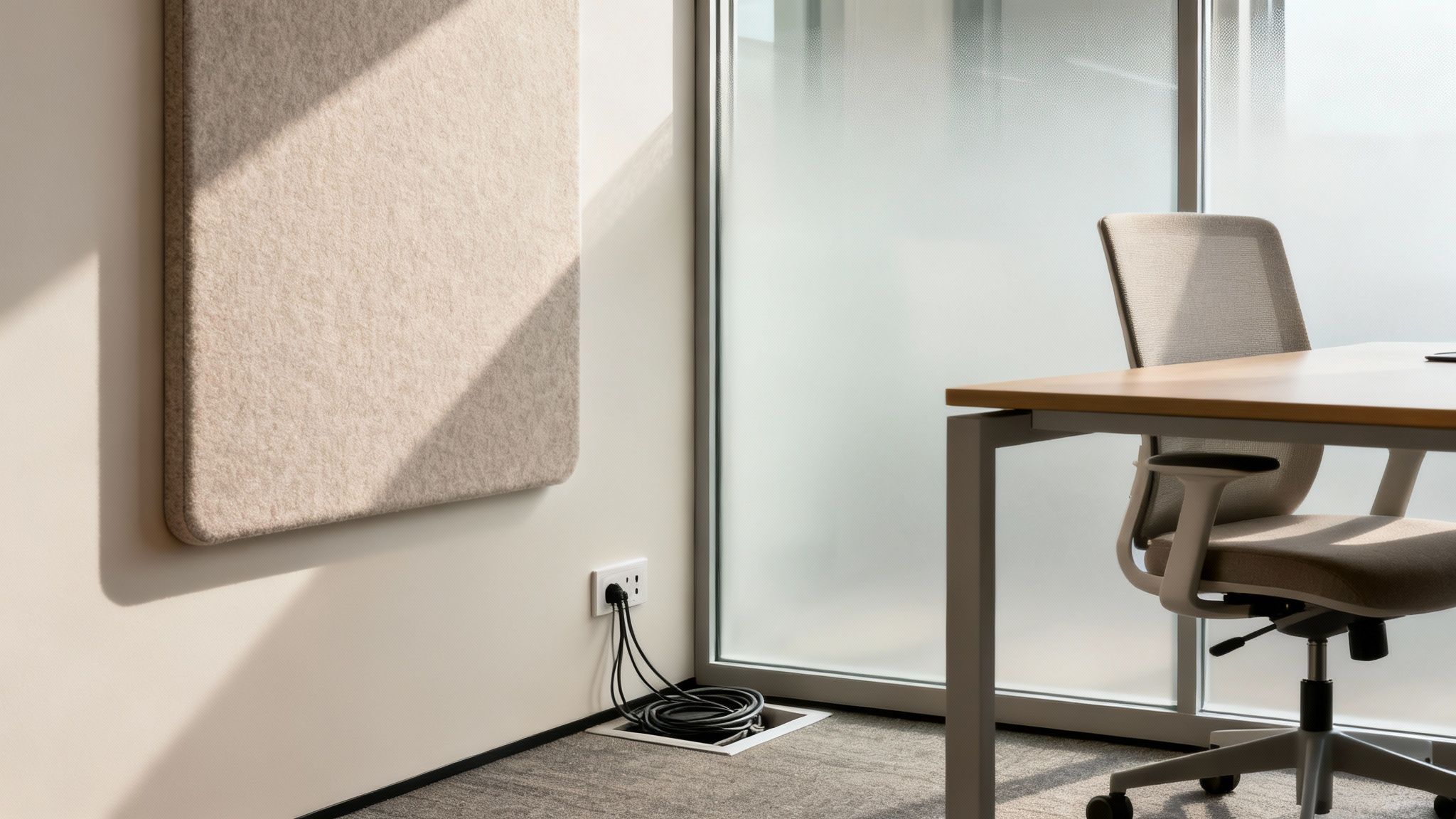
  • Grommets and Cable Channels: These are absolutely non-negotiable for hiding the inevitable mess of cords. Discreet openings and hidden channels built into the desk’s body guide wires out of sight, preventing that chaotic “spaghetti” effect.
  • Built-in Power Modules: Modern desks can come with pop-up or flush-mounted modules that have standard outlets, USB-A, and USB-C ports. This puts convenient charging right at the surface for both company devices and personal electronics, ditching the need for clumsy power strips.
  • Under-Surface Raceways: For a truly clean, professional setup, power and data cables can be run through dedicated raceways attached to the underside of the desk. This keeps every single wire off the floor, which makes cleaning a breeze and eliminates trip hazards.

Getting your desk’s electrical plan right is a critical step that affects both safety and aesthetics. To dig deeper into the requirements, check out our comprehensive guide on cubicle electrical setup for some great insights.

Smart Storage Solutions for a Curved Design

One of the first questions people ask about round reception desks is, “But where does everything go?” It’s a valid concern, but the answer is a resounding yes—you can have plenty of storage. The trick is making sure the storage is designed with the desk’s unique shape, not against it. Trying to shove a boxy, linear filing cabinet under a curved desk just won’t work with the flow.

Instead, custom storage solutions are made to follow the natural arc of the desk, which maximizes every inch of space while keeping that fluid, cohesive look.

Think of it like building a bookshelf into a curved wall. A skilled carpenter doesn’t force a straight shelf into the space; they craft a curved one that fits perfectly. The same principle applies here, ensuring no space is wasted and the design integrity remains intact.

Customizing Storage for Your Workflow

The best storage solutions are always the ones tailored to the specific job at hand. A busy medical clinic has wildly different needs than a corporate headquarters, and their storage should reflect that.

Consider these popular curved storage options:

  1. Curved Pedestals: These mobile or stationary drawer units are built with a curved front, allowing them to nestle perfectly under the desk. They often feature a mix of box drawers for supplies and a larger file drawer for paperwork.
  2. Integrated Cabinets: You can have concealed cabinets with curved doors built directly into the base of the desk itself. This is the perfect spot for stashing bigger items like computer towers, printers, or extra boxes of office supplies.
  3. Open Shelving: Gracefully curved shelves can be worked right into the design, giving you easy-access spots for frequently used binders, directories, or marketing materials.

When you plan for technology and storage from day one, your round reception desk transforms into a true hub of productivity. It becomes that perfect blend of form and function, giving your team the tools they need to represent your brand and keep the front office running like a well-oiled machine.

Seeing Round Desks in Real-World Scenarios

It’s one thing to talk about the benefits of a round reception desk, but it’s another to see it in action. Moving beyond concepts and into real-world settings is where you can truly appreciate how this design adapts to different industries, each with its own unique aesthetic and functional needs.

Let’s look at a few practical examples. Seeing how a round desk performs in these environments will help you picture how it could become the perfect centerpiece for your own space.

The Luxury Hotel Lobby: A Grand Welcome

In the world of high-end hospitality, first impressions are everything. A luxury hotel lobby has to feel open, elegant, and welcoming from the moment a guest steps inside. This is where a round reception desk truly shines, often acting as a stunning central anchor in a large, airy space. Its curved form naturally guides guest traffic, preventing those awkward bottlenecks that often form around sharp-cornered rectangular desks, especially when guests are wrangling luggage.

A circular design lets staff greet guests from multiple directions, making the check-in process feel more personal and less like a transaction. Instead of a formal barrier, the desk becomes an inviting hub. This isn’t just a trend; it’s a proven strategy in the hospitality sector for creating a better guest experience.

Round reception desks have become a go-to for luxury hotels, and the numbers back it up. The global reception desk market recently hit USD 3.45 billion, with a huge chunk of that growth driven by the hospitality industry. In fact, major hotel chains have boosted their adoption of round reception desks by 35% over the last five years, citing better guest flow and smarter use of space. You can explore more about these market dynamics to see why circular designs are taking over.

The Tech Startup: A Collaborative First Impression

Now, let’s pivot to a completely different environment: a fast-paced tech startup. The culture here is all about innovation, teamwork, and breaking down old-school corporate hierarchies. The last thing a startup wants is a reception area that feels stuffy or unapproachable. A round desk captures this forward-thinking spirit perfectly.

It sends an immediate message of openness and accessibility, which aligns beautifully with a flat company structure. It can even double as a casual meeting spot for team members, not just a formal gatekeeper for visitors. The design helps foster a sense of community right from the front door, reflecting the company’s collaborative core. It’s often paired with other flexible furniture, like private office cubicles, to create a cohesive and adaptable workspace.

The Modern Healthcare Clinic: A Calming Patient Experience

In any healthcare setting, the main goal is to make patients feel calm, comfortable, and well-cared-for. A clinical environment can be intimidating on its own, and the reception area plays a massive role in either easing or increasing patient anxiety. The soft, curved lines of a round desk are inherently more soothing than the hard angles of a traditional one.

The circular shape is approachable and non-confrontational, which helps in creating a reassuring and patient-centric atmosphere. It removes the institutional feel, making the check-in process feel more like a supportive conversation than a sterile transaction.

This design choice also brings some serious practical wins to a clinic:

  • Improved Sightlines: Staff can easily see and help patients coming from different directions.
  • Accessibility: It’s much simpler to integrate an ADA-compliant counter section, ensuring a welcoming experience for every patient.
  • Safety: No sharp corners is a big plus in a space that sees a lot of traffic, including children and patients with mobility challenges.

As you can see, a round reception desk is much more than a piece of furniture. It’s a strategic tool that can be shaped to reinforce what your brand is all about, whether that’s five-star luxury, disruptive innovation, or compassionate care.

Ensuring Longevity Through Professional Installation and Care

You’ve put in the work and designed the perfect round reception desk—one that truly captures your brand’s essence and fits your space like a glove. But the journey isn’t quite over. The final, and arguably most critical, steps are installation and long-term care.

Getting these two things right ensures your investment doesn’t just look stunning on day one, but continues to make that powerful first impression for years to come. Think of it as protecting the value and appearance of a centerpiece you’ve carefully chosen.

The whole process kicks off with a professional delivery and assembly team, and these folks need to know the specific ins and outs of curved and modular furniture. This isn’t your standard flat-pack bookshelf. A custom round reception desk is made of precision-engineered parts that demand correct assembly for a seamless finish and rock-solid stability. Trying to go the DIY route often ends in headaches like misaligned panels, a wobbly surface, and ugly seams that completely kill the sophisticated look you were going for.

The Professional Installation Advantage

A pro installation crew handles every single detail. They’re not just moving boxes; they’re carefully unloading each component and assembling the desk exactly to spec. They make sure all the integrated tech, from power modules to cable management, is fitted correctly and is secure. This level of expertise is what prevents accidental damage and guarantees the desk’s structural integrity.

This professional touch is a non-negotiable part of what you get with a full-service office furniture dealer. If you want to see exactly what that entails, you can learn more about our expert office furniture installation process, which covers everything from the initial logistics to the final walkthrough.

Keeping Your Desk Looking Brand New

Once your desk is perfectly in place, keeping it looking that way is surprisingly straightforward. It just takes the right approach for each material and a consistent routine to prevent dirt and grime from building up.

  • Laminate Surfaces: For daily upkeep, a soft cloth dampened with a little mild soap and water is all it takes. Just be sure to steer clear of abrasive cleaners or scouring pads—they can scratch the surface and dull the finish over time.
  • Wood Veneer: A regular dusting with a soft, dry cloth will do the trick. For a deeper clean, grab a cleaner made specifically for wood furniture. Pro tip: apply it to the cloth first, not directly onto the desk.
  • Solid Surface and Stone: These materials are incredibly durable and non-porous, making them a breeze to clean with a gentle, all-purpose cleaner. The key is to wipe up spills right away, especially acidic stuff like coffee or soda, to stop any potential staining in its tracks.

It’s no surprise that designs like the round reception desk are becoming more popular; it reflects a bigger shift in how we think about workplace design. The global reception desk market, estimated at a whopping USD 2.5 billion in 2023, is on track to hit USD 4.2 billion by 2032. This growth is being fueled by a demand for designs that create more open and welcoming first impressions. You can discover more insights about the reception desk market to see how these trends are shaping modern offices.

When you partner with a provider that manages everything from the initial design to the final installation—and you commit to simple, consistent care—your round reception desk will stand the test of time as an impressive and durable centerpiece for your business.

Have More Questions? We Have Answers.

When you’re making a big decision like new office furniture, a few last-minute questions are bound to pop up. Here are some straightforward answers to the things we get asked most often about round reception desks.

Are Round Reception Desks More Expensive?

Not always. The price tag on a round reception desk has more to do with the materials, overall size, and any custom features you choose than the shape itself. In fact, a standard laminate round desk often comes in at a very similar price point to its rectangular cousins.

Here at Cubicle By Design, our job is to find a solution that fits what you’re looking to spend without cutting corners on style or function. We’ll make it work for your budget.

How Do I Make Sure a Round Desk Is ADA Compliant?

This is a non-negotiable for creating a welcoming space for everyone, and it’s simpler than you might think. ADA compliance usually just means designing one section of the counter to be lower—typically between 28-34 inches high—with enough clear knee space underneath.

Our designers at Cubicle By Design live and breathe ADA guidelines. We’ll make absolutely sure your final design meets every requirement, so every single visitor has a comfortable and accessible experience.

Can I Get Enough Storage in a Round Reception Desk?

You bet. Modern round desks are surprisingly smart about storage. We can integrate curved file drawers, cabinets, and shelving that follow the desk’s contour, so they blend right in without disrupting the clean look. Planning for your receptionist’s specific storage needs is one of the first things we figure out.

This way, your receptionist gets a highly organized, efficient workspace where everything they need is just an arm’s length away. We always say, plan for the workflow first—it’s a core part of how we approach every project.

What Is the Typical Delivery Time for a Custom Desk?

This can vary a bit based on how complex the design is and which materials we’re using. As a general rule, you can figure on a timeline of several weeks from the day you sign off on the final design to the day it’s delivered and installed.

This is why we always suggest starting the conversation early. It gives us plenty of time to get everything lined up with your project schedule and give you a clear, reliable timeline from day one. Good planning is what makes for a smooth installation, whether we’re setting up a few new workstation cubicles or an entire office full of modern cubicles.


Ready to create a reception area that makes people say “wow” the moment they walk in? The experts at Cubicle By Design are here to help you design the perfect round reception desk that truly reflects your brand. Take a look at our solutions and get your project started today at https://cubiclebydesign.com/.

Read More
build a workspace that truly reflects your company’s quality and vision

Upgrade Your Office with a Black Desk with Glass

Upgrade Your Office with a Black Desk with Glass

A black desk with a glass top isn’t just a place to put your computer. It’s a statement. Right away, it tells people your office is modern and forward-thinking. The mix of a strong, dark frame with a light-catching surface creates a sophisticated, open vibe that old, clunky desks just can’t compete with.

Why Black Glass Desks Define Modern Workspaces

If you’re aiming to redefine your office space, swapping in a black glass desk is one of the most impactful moves you can make. It’s a complete departure from the heavy, light-sucking furniture of the past. Instead, it leans into a minimalist design focused on brightness and clarity, instantly turning a dated room into a professional, high-energy environment.

This isn’t just about following a trend; it’s about reflecting how we work now. The demand for office furniture that is both stylish and functional is through the roof. The global office desks market was valued at around USD 20 billion in 2023 and is expected to hit USD 30 billion by 2032. That growth is all about the demand for pieces that look good and feel good to work at—a sweet spot where black glass desks really shine.

The Appeal of Modern Design

One of the biggest wins with a black glass desk is its power to make a space feel bigger and more open. A solid wood or metal desk is a visual roadblock, but a glass surface lets light pass through and bounce around, creating an illusion of more room.

A well-designed workspace uses visual elements to create a sense of depth and warmth. The transparency of glass contributes to this by preventing visual clutter and enhancing the natural light in a room, making the entire office feel more inviting.

This trick is especially useful in smaller private offices or tight collaborative zones. The desk’s sleek profile anchors the room without taking it over. If you’re looking for more ways to freshen up your space, you should check out our guide on what makes a modern office.

This kind of desk is also a great team player, pairing well with other modern office furniture, such as:

  • Ergonomic Chairs: The desk’s clean lines are the perfect complement to the sophisticated engineering of a high-quality office chair.
  • Minimalist Storage: It works beautifully with simple, clean-lined cabinets and shelving that don’t scream for attention.
  • Advanced Technology: The modern aesthetic provides the perfect stage for today’s sleek monitors, laptops, and other tech gear.

When you’re choosing a black desk with a glass top, you’re not just picking out a piece of furniture—you’re making an investment in your workspace. What really separates a high-performance desk from one that quickly shows its age comes down to two things: the quality of the glass and the strength of the frame supporting it.

It’s easy to think all glass is the same, but that couldn’t be further from the truth. The material holding it all together is just as critical for stability, safety, and a long-lasting professional look.

This focus on quality is a big deal across the entire industry. The global glass manufacturing sector, the source for these materials, was valued at a massive USD 235.8 billion in 2024 and is only expected to grow. Thanks to innovations, particularly from leading manufacturers in Europe, the glass used in today’s office furniture is safer and more resilient than ever before.

Breaking Down the Glass Top

The type of glass on your desk directly affects its safety, how it looks, and how much time you’ll spend cleaning it. Getting familiar with the options helps you pick the right surface for your office.

  • Tempered Glass: This is the gold standard for a reason. It’s put through a special heating and rapid-cooling process that makes it four to five times stronger than regular glass. The biggest benefit? If it ever does break, it shatters into small, dull-edged pebbles instead of dangerous sharp shards—a must-have safety feature for any busy office.
  • Frosted Glass: This glass is treated to create a soft, translucent look. It’s a fantastic choice for cutting down on glare from overhead lights and hiding fingerprints and smudges, which is a huge plus. It also adds a nice touch of visual privacy, obscuring any clutter you might have underneath the desk.
  • Smoked Glass: A dark tint is added to this glass during manufacturing, giving it a sleek, sophisticated vibe that pairs perfectly with a black frame. It still lets light through but, much like frosted glass, does a great job of concealing minor dust and smudges.

The goal for most modern offices is to feel open, bright, and professional.

The right materials are key to creating a workspace that feels focused and uncluttered.

The Foundation: It’s All About the Frame

The frame does way more than just hold up the glass—it’s what gives the desk its stability and overall style. For a black desk with a glass top, the frame material is the key to its longevity. A flimsy base will inevitably lead to wobbling, which completely undermines the desk’s professional feel and function.

If you know you’ll need a bit more organization, looking into a glass top desk with drawers is a great move to get that perfect blend of style and built-in storage.

A desk’s frame is its skeleton. A strong, well-constructed base made from materials like powder-coated steel not only ensures stability for heavy equipment but also resists the scuffs and scratches of daily use, keeping it looking pristine for years.

To help you decide, let’s break down the common materials you’ll encounter for both the glass top and the frame.

Comparing Black Glass Desk Materials

This table breaks down common glass types and frame materials, highlighting their unique benefits and ideal applications for your office.

Component Material Type Key Benefits Best For
Glass Top Tempered Glass Safety (shatters into dull pieces), 4-5x stronger than standard glass, scratch-resistant. High-traffic offices, executive desks, and environments where safety is a top priority.
Glass Top Frosted Glass Reduces glare, hides fingerprints and smudges, offers a degree of privacy. Open-plan offices with bright overhead lighting or anyone who prefers a low-maintenance surface.
Glass Top Smoked Glass Sleek, modern aesthetic, conceals dust and minor smudges, reduces some glare. Design-forward spaces, creative agencies, and executive offices aiming for a sophisticated look.
Frame Powder-Coated Steel Extremely durable, resistant to scratches and chipping, provides a modern industrial look. Heavy-duty use, call centers, tech startups, or any environment needing maximum stability.
Frame Black-Finished Wood Warm, classic, and executive appearance, offers a substantial and traditional feel. Private offices, law firms, financial institutions, and home offices wanting a timeless aesthetic.

The most common frame materials are powder-coated steel for industrial-grade durability and black-finished wood for a warmer, more classic executive feel. Ultimately, your choice will come down to your office aesthetic and the day-to-day demands of your work.

The Reality of Working on a Glass Surface

A black desk with a glass top looks absolutely stunning in photos, but what’s it really like to work on every day? The experience is a mix of sleek, modern aesthetics and a few practical realities you’ll want to get ahead of before you commit. Knowing both sides of the coin—the good and the potentially annoying—is the key to choosing a desk that truly works for you.

The biggest win is how a glass surface can completely change the vibe of a room. A solid black or wood desk can feel heavy, almost like it’s sucking the light out of the space. A glass top does the opposite. It lets light pass through and bounce around, which instantly makes a small private office or a cozy cubicle feel bigger and brighter. It’s an easy way to get a more airy, uncluttered feel.

Daily Use Considerations

Of course, that pristine, glossy look requires a little bit of maintenance. The number one thing on everyone’s mind is fingerprints and smudges. They definitely show up, especially on darker glass, but managing them is dead simple. Just keep a microfiber cloth in a drawer for a quick wipe-down at the end of the day. That’s usually all it takes to keep it looking sharp and professional.

Another small thing is the surface temperature. Glass just feels cooler to the touch than wood or laminate. In a warm office, this can actually be pretty refreshing. In the colder months, some people might find it a bit chilly. An easy fix is a simple desk mat under your keyboard and mouse, which also helps minimize smudges right where you do most of your work.

The secret to loving a glass desk is to just lean into its quirks with simple habits. A well-placed desk mat, a coaster for your coffee, and a quick cleaning routine are tiny adjustments that preserve its incredible look without any real hassle.

Tackling Common Concerns

What about the big questions, like durability and glare? Those are totally valid, and thankfully, they have straightforward answers.

  • Scratches: Quality desks use tempered glass, which is surprisingly tough and resistant to everyday scratches from things like keys or mugs. Still, it’s a good idea to avoid dragging heavy, rough-bottomed items across the surface.
  • Glare: If your office has bright overhead lighting, you might get some reflections. This is often solved by slightly changing the angle of your desk, using a focused desk lamp for your main tasks, or even opting for a frosted or smoked glass finish that diffuses light beautifully.
  • Noise: Dropping a heavy stapler or a ceramic mug on a glass top can make a sharp clank. Using coasters and desk organizers with soft felt or cork bottoms completely solves this while protecting the surface.

In the end, it really comes down to your personal style and work habits. For a deeper look at different desk styles that might fit your workflow, check out our guide on the top desks for a busy professional. For many, the minor adjustments are a small price to pay for the major aesthetic upgrade a black desk with glass brings to the office.

How to Style Your Black Glass Desk

A black desk with a glass top is more than just furniture; it’s the anchor for a modern office. But its beautiful, minimalist design is really just a blank canvas. To make it the true centerpiece of your workspace, you need to pair it with the right elements that play up its sleek look without creating a bunch of clutter. The real goal is to build a cohesive, inspiring environment around it.

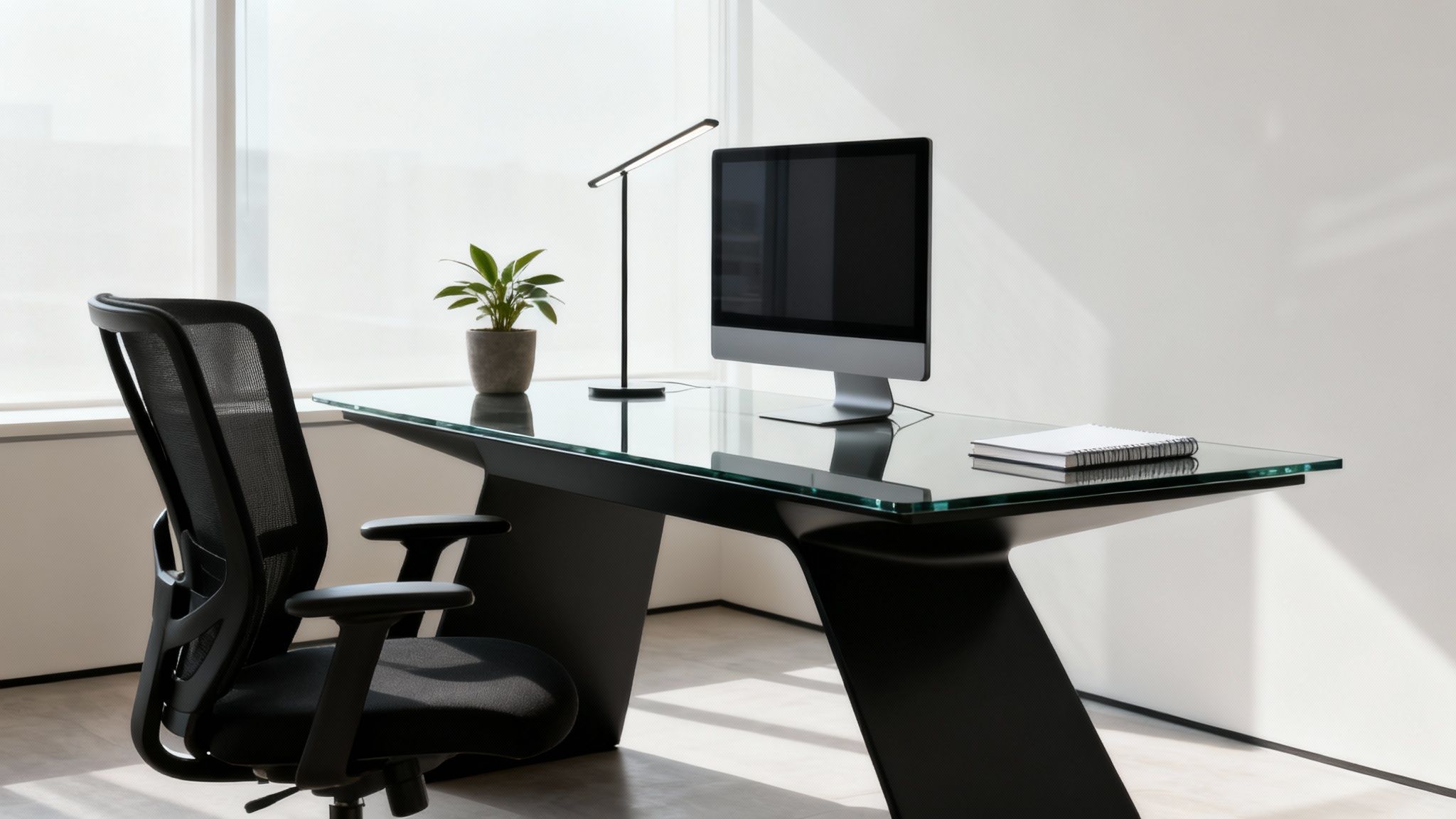
Modern minimalist home office with a black ergonomic chair and a sleek black desk with a glass top, featuring a computer monitor

This is where your vision for a functional, stylish office really begins, whether you’re outfitting a single executive space or a whole floor of workstations. The trick is to pick pieces that enhance the desk’s clean lines, not compete with them.

Creating a Cohesive Look

Styling a black glass desk is all about being intentional. Every single item you add should have a purpose. Start by figuring out the overall vibe you’re going for—is it ultra-minimalist, industrial chic, or something more like a luxurious executive suite?

Once you have a direction, you can start picking out complementary furniture and accessories. An ergonomic chair with a black mesh back and chrome accents, for instance, will echo the desk’s materials perfectly. For storage, think about low-profile filing cabinets or shelving in a matching black or even a contrasting metallic finish to keep that open, airy feeling.

A well-styled workspace balances form and function. With a glass desk, the accessories you choose—from the lamp to the pen holder—become part of the design. Select items with clean lines and a simple color palette to maintain a sophisticated, uncluttered look.

This approach makes sure every piece contributes to a unified design. It turns the desk from a simple surface into the heart of a well-curated office.

Accessorizing for Form and Function

The transparent nature of a glass top means everything on your desk is always on display. This isn’t a bad thing! It’s actually a great opportunity to be selective with your accessories, choosing items that are both beautiful and genuinely useful.

  • Lighting: A slim, architectural LED desk lamp in black or brushed metal provides essential task lighting without adding bulk. Its main job is to light up your work, but its design should feel like a deliberate part of the overall style.
  • Organization: Instead of letting things scatter, use a sleek leather or metal desk organizer. This keeps pens, notebooks, and other must-haves tidy while adding a nice touch of texture and sophistication.
  • Greenery: A small plant in a simple, modern pot can add a welcome pop of color and life. Something low-maintenance like a succulent or a snake plant contrasts beautifully with the industrial feel of the desk.

These small touches introduce personality without killing the minimalist appeal of your black glass desk.

Integrating with Cubicle Systems

One of the biggest strengths of a black glass desk is how easily it fits into modular office systems. At Cubicle By Design, we see this as the perfect way to elevate a standard workspace into something truly exceptional.

Imagine a row of our sleek workstation cubicles, each anchored by a black desk with a glass top. The reflective surfaces would create a sense of unity and brightness across the entire floor, making the whole space feel more open and collaborative.

For executives or teams who need more privacy, picture one of our modern private office cubicles featuring a stunning glass desk. That combination just exudes authority and style, creating a professional environment that’s both impressive and highly functional. You can even use our free Cubicle Designer tool to see how these pieces fit together to create a polished, modern office. Explore our full range of cubicles to find the perfect framework for your new desk.

Functional Setup and Workspace Ergonomics

A black desk with a glass top is an absolute showstopper, but its real worth is measured by how well it supports you through the daily grind. Once you get past the initial “wow” factor, the functional setup is what really turns this piece of furniture into a hub of productivity and comfort. A well-thought-out, ergonomic workspace isn’t just nice to have; it’s what keeps you focused and prevents physical strain after long hours.

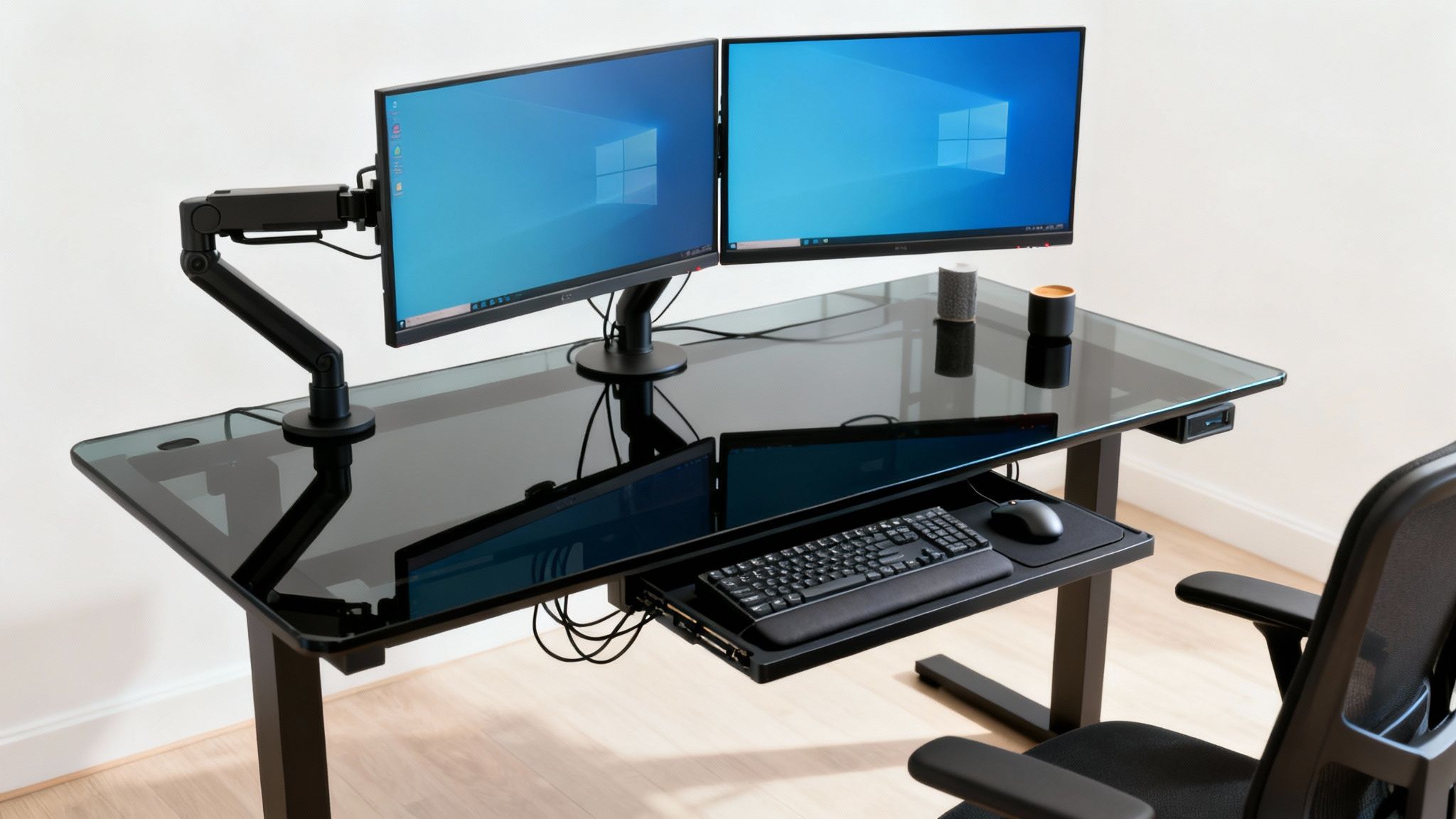
One thing about a transparent glass surface: there’s nowhere for messy cables to hide. This makes good cable management non-negotiable. A tangled mess of wires snaking under that beautiful glass top instantly undermines its sophisticated look. A small investment in some simple, clever solutions is all it takes to preserve that clean, modern aesthetic.

Modern ergonomic workspace featuring a black desk with glass top, dual monitors on adjustable arms, and organized accessories

This growing demand for minimalist and contemporary furniture is making waves in the market. The global glass table market, which includes designs like these, was valued at around USD 5.5 billion in 2025. And it’s not slowing down—projections show it growing at about 6% annually, all thanks to a major consumer shift toward sleek, modern interiors where glass furniture truly shines.

Mastering Ergonomics for Health and Productivity

Ergonomics is simply about making your workspace fit you, not forcing you to fit your workspace. Getting this right is crucial for dodging common problems like back pain, neck strain, and eye fatigue. A black desk with glass gives you the perfect, stable foundation for building an ergonomically sound station.

Start with the basics: your desk and chair height. Your feet should sit flat on the floor, with your knees bent at a comfortable 90-degree angle. Your elbows should also form a 90-degree angle, which lets your forearms rest parallel to the floor. Simple, but it makes a world of difference.

The most productive workspace is one that disappears, allowing you to focus entirely on the task at hand. Proper ergonomics isn’t a luxury; it’s a fundamental requirement for sustained performance and long-term well-being.

Next, get your monitors positioned correctly. This is your first line of defense for protecting your neck and eyes. The top of your main monitor should be at or just below your eye level, and about an arm’s length away. This one adjustment keeps you from hunching forward or craning your neck—two of the biggest culprits behind workplace discomfort. For a deeper dive, check out our guide on how to maximize the ergonomics of your office.

Cable Management and Assembly Best Practices

A clean setup is a productive setup. With a glass desk, you’ve got to get a handle on those wires. Here are a few effective ways to do it:

  • Adhesive Cable Clips: These little guys stick right to the underside of the desk or along the frame, neatly guiding your cables out of sight.
  • Cable Sleeves: A simple fabric or neoprene sleeve can bundle all your cords into a single, tidy tube. Instant organization.
  • Under-Desk Trays: Mounting a wire tray underneath is the ultimate move. It can hold a power strip and all the extra cable length, keeping everything completely off the floor and invisible.

Finally, a quick word on assembly: follow the manufacturer’s instructions to the letter. Make sure every single bolt and screw is fully tightened. A wobbly desk isn’t just a distraction; it’s a potential hazard for you and your expensive equipment. By focusing on these functional details, your black glass desk becomes the perfect blend of high style and peak performance.

Build Your Modern Office with Cubicle By Design

So, you’ve seen the potential. You understand how the right desk can shift the entire feel of an office. Now it’s time to take that inspiration and make it real. The next step is picturing how a sharp black desk with glass can genuinely transform your own workspace from just a room into a modern, functional environment.

Let’s start building. We’ve created some powerful, interactive tools so you can experiment with different layouts and see exactly how these desks fit into the bigger picture. Think of us as your partner in creating a workspace that truly reflects the quality and forward-thinking nature of your business. And if you want a more personal touch, our experts at Cubicle By Design are always ready for a space planning consultation.

Visualize Your Workspace Instantly

Every great design starts with a vision. Our online Cubicle Designer is built to help you map out yours, easily and intuitively.

Here’s a look at the simple drag-and-drop interface of our Cubicle Designer tool.

It’s a straightforward platform that lets you set dimensions, drop in furniture—like that black glass desk you’ve got your eye on—and arrange everything to create the perfect workflow. No guesswork, just results.

A well-planned office layout is the foundation of productivity. By visualizing your space before committing, you can identify potential bottlenecks and ensure every square foot is used effectively, creating a workspace that is both beautiful and efficient.

Whether you’re mapping out a single executive office or a full floor of workstation cubicles, this tool puts the power to create the ideal setup right at your fingertips. For a spark of creativity, you can also explore our comprehensive office furniture designs to see what’s possible.

Common Questions About Black Glass Desks

When you’re close to a decision, a few last-minute questions always pop up. We get it. To help you feel completely confident, here are the answers to the questions we hear most often from clients considering a black desk with a glass top.

Is a Black Glass Desk Strong Enough for Daily Office Use?

Yes, absolutely. This isn’t the same glass as your dining room table. Commercial-grade glass desks use tempered glass, a material that’s been heat-treated to be four to five times stronger than standard glass. It’s engineered specifically to handle the weight of multiple monitors, computer towers, and all the gear of a busy workday.

When you pair that tough glass surface with a sturdy steel or solid wood frame, you get a workstation that’s built for the long haul. It’s designed for performance, not just to look good.

How Do I Prevent Smudges and Fingerprints on a Glass Desk?

Keeping a glass top looking sharp is easier than you might think. For everyday dust and prints, a quick pass with a dry microfiber cloth is usually all it takes to bring back that perfect shine. For anything more stubborn, a little bit of standard glass cleaner—or even a simple mix of water and white vinegar—does the trick.

A great pro-tip is to place a desk mat under your keyboard and mouse. It’s a stylish way to keep your main work area fingerprint-free. Or, you could opt for a frosted or smoked glass finish from the start, which makes smudges much less noticeable.

Will a Black Glass Desk Look Good with My Existing Furniture?

It’s a common concern, but the minimalist appeal of a black glass desk makes it surprisingly versatile. While it’s a natural fit for modern design, its clean lines and neutral color can act as a sophisticated accent in more transitional or even industrial-style offices.

The trick is to find a common thread. By pairing it with chairs or storage that share a similar material or color—like pieces with a chrome base or black hardware—you can tie the whole room together. Often, instead of clashing, it elevates the existing furniture by adding a touch of clean, modern contrast.


Ready to build a workspace that truly reflects your company’s quality and vision? The team at Cubicle By Design is here to help you plan, design, and install the perfect office layout for your private office cubicles or open-concept workstation cubicles.

Explore our full range of modern office solutions at cubiclebydesign.com

Read More

Modern, Sleek & Functional Cubicles: Glass Top Desk with Drawers

Modern, Sleek & Functional Cubicles: Glass Top Desk with Drawers

A glass top desk with drawers is the perfect marriage of sleek, modern style and down-to-earth practicality. It gives you a workspace that feels open and organized, ideal for anyone looking to cut down on visual clutter while keeping their essential supplies tucked away but still within easy reach.

Why Choose a Glass Desk with Integrated Drawers

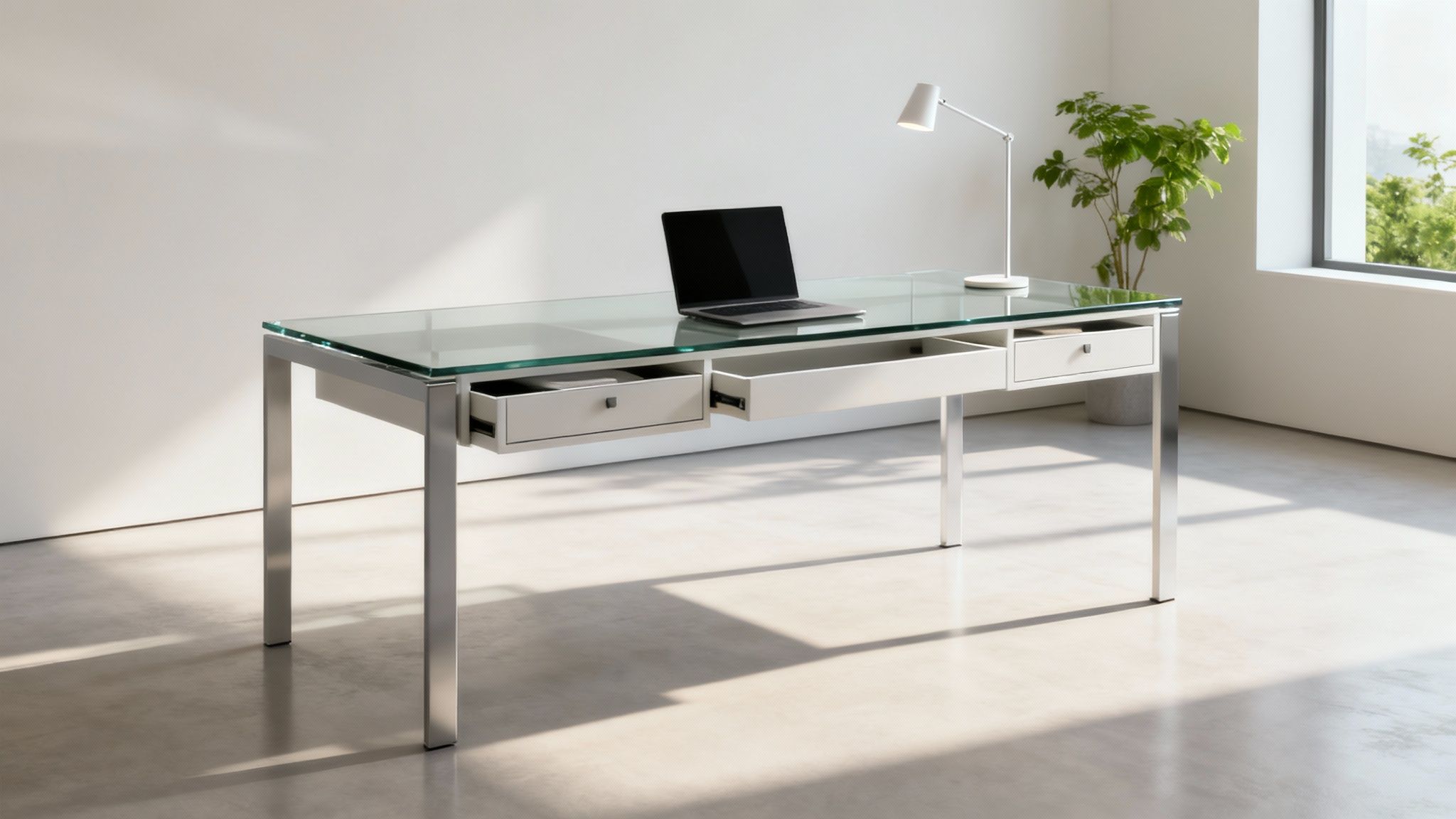
Modern glass top desk with white drawers, laptop, and minimalist lamp in a bright office.

Picking the right desk can feel like a huge decision, but it really just boils down to balancing style with function. A glass top desk with drawers nails this by pairing a light, airy surface with the absolute necessity of built-in storage. Unlike a heavy wood or metal desk that can really weigh a room down, the transparency of glass creates an illusion of more space.

This makes it a fantastic solution for a smaller home office or even a sprawling open-plan corporate space where you want to keep that feeling of openness. The drawers are built right in, so you can skip the separate, clunky filing cabinets and keep the clean, minimalist lines you’re going for.

The Best of Both Worlds

A glass top desk with drawers brings a few key advantages to the table that really resonate with today’s work habits and design tastes. Think of it less as a piece of furniture and more as a strategic tool for a better workday.

  • Aesthetic Appeal: The crisp, clean look of glass adds a touch of sophistication to any office. It catches the natural light and just makes the whole space feel brighter.
  • Built-in Organization: Having drawers right there means your pens, notebooks, and important documents are always an arm’s length away, but completely out of sight.
  • Reduced Clutter: When your work surface and storage are one seamless unit, you get a streamlined setup that helps you focus and think more clearly.

The right desk setup isn’t just about looks; it’s about creating an environment where you can do your best work. A glass desk with drawers merges form and function, supporting an organized and inspiring workspace.

This combination of elegance and efficiency is exactly why these desks are so popular. The global desk market was valued at over $31 billion in 2021 and is expected to keep growing, which tells you there’s a real demand for workspace solutions that are both functional and stylish. When you consider both the look and the practical storage, it’s easy to see why this design is a top choice for modern professionals. To learn more about where things are headed, check out our guide on the future of the office desk.

2. Understanding Your Desk’s Core Materials

A desk isn’t just a surface—it’s an investment in your team’s daily comfort and productivity. When you’re looking at a glass top desk with drawers, the quality of the materials tells you everything you need to know about its longevity and safety. From the glass itself to the frame and the drawer hardware, these are the building blocks of a truly reliable workstation.

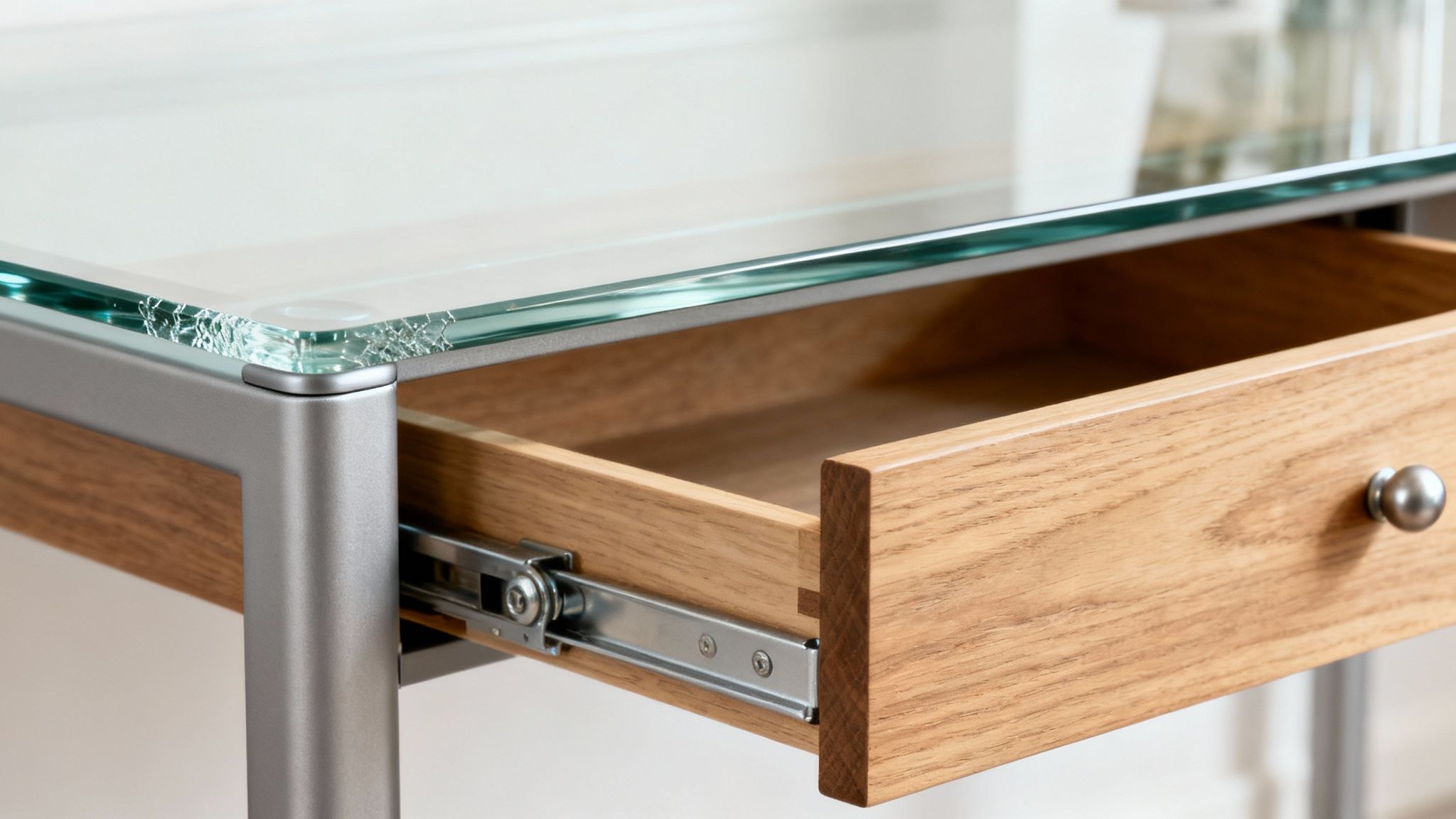
Modern glass top desk with an open wooden drawer showing metal glide hardware and sleek design.

The star of the show, of course, is the glass. Any reputable desk will use tempered glass, a special type of safety glass that goes through a unique heat treatment process. This makes it up to five times stronger than regular, untreated glass.

Think of it like a car’s side window. If it ever breaks under extreme force, it crumbles into small, pebble-like cubes instead of shattering into large, dangerous shards. This feature isn’t just a nice-to-have; it’s a critical safety standard for any professional office environment.

The Frame: Your Desk’s Foundation

Beneath the glass, the frame provides the essential stability and really defines the desk’s overall look and feel. Different materials create different vibes.

A solid frame is the backbone of any good desk. Here’s a quick breakdown of the most common materials to help you decide what fits your space, style, and budget.

Comparing Frame Materials for Your Glass Desk

Material Key Advantages Primary Considerations Best For
Steel Exceptionally strong and durable, supports heavy loads, offers an industrial or minimalist aesthetic. Can be heavy and more difficult to move. Susceptible to rust if the finish is compromised. High-traffic areas, executive offices, or anyone needing a robust, long-lasting desk.
Aluminum Lightweight, corrosion-resistant, and provides a sleek, modern look. Easy to move and reconfigure. Generally more expensive than steel. May not feel as substantial or “heavy-duty” as steel. Modern, agile offices, collaborative spaces, and setups that may be moved frequently.
Wood Adds natural warmth and a classic, timeless feel. Available in a wide variety of finishes and styles. Can be prone to scratches or water damage if not properly sealed. Solid wood is heavy and costly. Traditional or transitional office designs, home offices, and spaces aiming for an inviting feel.
Wood Composite (MDF) A budget-friendly alternative to solid wood. Offers a smooth, uniform surface perfect for veneers or paint. Less durable than solid wood; can be susceptible to moisture. Not as strong for load-bearing. Cost-conscious buyers, startups, or for desks that won’t be subjected to heavy, daily abuse.

Ultimately, the right frame material balances your desired aesthetic with the practical demands of your office. Steel offers unmatched strength, while aluminum brings a lightweight, modern edge, and wood adds a touch of classic warmth.

The drawers are where the desk’s functionality really comes to life. High-quality desks feature smooth, full-extension ball-bearing glides, which let you access the entire drawer without it sticking or wobbling. The drawer box construction—whether it’s solid wood or a durable composite—is just as important. These are the little mechanical details that determine how the desk performs day in and day out.

A well-built glass top desk is a system where every component works together. The strength of the tempered glass is supported by the rigidity of the frame, and the real-world utility is defined by the quality of the drawer hardware.

The pairing of transparent glass surfaces with sturdy frames creates a beautifully balanced design. It’s a lot like how modern offices use glass partition walls for offices to build an environment that feels open and collaborative, yet structured and private where it needs to be.

By understanding what goes into a desk’s construction, you can look past the surface-level appearance and choose a piece that’s truly built for lasting performance.

Finding the Perfect Fit for Your Space and Body

A stunning glass top desk with drawers doesn’t do you much good if it feels wedged into the room or leaves you with an aching back. The best desk is one that fits your physical space and your body, creating a workstation that feels completely natural and supportive. Nailing these dimensions from the get-go is the secret to long-term comfort and productivity.

Before you get too attached to a particular design, it’s time to break out the tape measure. Go ahead and map out the desk’s footprint on your floor, but don’t just stop there. You have to factor in what we call “breathing room”—that crucial space you need to pull your chair out and walk around without difficulty. A solid rule of thumb is to leave at least 3 feet of clear space behind the desk for your chair.

Ergonomics for Lasting Comfort

Once you’ve confirmed the desk actually fits in the room, the next critical step is making sure it fits you. Ergonomics isn’t some complex science; it’s really just about aligning your workspace with your body’s natural posture to keep strain at bay.

The goal is simple: a setup where your feet are flat on the floor, your knees are bent at a 90-degree angle, and your arms can rest on the desk with your elbows also at roughly a 90-degree angle. This simple alignment stops you from hunching over or reaching up—two of the biggest culprits behind neck, shoulder, and back pain. The standard desk height hovers around 29-30 inches, but don’t take that as gospel. Always measure your office chair at its most comfortable height for you, and then look for a desk that matches that level.

A desk that fits your body is just as important as one that fits your room. Proper ergonomic alignment is the foundation of a healthy and productive workday, reducing physical stress and allowing you to focus on your tasks.

Managing a Glass Surface

Working on a glass top brings a few unique quirks to the table. The most common one? Glare. That beautiful reflective surface can catch light from overhead fixtures or a sunny window, leading to some serious eye strain. Try positioning your desk so that bright light sources are to the side, rather than directly in front of or behind you. It can make a world of difference.

Keeping the surface looking sharp is also key. A few stylish desk organizers, trays, or even a nice leather desk pad can help corral all the little things that create clutter. And when you’re looking at a glass top desk with drawers, keep an eye out for built-in cable management. Features like grommets or under-desk trays are lifesavers for keeping cords out of sight and preserving that clean, minimalist look. In fact, finding good desks for small spaces often comes down to clever solutions like these that boost both function and style.

Choosing the Right Drawer Configuration for You

That sleek glass surface might be what catches the eye, but let’s be honest—it’s the drawers that make a desk a real workstation. The storage configuration you choose has a huge impact on your daily workflow, so it’s worth thinking about how you actually work before you buy. Not all drawer setups are built the same, and picking the right one is the first step toward a clean, productive space.

When it comes to a glass top desk with drawers, the two most common layouts you’ll run into are single-pedestal and double-pedestal designs.

  • Single-Pedestal Desks: These desks have just one stack of drawers, either on the left or the right. It’s a more minimalist approach that gives you essential storage without visually dominating the room. If you just need a spot for basic supplies and don’t deal with mountains of paperwork, this is a great choice.
  • Double-Pedestal Desks: Think of the classic executive desk—that’s a double-pedestal. With a set of drawers on both sides, this style offers maximum storage. It’s perfect for anyone who needs lots of organized space for files, project materials, and personal items right at their fingertips.

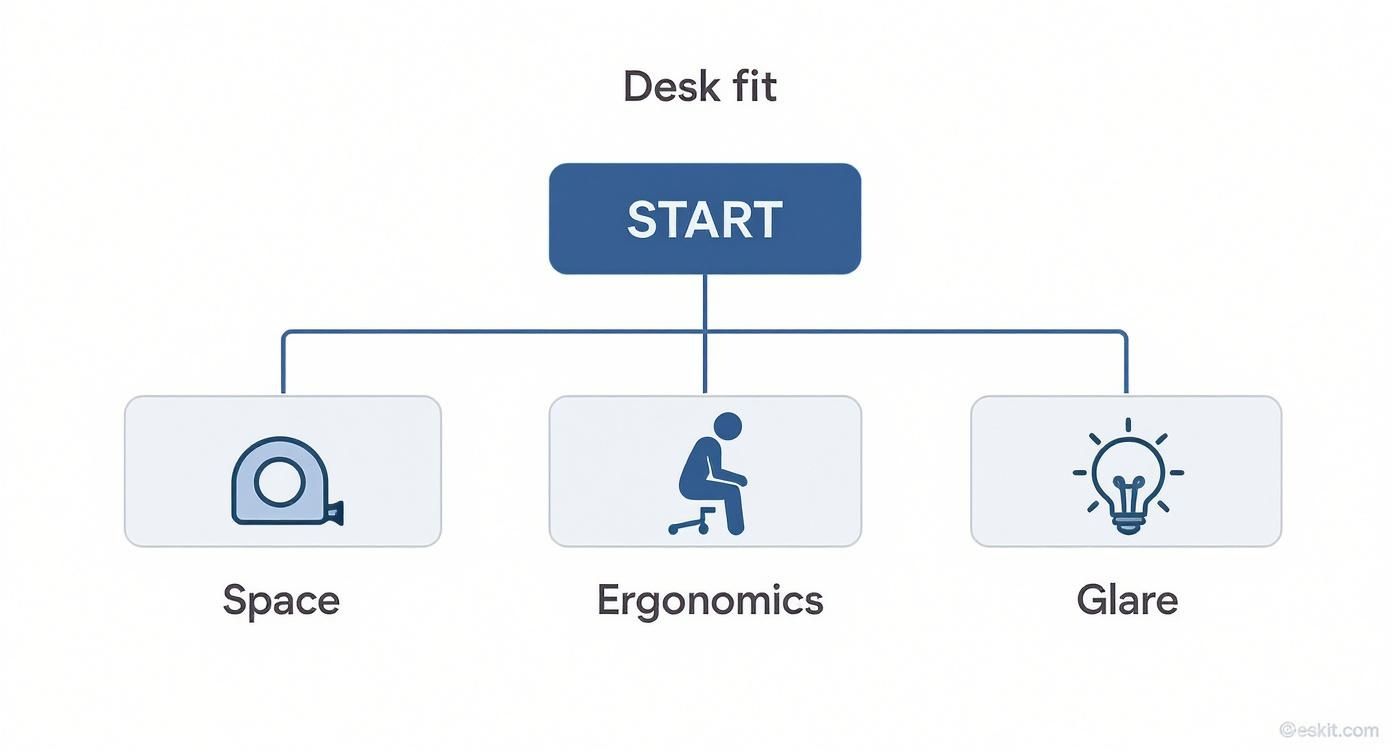
This decision tree can help you start thinking through all the factors, from the physical footprint to how you’ll use the desk day-to-day.

Flowchart shows desk fit evaluation criteria: space measurements, ergonomics, and glare considerations.

As the chart shows, finding the right desk is a balancing act between the space you have, how you sit, and what you actually do—all of which circles back to your storage needs.

Matching Drawer Types to Your Tasks

Beyond just the number of pedestals, the types of drawers inside them matter just as much. A well-thought-out desk will usually offer a mix of drawer styles to handle everything from stray paperclips to hefty client files.

Here are the main types you’ll find:

  1. Box Drawers: These are your shallow, top-level drawers. They’re designed for the everyday stuff: pens, notepads, chargers, and other small items you need to grab without thinking.
  2. File Drawers: Deeper and built tougher, these are made to hold standard letter or legal-sized hanging file folders. They’re absolutely essential if you’re organizing important documents, contracts, or records.

Premium Features That Elevate Functionality

The little details are what separate a good desk from a great one. As you compare options, keep an eye out for thoughtful features that make the desk easier and more pleasant to use.

A great desk doesn’t just hold your things; it anticipates your needs. Features like soft-close glides and integrated locks turn a simple storage unit into a secure, silent, and seamless part of your workflow.

Look for soft-close mechanisms that prevent drawers from slamming shut—a small touch that makes a big difference in a quiet office. If you’re handling sensitive information, built-in locks are non-negotiable. And for those of us who appreciate a place for everything, customizable organizers and drawer dividers let you create the perfect layout for all your supplies.

If maximum storage is your top priority, see how a double-pedestal desk could support your workflow.

Creating a Cohesive Modern Office Design

A single desk can definitely elevate a room, but it’s the integration into a larger design that creates a truly professional environment. A glass top desk with drawers is a fantastic player in this role, acting as a natural bridge between individual workstations and a unified, modern office aesthetic. Its transparent surface and clean lines just feel right in contemporary layouts.

At Cubicle By Design, we see these desks paired with modular cubicles and glass partition walls all the time. Think of the glass top as more than just a worksurface—it’s an architectural element. It continues the visual language of the glass walls, letting natural light flow uninterrupted throughout the entire space. This creates an atmosphere of openness and collaboration that, as studies have shown, can really boost team morale.

Harmonizing Finishes and Styles

Nailing a cohesive look is all about consistency in the small stuff. A glass desk almost always has a prominent metal or wood frame, and matching this element with your other furniture is the secret to a polished design. If your desk has a sharp chrome or brushed aluminum frame, echo that finish in the bases of your chairs, cabinet hardware, or even your light fixtures.

This simple repetition creates a sense of intentionality and order. The same logic applies to any wood tones you might have in the drawer pedestals.

  • Metal Finishes: Pair a brushed steel desk frame with similar finishes on seating and storage units. This gives you a sleek, almost industrial feel.
  • Wood Tones: Match the wood veneer on the desk’s drawers with other wood elements in the room, like shelving or credenzas, for a warmer, more grounded look.
  • Overall Style: Just make sure the desk’s minimalist design vibes with your other modern pieces. You want to avoid clashing with more traditional or ornate styles.

The goal is for your new desk to feel like it was always part of the plan, not an afterthought. A cohesive design ensures every piece works together, enhancing the overall functionality and aesthetic of the workspace.

The home office furniture market, valued at a massive $15.5 billion in 2024, is growing fast as more of us invest in creating spaces that are both functional and stylish. This trend really underscores the demand for furniture that is as beautiful as it is practical.

This unified approach is what creating a modern office is all about. You can learn more about which essential items contribute to a fresh look in our article on 5 furniture pieces to refresh your office. By carefully selecting and matching these elements, your glass top desk becomes a cornerstone of a sophisticated and productive environment.

Partnering with Experts for a Custom Solution

Stepping away from standard, off-the-shelf furniture opens up a whole new world of possibilities. While retail desks certainly have their place, partnering with a specialist like Cubicle By Design gives you the driver’s seat for every last detail of your glass top desk with drawers.

This isn’t just about picking a color from a catalog. It’s about crafting a solution built from the ground up to fit your team’s real-world operational needs and reflect your company’s brand identity.

When you go custom, you’re no longer hemmed in by what happens to be in stock. You can dial in the exact dimensions for that tricky corner office, choose a frame finish that perfectly complements your existing decor, and design a drawer layout that actually makes sense for how your people work.

The Value of Professional Space Planning

One of the biggest advantages of working with an expert is getting access to professional space planning and consultation. This is much more than just arranging furniture on a floor plan; it’s a strategic process that lets you see the final setup before committing, helping you sidestep expensive mistakes.

A specialist can whip up detailed 2D and 3D renderings, showing you exactly how your new desks will look and function within the broader office layout. This kind of foresight is absolutely crucial for mapping out traffic flow, making the most of every square foot, and ensuring the final result is as functional as it is beautiful.

Professional consultation turns furniture buying from a guessing game into a guided, intentional process. It’s the difference-maker that ensures your investment pays off with a workspace that’s efficient, code-compliant, and perfectly aligned with your business goals.

The best part? This process covers everything from the first sketch to the final installation. Our team handles all the logistics, making sure every component—from the tempered glass top down to the drawer pulls—is specified correctly, ordered, and delivered on time. This end-to-end management gives you total peace of mind and guarantees a superior result built to last, letting you focus on running your business while we bring your ideal workspace to life.

Your Questions Answered: Getting to Know Glass Top Desks

When you’re thinking about bringing a new piece of furniture into the office, especially something as distinct as a glass top desk with drawers, it’s only natural to have a few questions. This is a significant purchase, and getting the details right helps you feel confident you’re making the right call. Let’s tackle some of the most common things office managers ask about these functional, stylish workstations.

Is a Glass Top Desk Really Durable Enough for a Busy Office?

Absolutely. The secret is in the type of glass used. Quality glass desks aren’t made from just any old pane of glass; they use tempered glass. This material is heat-treated to make it four to five times stronger than standard glass.

This process gives the surface a high resistance to the scratches and heat that come with daily office life. You can place monitors, laptops, and coffee mugs on it without a second thought. Of course, the real key to durability is pairing that tough glass with a solid, well-engineered frame that provides rock-steady support day in and day out.

How Do I Keep a Glass Desk Looking Clean and Free of Smudges?

Keeping it pristine is surprisingly easy. For daily dusting, a simple microfiber cloth is all you need to wipe the surface clear.

When you start seeing fingerprints or smudges, a standard glass cleaner will do the trick. A 50/50 mix of water and white vinegar also works wonders.

Pro Tip: To get a perfect, streak-free shine, always spray your cleaner onto the cloth itself, not directly onto the glass. A quick wipe-down is all it takes to keep your desk looking sharp and professional.

What’s the Typical Weight Capacity for a Glass Desk?

The exact weight limit can vary based on the desk’s design—things like the thickness of the glass and the strength of the frame play a big role. Generally speaking, though, a well-built glass top desk with drawers can typically hold between 75 and 150 pounds.

That’s more than enough for most professional setups, easily handling multiple monitors, a computer, and all the usual accessories. If you plan on placing something exceptionally heavy on it, it’s always a good idea to double-check the manufacturer’s specs for the exact weight limit.

Can I Customize the Drawers on My Glass Desk?

Yes, and this is where working with a specialist really pays off. At Cubicle By Design, customization is at the heart of what we do. You can collaborate with our team to dial in the perfect setup for your workflow.

We can help you figure out:

  • The number and placement of drawer pedestals—left, right, or maybe one on each side.
  • The specific types of drawers you need, like shallow box drawers for pens and supplies or deep file drawers for important documents.
  • The finishes and hardware that will tie in perfectly with your office’s look and feel.

This kind of personalization ensures your desk isn’t just a pretty piece of furniture, but a practical tool built just for you.


Ready to design a workspace that blends modern style with smart storage? The experts at Cubicle By Design can help you put together the perfect glass top desk solution for your office. Explore our custom options and start planning today.

Read More

What Is A Double Pedestal Desk? Choosing the Right Desk Setup

What Is A Double Pedestal Desk? Choosing the Right Desk Setup

More than just a piece of furniture, the double pedestal desk is a classic for a reason. It’s a statement piece, a symbol of stability and focus. Its entire identity is built around a large, inviting work surface held up by two strong columns of drawers. Think of it as your own personal command center, designed from the ground up for getting things done.

Why the Double Pedestal Desk Remains an Office Icon

The double pedestal desk has a certain presence, an executive feel that comes from its practical, built-in storage. It’s a design that eliminates clutter before it even has a chance to start. This isn’t just about looking good; it’s a smart fusion of form and function that has kept it popular for decades. This classic structure gives you a sense of authority and efficiency that many minimalist designs just can’t match.

This timeless appeal is now finding its way into a new setting: the home office. As remote work continues to grow, so does the demand for substantial, functional furniture. With the U.S. home office furniture market expected to hit USD 56.30 billion by 2030, traditional styles are making a serious comeback. In fact, some estimates suggest that double pedestal models made up around 12% of all home office desks sold in the U.S. last year.

A Foundation of Productivity

So, what’s the secret to its staying power? It really comes down to its all-in-one design. Unlike many modern setups where you have to buy separate filing cabinets or storage units, a double pedestal desk keeps everything you need right at your fingertips.

Its very architecture encourages organization. With two pillars dedicated to storage, the main work surface stays clear. This naturally helps you focus and cuts down on distractions, making it a smart investment for any professional who values efficiency.

Office furniture trends will always come and go, but foundational pieces like this stick around. You can check out our thoughts on the future of the office desk to see how classic designs are adapting to today’s work needs.

Double Pedestal Desk At a Glance

To give you a clear, quick summary, here’s a breakdown of what defines a double pedestal desk and makes it such a solid choice for any professional space.

Feature Description Primary Benefit
Symmetrical Design A large desktop supported by two matching columns (pedestals) of drawers. Creates a balanced, professional aesthetic and ensures stability.
Integrated Storage Each pedestal contains multiple drawers, often a mix of box and file drawers. Keeps supplies and documents organized and accessible, saving space.
Spacious Work Surface Typically offers a generous desktop area, ideal for multiple monitors and tasks. Provides ample room for your workflow, reducing physical and mental clutter.
Durable Construction Often built from solid wood, veneers, or high-pressure laminates for longevity. Represents a long-term furniture investment built to withstand daily use.

This table really highlights how the desk’s thoughtful design directly translates into practical, everyday benefits for the user. It’s a powerhouse of form and function.

What Makes This Classic Desk a Smart Choice?

Sure, a double pedestal desk has timeless good looks, but its real power lies in its practical advantages. It’s a true workhorse in any professional setting for three key reasons: it offers an incredible amount of storage, it has a commanding presence, and it’s built to last. When these elements come together, you get a workspace that’s as impressive as it is functional.

The first thing you’ll notice is the massive, built-in storage. Think of those two pedestals not just as legs holding up the desk, but as a complete, self-contained filing system. With columns of drawers at your fingertips, all your essential documents, stationery, and supplies stay organized and within easy reach. This simple feature can seriously cut down on the time you waste hunting for things and keep your workflow smooth.

This integrated design often eliminates the need for separate filing cabinets or bulky shelving units. That frees up valuable floor space and helps create a much cleaner, more put-together office environment.

A Look That Means Business

A double pedestal desk does more than just hold your computer; it sends a message. Its substantial size and classic, symmetrical design make it an instant focal point in any room, projecting an image of stability, authority, and seriousness. This makes it an ideal choice for client-facing roles—think law firms, financial institutions, or executive suites where making a strong first impression is non-negotiable.

This style has a long history as a symbol of professionalism in government and academic settings. That legacy is alive and well today, with a renewed appreciation for traditional designs helping to fuel growth in the office furniture market. The global office desks market was valued at around USD 20 billion in 2023 and is expected to climb toward USD 30 billion by 2032, with classic styles like the double pedestal desk holding their own. You can see more details about the global office furniture market on DataIntelo.com.

The commanding presence of a double pedestal desk helps establish a professional tone. It’s a piece of furniture that conveys confidence and competence without saying a word, making it an asset in any high-stakes business environment.

Built to Endure for the Long Haul

Finally, the solid construction of a double pedestal desk is a smart long-term investment. These desks are typically built from materials like solid wood, tough veneers, or high-pressure laminates, all designed to handle the daily grind of a busy office. Their sturdy build means they won’t wobble or shake like some of the lighter, more minimalist desks out there.

That inherent stability also makes for a more comfortable and productive workday. When your desk is solid and reliable, it’s easier to focus on the tasks at hand. For a deeper dive into creating a supportive workspace, check out our guide on ergonomics and its role in workplace happiness. At the end of the day, choosing a double pedestal desk means you’re buying a piece of furniture that will look and function great for years to come.

Understanding Materials, Finishes, and Dimensions

When you’re picking out a desk double pedestal, it’s easy to get focused on just the look. But the real secret to a smart purchase is digging into the materials and dimensions that will hold up to your office’s daily grind while fitting perfectly into your space. Think of it this way: the materials don’t just define how the desk looks, but how long it will last and how much care it’s going to need. It’s a pretty big decision.

Finding the Perfect Fit and Finish

You’ve got a few great options when it comes to materials. There’s the timeless, commanding presence of solid woods and rich veneers like oak or mahogany. Then you have high-pressure laminates, which are workhorses known for their resilience. Solid wood brings a classic, authoritative vibe, while modern laminates are fantastic at resisting scratches and stains—a must-have for any busy office.

Laminates are especially versatile. You can find them in countless finishes that either mimic the warmth of natural wood or offer a clean, contemporary solid color. For instance, a quality supporting BBF pedestal in laminate delivers that ideal mix of durability and modern style for any workstation.

Of course, size matters just as much as what the desk is made of. A standard double pedestal desk typically gives you a generous 60 to 72 inches of width. That’s plenty of real estate for multiple monitors, stacks of paperwork, and all your essential gear. The depth usually falls between 30 and 36 inches, so you have ample room to spread out and work without feeling hemmed in.

The finish you choose is what really gives the desk its personality. It can either blend into your existing decor or stand out as a statement piece. A dark mahogany finish projects tradition and authority, perfect for an executive office. On the other hand, a lighter oak or a crisp white laminate can instantly make a space feel more open and modern.

This diagram really breaks down the key ingredients of a great double pedestal desk, from its solid construction to its visual appeal.

As you can see, the design is all about striking a balance between looks, build quality, and top-notch storage. When all three come together, you get a workspace that’s incredibly functional.

Comparison of Common Desk Materials

Choosing the right material often comes down to balancing the pros and cons against your specific needs—and your budget. A solid wood desk is a serious investment in long-term quality, while laminate offers a wallet-friendly and low-maintenance alternative that still looks sharp. This table lays it all out to help you compare your options at a glance.

Material Type Average Cost Durability/Lifespan Best For
Solid Wood High Excellent / Decades Executive offices and creating a premium, traditional look.
Wood Veneer Moderate Very Good / 10-20 Years Achieving a high-end wood look on a more moderate budget.
Laminate Low-Moderate Good / 5-15 Years High-use environments, open offices, and budget-conscious buyers.

Ultimately, whether you lean toward the lasting beauty of wood or the practical smarts of laminate, the goal is to find a desk that not only fits your space but also supports the work you do every single day.

Integrating Pedestal Desks into Modern Office Layouts

That classic image of a desk double pedestal might feel a bit out of place in today’s open, modular offices. But this traditional powerhouse is surprisingly adaptable and can serve as a fantastic anchor in a modern workplace design, bridging the gap between timeless style and contemporary needs. It doesn’t have to be a standalone island; think of it as the foundation for a highly functional, integrated workstation.

By pairing a double pedestal desk with modular components, you can build out some seriously expansive and practical layouts. Look beyond the single desk and imagine it as the central command of a larger system. Add a bridge and a credenza, and you’ve suddenly transformed it into a spacious L-shaped or U-shaped workstation—perfect for multitasking pros who need separate zones for computer work, paperwork, and meetings.

This approach gives you the best of both worlds: the solid storage and authoritative presence of the classic desk, combined with the flexibility of modern office systems. It’s how you build a workspace that feels substantial yet is perfectly customized to specific workflows.

Combining Classic Desks with Cubicle Systems

Dropping a double pedestal desk into a cubicle environment is a fantastic move. You get the privacy and structure from the panels along with the storage and gravitas of a traditional desk. This hybrid setup is ideal for managers or team leads who need a defined, personal workspace within a broader open-plan office. The cubicle walls provide that crucial acoustic and visual separation, while the desk itself offers a generous work surface and all that built-in storage.

Using a double pedestal desk as the core of a cubicle station creates a sense of permanence and an established personal office, even within a larger, shared environment. It’s a strategic choice for balancing individual focus with team accessibility.

Of course, making this combination work requires a bit of forethought to ensure everything fits seamlessly. Smart office space planning and design is absolutely key to making sure every component lines up perfectly, creating a workspace that’s both cohesive and productive.

Tackling Technology and Cable Management

Let’s be real—one of the biggest headaches in any office is keeping technology organized. A desk buried under a mess of wires and cables just looks unprofessional and can kill your workflow. The good news is that modern double pedestal desks are designed with today’s tech in mind.

You can maintain a clean, professional look with some smart cable management solutions. When you’re shopping, keep an eye out for desks with features designed to hide and organize all those cords:

  • Built-in Grommets: These are the little circular openings in the desktop. They let you neatly route monitor, keyboard, and power cables right through the work surface instead of having them hang off the back.
  • Wire Management Trays: Often mounted right underneath the desk, these trays are perfect for holding power strips and tucking away excess cabling, keeping everything off the floor and out of sight.
  • Modesty Panels: That panel at the front of the desk isn’t just for privacy—it’s also a great screen for concealing wires running from the floor up to your desk.

By choosing a desk double pedestal with these features, you can easily support a full suite of technology while keeping your workspace tidy and focused. This kind of thoughtful integration ensures that a classic piece of furniture can meet every demand of the modern professional.

Your Checklist for Selecting the Perfect Desk

Choosing the right double pedestal desk is a pretty big decision. It’s a piece of furniture you’ll rely on for years, so you want to get it right. To make it a whole lot easier, we’ve put together a straightforward checklist to walk you through the important stuff. Following these steps helps you sidestep the common pitfalls and feel much more confident about your purchase.

First things first: measure your space. Before you even think about browsing, grab a tape measure and figure out the absolute maximum length and width a desk can be without making the room feel cramped. And don’t forget about chair clearance! You’ll want at least 36-48 inches of open space behind the desk so you can move your chair in and out without a struggle.

A mistake we see all the time is people forgetting about pathways. Make sure the desk won’t block a doorway or create a weird, awkward traffic jam in your office. It’s not just about fitting the desk against a wall; it’s about making it work with the entire room.

Assessing Your Functional Needs

Next, take a minute to think about how you actually work day-to-day. A double pedestal desk is a storage beast, but how that storage is set up is what really matters.

  • Check Your Files: Are you dealing with standard letter-sized papers or the longer legal files? Make sure the file drawers are built to handle what you use.
  • Take Stock of Supplies: How many pens, staplers, and other small items do you need to keep handy? A good mix of shallow “box” drawers for the little things and deep file drawers usually hits the sweet spot.
  • Plan for Your Tech: Where is your computer tower going to live? What about a printer or scanner? You need to make sure there’s enough surface space and the right amount of clearance for all your gear.

Going through this process helps you find a pedestal setup that actually helps you work, rather than just becoming a place to stash random clutter.

Finalizing Your Choice

Okay, you’ve got your measurements and a solid idea of your storage needs. Now you can get to the fun part—the final details. Pick a material and finish that not only looks great in your office but also works with your budget. That could be the timeless warmth of solid wood or the tough, modern appeal of laminate.

Double-check the desk’s height (usually around 29-30 inches) to make sure it will pair well with your office chair and promote good posture. If you want a deeper dive into all the things you should consider when outfitting your space, our comprehensive office furniture buying guide is packed with more great advice. Taking the time to make a thoughtful, well-researched choice now means your new desk will be a valuable asset for a long, long time.

Designing Your Ideal Office with Cubicles.com

Okay, so you’ve got a handle on what a desk double pedestal brings to the table. But knowing the features is one thing; turning that knowledge into a smart, functional office design is the real challenge. This is where the blueprint becomes reality.

Here at Cubicles.com, we do more than just sell furniture. Think of us as your partner in creating an office that not only works well but feels right. Our mission is to make sure every piece, from the desks to the dividers, fits into a cohesive, productive whole.

From Concept to Completion

Bringing an office vision to life takes more than just picking out a few nice pieces of furniture. A new double pedestal desk shouldn’t just be dropped into a corner—it needs to be a core element of a well-planned layout. That’s why we offer the support to make sure it’s a perfect fit from day one.

We believe a great office is more than just a collection of desks and chairs. It’s a carefully crafted ecosystem designed to support your team’s best work, and our free services are built to make that happen.

Our free space planning and design services are designed specifically to integrate your new desk without a hitch. Our experts will take a look at your floor plan, get a feel for your workflow, and understand your style to build a layout that boosts efficiency and looks professional.

Ready to see what’s possible? Start playing around with our intuitive Custom Cubicle Designer tool to visualize your new space. Then, let our team help you build a workspace you can truly be proud of.

Have Questions? We Have Answers.

Even after seeing all the benefits, you might still be wondering how a classic double pedestal desk really fits into a modern workplace. Let’s tackle some of the most common questions we hear to help you decide with confidence.

Are Double Pedestal Desks Outdated?

Not a chance. While the design is definitely a classic, don’t picture your grandfather’s heavy, dark wood desk. Today’s manufacturers have completely reinvented the style with a huge range of contemporary materials and finishes. Think sleek laminates, minimalist hardware, and clean lines that fit right into a modern office aesthetic.

Plus, some things never go out of style. Their incredible storage capacity and commanding presence are timeless advantages. They’re still a go-to choice for executive suites, law firms, and any professional setting that values an organized, substantial look.

How Do I Manage Cables and Wires?

That’s a very common concern, but you can relax. Most modern double pedestal desks are built with today’s tech in mind. When you’re looking at different models, keep an eye out for these built-in features designed to keep your workspace from turning into a tangled mess.

  • Desktop Grommets: These are the small, clean-looking circular openings on the desk’s surface. They’re perfect for routing monitor, keyboard, and other cables directly through the top, keeping them neat.
  • Wire Management Trays: Usually found attached to the underside of the desk, these trays are your best friend for holding power strips and bundling up extra cords, keeping everything off the floor and out of sight.
  • Modesty Panels: The front panel of the desk isn’t just for privacy—it’s also brilliant for concealing the nest of wires running from the floor up to your equipment.

These smart little details make all the difference, ensuring you maintain a clean, professional work surface without a single distracting cord in sight.

Can a Double Pedestal Desk Be Ergonomic?

Yes, it absolutely can be. The key to making this style of desk ergonomic is less about the desk itself and more about pairing it with the right chair and accessories. You’ll want to start by making sure the desk height is right for you, which is typically between 29 to 30 inches, and then invest in a high-quality, adjustable ergonomic chair.

The most important ergonomic consideration for a double pedestal desk is having enough “kneewell” clearance. That’s the open space between the two pedestals where your legs go. It has to be wide enough for you to sit comfortably and shift your position freely without feeling cramped.

From there, adding things like an adjustable monitor arm or an ergonomic keyboard tray can dial in your setup for perfect posture and all-day comfort.

What Is the Difference Between a Pedestal and a Credenza Desk?

It’s easy to mix these up! A desk double pedestal is a single, all-in-one unit. The two columns of drawers (the pedestals) are the actual structural supports for the main desktop.

A credenza, on the other hand, is a separate piece of furniture. It’s usually a lower, shallower cabinet placed behind a main desk to provide extra storage and surface area. While a credenza has storage, it’s an accessory piece. With a double pedestal desk, the storage is the foundation.


Ready to build a workspace that blends classic authority with modern efficiency? The team at Cubicle By Design specializes in planning and installing professional office environments that just work. Explore our solutions and let’s start designing your ideal office today at https://cubiclebydesign.com.

Read More
Glass Partition Walls for Offices Your Complete Guide

Glass Partition Walls for Offices Your Complete Guide

Glass Partition Walls for Offices Your Complete Guide

Think for a moment about the traditional office. What comes to mind? For many, it’s a maze of high-walled cubicles that block out light and create a feeling of being boxed in. Now, imagine a different kind of workspace—one that’s open, filled with natural light, and humming with collaborative energy.

Glass partition walls for offices aren’t just a fleeting design trend; they’re a powerful tool for building a more productive and dynamic work environment. They break down barriers, both physical and communicative, which can do wonders for team morale and project a modern, forward-thinking brand image.

Reimagining the Modern Office with Glass Partitions

Today’s office is much more than just a place to clock in and out. It’s an ecosystem that needs to support focused work, spontaneous collaboration, and employee well-being. The old way of doing things with drywall and bulky cubicles often leads to a siloed culture, cutting people off and casting half the office in shadow. Glass partitions are the solution, transforming dim, sectioned-off areas into bright, connected spaces.

This isn’t just a gut feeling; the market reflects this shift. The global office partitions market was valued at around $8 billion and is expected to keep growing. Why? Because businesses are demanding flexible workspace solutions that give them the best of both worlds: the community feel of an open plan with the privacy people actually need to get work done.

Why Glass Is Gaining Ground

The pull towards glass walls is about much more than just looks. They are a genuinely functional piece of smart workplace design that solves several key business problems at once. When you swap out opaque walls for transparent ones, you create a visual connection that helps foster a real sense of unity and shared purpose.

Here’s why so many companies are making the switch:

  • More Natural Light: Glass lets sunlight reach deep into the building. This isn’t just a “nice-to-have”; studies have shown it can significantly cut down on employee eyestrain and headaches.
  • Better Collaboration: When team members can see each other, it encourages those quick, impromptu conversations that often lead to the best ideas. People simply feel more approachable.
  • Real Flexibility: Modular glass wall systems are worlds easier to reconfigure than traditional construction. As your business grows and changes, your office can adapt right along with it.
  • A Modern Brand Image: A sleek, glass-filled office sends a clear message. It says you’re a transparent, innovative company that cares about its people.

The secret to a great workspace is using glass partitions to create an environment that feels both expansive and intimate. It’s about crafting a place where ideas can flow as freely as the light.

This move toward brighter, more adaptable layouts is a cornerstone of good workspace strategy. A well-designed floor plan does more than just cram in desks; it actively improves how people work and helps you hit your company goals. Integrating glass walls is a huge part of our approach to expert office space planning and design, and this guide will walk you through everything you need to know to do it right.

Choosing Between Framed and Frameless Glass Walls

So, you’ve decided that glass partition walls are the way to go for your office. Great choice. Now comes the next big decision: what style fits your vision? You’re basically looking at two main options—framed or frameless systems. Each one brings a totally different look and feel to the table.

Getting this right is all about balancing your company’s aesthetic, your team’s day-to-day needs, and where you see the business heading. Think of it like choosing between a classic painting in an ornate frame and a modern, gallery-mounted canvas. The framed option is bold and defined, drawing your eye with its structure. The frameless one, on the other hand, goes for that seamless, “barely there” look, letting the space itself do all the talking.

The Bold Structure of Framed Glass Walls

Framed glass walls are exactly what they sound like. They have a visible architectural frame, usually made of aluminum, that outlines each glass panel. This creates a kind of grid pattern that can be anything from sleek and subtle to powerfully industrial. It’s a go-to choice for offices that want to make a strong visual statement.

The biggest upside here is structural strength. That frame provides rock-solid support, which is a huge plus in high-traffic hallways or when you’re building out larger, more complex layouts. That extra support also makes it a breeze to integrate features like sliding or pivot doors.

Framed systems, like our Series 700 and 800 glass walls, are real workhorses in a variety of settings.

  • Aesthetic Versatility: The frames come in tons of colors—black, silver, white—so you can easily match your office decor or brand palette.
  • Enhanced Durability: That metal framework adds an extra layer of protection around the glass edges, making them incredibly resilient to daily wear and tear.
  • Superior Acoustics: The seals tucked inside the frame do wonders for sound insulation. This is a game-changer for private offices and meeting rooms where conversations need to stay confidential.

This quick visual shows how different office goals can point directly to a glass wall solution.

A decision tree infographic showing that if the goal is 'More Light' or 'More Privacy', the solution is 'Glass Walls'.

The bottom line? Whether you’re trying to create an open, sun-drenched atmosphere or carve out focused, private workspaces, glass partitions are an incredibly flexible answer.

The Minimalist Appeal of Frameless Glass Walls

If a clean, modern, and almost invisible look is what you’re after, frameless glass walls are your best bet. These systems use very little hardware. The polished glass edges butt right up against each other, held in place by discreet channels along the floor and ceiling. What you get is an all-glass appearance that lets natural light flow completely uninterrupted.

Frameless partitions, such as our Series 500, are designed to create an illusion of wide-open space. By getting rid of the visual break of a frame, they make even smaller offices feel larger and more connected. This minimalist style is perfect for companies that want to project a sophisticated, forward-thinking image.

The real beauty of a frameless system is its simplicity. It’s about creating division without building a visual barrier, letting light and ideas move freely through the workspace.

They might look more delicate, but don’t be fooled. Frameless walls are built from thick, tempered safety glass that provides exceptional strength. They’re an amazing choice for executive offices, high-stakes conference rooms, and reception areas where making a clean, elegant first impression is everything.

To help you weigh the options, here’s a quick side-by-side comparison.

Framed vs. Frameless Glass Walls at a Glance

Feature Framed Glass Partitions Frameless Glass Partitions
Aesthetics Defined, structured, industrial or classic look. Minimalist, seamless, “all-glass” modern look.
Structure Highly durable with visible aluminum frames. Appears seamless with minimal top/bottom channels.
Best For High-traffic areas, large configurations, superior acoustics. Maximizing light, creating an open feel, modern offices.
Cost Generally more cost-effective. Typically a higher-end investment.
Doors Easily integrates sliding and pivot door systems. Requires specific hardware for doors; very sleek result.

Ultimately, whether you lean toward the bold definition of framed walls or the clean minimalism of frameless ones, the decision comes down to the story you want your office design to tell. To see how these systems fit into a bigger picture, you can explore our guide to modular office walls and learn about their long-term flexibility.

Solving for Acoustics and Privacy in Glass Offices

An open, light-filled office sounds great on paper, but it immediately brings up two huge questions: What about noise? And how can anyone get any privacy?

These aren’t minor issues. The very transparency that makes glass partition walls so appealing can feel like you’re trading away both acoustic and visual privacy. The good news is, modern glass systems are engineered with some pretty sophisticated solutions that tackle both problems head-on.

It all comes down to finding the right balance between that open, airy atmosphere and the quiet, confidential spaces every business needs to actually get work done. A bustling sales floor needs a totally different acoustic setup than a boardroom where a sensitive deal is being hammered out. In the same way, an HR manager’s office demands a level of visual privacy that a collaborative project area just doesn’t.

A modern office with frosted glass partition walls creating a private meeting space while still allowing light to filter through.

Demystifying Acoustic Performance

When we talk about how well a wall blocks sound, the industry metric is its Sound Transmission Class (STC) rating. Think of it like an SPF number for sunscreen—the higher the STC rating, the more sound it blocks out. For reference, a typical drywall office wall usually lands somewhere between an STC of 35 and 40. That’s enough to muffle loud speech, making it audible but not really understandable.

A lot of people just assume glass is terrible for blocking noise, but that’s a common misconception. Sure, a single pane of standard tempered glass might only have an STC rating in the low 30s. But specialized glass partition systems can perform just as well as, or even better than, traditional walls.

Here’s how we dial up the sound control:

  • Double-Glazed Glass: This is a fantastic middle ground. It uses two panes of glass separated by an air gap, which acts as an insulating buffer that disrupts sound waves before they can pass through. This simple design can boost the STC rating well into the 40s.
  • Laminated Acoustic Glass: This is the heavy hitter. It’s made of two sheets of glass bonded together with a clear, sound-dampening interlayer. This special layer is engineered to absorb vibrations, pushing STC ratings to 50 or even higher—perfect for creating truly soundproof spaces.

Creating Visual Privacy on Demand

Tackling noise is only half the battle. Visual privacy is just as crucial for many roles and meetings. Glass walls offer a surprising amount of flexibility here, letting you control who sees what without having to kill all the natural light.

The goal isn’t to hide everything, but to provide privacy precisely where and when it’s needed. Modern glass solutions make this possible without reverting to dark, closed-off rooms.

These privacy options can be applied during the initial installation or even added on later, which gives you a ton of flexibility. A few of the most popular solutions include:

  1. Frosted and Etched Glass: This treatment diffuses light to blur visibility while keeping the space feeling bright and open. It’s an ideal choice for private offices or conference rooms where confidentiality is key, but you don’t want to feel boxed in.
  2. Decorative and Banded Films: Applying vinyl film is a cost-effective and highly customizable route. You can add simple frosted bands at eye level, create intricate patterns, or even weave in company branding for a unique look that provides targeted privacy right where you need it.
  3. Switchable Smart Glass: For the ultimate in control, smart glass (sometimes called privacy glass) is a real game-changer. At the flip of a switch, it can go from perfectly clear to completely opaque. This technology is perfect for boardrooms or executive offices that need to shift from open collaboration to a private meeting in an instant.

It’s no surprise the demand for these solutions is climbing. The global glass partition wall market was valued at around $922 million and is on track to hit approximately $1.29 billion. The growing popularity of smart glass is a big driver behind this, as more companies look for dynamic control over their spaces.

Ultimately, getting both sound and visual privacy right is fundamental to a successful workplace. For more on these core principles, you can explore our detailed guide on achieving effective office cubicle privacy.

Understanding the Costs and ROI of Glass Walls

Whenever an office upgrade is on the table, the conversation always finds its way to the numbers. Investing in glass partition walls for offices is about much more than an upfront expense; it’s a strategic move that pays you back long after the installation crew has packed up. To make a confident choice, you need to understand what shapes the cost and what kind of real returns you can expect.

The final price tag for a glass wall system isn’t a simple, off-the-shelf number. Think of it as a sum of several custom choices you make to get the perfect fit for your space and your team’s needs. Every decision, from the type of glass to the handle on a door, plays a part in the final investment.

Breaking Down the Budget Factors

To get a clear financial picture, it helps to look at the main things that influence the price. It’s a lot like building a custom car—the base model has a price, but every feature you add, from a more powerful engine to custom interior trim, adjusts the final cost. The same principle applies here.

The key cost drivers typically include:

  • Glass Type and Thickness: Standard tempered glass is the baseline. If you need better sound control, upgrading to double-glazed or laminated acoustic glass will increase the price. The same goes for specialty options like frosted or low-iron (ultra-clear) glass.
  • Framing System: Frameless systems often demand thicker, more robust glass and specialized hardware to pull off that seamless look. This can sometimes place them at a higher initial price point than many standard framed options.
  • Hardware and Finishes: The little details matter. Door handles, hinges, and frame finishes (like a sleek powder-coated black versus standard brushed aluminum) all contribute to the final tally.
  • Doors and Mechanisms: A simple pivot door is going to be more budget-friendly than a large sliding door or a more complex telescoping system that tucks neatly away.

There’s a reason this market is growing. The global glass partition market was estimated at around $4.66 billion and is expected to climb to over $6.09 billion in the coming years. That growth is being driven by businesses recognizing the long-term value these systems bring, including serious energy savings from maximizing natural light. You can explore the full research on the glass partition industry to learn more.

Calculating Your Return on Investment

The true value of glass walls really shines when you look beyond the initial invoice and consider the long-term Return on Investment (ROI). This is where that initial expense starts paying for itself, both through direct cost savings and big gains in productivity.

The smartest office investments aren’t just about what they cost today, but about how much value they create tomorrow. Glass walls deliver returns by making your space more efficient, flexible, and human-centric.

The ROI from glass partition walls for offices is multi-faceted. It touches everything from your utility bills to your team’s performance.

The Tangible Financial Benefits

The financial payback from installing glass walls is clear and easy to measure in several key areas. These benefits add up over time, steadily chipping away at the initial cost.

Here are three major ways glass walls provide a tangible return:

  1. Lower Energy Bills: By letting natural light flood deep into your floor plan, glass walls dramatically cut down on the need for artificial lighting during the day. This can lead to a very noticeable drop in your electricity bill. Some studies have shown that maximizing daylight can result in significant energy savings.
  2. Increased Employee Productivity: A well-lit, visually open environment has a direct, positive impact on employee well-being and focus. Plenty of research has linked natural light to reduced eyestrain, fewer headaches, and better alertness—which translates directly to higher productivity and better quality of work.
  3. Future-Proof Flexibility: This might just be the most significant long-term financial win. Demountable glass walls can be reconfigured or moved with minimal cost and disruption. Compare that to demolishing and rebuilding traditional drywall—a messy, expensive, and time-consuming headache. The adaptability of modular glass systems saves a huge amount of money over the life of your office lease.

When you weigh these costs against a traditional build-out, the advantages become crystal clear. To get a better sense of how different office solutions stack up, take a look at our comprehensive cubicle price guide for a broader perspective on workspace investments.

Your Glass Partition Installation Roadmap

The idea of any office renovation can be stressful. Visions of dust, constant noise, and general chaos are enough to make anyone pause. But installing glass partition walls for offices is a completely different ballgame. When you’ve got an experienced crew on the job, the whole process is remarkably clean, efficient, and designed to cause as little disruption to your daily grind as possible.

Let’s walk through the roadmap from start to finish. Knowing what to expect takes the guesswork out of the equation and gives you confidence that everything will run smoothly. Think of it as a well-planned trip with clear milestones, not a frantic last-minute scramble.

Workers carefully installing a large glass partition wall in a modern office building.

Phase 1: Initial Consultation and Site Measurement

It all starts with a simple conversation. This first step is where we dig into your goals—what are you really trying to accomplish with this new layout? We’ll talk through your needs for privacy, sound control, workflow, and the overall look and feel you’re aiming for.

Once we have a clear vision, a professional team heads to your site to take meticulous measurements. This is way more than just checking wall lengths. They’re assessing floor and ceiling levels, scouting for potential obstacles like support columns or HVAC vents, and confirming structural support points. Getting this data right is the foundation for a perfect fit.

Phase 2: Design and Approval

With those precise measurements in hand, the design work begins. This is the fun part where your vision starts coming to life in detailed drawings and 3D renderings. You’ll see exactly how the glass partition walls for offices will look in your space, right down to the door locations, frame finishes, and any extras like frosted film for privacy.

This is a true collaboration. You get to review the designs, give feedback, and tweak things until they’re just right. We don’t move forward until you are 100% confident that the final plans meet every one of your needs. No surprises later on—that’s the goal.

A successful installation is built on a foundation of precise planning. The time spent refining the design and confirming every detail upfront is what guarantees a smooth, predictable on-site assembly with minimal disruption.

Phase 3: Fabrication and Logistics

After you give the final thumbs-up, we kick off the custom fabrication. Every single component—from the glass panels cut to exact dimensions to the aluminum frames finished in your chosen color—is manufactured off-site in a controlled factory setting. This method has some serious advantages:

  • Higher Quality: A factory environment allows for a level of precision and consistency that’s just not possible to achieve on-site.
  • Minimal On-Site Mess: Since all the cutting and finishing happens elsewhere, your office stays clean and free of construction dust and debris.
  • Faster Installation: With every piece pre-made and ready to go, the on-site team can focus purely on assembly, which dramatically shortens the project timeline.

While that’s happening, our project managers are handling all the logistics. They’re coordinating delivery schedules, making sure everything is up to building code, and syncing up with any other contractors you might have on-site, like electricians or painters. For a deeper dive into how we manage this, you can learn more about our professional glass architectural wall installation services.

Phase 4: On-Site Assembly

This is the home stretch, and it’s often the fastest part of the whole process. The pre-fabricated components arrive at your office, ready for assembly. Our expert installation team works efficiently to put up the framework, set the glass panels, and install the doors and hardware. Because the system is modular and engineered for a perfect fit, the assembly is clean, quiet, and surprisingly quick—often finished with very little interruption to your team’s workday.

Bringing Your Glass Wall Project to Life with Cubicle By Design

Picking out the right glass partition system is a great start, but it’s really just the beginning. The real success of your office transformation—from a simple idea on a floor plan to a flawless, finished space—comes down to the partner you choose to guide you there. This is where experience makes all the difference, turning what could be a headache into a smooth, predictable process.

At Cubicle By Design, we don’t just sell high-quality glass wall systems. We’re your hands-on partner for the entire project, from the first conversation to the final walkthrough. We know that redesigning an office is a big investment, and our job is to make sure you see a real return in how your space works, looks, and feels for years to come.

A Partnership, Not Just a Purchase

Trying to manage a commercial build-out on your own can be a real handful. You’re juggling building codes, coordinating with electricians and painters, and trying to keep everything on schedule. Our team is here to take that weight off your shoulders. We’ve specialized in modular office design for years, so we know how to spot potential problems before they happen, keeping your project on time and on budget.

Our whole approach is built around making your life easier:

  • Real Consultation: We kick things off by listening. Our designers want to understand your team’s workflow, your privacy needs, and your company’s vibe. That’s how we find the perfect glass wall system for you.
  • See It Before You Build It: We take your floor plan and create detailed 2D and 3D mockups. This lets you visualize exactly how your new layout will function, so you can make confident decisions before a single panel is ordered.
  • One Point of Contact: You’ll get a dedicated project manager who handles everything. They coordinate manufacturing, delivery, and on-site assembly, ensuring the installation is completely stress-free for you.

Choosing a partner isn’t just about the product; it’s about the people and the process behind it. A truly great workspace is built together, through a collaborative relationship focused on making your office better.

Quality and Customization are Standard

Every office has its own personality, and we think your glass partitions should, too. Cubicle By Design offers a huge range of options, from different frame finishes and glass types to door hardware and custom privacy films. This means the final installation doesn’t just work well—it looks like it was made for your space. We only use top-tier, commercial-grade materials built to stand up to the daily hustle of a busy office.

Whether you’re drawn to the clean, modern look of our Series 500 frameless walls or need the versatile strength of our Series 700 and 800 framed systems, our products are all designed to create spaces where people can do their best work. This is more than just selling partitions; it’s about helping you build a better office environment.

Ready to see what glass walls can do for your office? Contact the Cubicle By Design team today for a personalized consultation and let’s get started.

Common Questions About Glass Partitions

When you’re diving into the specifics of a new office design, a lot of practical questions pop up. It’s one thing to love the look of glass partition walls for offices, but it’s another to know how they’ll hold up day-to-day. Let’s tackle some of the most common things people ask about durability, flexibility, and upkeep.

These are the details that often come to mind after you’ve settled on the big picture, and they’re crucial for understanding the long-term value of your investment.

How Durable Are Glass Partition Walls in a Busy Office?

This is usually the first question people ask, and for good reason. The answer is simple: they’re incredibly tough. Office glass partitions aren’t made from ordinary window pane glass. They’re built with commercial-grade tempered or laminated safety glass.

Tempered glass is four to five times stronger than standard glass and is engineered to crumble into small, dull-edged pieces if it ever shatters, which drastically reduces the risk of injury. Laminated glass adds another layer of security by sandwiching a clear film between two sheets of glass. If it breaks, the film holds everything together. These systems are designed to handle the daily bumps and knocks of a busy corporate office, making them a safe and surprisingly rugged choice.

The strength of modern glass partition systems often surprises people. They are not delicate installations but robust architectural elements designed for the rigors of daily business life.

Can Glass Walls Be Relocated If We Redesign Our Office Layout?

Absolutely. In fact, this is one of their biggest selling points. Modular glass partition walls for offices are designed from the ground up to be demountable. That means they can be uninstalled, moved, and reassembled in a new spot with very little mess or disruption.

This adaptability is a game-changer for growing companies that know their floor plan will likely need to change in the future. It offers a massive long-term cost saving compared to the alternative—demolishing and rebuilding traditional drywall, which is a dusty, expensive, and time-consuming headache. When you invest in a movable system, your office can evolve right alongside your business.

What Maintenance Is Required for Glass Partition Walls?

Glass partitions are remarkably easy to care for, which keeps their total cost of ownership low. For the most part, all you’ll ever need is a standard glass cleaner and a microfiber cloth to keep them looking sharp and professional.

Unlike painted drywall that gets scuffed and needs a fresh coat every few years, glass holds up beautifully. For framed systems, a quick wipe-down of the aluminum tracks every now and then is all it takes. This simplicity frees up your facility team to focus on bigger priorities, saving you both time and labor costs.


Ready to transform your workspace with a solution that’s as flexible as it is beautiful? The team at Cubicle By Design offers expert guidance and a full range of customizable glass wall systems to fit your needs. Explore your options and start planning your project by visiting us at https://cubiclebydesign.com.

Read More
Your Guide to Temporary Office Walls

Your Guide to Temporary Office Walls

Your Guide to Temporary Office Walls

Temporary office walls are just what they sound like: modular, non-permanent partitions you can use to divide up your space. They’re a flexible and much more affordable alternative to putting up traditional drywall. With these systems, you can create private offices, huddle rooms, or collaborative zones without the chaos and downtime of a major renovation, making them perfect for today’s ever-changing workplace.

Why Your Modern Office Needs Flexible Walls

Let’s face it, the old-school office layout—that static grid of cubicles and corner offices—is becoming a thing of the past. Businesses today have to be nimble. They need to scale teams up or down at a moment’s notice and rearrange layouts to support hybrid work models. This is where the headache of permanent construction really becomes a problem.

Imagine your fast-growing startup just hired ten new developers. That open-plan office, which was once great for collaboration, is now a noisy mess of distractions. Building new offices with drywall would take weeks, kick up a ton of dust, and lock you into a layout that might not even make sense six months from now.

The Problem with Permanent Solutions

Traditional construction is slow, expensive, and completely inflexible. Once a drywall partition is up, it’s there for good—unless you’re ready to shell out for costly, disruptive demolition and rebuilding. That kind of rigidity just doesn’t work for the modern business.

This is exactly why temporary office walls have become so popular. They offer a practical, scalable solution that actually keeps pace with the agile nature of today’s work environment.

Think of them as high-end, architectural building blocks for your office. You can build, take down, and reconfigure your space whenever you need to, creating a workspace that evolves right alongside your company.

To give you a clearer picture, let’s break down the key differences.

Temporary Walls vs Permanent Drywall Construction

Feature Temporary Office Walls Permanent Drywall Construction
Flexibility Highly reconfigurable and reusable. Fixed and permanent once built.
Installation Quick, clean, and with minimal disruption. Slow, messy (dust, paint fumes), and very disruptive.
Cost Lower upfront cost and can be a depreciable asset. High upfront cost for labor and materials.
Timeline Can be installed in a matter of days. Takes weeks or even months from start to finish.
Customization Wide range of finishes, glass, and integrated tech. Limited to paint and basic trim options.
Sustainability Reusable and reduces construction waste. Creates significant demolition waste.

As you can see, temporary wall systems are designed from the ground up for adaptability, a stark contrast to the set-in-stone nature of drywall.

A Market Driven by Adaptability

The shift toward flexible workspaces isn’t just a fleeting trend; it’s a massive market movement. The global modular partition wall systems market, valued at USD 3.34 billion, is expected to skyrocket to USD 5.21 billion by 2031. This explosive growth is being driven by the huge adoption of hybrid work, with over 70% of companies now using flexible policies.

This data tells a simple story: businesses are actively looking for smarter ways to manage their physical office space. They need environments that can be tweaked on the fly to support new project teams, changing headcounts, and unpredictable in-office schedules.

By looking into solutions like modular office walls, companies can effectively future-proof their offices. Instead of being trapped by rigid architecture, they get the freedom to design a workplace that truly works for them—both today and for whatever comes next.

Exploring the Main Types of Office Partitions

When you start looking into temporary office walls, you’ll find a whole range of solutions, each built to solve a specific problem in the workplace. It’s less about a single product and more like a toolkit for shaping your environment. Getting to know the main players—modular partitions, demountable walls, and acoustic dividers—is the first step toward building a more flexible and productive office.

Each system brings its own mix of flexibility, style, and function to the table. Once you understand what makes them different, you can find the perfect match for your team, whether you’re setting up a busy call center or carving out a quiet corner for focused work.

This infographic really gets to the heart of what makes temporary walls such a smart move for modern businesses.

Infographic showing a central wall icon with radiating nodes for Flexibility, Scalability, and Cost-Effectiveness, each with a relevant icon.

As you can see, these benefits all work together, letting a company adapt its physical space on the fly without breaking the budget.

Modular Partitions: The Building Blocks of Your Office

Imagine having a set of professional-grade LEGOs for your office. That’s pretty much what modular partitions are. These systems are made of prefabricated panels that click together to create cubicles, workstations, and dedicated team areas. They are the true workhorses of office flexibility, built for quick setup and easy reconfiguration.

What makes modular partitions so popular is their sheer versatility. Panels come in all sorts of materials—fabric-covered surfaces to soak up sound, tough laminates for durability, and even glass elements to let natural light flow through. Because it’s all panel-based, you can create just about any layout you can dream up.

Take a growing tech startup, for instance. They could start with small “pods” for two-person teams. As they hire more people, they can simply add more panels to expand the existing pods or build new ones entirely, all without major construction. This adaptability makes them a favorite for dynamic companies where team sizes and project needs are always changing. If you’re curious about the possibilities, you can explore a complete overview of different cubicle configurations and an overview of their benefits to see just how customized these systems can get.

Demountable Walls: The Best of Both Worlds

If modular partitions are the building blocks, then demountable walls are like high-end, movable fixtures. These systems give you the solid, finished look of permanent construction, but with one huge advantage: they can be taken down and reinstalled somewhere else. We call them “demountable” because they’re designed to be uninstalled without the dust, debris, and waste of drywall demolition.

Demountable systems often use floor-to-ceiling glass panels, which create a modern, open feel while still delivering real acoustic privacy. This makes them a perfect choice for private offices, conference rooms, or any client-facing area where a polished, professional look is non-negotiable.

A key advantage is their long-term value. While the initial investment might be higher than for basic dividers, their reusability means you aren’t throwing money away on construction every time your company reorganizes its floor plan. A law firm, for instance, could use demountable glass walls to build partner offices, and if they move to a new building, they can take the entire wall system with them.

Acoustic Panels and Room Dividers: The Sound Tamers

In today’s open-plan offices, noise is one of the biggest productivity killers. Acoustic panels and room dividers are designed specifically to fight back. While they don’t always form a complete “wall,” these solutions are essential for creating quiet zones and visual separation in larger spaces.

Acoustic panels are made from sound-absorbing materials and can be freestanding, hung from the ceiling, or mounted on existing walls. They work by literally trapping sound waves, cutting down on echo and background chatter. Freestanding room dividers, on the other hand, are simple visual barriers that can be moved in a flash to section off a space for an impromptu meeting or create a temporary quiet zone.

  • Noise Reduction: They absorb ambient sound, making it easier for employees to concentrate on deep-focus tasks.
  • Visual Privacy: Simple dividers can block sightlines, reducing distractions in high-traffic areas.
  • Ultimate Flexibility: Often lightweight and on wheels, they can be deployed in seconds to adapt a space on the fly.

These are perfect for creating temporary “huddle rooms” for brainstorming or carving out a quiet nook for someone to take a private call. They offer a simple yet incredibly effective way to manage the chaos of an open office.

Why Flexible Walls Are More Than Just Dividers

When you start thinking beyond simple drywall, you realize temporary office walls aren’t just about splitting up a room. They offer real, strategic advantages that can directly impact your company’s budget, agility, and even how happy your employees are. Choosing a flexible wall system isn’t just a construction decision; it’s a forward-thinking business move that pays you back long after the installation is done.

These aren’t just isolated perks. The financial savings, the ability to adapt on the fly, and the boost in employee comfort all work together. It’s about creating a workspace that is strategically designed for modern business challenges, not just physically divided.

The Financial Advantage of Flexibility

Let’s be honest, one of the first things everyone looks at is the cost. Traditional construction is messy and expensive. You’re paying for labor, materials, and the inevitable cleanup and disruption. Temporary office walls flip that script. Since they’re prefabricated and built for quick assembly, you slash those upfront costs. Less mess, fewer labor hours, and your team can keep working without a construction crew in their way.

But the savings don’t stop there. Because these walls are considered tangible personal property—like furniture—they can often be depreciated much faster than permanent construction, which can be a nice little bonus come tax time. Plus, their biggest superpower is reusability. That initial investment keeps delivering value year after year as your company grows and changes.

Agility and Scalability on Demand

In business today, you have to be able to pivot. Fast. Temporary walls give you that power. You can completely reconfigure a layout in a few hours or a couple of days—not the weeks or months you’d be stuck waiting for with drywall. This means you can react instantly to a new project team, a sudden growth spurt, or a shift to a new work model.

Think about it: your company lands a big client and needs a dedicated project room, like, yesterday. With a modular system, you can build out a fully functional, private space over a weekend. When the project wraps up, those same walls can be taken down just as easily and either stored or used somewhere else. You simply can’t get that kind of on-demand adaptability from a permanent wall.

It’s no surprise the demand for these solutions is growing. The global market for removable wall partitions was valued at USD 4.75 billion and is expected to hit USD 8.18 billion by 2033. That’s a clear sign that businesses everywhere are putting a premium on adaptable spaces. You can read the full research about this market growth to see how flexibility is truly shaping the future of office design.

Boosting Privacy and Acoustic Comfort

The open-plan office was supposed to be great for collaboration, but it often killed focus and privacy. Modern temporary walls are engineered to fix that exact problem by delivering enhanced acoustics and privacy. They’re built with sound-dampening cores and sealed connections that do a surprisingly good job of cutting down on noise bleeding from one space to another.

This is how you strike the perfect balance. You can create quiet zones for deep work, private offices for confidential calls, and meeting rooms where a lively discussion won’t derail the entire office. You get the collaborative vibe without sacrificing the essential need for people to just focus.

A Commitment to Sustainability

Opting for temporary walls is also a much greener choice. Think of all the waste from a traditional demolition—drywall, studs, and insulation all heading straight for a landfill. Because temporary walls are designed from the ground up to be reused, they support a far more sustainable approach to building out your workspace.

Instead of tearing down and throwing away, you just reconfigure. This “circular” way of thinking not only keeps tons of debris out of landfills but also reduces the demand for new raw materials. For any company serious about its environmental footprint, flexible walls are a practical, visible way to put that commitment into action.

How to Plan Your Temporary Wall Project

Jumping into a workspace redesign without a solid game plan is like trying to drive somewhere new without a map. You’ll get somewhere, sure, but probably not where you intended. Taking the time to plan is the single most important step to make sure your temporary office walls actually solve the problems you have and give you the return you expect.

A well-thought-out plan doesn’t just make the process smoother; it lets you have a much more productive conversation with a design partner. It helps you spell out your vision, sidestep common pitfalls, and make sure the final layout truly helps your team get their work done. This early effort is what prevents expensive changes and frustrating delays later on.

A person sketching a floor plan for a temporary office wall installation on a blueprint.

Defining Your Project’s Purpose

Before you even think about fabrics or finishes, you have to answer one huge question: What problem are you trying to solve? The “why” behind your project is the North Star that will guide every other decision. Are you trying to carve out quiet zones for deep focus, build a private conference room from scratch, or just create some visual separation in a loud, open-plan office?

Your goal directly points to the right kind of wall system.

  • For Noise Reduction: Your top priority will be walls with high acoustic ratings (STC) and materials designed to dampen sound.
  • For Visual Privacy: The focus shifts to frosted glass or solid fabric panels instead of see-through glass.
  • For Collaboration Hubs: Maybe all you need are some semi-private, lower-height walls to outline team areas without completely closing them off.

Getting this core purpose nailed down is the foundation of a great project. A smart way to start is by getting some professional help with office space planning and design, which helps you align the physical space with what your business is trying to achieve.

The Essential Specification Checklist

Once you know your “why,” it’s time to dig into the nuts and bolts. Having clear answers to the questions in this checklist will make your consultation and the whole design process incredibly smooth.

Here’s a handy checklist to walk you through the key decisions you’ll need to make for your temporary office wall installation.

Consideration Key Questions to Ask Example Options
Dimensions & Layout What are the exact height, width, and length measurements of the space? Where will doors or openings be located? 8-foot ceiling height, 12-foot wall length, single door entry.
Material & Finish What aesthetic are you aiming for? Do you need durability, transparency, or a specific color? Tempered glass, fabric-wrapped acoustic panels, wood grain laminate.
Privacy Level How much visual separation is needed? Do you want to maintain an open feel or create full seclusion? Clear glass, frosted or etched glass, fully opaque solid panels.
Acoustic Needs What is the target Sound Transmission Class (STC) rating? Is sound-blocking or sound-absorbing more important? STC 35 for general privacy, STC 45+ for confidential meetings.
Power & Data Do the walls need to support electrical outlets, data ports, or AV equipment? Integrated power raceways, pre-wired panels, cutouts for media ports.

Thinking through these specifics ahead of time saves a world of trouble. A simple mistake in measurements or forgetting about power outlets can cause major headaches and unexpected costs during installation.

Navigating Compliance and Safety Codes

Finally, no office project—temporary or permanent—gets to ignore building codes and accessibility standards. While temporary walls often have a much simpler approval process than traditional drywall, they still have to meet critical safety rules. Skipping this step can lead to failed inspections and expensive rework.

You’ll need to pay close attention to a few key areas:

  1. Fire Safety: Your new layout can’t block fire exits, sprinkler heads, or fire extinguishers. The wall materials themselves also need to meet local fire code ratings.
  2. Egress Paths: You have to maintain clear, wide-enough paths for everyone to exit the building in an emergency. There are minimum width requirements for hallways and corridors that must be respected.
  3. ADA Accessibility: Any new spaces, doorways, or hallways you create must comply with the Americans with Disabilities Act (ADA). This ensures the office is accessible to everyone.

When you work with an experienced team like Cubicle By Design, you get the peace of mind that these critical compliance factors are baked into your plan from day one. It’s the proactive way to create a space that’s not just functional and stylish, but also safe and up to code.

Understanding Costs, Timelines, and Long-Term ROI

Choosing temporary office walls isn’t just a design decision—it’s a financial one that touches your budget, your team’s efficiency, and your company’s ability to adapt down the road. To make a smart choice, you need to look past the initial price tag and understand the full picture: how long it takes, what it costs, and what the real return on investment (ROI) looks like.

Unlike traditional construction, which can drag on with messy, unpredictable schedules, temporary wall systems are all about speed and clarity. The magic happens off-site. Your panels are built to precise specifications in a factory, so when they show up at your office, the job is mostly about assembly, not demolition and dust. This approach drastically cuts down on installation time and keeps disruption to your daily operations at an absolute minimum.

Breaking Down the Installation Timeline

The speed of installation is easily one of the biggest draws of temporary office walls. While every project is different, the process is always significantly faster than putting up drywall.

A typical project usually unfolds like this:

  1. Consultation and Design (1-2 weeks): This is where we nail down the details. We’ll finalize the layout, choose materials and finishes, and plan for any power or data needs.
  2. Production and Fabrication (3-6 weeks): Once you sign off on the design, your custom wall panels and parts are manufactured.
  3. On-Site Installation (2-5 days): A professional crew puts everything together. A single private office might be done in a day, while an entire floor of workstations can be up and running in less than a week.

This streamlined process means you can get your team into a new, more effective space in a fraction of the time of a standard renovation.

Demystifying the Cost of Temporary Walls

So, what do they cost? It’s a bit like buying a car—the base model is one price, but the final cost depends on the features you add.

Several key factors influence the price:

  • Materials: Glass panels, especially those with high acoustic ratings, will cost more than standard fabric or laminate options.
  • Customization: Special sizes, unique finishes, or built-in tech like media cutouts will impact the final investment.
  • Complexity: A simple, straight wall is naturally going to be more budget-friendly than a complex layout with multiple offices, doors, and corners.

While the upfront cost can sometimes be similar to basic drywall, the real financial story is about the long-term savings. For a more detailed look at what to expect, check out our comprehensive cubicle price guide—it offers some great insights for budgeting.

Calculating the Long-Term ROI

The real financial power of temporary walls comes from their reusability. This is where you see a massive return on your initial investment, and it’s a concept that’s hard to overstate.

Think about it this way: A company spends $15,000 on a drywall renovation. Two years later, they restructure and need to change the layout. That $15,000 is gone—it’s a sunk cost. They have to pay for demolition and start building all over again. With temporary walls, that initial investment is an asset you can simply reconfigure for a fraction of the cost.

This incredible adaptability is a huge reason why the global market for flexible solutions like folding temporary walls is exploding. Valued at USD 1.5 billion recently, it’s projected to hit USD 2.8 billion by 2033. Businesses are catching on to the value of infrastructure that can change with them. You can discover more insights about these market trends to see just how big this shift is.

When you factor in avoiding repeated construction costs, minimizing the need for larger leases, and potential tax advantages, the ROI on temporary walls becomes undeniable within just a few years.

Designing Your Space with Cubicle By Design

Turning a rough idea into a real, functional workspace that people actually enjoy working in takes a clear head and the right partner. At Cubicle By Design, we don’t just sell temporary office walls; we work with you, step-by-step, to build a space that genuinely solves your team’s problems. It’s a collaborative process where we make sure every detail, from the layout down to the finishes, lines up with what you actually need.

It all starts with a simple conversation about your goals. Are you trying to cut down on office noise? Carve out some much-needed private offices? Or maybe build dedicated hubs for your teams to brainstorm? Our design experts listen first, then help you find the right temporary wall system for the job. We’ll balance your budget, style, and day-to-day needs to land on a solution that fits your company culture.

A modern office designed with Cubicle By Design's temporary glass office walls.

From 3D Visualization to Professional Installation

Once we’ve got a solid plan, we bring it to life with detailed 3D space planning. This is a game-changer. It lets you see exactly how the new layout will look and feel before a single panel is ordered. You can play around with different setups and tweak things with total confidence, which gets rid of all the guesswork and prevents expensive do-overs.

Our whole process is designed to be straightforward. We’ll walk you through our product lines, showing you all the ways you can customize—from glass clarity and fabric finishes to built-in power outlets—so your new space is as practical as it is polished.

Want to get a head start? You can start playing with ideas right now using our easy-to-use online cubicle designer tool. It’s a great way to build out and customize your ideal workstation setup and get a feel for the possibilities before we even talk.

The last step is the professional installation. Our experienced crew handles the entire setup with skill and efficiency, keeping the disruption to your daily routine to an absolute minimum. We manage the project from the first screw to the final walkthrough, making sure your new temporary walls are installed correctly, on schedule, and ready for your team to move in.

Start Your Workspace Transformation Today

Ready to see how temporary office walls can create the flexible, productive space you’ve been picturing? The best way to get started is with a conversation. We invite you to schedule a free design consultation with one of our experts. Let’s work together to build an environment that can adapt as your business grows and helps your team do their best work.

Answering Your Questions About Temporary Walls

Stepping into a workspace redesign naturally brings up a lot of practical questions. As you think about shifting to a more flexible layout, you’re probably wondering how these temporary office walls actually perform in the real world. We’ve gathered some of the most common questions we hear to give you clear, straightforward answers and help you move forward with confidence.

Our goal here is to clear up any lingering uncertainties you might have. From day-to-day practicalities to long-term performance, getting these key details sorted out will help you make a fully informed decision about transforming your space.

Are Temporary Walls Strong and Durable?

This is a common concern, but modern temporary walls are far from flimsy. Many systems are built with seriously robust materials like steel or aluminum framing and solid cores designed for durability. In fact, they’re engineered to meet or even exceed the same building codes as traditional construction, making them a totally reliable choice for long-term use in busy offices.

Unlike drywall, which can get dinged up, crack, or bow over time, high-quality modular systems keep their structural integrity. They’re built to handle daily wear and tear, and many can even support heavy items like cabinets or monitors when they’re properly reinforced.

How Do They Handle Office Noise?

This is where modern temporary walls really shine. Effective sound control is a major advantage, and many are specifically engineered with acoustic performance in mind. They use sound-dampening cores and tightly sealed connections to stop noise in its tracks.

You can even choose walls with a specific Sound Transmission Class (STC) rating to match your needs. A higher STC rating means better soundproofing, ensuring private conversations in an office or conference room actually stay private. It’s an incredibly effective way to solve the noise and distraction problems that plague so many open-plan layouts.

Can Temporary Walls Be Moved and Reused Easily?

Absolutely—that’s their whole point! Temporary walls are designed from the ground up for disassembly and reassembly. If you need to change your layout down the road, move to a new building, or scale your team up or down, the entire system can be taken down and reinstalled.

This reusability delivers an incredible long-term return on investment. Instead of paying for demolition and new construction every single time your needs change, you have a flexible asset that adapts right alongside your business. The whole process is clean, fast, and creates virtually zero construction waste.

Do They Meet Building and Fire Codes?

Yes, any reputable temporary wall system is designed to comply with all the essential safety regulations. This includes meeting fire code ratings for materials and ensuring that any new layout maintains clear paths for emergency egress. They are also planned to accommodate ADA accessibility requirements. Working with an experienced provider ensures your final design is not only functional but also safe and fully compliant.


Ready to create a workspace that can keep up with your business? The team at Cubicle By Design is here to help you plan, design, and install the perfect flexible office solution.

Start designing your ideal workspace with Cubicle By Design today.

Read More
Modular Office Walls For Flexible Workspaces

Modular Office Walls For Flexible Workspaces

Modular Office Walls For Flexible Workspaces

Imagine being able to completely overhaul your office layout over a single weekend. No dust, no demolition crews, no week-long disruption. That’s the reality of modular office walls—a high-end, adaptable solution that lets you assemble, reconfigure, and even relocate your workspace with surprising ease.

Think of them as sophisticated LEGOs for office design. They aren’t just walls; they’re a strategic investment in your company’s agility.

Your Workspace Reimagined With Modular Office Walls

Traditional construction with drywall is permanent. Once a wall goes up, any change means a messy, expensive, and time-consuming project. Modular office walls completely flip that script. They are pre-engineered partition systems built for flexibility, allowing your business to adapt its physical space as fast as your needs change.

This modern approach ditches the “one-and-done” mindset of permanent construction. Instead, it treats your office layout as a dynamic asset that can evolve right alongside your company—a critical advantage as businesses navigate new team structures and hybrid work models.

From Fixed Floor Plans To Fluid Environments

The concept behind modularity is powerful. These systems use factory-built panels and components that are simply assembled on-site. When you need a new private office, want to expand a conference room, or decide to build a collaborative pod, the walls can be quickly taken down and put back up in a new layout.

The entire process is clean, fast, and generates almost no waste compared to tearing down drywall.

A few key advantages make this possible:

  • Pre-Engineered Precision: Every component is manufactured to exact specifications, guaranteeing a perfect fit and a clean, professional finish every time.
  • Rapid Installation: With no taping, mudding, or painting required, installation times are cut dramatically. This means less operational downtime for your business.
  • Sustainable Design: Because the components are reusable, modular walls are an environmentally responsible choice, saving tons of construction debris from ending up in landfills.

This built-in flexibility is driving a major shift in the market. Valued at around $4.16 billion in 2025, the global modular partition wall market is projected to hit $6.17 billion by 2034. This growth shows a clear trend: businesses across all industries are moving toward more adaptable workspace solutions.

Here’s a great example of a modern office using these flexible wall systems.

A modern, bright office interior showcasing the flexibility of modular glass and solid panel office walls.

This photo perfectly illustrates how glass and solid panels can be combined to create functional zones that feel both open and private. For businesses looking to strike that balance, understanding the details of a glass architectural wall installation can offer deeper insight.

Ultimately, these systems are much more than just partitions; they’re a practical tool for future-proofing your office.

Choosing Your Perfect Modular Wall System

Not all modular office walls are created equal. Walking into this world can feel like stepping into a massive showroom full of possibilities, with each system designed for a very specific purpose. The trick is to match the right wall system to your office’s unique function, look, and even its culture.

First things first, you need to know the difference between demountable walls and relocatable walls. Think of demountable systems as being engineered for reuse; you can take them apart piece by piece, which is perfect for companies that know their layout will probably change down the line. Relocatable walls, on the other hand, are often moved as whole units, built for lightning-fast disassembly and redeployment in a new spot.

With that foundation, let’s dig into the most common types you’ll come across.

Frameless Glass Partitions

Picture an office flooded with natural light, where sightlines stay open and teams feel connected even when they’re in separate spaces. That’s the magic of frameless glass partitions. These systems use minimal framing to create a sleek, modern look that champions transparency and a collaborative vibe.

Their main draw is pure aesthetics. They make spaces feel bigger and more inviting. This makes them ideal for:

  • Open-plan areas that need designated zones without sacrificing an ounce of light.
  • Conference rooms that need to feel like part of the main office, not a separate box.
  • Showcasing a modern, forward-thinking company culture.

But while they’re beautiful, they don’t offer the same level of acoustic privacy as solid walls. That makes them a better fit for collaborative hubs rather than spaces where people need deep, uninterrupted focus.

This image shows how you can combine different wall types in a single office to get the best of both worlds.

A modern, bright office interior showcasing the flexibility of modular glass and solid panel office walls.

You can see how the strategic use of both glass and solid panels creates a balanced environment that supports different work styles all at once.

Framed Aluminum Systems

If you’re looking for a solution that blends the openness of glass with a bit more structure and acoustic control, framed aluminum systems are an incredibly popular choice. These modular office walls feature glass or solid panels set inside sturdy aluminum frames, giving them a more defined and substantial appearance.

That frame isn’t just for looks—it adds real functional benefits. It seriously improves sound insulation and durability, making these systems a versatile workhorse for almost any office. They’re perfect for private offices, meeting rooms, and any area where you need to strike that delicate balance between visibility and privacy.

Solid Panel Walls

When acoustic privacy and visual separation are completely non-negotiable, solid panel walls are the answer. These systems are basically the modular version of traditional walls but with all the added perks of flexibility and reusability. They deliver the highest level of soundproofing you can get, which makes them absolutely essential for certain jobs.

A well-designed solid panel modular wall can achieve a Sound Transmission Class (STC) rating that meets or even beats standard drywall construction. This ensures confidential conversations stay exactly that—confidential.

You’ll want to consider solid panel walls for:

  • Executive offices where privacy is paramount.
  • Human Resources departments that handle sensitive information daily.
  • Quiet “focus rooms” or libraries where employees can escape the hustle.
  • Dividing large floors into distinct, sound-isolated departments.

The materials for these panels can range from vinyl-covered gypsum and fabric-wrapped boards to laminates that mimic wood or other high-end finishes. This variety ensures you can get the right look without sacrificing function.

To give you a clearer picture, here’s a quick breakdown of how these systems stack up against each other.

Comparison Of Modular Office Wall Types

Wall Type Key Feature Best For Common Materials
Frameless Glass Maximum light, sleek modern look Open-plan zones, collaborative hubs, modern aesthetics Tempered or laminated glass, minimal hardware
Framed Aluminum Balanced privacy and openness Private offices, meeting rooms, structured layouts Glass, solid panels (laminate, fabric), aluminum frame
Solid Panel Superior acoustic & visual privacy Executive offices, HR, focus rooms, sound-sensitive areas Gypsum, fabric, vinyl, wood veneer, laminate

Ultimately, choosing the right system comes down to weighing these options against what your team actually does every day. For a deeper dive into different office solutions, check out our comprehensive office furniture buying guide. Once you understand the strengths of each type of modular wall, you can start designing a workspace that truly works for everyone.

The Real-World Benefits Of Going Modular

Choosing modular office walls over traditional drywall isn’t just a design choice; it’s a strategic move that pays off in flexibility, cost savings, and a healthier planet. Forward-thinking companies are catching on because modularity just makes sense for the fast-paced nature of modern business. It’s an investment in an office that can grow and pivot right alongside you.

The most immediate win is incredible adaptability. Imagine your company lands a major new project. You need to create a dedicated space for a ten-person team, and you need it now. With traditional construction, you’re looking at a loud, dusty, and disruptive renovation that halts productivity. Modular walls, on the other hand, let you build out a new, fully-functional department over a weekend with almost no interruption.

That ability to reconfigure your space on demand is a serious competitive advantage.

Driving Down Costs And Maximizing ROI

While the upfront material cost for modular systems can sometimes be higher than drywall, the real financial picture becomes clear when you look at the total cost of ownership. The installation is dramatically faster and cleaner, which means significantly lower labor costs and less operational downtime. There’s no taping, no mudding, no sanding, or painting—all of which condenses a project timeline from weeks to just a few days.

But the financial perks don’t stop at installation. Modular office walls are classified as tangible personal property, not permanent structural additions. This often lets businesses depreciate them on a much faster schedule—typically over 7 years compared to 39 years for conventional construction.

This accelerated depreciation can lead to substantial tax savings, improving your company’s cash flow and turning a necessary office expense into a smart financial asset.

Here’s a look at a modular wall installation in progress. You can really see how clean and efficient the assembly process is.

The image shows how pre-made panels can be quickly set into place without the mess you get with traditional construction. That translates directly to less disruption and getting your team back to work faster.

Embracing Sustainability And A Greener Footprint

In an era where corporate responsibility matters, sustainability is another huge benefit. Traditional demolition sends tons of drywall, wood studs, and other materials straight to the landfill with every single office renovation. In fact, construction and demolition debris is one of the largest sources of waste in the country.

Modular office walls are sustainable by their very nature because they’re designed for reuse. When your needs change, you don’t throw the walls away; you simply take them down and put them back up in a new layout. This circular approach drastically cuts down on construction waste.

This commitment to eco-friendly design resonates with modern employees and clients. It’s a tangible way to show your company is invested in a sustainable future, standing in stark contrast to the throwaway nature of fixed walls.

The growing demand for this kind of adaptable workspace is a key reason the office modular partition walls market, which hit $901 million in 2025, is projected to expand at a compound annual growth rate of about 5.4% through 2033. You can learn more about the market trends for modular partitions and see how flexibility is shaping the future of office design. The advantages of modern layouts also extend to individual workstations; to learn more, check out the benefits of a modern office cubicle in our related guide.

Your Modular Wall Project Blueprint

Bringing modular office walls into your space is a whole lot less disruptive than a full-blown construction project, but that doesn’t mean you can just wing it. A successful outcome always starts with a solid plan. Think of it as a blueprint for your new workspace—a roadmap that keeps your project on schedule, on budget, and delivering exactly what your team needs to do their best work.

The first step is figuring out what you actually need. Go deeper than just “dividing up the room.” Ask yourself how your team really works. Are you trying to create more private offices for heads-down focus? Do you need collaborative pods for project teams? Or maybe you just need a few quiet zones away from the hustle and bustle. Answering these questions first will guide every single decision you make from here on out.

Defining Your Project Requirements

Before you get caught up in layouts and finishes, you have to nail down your core requirements. This is where you translate your business goals into concrete specs for the new space. Getting this right from the start prevents expensive changes later and ensures the final layout actually supports how your company operates.

Start by thinking through a few key areas:

  • Acoustic Needs: How much sound privacy do you need? An HR office discussing sensitive information has completely different needs than a casual breakout area. You’ll want to look at the Sound Transmission Class (STC) rating for the walls.
  • Space Allocation: How many private offices, meeting rooms, or focus pods are you adding? Figure out the ideal square footage for each to make sure people aren’t crammed into a space that’s too small to be functional.
  • Workflow and Adjacency: Think about who needs to be near whom. A good layout should feel natural and support the way your teams already communicate and collaborate, not fight against it.

A classic mistake we see is people planning only for today. Always plan for at least 10-15% growth in your layout. The beauty of modular office walls is that you can adapt down the road, but starting with a forward-thinking plan saves a ton of time and hassle.

Planning Your Design And Layout

With your requirements locked in, it’s time for the fun part: translating them into a floor plan. This is where the vision starts to feel real. You can use simple layout software or even just grab some graph paper and start sketching out how the modular walls will configure the office. The goal is to create a natural flow for foot traffic and make sure every new zone serves its purpose.

This is where the advantages of modular really shine. As the infographic shows, these systems are fundamentally faster, more cost-effective, and more sustainable than building with drywall.

Infographic detailing the benefits of modular office walls, showing icons for faster, cheaper, and greener.

These three benefits—speed, savings, and sustainability—are what make modular construction such a smart business decision, from cutting down on installation time to minimizing your environmental footprint.

During this stage, you also have to sweat the small stuff. Overlooking these technical details can cause major headaches during the installation.

Your Essential Pre-Installation Checklist:

  1. Power and Data Integration: Where do you need outlets, light switches, and network jacks? Map these out and make sure your wall system has built-in channels (raceways) to hide all the wiring.
  2. HVAC and Lighting: How will the new walls affect airflow from existing vents or block overhead lights? You might need to adjust your layout to ensure every new space is comfortable and well-lit.
  3. Fire Safety Compliance: Check your local building codes. You need to be sure your plan doesn’t mess with sprinkler head coverage or block emergency exits. Safety is non-negotiable.
  4. ADA Accessibility: Make sure all your new doorways and corridors meet the Americans with Disabilities Act (ADA) standards for width and clearance. It’s about creating a space that works for everyone.

Vetting Vendors And Setting Timelines

The final piece of your blueprint is picking the right partner and setting a realistic schedule. Not all vendors are created equal. Look for a company with a proven track record, good client reviews, and transparent pricing. A proper quote should break everything down—materials, labor, shipping, and any other potential fees.

Once you’ve found your vendor, work with them to map out a project timeline. A modular wall installation is way faster than drywall, but it still requires coordination. Good office renovation project management is the key to making sure everything shows up on time and the installation happens smoothly without bringing your business to a halt. This structured approach is your best bet for a project that goes off without a hitch.

Decoding The Cost Of Modular Office Walls

When you’re budgeting for an office refresh, it’s all too easy to get tunnel vision on the upfront price tag. Traditional drywall often looks like the cheaper option at first glance, but that’s rarely the full story. The real cost shows up over time.

Think of modular office walls less as an expense and more as a long-term investment in your company’s future. Getting a handle on what drives the price is the first step to seeing just how smart that investment can be.

The initial cost per linear foot for any modular system comes down to a few key variables, with your choice of materials leading the charge. It makes sense, right? A sleek, full-height frameless glass wall is naturally going to have a different price point than a solid, vinyl-covered panel.

Key Factors That Influence Price

Once you’ve settled on the basic materials, a few other elements will shape the final quote. It’s really important to think through these features to build a budget that lines up with what you actually need, so you don’t get hit with surprises later.

Here’s a look at the main cost drivers:

  • Acoustic Ratings: Need serious soundproofing? Walls engineered with higher Sound Transmission Class (STC) ratings require extra materials and more specialized construction, which bumps up the cost.
  • Integrated Technology: If you need walls with built-in channels for power and data cables, or ones designed to hold smart boards and monitors, expect a higher price.
  • Doors and Hardware: The type of door you choose—like a sliding glass door versus a solid wood one—and the quality of the handles and locks can significantly impact the overall project cost.
  • Finishes and Customization: This is where you can really make the space your own. Custom colors, unique finishes like a rich wood veneer, or even adding your company logo will add to the budget compared to the standard, out-of-the-box options.

The table below breaks down these primary cost factors.

Cost Factor Breakdown For Modular Walls

This table outlines the primary factors that influence the total cost of a modular office wall project.

Cost Factor Description Impact on Price (Low/Medium/High)
Material Type The core material of the wall panel (e.g., vinyl, fabric, glass, wood). High
Acoustic Rating (STC) The level of soundproofing built into the wall. Medium
Doors & Hardware The style, material, and mechanism of integrated doors. Medium
Custom Finishes Non-standard colors, textures, or branded elements. Medium
Integrated Technology Built-in electrical, data, or AV mounting capabilities. Low to Medium
Wall Height & Size Full-height walls or larger panels require more material and labor. Low to Medium

Understanding how these pieces fit together helps you tailor a solution that meets both your functional needs and your budget.

This chart provides a great visual breakdown of how modular walls stack up against drywall when you look at the bigger picture.

As you can see, even if the initial material cost for modular systems feels a bit higher, the savings you get from faster installation, easy reconfiguration, and even tax benefits quickly start to close that gap. Over time, it often becomes the more cost-effective solution.

Beyond The Sticker Price: The True ROI

The real financial magic of modular office walls happens when you look past day one. A traditional drywall build is what you’d call a sunk cost. The minute you realize your layout isn’t working anymore, you’re paying to tear it down and then paying all over again to rebuild.

With modular systems, your initial investment holds its value. Think about this: reconfiguring a modular wall system can cost as little as $20 to $60 per linear foot. Compare that to new drywall construction, which can easily shoot past $100 per linear foot once you factor in demolition, framing, finishing, and painting.

This incredible cost-efficiency is a huge reason why modern offices are the biggest users of these systems, especially with today’s focus on collaborative and open-plan work environments. The demand for flexible solutions in co-working spaces and temporary offices has only poured fuel on that fire. You can dig deeper into the growth of the modular wall systems market to see the trend for yourself.

This long-term value is the core of the modular ROI. You’re not just buying walls; you’re buying the ability to adapt your workspace on the fly, quickly and affordably, for years to come.

For a more detailed look at office furnishing costs, check out our complete cubicle price guide; it offers more context on budgeting for a truly flexible workspace. When you factor in the savings on labor, the minimal disruption to your business, and the power to change your layout whenever you need to, modular walls prove they’re a strategic asset that pays for itself.

Answering Your Modular Wall Questions

As you start exploring how modular walls could fit into your workspace, it’s totally normal for a few questions to pop up. This section tackles the most common things we hear from facility managers, designers, and business owners who are right where you are now. We want to give you clear, straightforward answers so you can feel confident in your decisions.

Think of this as your practical guide to the nuts and bolts. We’re moving past the big-picture benefits and getting into the details that really matter for your day-to-day operations and long-term investment.

Are Modular Walls As Soundproof As Traditional Walls?

This is usually the first thing people ask, and the answer is a solid yes. In fact, a high-quality modular wall system can often provide better sound control than standard drywall construction. The big difference is that they are engineered systems, designed from the ground up with acoustics in mind.

Unlike drywall, where performance hinges on the quality of the on-site work, modular systems are built with precision in a factory. They come with specific Sound Transmission Class (STC) ratings, which is just a technical way of measuring how well a wall blocks sound.

You can pick a system that’s fine-tuned to exactly what you need. Common options include:

  • Enhanced Acoustic Insulation: Panels filled with sound-absorbing materials like mineral wool.
  • Double-Paned Glass: Just like the windows on a house, two layers of glass with an air gap between them do a fantastic job of cutting down noise.
  • Acoustic Seals: Special seals are fitted at the top, bottom, and between panels to stop sound from sneaking through any tiny gaps.

This level of engineering means you can create genuinely private spaces for confidential meetings, executive offices, or quiet heads-down work—often with better results than you’d get from a typical stud-and-drywall build.

How Long Does Installation Take Compared To Drywall?

The speed of installation is one of the biggest wins for modular office walls. A typical modular install can be wrapped up in a fraction of the time it takes for traditional construction. We’re talking days, not weeks.

Because every piece is manufactured and finished in a factory, the on-site process is more like assembly than construction. There’s no taping, no mudding, no sanding, and no painting. This doesn’t just cut out the time for those messy jobs; it eliminates the dust, fumes, and general chaos that can bring an office to a grinding halt.

The bottom line is that a faster installation means less operational downtime. Your team can get into the new space and back to work much sooner, which translates directly into cost savings and a much smoother project.

This clean, quick process makes modular solutions a perfect fit for offices that are already occupied, where keeping disruption to a minimum is a huge priority.

The image highlights the core questions businesses have, emphasizing the need for clear, reliable information before making an investment.

Can Modular Walls Integrate With Existing Building Systems?

Absolutely. Modern modular wall systems are specifically designed to work seamlessly with a building’s existing infrastructure. This “plug-and-play” capability is what makes them so practical for today’s offices, where technology is everywhere.

The systems have pre-engineered channels, often called raceways, that run both horizontally and vertically inside the wall panels. These hidden channels are made to house everything from electrical wiring and data cables to low-voltage lines for AV gear.

This integrated design makes it incredibly easy to:

  • Add power outlets exactly where you need them.
  • Install light switches and thermostats.
  • Run network ports for computers and phones.
  • Mount monitors or smart boards directly onto the wall.

Just as importantly, this flexibility extends to future needs. If you decide to move a desk and need an outlet in a different spot, an electrician can easily get into the raceways to adjust the wiring without having to cut open a wall. This makes changing your power and data layout just as simple as reconfiguring the walls themselves.

What Is The Long-Term Maintenance Required?

Modular walls are known for being incredibly low-maintenance, especially when you compare them to painted drywall. They come with durable, factory-applied finishes that are built to handle the daily scuffs and bumps of a busy office.

Think about a traditional wall for a moment. It gets dinged and marked up, and every few years, it needs a fresh coat of paint to look good again. That means more disruption, more cost, and more hassle.

On the other hand, modular panels with finishes like high-pressure laminate, vinyl, or tempered glass are simple to clean and tough against scratches. If a panel somehow gets badly damaged, the fix is clean and easy—you just swap out that one panel for a new one. No patching, no sanding, and no trying to match old paint. This simplicity and durability make the long-term upkeep minimal and very cost-effective.


Ready to design a better workplace with the flexibility of modular office walls? The team at Cubicle By Design provides end-to-end support, from space planning to professional installation. Explore our modular solutions and start building your custom office today.

Read More
A Guide to Office Space Planning and Design

A Guide to Office Space Planning and Design

A Guide to Office Space Planning and Design

Effective office space planning is more than just arranging desks. It’s a strategic process that digs into how your company works, its future direction, and the practical details of the building itself. The goal is to create a workspace that’s not just efficient and comfortable but one that genuinely supports your company’s mission.

Building Your Foundation for Office Design Success

Before a single wall comes down or a new chair is ordered, a great office design starts with a deep dive into your organization’s unique DNA. This discovery phase is critical. It sets the stage for every decision you’ll make later, ensuring the final product is truly functional, not just nice to look at.

Many managers make the mistake of rushing this part, but it’s a shortcut to expensive problems. You can learn more about the risks of redesigning your office without a plan in our detailed guide.

Think of it as creating the architectural brief for the entire project.

Architects reviewing office blueprints during the initial planning phase, focusing on office space planning and design.

Conducting a Thorough Site Assessment

Your first real-world step is a solid site assessment. This is much more than just measuring square footage. You’re analyzing the existing conditions that will either be a launchpad for your vision or a major constraint.

Start by getting familiar with the architectural realities. Document every structural column, load-bearing wall, and the existing HVAC and electrical systems. These are the “immovable objects” of your design—expensive or impossible to change—so your layout has to flow around them.

Don’t forget to pay close attention to natural light. Where are the windows? How does sunlight move through the space during the day? Maximizing daylight is a proven way to boost morale and productivity, so it’s a smart move to orient key work zones to soak up as much as possible.

Defining Your Spatial Needs Through Programming

Once you have a handle on the physical space, it’s time for “programming.” This is where you translate your company’s day-to-day operations into a concrete list of what you actually need. It’s less about picking paint colors and more about data-driven space planning.

Kick things off with your headcount and departmental needs. How many people are on the payroll now? And what’s your growth projection for the next three to five years? It’s crucial to think ahead.

Then, figure out which departments absolutely need to be near each other to collaborate effectively. Your sales and marketing teams might thrive on proximity, while your engineers might need a quieter, more insulated zone to do their best work.

Your analysis should cover:

  • Headcount Projections: Always plan for future growth to avoid a costly do-over in a couple of years.
  • Departmental Adjacencies: Map out who talks to whom most often.
  • Shared Resource Needs: Tally up the requirements for meeting rooms, break areas, and storage.
  • Specialty Spaces: Don’t forget any unique needs like server rooms, labs, or dedicated wellness rooms.

The real secret to effective programming is understanding workflow. It’s not just about counting heads; it’s about watching how people interact, what tools they rely on, and what environment helps them achieve their goals.

Looking to the Past to Inform the Future

Modern office design has a fascinating history, evolving over a century as technology and work philosophies changed. Early 20th-century offices, inspired by “Taylorism,” looked like factories with rigid rows of desks for maximum supervision.

Then, as things like air conditioning became standard, designs shifted. The 1950s brought us the classic model: managers in private window offices overlooking a sea of workers in open bullpens. The iconic cubicle finally arrived in 1964 from Herman Miller’s “Action Office” system, striking a balance between privacy and openness that would define the workplace for decades to come.

Choosing the Right Office Layout for Your Team

Your office layout is more than just where you put the desks. It’s a powerful tool that directly shapes company culture, how people collaborate, and their ability to concentrate. Finding the right fit isn’t about chasing the latest trend; it’s about understanding how your teams actually work and designing a space that supports them. This decision will define the daily rhythm of your workplace.

A modern hybrid office with distinct zones for collaborative work and quiet focus, a key element in today's office space planning and design.

If you look back, the evolution of office design tells a story. In the 1960s, Robert Propst’s Action Office introduced the three-walled workstation to break up rigid, bullpen-style offices. That gave birth to the cubicle, which dominated for decades. Then, by the 1990s, the pendulum swung hard toward open-plan designs to spark collaboration, though often at the cost of focus.

The Classic Debate: Open Plan vs. Cubicles

The open-plan office gets a lot of praise for fostering spontaneous interaction. With minimal barriers, it can feel energetic and transparent—perfect for sales teams or creative departments where quick, informal chats are part of the job. But that lack of barriers is also its biggest weakness. The constant noise and visual distractions can torpedo any task that requires deep concentration.

On the flip side, you have the traditional cubicle. Cubicles provide a dedicated, semi-private space where employees can zero in on their work without the constant buzz of an open office. This setup is ideal for roles that demand focus or handle sensitive information, like accounting, HR, or programming.

While some people think of cubicles as outdated, modern systems offer incredible flexibility and style. We dive deep into this in our guide to open plan offices vs. cubicles. Ultimately, the best choice is the one that actually matches the work being done.

Embracing Modern Alternatives

Today, the most effective office designs have moved beyond a simple “open or closed” choice. The real magic happens when you blend privacy with connection, catering to different work styles under one roof.

  • Glass-Walled Offices: These are a fantastic middle ground. You get complete acoustic privacy for meetings or focus work, but the visual transparency prevents the feeling of isolation that solid walls can create. It’s a great way for leaders to have a private office while still feeling connected and accessible to their team.
  • Hybrid and Zoned Layouts: This is where things get really interesting. The hybrid or “activity-based” model is easily the most popular modern approach. Instead of assigning a permanent desk to everyone, you divide the office into distinct zones designed for different kinds of work.

A hybrid layout empowers employees with choice. When they can select the environment that best suits their task, you’re not just designing a space—you’re building a culture of autonomy and trust.

Designing a Dynamic Hybrid Environment

A successful hybrid layout is all about intentional zoning. It’s a practical acknowledgment that an employee’s needs shift throughout the day. A great design will incorporate several of these specialized areas.

Below is a quick breakdown to help you compare the most common layout models at a glance.

Comparing Office Layout Models

Layout Type Key Benefit Primary Drawback Best For
Open-Plan Fosters collaboration and transparency High potential for noise and distractions Creative agencies, sales teams, collaborative project groups
Cubicles Provides individual focus and privacy Can feel isolating and limit spontaneous interaction Accounting, programming, roles requiring deep concentration
Glass-Walled Offices Balances acoustic privacy with visual connection Higher cost and less layout flexibility Executive suites, HR departments, client-facing roles
Hybrid/Zoned Maximum flexibility and employee choice Requires clear communication and management Tech companies, modern corporate environments, flexible workforces

This kind of zoned model supports a truly dynamic workflow. A team might kick off their day with a brainstorm in a collaborative lounge, then break off to quiet pods or hot desks to execute on their individual tasks. This approach to office planning is less about where people sit and more about giving them what they need to do their best work.

Mastering the Details of Your Workspace

A brilliant layout concept can fall completely flat if you overlook the small, functional details. True success in office planning hinges on mastering the elements that impact daily work: privacy, acoustics, and the unseen infrastructure that powers it all.

These components are the difference between a space that just looks good and one that actually works.

A close-up of an acoustic panel on an office wall, demonstrating sound absorption technology for better office acoustics.

Getting these details right is about more than just comfort; it’s a direct investment in productivity. When employees can focus without constant interruptions, their performance and job satisfaction skyrocket.

Managing Privacy and Acoustics

Noise is, without a doubt, the biggest complaint about modern offices, especially in open-plan setups. You absolutely need a multi-layered approach to sound management to create a functional, focused workspace. Your strategy should tackle both sound absorption and sound blocking.

Sound absorption is all about using soft materials to soak up ambient noise, which cuts down on echo and the overall volume. Think of it like adding sponges for sound throughout the office.

  • Acoustic Panels and Baffles: These can be installed on walls or hung from ceilings. They come in all sorts of colors and shapes, so they can double as cool design elements.
  • High-Pile Carpeting: Hard surfaces like concrete or wood floors just bounce sound around. Carpet, on the other hand, absorbs it.
  • Upholstered Furniture: Sofas, soft chairs, and fabric-covered partitions in common areas all help to dampen noise.

Sound blocking, on the other hand, is about creating physical barriers to stop noise from traveling from one area to another. This is non-negotiable for meeting rooms and private offices where confidentiality is key.

A well-designed acoustic plan isn’t just about silence. It’s about creating different soundscapes for different activities, ensuring the collaborative buzz doesn’t bleed into quiet zones meant for deep work.

Visual privacy is just as important. No one likes feeling like they’re on display all day. Simple solutions like frosted glass films, strategically placed tall planters, or freestanding modular screens can create a sense of personal space without having to build solid walls.

Planning Your Power and Data Infrastructure

In our tech-driven world, an office without enough accessible power and data is practically useless. This technical backbone needs to be planned meticulously from the very beginning—not as an afterthought. A poor cabling plan leads to a messy, unsafe environment cluttered with extension cords and tangled wires. It’s a nightmare.

Start by creating a detailed map of every single workstation, meeting room, and collaborative area. For each spot, figure out the exact power and data requirements. Does a workstation need two outlets or four? Does that conference table need integrated ports for laptops and A/V equipment?

This is also the perfect time to think about the future. Technology will change, and your team will grow. Installing floor boxes or using modular wall systems with integrated raceways gives you the flexibility to add or move connections later without ripping up the floors or walls.

Creating a Functional Infrastructure Checklist

To make sure nothing gets missed, use a simple checklist to guide your power and cabling plan. This forces you to think through the needs of every single corner of your office.

A well-organized system of cable trays, raceways, and ties keeps everything neat and accessible for your IT team. Properly managed cables don’t just look more professional; they improve safety and make troubleshooting a whole lot easier down the line.

And don’t forget, a clean setup contributes to the overall ergonomics of a workstation. You can learn how to maximize the ergonomics of office spaces in our complete guide, which covers everything from cable management to chair posture.

By focusing on these critical details—acoustics, privacy, and infrastructure—your office design will result in a space that isn’t only visually appealing but also highly functional, adaptable, and ready to support your team’s success for years to come.

Selecting Furnishings That Define Your Space

This is where your design vision becomes real. Furniture is the tangible part of your plan, the physical items your team will use every single day. It directly impacts everything from their comfort and productivity to how clients perceive your brand. Choosing the right pieces isn’t just about aesthetics; it’s a direct investment in your company’s future.

Making smart, intentional choices here is the practical application of all that planning you’ve been doing. It’s about finding pieces that support employee health, can adapt as your company changes, and create a cohesive environment that actually feels like your company.

Function and Flexibility First: Think Modular

The modern workplace is anything but static. Teams grow, projects shift, and how we work is always evolving. That’s why modular furniture isn’t just a nice option anymore—it’s pretty much a strategic necessity if you want to future-proof your office.

Modular components like customizable desks, movable partitions, and reconfigurable storage give you the power to adapt your space without a massive, costly overhaul. A row of workstations can be reconfigured into smaller pods for a new project team, or a collaborative area can be quickly divided for a temporary war room. That kind of adaptability is how you maximize your real estate investment over the long haul.

Think of modular furniture less like buying individual pieces and more like investing in a flexible ecosystem. It lets your physical space grow and change right alongside your business, which is a huge advantage.

This flexibility is even more critical as offices become more efficient. Recent analysis shows a major trend toward “densification,” with the average space per employee now hovering around 150-175 sq ft in many U.S. markets. That’s a steep drop from the 250+ sq ft that was common not too long ago. This shift forces us to be smarter about our layouts, and modular systems are a fantastic solution for making denser spaces feel more functional and less cramped. You can dig into the numbers and see how office space utilization has evolved in this detailed report.

Prioritizing Employee Well-Being with Ergonomics

Employee wellness must be at the heart of every furniture decision. An uncomfortable workstation doesn’t just cause aches and pains; it kills productivity and morale. Ergonomic furniture is designed to fit the person using it, which reduces physical strain and promotes healthier postures all day long.

When it comes to ergonomic workstations, here are the absolute must-haves:

  • Ergonomic Seating: Look for chairs with adjustable height, seat depth, lumbar support, and armrests. A truly good chair moves with the employee, providing constant support.
  • Adjustable-Height Desks: These are often called sit-stand desks, and they are genuine game-changers for employee health. Just giving people the option to easily switch between sitting and standing is proven to reduce back pain and boost energy levels.

Investing in ergonomics sends a powerful message to your team: we care about your health and well-being. It’s also a surprisingly effective tool for attracting and keeping great people.

Furnishing Your Entire Office for a Cohesive Feel

Your office furniture tells a story, and you want that story to be consistent from the reception area to the break room. While individual workstations are obviously critical, don’t forget about all the other zones that shape the daily experience for your employees and visitors.

Creating a cohesive look requires a careful selection of finishes, fabrics, and colors that align with your brand. For some inspiration, check out our guide on 5 furniture pieces that make a modern office to see how a few key items can totally refresh a space.

Make sure you’re thinking about these key areas:

  1. Reception and Waiting Areas: This is your first impression. The furniture here needs to be welcoming, comfortable, and a clear reflection of your brand’s style.
  2. Collaborative Spaces: Furnish these zones with a mix of options. Think high-top tables for quick huddles, comfy lounge seating for brainstorming, and mobile whiteboards that can go wherever the ideas are.
  3. Break Rooms and Kitchens: This is where your team recharges. Go for durable, easy-to-clean surfaces and provide different types of seating that encourage people to relax and socialize.

By thoughtfully furnishing every corner of your office, you create a complete, supportive environment where your team can really do their best work.

Managing Your Office Design Project and Budget

A brilliant design is one thing, but bringing it to life without blowing your budget or timeline is where the real work begins. This is the part of the project where your vision for a new office meets the reality of schedules, vendor coordination, and cold, hard numbers. A disciplined project management approach is what keeps everything on track.

Successfully pulling off a redesign means you’re juggling dozens of moving parts at once. You’re coordinating contractors one minute and tracking furniture deliveries the next. Without a solid game plan, it’s frighteningly easy for small hiccups to snowball into massive, costly delays.

Creating a Comprehensive Budget

First things first: you need a budget that accounts for everything, not just the big, obvious costs. Too many projects go off the rails simply because the initial budget was full of holes. A truly comprehensive budget is your best defense against nasty surprises down the road.

Start by breaking down every conceivable expense into clear categories. This gives you a bird’s-eye view and helps you see where the money is really going. A typical breakdown will look something like this:

  • Construction and Renovation: This is all your heavy-lifting costs—demolition, framing, drywall, painting, and new flooring.
  • Furniture and Fixtures: Often one of the biggest line items, this covers every desk, chair, storage unit, and collaborative piece you’ll need.
  • Technology and Cabling: Don’t forget to budget for all the data wiring, AV equipment in conference rooms, and any new hardware your team requires.
  • Professional Fees: This bucket includes the costs for your designer, architect, engineers, and project manager.

A critical piece of advice for every client: the most important line item in any budget is your contingency fund. You absolutely must set aside 10-15% of your total estimated cost for the unexpected. Trust me, something will come up. This fund is your safety net for everything from surprise structural issues to a key vendor having shipping delays.

Here is a sample budget template to help you start thinking about cost allocation for a typical mid-size office renovation.

Office Design Project Budget Template
Budget Category Estimated Percentage of Total Budget Key Considerations
Construction & Renovation 35-45% Labor, permits, materials (flooring, paint, lighting). This can vary wildly based on the scope.
Furniture & Fixtures 20-30% Desks, seating, storage, conference tables. Ergonomics and modularity are key factors.
Technology & Cabling 10-15% Network infrastructure, Wi-Fi, AV systems, security. Plan for future tech needs.
Professional Fees 10-15% Designer, architect, project manager fees. Don’t skimp on expertise.
Moving & Installation 3-5% Costs for professional movers, furniture installers, and IT setup.
Contingency Fund 10-15% Non-negotiable. For unexpected costs, scope changes, or delays.

This table provides a solid starting point, but remember to adjust the percentages based on the specific priorities and complexities of your own project.

Phasing Your Project for Minimal Disruption

For any large-scale redesign, trying to do it all at once is a recipe for chaos that can bring your entire business to a grinding halt. This is where a phased approach becomes a lifesaver. By breaking the project into smaller, manageable stages, you can execute the redesign while keeping day-to-day operations running.

It’s a simple concept. For instance, you could renovate the west wing of your office while the team temporarily relocates to the east wing. Once that phase is complete, everyone moves into the beautiful new space, and you can start work on the next section.

Phasing demands meticulous coordination and, most importantly, clear communication with your team. Keep everyone in the loop on the timeline, what to expect, and how it will impact their work. A well-managed phased project keeps your business humming along smoothly through the entire transition.

The Procurement and Installation Process

With a budget and plan locked in, your focus shifts to buying and installing everything. This is a detail-heavy process that lives or dies by your ability to track it all. A simple spreadsheet can be your best friend here, letting you monitor every single item—order dates, lead times, delivery schedules, and payment status.

When it comes to selecting the actual furniture, your decision-making should be guided by a few key principles: ergonomics for your team’s health and comfort, modularity for future flexibility, and brand alignment to create a cohesive look.

This infographic breaks down a smart way to approach furniture selection.

Infographic on the furniture selection process covering ergonomics, modularity, and brand alignment for office space design.

As you can see, the process flows from human needs (ergonomics) to business needs (modularity), ultimately landing on a final selection that reinforces your company’s identity.

Your Final Installation Checklist

The final push is all about coordination. An installation checklist is your guide for those last few critical days, ensuring the move into your new space is seamless and nothing falls through the cracks.

Your checklist needs to cover a few key areas:

  1. Compliance and Inspections: Double-check that all work has passed final building inspections and meets local codes. This means fire safety, electrical, and ADA accessibility are all signed off.
  2. Vendor Coordination: Get firm, confirmed dates from all your key players—furniture installers, IT techs setting up equipment, and the professional movers.
  3. Site Walkthrough: Before anyone moves in, do a thorough “punch list” walkthrough with your designer and contractor. This is your chance to spot any last-minute fixes, like paint touch-ups or loose cabinet hardware.
  4. Employee Communication: Get your team excited! Prepare a welcome packet or email with a floor plan, instructions for new equipment, and a quick guide on how to use the new shared spaces.

This level of meticulous management is what ensures your office design project ends on a high note, delivering a space that’s not just beautiful, but fully compliant and ready for your team on day one. For a deeper dive into the nuts and bolts of coordination, our guide on professional project management has some great additional insights.

Answering Your Office Planning Questions

Even the most detailed blueprint can’t anticipate every question that pops up during an office redesign. It’s a big project, and you’re bound to run into a few practical challenges. Let’s tackle some of the most common questions we hear from people in the thick of planning their new workspace.

How Do You Plan an Office for a Hybrid Work Model?

Planning for a hybrid team isn’t about cramming in desks anymore. It’s about shifting your mindset from “one desk per person” to creating an ecosystem of different work environments. The real goal is to give your team choice and flexibility for whatever they need to do when they come into the office.

First things first: you have to survey your employees. Find out why they’re coming in. Is it for heads-down, deep-focus work? Quick, spontaneous collaboration? Big, formal team meetings? Or just to connect with colleagues? Their answers are your design roadmap.

Once you have that feedback, you can start creating specific “zones” to support those activities:

  • Hot Desks: A bank of unassigned workstations is perfect for employees who just need a place to land for a few hours.
  • Quiet Pods: Think small, soundproof enclosures. They’re a lifesaver for confidential video calls or any task that demands serious concentration.
  • Collaborative Lounges: Get some comfy seating, add a few whiteboards and make sure there are plenty of outlets. You’ve just created the perfect spot for informal brainstorming.
  • Formal Meeting Rooms: Don’t skimp here. Make sure they’re decked out with top-notch video conferencing gear to bridge the gap between your in-office and remote team members.

The secret to a great hybrid office is giving your employees choices. When people can pick the right space for the task at hand, it builds a culture of autonomy and trust that you can see in their productivity.

What Is a Realistic Budget for a New Office Design?

I wish there was a magic number, but a realistic budget really depends on your location, the scale of the project, and the quality of finishes you’re after. The best way to get an accurate estimate is to break down the costs into a few major buckets.

Think in terms of construction, furniture, technology, and professional fees. As a rough guideline, you can expect furniture to eat up about 20-30% of your total project cost. But the most critical part of any budget is the contingency fund. You absolutely have to set aside 10-15% of your total estimated cost. Trust me, surprises always pop up during a renovation, and you’ll be glad you have it.

How Can We Make Our Open Office Less Distracting?

Noise is the number one complaint in any open-plan office, but it’s a problem you can solve with a few smart moves. Your first line of defense is to bring in sound-absorbing materials anywhere you can. We’re talking acoustic ceiling baffles, fabric-covered wall panels, and even high-pile carpeting to soak up that ambient chatter.

Next, you need to create some physical and visual barriers. This doesn’t mean you have to build solid walls. Strategically placed bookcases, some tall planters, or freestanding modular screens can do wonders to break up sightlines and block the direct path of sound. It creates a feeling of psychological privacy, even when you’re in an open area.

Finally, give people an escape route. Designate a few spots as official “quiet zones” where talking is off-limits, and install a few enclosed pods or small rooms for private calls. This gives everyone a place to retreat to when they really need to focus, which makes the whole layout work better for the entire team.

How Long Does This Process Typically Take?

The timeline for an office project is tied directly to its size and complexity. A simple furniture refresh for a small space could take just 4-8 weeks from planning to installation.

If you’re doing a mid-sized renovation that involves some light construction, it’s safer to plan for 3-6 months. That gives you enough time for design development, pulling permits, the actual construction, and getting all the furniture in place. A full build-out from a raw, empty shell is a much bigger beast—that can easily take 9-12 months, sometimes even longer.


At Cubicle By Design, our specialty is turning these complex questions into practical, beautiful solutions. Our modular cubicles, glass walls, and ergonomic furniture are designed to create flexible, productive workspaces that actually fit your budget and timeline. Let’s start designing your ideal office today.

Explore our office furniture solutions at Cubicle By Design

Read More
Cubicle Hanging Shelves: Your Guide to an Organized Desk

Cubicle Hanging Shelves: Your Guide to an Organized Desk

Cubicle Hanging Shelves: Your Guide to an Organized Desk

If you’ve ever found yourself staring at a desk completely buried under documents, sticky notes, and stray supplies, you know the frustration all too well. Cubicle hanging shelves are the refreshingly simple answer to that chaos. They’re designed to take all that unused vertical wall space and turn it into practical, easy-to-reach storage.

By getting your essentials up and off your desk, you instantly clear your work surface. More importantly, you create the mental space you need to actually think and get things done.

Why Cubicle Hanging Shelves Are a Must-Have for a Tidy Workspace

A disorganized desk isn’t just a physical mess—it’s a mental one. All that visual clutter can be a real drain on your focus and drag down your efficiency. This is where cubicle hanging shelves become more than just a nice accessory; they’re a core tool for taking back control of your work environment.

An organized cubicle with sleek metal hanging shelves displaying books and office decor.

They let you tap into that often-ignored vertical real estate right above your desk. Suddenly, you can move items off your primary work surface and give them a designated, organized home.

The effect of this small adjustment is huge. All at once, your keyboard, monitor, and the documents you’re actively working on have room to breathe. This strategic shift is a basic principle of smart workspace management and can make a massive difference in your day-to-day workflow.

The Growing Trend of Vertical Organization

This shift toward vertical storage isn’t just a personal preference; it’s part of a much bigger trend in office optimization. As more companies realize the value of efficient layouts, the global market for these kinds of products is booming.

As of 2024, the market size for cubicle shelf hanging was valued between USD 1.47 billion and USD 2.18 billion, which really shows how widely they’ve been adopted. This growth highlights a clear investment from businesses in tools that make employees happier and more productive.

Thinking vertically unlocks a whole new dimension of organization. A hanging shelf turns a cramped, flat surface into a multi-layered, functional system. Your most-used items are visible and within arm’s reach, but they aren’t adding to the clutter.

This guide will walk you through everything you need to know, from picking the right materials to getting the installation just right. We’ll even explore different office cubicle design ideas to help you set up a space that’s not just organized but perfectly suited to how you work. With the right setup, your cubicle can go from being a source of stress to a hub of productivity.

How to Choose the Right Cubicle Hanging Shelves

Picking out the perfect hanging shelf for your cubicle goes way beyond just looks. It’s really about finding a functional partner for your specific needs and workspace. Think of it like buying the right tires for your car—style is nice, but it’s the performance and fit that actually get you where you need to go safely. This guide will walk you through finding the ideal storage solution.

A well-organized cubicle with a white hanging shelf holding a plant, a notebook, and a coffee mug.

First thing’s first: what kind of storage do you actually need? You might just be looking for a sleek, single-tier shelf to hold a few daily essentials, like your notebook and a coffee mug. Or, if you’re trying to wrangle binders, stacks of paper, and personal items, a multi-level unit is probably a much more practical choice to get truly organized.

Picking the Perfect Material

The material of your hanging shelf has a huge say in its durability, its look, and even its feel. Each option brings something different to the table, and the right choice depends on your office vibe and what you plan on storing.

To make it simple, let’s break down the most common choices.

Comparing Common Materials for Cubicle Shelves

Material Key Advantages Best For Considerations
Metal Unmatched durability and high weight capacity. Typically made from steel or aluminum for a clean, modern look. Heavy binders, textbooks, multiple tech gadgets, or anything requiring serious support. Can look a bit industrial, which might not fit warmer, more traditional office aesthetics.
Wood Provides a classic, warm, and high-end feel. Can be made from solid wood or composite materials. Personalizing a space, holding decorative items, and adding a touch of natural style. Often heavier than metal or plastic and may have a lower weight capacity. Can be more expensive.
Plastic Lightweight, budget-friendly, and available in a huge variety of colors for easy customization. Lighter items like framed photos, small succulents, pens, and basic office supplies. Lacks the sturdiness for heavy loads and can sometimes look less professional than metal or wood.

Ultimately, choosing a material isn’t just a practical decision; it’s an aesthetic one. The right material can either blend in seamlessly with your existing furniture or become a stylish accent piece that really makes your space your own.

Ensuring a Perfect Fit

Let’s be blunt: compatibility is everything. A shelf that doesn’t fit is more than just a waste of money—it’s a potential safety hazard waiting to happen. The trick is to know your cubicle’s design and match it with the correct mounting system.

Start by grabbing a ruler or a set of calipers and measuring the thickness of your cubicle wall. It’s a simple step, but it’s crucial. Most shelf manufacturers will list a compatible thickness range, something like fits walls 1.5″ to 2.5″ thick. Knowing this single number will immediately narrow your options and save you a major headache.

Next, figure out the mounting mechanism you need. The most common style is the universal over-the-panel hook. These are great because they require zero tools—you just slide them right over the top of the wall. But if you’re planning to store heavier items or want a more permanent setup, some shelves use pin-mounts that push directly into the panel’s fabric for a rock-solid, stable fit.

Getting these details right ensures your new shelf will be a perfect and lasting addition. For a deeper dive into outfitting your entire workspace, our complete office furniture buying guide is a great resource for making smart decisions.

Understanding Weight Limits and Mounting Systems

A cubicle hanging shelf is only as good as its anchor. Before you can enjoy all that new vertical storage, it’s critical to get a handle on the technical side of things—specifically, weight limits and the right mounting hardware. This isn’t just about the shelf itself; it’s about what your cubicle panel can safely support.

Think of it like a bridge—both the structure and its supports have to be strong enough for the load they’re expected to carry. A common mistake is ignoring the manufacturer’s specified weight limit, which can lead to damaged equipment or even create a safety hazard. Most cubicle shelves are built to hold between 10 to 25 pounds, perfect for your everyday office supplies, binders, and a bit of decor, but not for heavy electronics.

Before you buy, always check two things: the weight capacity of the shelf and the structural integrity of your cubicle wall. This simple step is all it takes to prevent overloading and keep your workspace secure.

Choosing the Right Mounting Mechanism

How your shelf attaches to the wall is just as important as how much it can hold. Different mounting systems are designed for different types of cubicle panels and load requirements. Picking the right one guarantees a secure fit without damaging your office furniture.

You’ll generally find two main categories of mounting hardware for cubicle hanging shelves:

  • Tool-Free Brackets: These are by far the most common and user-friendly option. They usually have hooks or clamps that just slide right over the top of the cubicle panel. You don’t need any tools, they won’t leave any marks, and you can move them around in a snap. This makes them ideal for lighter loads and flexible setups.
  • Secured Pin and Screw Systems: If you’re storing heavier items or need a more permanent installation, these systems offer much better stability. They often use small metal pins or prongs that you push directly into the fabric of the cubicle wall, anchoring the shelf firmly in place. Some even include a small screw to tighten the bracket for a truly no-wobble fit.

The mounting system is the foundation for your vertical storage. A simple slide-on bracket is perfect for daily planners and photos, while a pin-mount system gives you the confidence you need for holding a whole row of heavy binders.

Getting the installation right is the key to long-term stability. While most shelves are designed for an easy setup, understanding the basics of proper assembly can prevent a lot of common headaches. For anyone managing a larger office reconfiguration, getting professional guidance on office furniture cubicle assembly can ensure every single component is installed safely and correctly. At the end of the day, matching the mounting hardware to your specific needs is what keeps your items where they belong and your cubicle walls in great shape.

Your Step-by-Step Shelf Installation Guide

So, you’ve got your new cubicle hanging shelves out of the box. You’re just a few moments away from a much more organized workspace. Installing these is usually a breeze, but walking through the steps ensures your shelf is level, totally secure, and ready to go without any second-guessing.

First things first, do a quick inventory. Lay out all the components and make sure you have all the brackets, screws, or pins that came with the unit. It’s also a smart move to clear off the part of your desk directly under where the shelf will hang.

The Installation Process Made Simple

Alright, let’s get that shelf up on the wall. The whole process is designed to be quick and easy, and you often won’t even need any tools.

  1. Attach the Brackets: If the mounting brackets came separate from the shelf, go ahead and attach them first. Most designs have pre-drilled holes, so it’s as simple as lining them up and using the provided hardware to secure them.
  2. Position the Shelf: Now, carefully lift the shelf and hook the mounting brackets over the top of your cubicle wall. Slide it down until it sits flush against the panel and feels stable. This is your chance to find the perfect height—you want it within easy reach, but not so low that it blocks your line of sight.
  3. Check for Level: Nobody likes looking at a crooked shelf all day. Grab a small bubble level (or just use a level app on your phone) to make sure it’s perfectly horizontal. A tiny adjustment now makes a huge difference.
  4. Secure and Test: If your model has locking pins or screws to tighten for extra stability, now’s the time to put them in place. Once it’s all set, give the shelf a gentle but firm press with your hand to test it. You should feel zero wobble; it needs to be solid.

This visual guide hits on the key safety checks you’ll want to run through for a secure setup.

Infographic detailing how to safely install cubicle hanging shelves, with icons for checking weight limit, using the right mount, and testing stability.

It really all comes down to those three pillars for a safe and successful install: checking the weight limit, using the right mount for your wall type, and testing for stability before you load it up.

Final Safety and Placement Tips

With your shelf up, a few final thoughts will make sure it stays a safe and useful part of your desk. Be mindful of what you put on it and where you’ve placed it.

The goal is to add storage without adding risk. A well-placed shelf keeps important items accessible, but a poorly placed one can be a hazard to you and your equipment.

Try to avoid placing the shelf directly over your monitor or laptop. Even though it’s secure, it’s just good practice to prevent any accidental spills or falling items from causing a very bad day. It’s also wise to double-check your company’s rules on cubicle modifications before you make any permanent changes.

If you’re outfitting an entire office or handling a big reconfiguration, don’t go it alone. Bringing in a professional team can be a lifesaver. Experts can manage everything from assembly to perfect placement, ensuring every single workspace is set up correctly and safely. For those larger projects, consider professional services for office furniture installation and disposal to make the whole process completely seamless.

Organizing Your Shelves for Better Productivity

With your new cubicle hanging shelves securely installed, the real fun begins: turning them into a true engine for your workflow. A shelf is just a shelf until you give it a purpose. Thinking strategically about organization transforms this simple storage solution into a powerful tool that cuts down on clutter, reduces physical strain, and helps you stay focused.

A person organizing items on cubicle hanging shelves, creating a tidy and productive workspace.

The trick is to think in terms of zones. Your most frequently used items—like your daily planner, key notebooks, and favorite pens—should live in your primary zone, within immediate arm’s reach. This simple ergonomic tweak means you aren’t constantly twisting or stretching, which saves little bursts of energy that really add up over the course of a day.

Creating Your Productivity Zones

Look at your shelving system like a tiered landscape. Each level needs a specific job. This simple approach turns a random collection of stuff into an intuitive system that actually supports the way you work.

Here’s a simple framework to get you started:

  • The “Now” Shelf (Closest): This is for your high-priority items. Dedicate this shelf to your current projects, to-do lists, and the tools you can’t work without. When everything you need for immediate tasks is in one spot, you get rid of the mental friction that comes from hunting things down.
  • The “Soon” Shelf (Middle): Use this space for reference materials, binders, or supplies you need regularly but not constantly. It’s the perfect home for items related to upcoming projects or weekly tasks.
  • The “Later” Shelf (Highest): This top tier is ideal for archival storage. Think of it as a place for completed project folders, extra office supplies, or personal items you want to keep nearby but out of the way.

This structured approach is a cornerstone of effective workspace management. In fact, improving how you handle physical documents is a huge step, and you can learn more about how good file management impacts your office to build on these habits.

Mastering the Details with Bins and Dividers

Even with a great zoning system, loose items like paper clips, sticky notes, and charging cables can create visual noise. Small bins, trays, and vertical file holders are the final touch for a truly organized shelf. They neatly contain all those little things, making your entire setup look clean and professional.

By assigning a specific home to every item, you eliminate decision fatigue. You’ll no longer waste mental energy wondering where something is—or where it should go.

This drive for better organization is reflected in broader office trends. The market for complementary products like cubicle hanging folder racks, for example, hit valuations between USD 1.2 billion and USD 1.47 billion in 2024. This growth shows that businesses are recognizing the powerful link between an organized workspace and employee efficiency. By thoughtfully arranging your shelves, you’re not just tidying up; you are designing a more productive and less stressful work environment.

Got Questions About Cubicle Shelves? We’ve Got Answers.

Even the most straightforward office upgrade can come with a few questions. When it comes to adding hanging shelves to your cubicle, getting the details right from the start saves a lot of headaches later. We hear these questions all the time, so let’s walk through the answers to make sure you find the perfect storage solution.

Getting the fit right isn’t just a matter of convenience—it’s about safety and stability. A wobbly shelf is a disaster waiting to happen.

How Do I Know if a Hanging Shelf Will Fit My Cubicle Wall?

This is the most critical question, and thankfully, the answer is simple: measure the thickness of your cubicle panel. Seriously, don’t just eyeball it.

Most shelves are designed for a specific range, often something like 1.5 to 2.5 inches. Grab a ruler or a pair of calipers and get an exact measurement of your panel. With that number in hand, you can check the product specs and buy with total confidence, knowing you’ll get a snug, secure fit.

What’s a Safe Weight Limit for a Cubicle Shelf?

Weight capacity varies quite a bit between models, but you’ll typically find they can hold anywhere from 10 to 25 pounds. Always, always check the manufacturer’s limit. It’ll be printed right on the box or in the online product description.

As a general rule, stick to standard office supplies—binders, notebooks, a few personal items. Don’t be tempted to load them up with heavy equipment like a big office printer or a computer tower. Overloading a shelf is the quickest way to damage both the shelf and your cubicle wall.

Pushing the weight limit is a common mistake that can compromise the shelf’s stability over time. Don’t risk it.

Can I Install These Shelves Without Any Tools?

Absolutely. In fact, many of the most popular hanging shelves are designed for a completely tool-free installation. They usually feature simple brackets that just slide right over the top of the cubicle wall. It’s a quick, painless process.

That said, some sturdier models built to handle more weight might need a little help. This could be as simple as tightening a small screw to lock the bracket in place or pushing a mounting pin into the panel fabric for an extra-secure anchor point.

Are There Special Shelves for Heavy Things Like Monitors?

Yes, but they aren’t your standard hanging shelves. A computer monitor’s weight and balance require a much beefier solution to keep it stable and safe. Standard shelves are absolutely not recommended for this job.

What you’re looking for are VESA-compatible cubicle monitor mounts. These are engineered specifically to handle the weight of a screen and attach firmly to different types of panel walls. It’s the only way to ensure your valuable equipment stays put.


Ready to reclaim your desk space with smart, vertical storage? At Cubicle By Design, we specialize in creating efficient, modern office environments that just work. Explore our customizable cubicle solutions and let’s find the perfect fit for your team.

Read More
Modern Office Cubicle Design for Productivity

Modern Office Cubicle Design for Productivity

When you hear the word “cubicle,” what comes to mind? For many, it’s the image of a sterile, isolating box—a “cube farm” from a bygone corporate era. But modern office cubicle design isn’t about creating boxes anymore. It’s about building flexible, human-centric workstations.

This is a deliberate shift away from the past and toward adaptable environments that actually support focus, well-being, and the collaborative spirit of today’s workplace.

From Cube Farm to Creative Hub: The Cubicle’s Journey

A bright, modern office with low-walled cubicles, promoting an open and collaborative atmosphere, showing an example of modern office cubicle design.

To really get what makes today’s workstations so effective, you have to look back at their surprising origin story. The cubicle wasn’t invented to shove employees into a corner; it was conceived to liberate them. The history shows a wild ride from an idealistic dream to a symbol of corporate monotony—and now, thankfully, a return to its smarter roots.

It all started back in the 1960s. Offices were rigid and hierarchical. Executives got the private offices with windows, while everyone else was packed into open “bullpen” arrangements with virtually no privacy or personal space. It was noisy and impersonal.

The Original Vision for a Flexible Office

Robert Propst, a researcher at the Herman Miller furniture company, saw this problem and came up with a solution: the “Action Office.” His idea was revolutionary at the time. It introduced a three-walled, moveable partition system that completely upended how companies thought about office architecture.

The goal was simple: give employees a good measure of privacy while keeping the overall environment open and flexible. If you’re interested in the nitty-gritty, you can dig deeper into the evolution of the office cubicle in our guide.

But the Action Office was so much more than just walls. It was a complete system designed for the person using it, featuring varied desk heights to encourage movement, tackable surfaces for notes, and materials that absorbed sound. Propst wanted to build a workspace that could adapt to the individual—a personal hub for productivity. It was a concept way ahead of its time, meant to empower workers, not cage them.

The initial intent behind the cubicle was not to create uniformity, but to provide a versatile and customizable workspace that could be adapted to the specific needs of each employee and their tasks.

How the Idea Was Simplified

There was just one problem: Propst’s sophisticated vision was expensive. As competitors jumped into the market, they stripped the Action Office down to its most basic elements—three simple walls and a desktop. This cheap, bare-bones version was easy to churn out, allowing companies to cram more people into less space. Economics won out over experience.

This cost-cutting approach is what led to the dreaded “cube farm.” We’ve all seen it: endless rows of identical, high-walled cubicles that prioritized packing people in over creating a decent place to work. The design became a punchline, a symbol of corporate conformity that left employees feeling isolated and disconnected. The very tool created to give people autonomy became a source of misery.

The history of the cubicle is a great lesson in how easily good design can get lost in translation. Understanding this context makes it clear why today’s modern office cubicle design is more than just a cosmetic refresh. It’s a full-circle return to Propst’s original principles, but updated for the needs of a modern workforce.

Today’s systems solve the old problems of isolation and rigidity by focusing on flexibility, ergonomics, and smart technology integration. By learning from the mistakes of the past, we’re finally building workspaces that truly support employee well-being and drive real productivity.

What Modern Office Cubicle Design Really Means

A modern office cubicle with a bright, minimalist design, an ergonomic chair, and ample natural light, illustrating an ideal modern workstation.

If you’re picturing three drab, fabric-covered walls, it’s time for an update. Today, modern office cubicle design isn’t about a piece of furniture—it’s a whole philosophy for creating an adaptable, employee-focused environment. It’s a complete break from the one-size-fits-all box that defined offices for decades.

Think of a modern cubicle less like a box and more like a personal command center. It’s a highly functional, connected home base built to support everything from deep, focused work to a quick, informal check-in with a teammate.

This whole shift is happening for one simple reason: the way we work has changed. The static, repetitive tasks of the past are gone, replaced by dynamic, project-based work that demands both concentration and collaboration. The modern cubicle is a direct answer to that need.

Moving Beyond the Physical Walls

The big ideas behind this new design philosophy are all about flexibility and personal well-being. Unlike their rigid ancestors, modern systems are built to be configurable. This means they aren’t just dropped into an office; they’re truly integrated into its workflow.

Let’s be honest, the original cubicle boom was driven by practical concerns. The energy crisis of the 1970s, for example, was a huge catalyst, as companies scrambled to cram more people into less space to cut real estate costs. It worked for increasing density, but it often forgot about the human element—a problem modern designs are here to solve. You can actually see how historical shifts shaped the evolution of modular workspaces and their impact.

Today, the focus has pivoted from just space efficiency to employee effectiveness. The goal is to create workstations that can be easily changed to suit different teams, projects, or even just an individual’s preference.

The Key Principles of Modern Workstations

Modern office cubicle design stands on a few foundational pillars that set it apart from the old-school models. These aren’t just add-on features; they are the essential building blocks of a supportive work environment.

Here are the concepts at the heart of the design:

  • Intelligent Flexibility: Modern cubicles are often modular, so they can be reconfigured as your teams grow or projects pivot. This kind of adaptability keeps your office layout from becoming obsolete.
  • Seamless Technology Integration: These workstations are designed with tech built right in, featuring integrated power, data ports, and smart cable management to keep things clean and functional. They’re ready for the devices your team uses every single day.
  • True Ergonomic Support: We’re talking more than just an adjustable chair. Modern cubicles incorporate things like sit-stand desks and monitor arms. This focus on physical well-being helps reduce strain and keeps people comfortable all day long.
  • Acoustic and Visual Privacy: Instead of total isolation, today’s designs use materials like frosted glass and sound-dampening panels. The goal is to give employees a sense of privacy without completely cutting them off from the buzz of the office.

A modern cubicle isn’t just a workstation; it’s a tool. It’s designed to empower employees by giving them a space that supports their specific tasks, whether that requires quiet focus or easy access to collaborators.

Ultimately, modern office cubicle design is reclaiming the original promise of a flexible, human-centric workspace. It proves that with thoughtful planning, a cubicle can be a cornerstone of a productive and engaging office, not an obstacle to it.

The Five Pillars of a High-Performing Cubicle

Not all workstations are created equal. A truly modern office cubicle is much more than just a desk and three walls—it’s a carefully balanced ecosystem designed to support the person working inside it.

Think of it like building a high-performance car. You can’t just drop in a powerful engine and call it a day; you need the right suspension, controls, and chassis all working together. A high-performing cubicle is no different. It rests on five essential pillars that combine to create an environment where people can actually do their best work.

Those five pillars are Ergonomics, Acoustics, Lighting, Materials, and Technology Integration. When you get these elements right, a simple workstation becomes a powerful tool for focus and comfort. But if you neglect even one, the whole setup can feel off, leading to distraction and frustration.

Pillar 1: Ergonomics

The absolute foundation of any productive workspace is ergonomics—the science of designing an environment to fit the person, not forcing the person to fit the environment. Get it wrong, and you’re looking at physical strain, fatigue, and a serious drop in productivity.

A modern cubicle tackles this head-on. The single most impactful feature is the sit-stand desk. Giving people the freedom to switch between sitting and standing throughout the day is a game-changer for energy levels and overall health.

Pair that with a fully adjustable chair that offers proper lumbar support and monitor arms that get screens right at eye level, and you’ve eliminated the root causes of most neck and back pain. You can dive deeper into how ergonomics is the secret to a happy workplace in our detailed guide.

Pillar 2: Acoustics

In a busy office, noise is the number one enemy of deep work. The constant chatter, ringing phones, and foot traffic can shatter anyone’s concentration. This is where acoustics come into play. Modern cubicles are engineered to provide auditory privacy without making people feel like they’re in a sensory deprivation tank.

This balance is achieved through a few key elements:

  • Sound-Dampening Panels: The walls of modern cubicles are often made from thick, sound-absorbing fabrics that soak up ambient noise instead of letting it bounce around the office.
  • Strategic Height: Panels don’t have to scrape the ceiling to be effective. Even mid-height partitions do a fantastic job of cutting down on direct-line sound, creating a much quieter personal bubble.
  • Glass with a Purpose: While glass walls keep things feeling open and airy, they can also be specified with acoustic ratings to block sound, giving you the best of both worlds—transparency and tranquility.

A well-designed acoustic environment gives employees the freedom to focus without needing noise-canceling headphones just to get through their task list.

Pillar 3: Lighting

You can’t underestimate the impact of good lighting. It affects everything from mood and energy to eye comfort. The harsh, flickering fluorescent lights of old-school offices are notorious for causing headaches and fatigue. Modern cubicle design throws that whole concept out the window in favor of smarter, more personalized lighting.

This means integrating ambient, task, and natural light. Built-in LED fixtures, often with adjustable brightness and color temperature, let individuals tailor the light for whatever they’re working on. On top of that, layouts using lower partitions and glass are specifically designed to maximize the reach of natural daylight, which is consistently linked to happier, more satisfied employees.

Pillar 4: Materials and Finishes

The materials used in a cubicle define its entire look and feel. The days of monotonous gray fabric are long gone. Today’s options are all about creating a visually appealing atmosphere that reflects a company’s brand and culture.

For example, light wood laminates can create a warm, natural feel, while sleek metallic finishes offer a more industrial, modern edge. Frosted or clear glass panels make the entire space feel larger and more connected. These aren’t just cosmetic choices; they contribute to the overall psychological comfort of the workspace.

Pillar 5: Technology Integration

Finally, a modern cubicle has to play nice with the technology we rely on every single day. A workstation buried in a mess of power strips and tangled cords is a functional and visual nightmare. True integration means designing for technology from the very beginning.

This includes features like:

  • Built-in Power and USB Ports: Placing outlets conveniently at desk level means no more crawling on the floor to plug in a laptop.
  • Integrated Cable Management: Hidden channels and trays built right into the cubicle’s structure keep all those wires for monitors and chargers neatly organized and completely out of sight.
  • Support for Multiple Devices: Work surfaces are now designed with enough depth and strength to easily accommodate multiple monitors, laptops, and all the other tools of the trade.

By focusing on these five pillars, you move beyond just buying furniture and start creating a genuinely high-performing work environment. Each element plays a critical role in building a modern office cubicle that supports your team’s health, focus, and ultimate success.

Unlocking Flexibility with Modular and Glass Systems

Let’s face it: traditional office furniture is static. Once it’s in, it’s a major headache to move, locking you into a layout that can quickly become outdated as your company evolves. But today’s workplace has to be agile. This is where modular and glass systems completely change the game.

The word “modular” might make you think of simple movable walls, but it’s a much bigger concept in modern cubicle design. Think of it as a sophisticated set of building blocks for your entire office. It’s a full ecosystem of components that work together—desks, storage, power, and partitions—all designed to be rearranged with almost no downtime.

With a modular approach, you can shift from a grid of individual workstations to a collaborative project hub in just a few hours, not weeks. Your whole workspace becomes a fluid asset, ready to adapt to whatever your business needs next.

The Power of Modularity: An Agile Workspace

Imagine your office layout less like a permanent building and more like a software program. With modular systems, you can “update” your workspace whenever you need to. Bringing on a new team? You can add workstations seamlessly. Need a dedicated “war room” for a big project? A few cubicles can be quickly reconfigured into a larger, semi-private zone.

This kind of adaptability is a direct response to the speed of modern business. It’s no surprise that flexible workspaces are becoming a top priority for companies that want to stay responsive and efficient. The ability to pivot your physical layout gives you a real competitive edge.

Modularity transforms your office from a static cost center into a strategic asset. It empowers you to reshape your environment on demand, ensuring your workspace actively supports your business goals instead of constraining them.

This flexibility also makes modular systems a smart financial move. Instead of paying for costly renovations every time your needs change, you just reconfigure the pieces you already own. It extends the life of your furniture and gives you a much better long-term return on your investment.

Glass Walls: Balancing Openness and Privacy

While modularity provides the structural agility, glass partitions solve one of the biggest workplace dilemmas: how to balance privacy with an open, connected culture. We all know the problems—high-walled cubicles created total isolation, but fully open offices often lead to constant noise and distractions.

Glass walls are the perfect middle ground. They give you the acoustic separation employees need to focus on tough tasks, but without cutting them off from the energy of the office. That visual connection to the broader team helps maintain a sense of community and prevents the loneliness that plagued older office designs.

This image shows just how well glass walls and modular components work together to create a bright, functional workspace.

The frosted glass provides a bit of visual privacy for focused work while still keeping the whole space feel open and airy.

On top of that, glass maximizes the flow of natural light throughout the office. This doesn’t just cut down on energy bills; it’s been proven to make employees happier and healthier. By combining the transparency of glass with the functionality of modular partitions, you create a workspace that is both productive and inspiring.

For companies looking to go this route, understanding the details of a professional glass architectural wall installation is a key step to getting it right. By embracing modular and glass systems, you unlock a new level of control, creating an environment that’s ready for whatever comes next.

How to Plan a Smart Cubicle Layout

Putting together a great workspace is so much more than just buying some furniture and sticking it in a room. A truly smart layout is the result of careful, deliberate planning that lines up your physical space with how your teams actually get things done. The goal is to build an environment that actively supports productivity, not just one that houses it.

This whole process starts long before you even think about picking out your first cubicle. It begins with a deep dive into your company’s day-to-day rhythm. Who really needs to talk to whom? Which teams need quiet zones to concentrate, and which ones feed off the energy of constant interaction? Nailing down the answers to these questions is your first step toward a modern office cubicle design that works.

Analyzing Your Team’s Workflow

Before you can build a better workspace, you have to truly understand the one you have now. Watch how your teams operate. Do your software developers need to be siloed away to focus on complex code, while your sales team thrives on the high-energy buzz of back-and-forth communication?

Mapping these interactions is everything. A great layout strategically clusters teams that collaborate frequently, which cuts down on wasted steps and sparks those spontaneous problem-solving moments. It’s all about creating the path of least resistance for communication and movement throughout the workday.

The most effective cubicle layouts are not based on seniority or department names, but on the flow of work itself. When the physical environment mirrors the workflow, the entire organization becomes more efficient.

Exploring Tangible Layout Configurations

Once you have a solid handle on your workflow, you can start exploring specific layout ideas that actually support it. Modern cubicle systems offer incredible versatility, letting you create configurations that were simply impossible with the old, static furniture of the past.

Here are a few popular models that really deliver:

  • Pinwheel Configurations: Instead of rigid, straight rows, a pinwheel setup clusters four workstations around a central point. This is fantastic for creative or project-based teams. It gives each person a defined personal space but makes it effortless for them to just turn and chat with their immediate neighbors.
  • Hybrid Models: This is one of the most powerful approaches out there. It’s all about creating distinct zones within the same office. You might have a “focus zone” with higher-walled, acoustically treated cubicles for deep work, right next to an open, collaborative hub with low partitions and shared project tables.
  • Spine-and-Rib Layouts: In this configuration, a central “spine” carrying all the power and data runs through the office, with cubicle “ribs” branching off from it. It’s a remarkably efficient way to manage cabling and creates clear, organized traffic flow.

To get a better sense of what could work for your space, it helps to see the possibilities. You can explore a great overview of popular cubicle configurations to check out visual examples and get some inspiration.

This infographic really nails the core benefit of modular systems—their ability to change with you.

Infographic showing the process flow of modular office flexibility, with steps for Components, Reconfigure, and Adapt, which are key to modern office cubicle design.

The process is simple: start with the right components, reconfigure them as your team evolves, and adapt the entire space to new challenges over time.

Demystifying the Budgeting Process

Budgeting for a new office layout is about more than just the sticker price on a cubicle. To get a realistic number and really maximize your investment, you need to think about all the moving parts that make up the final cost. A well-planned budget prevents nasty surprises and ensures you get the most bang for your buck.

Several key variables will shape your total spend:

  1. Materials and Finishes: Of course, premium materials like glass partitions, sleek wood laminates, and high-grade acoustic fabrics are going to cost more than the standard options.
  2. Size and Complexity: The footprint of each workstation and the intricacy of the layout itself will directly impact both material and installation costs.
  3. Ergonomic Features: Adding things like electric sit-stand desks or fully adjustable monitor arms is an investment in your team’s well-being, but it adds to the upfront cost.
  4. Technology Integration: The number of power and data outlets needed at each station can affect the price, especially if you need complex wiring runs.
  5. Installation and Delivery: Don’t forget to factor in the real-world costs of shipping, professional assembly, and hauling away the old furniture if you need to.

By breaking down your budget into these pieces, you can make smarter decisions about where to invest and where you might be able to save. It’s a strategic approach that empowers you to create a functional, cost-effective layout that genuinely helps your team succeed.

Common Questions About Modern Office Cubicles

As you start looking into modern office cubicle design, it’s completely normal for practical questions to pop up. This is a big decision that goes way beyond just aesthetics—it’s a real investment in your team’s comfort and ability to get work done. Let’s dig into some of the most common questions and give you the straightforward answers you need.

Are Cubicles Still Relevant in the Age of Open Offices?

Absolutely. In fact, you could argue they’re more relevant now than ever before, precisely because so many companies have experienced the downsides of a fully open office. The dream was collaboration, but the reality was often constant noise and zero privacy, which are productivity killers.

Modern cubicles offer a “best of both worlds” solution. They fix the biggest problems with open plans by giving people the acoustic and visual privacy they need to actually concentrate. But by using lower partitions and glass, they still keep that sense of connection that was totally lost in the old-school, high-walled cube farms.

This setup is perfect for activity-based working, where people can choose the right spot for the task at hand. The modern cubicle becomes a personal “home base” for focused work, while open, collaborative areas are just a few steps away for team huddles. It’s that balance that really boosts both individual focus and team morale.

How Much Does a Modern Cubicle Actually Cost?

The price of a modern cubicle can swing pretty wildly depending on what you need, kind of like buying a car. The model and the features you add make all the difference. It helps to think of it in a few tiers.

A basic, no-frills workstation is going to start somewhere in the $800 to $1,500 range per unit. These are your functional workhorses, with standard surfaces and panels.

The sweet spot for most businesses is the mid-range, which typically falls between $1,500 and $3,500. Here, you get much better materials, some acoustic dampening, and essential ergonomic features like electric sit-stand desks. This is where you really start to see the investment pay off in your team’s well-being.

For the top-of-the-line setups, you can expect to go over $4,000 per unit. These are the fully custom systems with premium glass, integrated tech, and all the modular bells and whistles you can imagine, usually reserved for executive suites or design-forward spaces.

Think of your cubicle budget not just as a furniture expense, but as a direct investment in your team’s daily performance and long-term health. Also, remember to factor in the associated costs of space planning, professional delivery, and installation.

How Do You Balance Privacy and Collaboration?

The secret isn’t finding one perfect cubicle for everyone. The key is creating a varied office “ecosystem” with different types of spaces for different kinds of work. A smart layout doesn’t force a one-size-fits-all solution.

Here are a few ways to make that happen:

  • Create Focus Zones: Use cubicles with taller, sound-absorbing panels for roles that require deep concentration—think developers, writers, or accountants.
  • Build Collaborative Hubs: For teams that need to talk all the time, like sales or marketing, cluster workstations with lower partitions to make conversation easy and natural.
  • Strategically Place Shared Spaces: The real magic happens when you place dedicated collaborative areas—like meeting pods, project tables, or comfy lounge areas—right next to these cubicle clusters.

This gives your team the freedom to move between their personal desk and a shared space, letting them pick the right environment for whatever they’re working on at that moment.

Can We Upgrade Our Old Cubicles to Be More Modern?

Yes, and it’s a great, cost-effective way to get the benefits of modern design without ripping everything out and starting from scratch. You can make some high-impact changes that totally transform the look and feel of your existing workstations. For anyone weighing their options, our guide on whether cubicles are right for your office can offer some more perspective.

Start with the upgrades that give you the most bang for your buck. Swapping out tall, fabric panels for lower or frosted glass ones can instantly make the whole office feel brighter and more open. The single best ergonomic upgrade you can make is replacing fixed-height desks with electric sit-stand surfaces, which can often be fitted right into your existing cubicle frames.

Even small additions can make a huge difference. Think about adding individual LED task lights to reduce eye strain or modern ergonomic accessories like monitor arms. A few thoughtful upgrades can turn an outdated setup into a place where people are more comfortable, flexible, and productive.


Ready to design a better workplace with furniture that adapts to your team? At Cubicle By Design, we specialize in creating flexible, modern office solutions that fit your budget and goals. From space planning to professional installation, we’re here to help you build an environment that drives productivity and supports your team.

Start designing your ideal workspace today at Cubicle By Design.

Read More